
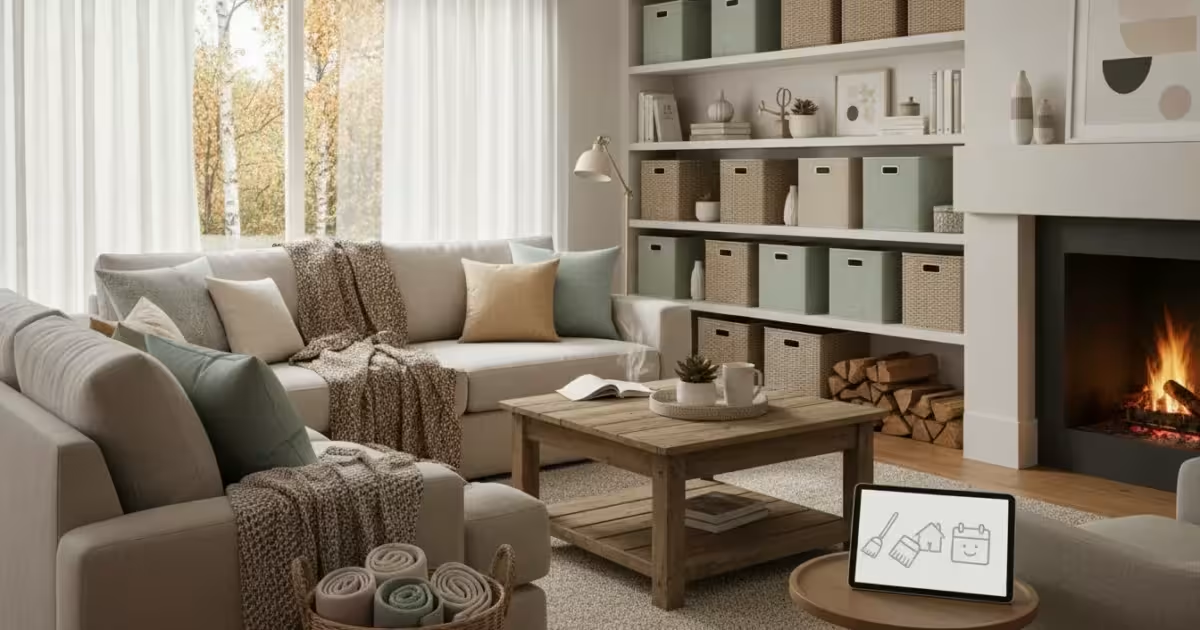
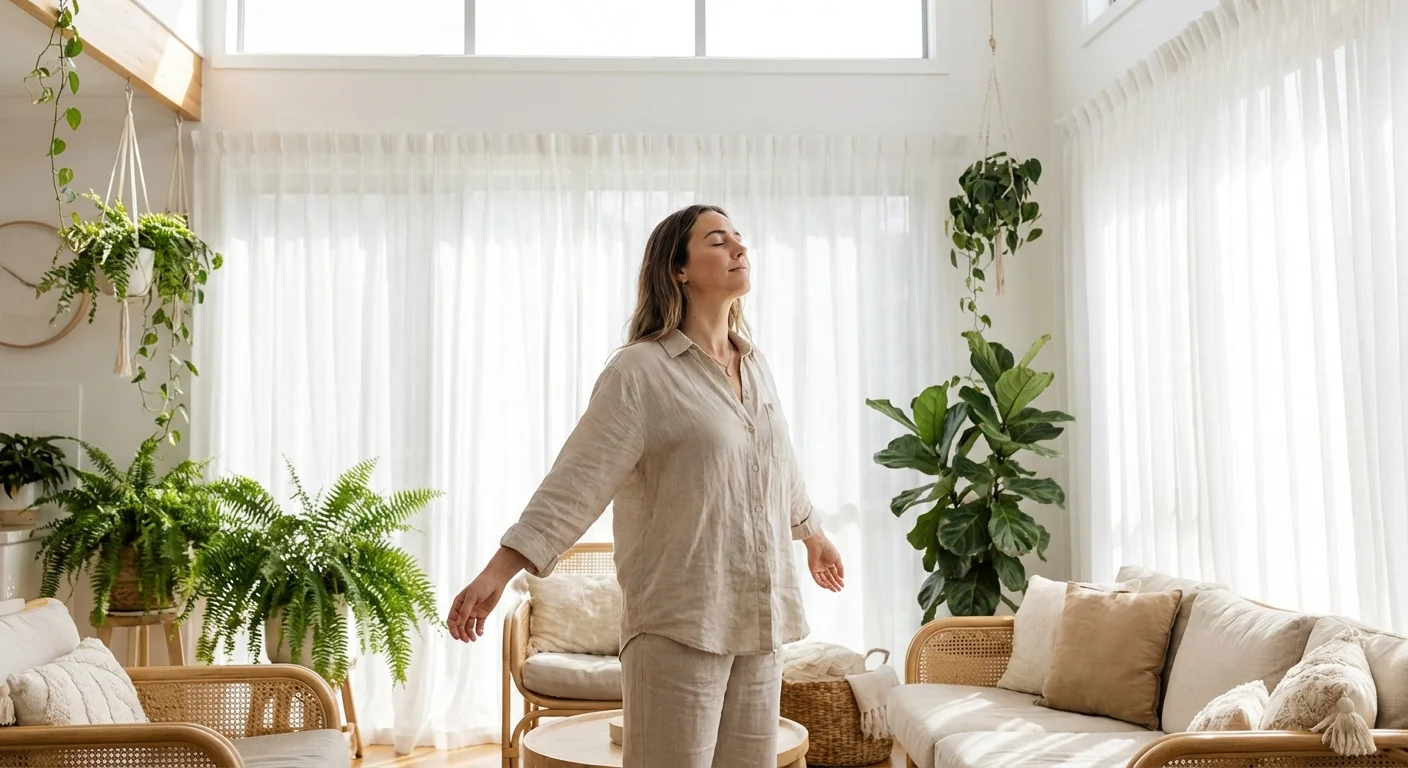
Life moves fast. Between work, family, and daily errands, finding a moment of peace often feels like a luxury. You know the benefits of mindfulness, but where do you even begin when your home already feels full? Creating a dedicated meditation space at home offers a powerful solution. This isn’t about building a lavish zen room, but rather crafting a personal sanctuary, big or small, that supports your well-being. A meditation space acts as a visual cue and a physical haven, inviting you to pause, breathe, and reconnect with yourself. You deserve a spot where you can consistently practice mindfulness at home, reducing stress and enhancing focus without needing to leave your front door. Let’s explore how you can create this tranquil corner, regardless of your space or budget.
Understanding Your Meditation Space
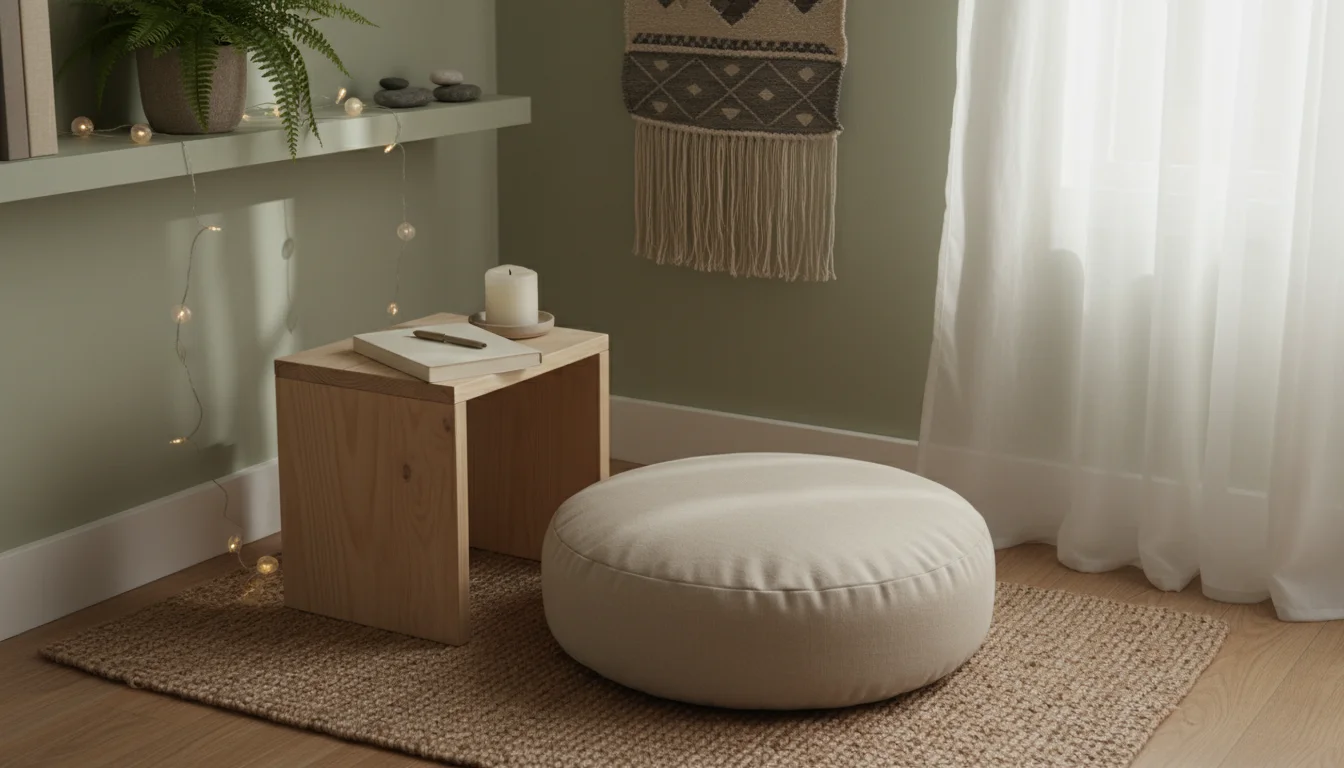
A meditation space is more than just a quiet corner; it is a designated area within your home specifically for practices that cultivate inner peace. This can include meditation, yoga, journaling, mindful stretching, or simply quiet contemplation. The purpose is to create an environment that signals to your mind and body that it is time to slow down. This mental cue helps you transition from your daily bustling routine into a state of calm more effectively.
You may wonder why a dedicated space matters when you can meditate anywhere. A designated zen room or corner removes distractions. It eliminates the mental friction of deciding where to sit or clearing a spot each time. This consistency helps build a strong habit. Over time, your body will associate this specific area with peace and relaxation, making it easier to drop into a mindful state as soon as you enter it. Think of it as creating a mini retreat within your busy life, a place where you consistently prioritize your mental well-being.
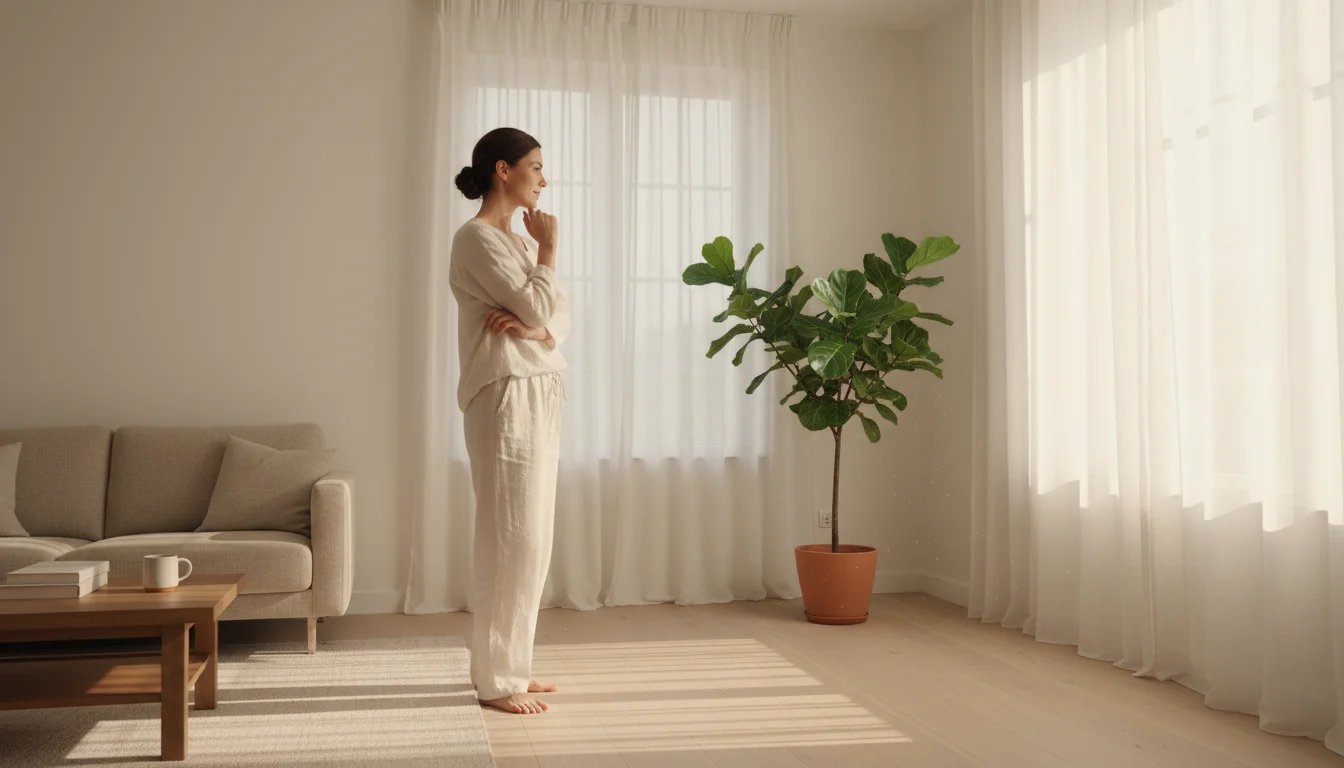
Choosing Your Zen Zone: Finding the Perfect Spot
Finding the right location for your meditation space is crucial. You don’t need an entire room; even a small nook can transform into a peaceful sanctuary. Start by observing your home. Where do you naturally find moments of quiet? Consider areas with minimal foot traffic, away from high-energy zones like kitchens or living rooms that often hum with activity.
If you are short on square footage, separating this zone from a cozy home office is vital to maintain a clear boundary between productivity and peace.
Many of these tranquil locations also work beautifully for reading nook ideas if you want to create a dual-purpose relaxation zone.
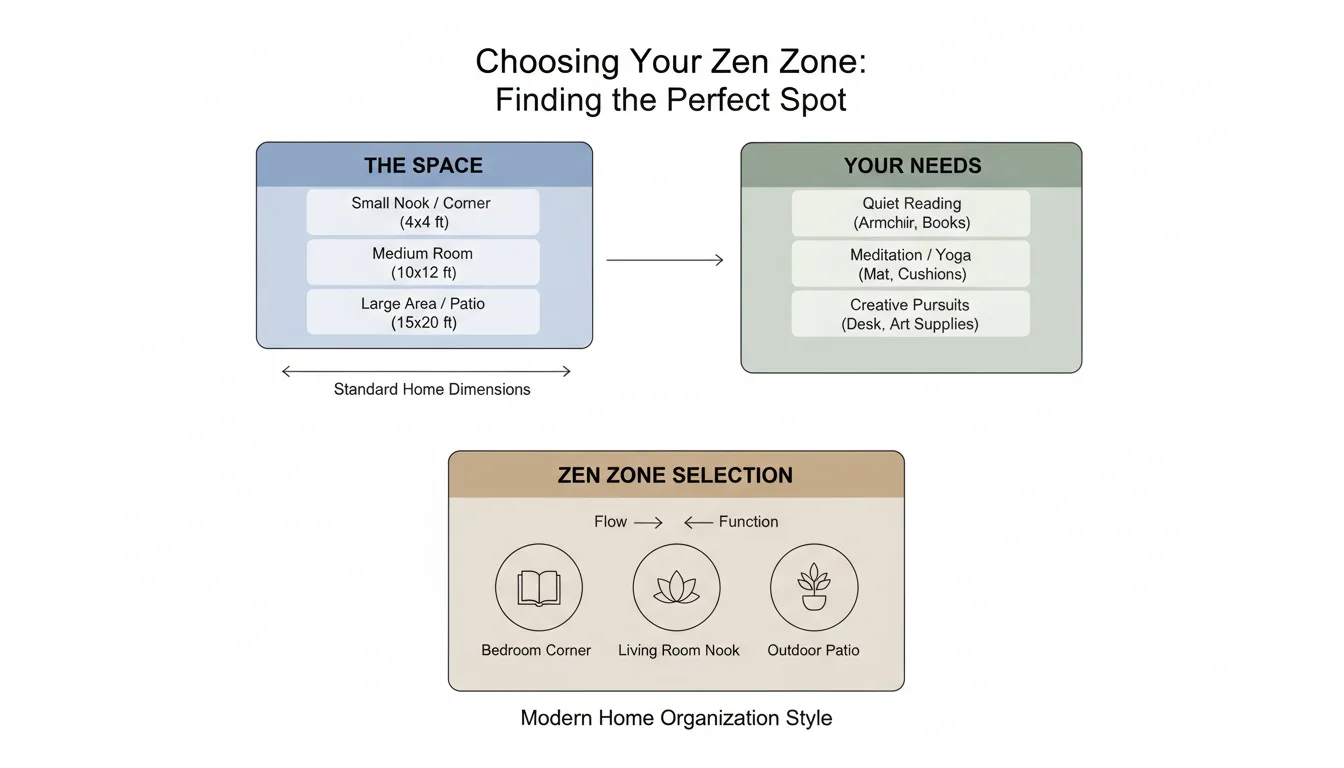
Think about natural light. A spot near a window can offer calming views and invigorating sunlight, but ensure direct glare won’t disrupt your practice. If a window isn’t an option, plan for soft, ambient lighting. Evaluate sound. Can you minimize external noise? Perhaps a corner furthest from the street or a shared wall. If complete silence proves impossible, consider incorporating gentle sound elements, which we discuss later.
Your “zen zone” can take many forms:
- A spare room: The ultimate luxury, allowing you to dedicate an entire area. You can design it from the ground up for maximum tranquility.
- A bedroom corner: Often the easiest and most private option. Place it opposite your bed to maintain a clear distinction between sleep and meditation.
- A closet or pantry conversion: For truly small spaces, a walk-in closet or large pantry can become a cozy, secluded haven. Remove clutter, add a cushion, and enjoy the solitude.
- An unused hallway nook: If wide enough, a hallway alcove can offer surprising privacy with a simple curtain or screen.
- An outdoor spot: A balcony, patio, or quiet garden corner can connect you with nature. Ensure it offers shelter from elements and sufficient privacy.
Evaluate what feels right for you. Your chosen spot should evoke a sense of calm and accessibility. Remember, consistency in location reinforces the habit of mindfulness at home.
Decluttering for Clarity: Preparing Your Space
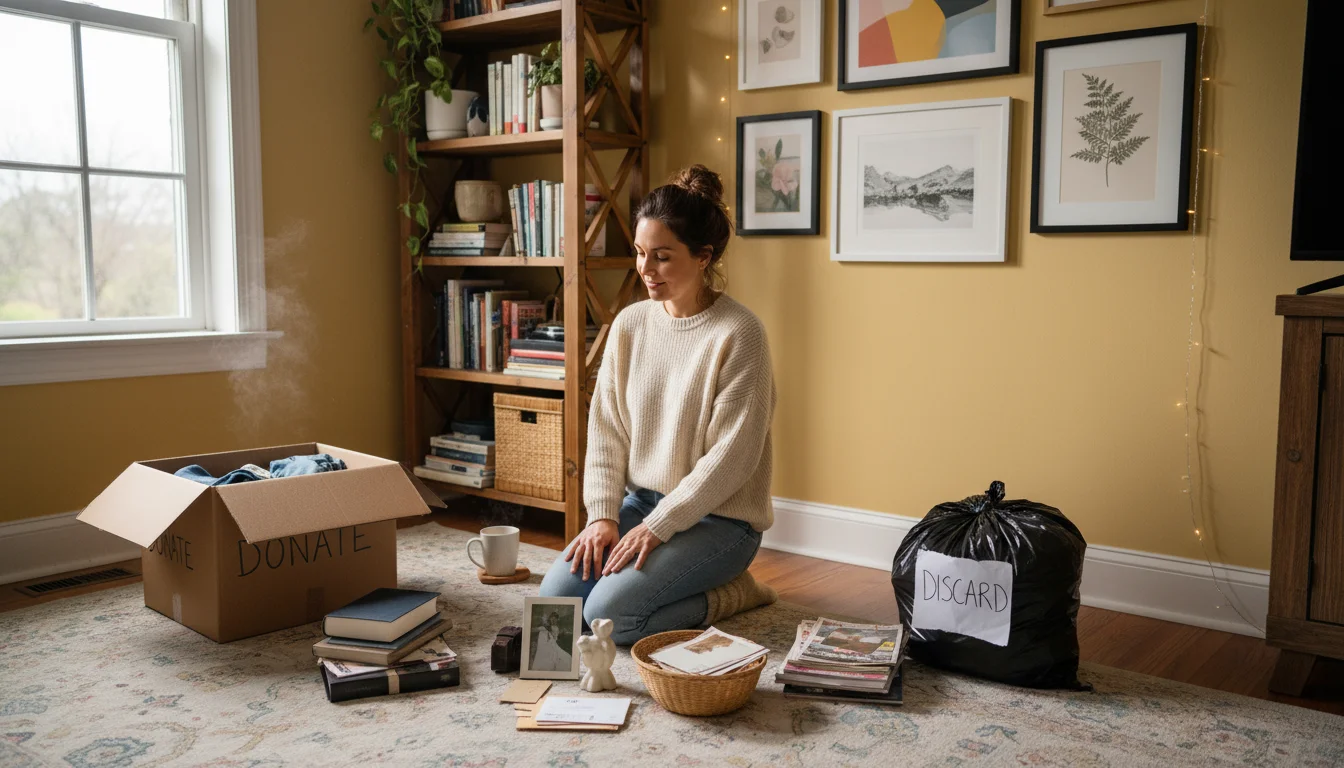
Before you introduce a single cushion or candle, decluttering the chosen area is paramount. Visual clutter creates mental clutter, making true relaxation difficult. Even if your space is small, removing unnecessary items clears both physical and psychological pathways for peace. A pristine environment helps you focus inward.
Approach this task with intention. Remove anything that doesn’t serve the purpose of calm or relaxation. Here’s a practical, step-by-step approach:
- Empty the space: Take everything out of your designated meditation area. This gives you a blank canvas.
- Sort everything: Categorize items into “keep,” “relocate,” “donate/sell,” and “discard.” Be ruthless. If an item doesn’t belong in a tranquil space or serve a clear purpose, it needs to go.
- Clean thoroughly: Once empty, clean the area from top to bottom. Dust, vacuum, and wipe surfaces. A physically clean space feels mentally refreshing. According to The Spruce on home organizing, a deep clean creates an ideal foundation for any new organization project.
- Return only essentials: Bring back only the items that truly belong in your meditation space. Prioritize items that support your practice and contribute to a peaceful atmosphere.
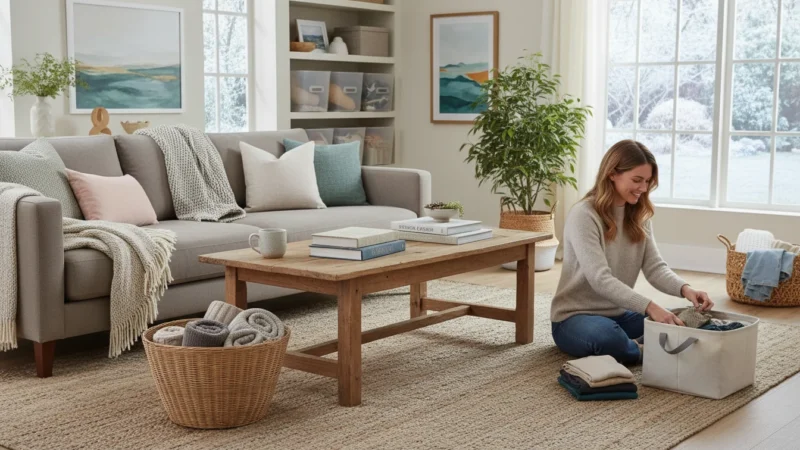
- Create storage for remaining items: If you must keep a few items nearby but out of sight, consider discreet storage solutions like decorative baskets, small bins, or closed drawers. The goal is to keep the surface clear and visually calm.
This decluttering process is a form of mindfulness itself. You actively decide what you invite into your personal sanctuary, setting the tone for every practice you undertake there.
Setting the Sensory Stage: Activating Your Senses
Once your space is clear, begin to engage your senses to deepen your meditation experience. Thoughtful choices in lighting, sound, scent, and texture transform a simple corner into a truly immersive zen room.
Lighting
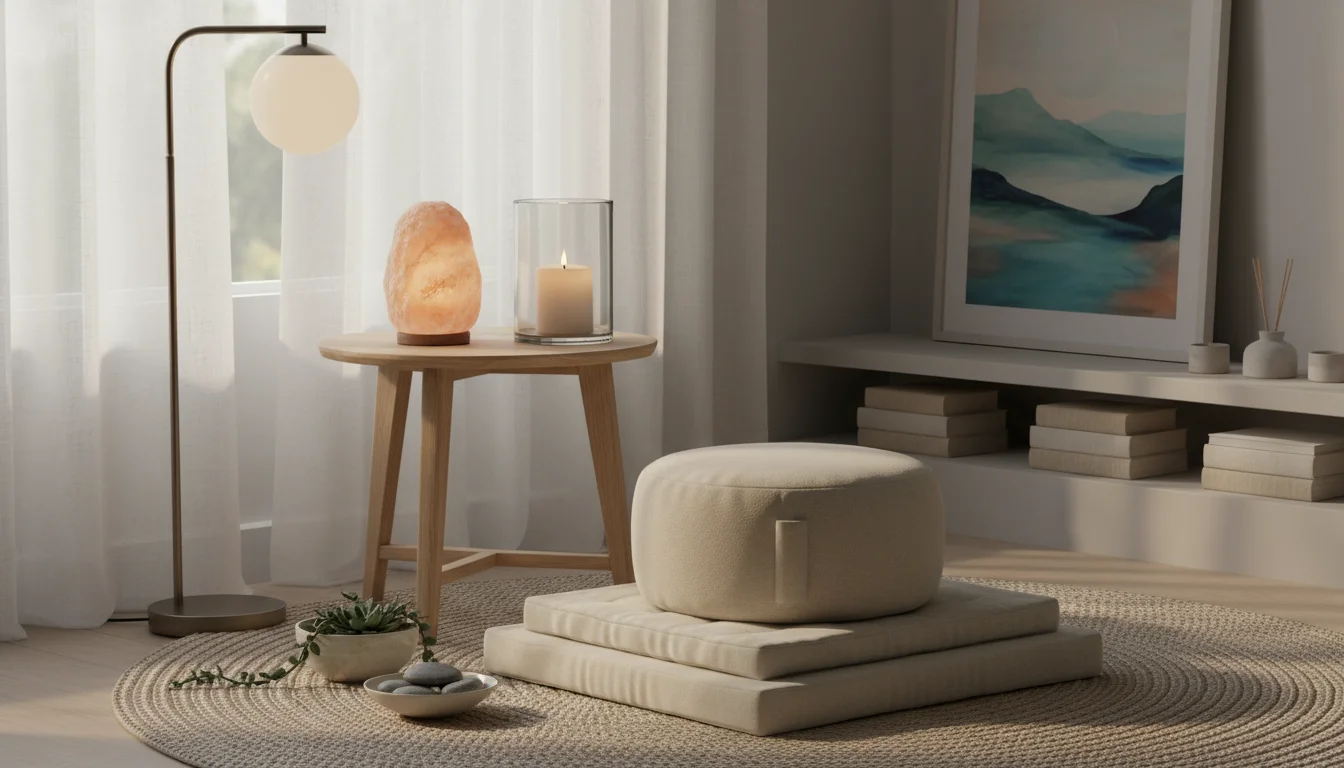
Harsh overhead lighting disrupts tranquility. Opt for soft, diffused light sources:
- Natural light: Maximize it if possible. Use sheer curtains or blinds to soften direct sunlight.
- Dimmer switches: Install these on existing lights to control intensity.
- Lamps: Choose lamps with warm-toned bulbs. Himalayan salt lamps provide a gentle glow.
- Candles: Unscented or naturally scented candles add a calming, flickering light. Always prioritize fire safety.
Sound
Silence is ideal, but often unattainable. Instead, manage the soundscape:
- Minimize noise: Close doors and windows. Use heavy curtains or rugs to absorb sound.
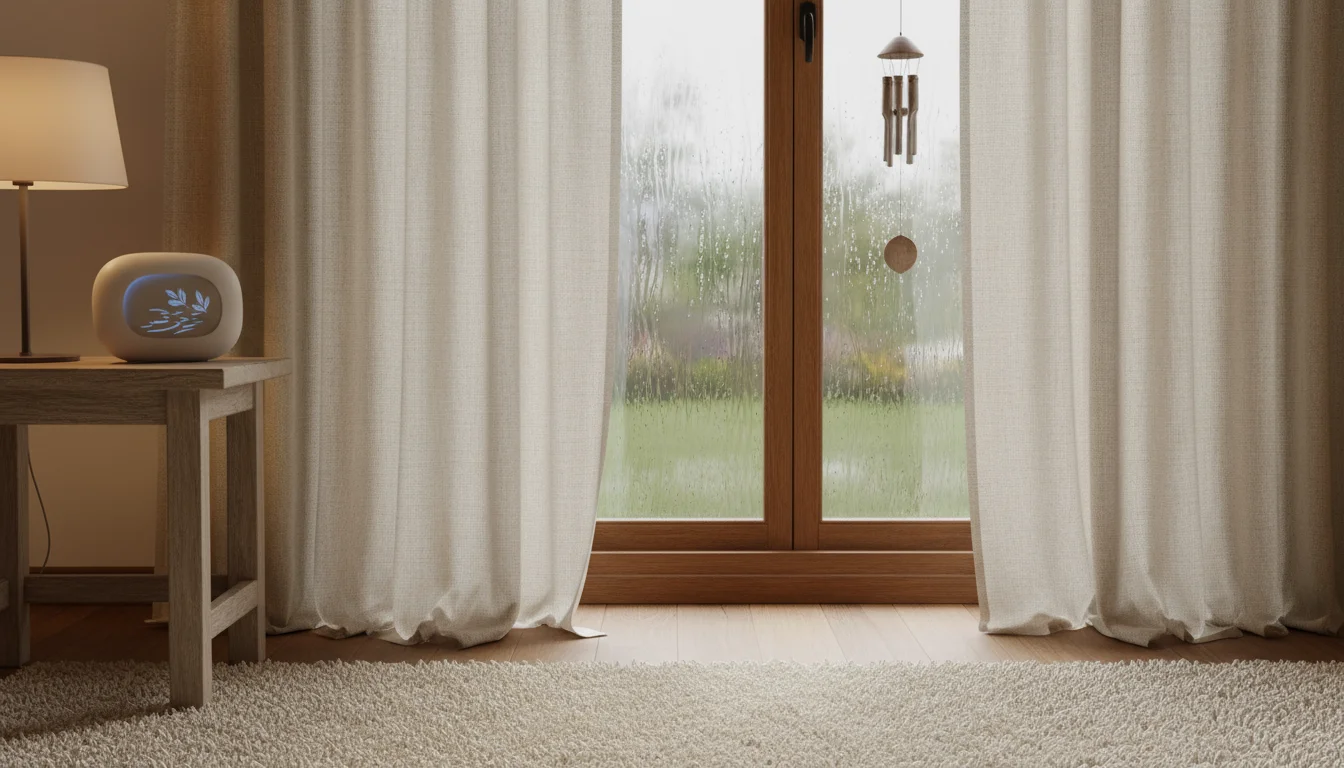
- Embrace natural sounds: If near a window, enjoy birdsong or gentle rain.
- Add white noise or nature sounds: Sound machines or apps offer rain, ocean waves, or ambient tones to mask distractions.
- Soft chimes: A subtle wind chime near an open window can add gentle background music.
Scent
Our sense of smell strongly links to memory and mood. Choose calming aromas:
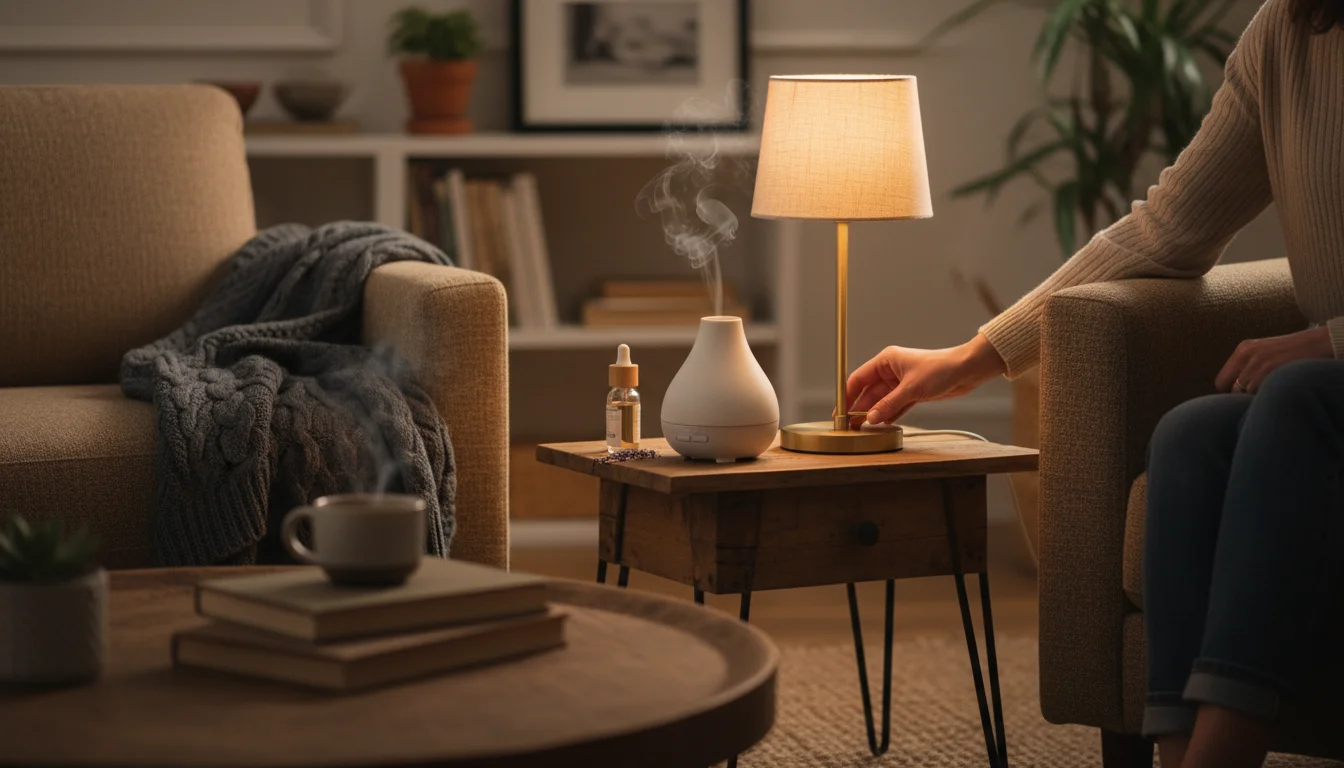
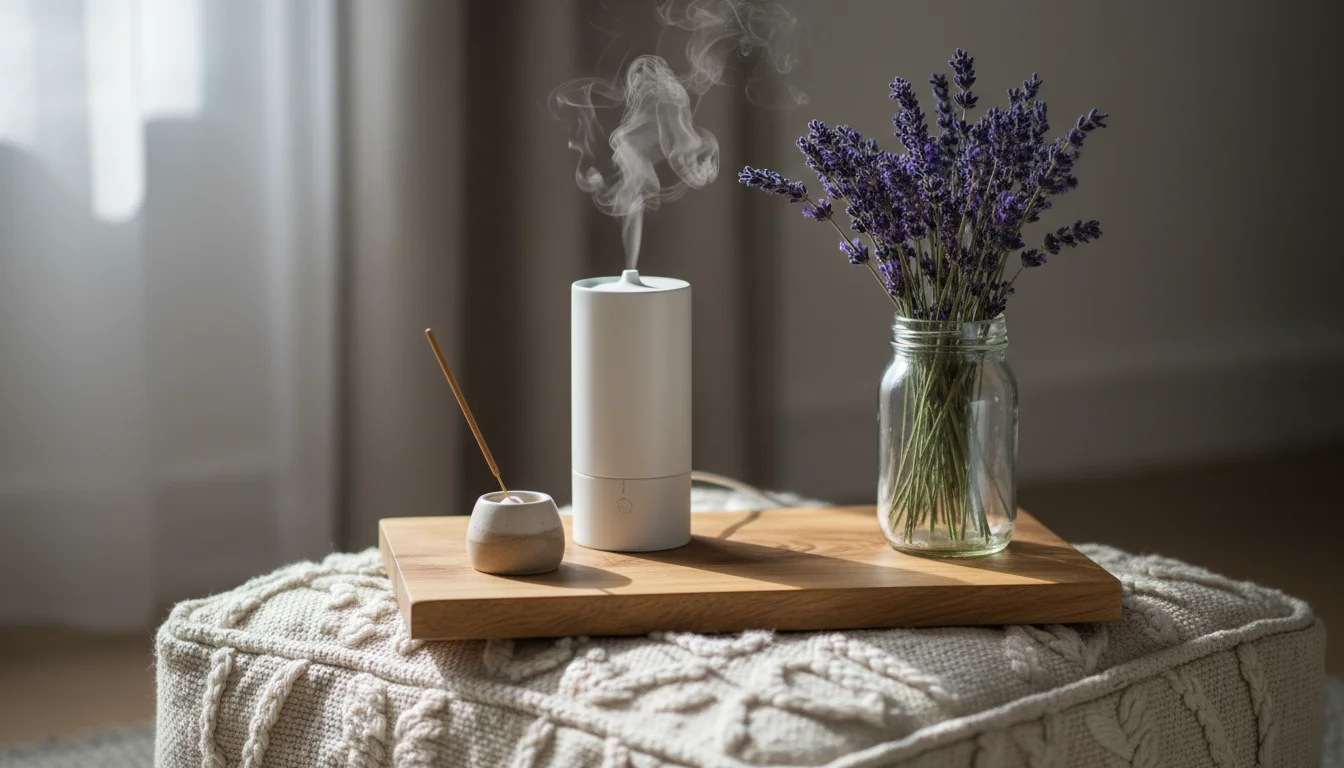
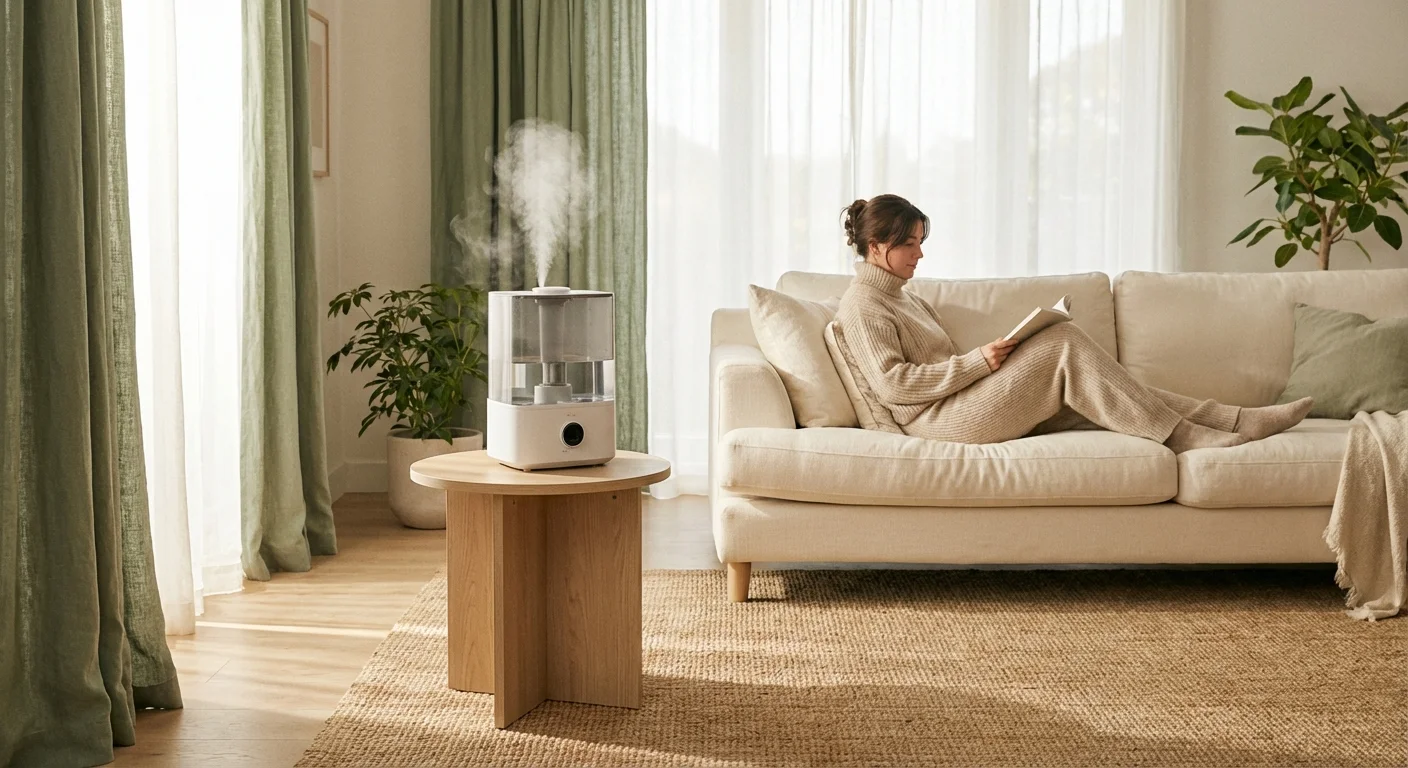
- Essential oil diffuser: Use scents like lavender, frankincense, sandalwood, or chamomile. Ensure good ventilation. According to EPA guidance on indoor air quality, proper ventilation is important when using diffusers or burning candles.
- Incense: Select natural, low-smoke varieties.
- Fresh flowers or herbs: A small vase of lavender or rosemary adds subtle, natural fragrance.
Texture
Tactile elements ground you and enhance comfort:
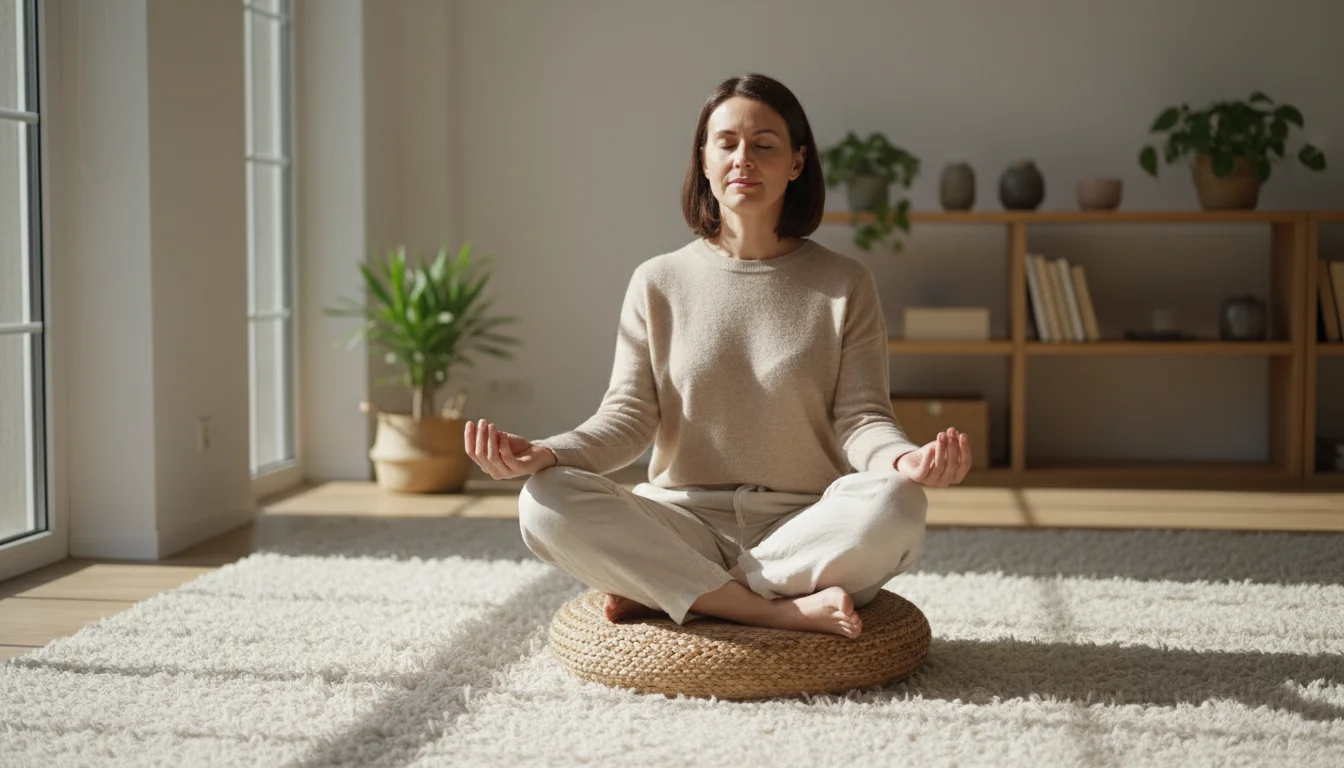
- Soft textiles: A plush rug, a cozy throw blanket, or a meditation cushion made from natural fibers.
- Natural materials: Incorporate wood, stone, or woven elements to connect with nature.
- Plants: Live plants not only add natural beauty but also improve air quality and provide a calming green presence.
Essential Elements for Your Meditation Space
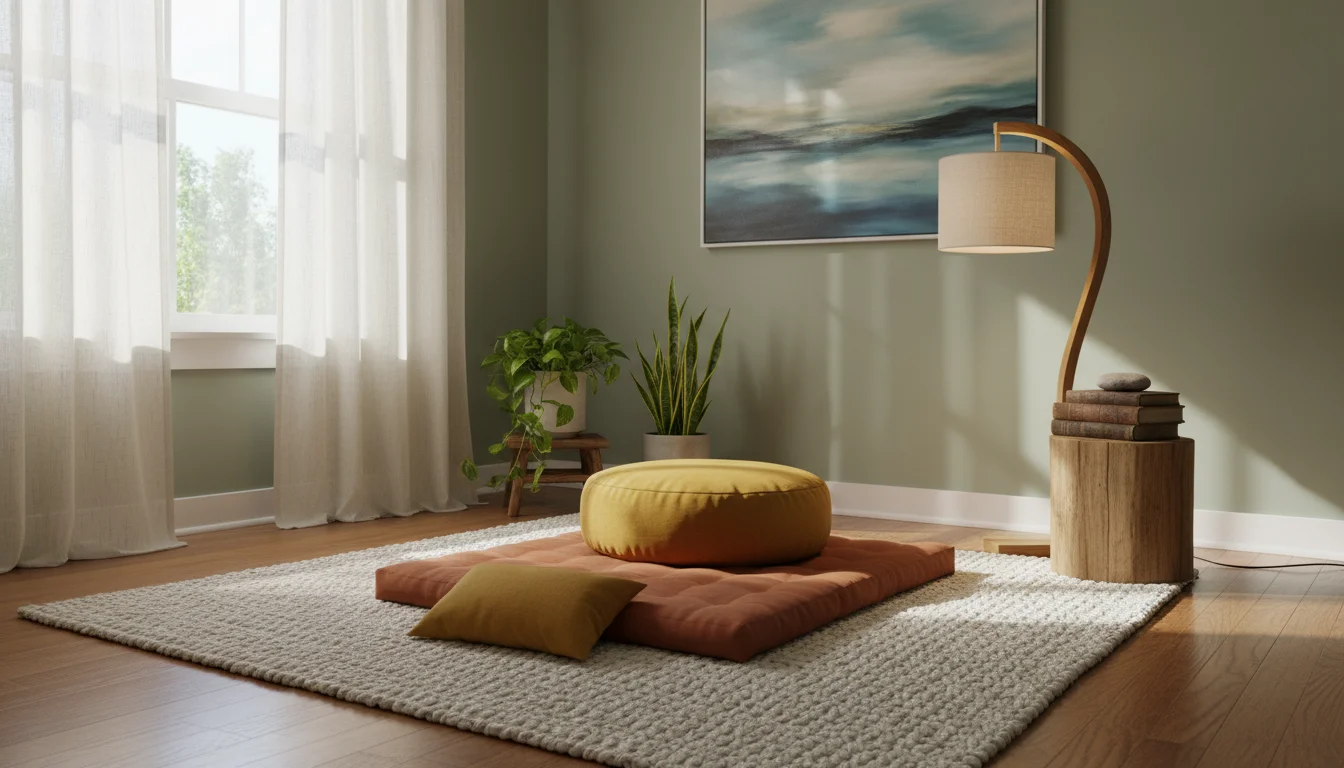
Once you establish the atmosphere, consider the practical items that support your practice. You don’t need to purchase everything at once; start with the essentials and build your collection over time. The goal is functionality and comfort, not accumulation.
Knowing how to arrange furniture for coziness ensures your sanctuary feels grounded and intentional rather than just a collection of cushions.
Comfortable Seating
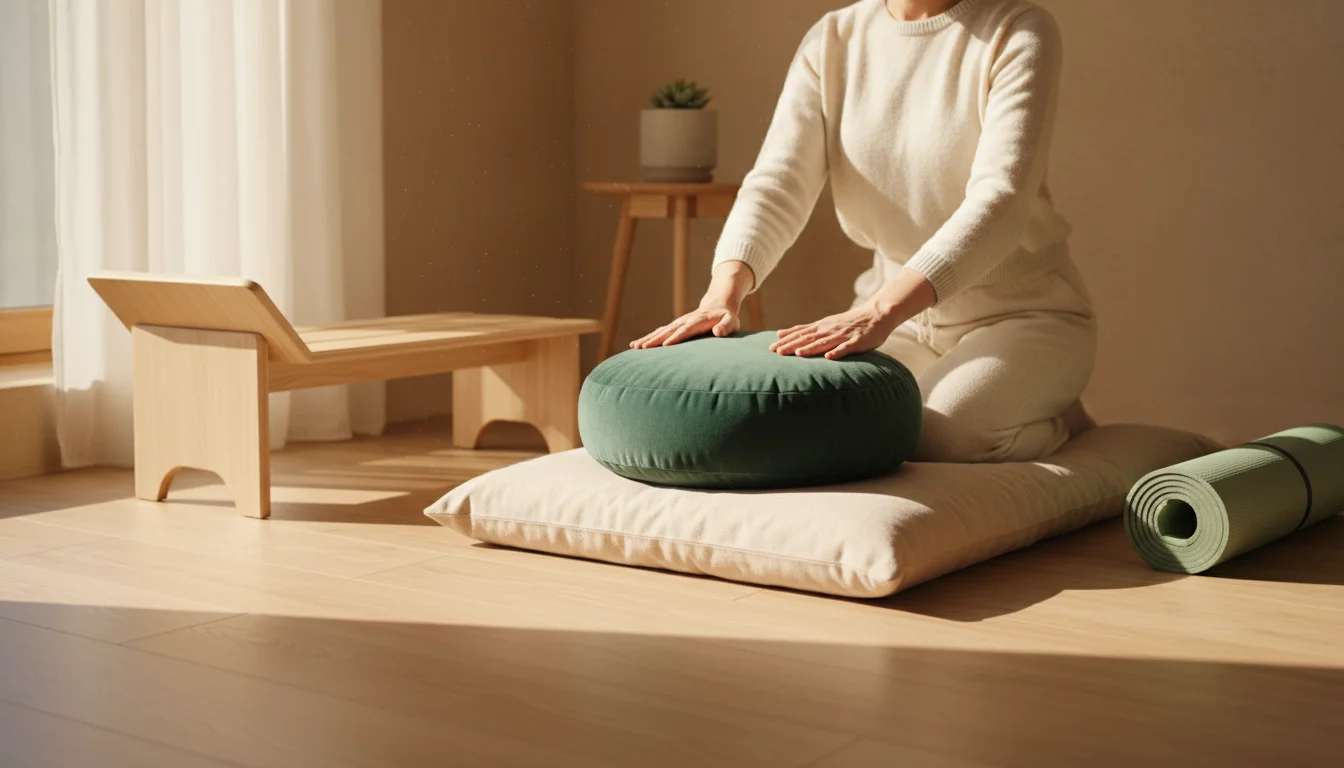
- Meditation cushion (zafu): Provides elevation for proper posture and spinal alignment.
- Meditation mat (zabuton): A soft mat placed under your zafu for knee and ankle comfort.
- Bench or stool: If sitting on the floor is challenging, a low bench offers support.
- Yoga mat: Essential for stretching or gentle yoga flows before or after meditation.
Altar or Focus Point
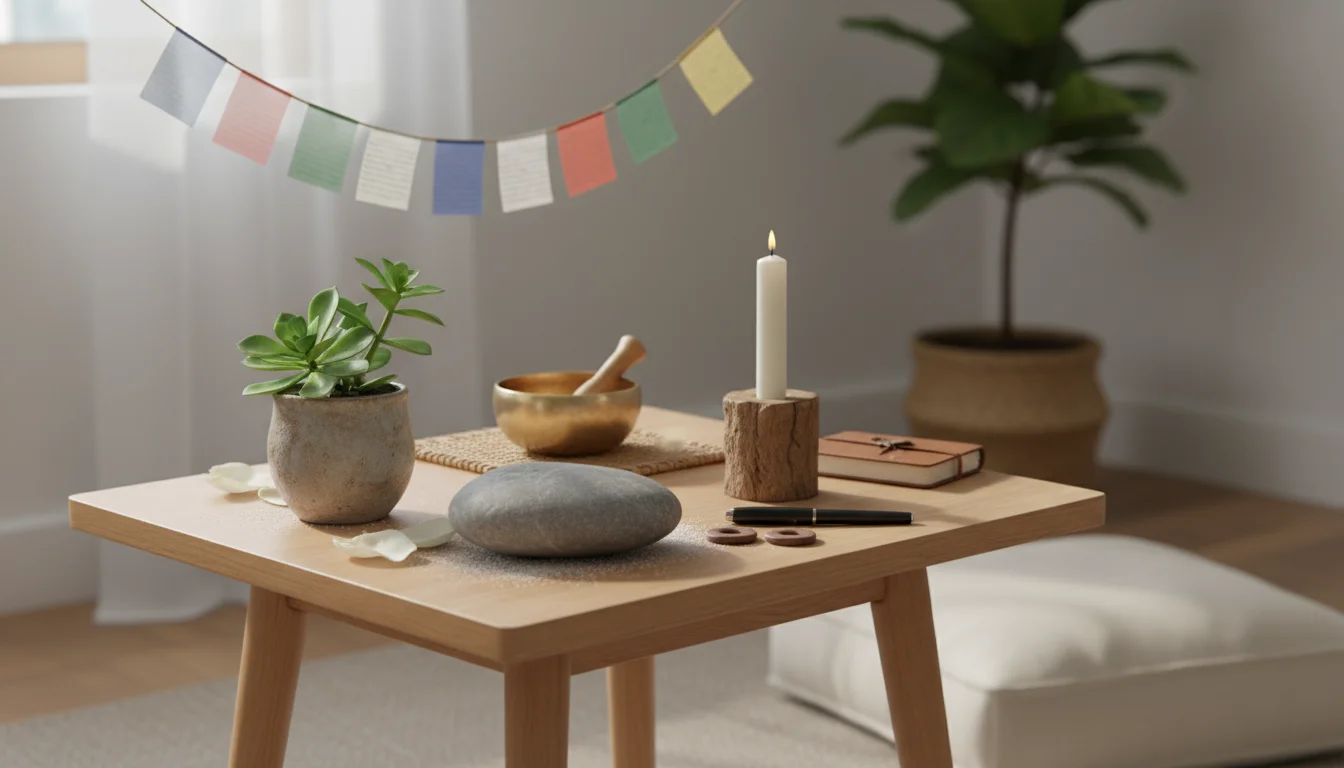
Many find a small altar helpful as a visual anchor. This is not necessarily religious; it simply acts as a focal point for intention and beauty.
- A low shelf or small table: The foundation for your altar.
- Meaningful objects: These could include:
- A small statue or figurine that inspires you.
- Natural elements like smooth stones, seashells, or a small plant.
- A photo of a loved one or a serene landscape.
- A candle to symbolize light and focus.
- Incense holder or essential oil diffuser.
Journal and Pen
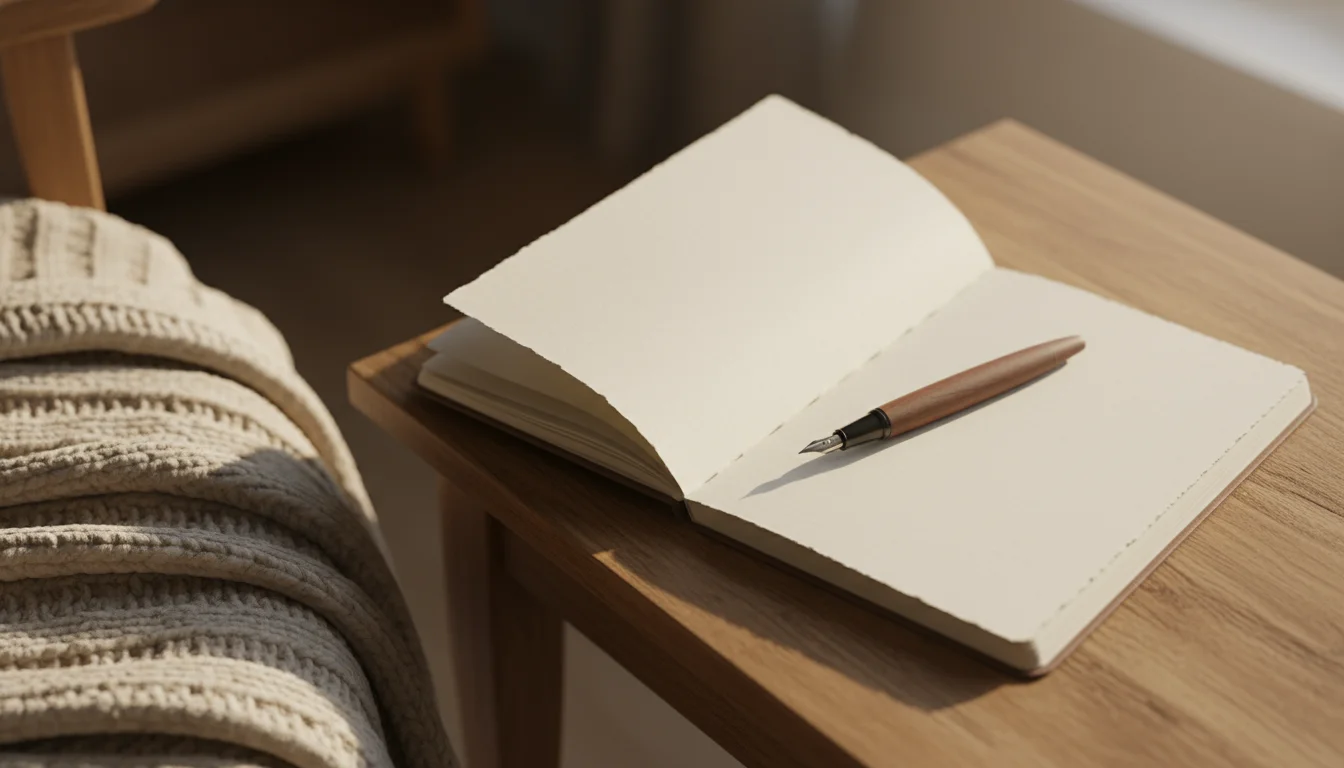
Many individuals find journaling before or after meditation helps process thoughts or capture insights. Keep a dedicated journal and pen within easy reach.
Art and Decor
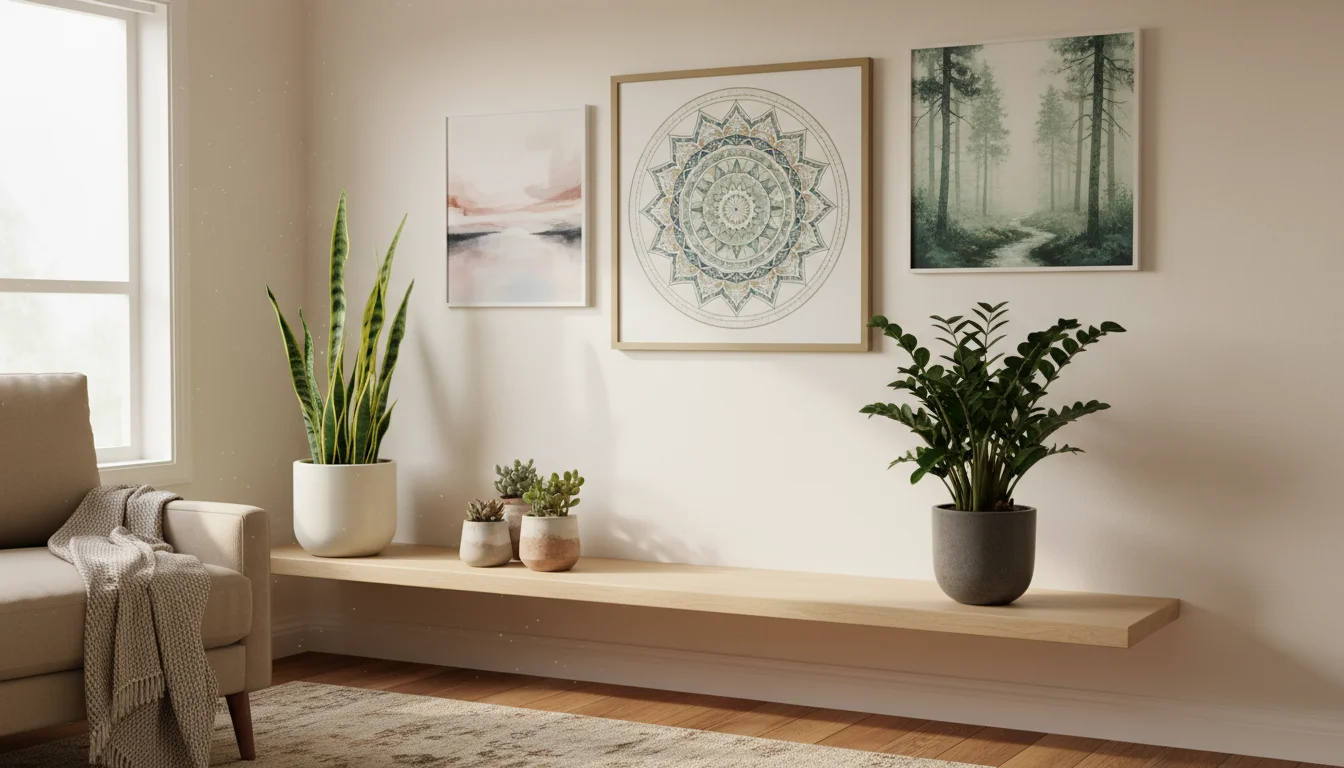
Choose art that inspires peace and tranquility. Avoid busy or overly stimulating pieces.
- Mandalas: Geometric designs that symbolize the universe and aid concentration.
- Abstract art: Pieces with soft colors and flowing lines.
- Nature-inspired prints: Landscapes, trees, or water scenes.
- Plants: Greenery brings life and a connection to nature. Choose low-maintenance plants like snake plants, ZZ plants, or succulents.
Remember, the best elements are those that resonate with you personally, enhancing your sense of peace and making your time in the space more meaningful.
Budget-Friendly Zen: Creating a Space on a Dime
Creating a beautiful and functional meditation space does not require a large budget. You can achieve tranquility with creativity and resourcefulness. Many items you already own, or can find affordably, will serve you well.
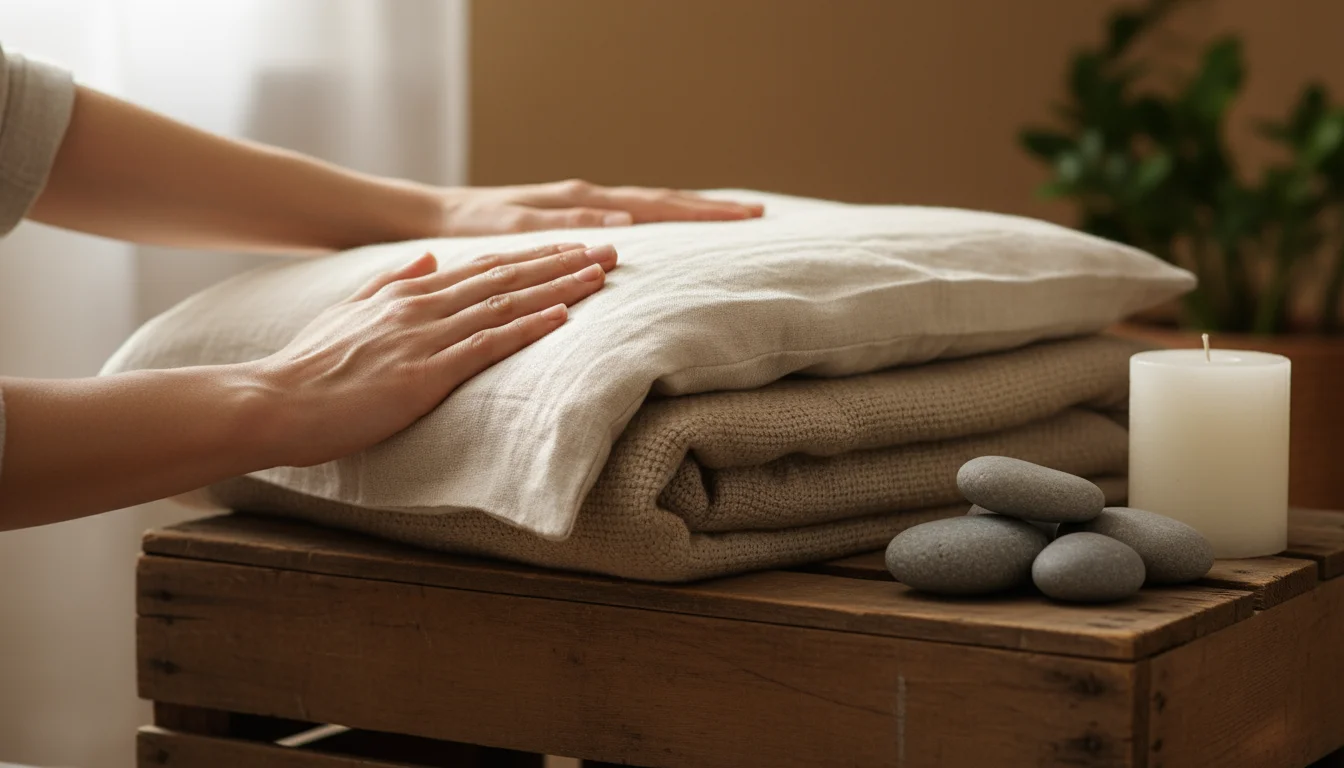
- DIY Cushions and Mats: Use old blankets, towels, or even firm pillows to create your own comfortable seating. Fold them neatly or sew simple covers from inexpensive fabric remnants.
- Repurpose Furniture: A sturdy crate, a stack of books, or an overturned basket can serve as a small altar or side table. Paint or cover them to match your aesthetic.
- Natural Decor: Collect smooth stones, fallen leaves, interesting twigs, or pinecones from nature walks. These free elements bring an organic, grounding feel to your space.
- Thrift Store Finds: Hunt for unique vases, candle holders, small statues, or woven baskets at thrift stores. A little cleaning and a fresh coat of paint can transform them.
- Lighting Alternatives: Instead of expensive lamps, use fairy lights or battery-operated candles for soft, ambient illumination. You can also craft paper lanterns for a diffused glow.
- Plants on a Budget: Propagate plants from cuttings you receive from friends, or buy small, inexpensive succulents or herbs from local nurseries.
- Sound Solutions: Utilize free meditation apps on your phone or tablet for guided meditations or ambient nature sounds.
- Art from Nature or Your Own Hands: Create simple abstract art with watercolors, draw mandalas, or frame beautiful photos you’ve taken of nature.
The core principle remains: minimalism and intention. Focus on what truly brings you peace and removes distractions, not on accumulating expensive items. Your personal touch makes the space uniquely yours, enriching your mindfulness practice.
Maintaining Your Sanctuary: Keeping it Pristine
A meditation space works best when it remains a clean, uncluttered, and inviting sanctuary. Regular maintenance ensures it consistently serves its purpose and doesn’t become another source of stress. You establish a pattern of care that reinforces the importance of your self-care practices.
Here are practical steps to maintain your meditation space:
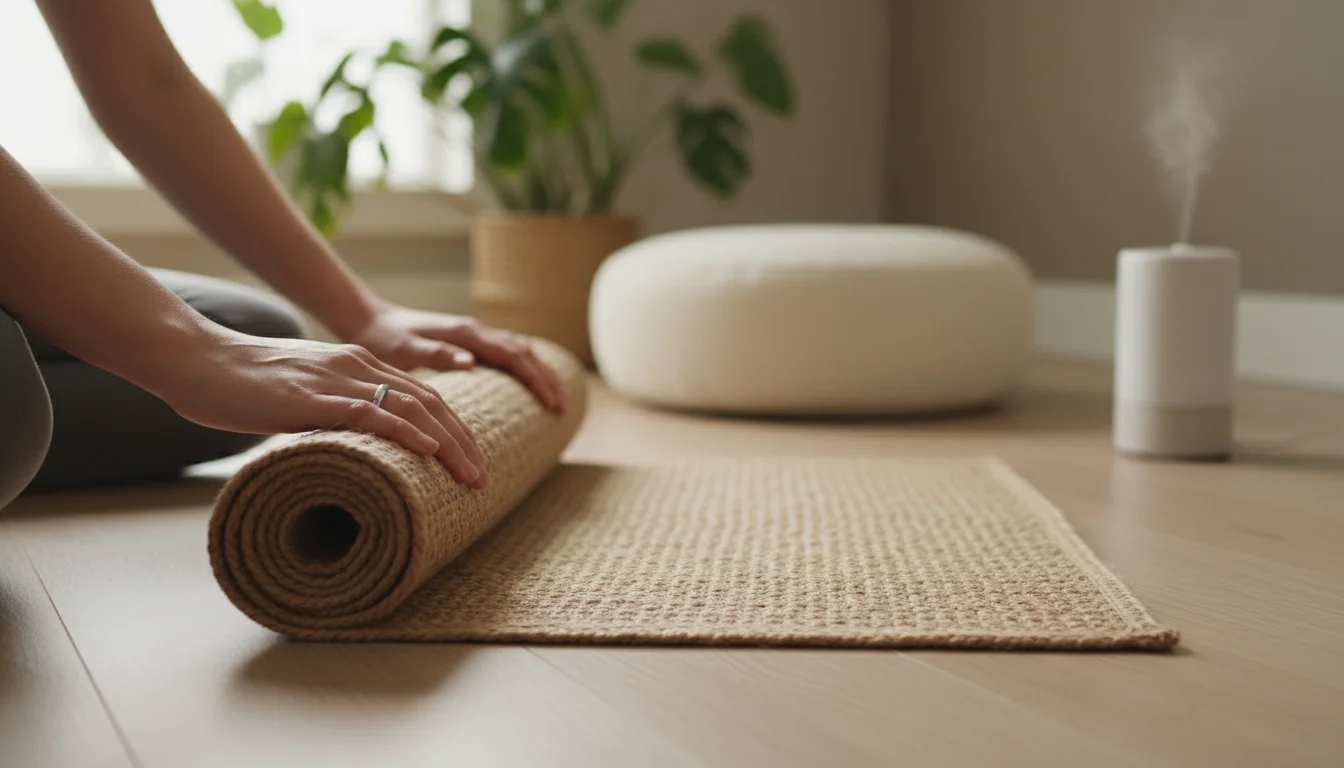
- Daily Tidy-Up: After each use, take a moment to straighten cushions, roll up your mat, and return any items to their designated spots. This prevents clutter from accumulating.
- Weekly Dust and Wipe: Lightly dust surfaces, wipe down any tables or shelves, and vacuum or sweep the floor. A quick clean keeps the area fresh.
- Check Scents: If you use diffusers or incense, replenish supplies as needed. Consider rotating scents to keep things interesting or matching them to your mood.
- Refresh Plants: Water your plants, prune any dead leaves, and wipe dust from their foliage. Healthy plants contribute to a vibrant atmosphere.
- Deep Clean Periodically: Every few months, give the space a more thorough clean. Wash cushion covers, clean windows, and really get into corners. This periodic reset revitalizes the energy of the space. As noted by experts at Good Housekeeping on home organizing, consistent small efforts prevent large cleaning tasks.
- Declutter Regularly: Even in a dedicated space, unnecessary items can creep in. Periodically review your altar and shelves. Ask yourself if each item still serves its purpose or contributes to the peaceful ambiance. Remove anything that no longer resonates.
Treat the maintenance of your meditation space as an extension of your mindfulness practice. This act of care honors the space and your commitment to well-being.
Integrating Mindfulness Beyond the Space
While your meditation space provides a vital anchor, the true power of mindfulness extends beyond its physical boundaries. Your zen room teaches you principles you can apply throughout your entire home and daily life. You cultivate an awareness that transforms everyday tasks into opportunities for presence.
Consider these ways to integrate mindfulness more broadly:
- Mindful Moments Throughout Your Day: Take mini-breaks wherever you are. Sip your tea mindfully, noticing the warmth and flavor. Observe your breath for a minute while waiting for the kettle to boil.
- Declutter with Intention: Apply the decluttering principles you used for your meditation space to other areas of your home. Ask yourself if items truly serve you or bring you joy. This helps maintain an organized and peaceful environment overall.
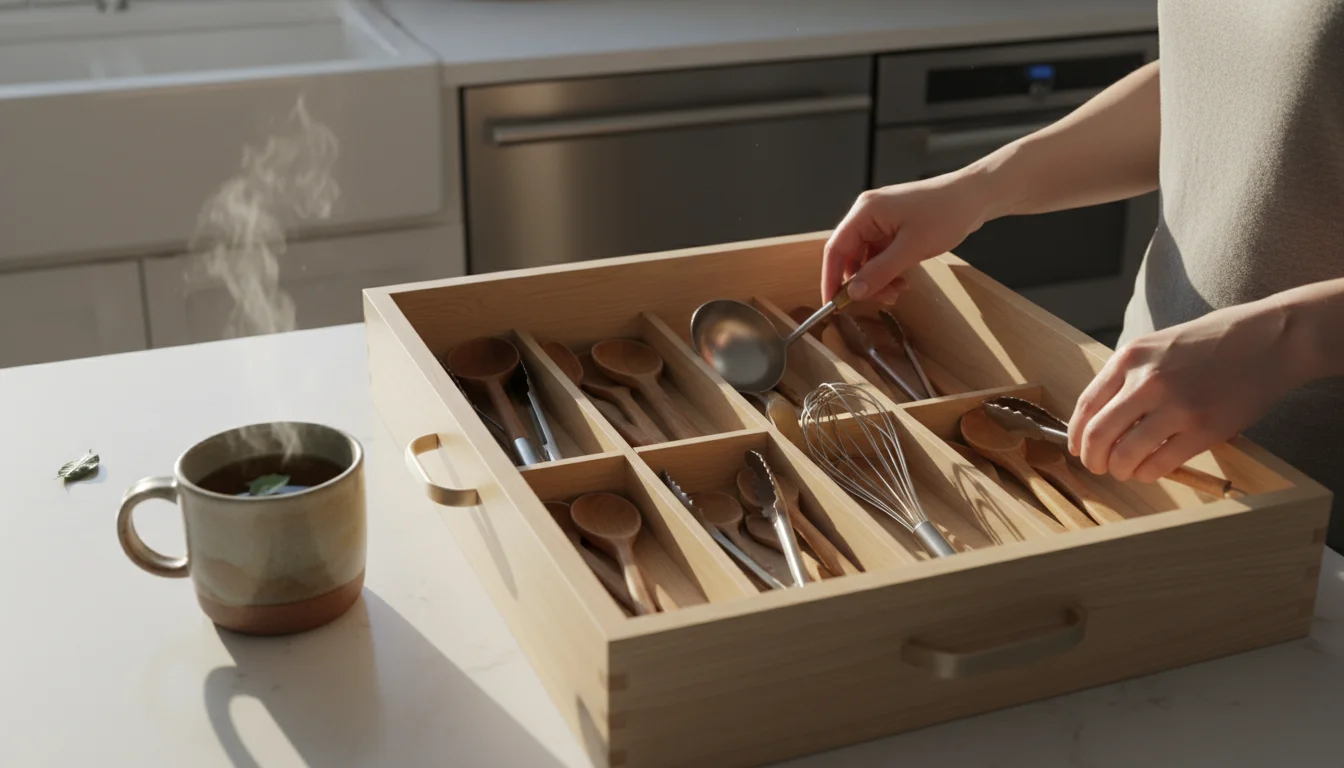
- Create “Micro-Sanctuaries”: Maybe it’s a beautifully organized drawer, a clean kitchen counter, or a small plant on your desk. These little pockets of calm remind you to pause.
- Engage Your Senses Everywhere: Notice the textures of your clothes, the sounds of your neighborhood, or the aroma of your cooking. Heightened sensory awareness grounds you in the present.
- Practice Gratitude: Take a moment each day to appreciate your home, the comforts it provides, and the people who share it with you.
Your meditation space is a training ground. It equips you with the tools and mindset to live more consciously, bringing peace and presence into every corner of your life, not just your dedicated zen room.
Frequently Asked Questions
What if I live in a very small apartment? Can I still create a meditation space?
Absolutely. Even in the smallest apartments, you can create a dedicated meditation space. Consider a corner of your bedroom, a clear spot near a window, or even a section of a closet that you can clear out. The key is designation and consistency. Use portable elements like a roll-up yoga mat and a small cushion that you can easily store when not in use, and bring out for your practice. A simple cloth or screen can also create a visual boundary for your “zen zone” even in an open-plan living area.
Do I need special equipment or can I just use what I have?
You do not need special or expensive equipment to start. Begin with what you have. A comfortable pillow can substitute for a meditation cushion, and a folded blanket works as a mat. The most important “equipment” is your intention and consistency. Over time, as you establish your practice, you may choose to invest in specific items that enhance your comfort or focus, but they are not prerequisites for starting your mindfulness journey.
How do I keep my meditation space from becoming cluttered again?
Maintaining a clutter-free meditation space requires mindful habits. Make it a rule to only bring items into the space that directly support your practice. After each use, take a moment to tidy up: return props to their designated storage, smooth out your mat, and clear any distractions. Schedule a quick weekly wipe-down and a more thorough monthly declutter to ensure stray items do not accumulate. Treat the space with reverence, and it will remain a sanctuary.
What if I have children or pets? How can I protect my meditation space?
This is a common challenge. If you have children or pets, consider using a room divider or screen to create a visual barrier during your practice. Store delicate or potentially hazardous items (like candles) in a closed container when not in use. You can also involve older children by explaining the purpose of the space and setting clear boundaries, perhaps even encouraging them to have their own “quiet time” activity nearby. For pets, a designated pet bed just outside your space can offer them comfort while you meditate, teaching them to respect the area.
For expert home organization guidance, visit
Good Housekeeping — Organization,
Better Homes & Gardens — Home Organization and
EPA — Indoor Air Quality.
Disclaimer: This article is for informational purposes only and is not a substitute for professional advice. Consult professional organizers or specialists for personalized recommendations.
Leave a Reply