

Dedicating an entire room to guests who visit three times a year costs you thousands of dollars in unused real estate. As housing costs rise and floor plans shrink, a permanent guest bed sitting empty wastes valuable square footage that could serve as your home office, fitness studio, or creative workspace. Rethinking how your furniture operates allows you to reclaim that space without sacrificing comfort when visitors arrive.
The modern space saving bed has evolved far beyond the clunky, dangerous folding contraptions of the mid-twentieth century. Today’s integrated wall beds feature counterbalanced pistons, elegant cabinetry, and built-in lighting. They transform rooms seamlessly; a productive office at 4:00 PM becomes a welcoming guest suite by 4:05 PM. If you want to maximize your home’s potential, implementing smart Murphy bed ideas offers a permanent, structural upgrade to your living environment.
Decoding the Lift Mechanisms
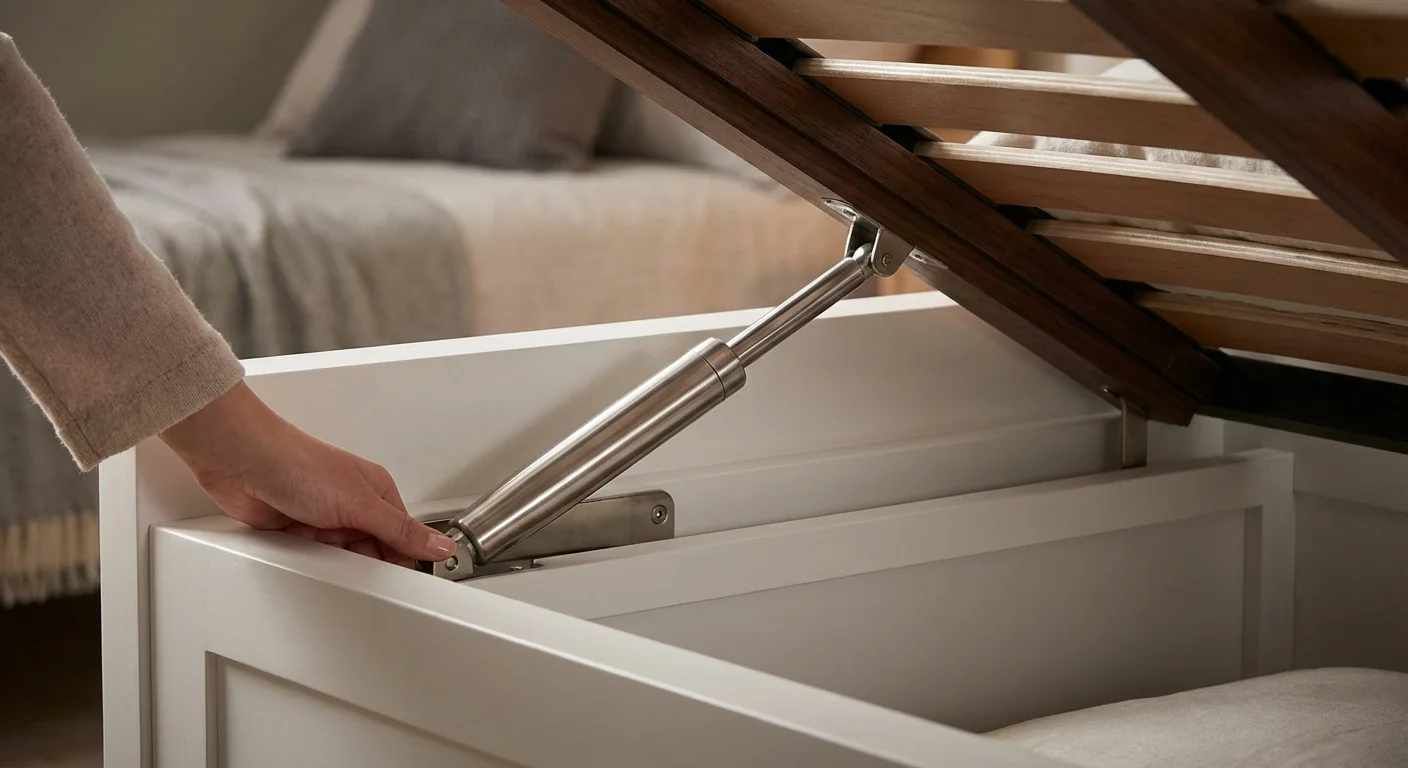
The core of any wall bed solution lies in its lifting mechanism. The hardware dictates how easily the bed operates, how long it lasts, and how seamlessly it integrates into your daily life. When you browse various Murphy bed reviews, you will notice that satisfaction heavily depends on choosing the correct lift system for your specific physical capabilities and usage frequency.
| Mechanism Type | How It Works | Pros | Cons |
|---|---|---|---|
| Piston Lift System | Uses gas or air pressure cylinders to counterbalance the weight of the mattress and frame. | Whisper-quiet operation; requires minimal physical effort; completely contained within the cabinet. | Pistons eventually lose pressure and require replacement every 10 to 15 years; strict weight tolerances. |
| Spring Lift System | Relies on a network of heavy-duty steel springs attached to the base of the frame. | Highly adjustable tension by adding or removing springs; exceptional durability; handles heavier mattresses. | Can become squeaky over time; springs require occasional lubrication and tension adjustments. |
| Manual / Freestanding | No counterbalancing hardware. Relies on leverage, folding frames, or simply sliding out from a stationary cabinet. | Extremely affordable; often requires zero wall mounting; easy to relocate to different rooms. | Requires significantly more physical strength to deploy; often restricted to smaller mattress sizes. |
Gas piston systems currently dominate the market because they offer a smooth, controlled descent. If you happen to let go of the bed frame halfway down, a high-quality piston system prevents the bed from crashing to the floor. Spring systems, conversely, require you to manage the tension manually, but they boast a lifespan that frequently outlasts the house itself. Your choice depends entirely on who will open the bed and how frequently the room transitions.

Creative Murphy Bed Ideas for Every Room
Integrating a fold down bed requires you to evaluate the daily function of the space. You should never design a room around an open bed if the bed remains closed 340 days a year. Instead, focus on designing the primary function of the room—whether that is an office, a playroom, or a living room—and camouflage the bed within that aesthetic.
If you are working with limited square footage, discovering specific Murphy bed ideas for small apartments can help you select a model that fits your specific floor plan.
The Home Office Hybrid
The most popular application for a wall bed is the home office. Because desks and beds rarely see simultaneous use, they share a footprint perfectly. Look for desk-bed combos featuring a specialized cantilever mechanism. As you pull the bed down from the wall, the desk surface lowers parallel to the floor. You can leave your dual monitors, coffee mugs, and paperwork exactly where they are; the bed simply hovers above them. This specific space saving bed eliminates the tedious chore of clearing off your desk every time a guest arrives.
The Low-Clearance Horizontal Bed
Traditional vertical Murphy beds require tall ceilings to accommodate the length of the mattress. If you are retrofitting an attic with angled eaves or a basement with low drop-ceilings, a horizontal Murphy bed solves the clearance issue. These beds mount sideways, opening into the room horizontally. They project far less into the floor space when deployed, leaving ample room for narrow walkways. Homeowners often install custom shelving above a closed horizontal bed to maximize vertical storage.
The Library Wall Illusion
If you prefer hidden utility, the sliding bookcase bed offers maximum visual impact. The front of the bed cabinet features functional bookshelves mounted on heavy-duty tracks. To reveal the bed, you simply slide the two bookcase halves outward. This design works exceptionally well in formal living rooms or dens where a blank wooden cabinet door would look entirely out of place.
“A home should rise to meet the demands of your life. When furniture serves dual purposes, you effectively add square footage to your floor plan without moving a single structural wall.” — Sarah Richardson, Interior Designer

Selecting the Right Mattress for Wall Bed Solutions
Choosing a mattress for a fold down bed requires distinct considerations that you never encounter with standard stationary beds. Because the mattress spends the majority of its life standing on its edge, gravity inevitably affects its internal structure.
Once you have chosen the right foundation, apply specific designer tricks for small bedrooms to ensure your hidden bed area feels high-end and inviting.
Once the hardware is installed, you can focus on cozy bedroom ideas to ensure the sleep quality matches the convenience of the design.
Avoid pure memory foam mattresses for vertical wall beds. Without rigid internal support, memory foam naturally compresses and slumps toward the bottom of the cabinet over time. When you finally pull the bed down, you will find a dense, uncomfortable lump at the foot of the bed and practically nothing at the head. Instead, opt for a high-quality innerspring or hybrid mattress. The steel coils provide the structural integrity needed to maintain the mattress shape while standing upright.
Pay strict attention to the maximum mattress depth allowed by your specific frame. Most traditional wall bed cabinets only accommodate mattresses up to 10 or 11 inches thick. If you attempt to force a 14-inch pillow-top mattress into the cabinet, the doors will not close, and you risk destroying the lift mechanism. For highly rated bedding suggestions that fit precise spatial requirements, The Spruce offers extensive testing data on low-profile hybrid mattresses.
Weight limits also matter. Counterbalanced pistons are calibrated for a specific weight range. If your mattress is too light, the bed will stubbornly attempt to close itself while your guest is sleeping. If the mattress is too heavy, the bed will slam to the floor during deployment. Always check the manufacturer’s specified weight tolerances before purchasing your mattress.
Preparing Your Space: Clearances and Obstacles
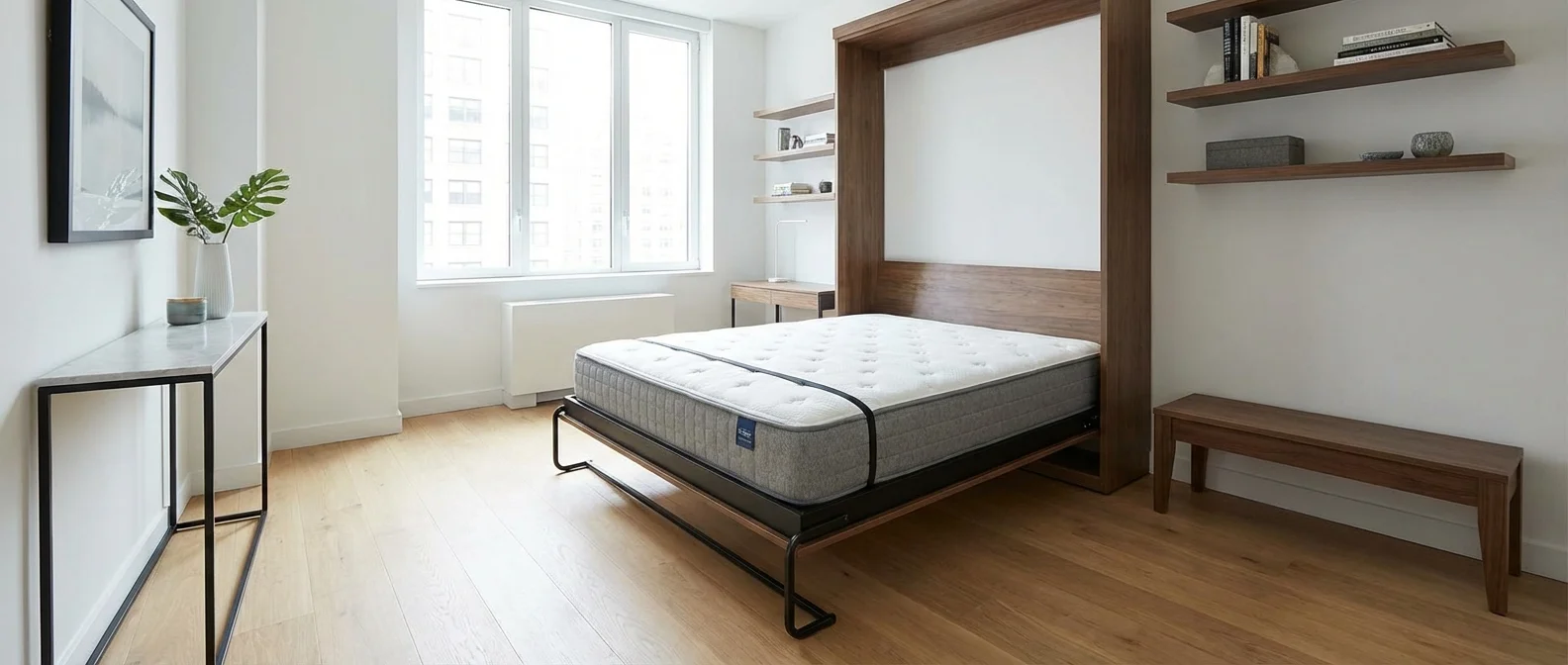
Failing to measure the projection footprint ruins more wall bed installations than any other mistake. The cabinet itself only occupies about 16 to 20 inches of floor depth, but a standard queen bed projects up to 90 inches into the room when fully opened. You need a minimum of 30 inches of walking clearance around the end and sides of the deployed bed to ensure the room remains navigable.
If clearance issues make a wall bed impossible, consider implementing high-capacity under-bed storage systems for your current furniture instead.
Look up before you install anything. Ceiling fans represent the absolute nemesis of the vertical Murphy bed. If your room features a central ceiling fan, you must calculate exactly where the top edge of the bed frame will arc as you pull it down. Relocating a hardwired ceiling fan creates expensive electrical work; it is far easier to offset the bed cabinet along the wall during the planning phase.
Do not forget to account for your baseboards. Wall beds must sit perfectly flush against the drywall to ensure the wall anchors hold securely. You have two options: either cut away a section of your baseboard so the cabinet slides directly against the drywall, or cut a notch out of the back of the bed cabinet to accommodate the molding. Removing the room’s baseboard generally yields a cleaner, more integrated aesthetic.

Pitfalls to Watch For
When implementing fold down bed options, certain structural and design errors lead to disastrous results. Avoid these common missteps to ensure your installation remains safe and functional.
If you find that the cabinet blocks your usual storage, implementing corner shelving ideas can help you reclaim lost wall space adjacent to the frame.
Properly integrating these beds is a cornerstone of studio apartment organization, where managing the footprint of your sleep area is essential for daily comfort.
- Ignoring Wall Anchors: A wall bed relies entirely on its upper wall anchors to prevent the massive cabinet from tipping forward when you pull the bed down. Securing the cabinet with drywall anchors is a recipe for catastrophic failure. You must locate the structural wall studs and secure the header board using heavy-duty lag screws. For guidance on locating studs accurately without destroying your drywall, consult resources from This Old House.
- Trapping Area Rugs: Thick, high-pile area rugs frequently jam the feet of a lowering Murphy bed. When the bed frame descends, its supporting legs must snap out and lock onto a solid surface. A plush rug prevents the legs from fully extending, placing massive leverage stress on the cabinet hinges. Ensure the footprint of the lowered bed lands on hard flooring or low-pile carpets.
- Neglecting Internal Lighting: Once you pull a wall bed down, you essentially create a dark cave at the head of the bed. Standard ceiling fixtures rarely cast light into the cabinet alcove. Wiring low-voltage LED puck lights into the top of the cabinet interior provides essential reading light and prevents the space from feeling claustrophobic.
- Forgetting About Linens: People frequently assume they can fold the bed into the wall with all the blankets and pillows perfectly arranged. Most slim-profile cabinets only offer enough clearance for a fitted sheet, a flat sheet, and a thin quilt. Bulky duvet covers and sleeping pillows must be stripped and stored elsewhere before closing the bed.

Getting Expert Help
While many freestanding cabinet beds require nothing more than basic assembly, traditional wall bed installations pose structural challenges. You should hire a professional carpenter, contractor, or specialized installer under the following specific scenarios:
Finally, remember that maximizing closet space is a vital secondary step to ensure your multifunctional room remains clutter-free after the bed is installed.
You Have Metal Studs: Modern condominiums and high-rise apartments frequently use metal wall studs rather than traditional wood framing. Standard lag screws cannot grip thin-gauge metal studs effectively. A professional must install specialized toggle anchors or reinforce the wall to bear the immense rotational force of the heavy bed cabinet.
Your Floors Are Severely Uneven: Older homes settle over time. If your floors slope dramatically, a large cabinet will sit twisted against the wall. This torsion binds the lifting mechanism and prevents the doors from closing flush. A professional carpenter can build a custom, level plinth base for the cabinet to rest upon, ensuring the hardware operates flawlessly.
You Want Custom Flanking Cabinetry: If you desire a seamless, built-in aesthetic with matching wardrobes, floating shelves, or an integrated desk system, hire a custom cabinetmaker. They can match the millwork to your existing home architecture, elevating the installation from a piece of bulky furniture into a permanent architectural asset. You can browse extensive galleries of custom built-in configurations on Houzz to communicate your vision to a local contractor.
Frequently Asked Questions About Murphy Beds
Are Murphy beds comfortable for daily use?
Yes, they are exceptionally comfortable because they utilize standard mattresses rather than the thin, folding foam pads found in sofa beds or futons. As long as you select a high-quality innerspring or hybrid mattress that fits within the manufacturer’s depth specifications, sleeping on a wall bed feels identical to sleeping on a standard platform bed. They provide excellent support for long-term guests or daily sleeping.
Do Murphy beds damage your walls?
When installed correctly, wall beds cause minimal structural damage. The installation requires driving several heavy lag bolts through the cabinet header directly into your wooden wall studs. The weight rests on the floor, while the wall anchors simply prevent tipping. If you ever move and take the bed with you, you will simply need to apply spackle to a few bolt holes—a process nearly identical to patching drywall after removing a heavy television mount.
Can you leave sheets and blankets on a Murphy bed when folded?
You can leave standard fitted sheets, flat sheets, and a thin quilt strapped to the mattress when closing the bed. Most systems include heavy elastic nylon straps that clip over the corners of the bed to hold the linens in place while vertical. However, thick winter duvets, puffy comforters, and standard sleeping pillows generally require too much clearance. Trying to crush them into the cabinet will strain the hinges and bow the front panels.
How much does a good Murphy bed cost?
Prices vary wildly based on materials and complexity. A reliable, basic wall bed mechanism paired with a flat-pack melamine cabinet generally starts around $1,000 to $1,500. Mid-range options with basic side shelving run between $2,000 and $3,000. Fully custom, solid wood installations featuring integrated lighting, side wardrobes, and desk attachments can easily reach $4,000 to $6,000. You must also factor in the cost of a new mattress, which is rarely included with the frame.
Maximizing your living space requires thoughtful planning and an investment in versatile, hardworking furniture. By carefully selecting the right mechanism, measuring your clearances, and prioritizing a supportive mattress, you can seamlessly blend a high-quality sleep setup into your everyday living areas. Choose a design that complements your room’s primary function, and you will effectively gain an entire room’s worth of utility without laying a single brick.
The tips in this article are meant as general guidance. Your specific situation—including your home’s age, layout, and local building codes—may require different approaches. When in doubt, consult a professional.
Last updated: February 2026









Leave a Reply