
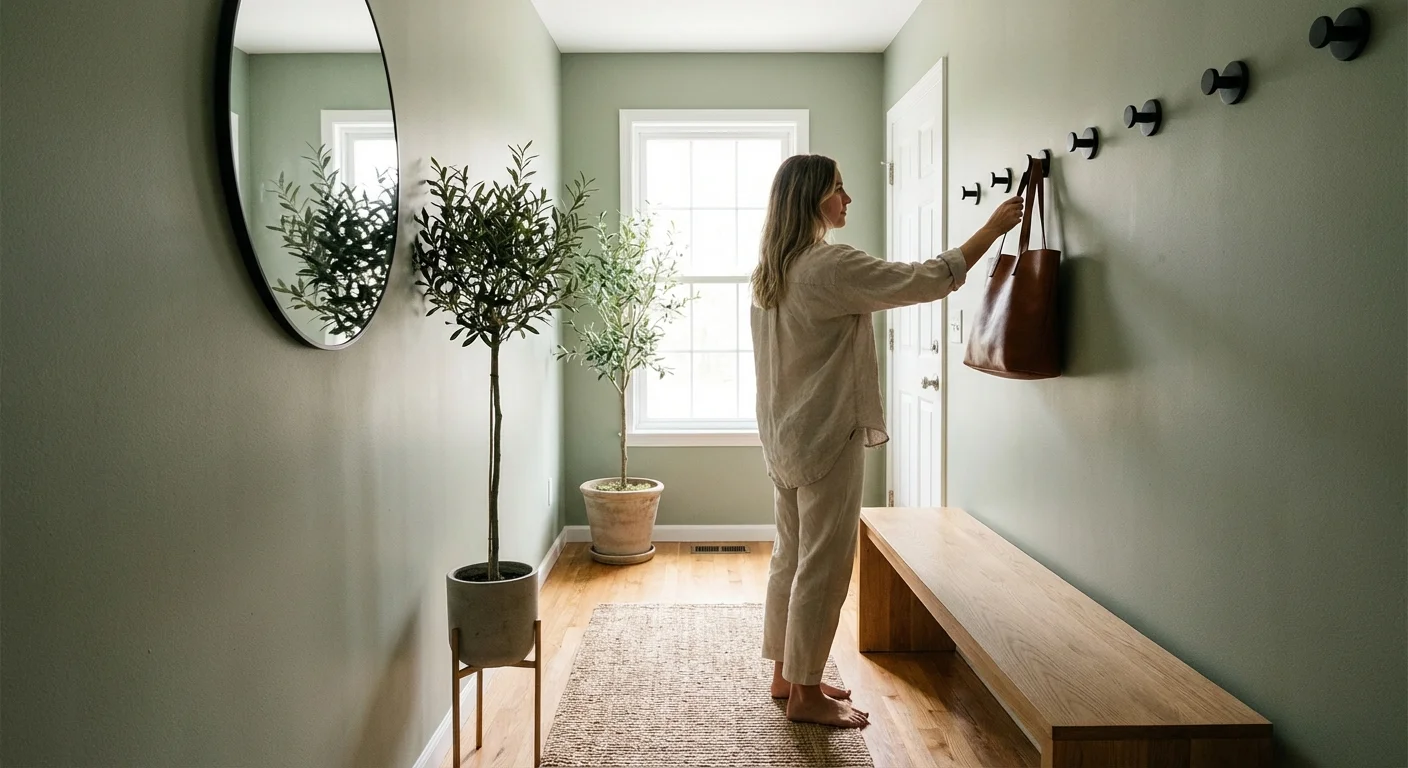
You unlock the front door, step inside, and immediately face an obstacle course. Backpacks slump against the baseboards, a rogue pair of sneakers blocks the hallway, and yesterday’s mail teeters on the edge of a tiny shelf. When you live with a compact layout, that crucial transition area between the outside world and your sanctuary often becomes a chaotic catch-all. Because the front door handles the highest volume of daily traffic, achieving functional small entryway organization requires strategy rather than just extra storage bins.
If you are short on time, you can organize your entryway in under an hour by focusing on these high-impact zones first.
Your foyer sets the tone for your entire home. Stepping into a calm, orderly space instantly lowers your stress levels after a long day; stepping into a pile of winter coats raises them. The good news is that you do not need a grand, sprawling mudroom to create an efficient drop zone. By utilizing vertical space, choosing dual-purpose furniture, and establishing strict boundaries for what belongs near the front door, you can transform even a three-foot-wide hallway into a highly functional command center.
The Essentials
- Exploit Vertical Real Estate: Move storage off the floor and onto the walls using staggered hooks, floating shelves, and tall, shallow cabinets.
- Reduce Friction: Design systems that require zero extra effort. If putting away a coat requires opening a closet, grabbing a hanger, and fastening buttons, the coat will end up draped over a chair.
- Implement the “One In, One Out” Rule: A tiny entryway simply cannot hold your entire shoe collection. Store off-season gear elsewhere and rotate items as the weather changes.
- Designate Specific Drop Zones: Assign a precise, permanent home for your keys, wallet, sunglasses, and incoming mail to prevent flat-surface clutter.
Understanding the Psychology of the Drop Zone
Before buying a single basket or drilling a single hole, you must observe your household’s natural habits. Organization fails when we try to force aspirational routines onto our daily reality. If you naturally drop your keys the second the door clicks shut, placing a key hook across the room will never work. Your keys will end up on the nearest flat surface—usually a dining table or kitchen counter.
Even without a full mudroom, you can adapt professional mudroom storage solutions to fit a compact foyer by focusing on high-impact zones.
Effective entryway storage solutions rely on the concept of friction. You want to create low-friction storage. A wall hook is a low-friction solution because hanging a jacket requires one swift motion. A heavy storage chest with a heavy lid is a high-friction solution; nobody wants to lift a heavy lid just to put away a scarf. Watch how you and your family behave when walking through the door for three consecutive days. Note exactly where items naturally land. Your goal is to place structured storage containers precisely where those piles organically form.
Vertical Storage: The Small Entryway’s Best Friend
When floor space runs tight, your walls offer the greatest untapped potential. Narrow hallway organization demands that you look up. By drawing the eye upward, you not only multiply your storage capacity but also create the illusion of taller ceilings and a grander space.
Incorporating versatile wall-mounted storage ideas is the most effective way to keep your floors clear in a high-traffic zone.
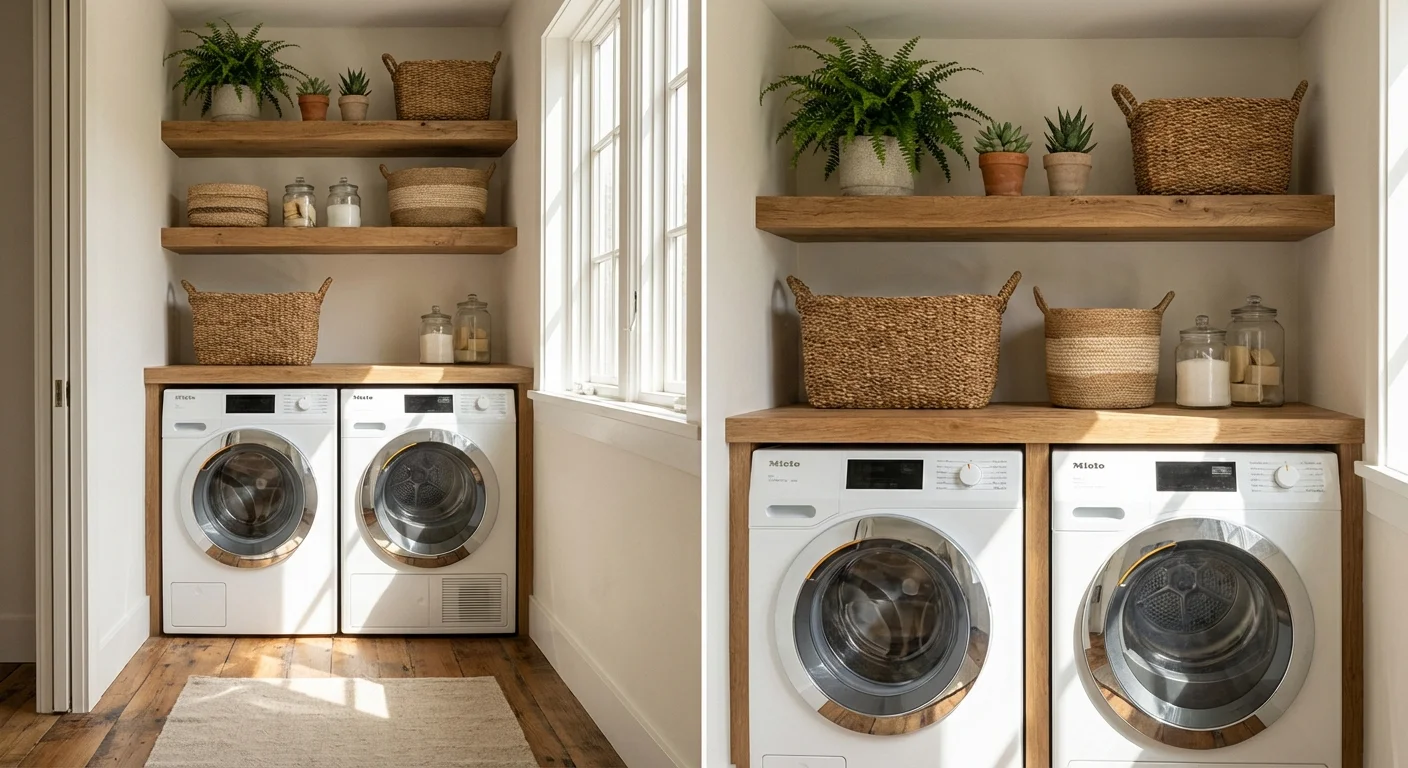
This strategy of maximizing wall height is also effective for tiny laundry room organization where floor area is at a premium.
The Power of Wall Hooks
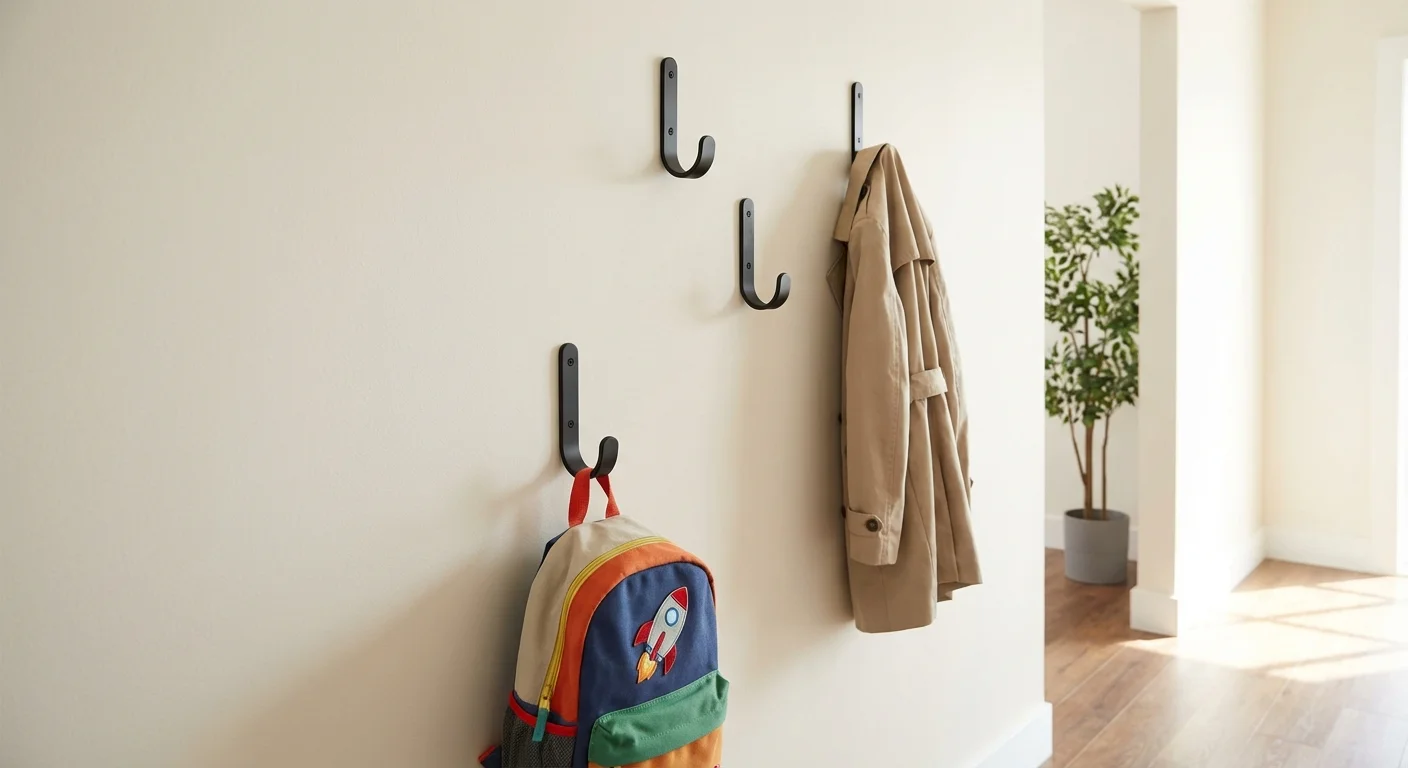
Ditch the bulky freestanding coat rack. They possess a wide, awkward footprint and notoriously tip over when unbalanced. Instead, install rows of heavy-duty wall hooks. To maximize capacity without overcrowding the wall, install a staggered double row of hooks. Place the top row at approximately 60 inches from the floor for long coats and adult jackets. Place a second row at roughly 36 to 40 inches from the floor. This lower row serves multiple purposes; it handles shorter items like umbrellas, scarves, and canvas tote bags, while also remaining perfectly accessible for young children to hang their own backpacks.
Floating Shelves and Cubbies
If you lack a front hall closet, mount a floating shelf featuring integrated cubbies just above your coat hooks. This utilizes the dead space near the ceiling for items you need but rarely touch during the daily rush. Stash winter hats and heavy gloves in fabric bins on this upper shelf. For inspiration on designing aesthetic, space-saving shelving profiles, Apartment Therapy frequently showcases ingenious wall-mounted solutions tailored specifically for apartment dwellers and narrow corridors.
Taming the Shoe Pile
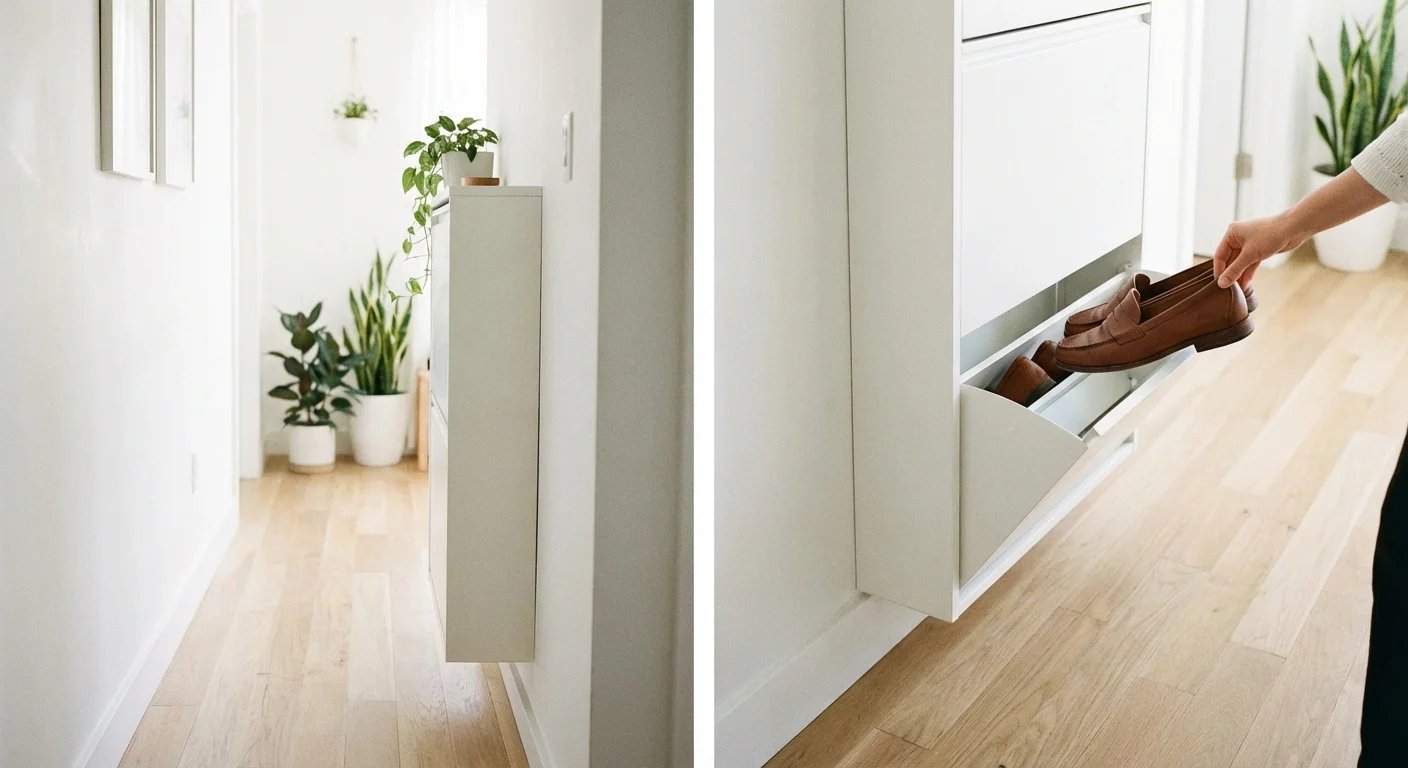
Shoes remain the absolute worst offenders in a tiny foyer. They quickly multiply, track in dirt, and pose an immediate tripping hazard. Leaving shoes scattered across the floor visually shrinks an already cramped space, making narrow hallway organization feel impossible.
If your shoe collection exceeds the limits of your foyer, consider maximizing closet space in a nearby bedroom to store off-season pairs.
To combat this, you need a dedicated containment strategy. Slim, tilt-out shoe cabinets are revolutionary for tight spaces. Unlike traditional shelves that require at least 12 to 14 inches of depth to hold a shoe flat, a tilt-out cabinet stores shoes vertically against the door face. This clever engineering reduces the required depth to a mere 6 to 8 inches, allowing the cabinet to sit flush against the wall even in the skinniest hallways. Companies like IKEA have popularized these ultra-slim profiles; exploring IKEA Ideas can show you how to hack and customize these basic cabinets to look like expensive built-in furniture.
Shoe Storage Solutions for Tiny Foyers
| Storage Type | Average Depth | Best Used For | Pros | Cons |
|---|---|---|---|---|
| Tilt-Out Shoe Cabinet | 6″ – 10″ | Narrow hallways, daily wear sneakers and flats | Hides clutter completely, provides a drop-zone surface on top, ultra-slim profile. | Cannot accommodate tall boots or highly structured, bulky winter footwear. |
| Open Tiered Shoe Rack | 10″ – 14″ | Closet floors or slightly wider entryways, wet or muddy shoes | Allows damp shoes to air dry rapidly, very budget-friendly. | Leaves visual clutter exposed, requires more floor space. |
| Storage Bench | 15″ – 18″ | Square or recessed foyers where sitting is preferred | Provides a place to sit while lacing up shoes, hides large boots easily. | Takes up the most floor space, high friction (requires opening a lid or doors). |
Sneaky Storage Furniture for Compact Entries
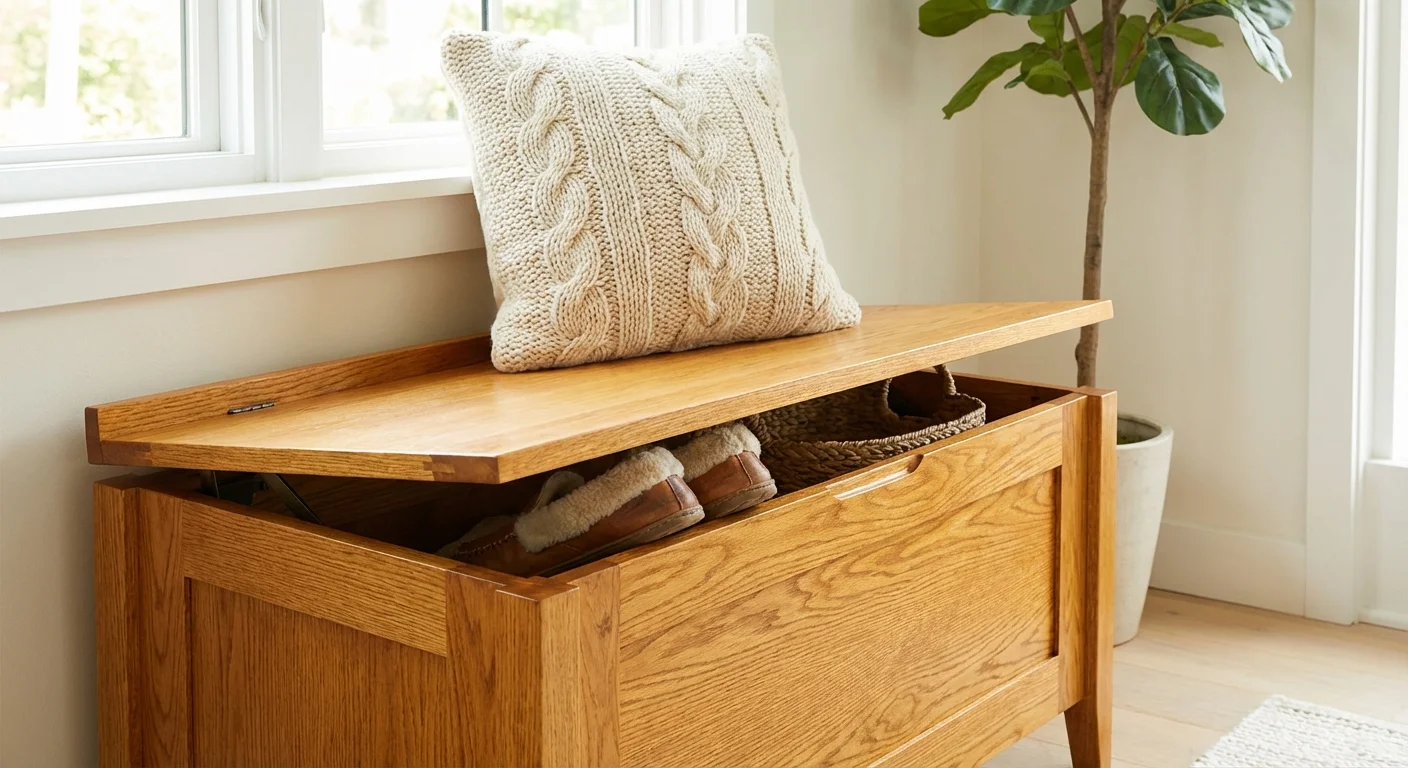
When selecting furniture for a tight entry, every single piece must serve at least two functions. If a console table only looks pretty but offers zero storage, it does not belong in your small entryway.
Seek out narrow console tables featuring built-in drawers. A drawer completely conceals visual noise like dog leashes, spare keys, flashlights, and lip balm. If you have the floor space for a seating element, skip the delicate accent chair and opt for a sturdy storage ottoman or a bench with cubbies underneath. When choosing baskets to slide beneath a bench, select materials that hide the contents entirely, such as woven rattan, structured canvas, or opaque metal. Clear plastic bins will only showcase the chaotic jumble of shoes inside, defeating the purpose of tidy compact entry decor.
“The entryway is the handshake of the home. It needs to be welcoming, but it also has to perform like a well-oiled machine.”
— Vern Yip, Interior Designer
Organizing Small Items: Keys, Mail, and Accessories
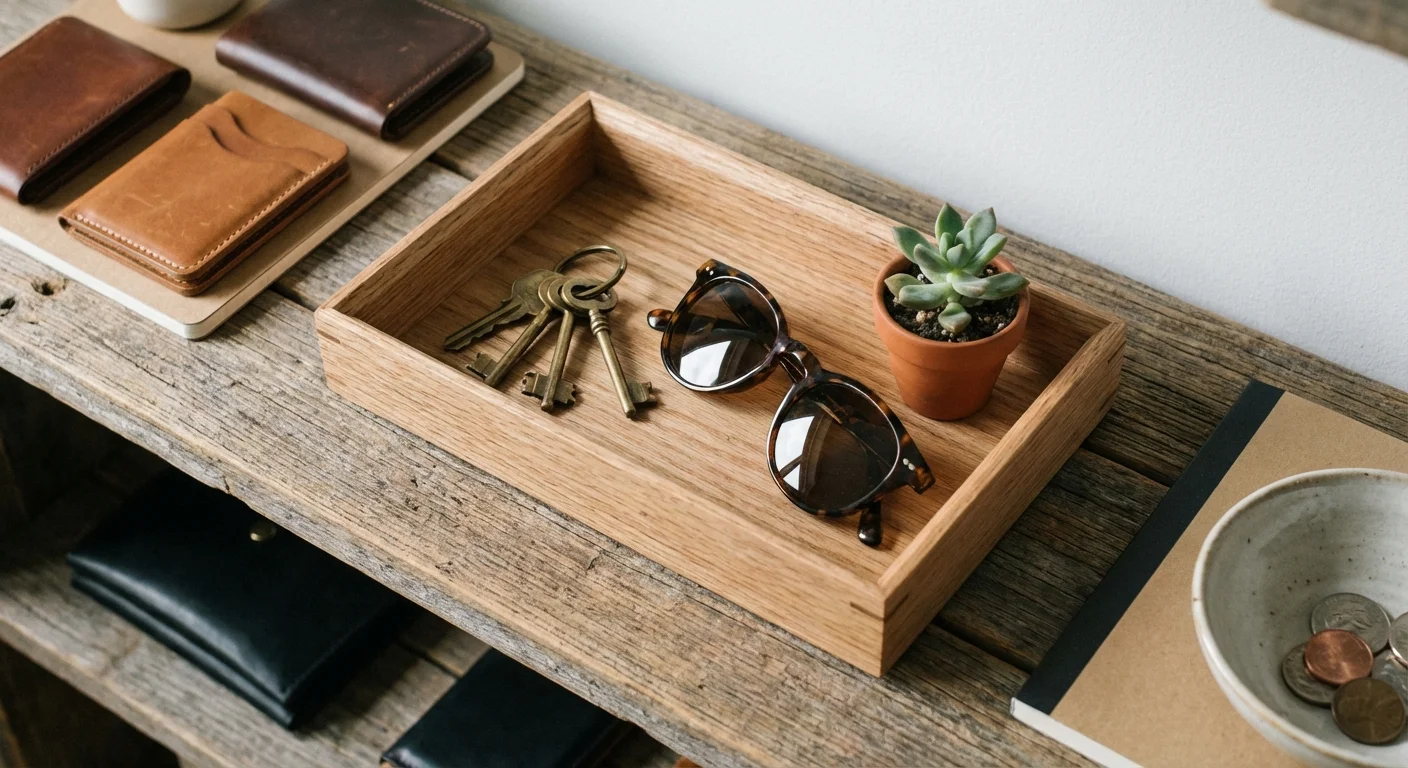
Micro-clutter destroys the serenity of a small space faster than macro-clutter. A single pair of boots might look rugged, but a scattered pile of envelopes, receipts, loose change, and keychains instantly makes a space feel neglected. You must build a dedicated “command center” for the minutiae of daily life.
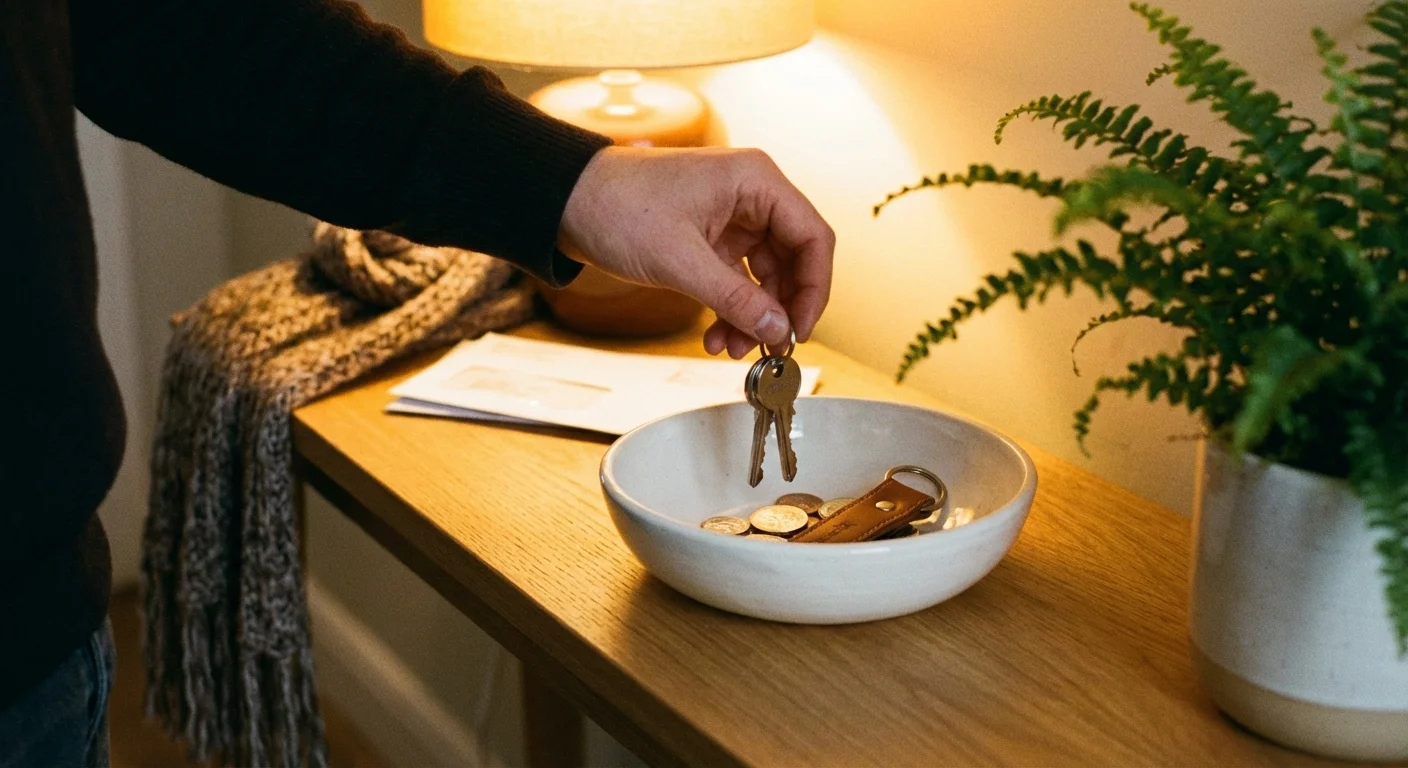
The Drop Bowl: Place a shallow ceramic bowl or a structured leather valet tray on your console table. This serves as the undisputed home for keys and wallets. By physically containing these small items within the boundaries of a tray, they appear intentional rather than messy.
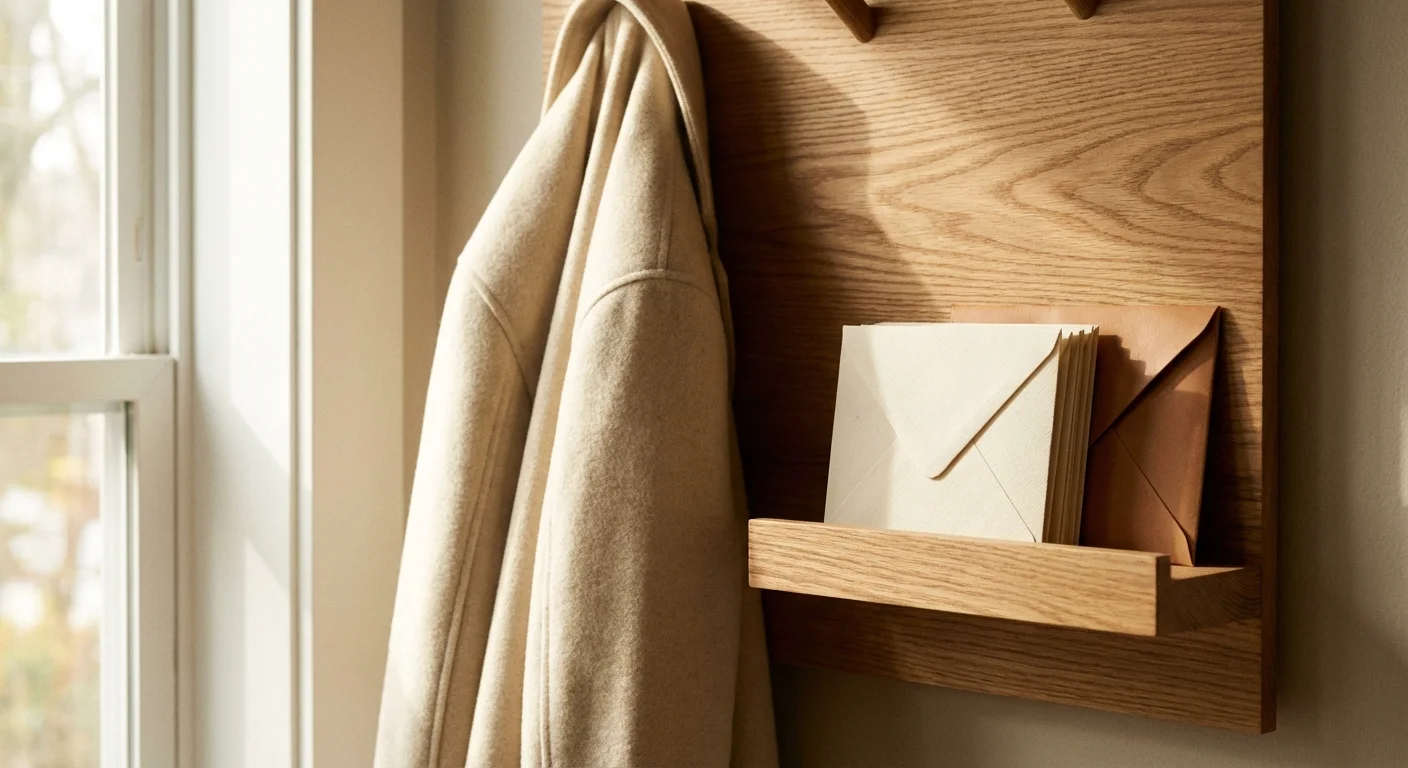
The Mail Sorter: Paper clutter demands an immediate sorting routine. Install a wall-mounted mail organizer with distinct slots for incoming action items (bills to pay, invitations) and outgoing mail. Mount a small recycling basket directly below or nearby. When you walk in with the mail, immediately drop the junk mail into the recycling bin. Only the important documents earn a spot in the wall sorter. For high-quality, specialized organizing systems, The Container Store offers excellent modular wall components designed specifically for managing paperwork in tight drop zones.
Creating Visual Illusions to Maximize Space
Organization tackles the physical footprint of your belongings, but smart design dictates how large the space actually feels. Compact entry decor should employ visual tricks to expand the perceived square footage.
Utilizing mirrors and light-reflective surfaces mirrors the same design principles used in small living room furniture layouts to open up cramped quarters.
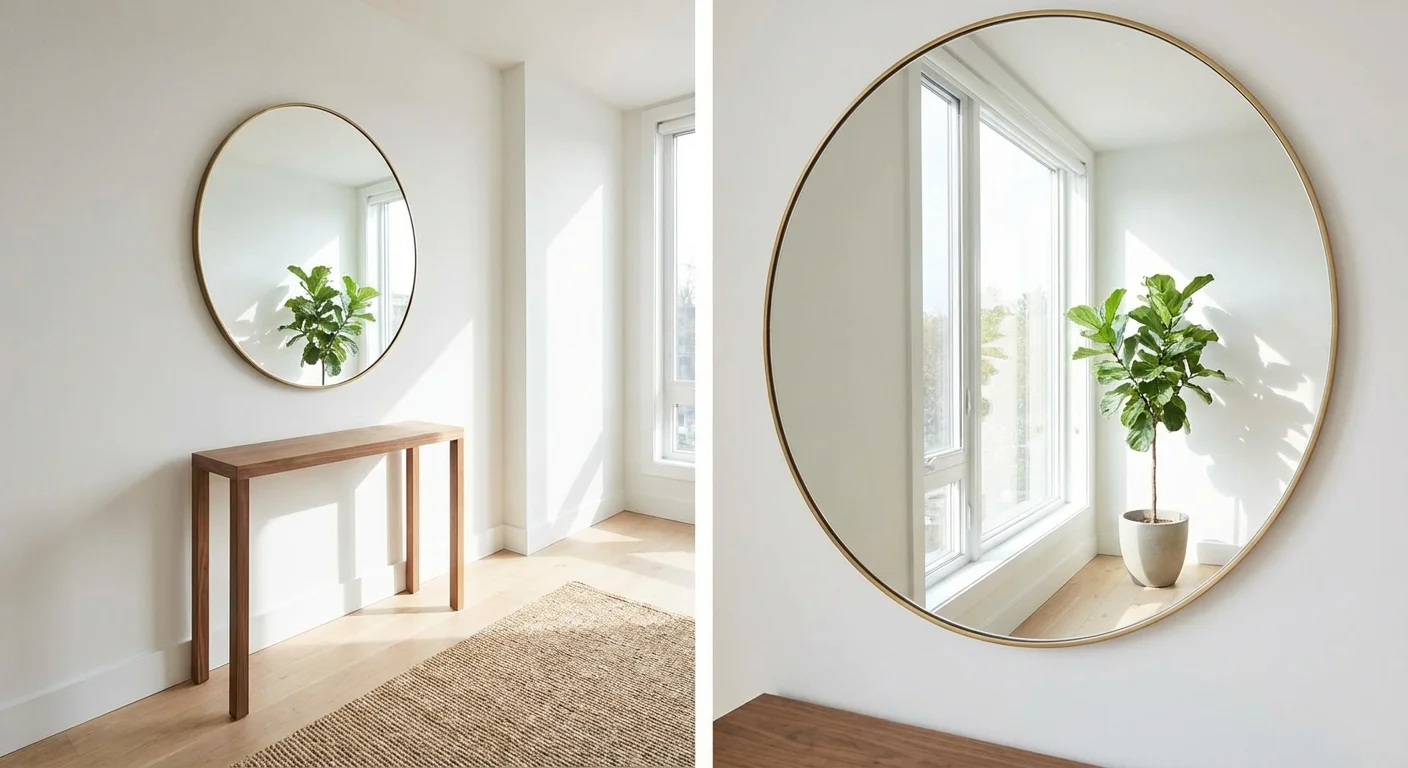
Mirrors act as the ultimate spatial expanders. Hanging a large, beautifully framed mirror across from a light source bounces illumination around the tight corridor, making a cramped foyer feel twice its actual size. Furthermore, a mirror provides genuine utility, allowing you to quickly check your reflection before rushing out the door.
Lighting significantly impacts the functionality of your drop zone. Many builder-grade entryways suffer from a single, dim flush-mount ceiling light. Upgrade your overhead fixture to a brighter, semi-flush mount that casts light onto the walls rather than straight down. If your console table allows, add a small, slim accent lamp. A warm pool of light from a table lamp makes the space feel welcoming and intentional, drawing attention away from the utility of coats and shoes.
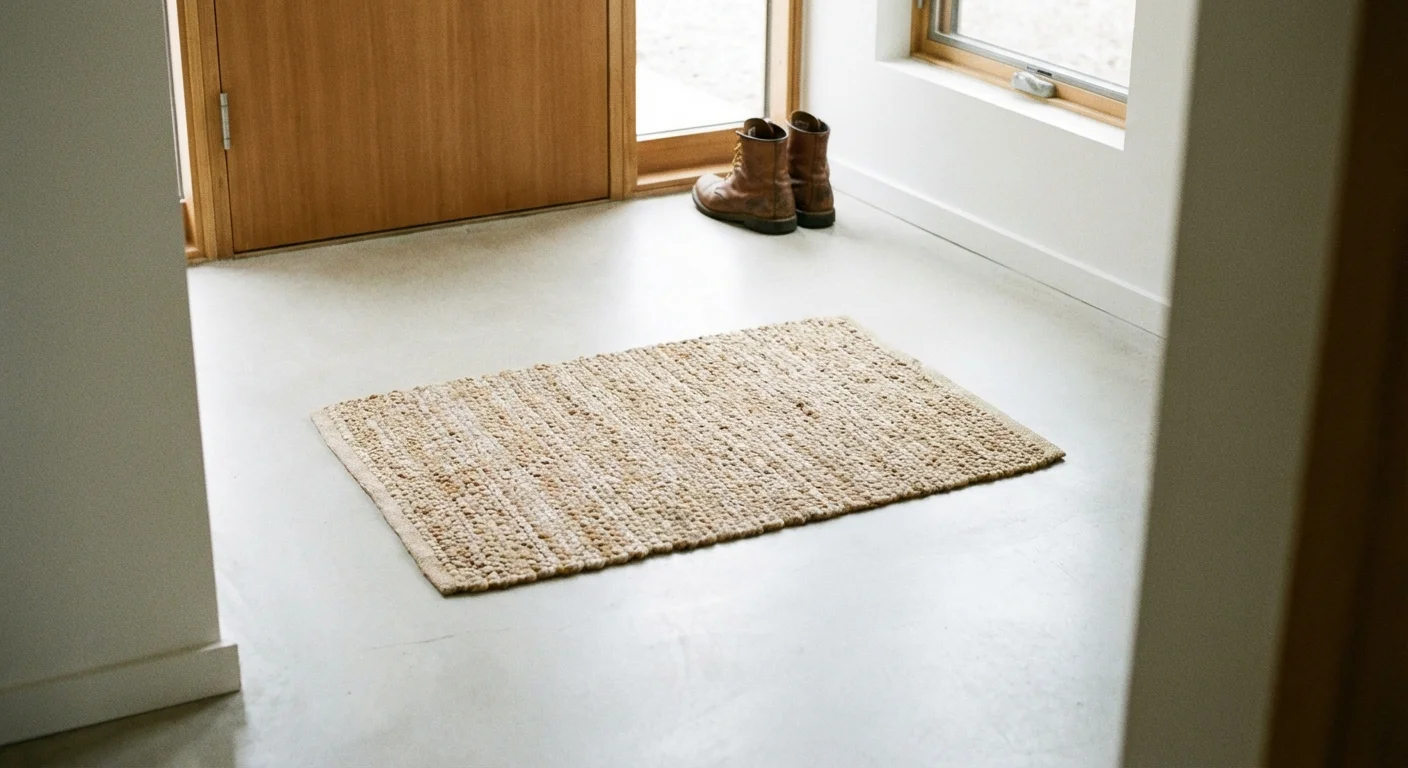
Finally, ground the space with a durable, washable runner rug. A rug featuring a subtle vertical stripe draws the eye down the length of the hallway, elongating the space. Ensure the rug possesses a low pile so the front door can easily swing open without catching the fabric.

Seasonal Rotations: Keep Only What You Need
You cannot organize your way out of excess inventory. A tight foyer simply cannot function if you force it to hold your family’s entire outerwear wardrobe year-round.
Adopt a strict seasonal rotation policy. In November, your drop zone should only contain heavy winter coats, snow boots, thick gloves, and scarves. Pack away the flip-flops, sun hats, and lightweight denim jackets into under-bed storage boxes or a secondary hall closet. In May, reverse the process. Scrub the salt off the winter boots, wash the heavy coats, and banish them from the front door until autumn returns.
Limit each family member to keeping two pairs of everyday shoes in the entryway. If you want to wear a third pair, you must carry one pair back to your bedroom closet. Establishing this boundary prevents the dreaded “shoe creep” that slowly consumes the hallway floor over the course of a busy workweek.
“The space in which we live should be for the person we are becoming now, not for the person we were in the past.”
— Marie Kondo, Organizing Expert
What Can Go Wrong: Common Entryway Mistakes
Even with the best intentions, certain organizational choices can accidentally make your small space harder to use. Watch out for these frequent pitfalls.
- Blocking the Door Swing: Homeowners often underestimate the clearance required for the front door. Measure the exact arc of your door swing. Never place a shoe rack, umbrella stand, or bench within that arc. Hitting furniture every time you open the door damages the items and creates daily frustration.
- Ignoring Wet Gear: Organizing pristine shoes looks great on paper, but reality includes rainstorms and snow drifts. Failing to plan for wet items leads to ruined hardwood floors and moldy baseboards. Always incorporate a heavy-duty, water-resistant boot tray with a raised lip to catch melting snow, and ensure you have an accessible hook placed far enough away from painted walls to let damp coats drip-dry safely. Resources like Real Simple offer great guidance on protecting your home’s surfaces from seasonal wear and tear.
- Using Over-the-Door Hooks on the Exterior Door: While over-the-door hooks provide brilliant storage on interior closet doors, hanging them on your heavy, weather-stripped front door often damages the weather seal. This compromises your home’s insulation and leads to drafts. Mount hooks directly to the adjacent walls instead.
- Over-Decorating: In a tiny space, too much decor becomes clutter. Resist the urge to cover your small console table with vases, framed photos, and decorative sculptures. Leave at least sixty percent of the table surface completely clear to accommodate the actual drop-zone activities like setting down grocery bags or organizing the mail.
Frequently Asked Questions
How do I organize an entryway when I don’t have a hall closet?
If you lack a dedicated coat closet, you must create an exposed mudroom system. Use sturdy wall hooks mounted on a piece of painted wood trim (board and batten style) to distribute the weight of heavy coats. Place a slim storage bench or a low shoe rack directly beneath the hooks to create a cohesive, visually distinct “closet” area without needing actual walls. Baskets placed on a shelf above the hooks can hold the seasonal items that would traditionally live on the top shelf of a closet.
What is the minimum clearance needed for a hallway walkway?
For comfortable daily use, you should maintain an absolute minimum clearance of 36 inches in any main thoroughfare or hallway. If your hallway measures 48 inches across, you can safely install storage pieces with a maximum depth of 12 inches. If your hallway only measures 36 inches across, you cannot use floor-standing furniture at all; you must rely entirely on wall-mounted hooks and floating shelves to keep the floor perfectly clear.
How do I hide bulky kids’ backpacks in a compact entry?
Backpacks create massive visual clutter because of their awkward shapes and dangling straps. If you cannot fit a closed cabinet in your foyer, assign a specific heavy-duty hook for each child’s backpack, mounted low enough for them to reach. Alternatively, if your entryway sits adjacent to a living room or kitchen, establish a rule that backpacks must be unpacked in the drop zone but stored in the child’s bedroom or a designated study area. The entryway is a transit zone, not long-term storage for school gear.
Establishing the Maintenance Routine
You have installed the slim shoe cabinet, mounted the staggered hooks, and placed the stylish key bowl perfectly. However, the most brilliantly designed storage system will still collapse without a maintenance routine. Tiny spaces lack the luxury of absorbing mess. A single misplaced jacket goes unnoticed in a giant mudroom; in a tight foyer, it ruins the entire aesthetic.
Commit to a nightly five-minute reset. Before heading to bed, walk to the front door. Hang up any coats that missed the hooks. Pair up stray shoes and tuck them inside the tilt-out cabinet. Empty the recycling bin if it overflowed with junk mail. By resetting the space each evening, you guarantee that your future self will walk out the door the next morning feeling calm, prepared, and entirely in control of your home.
The transition from the outside world into your private sanctuary deserves attention and respect. Treat your small entryway not as a restrictive constraint, but as an opportunity to curate exactly what you need for your daily life. Keep it deliberate, keep it functional, and watch how it transforms the rhythm of your entire household.
The tips in this article are meant as general guidance. Your specific situation—including your home’s age, layout, and local building codes—may require different approaches. When in doubt, consult a professional.
Last updated: February 2026

Leave a Reply