
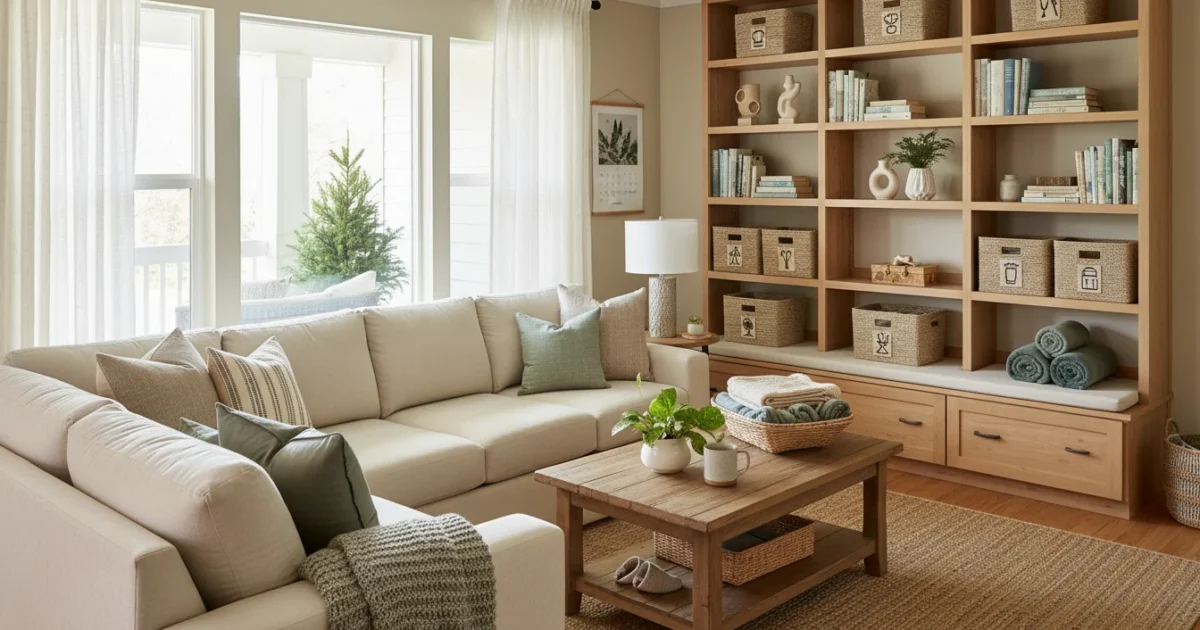
Creating a serene and healthy bedroom environment is a top priority for restful sleep and overall well-being. Many homeowners, renters, and apartment dwellers seek practical ways to enhance their living spaces, and incorporating indoor plants offers an elegant, natural solution. Beyond their aesthetic appeal, certain bedroom plants excel at improving air quality, making your sleep sanctuary even more beneficial.
As your supportive home organization coach, I will guide you through selecting the best indoor plants for your bedroom, focusing on those that purify the air, require minimal fuss, and fit seamlessly into your busy lifestyle. We will explore specific air purifying plants, understand their benefits, and discover realistic care tips to ensure your green companions thrive.
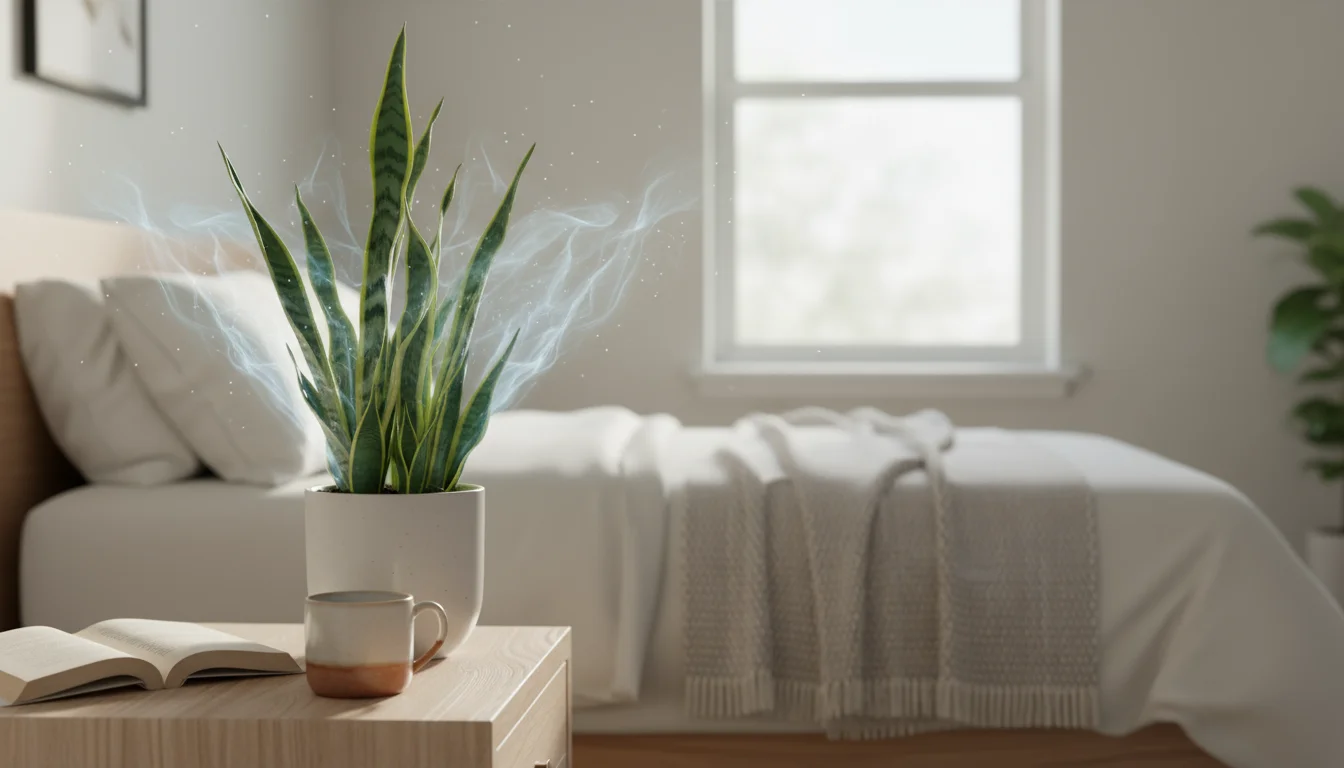
The Science Behind Plant Power: How Indoor Plants Clean Your Air
You might wonder how a simple plant sitting on your nightstand can truly improve the air you breathe. The answer lies in their natural biological processes. Plants absorb carbon dioxide and release oxygen during photosynthesis. However, many indoor plants take this a step further, actively filtering out common airborne toxins through their leaves and roots. This process is known as phytoremediation.
To further minimize chemical off-gassing, consider buying quality secondhand furniture, as older pieces have typically already released most of their volatile organic compounds.
For a deeper dive into common pollutants and how to manage them, check out our guide on creating a healthier home with air quality basics.
Research, including groundbreaking studies conducted by NASA in the 1980s, demonstrated that common indoor plants effectively remove volatile organic compounds (VOCs) such as formaldehyde, benzene, and trichloroethylene from the air. These VOCs emanate from everyday household items like furniture, carpets, cleaning products, and paints. According to the EPA’s indoor air quality guide, exposure to VOCs can contribute to various health issues, including headaches, dizziness, and respiratory irritation. By introducing air purifying plants into your bedroom, you create a natural, living filtration system.
While a single plant will not transform heavily polluted air, a strategic placement of several bedroom plants contributes significantly to a healthier environment. Think of them as tiny, tireless helpers working 24/7 to make your personal space cleaner and fresher.
Why Prioritize Bedroom Air Quality?
Your bedroom is your sanctuary, a place for rest, rejuvenation, and sleep. You spend approximately one-third of your life in bed, making the air quality in this specific room profoundly important. Poor indoor air quality can disrupt sleep, trigger allergies, exacerbate asthma, and lead to persistent fatigue. Common indoor pollutants, often trapped within our relatively sealed homes, accumulate and recirculate, especially in spaces with limited ventilation.
Along with air purification, learning how to soundproof a bedroom can create the ultimate quiet sanctuary for deep rest.
Reducing dust collectors by utilizing under-bed storage ideas can also help maintain a cleaner environment for both you and your plants.
In addition to adding plants, you can significantly reduce dust and allergens if you declutter your bedroom to improve overall airflow.
Additionally, optimizing your environment by reducing EMF exposure in your bedroom can support your overall health and sleep hygiene.
To further enhance your sleep sanctuary, you might also consider practical ways to reduce noise in your apartment for a more peaceful atmosphere.
Integrating indoor plants offers a straightforward, budget-conscious method to combat these issues. Unlike expensive air purifiers that require filters and electricity, plants work silently and continuously, providing a sustainable solution. Improved air quality in your bedroom leads to deeper, more restorative sleep, reduced morning congestion, and a general sense of well-being. You deserve a bedroom that supports your health and helps you wake up feeling refreshed and ready to tackle your day.
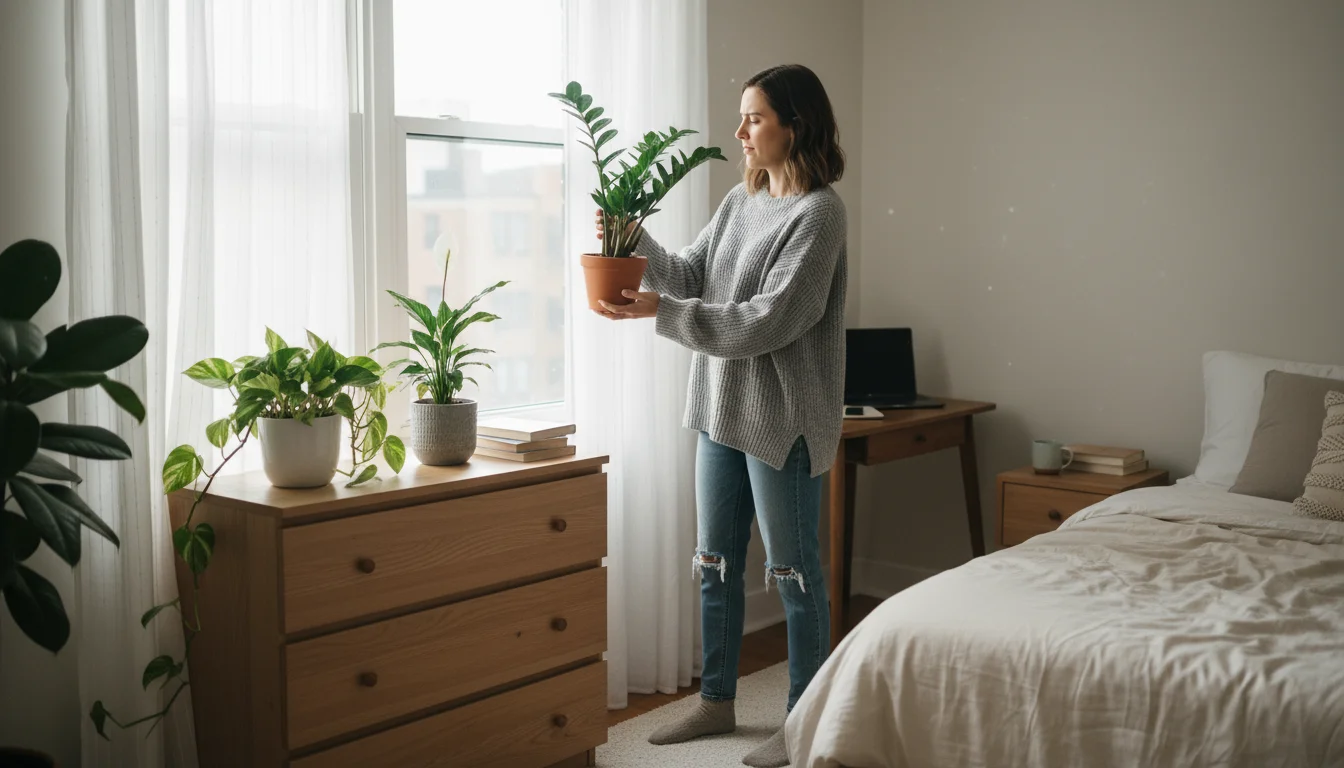
Choosing Your Perfect Bedroom Plant: What to Consider
Selecting the right indoor plants for your bedroom involves more than just aesthetics; it requires a practical assessment of your living conditions and your lifestyle. As a busy homeowner or renter, you need bedroom plants that are resilient, effective, and easy to maintain.
If your nightstand is already crowded, implementing corner shelving ideas is a great way to elevate your greenery and maximize floor space.
If your home suffers from very low humidity, pairing your plants with one of the best humidifiers for dry indoor air can help both your greenery and your respiratory health thrive.
Consider these key factors when making your choices:
- Light Conditions: Evaluate the natural light in your bedroom. Does it receive bright, indirect light for most of the day, or is it a shadier space? Many popular air purifying plants tolerate low light, making them ideal for bedrooms.
- Maintenance Level: Be honest about your commitment to plant care. If you have a busy schedule, opt for low-maintenance varieties that forgive occasional neglect. Look for plants that do not require daily watering or specialized soil.
- Size and Space: Think about the available space. A sprawling plant might overwhelm a small nightstand, while a tall, slender plant could fill an empty corner beautifully. Consider hanging plants for apartment dwellers or those with limited floor space.
- Toxicity (Pets and Children): If you have pets or young children, prioritize non-toxic plants to ensure their safety. Always research a plant’s toxicity before bringing it home.
- Humidity Needs: Most indoor environments have low humidity, especially with heating or air conditioning. Choose plants that tolerate drier conditions, or be prepared to mist them occasionally.
- Allergies: While plants improve air quality, some produce pollen or spores that might trigger allergies in sensitive individuals. Opt for varieties known for minimal pollen production.
By assessing these practical considerations, you empower yourself to select bedroom plants that will thrive in your specific environment, adding beauty and cleaner air without becoming another chore on your to-do list.
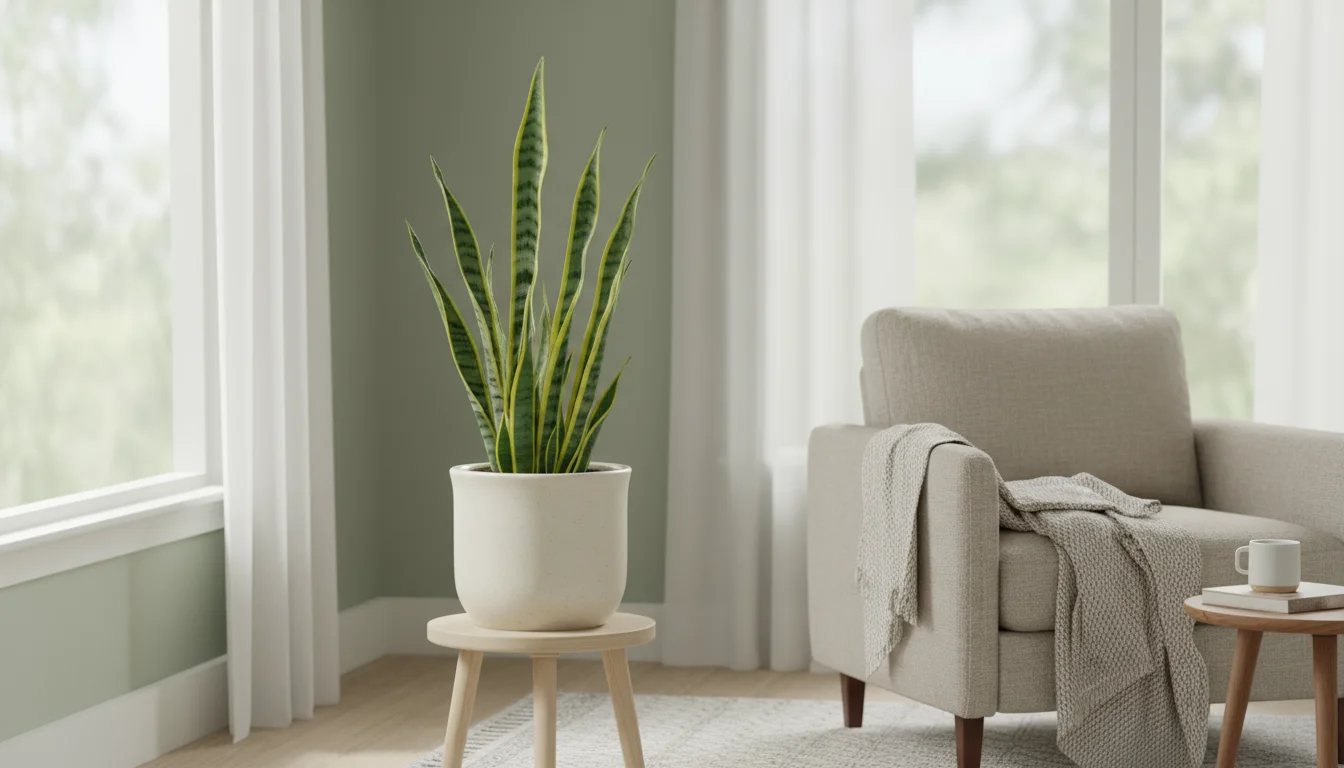
Top Picks: Air Purifying Bedroom Plants
Now, let’s dive into some of the best indoor plants for your bedroom air quality. These selections balance effective air purification with ease of care, making them perfect companions for any busy individual. We recommend a variety of plants to suit different light conditions and maintenance preferences.
Strategic plant placement is also key when creating a reading nook in your bedroom for a relaxing afternoon escape.
Remember that keeping leaves dust-free is an essential part of plant maintenance and fits perfectly into a simple spring cleaning routine.
If you are looking for even more options, explore our expanded guide on the 8 best air-purifying plants for better sleep and well-being.
-
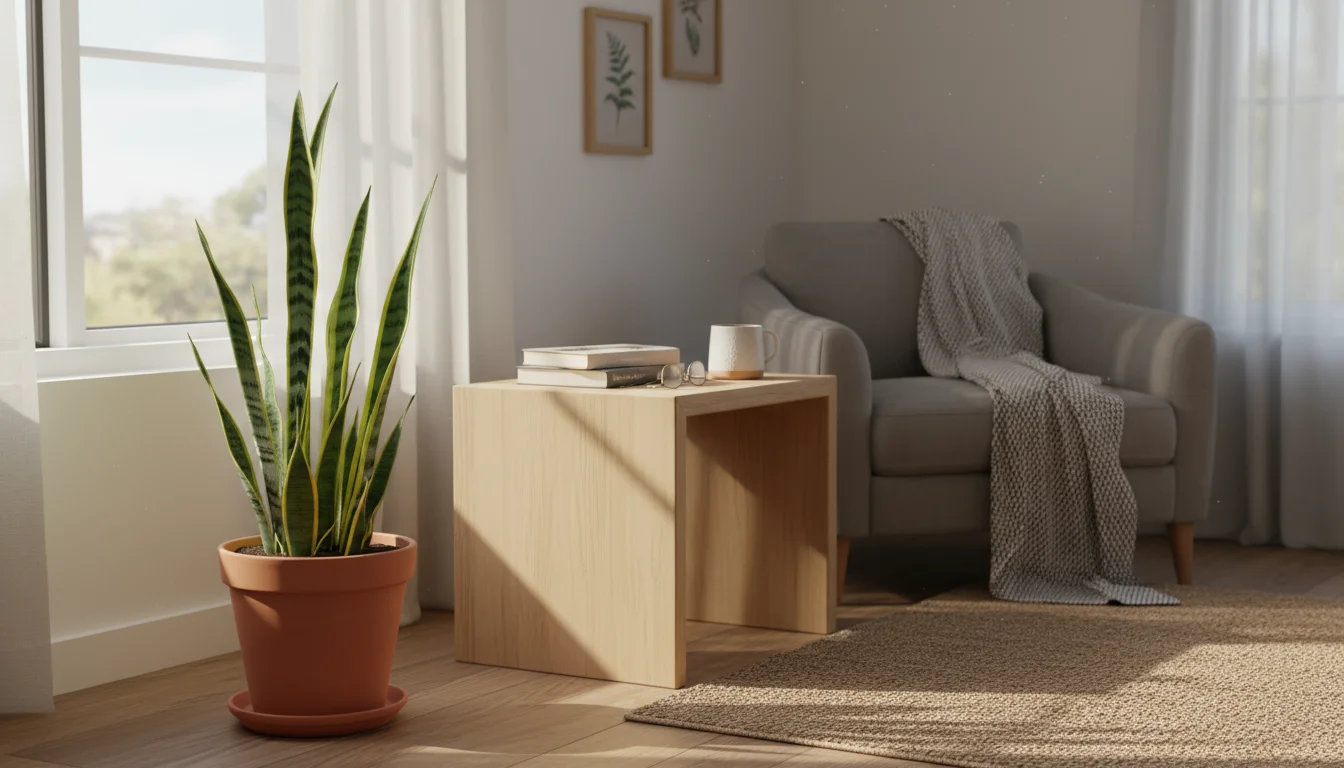
Easy care and a modern look make the snake plant a perfect bedroom companion. Snake Plant (Sansevieria trifasciata)
Why it’s a top pick: The Snake Plant, also known as Mother-in-Law’s Tongue, is an absolute powerhouse for bedrooms. It converts carbon dioxide into oxygen at night, a unique trait among many plants, which makes it an ideal bedtime companion. It effectively removes formaldehyde, benzene, trichloroethylene, and xylene from the air. Its upright, sword-like leaves add a modern, minimalist touch to any decor.
Care Level: Extremely Low. You practically have to try to kill this plant. It tolerates low light, infrequent watering, and a range of temperatures. Water only when the soil is completely dry, typically every 2-4 weeks.
Space Recommendation: Perfect for floor corners, dressers, or a tall, slender spot. Varieties range from small tabletop sizes to impressive 3-4 foot tall specimens.
-
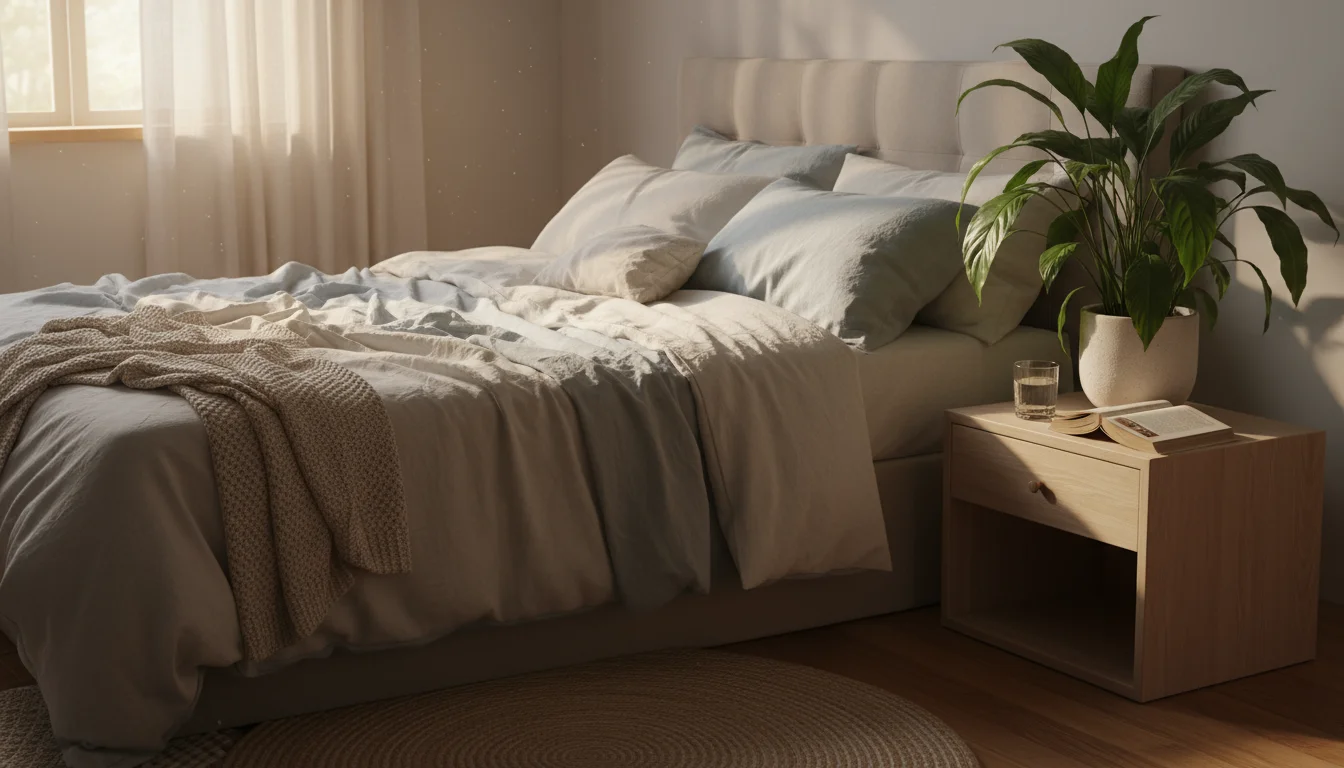
When your Peace Lily signals it’s time for a refreshing drink. Peace Lily (Spathiphyllum)
Why it’s a top pick: The Peace Lily is not only beautiful with its elegant white blooms, but it is also a champion air purifier. It targets benzene, formaldehyde, trichloroethylene, toluene, and xylene. Its lush, dark green foliage adds a touch of tropical serenity to your bedroom.
Care Level: Moderate. Peace Lilies prefer consistent moisture but do not like soggy soil. They droop dramatically when thirsty, giving you a clear signal to water. They thrive in medium to low indirect light.
Space Recommendation: Ideal for a nightstand, dresser, or as a floor plant in a larger pot. Avoid direct sunlight, which can scorch its leaves.
-
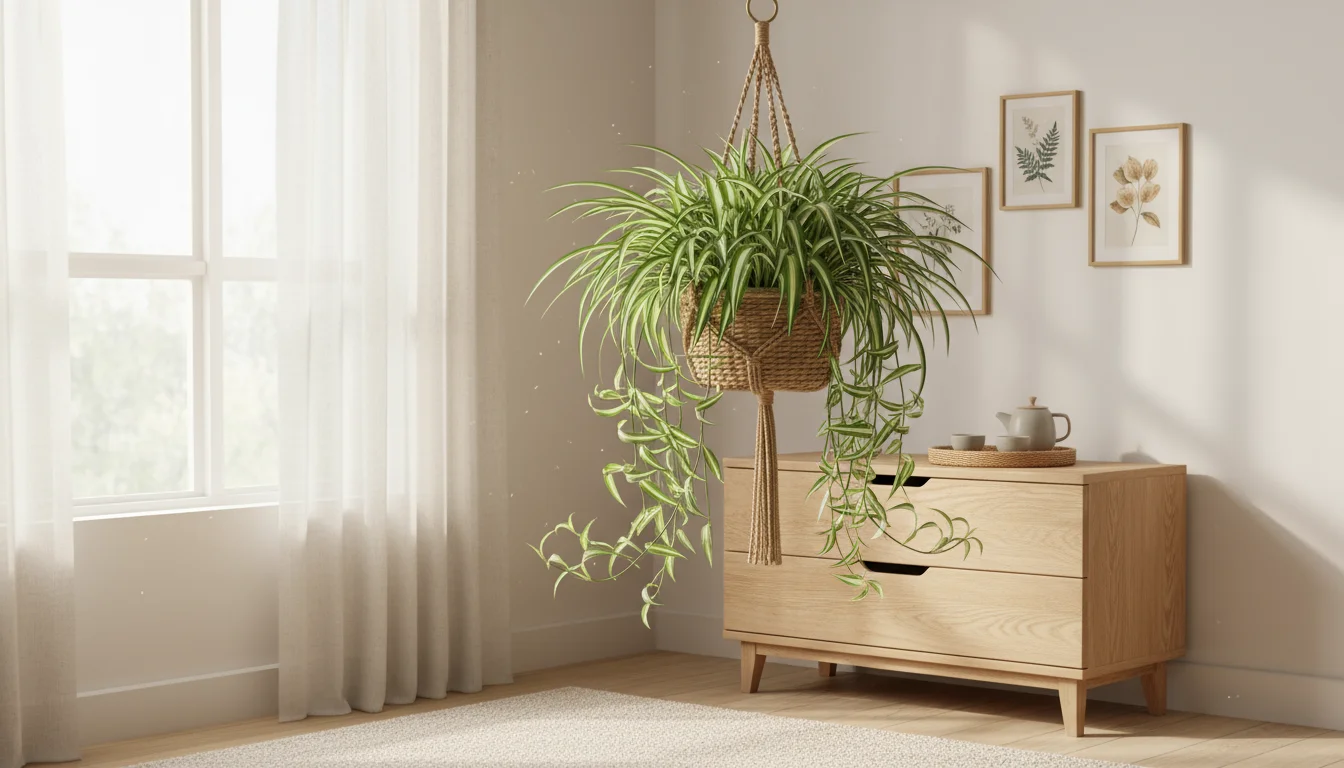
This spider plant adds a touch of green while purifying the air. Spider Plant (Chlorophytum comosum)
Why it’s a top pick: Spider Plants are incredibly easy to grow, making them perfect for beginners or those with limited time. They are excellent at removing formaldehyde and xylene. Their distinctive arching leaves and “spiderettes” (baby plants) make them visually interesting and fun to propagate.
Care Level: Low. They tolerate a wide range of conditions, preferring bright to moderate indirect light. Water when the top inch of soil feels dry. They are also non-toxic to pets and children.
Space Recommendation: Best suited for hanging baskets, high shelves, or elevated plant stands where their foliage can cascade downwards.
-
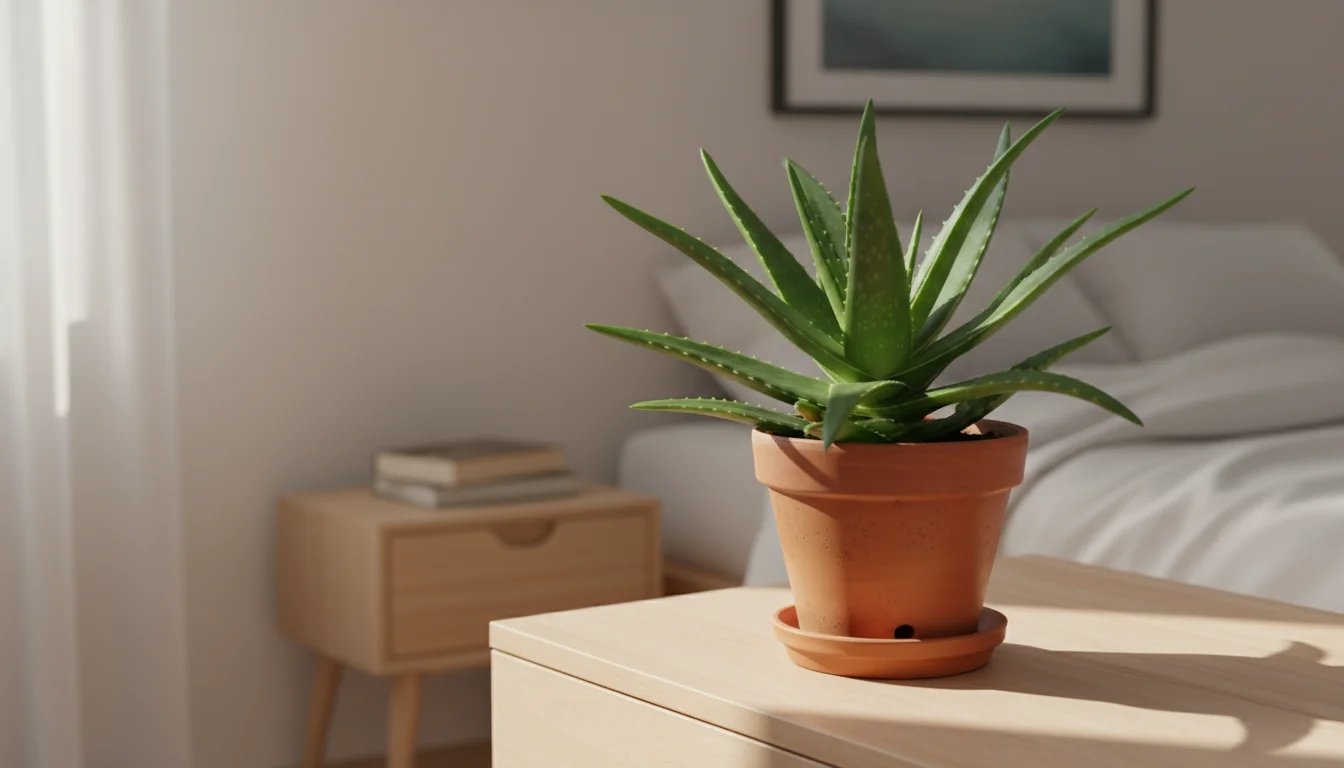
Your sleepy-time oxygen provider, soaking up the morning sun. Aloe Vera (Aloe barbadensis miller)
Why it’s a top pick: Beyond its well-known medicinal properties for skin, Aloe Vera is an effective air purifier, specifically targeting formaldehyde and benzene. It also works similarly to the Snake Plant, releasing oxygen at night, which benefits your bedroom air quality while you sleep.
Care Level: Low. As a succulent, Aloe Vera thrives on neglect. It needs bright, direct light and infrequent watering (allow the soil to dry out completely between waterings). Overwatering is its biggest enemy.
Space Recommendation: Perfect for a sunny windowsill, a bright dresser, or any spot in your bedroom that receives ample sunlight.
-
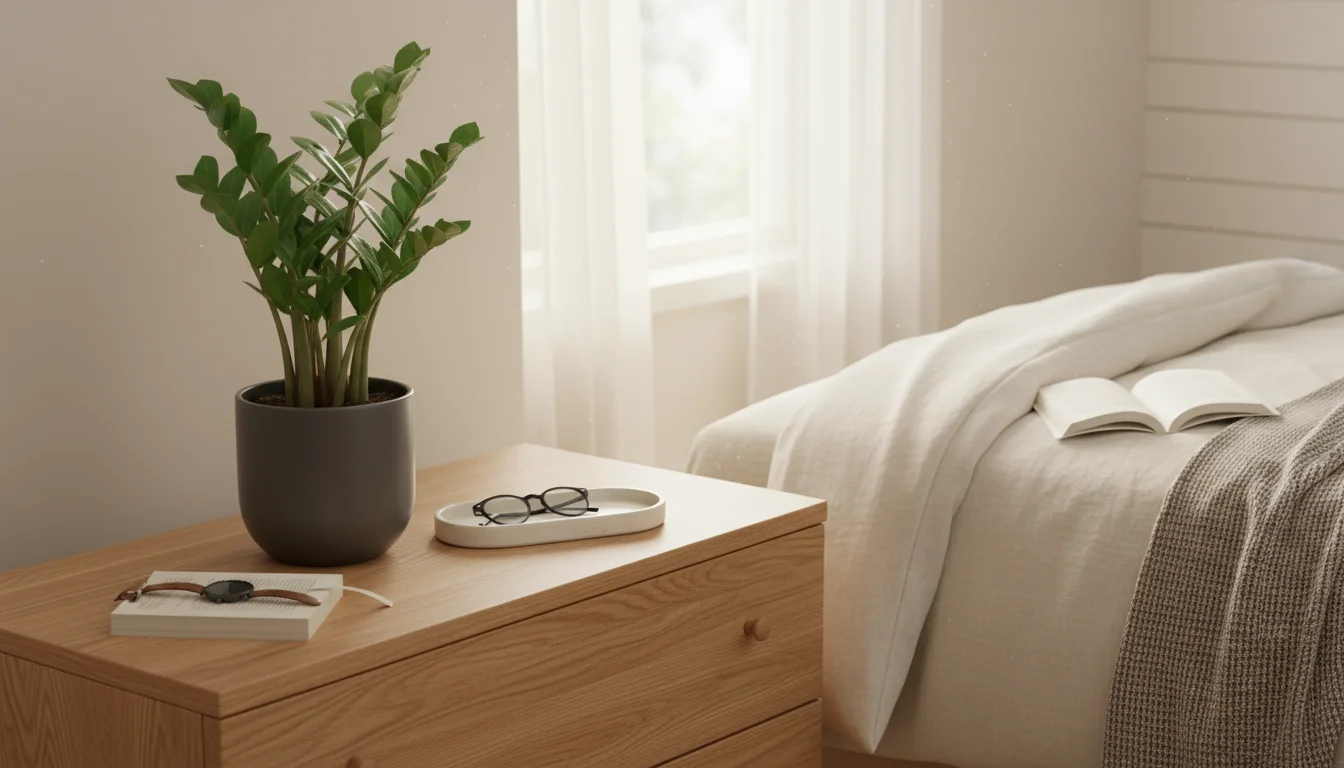
A low-maintenance ZZ plant perfect for any quiet corner. ZZ Plant (Zamioculcas zamiifolia)
Why it’s a top pick: For bedrooms with very low light or for individuals who frequently forget to water, the ZZ Plant is a lifesaver. It is incredibly drought-tolerant and handles extremely low light conditions with grace. While not as heavily studied for air purification as some others, it is known to remove xylene, toluene, and benzene from the air.
Care Level: Extremely Low. Water only when the soil is completely dry, which could be every 3-6 weeks depending on conditions. It tolerates low light but will grow faster in brighter, indirect light.
Space Recommendation: Excellent for dark corners, shelves, or any area in your bedroom that lacks strong natural light.
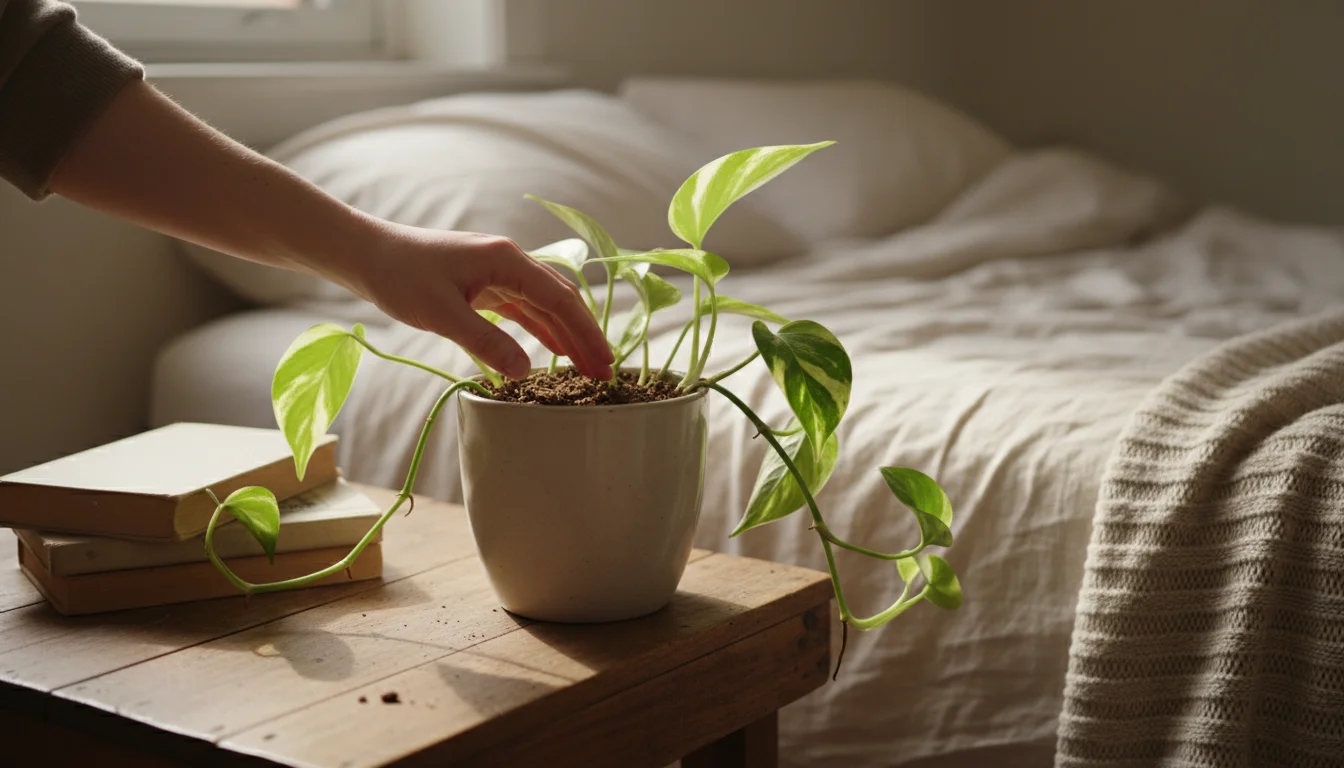
Caring for Your Air Purifiers: Essential Maintenance Tips
Even the most low-maintenance indoor plants require some basic care to continue purifying your air and looking their best. These simple, realistic steps ensure your bedroom plants thrive without adding unnecessary stress to your schedule.

- Watering Wisely: Overwatering is the most common cause of houseplant demise. Always check the soil moisture before watering. Stick your finger an inch or two into the soil; if it feels dry, it is time to water. For plants like Snake Plants and ZZ Plants, wait until the soil is completely dry. Use a pot with drainage holes to prevent root rot.
- Light Placement: Understand your plant’s light needs. Rotate your plants occasionally to ensure all sides receive adequate light. Move plants closer to windows in winter and further away in summer if light intensity changes significantly.
- Dusting Leaves: Dust accumulates on plant leaves, just like on your furniture. This layer of dust can hinder the plant’s ability to photosynthesize and purify the air. Gently wipe leaves with a damp cloth every few weeks to keep them clean and efficient.
- Fertilizing (Sparingly): Most indoor plants do not require frequent fertilization, especially those in a bedroom where rapid growth might not be desired. Fertilize sparingly, if at all, during the growing season (spring and summer) and avoid fertilizing in winter. Follow product instructions carefully.
- Repotting When Necessary: Plants generally need repotting every 1-2 years, or when they become root-bound (roots are circling the drainage holes). Choose a pot only one size larger than the current one to avoid excess soil moisture.
Remember, consistency trumps complexity. A simple, regular routine for your bedroom plants ensures they continue to enhance your home’s comfort and air quality without demanding too much of your precious time.
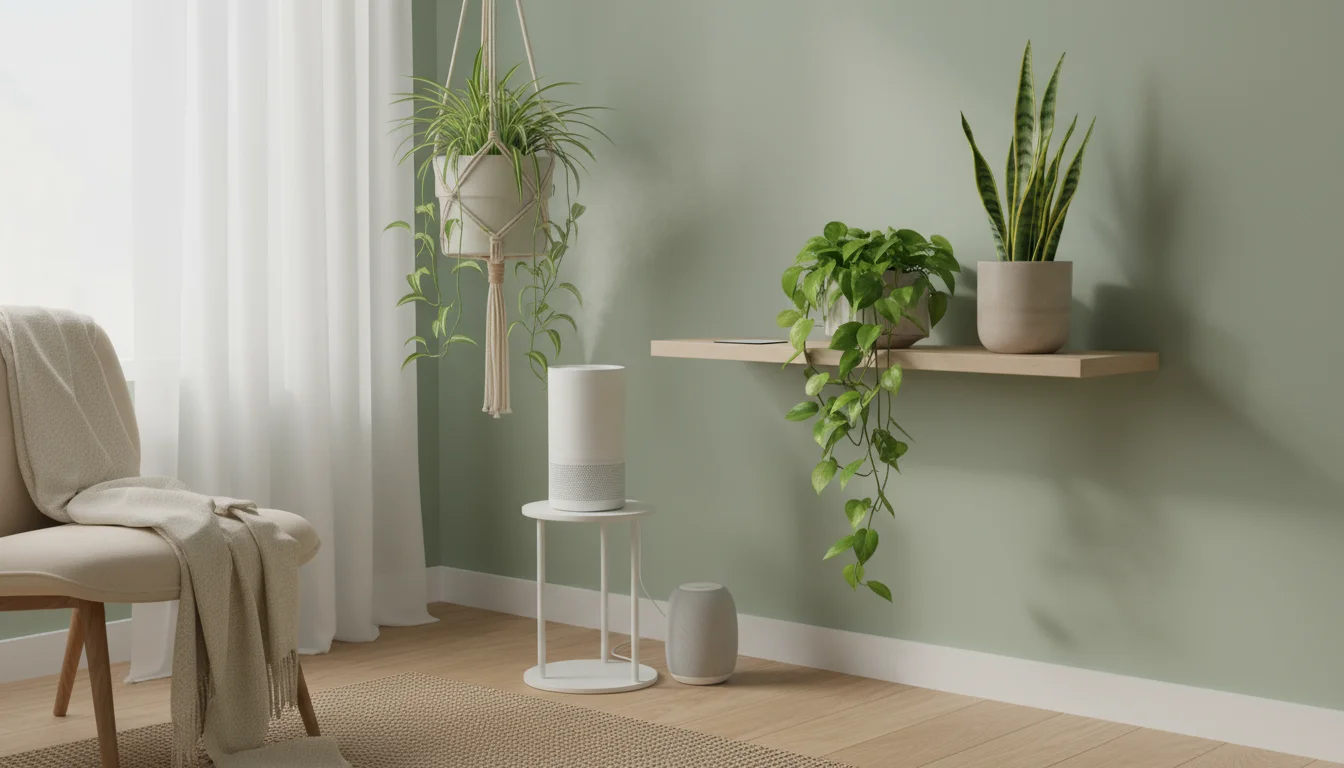
Integrating Plants into Your Bedroom Decor
Beyond their air-purifying benefits, indoor plants are fantastic for enhancing your bedroom’s aesthetic and creating a calming atmosphere. Integrating them thoughtfully into your decor maximizes their impact without cluttering your space. This approach aligns perfectly with our ethos of realistic living solutions, even for small spaces and tight budgets.
Many of these plants also make excellent additions to an ergonomic home office setup, providing a fresh environment for work and rest alike.
- Consider Vertical Space: If you have limited floor or surface area, look up! Hanging planters or wall-mounted shelves are excellent ways to introduce greenery. Spider Plants and Pothos, with their cascading foliage, are perfect for this.
- Create Green Zones: Designate specific “zones” or areas for your plants. A cluster of small plants on a nightstand, a tall plant in an empty corner, or a row of succulents on a windowsill creates visual interest and impact. As noted by experts at Real Simple Organizing, grouping items visually anchors them and prevents a scattered look.
- Choose Appropriate Planters: The pot plays a significant role in the overall look. Select planters that complement your bedroom’s style, whether that means minimalist ceramic, rustic terracotta, or woven baskets. Ensure they have drainage holes to prevent waterlogging.
- Balance with Other Decor: Plants should enhance, not overpower, your existing decor. Use them to add texture, color, and life. A single, striking plant can be a focal point, while smaller plants can provide subtle accents.
- Utilize Dead Space: That awkward space beside your dresser or the empty corner next to your bed can be transformed with a well-chosen plant. A tall Snake Plant or a ZZ Plant can fill these areas beautifully and effectively.
Thoughtful placement ensures your bedroom plants contribute to a harmonious, comfortable environment, making your space feel more inviting and alive.
Troubleshooting Common Plant Problems
Even with the best intentions, your indoor plants might occasionally show signs of distress. Do not worry; most common issues are easily resolved with a little observation and adjustment. Here are some quick fixes for frequent plant problems:
-
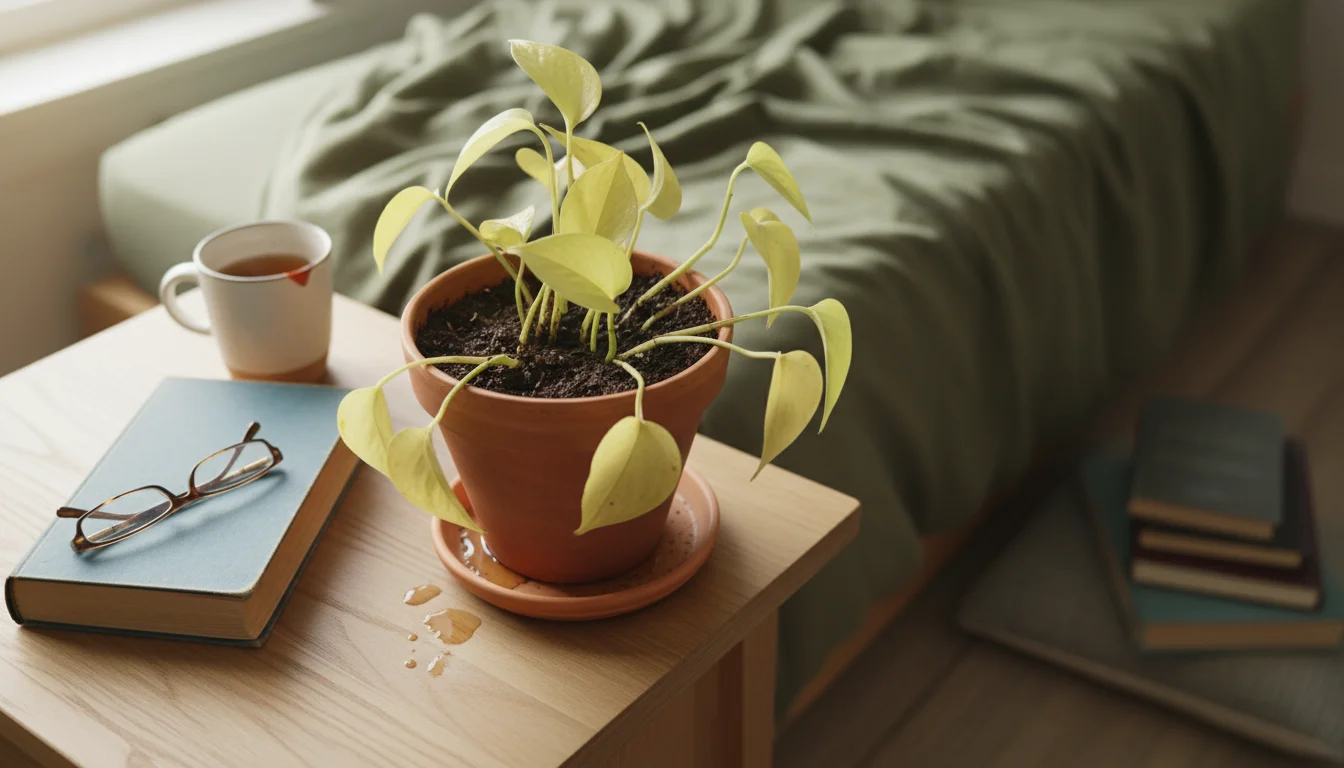
Yellowing Leaves:
- Cause: Often a sign of overwatering or poor drainage. It can also indicate underwatering or nutrient deficiency.
- Solution: Check soil moisture. If soggy, allow it to dry out more between waterings. Ensure good drainage. If consistently dry, increase watering frequency. Consider a balanced liquid fertilizer during the growing season.
-
Brown, Crispy Leaf Tips:
- Cause: Typically a sign of low humidity, underwatering, or too much direct sunlight.
- Solution: Increase humidity by misting, placing the plant on a pebble tray with water, or using a humidifier. Adjust your watering schedule. Move the plant away from direct, harsh sun.
-
Wilting or Drooping Leaves:
- Cause: Most commonly, the plant is thirsty. However, overwatering can also cause wilting if roots are rotting.
- Solution: Feel the soil. If dry, water thoroughly. If soggy, hold off on watering and check for root rot. Peace Lilies are excellent indicators, quickly drooping when dry and perking up after a drink.
-
Leggy Growth (Stretching towards light):
- Cause: Insufficient light. The plant is desperately trying to reach a light source.
- Solution: Move your plant to a brighter location. You can prune back leggy stems to encourage bushier growth.
-
Pests: Small bugs on leaves or sticky residue:
- Cause: Common indoor pests include spider mites, mealybugs, and aphids.
- Solution: Isolate the affected plant. Wipe leaves with a damp cloth or spray with insecticidal soap or a diluted neem oil solution. Consistent vigilance helps prevent outbreaks.
A little patience and observation go a long way in keeping your bedroom plants healthy and vibrant. Remember, every plant is a living being and will respond to its environment. Learning to read its signals helps you provide the best care.
Budget-Friendly Plant Solutions
Enhancing your bedroom air quality with plants does not require a significant financial investment. There are many ways to acquire beautiful, effective indoor plants without breaking the bank. As your practical home organization coach, I advocate for smart, budget-conscious choices.
For those working from home, these affordable greenery tips can be paired with our guide on creating an ergonomic home office to improve your daily productivity.
- Start Small: Purchase young, small plants. They are significantly cheaper than mature specimens and will grow over time. This also gives you the satisfaction of nurturing them.
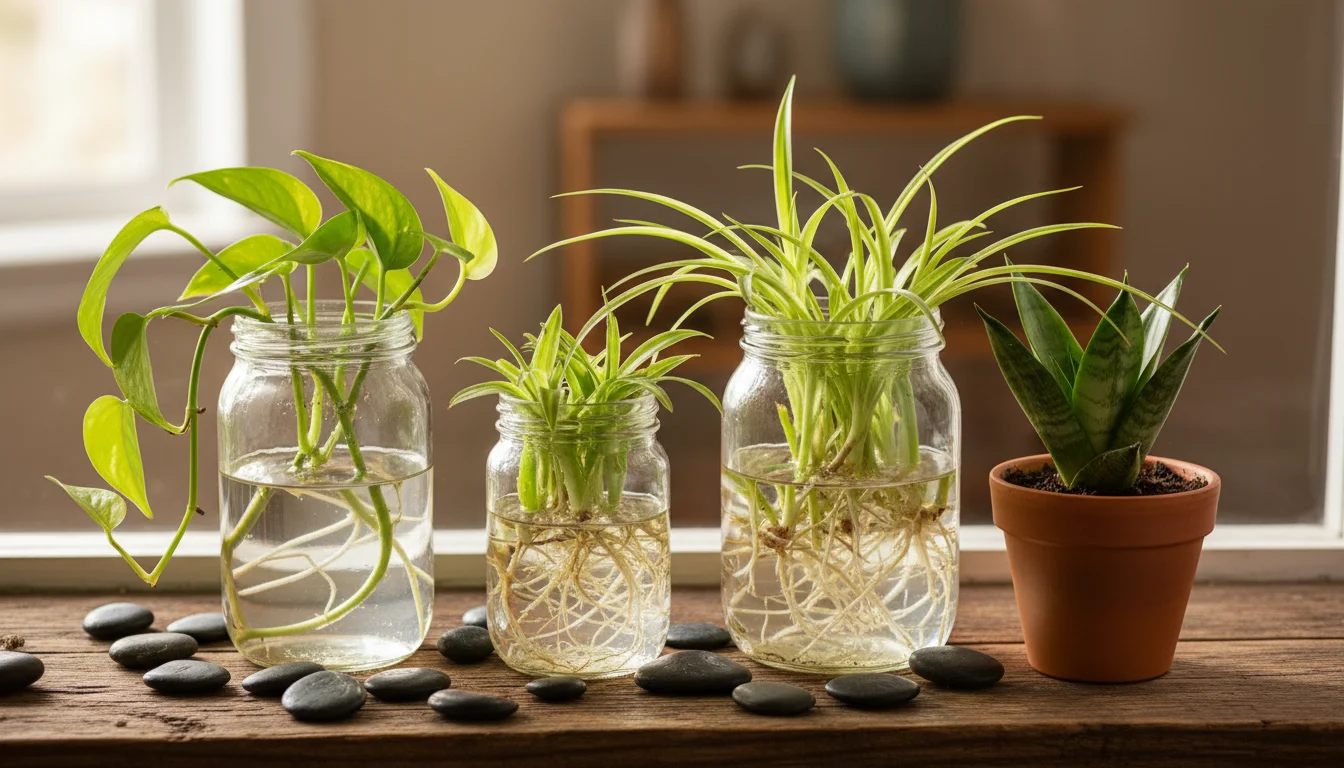
- Propagate from Cuttings: Many popular indoor plants, including Spider Plants, Pothos, and Snake Plants, are incredibly easy to propagate from cuttings. If a friend or family member has a healthy plant, ask for a cutting. You can root these in water or directly in soil, creating new plants for free. This is a fantastic way to expand your collection.
- Check Local Nurseries and Big Box Stores: Compare prices between specialized plant shops and the garden sections of larger retailers. Sometimes, big box stores offer competitive prices on common varieties.
- Shop Seasonal Sales: Keep an eye out for sales, especially during off-peak gardening seasons. You might find great deals as stores clear out inventory.
- Utilize Secondhand Planters: You do not need expensive pots. Thrift stores, garage sales, and online marketplaces often have unique and affordable planters. Just ensure they have drainage holes or that you can easily add them.
Building your plant collection over time, utilizing propagation, and making smart purchasing decisions allows you to enjoy the benefits of indoor plants without stressing your budget. A healthier home environment is accessible to everyone.
Frequently Asked Questions
How many plants do I need for my bedroom?
While there is no strict rule, a good guideline is to aim for 2-5 medium-sized plants (6-8 inch pots) for an average 10×12 foot bedroom. More plants will provide greater air purification benefits. Focus on quality and strategic placement over quantity initially.
Do bedroom plants really improve sleep?
Yes, indirectly. By reducing common indoor air pollutants and increasing oxygen levels, especially plants like the Snake Plant and Aloe Vera that release oxygen at night, plants create a fresher, healthier breathing environment. This can lead to better respiratory health and more restful sleep for many individuals, particularly those sensitive to air quality.
Are certain plants toxic to pets?
Yes, many common indoor plants can be toxic if ingested by pets. Peace Lilies, Pothos, and Dracaenas are examples of plants that are toxic to cats and dogs. Always research the specific plant’s toxicity if you have pets. Safe options include Spider Plants, Boston Ferns, and African Violets.
Can I use regular tap water for my plants?
Most plants tolerate regular tap water. However, some sensitive plants might react to chlorine or fluoride found in tap water, leading to brown leaf tips. Allowing tap water to sit out for 24 hours can help dissipate chlorine. Alternatively, use filtered water or collected rainwater for very sensitive varieties.
Do plants attract bugs into the bedroom?
Healthy indoor plants generally do not attract pests unless they are stressed, overwatered, or brought in from an infested outdoor environment. Common indoor plant pests are usually small and specific to plants, not typically household nuisances. Practicing good plant hygiene, like checking for pests before bringing plants home and wiping leaves, minimizes this risk.
For expert home organization guidance, visit
Bob Vila,
HGTV — Home,
Apartment Therapy and
The Container Store — Organization Tips.
Disclaimer: This article is for informational purposes only and is not a substitute for professional advice. Consult professional organizers or specialists for personalized recommendations.


I love my spider plant ,ivy ,succulent plant and a money tree I have no luck with peace lily and orchid plant
I have peace lilies, spider plants, violets and a couple other plants in bedrooms. I put them all outside in summer except the violets!