

Opening your closet doors should not feel like an archaeological dig. Yet, many of us spend our mornings pushing past heavy wool coats in the sweltering heat of July or untangling delicate linen sundresses while hunting for a heavy winter sweater in January. When your current wardrobe shares tight real estate with off-season garments, you lose time, wrinkle your clothes, and suffer from entirely preventable decision fatigue.
If you are working with limited square footage, maximizing closet space in a small bedroom requires a strategy that goes beyond simple rotation.
Learning exactly how to rotate clothes by season is not just a chore; it is a lifestyle shift that transforms how you start your day. By curating your active wardrobe to match the current climate, you give your clothes room to breathe and give your mind the clarity it needs to get dressed quickly. Whether you manage an expansive walk-in or a tiny single-rail reach-in, implementing a structured seasonal wardrobe rotation reduces clutter, protects your textile investments, and makes your closet feel like a personal boutique rather than a storage unit.

The Essentials: What You Will Learn
- The Core Rotation Strategy: How to effectively purge, clean, and store off-season garments without feeling overwhelmed.
- Optimal Storage Methods: Matching specific fabrics to their ideal storage containers to prevent damage.
- Space Adaptation: Customizing the closet rotation system to fit studio apartments, standard reach-ins, and large walk-in closets.
- Pest and Damage Prevention: Actionable clothing storage tips to protect against moths, mildew, and yellowing.
The Psychology of the Edited Closet
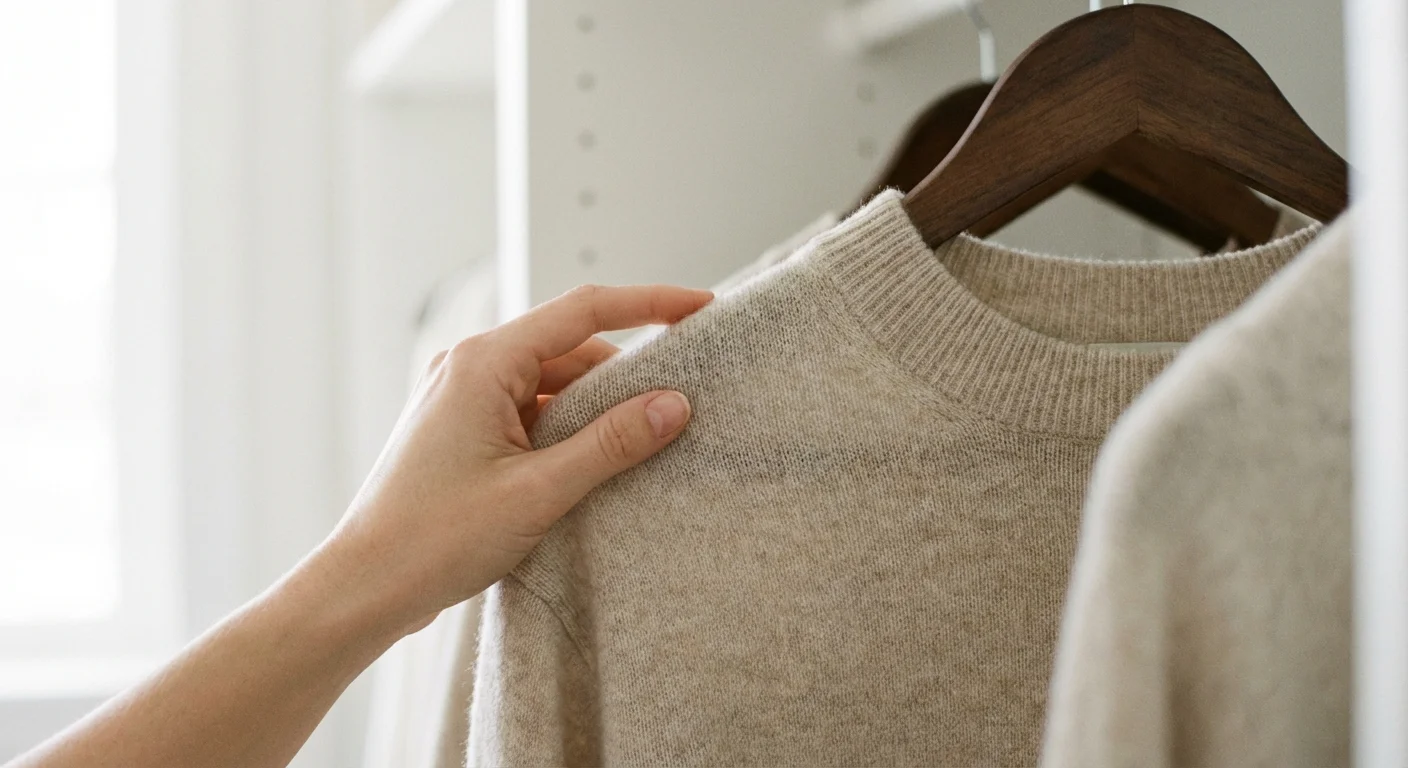
You wear twenty percent of your clothes eighty percent of the time. When you leave the other eighty percent hanging in your primary visual field, your brain has to process and reject dozens of items before selecting an outfit. This constant visual noise contributes to morning stress. An effective seasonal wardrobe rotation removes the visual clutter, leaving only the garments that are immediately wearable, weather-appropriate, and ready to go.
To truly optimize your space, you might also want to explore the best closet organization systems available this year to find a layout that works for you.
Furthermore, packing away your off-season clothes allows you to rediscover them six months later. Instead of feeling bored by a sweater you have stared at all summer, pulling it out of storage in the autumn feels like going shopping in your own home. This cyclical process encourages better garment care and helps curb impulse fast-fashion purchases, as you remain keenly aware of exactly what you already own.
“The objective of cleaning is not just to clean, but to feel happiness living within that environment.” — Marie Kondo, Organizing Consultant
The Four-Step Closet Rotation System
A successful seasonal switch requires more than just shoving sweaters into a plastic bin. To preserve the lifespan of your clothes and maintain organization, follow this systematic approach every spring and autumn.
While these steps apply to any individual, you can also find specific closet organization ideas for families to help manage children’s outgrown or seasonal items.
Step 1: The Purge and Sort
Never pack away clutter. Storing items you no longer wear wastes valuable storage space and delays inevitable decisions. Empty your closet completely. As you pull items out, separate the outgoing season’s clothing into three distinct categories: keep, donate, and repair.
If you did not wear a sweater once during the entire winter, you are highly unlikely to wear it next winter. Be ruthlessly honest with yourself. Keep only the pieces that fit well, align with your current lifestyle, and make you feel confident. For items requiring repair—a missing button, a fallen hem, or a scuffed boot heel—place them in a tote bag by the front door. Take them to the tailor or cobbler immediately, rather than storing damaged goods that will only frustrate you when the season returns.
Step 2: Deep Cleaning and Preparation
This is the most critical rule of seasonal storage: never store unwashed clothing. Invisible stains—like perspiration, body oils, perfume, and small drops of white wine—oxidize over time. While they might look clean when you pack them away, these invisible residues will turn into permanent dark brown or yellow spots after six months in a dark box. Furthermore, lingering body oils and microscopic food particles are the primary attractants for clothes moths and silverfish.
Wash or dry clean every single item before it goes into storage. For garments returning from the dry cleaner, immediately remove them from the plastic film bags. Dry cleaning bags trap moisture and off-gas chemicals, which can cause fabrics to yellow and degrade over time. Allow your dry-cleaned garments to air out in a well-ventilated room for a day before packing them.
Step 3: Strategic Packing and Storage
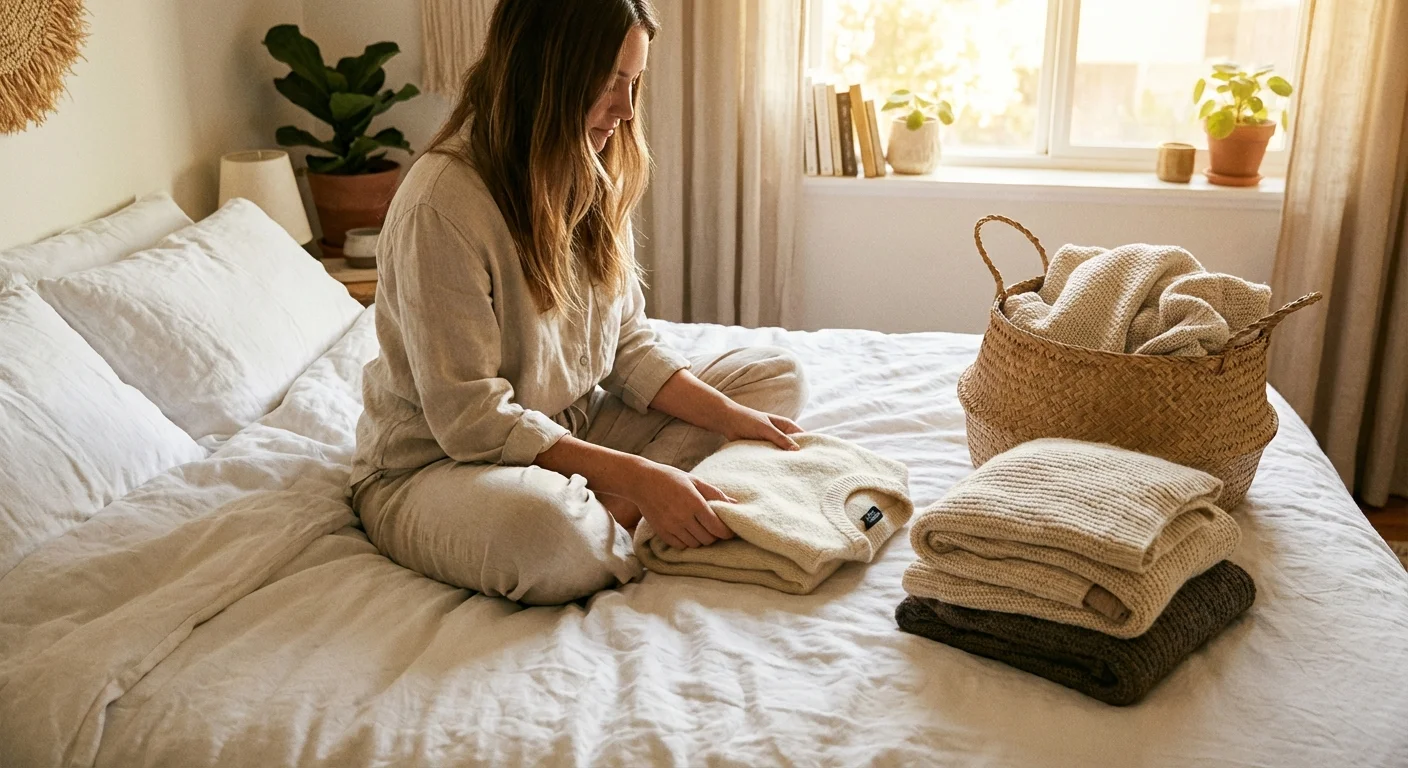
Your packing method dictates how your clothes will look when they emerge in six months. Fold heavy knits, jeans, and casual t-shirts. Hanging sweaters for long periods causes the shoulders to stretch and the garment to lose its structural integrity. Use the rolling method or KonMari folding technique for smaller items to maximize space within your storage bins.
When packing your containers, place the heaviest, most durable items at the bottom (like denim and heavy wool) and the lightest, most delicate fabrics at the top (like silk blouses and fine cashmere). Slip sheets of acid-free tissue paper between delicate items to prevent color transfer and snagging. Incorporate natural pest repellents; cedar blocks and lavender sachets are highly effective and leave your clothes smelling fresh, unlike harsh chemical mothballs.
Step 4: Reintroducing the New Season
Before moving the new season’s clothing into your closet, vacuum the floor, wipe down the shelves, and dust the hanging rods. A clean environment sets the stage for a fresh wardrobe. As you unpack your incoming clothes, look for items that may need a quick steam or iron.
Group your garments by category (shirts, pants, dresses) and then by color. This visual organization mimics the layout of a high-end boutique and significantly reduces the time it takes to build an outfit. Turn all your hangers backward. As you wear an item and return it to the closet, face the hanger forward. At the end of the season, any hangers still facing backward instantly identify the clothes you never wore, making your next seasonal purge effortless.
Storage Solutions: Bins vs. Bags vs. Vacuum Seal
Selecting the right storage vessel is just as important as the cleaning process. Different fabrics require different environments to survive the off-season. Resources like The Spruce often emphasize that natural fibers must breathe, while synthetics can handle tighter compression.
| Storage Method | Best For | Worst For | Space Efficiency | Protection Level |
|---|---|---|---|---|
| Clear Plastic Bins | Cotton, denim, synthetic blends, t-shirts | Delicate silks, items prone to trapping moisture | Moderate (stackable) | High (waterproof, bug-proof) |
| Cotton/Canvas Boxes | Wool, cashmere, down jackets, natural fibers | Damp environments (basements) | Moderate | Medium (breathable, but allows dust if unzipped) |
| Vacuum Bag Wardrobe Storage | Puffer coats, synthetic comforters, poly-blend sweaters | Down feathers, fine wool, leather, structured jackets | Maximum (compresses up to 80%) | High (airtight, waterproof) |
| Canvas Garment Bags | Suits, structured coats, formal gowns, leather jackets | Casual wear, heavy knits that should be folded | Low (requires hanging rod space) | High (maintains garment structure, breathable) |
When implementing vacuum bag wardrobe storage, proceed with caution. While these bags are miracles of modern space-saving technology, compressing natural fibers like down and wool can permanently break the internal fibers, destroying the garment’s ability to retain heat. Reserve your vacuum bags exclusively for synthetic puffer jackets, standard bedding, and resilient cotton blends.

Adapting to Your Specific Closet Size
The concept of rotating a wardrobe sounds simple until you face the reality of your specific living arrangements. A seasonal switch in a suburban home with an attic looks vastly different than one in a downtown studio apartment. Here is how to adapt the system to your footprint.
The Micro-Closet (Studio Apartments and Older Homes)
When you lack dedicated storage space, you have to create it. In a micro-closet environment, off-season clothing must live outside the closet entirely. Maximize the dead space under your bed using low-profile, rolling storage bins. If your bed frame sits too low, consider purchasing bed risers to gain an extra few inches of clearance.
Look to dual-purpose furniture to hide your off-season wardrobe. Storage ottomans, hollow benches at the foot of the bed, and vintage steamer trunks functioning as coffee tables provide excellent stealth storage. Expert organizers featured in Apartment Therapy frequently recommend utilizing high vertical space—installing a single deep shelf above your closet door specifically for off-season bins. You can also utilize slim, hanging vacuum bags that compress bulky winter coats down to the thickness of a standard dress shirt.
The Standard Reach-In Closet
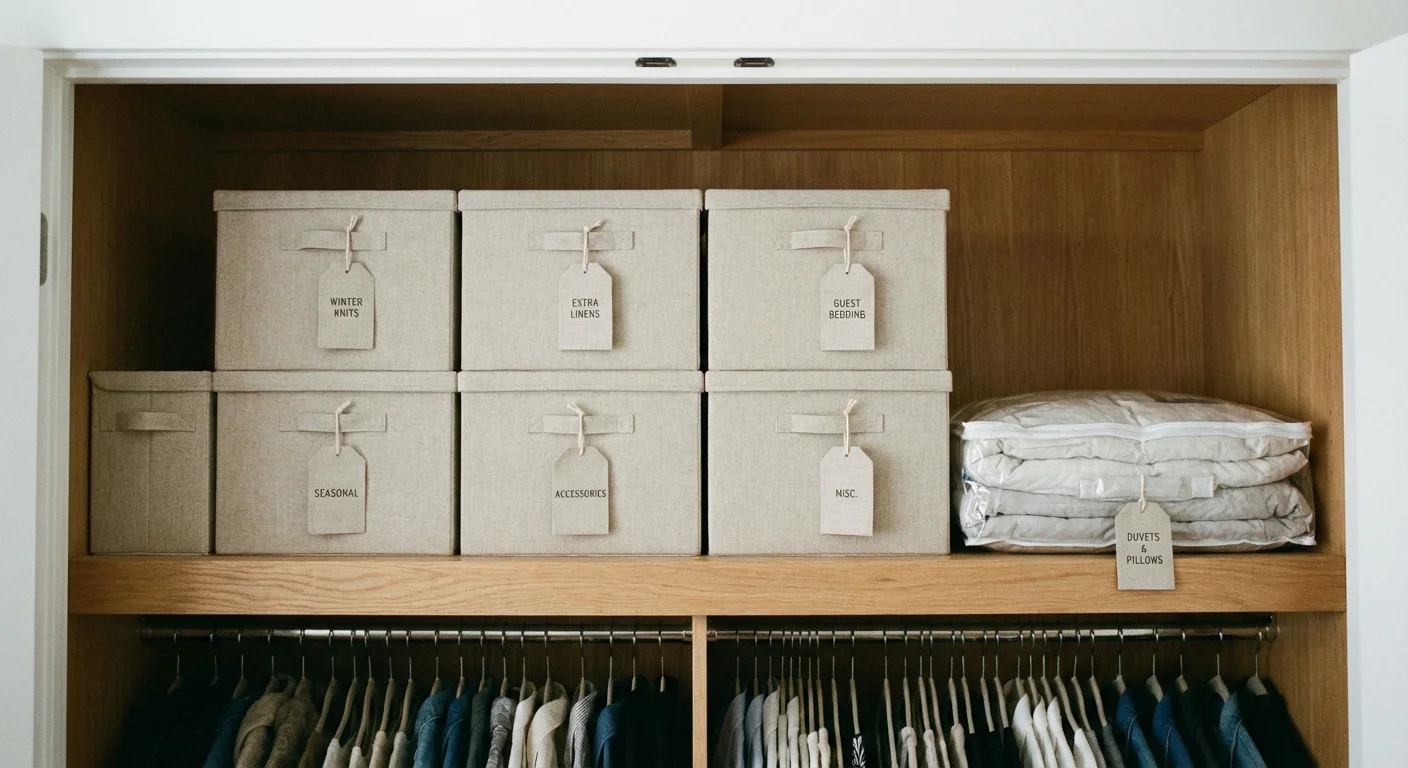
If you have a standard reach-in closet, you likely have one long hanging rod and a single shelf above it. In this scenario, the top shelf and the floor space are your rotation zones. Store your off-season folded items in matching, opaque canvas bins on the very top shelf to reduce visual clutter.
Keep your hanging space reserved strictly for the current season. If you must keep off-season coats in the same closet, push them to the far back corners, effectively establishing an “active” zone in the center and “inactive” zones on the periphery. To optimize the active zone, invest in slim velvet hangers. They prevent garments from slipping off and can increase your hanging capacity by up to thirty percent compared to bulky wooden or plastic tubular hangers.
The Walk-In Dream
Having a spacious walk-in closet is a luxury, but it easily becomes a dumping ground if not carefully managed. You may not need to physically pack away your clothes in a walk-in, but you still need a rotation strategy. Implement a “zone rotation.” Dedicate the most accessible, well-lit section of the closet to the current season. When the weather shifts, simply migrate the heavy sweaters and boots to the higher shelves or the back corners of the walk-in, pulling the lighter garments forward.
Even with ample space, adhere to the “one in, one out” rule. If you buy a new winter coat, donate or sell an old one. Keeping a large space organized requires maintaining a strict inventory limit, lest your walk-in slowly morph into an unmanageable storage unit.

Ideal Storage Environments
Where you store your clothing is just as important as how you store it. According to guidelines often shared by Good Housekeeping, the ideal storage environment is cool, dark, and dry. Heat, light, and humidity are the natural enemies of textiles.
Avoid storing clothing in unfinished attics. The extreme summer heat bakes garments, breaking down elastics, melting synthetic blends, and turning whites yellow. Unfinished basements present the opposite problem; high humidity levels encourage mold and mildew growth, which can permanently ruin an entire bin of clothing in a matter of weeks. If you must use a basement, ensure your clothing is stored in airtight plastic bins elevated off the concrete floor, and run a dehumidifier to keep the ambient moisture levels low. The best storage locations are under beds, on top shelves of interior closets, or in climate-controlled spare bedrooms.

What Can Go Wrong (And How to Prevent It)
Even the most meticulously packed wardrobes can encounter disaster if preventative measures are skipped. Here are the most common storage pitfalls and how to avoid them.
- The Moth Invasion: Finding tiny holes in your expensive cashmere is a devastating experience. Moths target animal fibers (wool, silk, cashmere, leather) that carry traces of sweat or food. Prevention relies heavily on washing clothes before storage. Pack cedar rings or lavender sachets in your bins. If you discover an active infestation, isolate the damaged garments, place them in sealed plastic bags, and put them in the freezer for 72 hours to kill any remaining eggs and larvae.
- The Mildew Disaster: Mildew smells sour and leaves dark, powdery stains on fabric. It occurs when clothes are packed away slightly damp or stored in humid environments. Ensure every garment is bone-dry before sealing it in a plastic bin. Toss a few silica gel packets (the kind found in shoeboxes) into your storage containers to absorb any ambient moisture.
- Yellowing and Discoloration: Storing white or light-colored garments in cardboard boxes or plastic dry-cleaning bags often leads to yellowing. Cardboard is highly acidic and the acids transfer to fabrics over time. Always line cardboard boxes with acid-free tissue paper or opt for clean, washed cotton storage bags.
- Permanent Creases and Stretching: Heavy knits stored on hangers will stretch out of shape, while delicate silks folded tightly under heavy denim will develop permanent creases. Always follow the rule of gravity: heavy items folded flat on the bottom, light items placed loosely on top.
Frequently Asked Questions
How do I transition my wardrobe for spring when the weather fluctuates?
Spring and autumn are notoriously unpredictable, featuring freezing mornings and warm afternoons. During these transitional months, utilize a hybrid closet rotation. Keep lightweight base layers (t-shirts, thin blouses) easily accessible alongside your mid-weight layering pieces (cardigans, denim jackets). Pack away only the extremes: the heavy parkas and thick wool sweaters, or the ultra-light linen and beachwear. Layering is your best defense against fluctuating temperatures.
Can I hang my sweaters during off-season storage?
You should never hang your sweaters for long-term storage. Gravity constantly pulls down on the heavy knit fabric, causing the shoulders to distort (often creating “hanger bumps”) and the overall garment to stretch and lose its shape. Always fold sweaters. If you must use a hanging storage method to save shelf space, utilize hanging canvas sweater organizers with cubbies that allow the sweaters to rest flat.
Do I need to wash clothes again when taking them out of storage?
If you followed the golden rule of washing everything before packing it away, you do not need to do a full wash cycle when unpacking. However, clothes stored for six months can smell stale. For a quick refresh, run them through a delicate dryer cycle on low heat with a lightly scented dryer sheet for ten minutes, or utilize a hand steamer to simultaneously remove wrinkles and kill stale odors. If items were stored with cedar blocks or lavender, hanging them in an open, breezy room for an afternoon will dissipate the strong scents naturally.
How do I manage shoe rotation?
Shoes require the same seasonal attention as clothing. Before storing winter boots, wipe off all salt and mud to prevent the leather from drying out and cracking. Stuff the boots with tissue paper or use boot shapers to help them maintain their form over the summer. Store off-season footwear in clear plastic drop-front shoe boxes to protect them from dust while maintaining a tidy, stackable aesthetic.
Taking Control of Your Space
Implementing a seasonal wardrobe rotation requires a modest investment of time twice a year, but the daily dividends are immense. You will step into your closet each morning greeted only by options that fit, flatter, and suit the current weather. By treating your garments with respect, utilizing smart storage techniques like vacuum bag wardrobe storage for the right items, and ruthlessly purging what no longer serves you, you extend the life of your wardrobe and reclaim your mornings.
Start small this weekend. Pull out your heavy winter gear, launder it thoroughly, and clear the prime real estate in your closet. Once you experience the visual calm of an edited, seasonally appropriate wardrobe, you will never go back to sifting through parkas in July.
This guide provides general home improvement information. Every home is different—what works in one space may need adaptation in yours. For structural changes or electrical/plumbing work, consult a licensed professional.
Last updated: February 2026









Leave a Reply