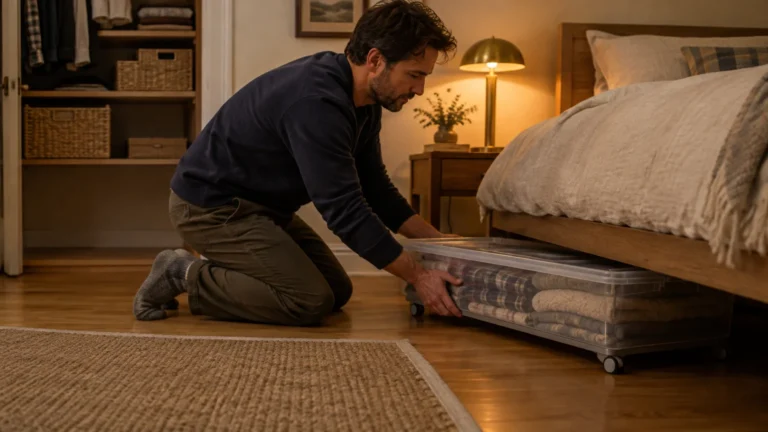
A 2,500 sq ft four-bedroom house with a two-car garage and an unfinished basement breaks the standard KonMari rule of piling every miscellaneous item together. Dumping four bedrooms, a pantry, and a garage into one living room stalls daily life for weeks.
Keeping the sequence intact in this floor plan requires whole-house gathers for clothes, books, and papers, followed by strict room perimeters for miscellaneous goods. Adding a two-tier bulk inventory system protects warehouse-club purchases while driveway staging clears the garage.
Why whole-house komono fails in a 2,500 sq ft floor plan
The official KonMari method asks you to work through five categories in a fixed order: clothes, books, papers, komono (miscellaneous items), and sentimental items. Completing each earlier round builds the decision speed required for harder keepsakes later.
Gathering an entire category works when side-by-side comparison exposes hidden duplicates. Seeing six spatulas together on a counter makes discarding effortless, whereas six spatulas split across three drawers rarely feel excessive.
Volume breaks that single-pile rule once a household reaches komono in a multi-level home. Clothes, books, and papers from four bedrooms still fit on one bed or dining table, while cables, toiletries, pantry staples, and tools overwhelm shared living areas.
Official KonMari guidance already breaks komono into subcategories such as kitchen goods, bathroom supplies, and garage tools. Treating each subcategory as a separate session with a strict room perimeter keeps the rest of the house usable.
The eight-session schedule and budget for this house
The schedule below maps all eight sessions for a 2,500 sq ft four-bedroom home with a two-car garage and an unfinished basement. Working hours assume one adult making decisions, with supply costs listed as planning ranges rather than firm quotes.
| Session | What gets gathered | Working time | Supplies cost | DIY or pro |
|---|---|---|---|---|
| 1. Clothes | Every closet, dresser, coat closet, and laundry pile | 8-14 hours | $0-30 (bags, hangers) | DIY |
| 2. Books | Shelves, nightstands, kids’ rooms, car | 3-5 hours | $0 | DIY |
| 3. Papers | Mail piles, file drawers, schoolwork | 4-8 hours | $0-80 (shredder or drop-off shredding) | DIY |
| 4. Kitchen komono | Cabinets, drawers, pantry, backstock | 6-10 hours | $40-200 (containers, after discarding) | DIY |
| 5. Bath and linen komono | Vanities, medicine cabinets, linen closet | 2-4 hours | $0-40 | DIY |
| 6. Living and office komono | Cables, games, crafts, decor | 4-8 hours | $0-60 | DIY |
| 7. Garage and basement | Tools, sports gear, paint, seasonal decor | 12-20 hours over two days | $150-450 (partial junk haul) | DIY sort, pro haul-away |
| 8. Sentimental | Photos, letters, heirlooms, kids’ art | 4-10 hours | $30-120 (acid-free boxes) | DIY |
Add about a third to each session time whenever a partner or teenager weighs in on shared items. Spread across weekends, most households complete all eight sessions in three to six months by booking fixed blocks on the calendar.
Wait until discarding finishes in every category before spending the container budgets listed in the table. Buying matching baskets early hides unneeded items instead of removing them from the house.
Sessions 1 to 3: clothes, books, and papers across four bedrooms
Session 1 takes 8-14 hours and $0-30 for bags and hangers, starting with one clothing pile on a single bed. Gathering four bedroom closets, the coat closet, guest overflow, and laundry piles exposes duplicate coats and basics.

Skip demoting rejected shirts into yard clothes or loungewear during the clothing sort. Keeping two or three outfits covers painting and gardening, whereas twenty faded T-shirts inside a dresser drawer simply relocate the same clutter.
Fold surviving garments into upright rectangles so every piece remains visible when a drawer opens. Hang heavy coats and long pieces on the left side of each closet rod, tapering to lighter pieces on the right.
Session 2 gathers every book across living room shelves, bedroom nightstands, children’s rooms, and the car in 3-5 hours for $0. Session 3 follows in 4-8 hours with $0-80 budgeted for a shredder or drop-off shredding.
Paper across four bedrooms and a home office obeys a single rule: keep only what you need now, for a set period, or permanently.
- Needs attention: bills to pay, forms to sign, and letters to answer, kept in a tray emptied weekly.
- Short-term: warranties for appliances you still own, recent tax records, and active medical paperwork.
- Permanent: birth certificates, home deeds, passports, and Social Security cards.
Shred expired insurance policies, old utility statements, and appliance manuals available online. Everything remaining fits into one file box or drawer, and our guide to organizing your home’s paper trail covers scanning and filing.
Session 4: kitchen komono and the two-tier bulk pantry
Session 4 stays strictly inside the kitchen and pantry perimeter for 6-10 hours, leaving $40-200 for containers after discarding. Six spatulas across three drawers become obvious here without spilling miscellaneous clutter into the dining room.
Warehouse-club buying clashes with minimalist storage, yet throwing away 24 rolls of paper towels wastes money. Separating active working stock from sealed backstock resolves that conflict without shrinking grocery budgets.
Working stock means one open package of each item kept inside everyday kitchen cabinets. Backstock covers every sealed backup package, confined to one designated shelving unit in the pantry, utility closet, or basement.
Before every warehouse trip, take stock of what you already have and build your list solely from gaps on that shelf. Checking one visible backstock unit stops you from buying a third jar of the same marinara.
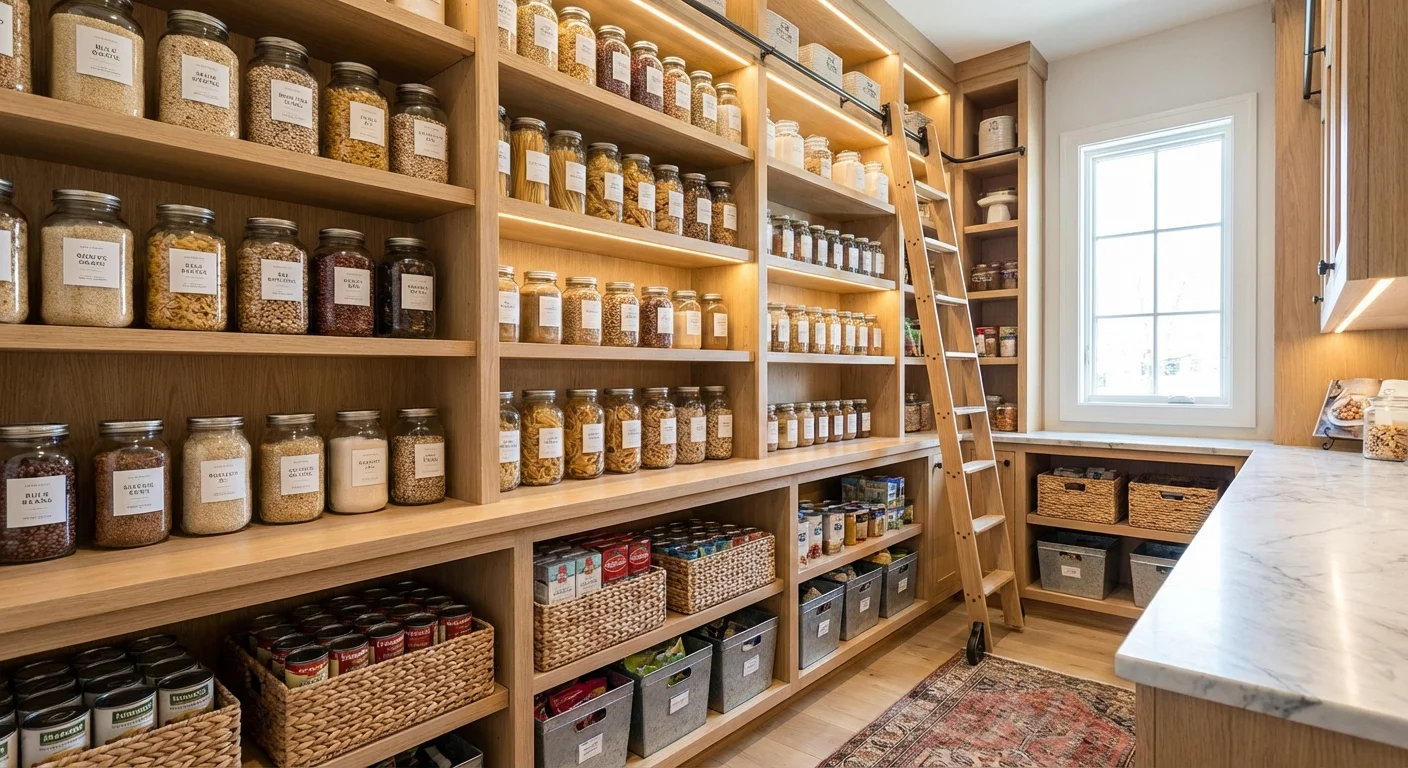
Store food backstock in a cool, dry interior zone rather than an unconditioned garage. Seasonal swings from summer heat to winter cold spoil cooking oils, flour, and canned goods stored beside vehicles.
Move paper goods and dry groceries out of torn cardboard cartons into lidded bins, since cardboard stacks shelter pantry pests. Decant only everyday staples like rice, cereal, and snacks, using our pantry organization guide for shelf depths and container sizes.
Sessions 5 and 6: bath, linen, living, and office perimeters
Session 5 clears bathroom vanities, medicine cabinets, and the hall linen closet in 2-4 hours with $0-40 in basic dividers. Session 6 tackles living room and office cables, board games, craft supplies, and decor in 4-8 hours for $0-60.
Working one room perimeter at a time keeps bedrooms and baths functioning while shared zones get sorted. Decide strictly on your own belongings and shared household supplies, leaving a partner’s or teenager’s personal rooms to them.
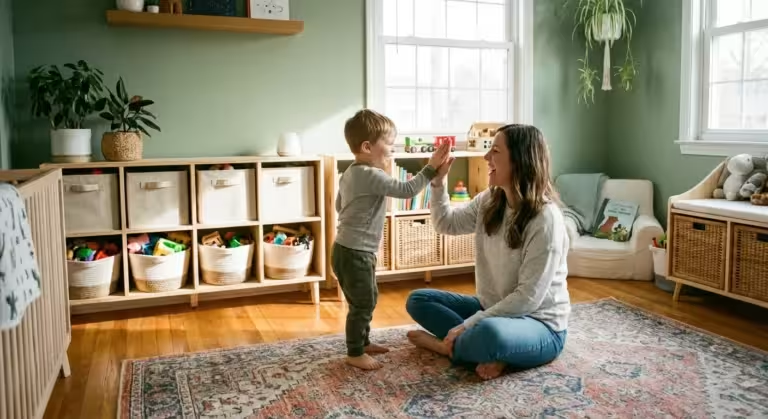
Children’s toys follow the same komono perimeter rule inside bedrooms or play spaces. Let kids select their favorites first, then store survivors in open-top bins detailed in our toy storage guide.
Any furniture, gear, or decor set aside to sell gets a firm 30-day deadline. Donate whatever remains unsold after 30 days so rejected komono does not migrate into the basement.
Session 7: staging the two-car garage and basement on the driveway
Session 7 is the largest single block, requiring 12-20 hours across two dry consecutive days and $150-450 for partial junk hauling. An empty driveway becomes the staging floor for postponed repairs, broken mowers, old paint, and idle exercise gear.
- Pull every item from the two-car garage onto tarps grouped into automotive, garden, tools, sports gear, and seasonal decor.
- Set aside paint, motor oil, pesticides, pool chemicals, and batteries, taking these household hazardous wastes in labeled containers to a local collection program instead of the trash or a drain.
- Judge every group by whether your household used it in the past year, releasing repairs postponed for three years.
- Load the donation car and complete the pro haul-away before moving kept items back inside.
- Return survivors to wall shelving and overhead ceiling racks so both vehicle bays stay clear for parking.
Screw overhead ceiling racks directly into structural joists rather than drywall alone. Stand on a stepladder rated for your weight plus the bin with a helper handing up heavy loads, or hire an installer near the door opener and wiring.
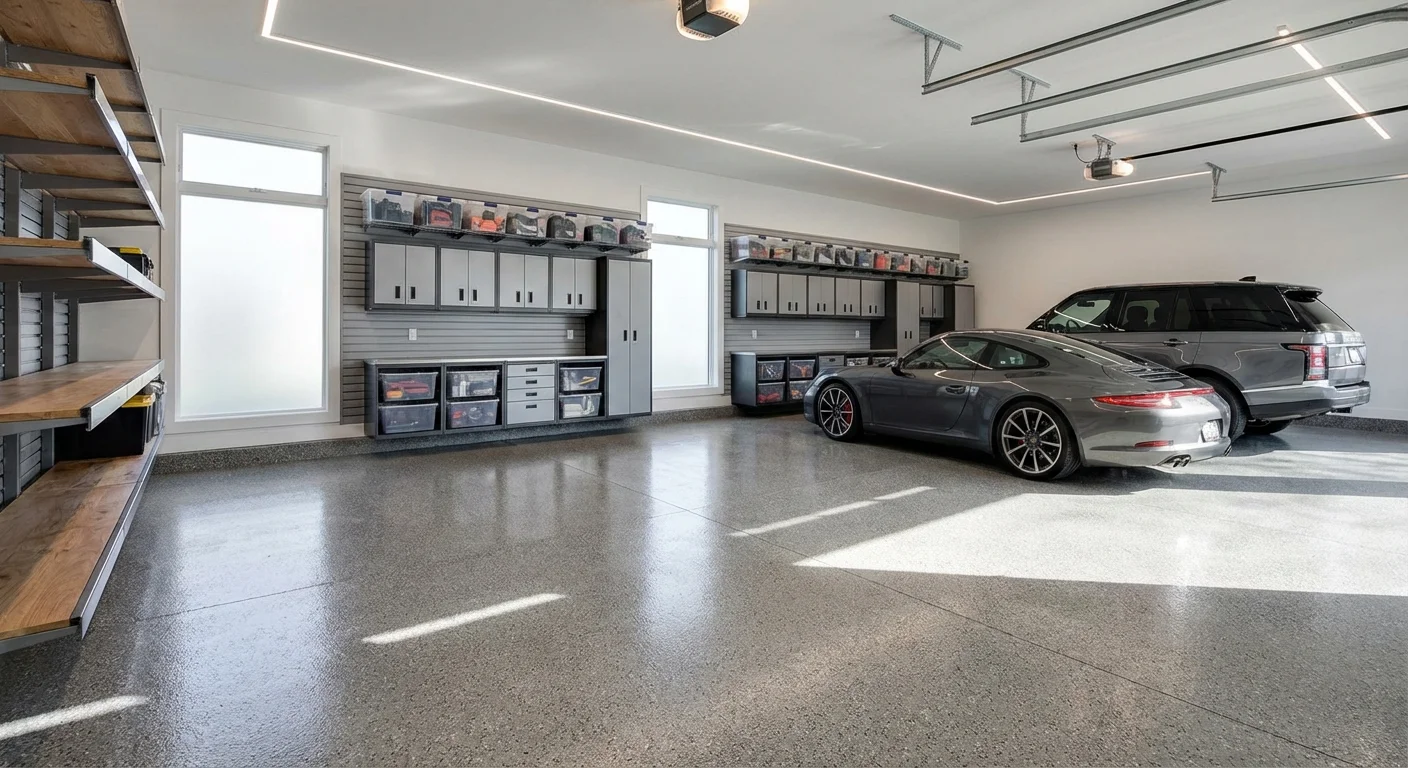
Apply identical staging discipline to the unfinished basement so overflow does not replace what left the garage. Keep cardboard boxes, paper, and combustibles out of furnace and water heater rooms with a clear access path.
Once the floor clears, our garage storage design guide maps out wall zones, rack heights, and layout.
Session 8: sentimental keepsakes and when to hire help
Session 8 takes 4-10 hours and $30-120 for acid-free boxes once every practical category is finished. Hundreds of earlier keep-or-release decisions sharpen your judgment for family photos, letters, heirlooms, and children’s artwork.
Select a small representative handful per person or event rather than storing entire school-year stacks. Photograph bulky three-dimensional projects and school artwork before letting the paper originals leave the house.
University of Georgia Extension recommends a stable climate around 60 to 65°F and about 50 percent relative humidity for heirloom textiles. Wrap textiles in acid-free tissue and boxes on an interior closet shelf, avoiding attics and garages.
Bringing in a professional organizer pays off in three specific household situations even when you lead most sessions:
- Clearing a relative’s home while grieving: an outside helper keeps sorting moving when emotional attachment stalls decisions.
- Little free time: a crew executes sorting choices you have already made across two or three long days.
- ADHD or executive-function challenges: an organizer builds practical storage routines around how your household actually operates.
If your household is running this eight-session plan ahead of a move, pair each weekend block with our moving declutter checklist so nothing gets packed that you would discard on arrival.