

Heating and cooling account for roughly half of the energy used in a typical home. When you ignore the complex machinery regulating your indoor climate, you pay for it twice; first through steadily inflating utility bills, and second through premature, expensive equipment failure. A neglected air conditioner loses about five percent of its efficiency every year it operates without proper upkeep. Fortunately, you hold the power to prevent this decline.
A monthly home maintenance calendar can help you track these seasonal chores alongside other vital property needs.
Establishing a consistent routine protects your investment and ensures your home remains a sanctuary, regardless of the weather outside. You do not need to be a licensed technician to perform basic, highly effective upkeep. Implementing a practical HVAC maintenance guide for your home requires only a few hours a season and a willingness to understand the basics of airflow and machinery.
The Essentials at a Glance
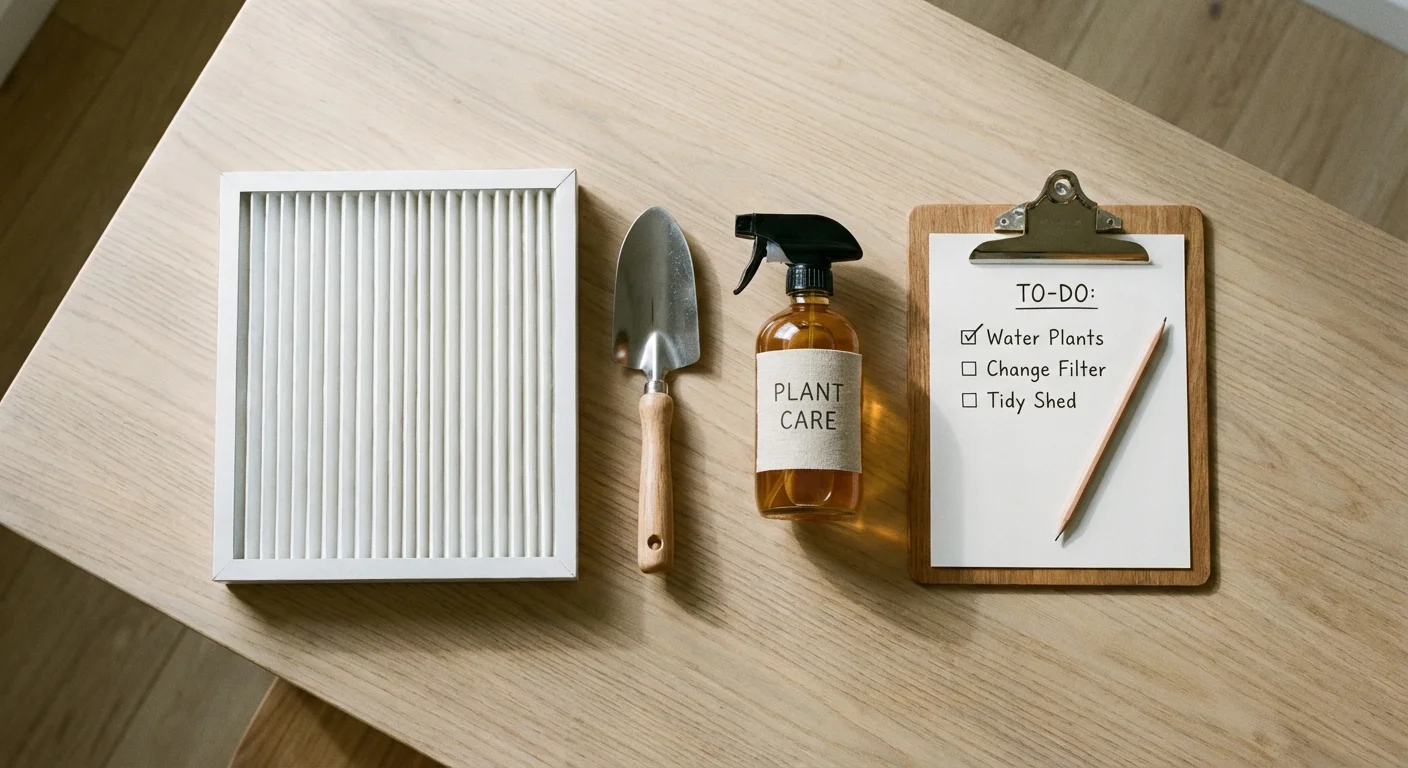
- Swap filters frequently: Check your air filter every 30 days and replace it at least every 90 days.
- Protect the perimeter: Maintain a two-foot clearance of clean space around your outdoor condenser unit.
- Clear the drain: Flush your condensate drain line twice a year to prevent water damage and humidity issues.
- Schedule professional check-ups: Book a cooling tune-up in the spring and a heating tune-up in the fall.
HVAC Filter Replacement: The Front Line of Defense
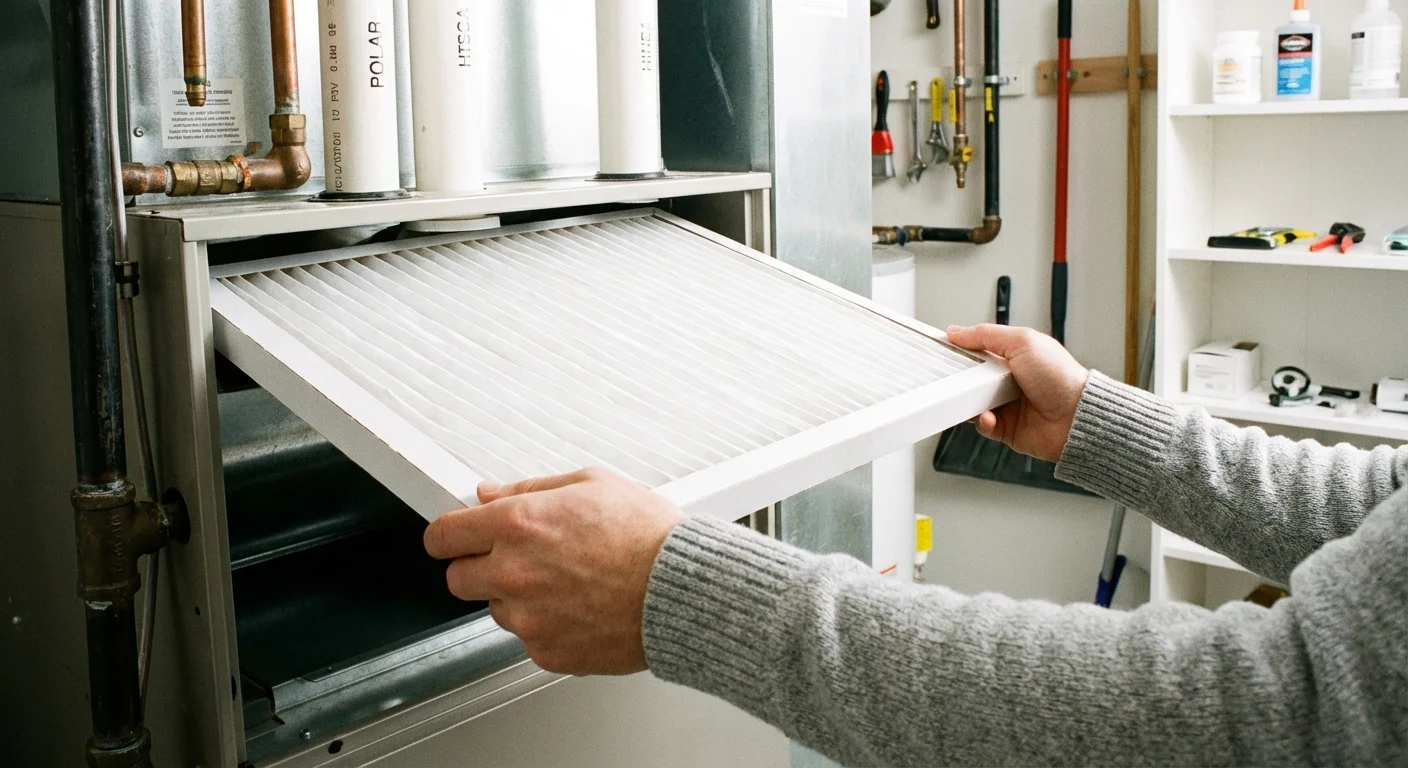
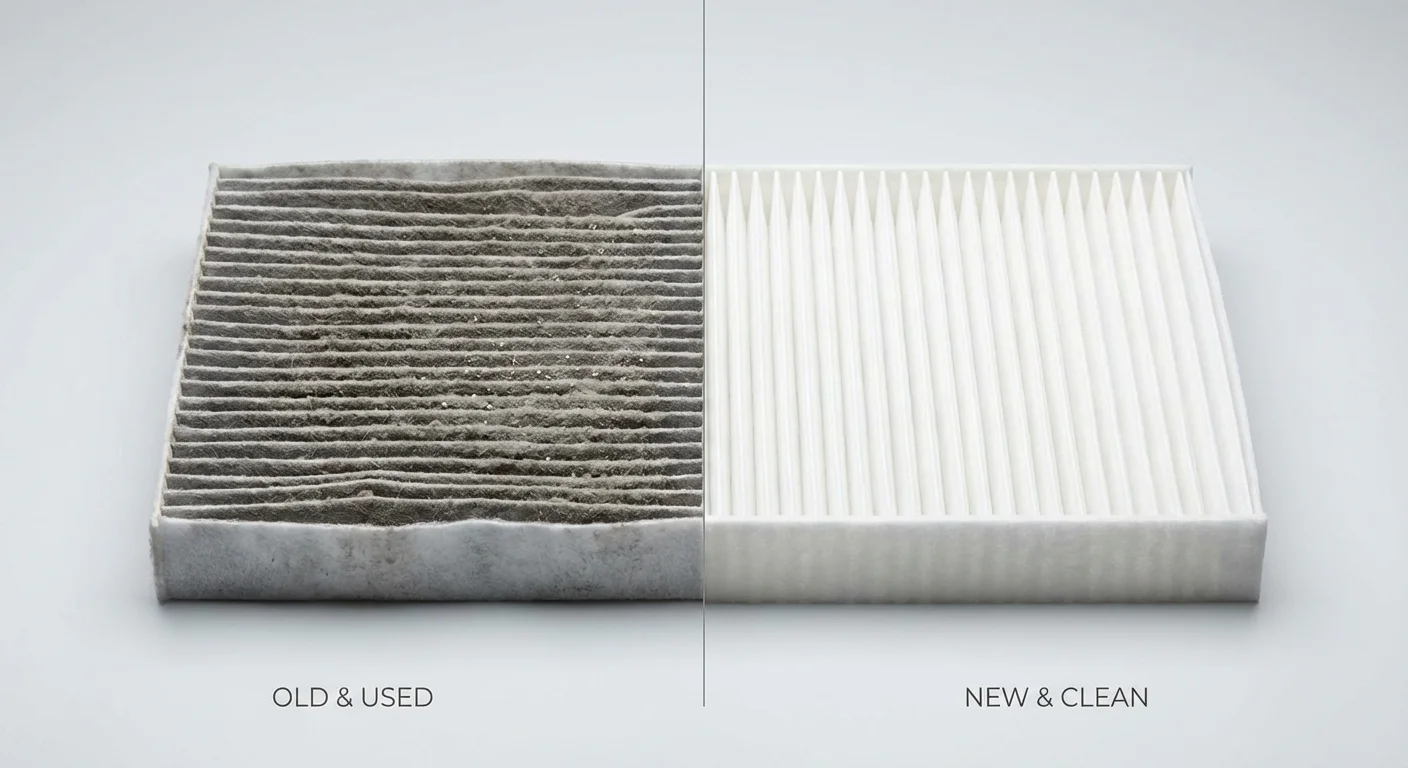
If you only take away one habit from this guide, make it this: change your air filter. Consistent HVAC filter replacement stands as the single most effective way to protect your equipment and improve your indoor air quality. The filter protects the sensitive internal components of your blower motor and coils from dust, pet dander, and debris.
For a quick overview of routine care, follow these simple HVAC maintenance tasks that any homeowner can handle.
Regularly changing your filters is one of the most important monthly home care tasks for preventing expensive emergency repairs.
While you are checking your climate control systems, you might also want to perform water heater maintenance to extend the life of your home’s other major appliances.
When a filter clogs with dirt, it restricts airflow. This restriction forces the blower motor to work significantly harder to pull air through the home, increasing electrical consumption and placing immense stress on the machinery. In the summer, restricted airflow causes the evaporator coil to freeze solid into a block of ice; in the winter, it causes the furnace heat exchanger to overheat and shut down prematurely.
Understanding which filter to buy requires knowing the MERV (Minimum Efficiency Reporting Value) rating system. A higher MERV rating traps smaller particles, but it also creates more resistance for your system’s blower motor.
| MERV Rating | Particle Types Captured | Best Used For | Replacement Frequency |
|---|---|---|---|
| MERV 1–4 | Pollen, dust mites, large fibers | Basic equipment protection (spun fiberglass) | Every 30 days |
| MERV 5–8 | Mold spores, pet dander, aerosol hairspray | Standard residential homes (pleated fabric) | Every 60–90 days |
| MERV 9–12 | Legionella, lead dust, fine flour | Homes with mild allergies or multiple pets | Every 60–90 days |
| MERV 13–16 | Bacteria, tobacco smoke, virus carriers | Severe allergies, specialized HVAC systems | Check monthly; replace as needed |
Before upgrading to a high-efficiency MERV 13 filter, verify that your blower motor can handle the increased air resistance. Many standard residential systems lack the power to pull air through highly restrictive filters, leading to the exact airflow problems you want to avoid. The EPA Indoor Air Quality guidelines suggest that a MERV rating between 8 and 12 provides the optimal balance of air purification and system efficiency for most homes.
Your Spring and Summer AC Maintenance Schedule
Preparing your air conditioning system before the first heatwave hits ensures you will not be left sweating over the Fourth of July weekend. Following a proactive AC maintenance schedule minimizes strain on the compressor and maximizes cooling capacity.
Spring is also the ideal time to complete your full April home maintenance checklist to prepare for the active months ahead.
Clear the Outdoor Condenser Unit
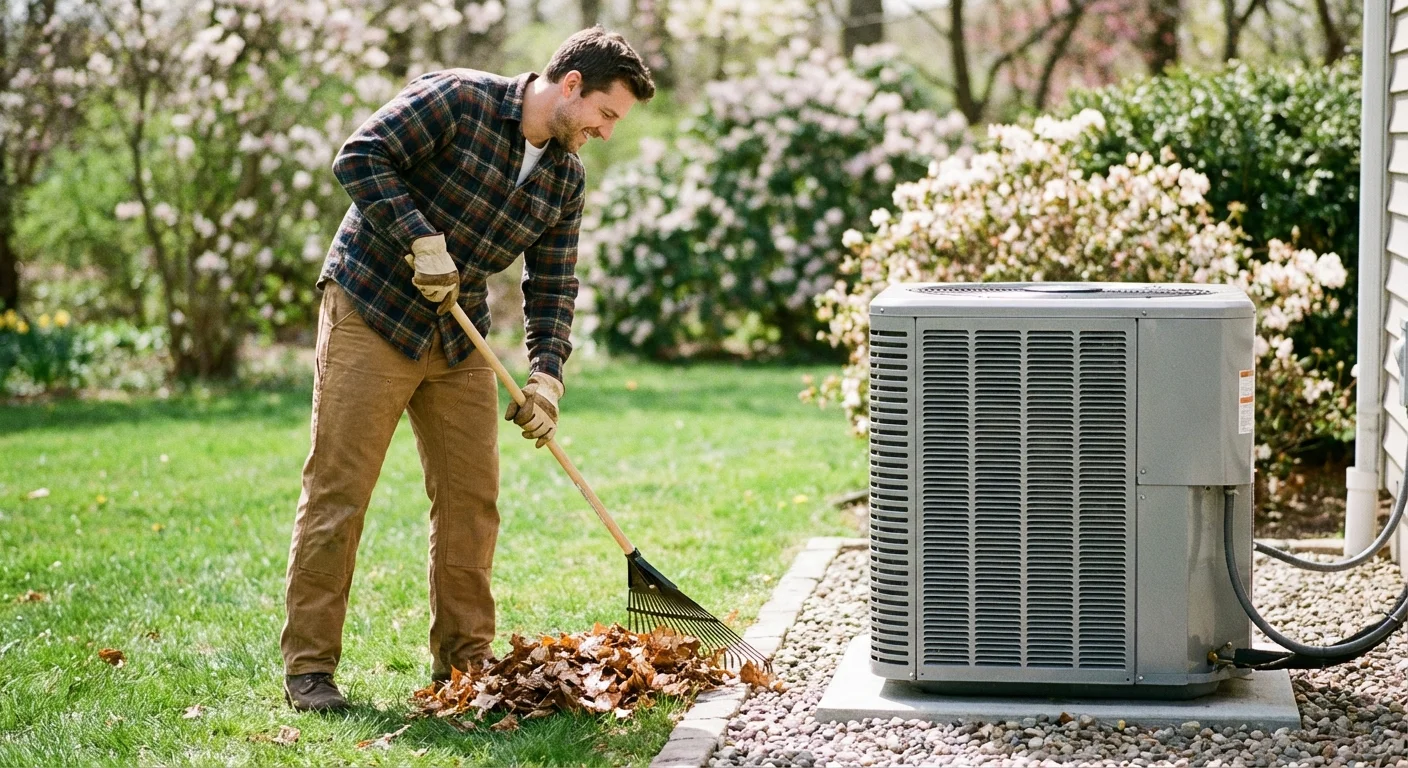
The large metal box sitting outside your home acts as the lungs of your cooling system. It exhausts the heat collected from inside your house. Over the fall and winter, leaves, twigs, grass clippings, and dirt accumulate inside and around the metal fins.
First, locate the electrical disconnect box near the unit and pull the plug or flip the switch to shut off the power. Put on heavy gloves and remove any visible debris from the base of the unit. Trim back shrubs, tall grass, and branches to maintain at least 24 inches of clear space on all sides. This clearance guarantees the unit can pull in enough air to cool the internal refrigerant.
Clean the Condenser Coils and Fins
The thin aluminum fins on the outside of your condenser bend easily and trap dirt. Use a soft-bristle brush or a specialized fin comb to gently remove debris and straighten any bent fins. If the fins are heavily soiled, use a garden hose—set to a gentle spray—to wash the dirt from the inside out. Never use a pressure washer; the high-velocity water will crush the delicate fins and destroy the unit.
Flush the Condensate Drain Line
As your indoor unit cools the air, it also removes humidity. This moisture drips into a pan and flows outside through a white PVC pipe called the condensate drain. Over time, algae and mold thrive in this dark, damp pipe, eventually causing a blockage. When the pipe clogs, water backs up into your home, potentially damaging your ceiling or flooring.
Locate the access port on the PVC drain line near your indoor air handler. Pour a quarter-cup of plain white vinegar down the pipe every spring to kill organic growth and keep the water flowing freely. If the line is already clogged, attach a wet/dry vacuum to the outside termination point of the pipe to suck the blockage out.
“Dirt and neglect are the top causes of heating and cooling system inefficiency and failure. To ensure efficient operation, it’s important to perform regular maintenance.” — Energy Star Guidelines
Essential Furnace Maintenance Tips for Fall
When the leaves begin to turn, shift your focus to your heating system. A neglected furnace poses both a financial risk and a safety hazard due to the combustion of natural gas or oil. Implement these furnace maintenance tips before the first frost.
While focusing on heating, remember to also prepare your plumbing for winter to prevent frozen pipes and water damage.
Proper furnace care is a major component of learning how to winterize your home before the extreme cold arrives.
Ensuring your heating system is ready is a key part of any complete fall home maintenance checklist before the winter cold sets in.
Test Carbon Monoxide Detectors
Before you even touch the furnace, check your safety equipment. Gas and oil furnaces produce carbon monoxide—an odorless, colorless gas—during the combustion process. Normally, this gas safely vents outside through the flue. However, a cracked heat exchanger or a blocked vent can force the gas into your living space. Replace the batteries in your carbon monoxide detectors and press the test button to ensure the alarms sound loudly.
Inspect the Flue and Exhaust Vent
Take a flashlight and inspect the metal or PVC exhaust pipe running from your furnace to the outside of your house. Look for rust, corrosion, soot streaks, or disconnected joints. The pipe must angle slightly upward to ensure proper drafting. If you notice a white, powdery residue or significant rust flaking, contact a professional immediately; these are signs of venting issues.
Clean the Flame Sensor
If your furnace turns on, ignites the burners for three seconds, and then shuts off, you likely have a dirty flame sensor. This small metallic rod sits in the path of the burner flame. Its sole job is to detect fire and tell the gas valve to stay open. Over time, carbon buildup coats the sensor, preventing it from feeling the heat.
To clean it, shut off the power to the furnace at the breaker panel. Remove the front panel, locate the flame sensor—usually held in place by a single hex screw—and pull it out. Gently rub the metal rod with light steel wool or a rough sponge until the carbon comes off. Reinstall it and restore the power.
Service the Whole-House Humidifier
Many forced-air heating systems include an integrated humidifier to combat dry winter air. The humidifier pad or filter scales up with hard water minerals over a single season. Open the humidifier casing, discard the calcified pad, and slide a fresh one into the housing. Turn the water supply valve back on and set the humidistat to roughly 35 to 40 percent.
Understanding How to Maintain HVAC System Airflow
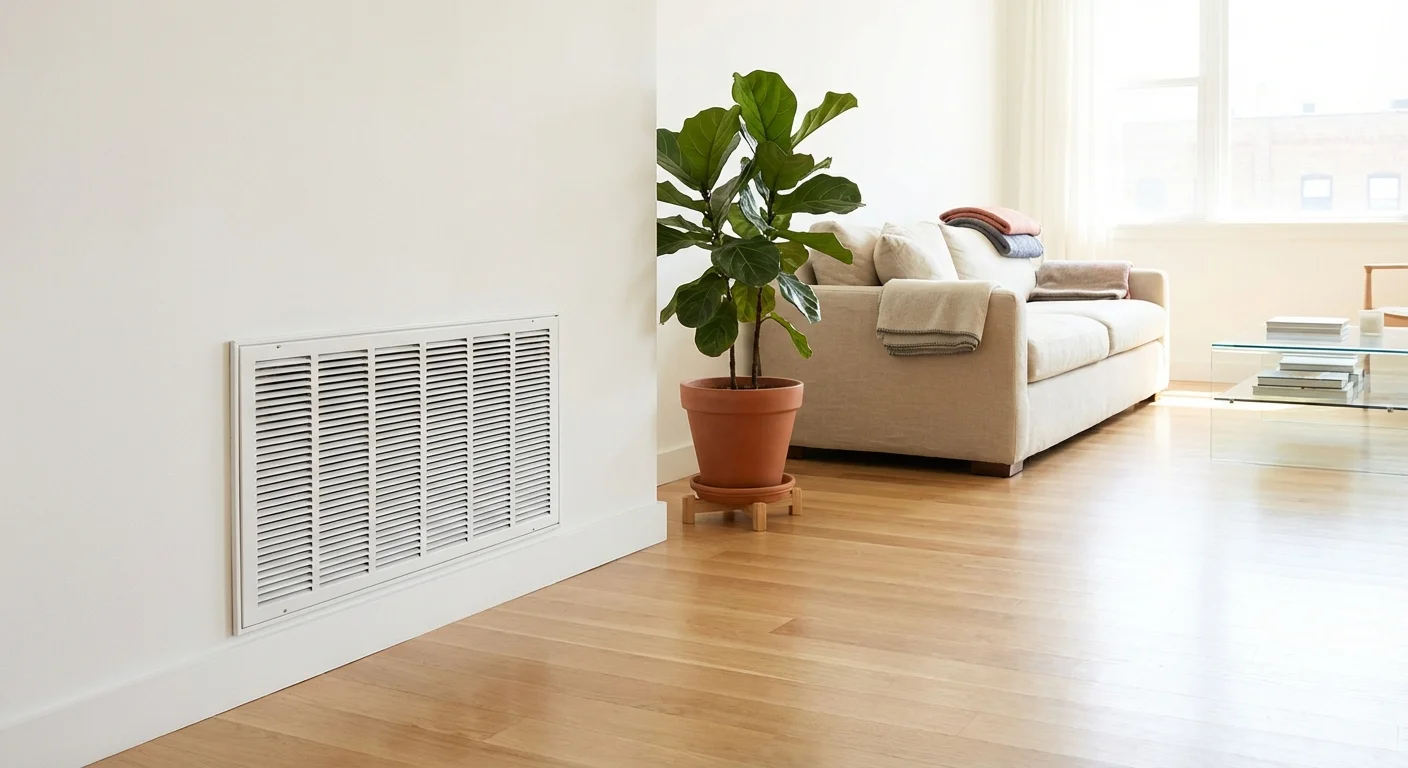
Your heating and cooling equipment cannot function efficiently if the distribution network—your ductwork and vents—is compromised. Learning how to maintain HVAC system airflow optimizes comfort in every room.
Optimizing airflow works best when paired with proper home insulation to prevent conditioned air from escaping.
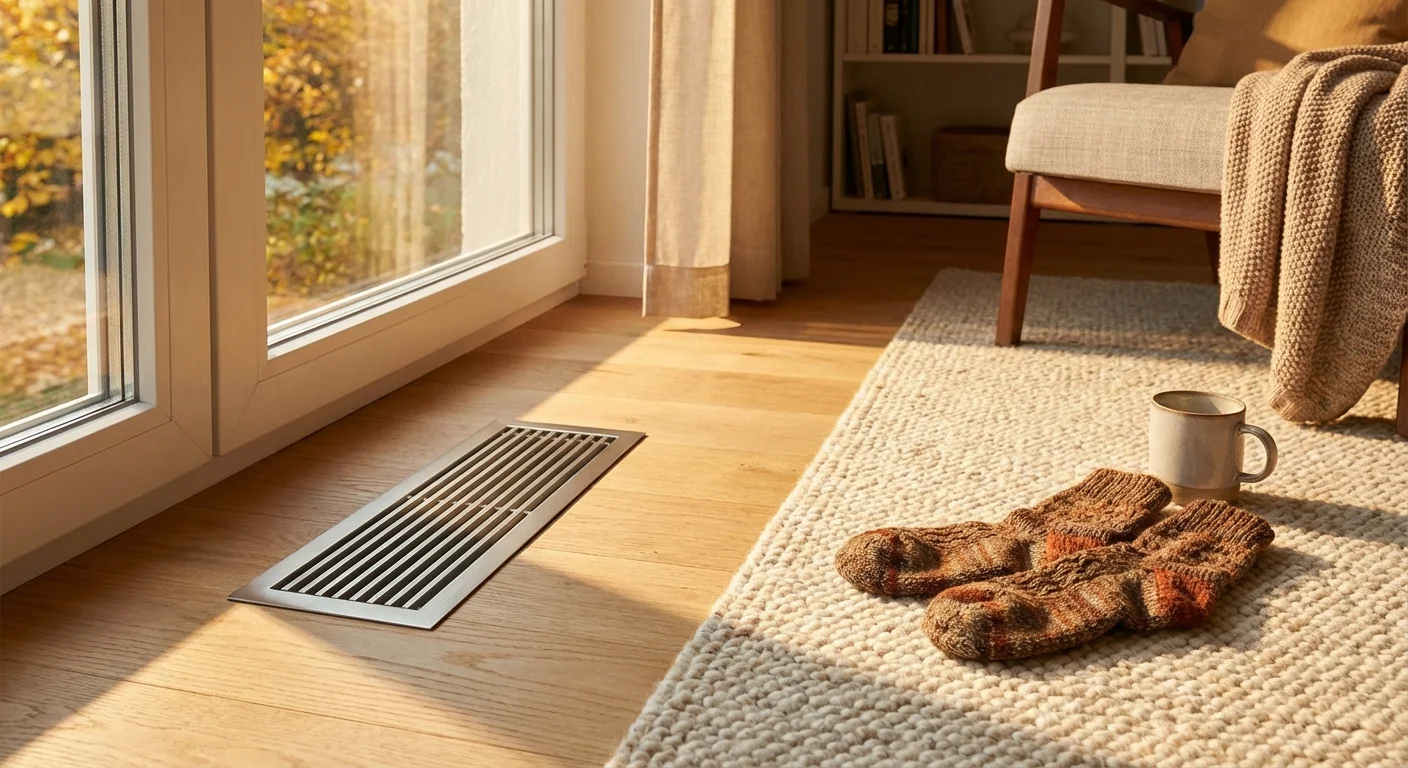
Walk through your home and inspect every supply register and return grille. Move rugs, couches, and bookshelves away from the vents. Blocking a vent forces the air to back up into the ductwork, increasing static pressure. This pressure buildup stresses the blower motor and creates whistling noises.
Examine any exposed ductwork in your basement, attic, or crawlspace. Look for disconnected joints or degraded tape. According to the Energy Star program, in a typical house, about 20 to 30 percent of the air moving through the duct system is lost due to leaks, holes, and poorly connected ducts. Seal visible leaks using specialized mastic sealant or foil-backed HVAC tape. Never use standard cloth “duct tape,” as the adhesive dries out and peels away under temperature fluctuations.

Upgrading and Managing Your Thermostat
The thermostat serves as the brain of your climate control system. If the brain sends the wrong signals, the body suffers.
If you still use an old manual thermostat with a mercury dial, upgrading to a programmable or smart thermostat provides immediate energy savings. Smart thermostats learn your schedule, adjusting the temperature automatically when you leave for work and returning it to a comfortable level before you arrive home. They also provide valuable data, alerting you to sudden spikes in humidity or irregular cycling patterns that indicate an impending equipment failure.
Ensure your thermostat sits on an interior wall, away from direct sunlight, drafty windows, or heat-producing appliances like ovens and lamps. A thermostat baking in the afternoon sun will read the room as too hot, forcing your AC to run constantly and freezing out the rest of the house.
What Can Go Wrong: Common Maintenance Mistakes
Even with the best intentions, homeowners often make errors that damage their equipment. Avoid these common pitfalls to keep your system running smoothly.
- Closing vents in unused rooms: A pervasive myth suggests that closing vents in empty guest rooms saves money by redirecting air to occupied spaces. In reality, modern HVAC systems are balanced for the total square footage of the home. Closing vents increases the static pressure inside the ductwork, leading to reduced airflow, frozen evaporator coils, and cracked heat exchangers. Leave all vents at least partially open.
- Ignoring strange noises: A perfectly functioning system produces a steady, low hum. Banging, rattling, screeching, or grinding sounds indicate mechanical trouble. A screeching noise usually points to a failing blower motor belt or bearings; a rattling sound could mean a loose component is vibrating near the fan blade. Ignoring these auditory warnings turns a minor repair into a catastrophic failure.
- Skipping annual professional maintenance: DIY maintenance is crucial, but it does not replace the trained eye of a certified technician. Professional tune-ups catch micro-leaks in refrigerant lines, test electrical capacitance, and measure combustion efficiency—tasks that require specialized gauges and training.
“Regular maintenance pays for itself by reducing energy costs and extending the life of your equipment. It’s the difference between replacing a system at ten years versus getting twenty years of reliable comfort.” — Richard Trethewey, Plumbing and Heating Expert, This Old House

When to Call a Professional
While you can easily change a filter or clean a condenser coil, certain issues require professional intervention. Modern HVAC equipment utilizes high-voltage electricity, pressurized chemical refrigerants, and combustible gases. Attempting to service these components without proper licensing is dangerous and often voids the manufacturer’s warranty. Call a certified technician if you encounter the following scenarios:
Refrigerant Leaks and Freezing: If you notice ice building up on your copper refrigerant lines or your indoor evaporator coil, you likely have a restricted airflow issue or a low refrigerant charge. Since air conditioners do not “consume” refrigerant, low levels indicate a physical leak in the copper tubing. By law, only EPA-certified technicians can handle, reclaim, and recharge chemical refrigerants.
Electrical Failures and Tripped Breakers: If your air conditioner or furnace repeatedly trips the circuit breaker on your main electrical panel, do not keep resetting it. A tripping breaker signifies a serious electrical fault—often a failing compressor drawing too many amps or a short circuit in the wiring. Leave the breaker off and call for service to prevent electrical fires.
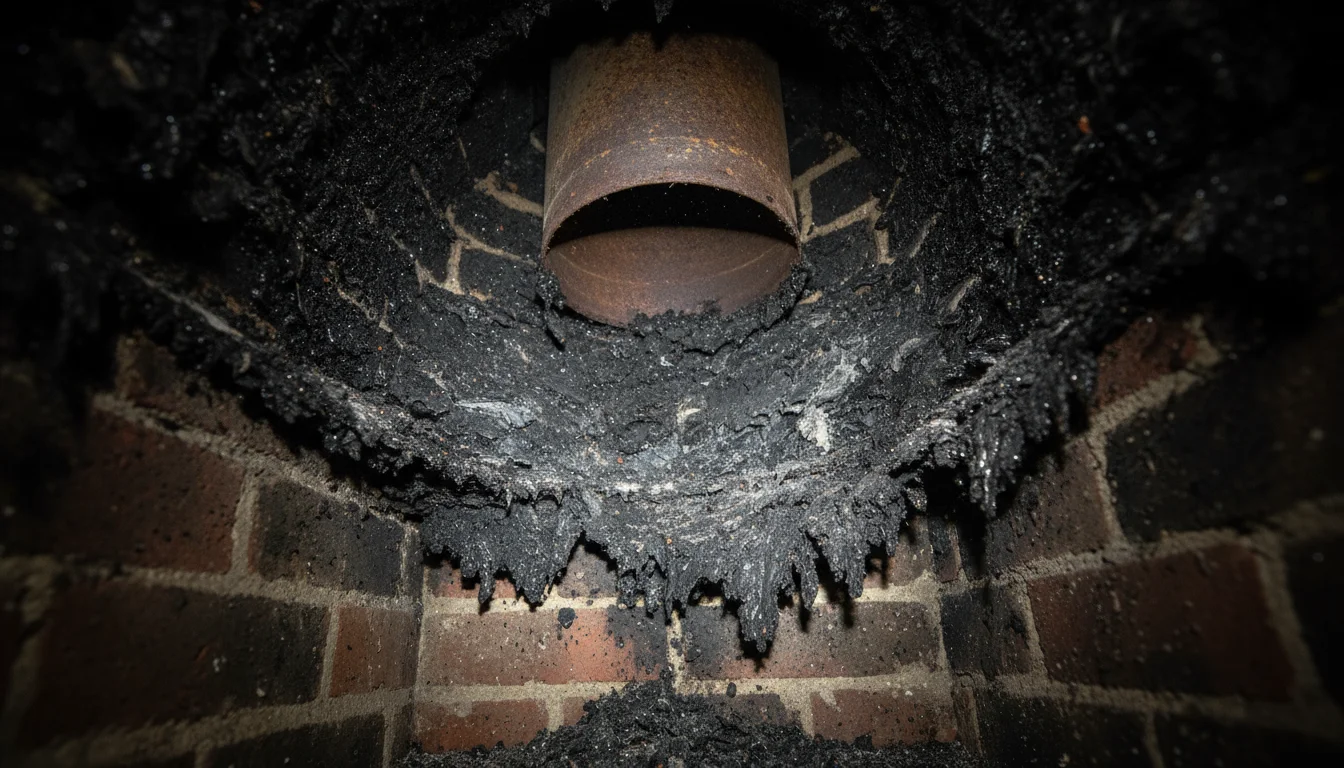
Gas Odors or Soot: If you smell the distinct odor of rotten eggs near your furnace, shut off the gas supply valve immediately, evacuate the house, and call your utility company or an HVAC professional. Similarly, if you see black soot accumulating around the furnace registers or outside the exhaust vent, the fuel is not burning cleanly, indicating a severe combustion problem.
The System is Short Cycling: Short cycling occurs when the system turns on for just a few minutes, shuts off abruptly, and then restarts shortly after. This constant starting and stopping destroys the compressor and blower motor. It can be caused by an oversized unit, an overheating furnace, or a malfunctioning control board—all of which require professional diagnostics.
Frequently Asked Questions
How long should an HVAC system last?
With rigorous maintenance, a central air conditioning unit typically lasts 12 to 15 years, while a gas furnace can operate safely for 15 to 20 years. Heat pumps, because they run year-round for both heating and cooling, generally last 10 to 15 years.
Is an annual HVAC tune-up really necessary?
Yes. Much like changing the oil in your car, annual tune-ups keep the machinery operating at peak efficiency. Furthermore, most major manufacturers stipulate in their fine print that failure to provide proof of annual professional maintenance will void the equipment warranty.
Why is water leaking around my indoor furnace?
During the summer, this usually indicates a clogged condensate drain line or a rusted drain pan beneath the evaporator coil. During the winter, if you have a high-efficiency condensing furnace, it means the condensate pump or the internal drain tubes have failed or frozen.
Can I use a pressure washer to clean my outdoor unit?
Never use a pressure washer on your condenser. The high-pressure water stream will instantly flatten and bend the delicate aluminum fins, choking off the airflow and destroying the unit’s ability to exhaust heat.
Caring for your home’s climate control system pays dividends in quiet operation, lower utility bills, and consistent comfort. By managing your filters, keeping your outdoor units clear of debris, and addressing small noises before they become major breakdowns, you take command of your indoor environment. Take ten minutes today to check your current air filter and mark your calendar for your seasonal maintenance tasks.
This guide provides general home improvement information. Every home is different—what works in one space may need adaptation in yours. For structural changes or electrical/plumbing work, consult a licensed professional.
Last updated: February 2026








Leave a Reply