
Winterizing a yard without a shed turns an unheated garage into a cramped obstacle course beside a daily-driven car. Dragging tools, cushions, and mowers indoors all at once blocks car doors and traps gear against salty tire slush.
Instead of one rushed cleanout, staging fall tasks between a 32°F light frost and a 28°F hard freeze keeps outdoor-safe items outside longer. Only dry, freeze-sensitive gear enters assigned dry zones ahead of the bumper or on upper walls.
6 Weeks Before Frost: Early Mower Storage Causes Snow Mold and Stale Fuel
How it goes wrong: Parking the mower too early forces you to skip late cuts or wedge it beside car doors. Buying extra gas late in fall leaves stale fuel sitting all winter.
Why it happens: Grass grows until soil chills, so long blades flop under snow and trap moisture that triggers snow mold. Scalping turf in one cut stresses roots, while untreated gasoline degrades in about 30 days.
The fix: Look up your ZIP code’s average first frost date through your state Cooperative Extension office, since dates vary by weeks within one state. Stage pre-frost tasks outside while keeping the mower near the garage door:
- Stop buying extra gas: Six weeks before frost, purchase fuel stabilizer ($8 to $15) instead of refilling large gas cans.
- Service the cutting blade: Spend 30 minutes sharpening or replacing the mower blade ($10 to $25 at a shop) while mowing at normal height.
- Finish cool-season lawn work: Aerate or overseed thin turf, cut watering as rain increases, and flag sprinkler heads near walkways.
- Prep perennials outdoors: Divide crowded hostas and daylilies and plant spring bulbs straight into beds so nothing crowds garage shelves.
At 32°F Light Frost: Over-Clearing Beds Packs Aisles and Costs Spring Blooms
How it goes wrong: Cutting back every perennial and stacking brush or mulch bags on the garage slab after a 32°F frost steals door clearance. Pruning shrubs in fall also strips spring flowers and draws mice.
Why it happens: University of Vermont Extension advises homeowners to avoid fall pruning on spring-flowering shrubs like lilac, forsythia, and azalea because buds are already set. Mulching warm soil traps heat that attracts nesting mice.
The fix: Keep yard waste out of the garage by sorting bed tasks between the 32°F light frost and colder soil near 28°F:
- Clear only blackened annuals at 32°F: Pull dead annuals and spent vegetables, bagging foliage with powdery mildew, blight, or leaf spot for trash because backyard compost rarely kills spores.
- Leave healthy perennials standing: Keep dry stems and seedheads outdoors to catch snow, shelter insects, and feed birds until a spring budget curb appeal refresh.
- Compost clean leaves outdoors: Move surplus leaves to an outdoor home compost pile, then clear bare-tree gutters using our gutter cleaning guide.
- Wait for cold soil to mulch: Spread 2 to 3 inches of shredded leaves or straw around roses and tender perennials outdoors once ground chills toward 28°F.
- Skip premature winter wraps: Hold high-nitrogen shrub fertilizer, save burlap for broadleaf evergreens in windy or salted spots, and leave large limbs near power lines to a licensed arborist.
Between 32°F and 28°F: Attached Hoses Split Pipes and Floor Coils Get Crushed
How it goes wrong: Leaving a garden hose connected past a 32°F frost splits interior plumbing, while dropping stiff coils on the garage bay puts brass couplings under car tires. Undrained sprinkler manifolds crack shallow fittings during a 28°F freeze.
Why it happens: Attached hoses trap water inside even frost-free sillcocks, freezing backward into wall pipes so leaks stay hidden until spring thaw. Unemptied irrigation lines expand as soil freezes for several hours at 28°F or colder.
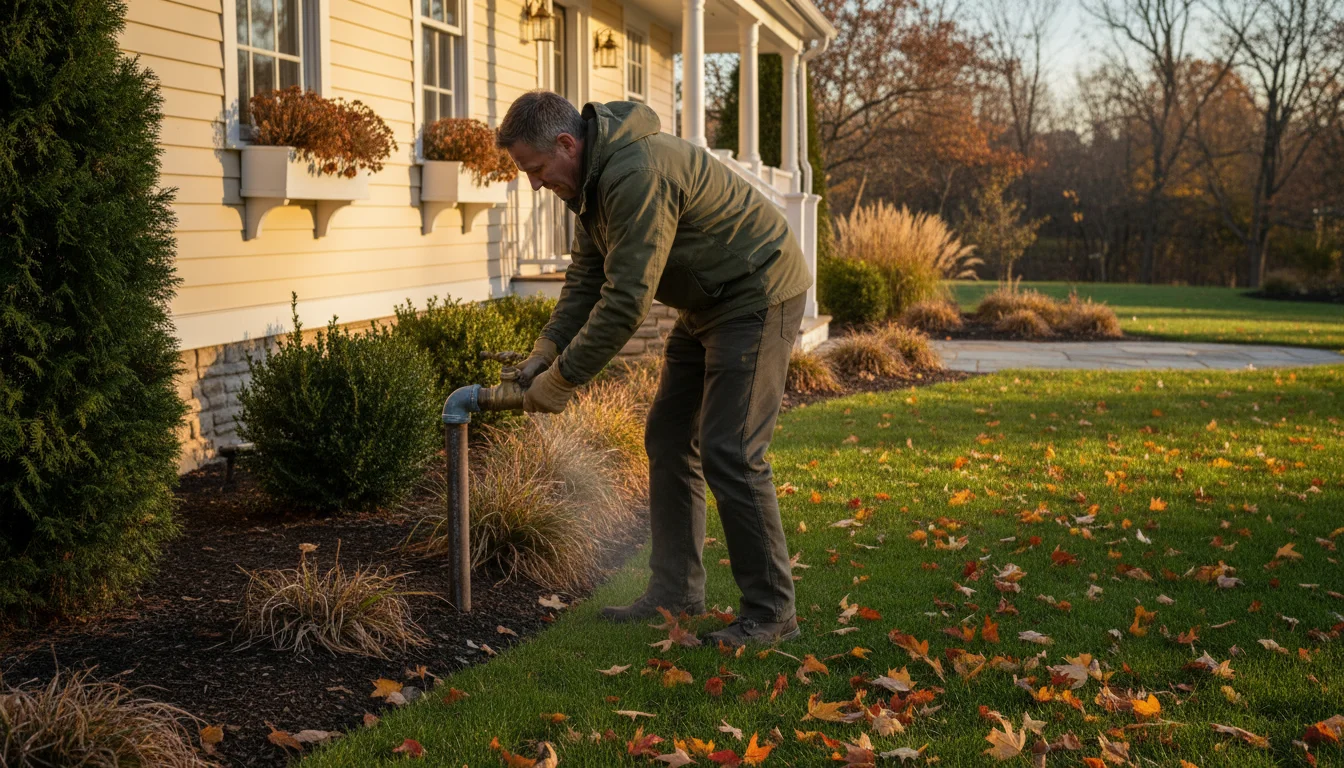
The fix: Drain outdoor plumbing right after the 32°F light frost and store hoses on high wall hooks above tire and door height:
- Drain hoses and spigots at 32°F (20 minutes, $3 to $8 per cover): Follow University of Illinois Extension advice to disconnect and drain garden hoses, close interior shutoffs, leave exterior taps open under foam covers, and hang coils high.
- Drain manual irrigation lines before 28°F (30 to 60 minutes, $0): Follow EPA WaterSense guidance to shut off the irrigation water supply and drain the lines by closing the supply valve, switching controllers off, and opening low-point drains.
- Book a blow-out for drainless systems (30 to 60 minutes, $75 to $150): Hire an irrigation contractor if your system lacks drains or sits shallow, since excess compressor pressure cracks fittings and launches debris.
- Protect above-ground valves: Wrap backflow preventers in foam pipe insulation after checking local licensed-tester rules, and check interior garage walls with our guide to preventing frozen pipes.
At 28°F Hard Freeze: Side-Parked Mowers Rust in Salt Slush and Gum Up
How it goes wrong: Parking a grass-caked mower along the car’s side wheel well after your final cut pits the steel deck and stalls spring startups. Leaving lithium battery packs in an unheated garage damages cells during hard freezes.
Why it happens: Winter slush and road salt dripping off daily tires pool in side aisles, accelerating deck rust under damp clippings. As Briggs & Stratton notes, untreated gasoline starts to degrade in about 30 days, leaving carburetor-clogging gum.
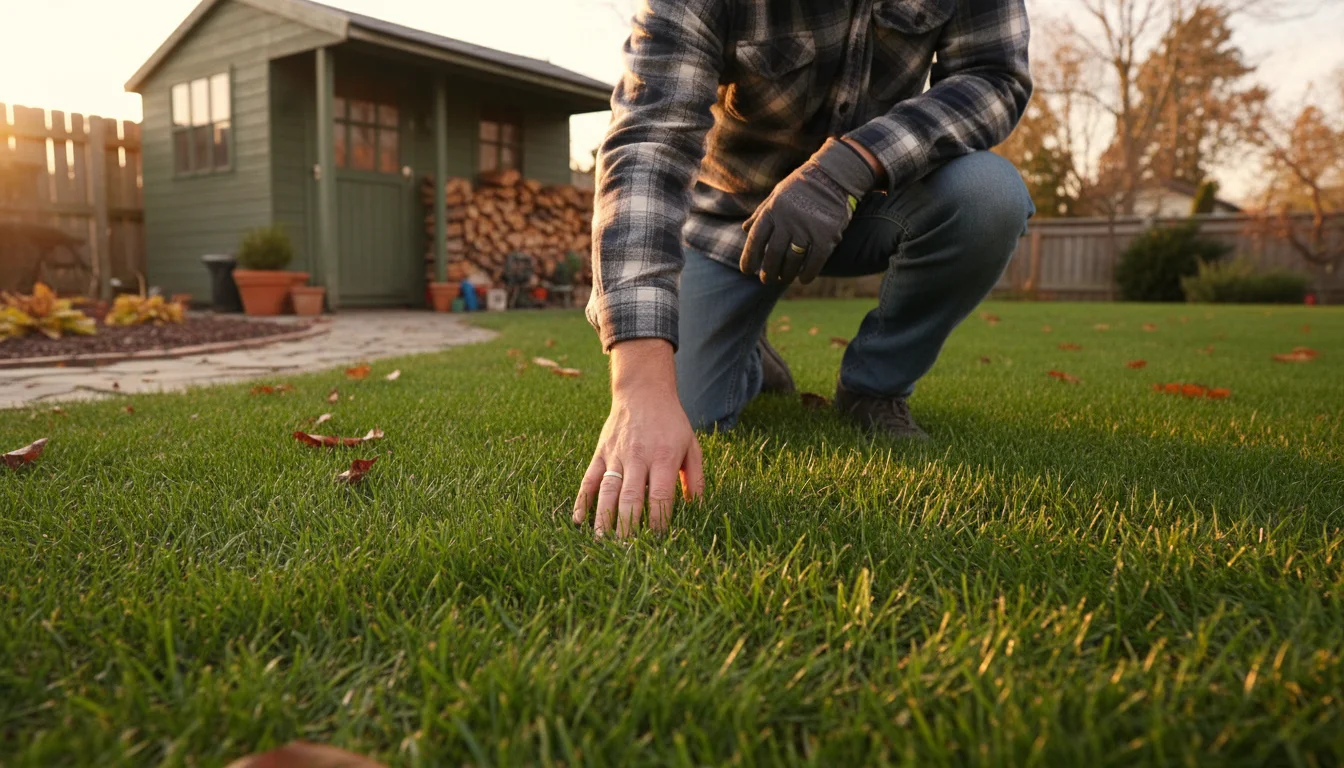
The fix: Keep mowing until growth stops before the 28°F freeze, then spend 45 minutes ($8 to $15 for stabilizer) prepping the mower for the dry front wall ahead of your car bumper:
- Stepped final cuts (1 to 2 hours per weekend, $0): Lower the deck one notch every cut or two and mulch-mow leaves weekly so wet mats cannot yellow grass within weeks, finishing at 2 to 2.5 inches.
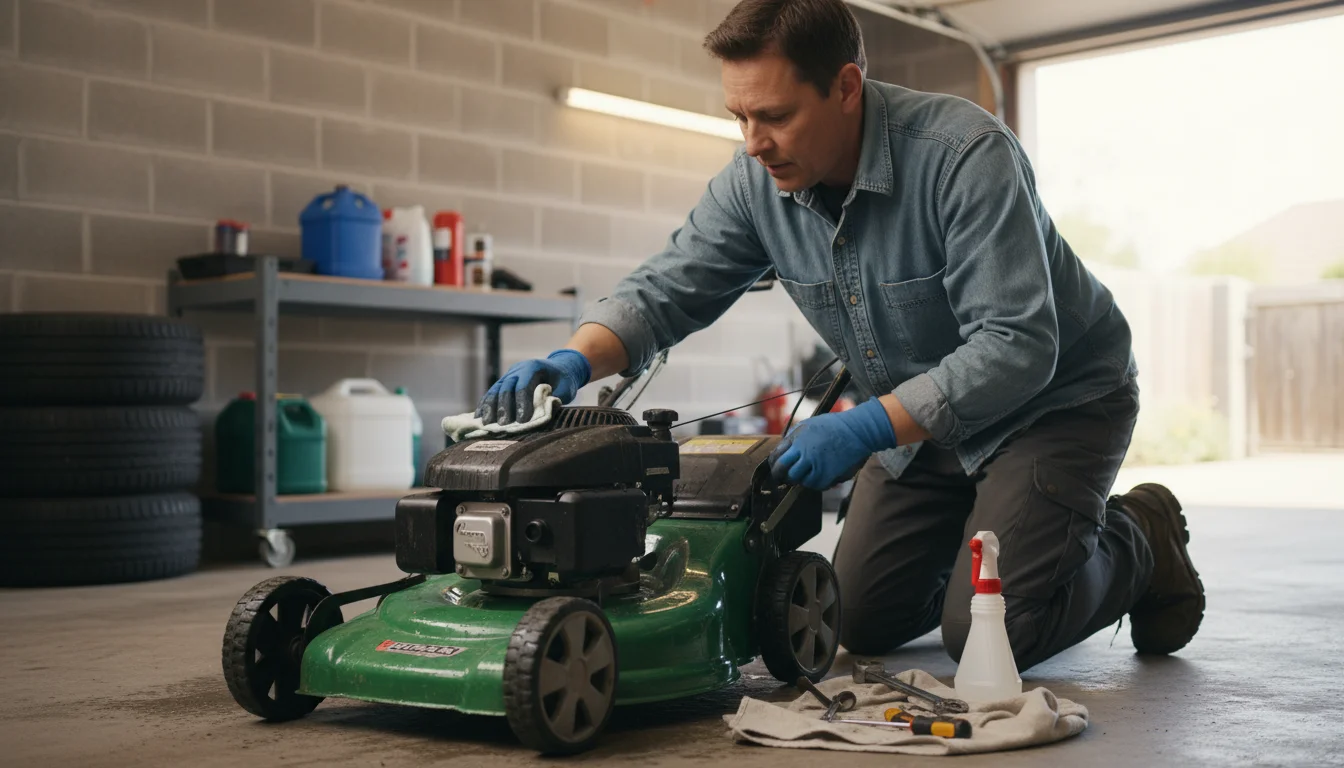
- Stabilize or drain fuel: Add stabilizer to fresh gas in the mower and gas can, run the engine a few minutes, and top off the tank, or run it dry if your manual specifies.
- Clean and store away from splash: Cool the engine for 30 minutes, pull the spark plug wire, tip with carburetor and air filter up, scrape caked clippings, change oil if due, and park tight against the front wall.
- Move batteries indoors: Remove electric-mower packs and store them inside heated rooms at the temperature and charge level listed in the manual, using our garage storage layout guide for front-zone spacing.
At 28°F Hard Freeze: Floor-Stacked Terracotta Cracks and Sealed Cushions Mildew
How it goes wrong: Pulling heavy planters and damp cushions onto the garage floor right before a 28°F freeze steals bumper clearance so the garage door cannot shut. By spring, clay pots shatter and sealed cushion bags grow mildew.
Why it happens: Unheated garages still drop to freezing during a 28°F hard freeze, expanding moisture inside porous terracotta and wet potting soil until walls split. Sealed plastic sitting on cold concrete traps damp air inside cushion foam.
The fix: Spend 1 to 2 hours ($0 to $5) sorting patio items outdoors before the 28°F freeze so only dry, shelf-sized pieces enter high garage storage:
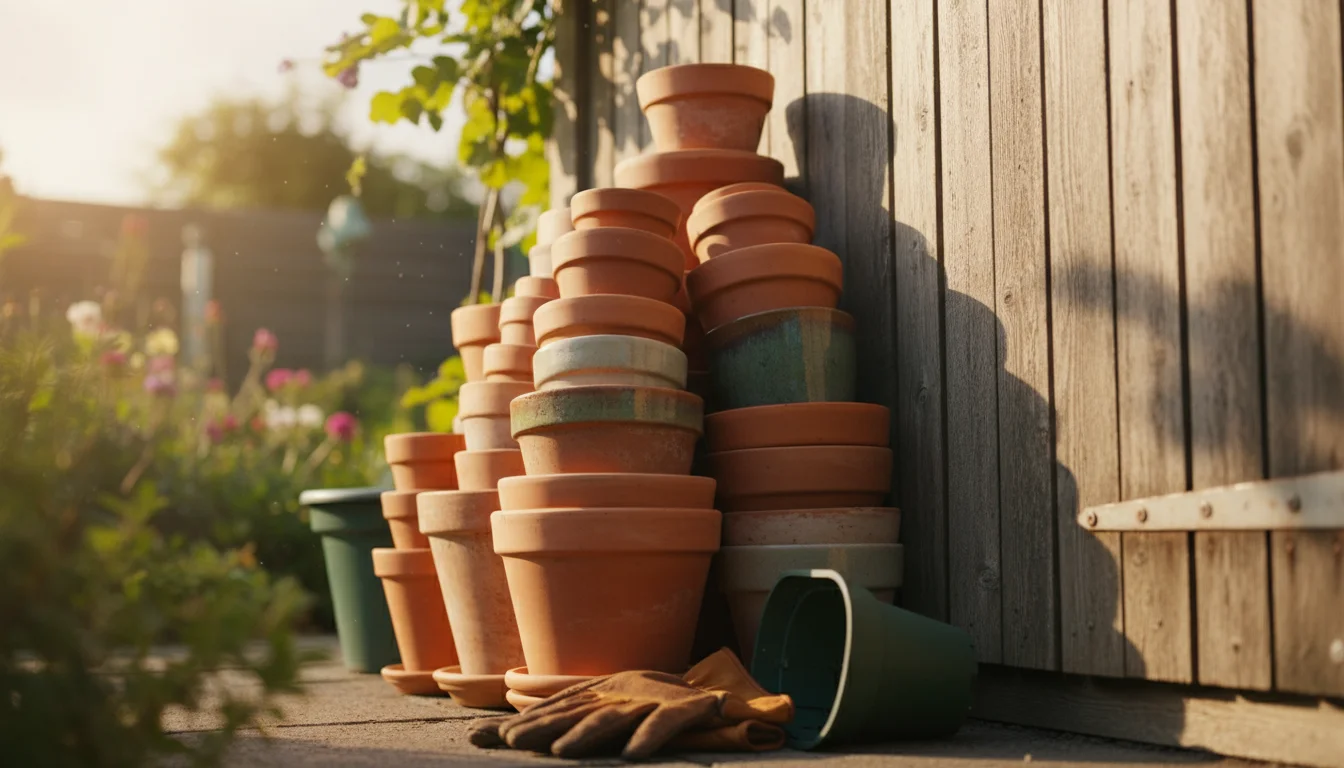
- Leave durable pots outside: Keep plastic, fiberglass, and resin containers outdoors, and empty immovable heavy pots, cover them, and raise them on pot feet.
- Dry and invert clay pots: Follow University of Vermont Extension guidance on emptying and storing terracotta by dumping soil onto garden beds, brushing clay and glazed ceramic pots clean, and stacking them upside down on upper shelves.
- Wash and shelf-store cushions: Brush off dirt, wash with 1/4 cup mild soap per gallon of water, rinse, stand on edge until completely dry, and pack in breathable bags on high shelves.
- Keep furniture outdoors: Care for frames, decking, and pavers in place with our deck and patio schedule instead of crowding the parking bay.
After Final Chores: Leaning Tools Dent Car Doors and Oily Rags Risk Fire
How it goes wrong: Propping muddy shovels and pruners along a tight garage wall pits steel edges and tips handles into opening car doors. Tossing oil-soaked finishing rags into a pile near fuel cans creates a severe fire hazard.
Why it happens: Damp soil rusts tool blades in unheated air, while routine bleach corrodes metal. Worse, NASA safety guidance warns that linseed-soaked rags can spontaneously combust as oil oxidizes inside bunched fabric.
The fix: Spend 1 hour ($10 to $20 for alcohol and oil) after your last yard chores to sanitize, oil, and hang tools above door-swing clearance:
- Scrub and disinfect blades: Knock soil off shovels and hoes with a wire brush, then wipe pruner and lopper blades with 70% rubbing alcohol, which disinfects without the corrosion routine bleach causes.
- Coat metal and handles: Wipe bare steel with light oil, sand rough wooden handles, and rub in boiled linseed oil.
- Dispose of rags safely: Lay linseed-soaked rags flat outdoors to dry completely or seal them inside a metal can filled with water before discarding.
- Mount tools off the floor: Hang long-handled shovels, rakes, and hoes on wall tracks mounted high enough to clear car doors and side mirrors.