
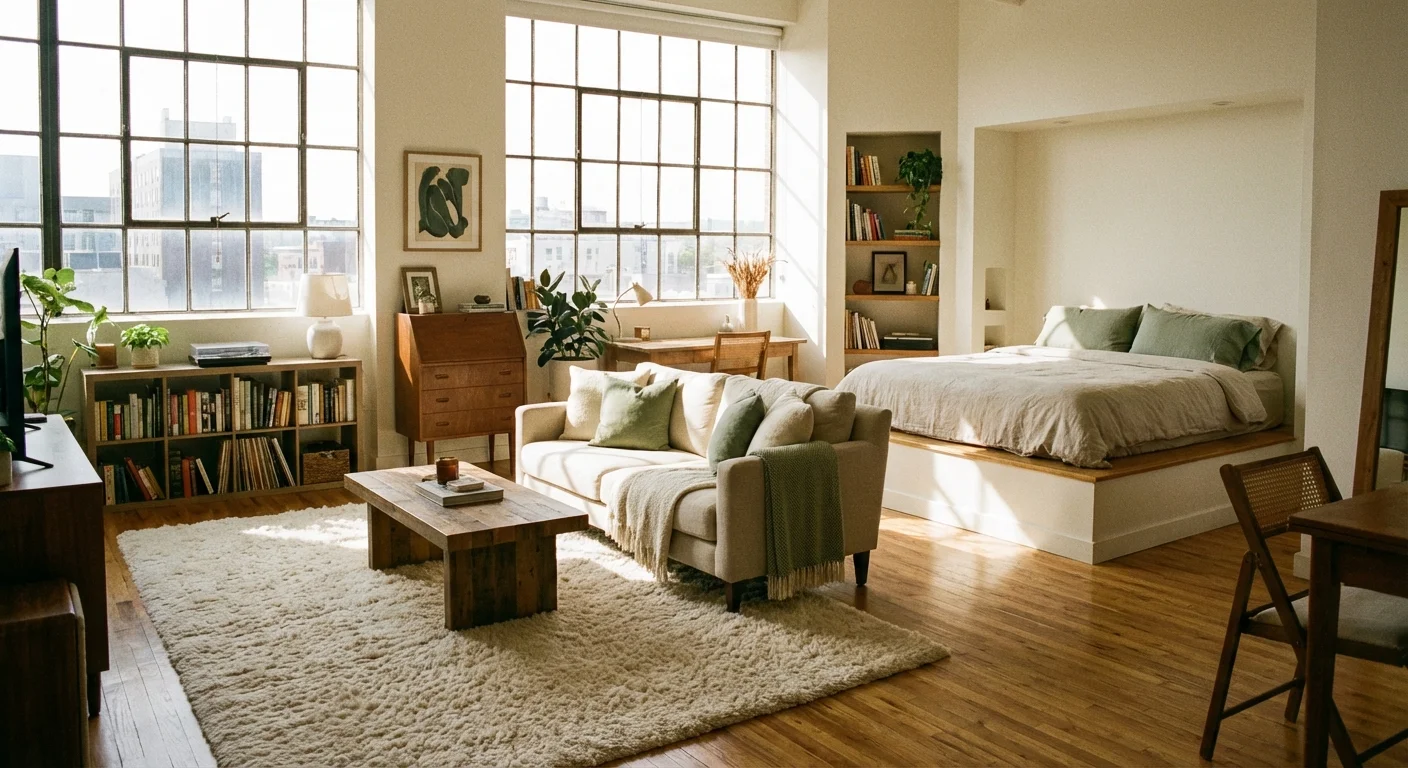
Living in a single room challenges everything you know about traditional home organization. When your bedroom, living room, dining area, and home office share the exact same footprint, every square inch carries immense weight. You cannot simply close a door on a messy bedroom or hide a cluttered desk down the hall; everything remains in your immediate line of sight. Yet, this inherent limitation offers a unique opportunity. A well-organized studio apartment forces you to curate your belongings meticulously, resulting in a space that feels intentional, cohesive, and remarkably comforting.
Mastering studio apartment organization requires a shift in perspective. Instead of seeing a lack of physical walls as a deficit, you can use furniture, lighting, and clever storage solutions to carve out functional zones. By rethinking how you interact with your environment, you can transform a cramped box into a highly efficient, stylish home that serves your daily needs without feeling overwhelming.
The Essentials of One-Room Living
- Define specific zones: Establish invisible boundaries for sleeping, living, and working using area rugs and furniture placement.
- Maximize vertical space: Draw the eye upward and reclaim floor space by utilizing floor-to-ceiling shelving and wall-mounted storage.
- Demand dual-purpose furniture: Every piece of furniture must earn its keep by offering hidden storage or serving multiple functions.
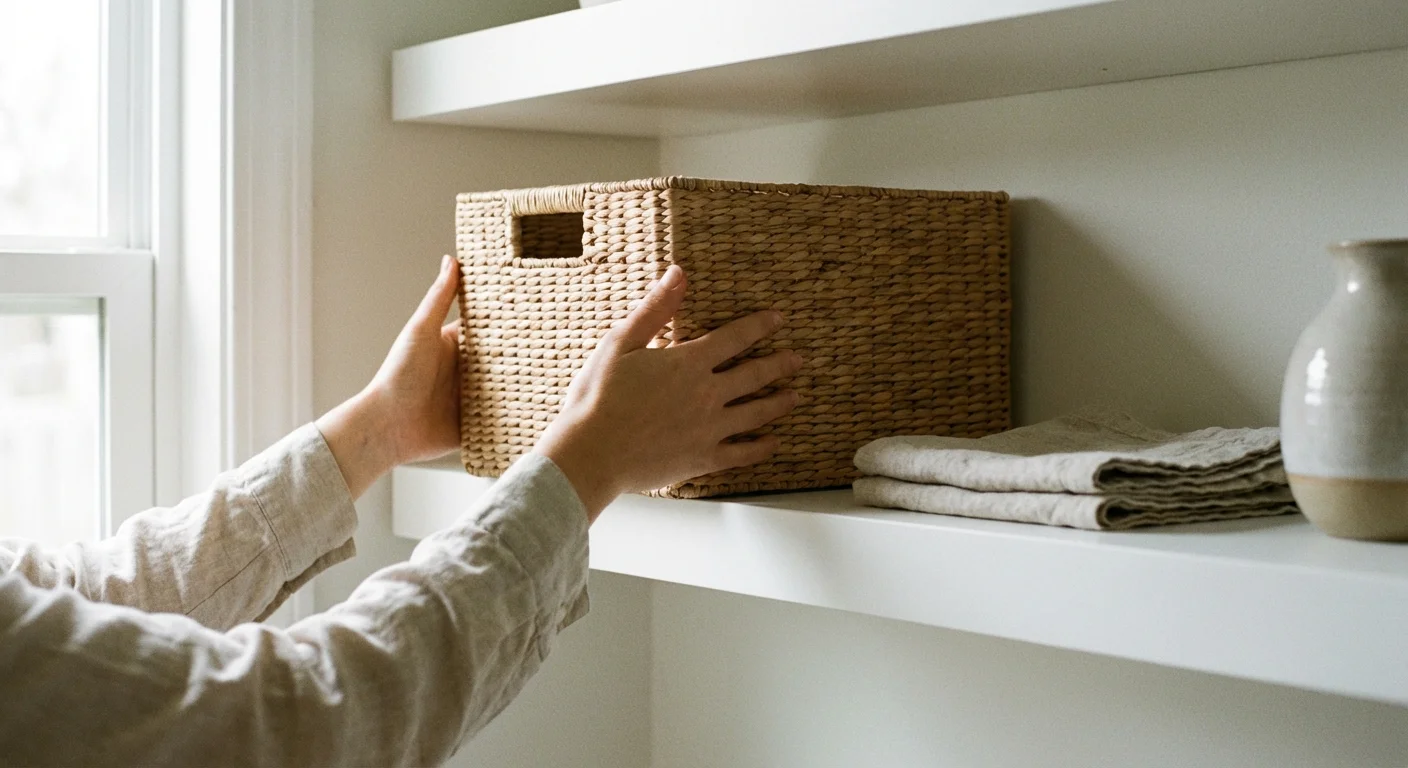
- Control visual clutter: Keep flat surfaces clear and utilize uniform storage bins to create a calm, cohesive aesthetic.
Mapping Your Studio Apartment Layout
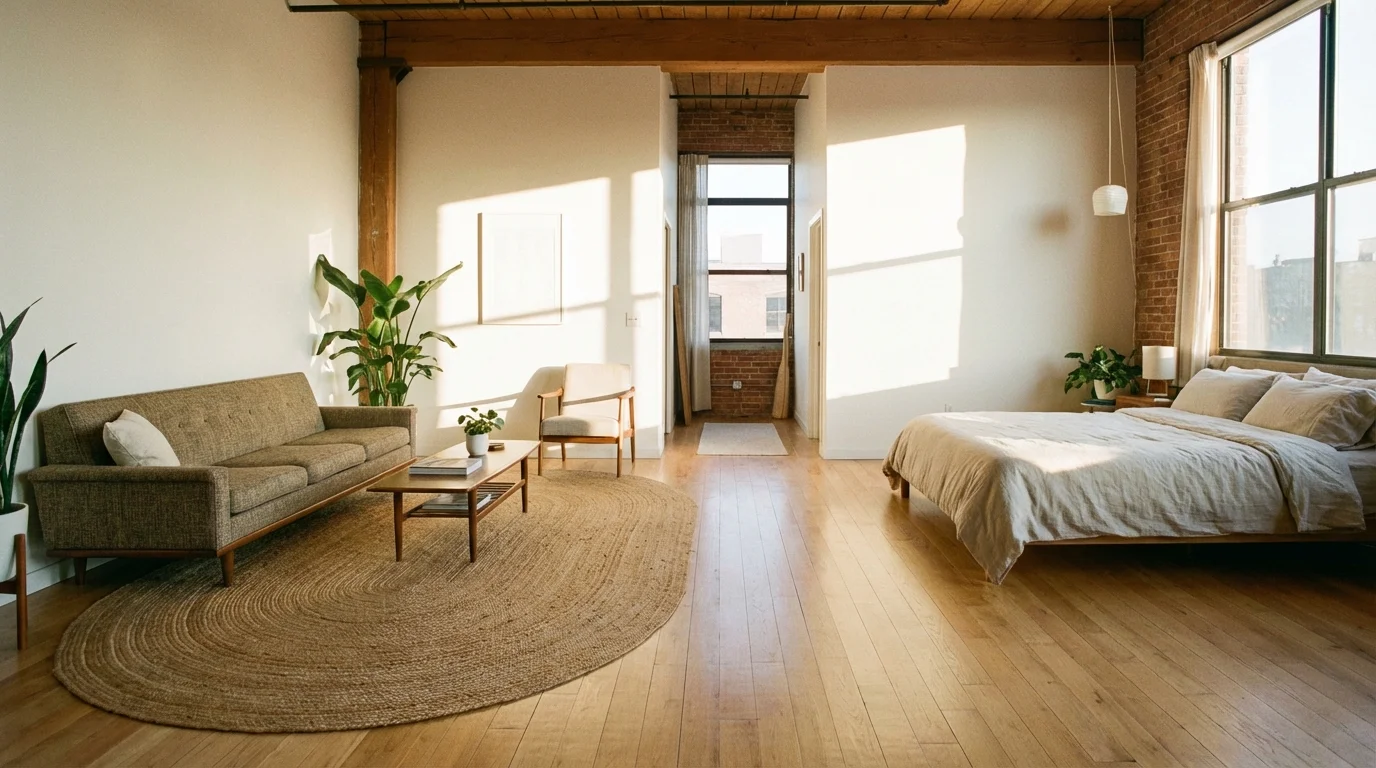
The foundation of effective one room living ideas begins with a strategic floor plan. Before you purchase a single storage bin or move a heavy sofa, you need to understand how energy and movement flow through your space. Without walls to dictate where the living room ends and the bedroom begins, you must create these boundaries yourself. Interior designers refer to this as zoning.
For more specific inspiration on physical barriers, explore these creative studio apartment room divider ideas that won’t make the space feel smaller.
Learning how to divide a studio apartment effectively ensures that each area serves its intended purpose without feeling cluttered.
Start by identifying your natural focal points. If your apartment features a beautiful bay window or a striking fireplace, orient your primary living space around it. Position your bed in the quietest, darkest corner of the room, ideally away from the entryway and the kitchen appliances. Once you have your anchor pieces—the bed and the sofa—mapped out, you can begin defining the edges of these zones.
Area rugs serve as excellent visual dividers. Placing a five-by-eight rug beneath your sofa and coffee table instantly signals that this specific area is designated for lounging, separating it from the sleeping quarters even if they are only a few feet apart. Leave a minimum of 30 to 36 inches of walking space in your main pathways to prevent the apartment from feeling like an obstacle course. If you constantly bump your hip on a dresser while walking to the bathroom, the layout needs adjustment.
Strategic furniture placement also creates boundaries. A low-profile sofa placed at the foot of your bed creates a distinct barrier between the sleeping and living areas without obstructing natural light. For more comprehensive layout strategies tailored to challenging floor plans, resources like Apartment Therapy offer extensive galleries of real-world studio setups.
Vertical Space: The Secret Weapon of Small Apartment Storage
When floor space runs out, the only direction left to go is up. Most standard furniture stops at waist or chest height, leaving feet of usable wall space completely abandoned. Capitalizing on this vertical real estate represents a cornerstone of small apartment storage.
Don’t overlook awkward nooks; implementing clever corner shelving ideas can turn dead space into a functional display or storage area.
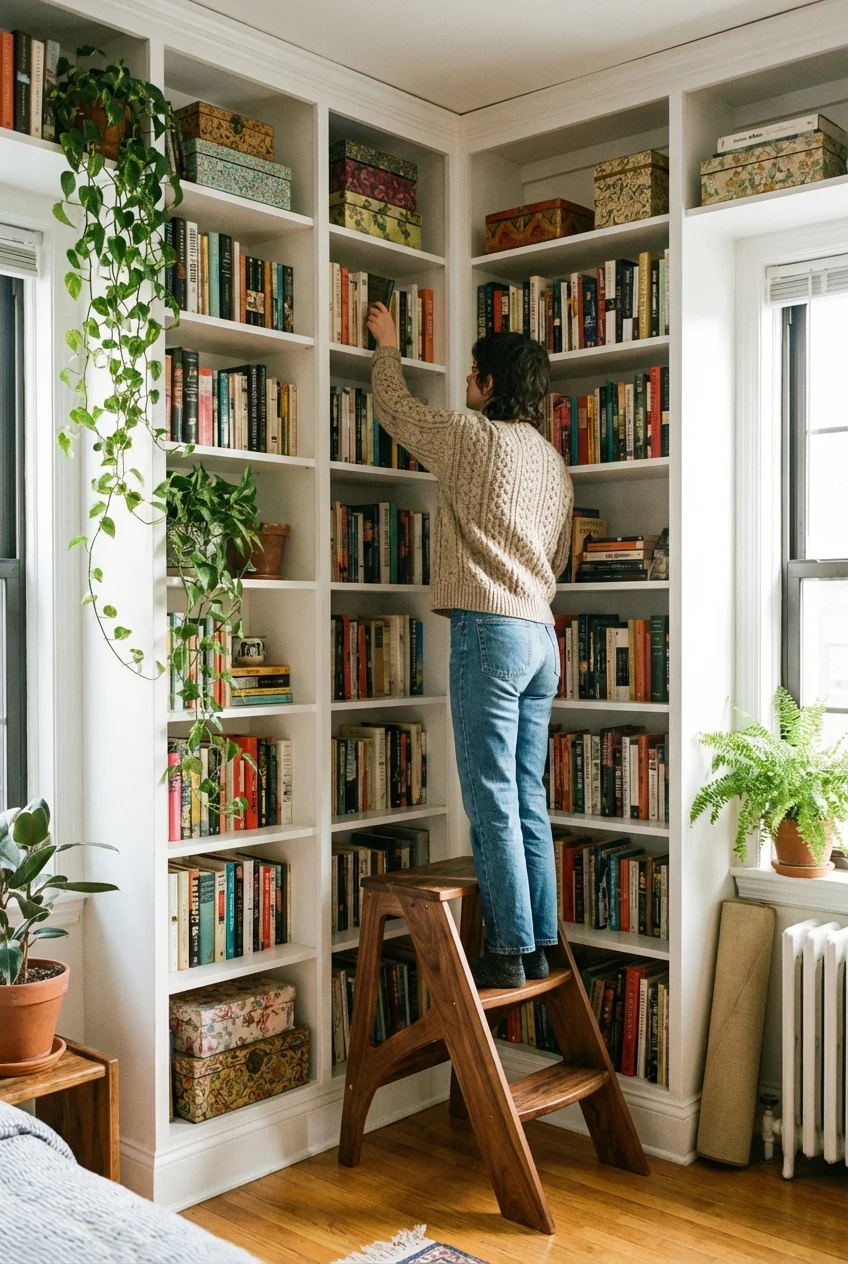
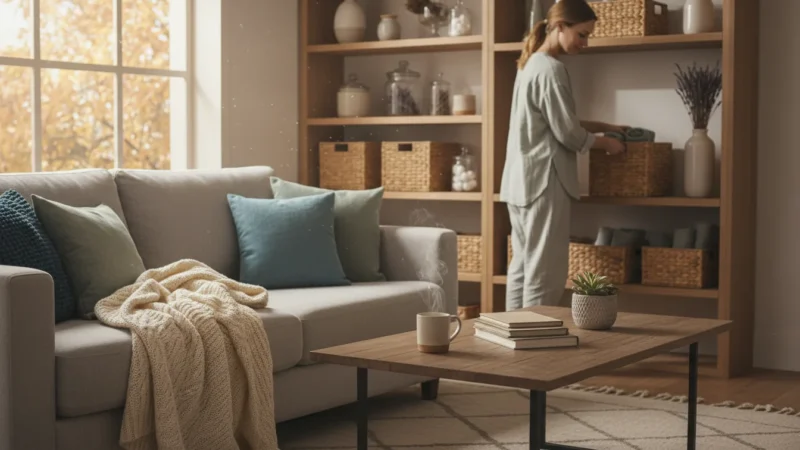
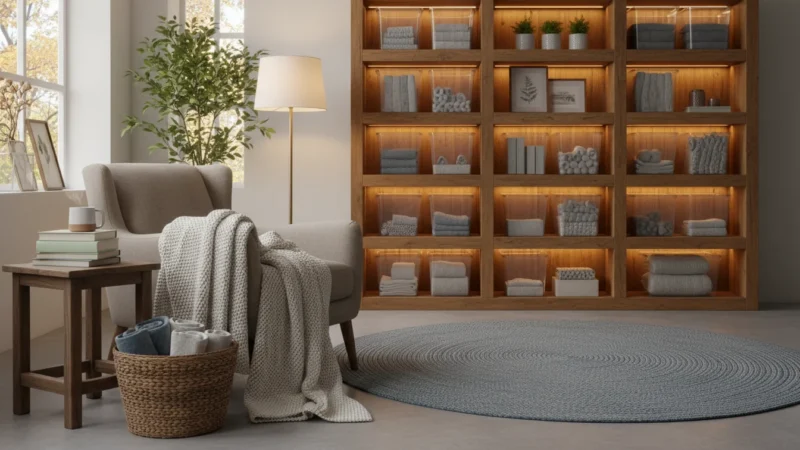
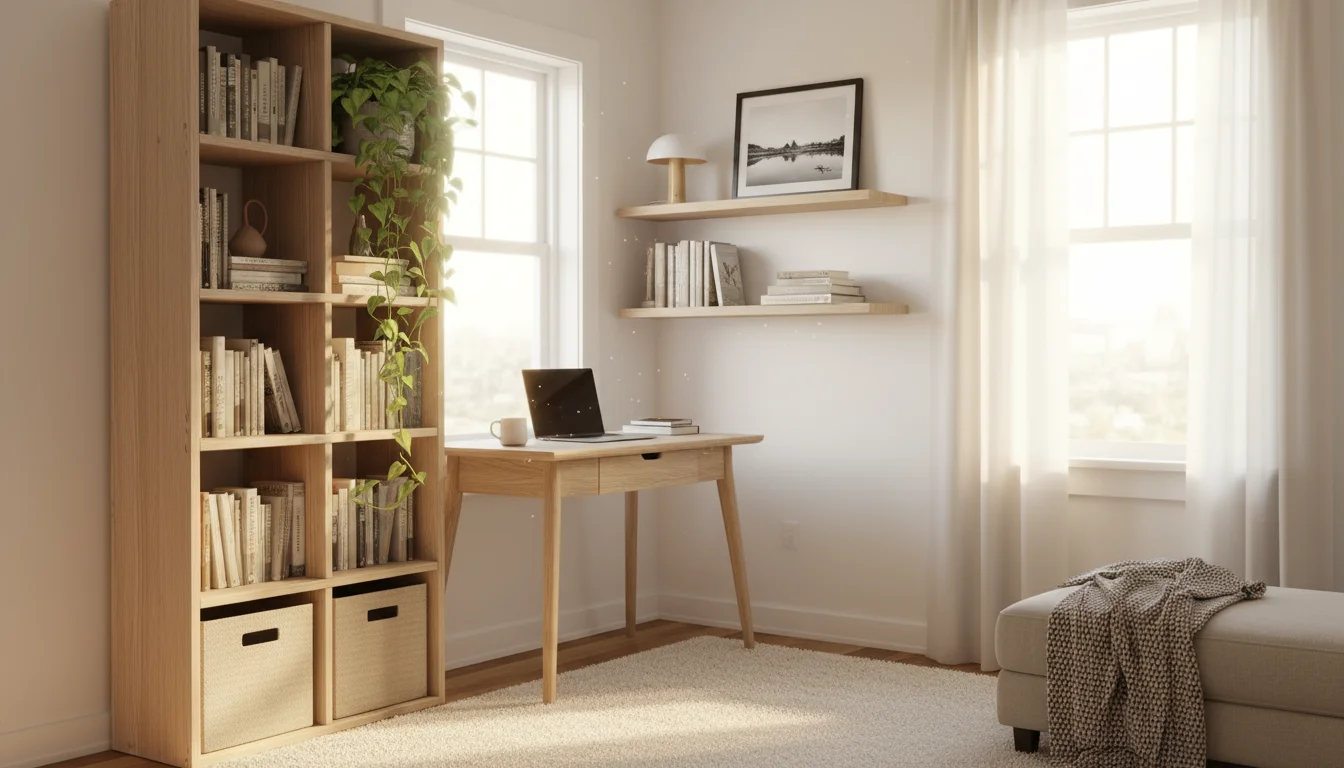
Floor-to-ceiling shelving units provide massive amounts of storage while occupying a minimal footprint. Instead of buying two short bookcases, invest in one tall unit that draws the eye upward, making your ceilings appear higher. Use the lowest shelves for heavy items like books and storage baskets containing out-of-season clothing. Reserve the eye-level shelves for everyday items and decorative pieces that bring you joy. The highest shelves—the ones requiring a step stool—should house items you only need a few times a year, such as holiday decorations or specialized cookware.
Wall mounting is another powerful tool for reclaiming your floor. A floating console beneath your television removes the visual weight of a traditional TV stand and provides space underneath to tuck away poufs or storage baskets. Floating nightstands attached directly to the wall beside your bed serve the same purpose. Even in the entryway, a wall-mounted shelf with hooks below can replace a bulky coat rack or console table.
“Clutter is caused by a failure to return things to where they belong. Therefore, storage should reduce the effort needed to put things away, not the effort needed to take them out.” — Marie Kondo, Organizing Consultant
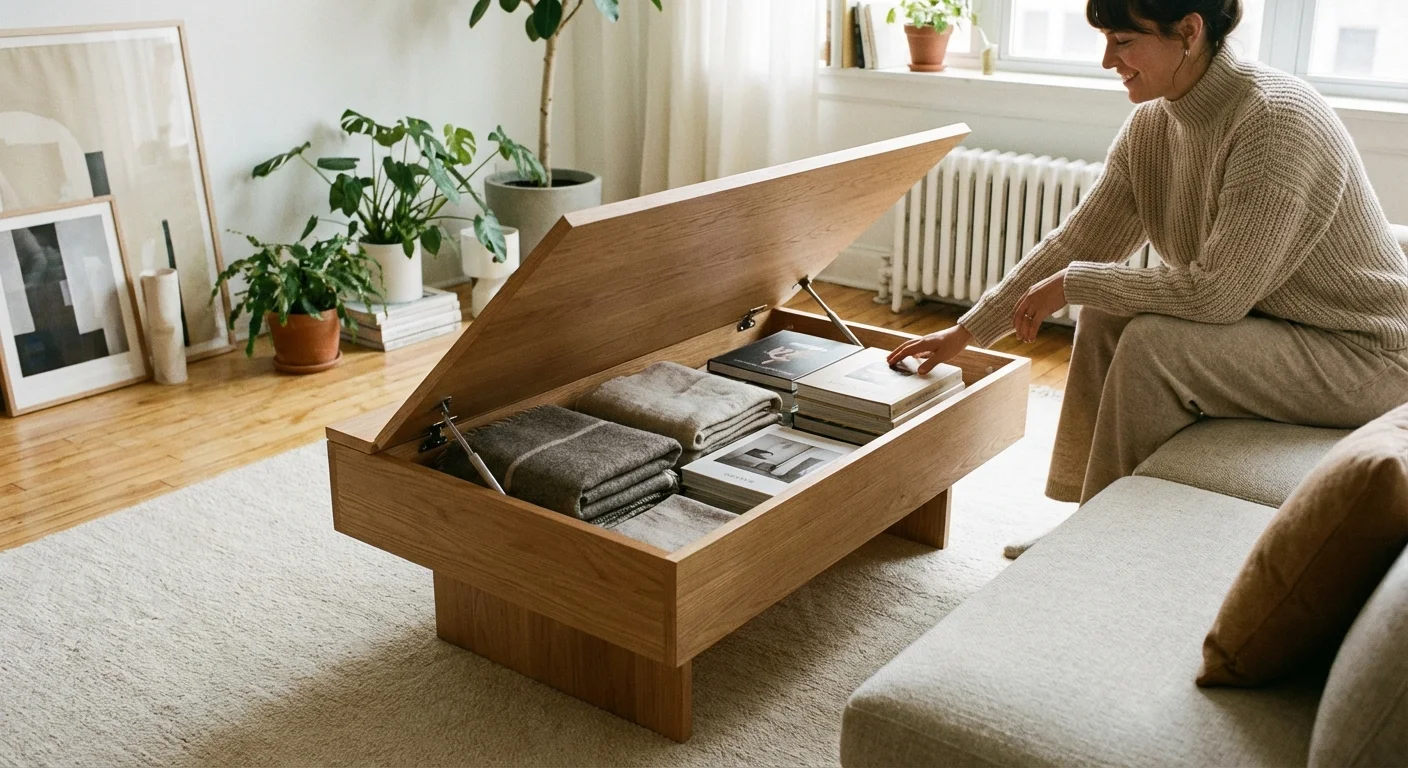
Multi-Functional Furniture: Maximizing Utility
In a studio apartment, furniture that only performs one job is a luxury you can rarely afford. Every piece must pull double duty to maximize your square footage. When selecting furniture, prioritize items that offer concealed storage or can adapt to different situations throughout the day.
A lift-top coffee table, for example, functions as a standard living room centerpiece but elevates to dining or desk height, eliminating the need for a separate home office or dining table. Storage ottomans provide seating for guests while hiding extra blankets or seasonal shoes. Even your bed, the largest piece of furniture in the room, should feature built-in drawers or offer enough clearance underneath for rolling storage bins.
| Furniture Need | Traditional Choice | Studio-Optimized Alternative | Why It Works Better |
|---|---|---|---|
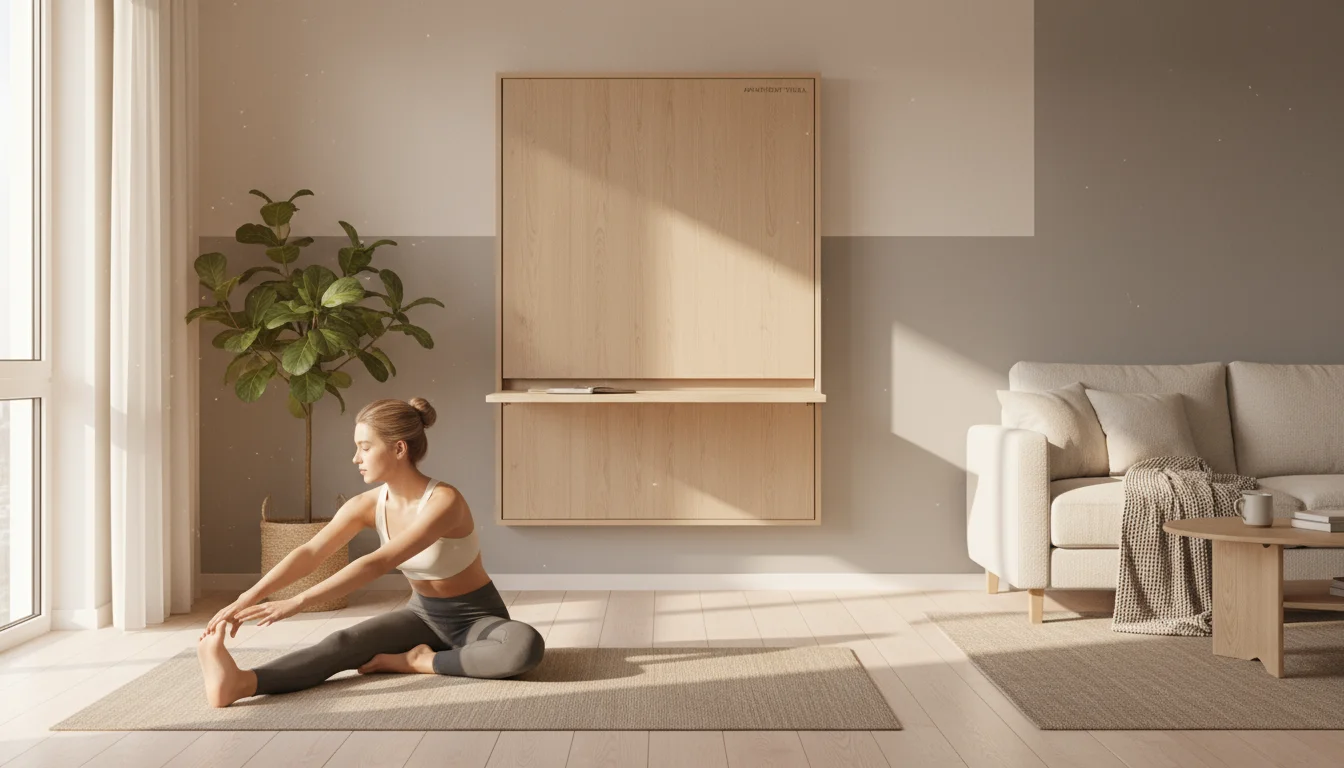
| Sleeping | Standard Bed Frame | Storage Platform Bed or Murphy Bed | Provides massive concealed storage for off-season items; a Murphy bed frees up entire floor space during the day. |
| Dining/Working | Dining Table | Drop-Leaf Table or Lift-Top Coffee Table | Expands when hosting guests or working, but folds flat against a wall or tucks away when not in use. |
| Seating | Standard Sofa | Sleeper Sofa with Chaise Storage | Accommodates overnight guests and hides bulky items like winter coats or extra bedding inside the chaise. |
| Coffee Table | Glass-Top Table | Storage Trunk or Nesting Tables | A trunk hides clutter; nesting tables can be spread out for guests and stacked tightly together afterward. |
You can find endless inspiration for multi-functional living configurations through IKEA Ideas, which specializes in modular, adaptable furniture explicitly designed for tight quarters.
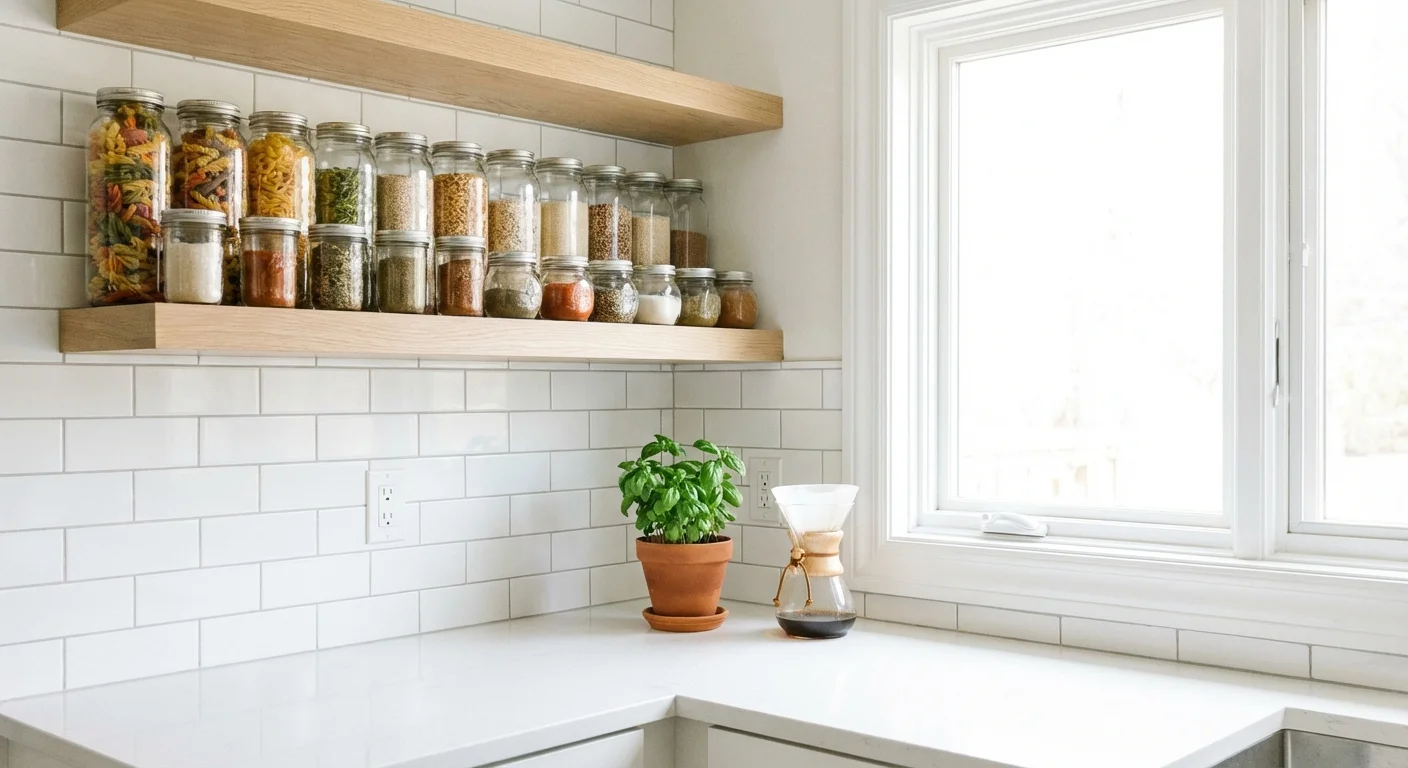
Kitchen Organization Without a Pantry
Studio apartment kitchens are notoriously tiny, often featuring limited counter space, a handful of cabinets, and absolutely no pantry. Organizing this space requires ruthless editing and creative storage solutions to keep cooking from becoming a frustrating chore.
Begin by decluttering your cookware and gadgets. You do not need three spatulas or a specialized avocado slicer. Keep a single, high-quality set of pots and pans—ideally ones that nest neatly inside each other. Once you have pared down to the essentials, rethink your cabinet organization. Use tension rods vertically inside cabinets to store baking sheets and cutting boards upright, acting like a filing system. Add wire risers to shelves so you can stack plates and bowls without creating an unstable tower.
To compensate for the lack of a pantry, utilize the space on your walls and doors. A magnetic strip mounted above the backsplash holds knives securely, freeing up valuable drawer space and eliminating the need for a bulky countertop knife block. Pegboards offer a highly customizable way to hang pots, pans, and frequently used utensils. If you have a few inches of space between your refrigerator and the wall, slide in a slim, rolling utility cart to hold spices, oils, and canned goods.
Decanting dry goods into clear, square, airtight containers also saves space. Bulky cereal boxes and half-empty bags of pasta waste premium cabinet real estate. Square containers stack perfectly, maximizing every inch of shelf height while making it easy to see what ingredients you have on hand.
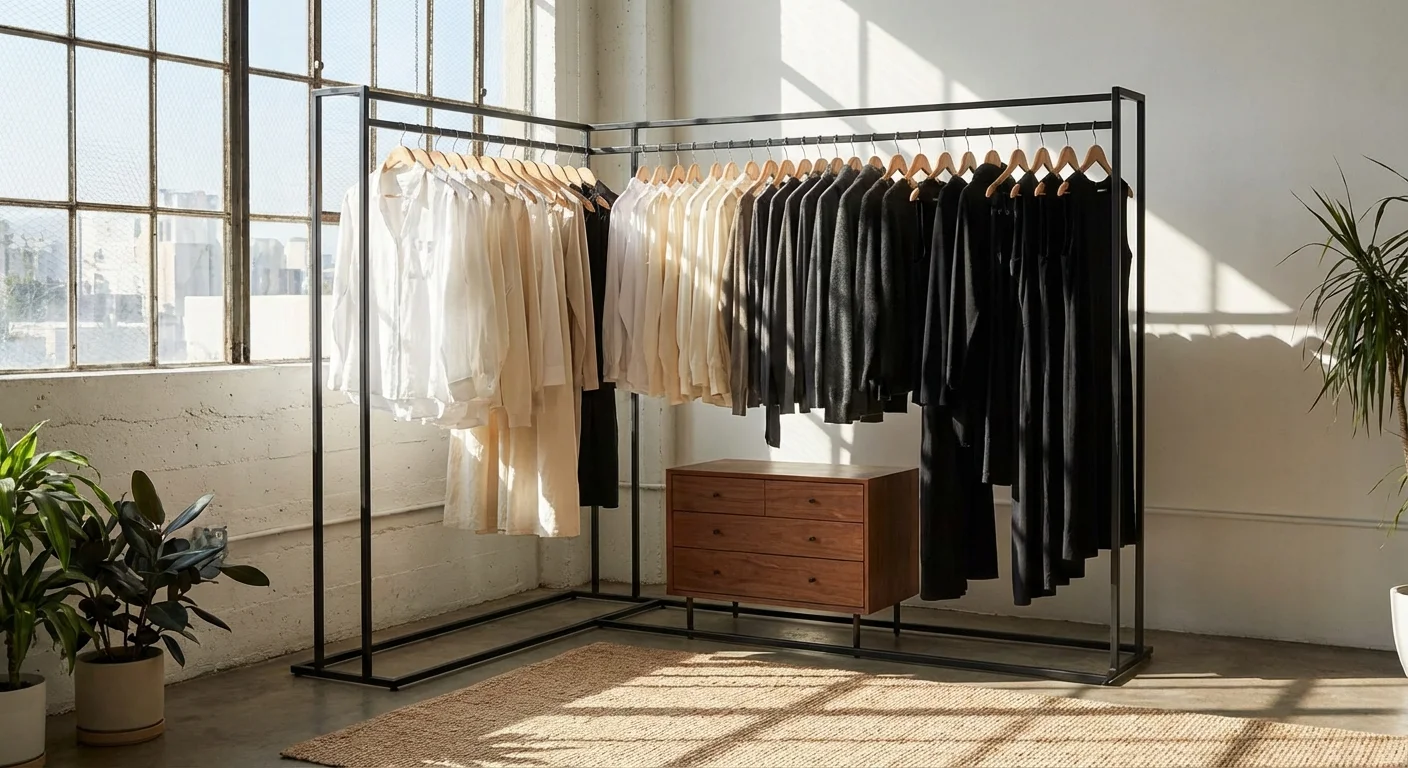
The Wardrobe Challenge: Where to Put Your Clothes
Many studio apartments feature a single, narrow closet—or worse, no built-in closet at all. Managing your wardrobe in these conditions demands discipline and strategic storage tools.
First, swap all your mismatched hangers for slim, velvet, non-slip hangers. This single adjustment can instantly increase your closet hanging capacity by up to 30 percent, while creating a visually uniform, boutique-like appearance. For items like scarves, belts, or multiple pairs of jeans, use cascading hangers that utilize the vertical drop of the closet rather than the horizontal rod space.
If you lack a built-in closet, you will need to create an open wardrobe. A freestanding clothing rack can look incredibly chic if kept tidy, but it requires strict curation. Display only your current seasonal, aesthetically pleasing clothing on the rack, and hide undergarments, workout gear, and pajamas in a nearby dresser. The Container Store offers numerous modular, customizable freestanding closet systems that can be tailored to exact wall measurements.
Seasonal rotation is non-negotiable in a studio. During the summer, thick wool sweaters and heavy coats have no business taking up your prime storage areas. Vacuum-seal your off-season clothing and store them in flat bins under your bed or on the highest shelf of your closet. By only keeping the current season’s wardrobe accessible, you dramatically reduce daily dressing friction.
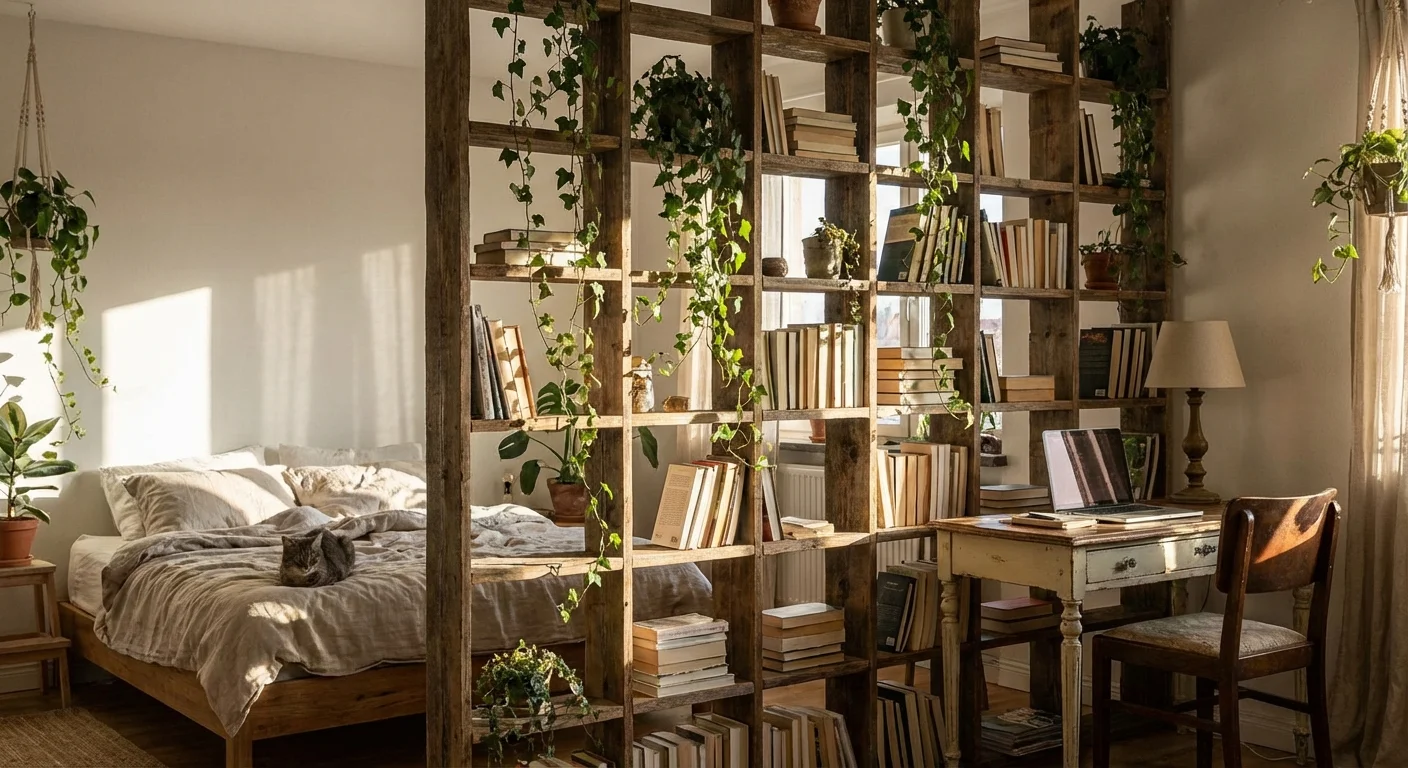
Creating Visual Separation Without Blocking Light
Studio apartment layout planning often involves a delicate balancing act: you want to create distinct rooms, but you cannot block the natural light. Because most studios only have windows on one or two walls, erecting a solid barrier can leave half the apartment feeling like a dark cave.
Explore different studio apartment room divider ideas that allow you to segment your home while maintaining an open, airy aesthetic.
Instead of heavy folding screens, opt for open-backed shelving units. A bookcase positioned perpendicular to a wall can serve as a room divider between your bed and living area. Because the shelves lack a back panel, natural light passes through, maintaining the airy feel of the apartment. Fill the shelves with a mix of books, trailing plants, and attractive storage boxes.
Curtains mounted on a ceiling track offer another excellent method for visual separation. You can pull them closed when you want privacy or when you want to hide an unmade bed from unexpected guests, and easily pull them back to open up the room. Choose sheer or light-filtering fabrics to ensure illumination still penetrates the space.
Do not underestimate the power of lighting to define zones. A floor lamp casting a warm glow over a reading chair creates a cozy corner separate from the bright, overhead task lighting of the kitchen. By using multiple light sources placed at different heights, you create pools of light that act as invisible boundaries during the evening.
Studio Apartment Tips: Maintaining the Space
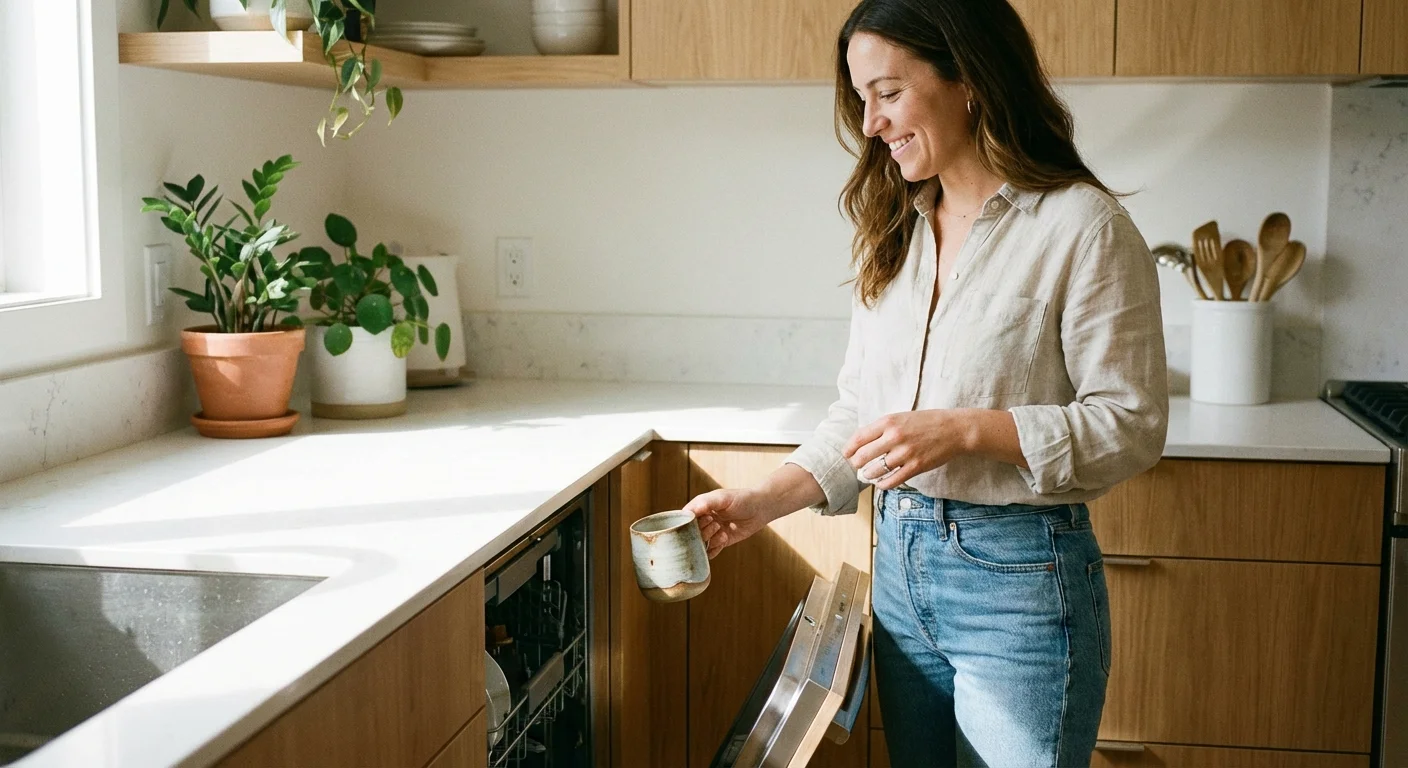
The most beautifully organized studio apartment will quickly devolve into chaos without a solid maintenance routine. In a large house, you can leave a pile of mail on the dining table or a sweater over a chair without it ruining the room’s aesthetic. In a studio, a single pair of shoes left in the middle of the floor can make the entire home look messy.
Establish a 15-minute nightly reset routine. Before getting into bed, wash the dishes, wipe down the counters, put your shoes away, and fold any blankets. Waking up to a clean, orderly space sets a positive tone for the day and prevents clutter from accumulating.
Adopt the “one in, one out” rule. For every new item you bring into the apartment—whether it is a new pair of jeans, a coffee mug, or a decorative pillow—an old item must be donated, sold, or recycled. This strict boundary prevents your possessions from outgrowing your limited storage capacity. For deeper insights into establishing lasting decluttering habits, The Spruce provides excellent step-by-step cleaning and maintenance schedules tailored to small homes.
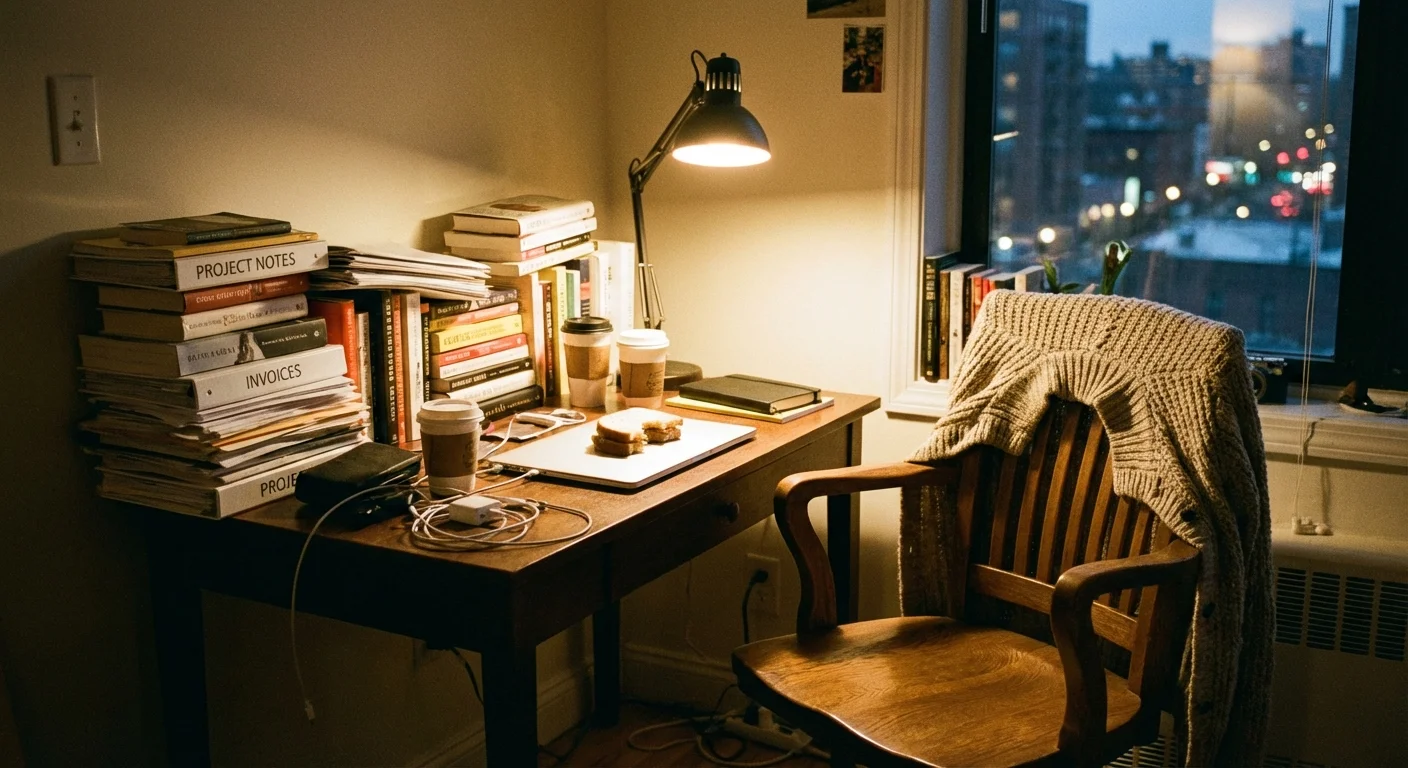
Paper clutter is particularly insidious in small spaces. Opt for paperless billing wherever possible, and immediately sort your mail over the recycling bin as soon as you walk through the door. Maintain a single, small physical inbox for important documents that require action, and digitize everything else.
What Can Go Wrong
Organizing a studio apartment comes with unique pitfalls. Being aware of these common mistakes can save you time, money, and frustration.
The Dollhouse Effect: In an effort to save space, many people purchase tiny furniture—a miniature sofa, a tiny cafe table, and a small rug. Instead of making the room feel larger, a collection of undersized furniture actually makes the space feel cramped and disjointed. It is often better to have fewer, full-sized, comfortable pieces than a cluster of miniature ones.
Blocking Natural Light: Pushing a tall wardrobe right next to your only window will cast heavy shadows across the room. Always keep tall, bulky furniture on the walls furthest from your light source, keeping the space around the windows low and unobstructed.
Too Much Closed Storage: While hiding clutter is essential, outfitting a room entirely in solid, floor-to-ceiling cabinetry can make the apartment feel like a fortified bunker. Balance closed storage (drawers, solid cabinets) with open storage (floating shelves, glass-front doors) to give the room visual depth and breathing room.
Ignoring Clearances: A drop-leaf table is useless if you cannot comfortably pull a chair out to sit at it. Always measure the clearance required to open drawers, swing cabinet doors, and walk past furniture before finalizing your layout.

When to Call a Professional
While most studio apartment organization projects can be tackled over a weekend with determination and a tape measure, certain situations warrant professional intervention.
- Custom Closet Design: If your studio has unusually shaped alcoves, slanted ceilings, or a single closet that must house everything from winter coats to cleaning supplies, a professional closet designer can maximize the space in ways standard modular systems cannot.
- Complex Wall Mounting: Securing a heavy television, floating credenza, or ceiling-mounted curtain track requires finding studs and avoiding electrical wiring. If your building has older plaster walls or metal studs, hiring a professional handyperson ensures your heavy items will not come crashing down.
- Custom Millwork: For long-term studio apartment dwellers or owners, custom built-ins—such as a tailored Murphy bed system or a built-in window seat with deep storage—can add massive value and utility. A carpenter or cabinet maker can seamlessly integrate these elements into your architecture.
Frequently Asked Questions
How do I hide my bed in a studio apartment?
You can hide your bed using physical dividers like a freestanding bookcase, a folding screen, or ceiling-mounted curtains. If you want to eliminate the bed entirely during the day, a Murphy bed that folds into the wall or a high-quality sleeper sofa are your best options. Strategically placing a low sofa at the foot of the bed also shifts the visual focus away from the sleeping area.
Where do you put your clothes in a studio without a closet?
Create an open wardrobe utilizing a sturdy freestanding garment rack for your best, seasonally appropriate clothing. Supplement this with under-bed rolling drawers, a tall dresser, and utilize vacuum-sealed bags for out-of-season items. Wall-mounted shelving with canvas bins above the garment rack can act as a substitute for a closet’s top shelf.
How can I make my studio apartment look bigger?
Maximize natural light by keeping window treatments minimal and placing mirrors opposite windows to bounce light deeper into the room. Keep furniture legs exposed rather than using skirts, which creates a sense of continuous floor space. Finally, stick to a cohesive, light color palette and ruthlessly minimize visual countertop and surface clutter.
Is it better to have one large rug or multiple small rugs in a studio?
Multiple rugs work best in a studio because they help delineate different functional zones. A large rug under the living area and a smaller runner near the kitchen or entryway subtly signal where one space ends and another begins, providing structure to an otherwise open floor plan.
Moving Forward with Intention
Embracing studio apartment organization requires patience and a willingness to edit your belongings to fit your current reality. You do not need thousands of square feet to live beautifully or comfortably. By defining your zones, investing in multi-functional furniture, and utilizing every inch of vertical space, you can cultivate a home that feels incredibly expansive, regardless of its physical footprint. Start small—perhaps by rethinking your closet hangers or adding a single wall-mounted shelf—and gradually layer in these strategies until the room hums with efficiency.
Take time to appreciate the simplicity that one room living ideas offer. Fewer rooms mean less space to clean, lower utility bills, and a curated environment filled only with items that serve a distinct purpose or bring you genuine happiness. The tips in this article are meant as general guidance. Your specific situation—including your home’s age, layout, and local building codes—may require different approaches. When in doubt, consult a professional.
Last updated: February 2026
Leave a Reply