

A spill happens in slow motion. The coffee cup tips, the dark liquid arcs through the air, and suddenly your pristine living room rug or favorite crisp shirt is completely compromised. Your heart sinks. Your immediate instinct might be to grab the nearest wet cloth and scrub the spot frantically. Resist that urge. Panic serves no purpose here; chemistry does.
Understanding these techniques is a vital component of any spring cleaning routine aimed at truly refreshing your home.
Stain removal is not about luck, nor is it about applying maximum physical force to a fabric. It is entirely about understanding the chemical composition of the offending substance and applying the specific counteragent designed to break it down. Whether you are dealing with a splash of red wine on a woven sofa, grass stains on a child’s denim knees, or a mysterious grease spot that emerged from the washing machine, you have the power to reverse the damage.
This comprehensive guide breaks down the science of fabric stain cleaning, providing you with exact methodologies to lift, dissolve, and eradicate the most stubborn marks in your home. By treating stain removal as a methodical process rather than a frantic emergency, you preserve the lifespan of your textiles and save significant money on replacements.
The Essentials: Stain Removal at a Glance
- Speed is your greatest ally: A fresh stain is exponentially easier to remove than one that has dried and bonded with the fabric fibers.
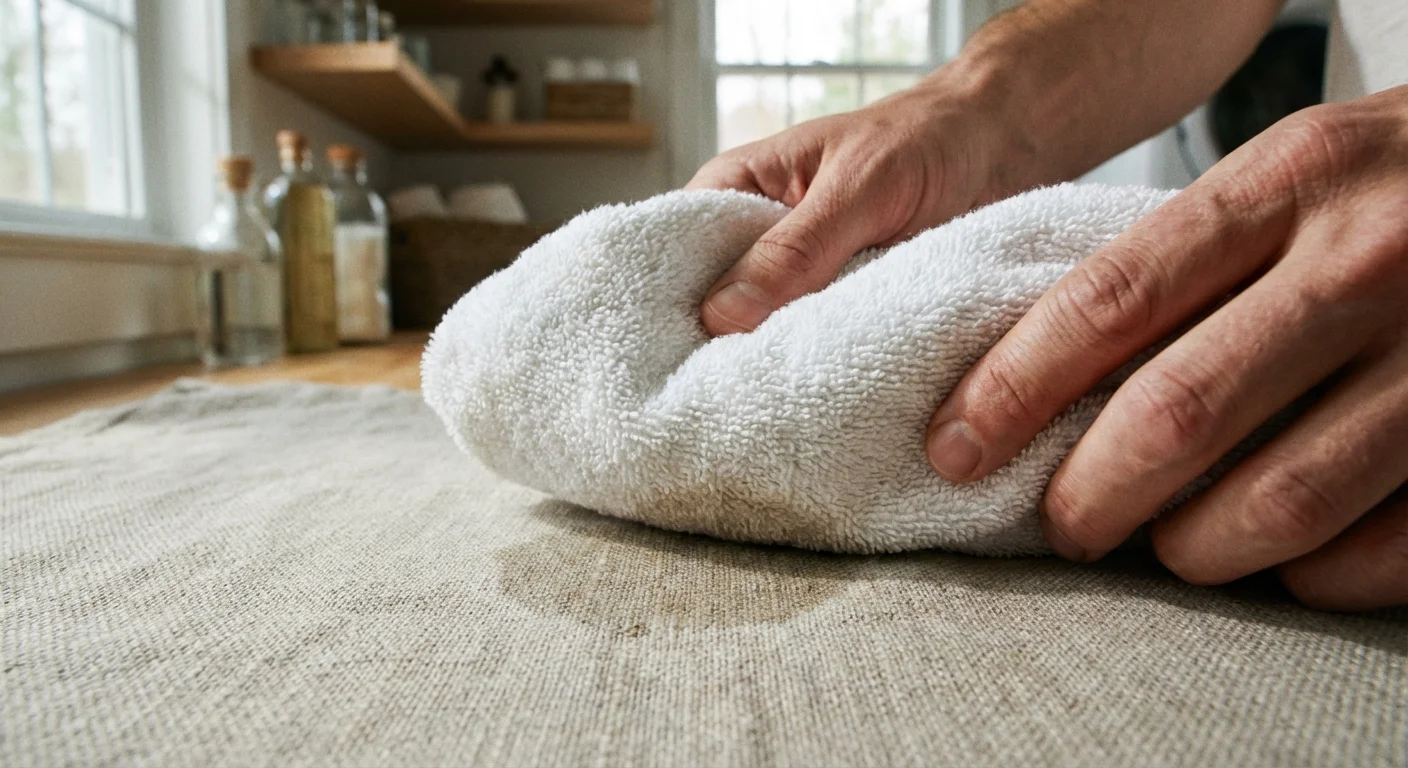
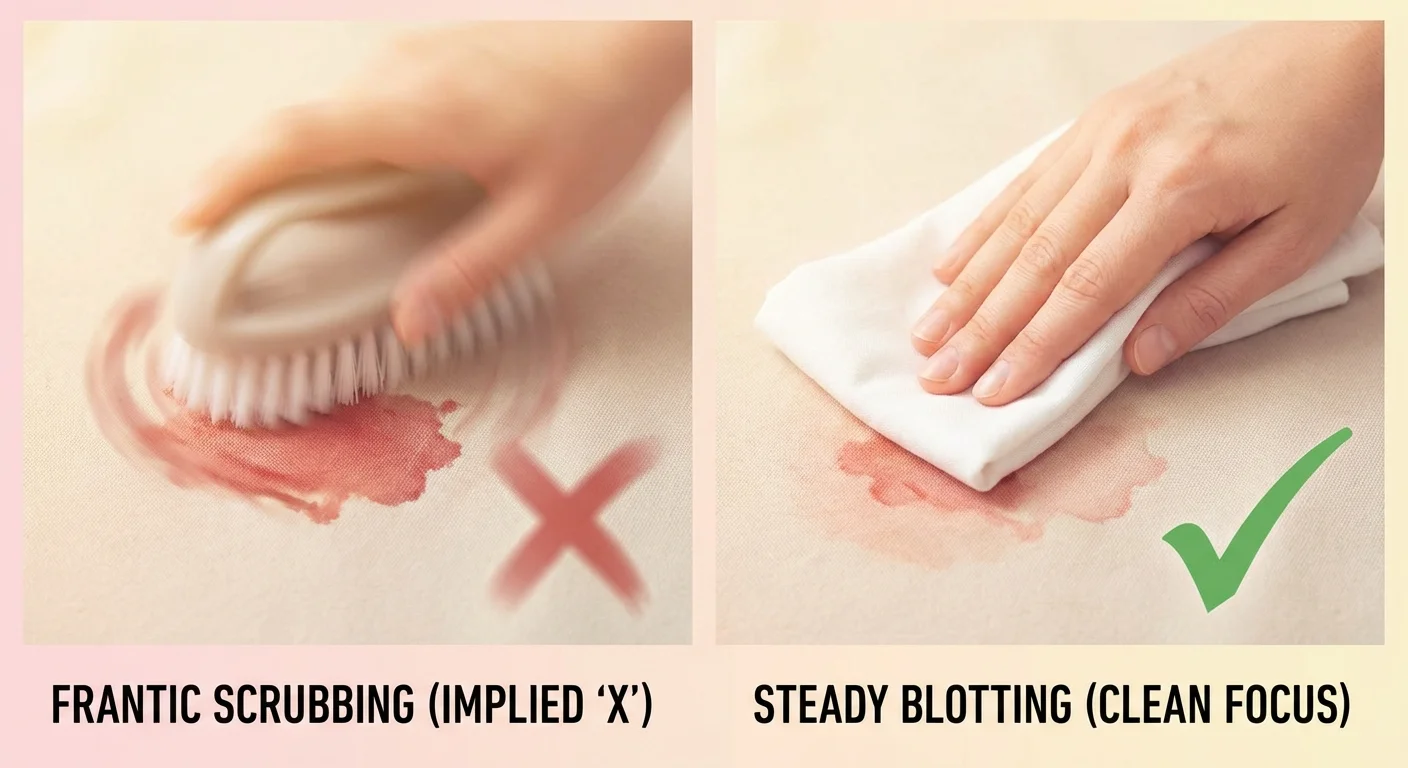
- Blot, never rub: Friction damages delicate fibers and forces the staining agent deeper into the material. Always press straight down to transfer the substance into your cleaning cloth.
- Work from the outside in: Prevent the stain from spreading by applying your cleaning solution to the perimeter of the mark and working your way toward the center.
- Check the temperature: Hot water permanently sets protein-based stains like blood and milk; always start with cold water unless dealing with oil or grease.
- Do no harm: Test any chemical treatment on an inconspicuous hem or hidden corner of the fabric before attacking the main stain.
The Universal Rules of Stain Removal
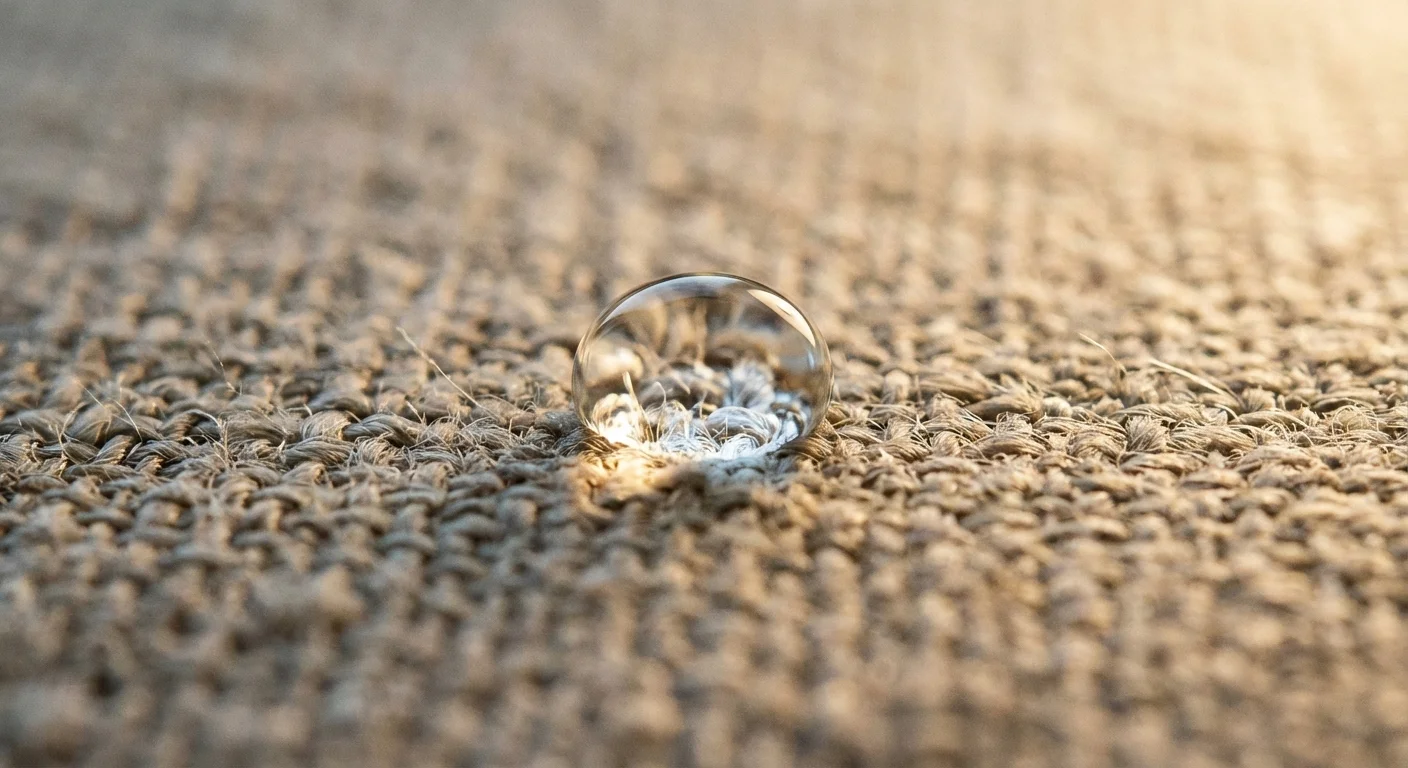
Before mixing a single solution or addressing specific spills, you must understand the underlying physics of how textiles absorb liquids. Fabrics are composed of thousands of tiny woven fibers that act like microscopic straws. When liquid hits these fibers, capillary action immediately begins drawing the substance deep into the weave.
Avoiding harsh commercial solvents during this process is a simple way to detox your home and improve your overall environment.
While speed cleaning is excellent for maintaining general order, taking a few extra minutes for targeted stain removal prevents permanent damage.
Once you have mastered these basics, you can easily incorporate fabric care into a weekly house cleaning schedule to keep your space looking its best.
Your goal is to reverse this capillary action. This is why blotting is non-negotiable. When you apply a dry, highly absorbent cloth—like a thick white terrycloth towel or heavy-duty paper towel—to a wet spill, you give the liquid a new, more attractive place to go. You want the stain to transfer upward into your towel, not downward into the fabric.
“Successful stain removal depends on treating the stain as quickly as possible, using the right technique, and understanding the fabric you are working with.” — American Cleaning Institute
Furthermore, heat acts as a catalyst for chemical bonding. The heat from your washing machine’s hot water cycle, or worse, the intense heat of a tumble dryer, will literally cook the cellular structure of certain stains, fusing them permanently to the garment. Never put an item in the dryer until you are absolutely certain the stain is completely gone. If a faint shadow remains after the wash cycle, treat it again and rewash.
Building Your Ultimate Stain Removal Arsenal
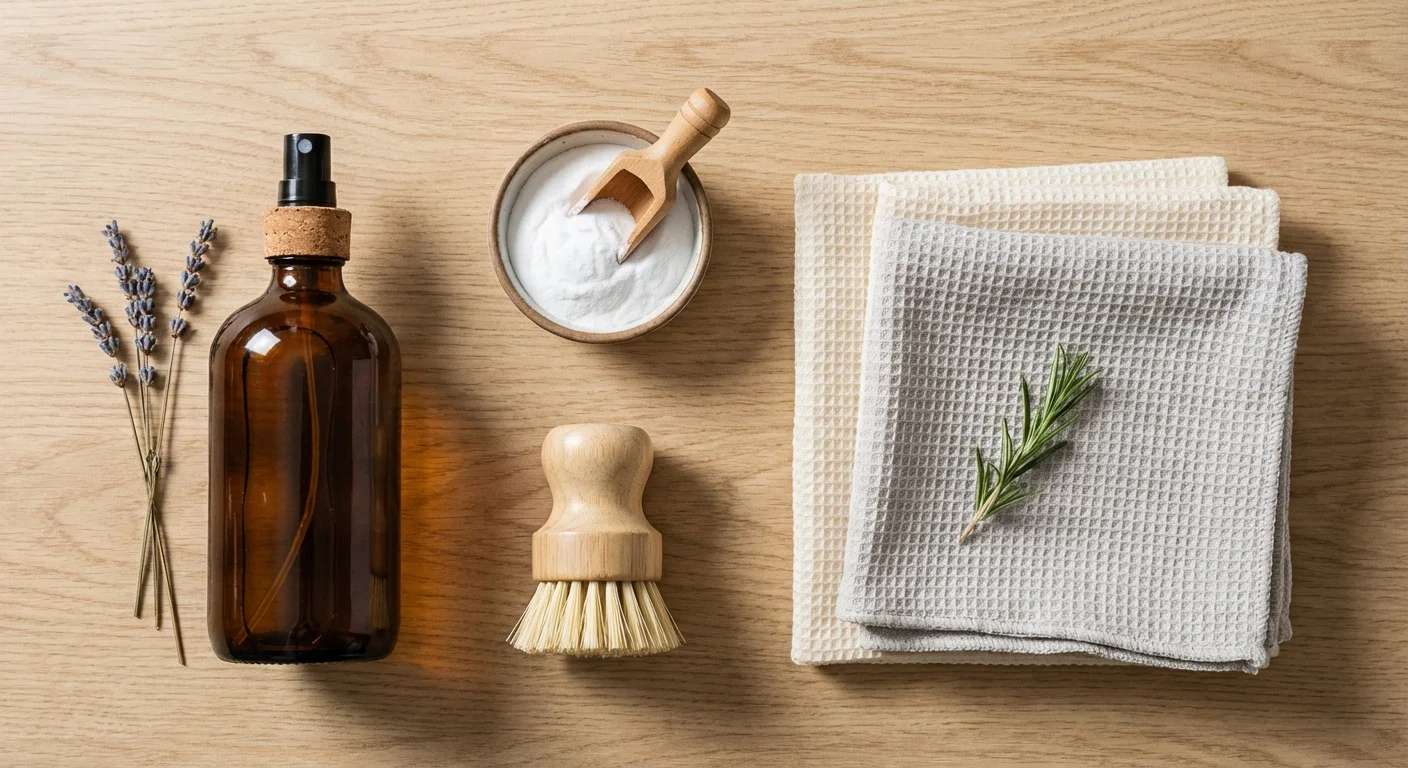
You do not need an entire aisle of expensive, single-purpose commercial cleaners. Most stain removal requires only a few basic, scientifically proven ingredients that you likely already have in your pantry or laundry room. Keep these essentials grouped together in a portable caddy so you can deploy them the second a spill occurs.
By choosing these pantry staples, you can effectively replace every chemical cleaner in your home with safer, non-toxic alternatives.
- White Vinegar: A mild acetic acid. It works wonders on tannin stains, neutralizing odors, and dissolving mineral deposits. It also acts as a gentle fabric softener.
- Baking Soda: A mild alkali that excels at absorbing fresh liquid spills and drawing out grease. When made into a paste with water, it provides gentle abrasion to lift dirt without tearing fibers.
- Liquid Dish Soap: Look for a high-quality grease-cutting formula (clear or blue formulations are best to avoid accidental dye transfer). Dish soap contains surfactants specifically designed to encapsulate and break down lipid (fat) bonds, making it your first line of defense against oil and grease.
- Hydrogen Peroxide (3% solution): A mild, environmentally friendly bleaching agent. It oxidizes the pigment in organic stains like blood, wine, and fruit juice, turning them colorless. Keep it in its opaque brown bottle, as light breaks it down into plain water.
- Enzyme Laundry Detergent: Biological stains require biological solutions. Detergents containing proteases, amylases, and lipases actually digest the proteins, starches, and fats binding the stain to the fabric.
- Rubbing Alcohol (Isopropyl Alcohol): An excellent degreaser and solvent. It is crucial for breaking down the synthetic polymers in ink and permanent markers.
- Soft-Bristled Toothbrush: Required for gently tamping—tapping the fabric to work the cleaning solution into the fibers without harsh scrubbing.
Protein-Based Stains: Blood, Sweat, and Dairy
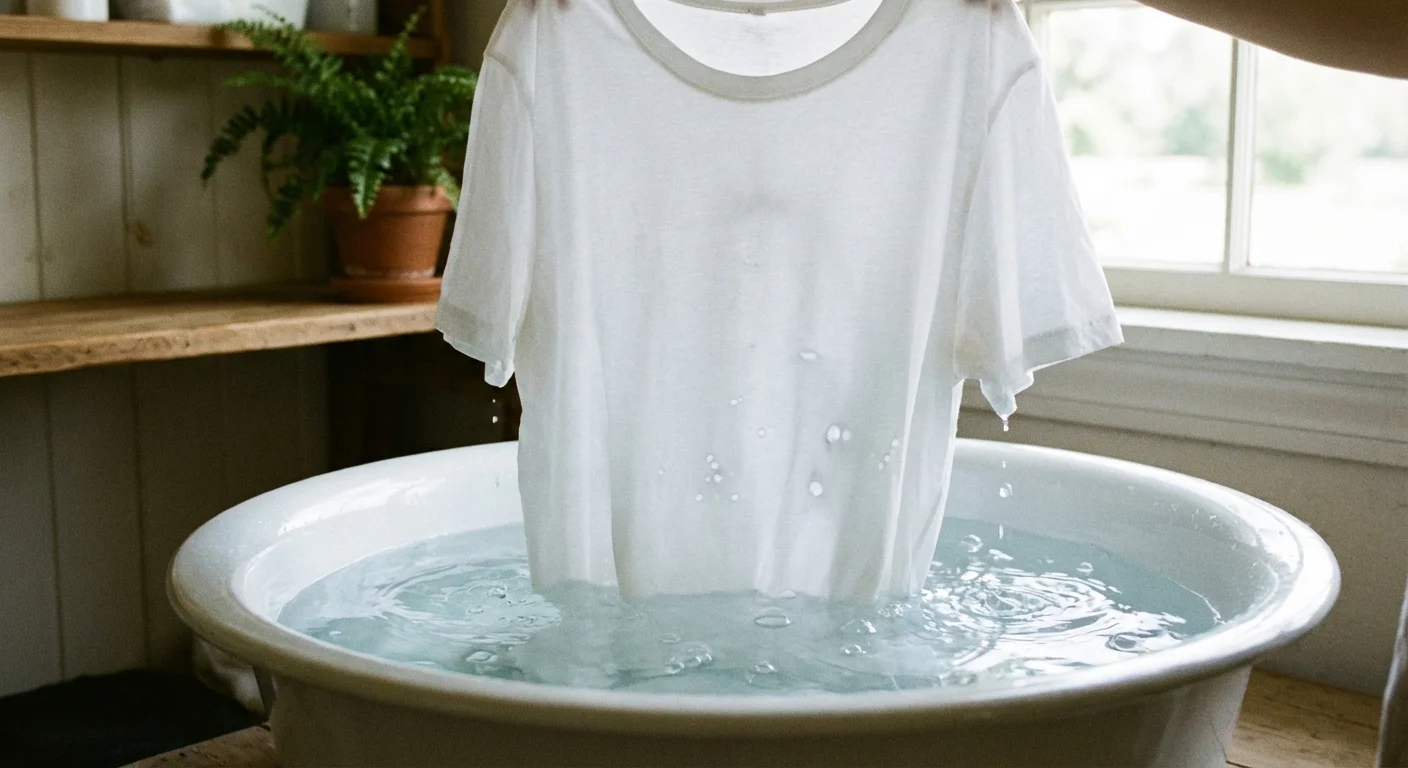
Protein stains are organic compounds produced by the body or derived from animals. Common culprits include blood, sweat, vomit, feces, milk, cheese, and egg. The defining characteristic of a protein is that it coagulates when exposed to heat. If you hit a blood stain with hot water, you effectively cook the proteins, cementing them to the fabric fibers permanently.
How to Remove Blood
For fresh blood, flush the fabric immediately with cold, running water from the back of the stain to push the matter out the way it came. If the stain persists, apply a small amount of hydrogen peroxide directly to the spot. You will see it bubble—this is a reaction with the catalase enzyme in the blood. Tamp it gently, let it sit for five minutes, and rinse with cold water.
For dried blood, the stain requires rehydration and digestion. Soak the garment in cold water mixed with an enzyme-based detergent for at least an hour—or overnight for severe cases. The enzymes will slowly eat away the protein structures.
How to Remove Sweat and Deodorant Yellowing
Those stubborn yellow pit stains on white shirts are not actually caused by sweat alone; they result from a chemical reaction between the urea in your sweat and the aluminum compounds in your antiperspirant. To lift them, mix a paste of equal parts hydrogen peroxide, baking soda, and water. Rub this paste into the stained underarm area, let it sit for 30 minutes to an hour, and then launder as usual.
Tannin Stains: Coffee, Tea, and Wine
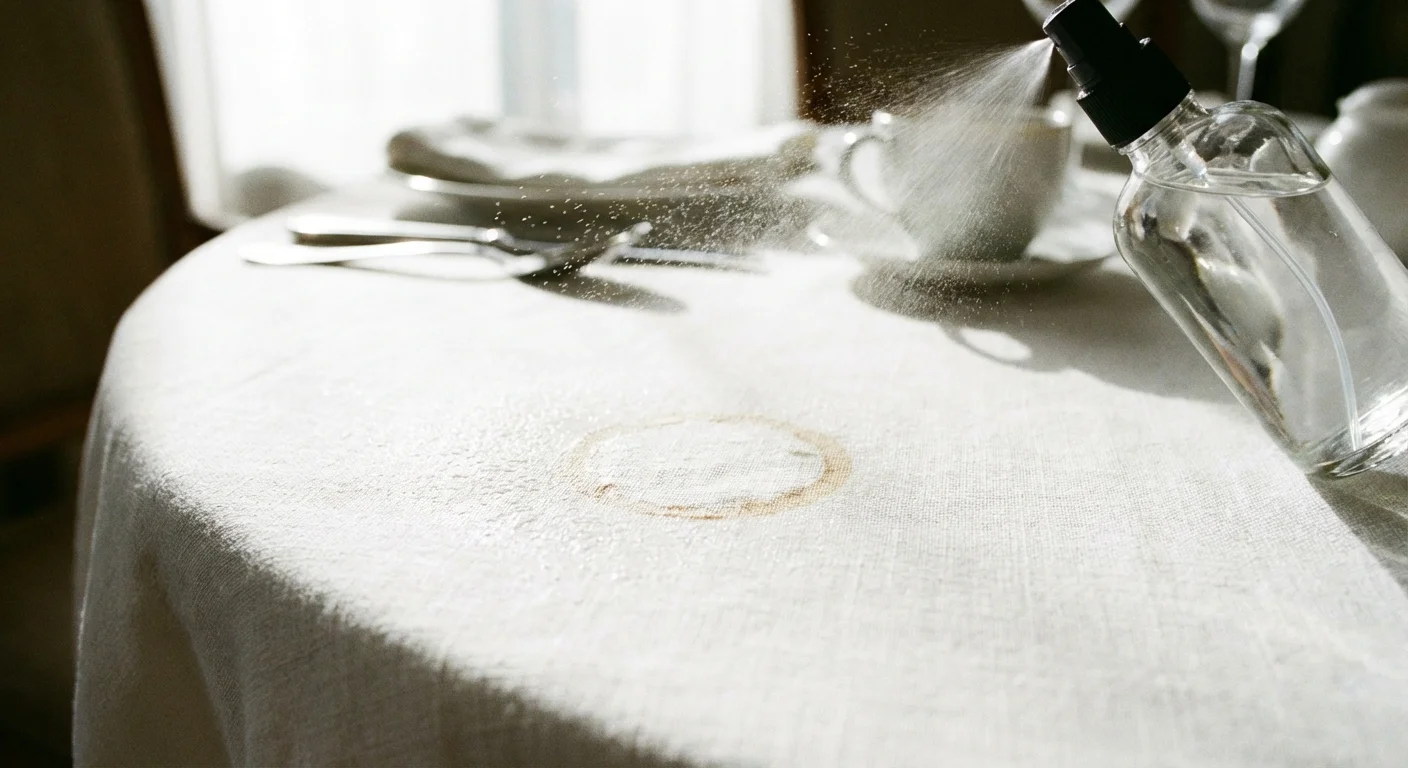
Tannins are naturally occurring plant compounds that give coffee, tea, and red wine their rich colors and astringent flavors. Unlike protein stains, tannin stains often respond beautifully to hot water, provided the fabric can tolerate it without shrinking or melting.
How to Remove Coffee and Tea
If the coffee contained milk or cream, you must treat the protein (milk) portion first using cold water and dish soap. If it was black coffee or plain tea, stretch the stained portion of the fabric taut over a large bowl, securing it with a rubber band. Carefully pour boiling water from a height of about 12 to 18 inches directly onto the stain. The force and heat of the water will often flush the tannins straight out of the weave.
How to Remove Red Wine
Red wine on a white tablecloth or carpet is a classic household disaster, but it is highly treatable. First, blot up as much liquid as humanly possible. Next, apply a liberal mound of salt or baking soda to the wet stain to absorb the remaining moisture. Wait 15 minutes, then vacuum or brush away the powder.
If a pink shadow remains, mix one part liquid dish soap with two parts hydrogen peroxide. Sponge this mixture onto the stain, let it sit for a few minutes until the redness fades, and then rinse thoroughly. According to experts at Good Housekeeping, prompt action with mild oxidizers is the most reliable way to conquer berry and wine pigments.
Oil and Grease Stains: Butter, Dressing, and Makeup
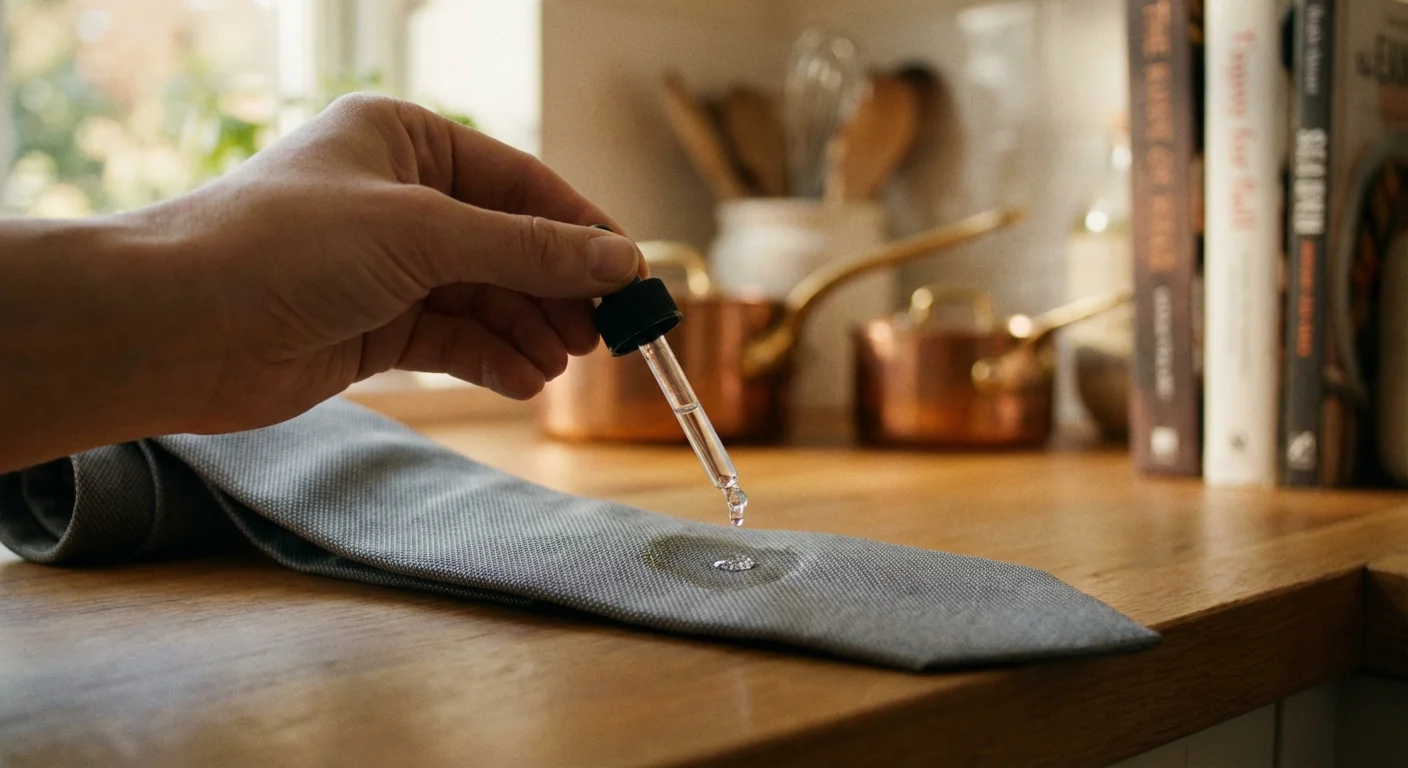
Water and oil do not mix. Attempting to rinse a salad dressing spill with plain water will do absolutely nothing except spread the oil further. To remove grease, you need a surfactant to break the surface tension and emulsify the fat.
Since oil splashes are common during meal prep, addressing them immediately is a key part of any deep cleaning of your kitchen.
How to Remove Cooking Oil and Butter
If a greasy French fry drops onto your lap, grab a paper towel and gently press it against the spot to lift away the excess oil. Next, cover the stain completely with cornstarch, baby powder, or baking soda. Let this absorbent powder sit for at least 30 minutes; it will pull the oil out of the fabric like a sponge. Brush the powder away.
If a dark ring remains, apply a drop of grease-cutting liquid dish soap directly to the spot. Tamp it with a soft toothbrush, let it sit for 10 minutes, and wash the garment in the warmest water recommended on the care label. The heat helps melt the remaining grease, while the soap washes it away.
How to Remove Lipstick and Liquid Foundation
Makeup presents a unique challenge because it usually contains both an oily base and intense dye pigments. Start by treating the oil. Apply rubbing alcohol or liquid dish soap to a cotton ball and dab the stain from the outside in. Once the greasy base is broken down, treat any remaining color with a targeted application of hydrogen peroxide or an oxygen-based bleach.
Dye Stains: Berries, Ink, and Mustard
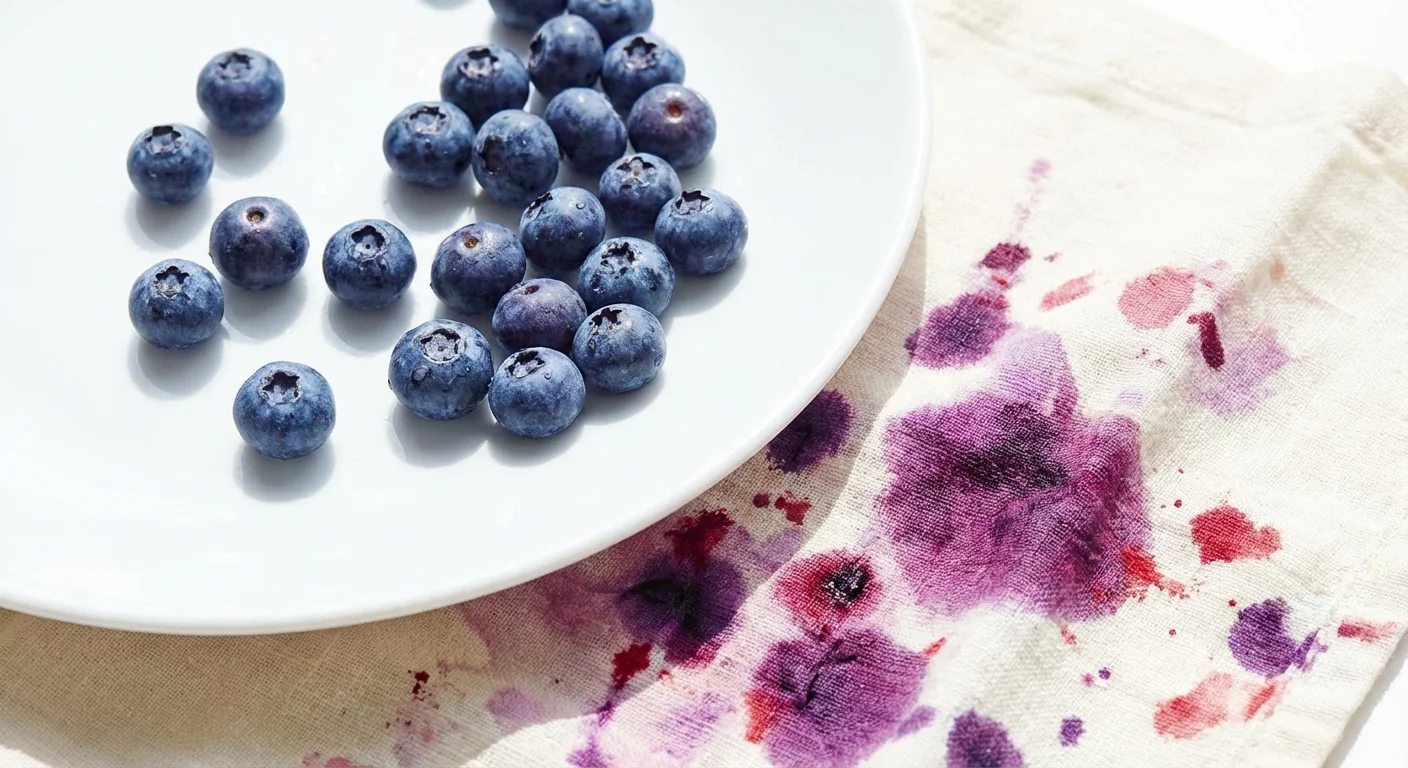
Dye stains are aggressively pigmented and require targeted solvents to break down their color bonds. Patience is required; you may need to repeat the treatment several times before the stain fully lifts.
If your spill has reached the floor, consult our specialized guide on how to clean every type of flooring for surface-specific advice.
How to Remove Ink
Standard ballpoint pen ink responds very well to rubbing alcohol. Place a thick pad of paper towels underneath the stained layer of fabric to prevent the ink from bleeding through to the back of the garment. Dip a cotton swab or a clean cloth in pure rubbing alcohol and dab the stain. You will see the ink immediately begin to dissolve and transfer to your cloth. Keep moving to a clean section of your cloth to avoid reapplying the ink. Once the spot is clear, rinse thoroughly.
How to Remove Mustard
Mustard is notoriously difficult because turmeric, the spice that gives yellow mustard its bright color, is essentially a powerful natural dye. First, scrape off any excess mustard with a dull knife. Flush with cold water. Next, apply liquid dish soap and let it sit. If the yellow stain persists, apply white vinegar to help break down the plant dye, or use an oxygen-based bleach soak. Avoid using ammonia on mustard, as it can permanently set the turmeric dye.
Earthy Stains: Grass, Mud, and Rust
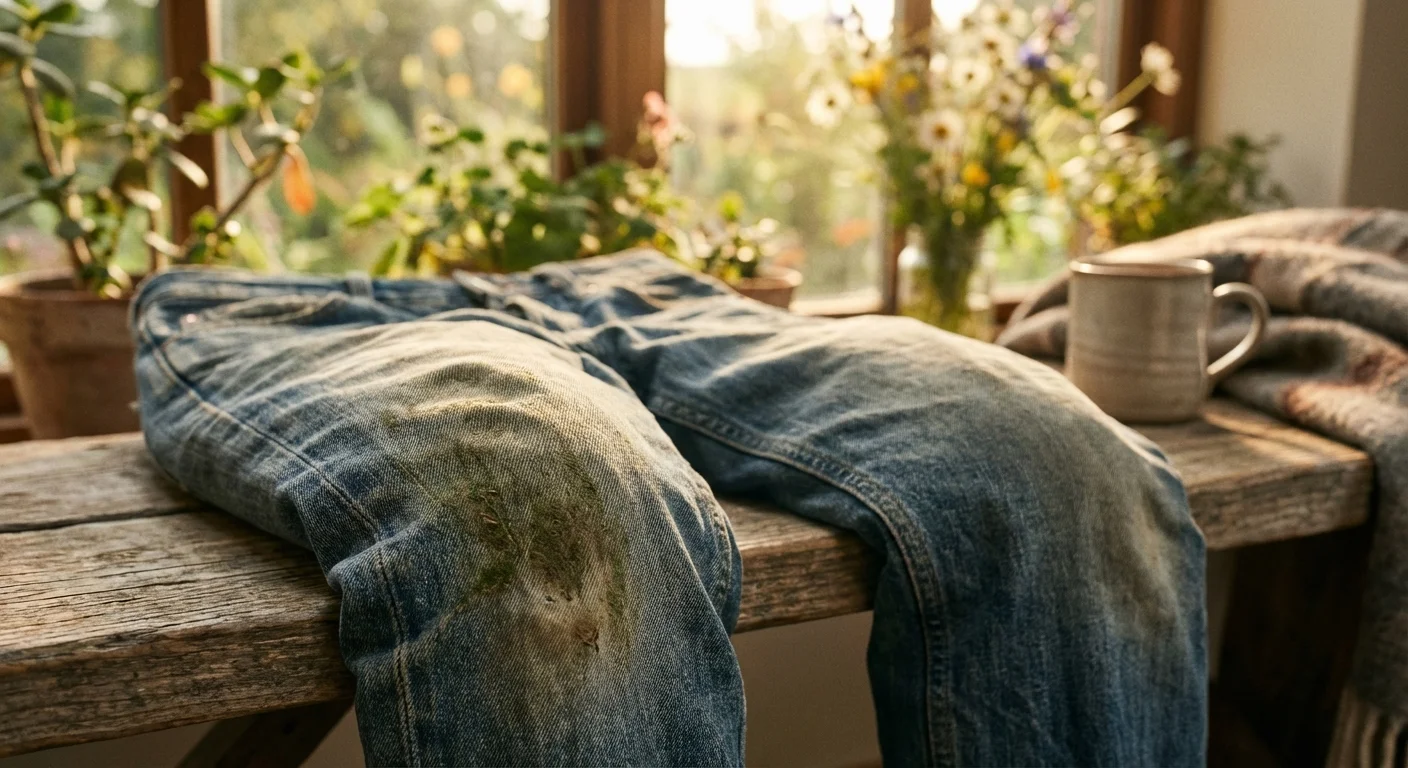
Outdoor stains combine organic matter with ground-in particulate dirt, requiring both chemical dissolution and gentle mechanical action.
How to Remove Grass Stains
Grass stains are a combination of protein and plant dyes (chlorophyll). An enzyme-based laundry detergent is your best weapon. Rub the liquid detergent directly into the green streaks, working it in with your fingers or a soft brush. Let it rest for 15 minutes before laundering. Alternatively, a mixture of white vinegar and baking soda can help lift the green pigment from light-colored baseball pants and denim.
How to Remove Mud
Unlike almost every other stain, mud is often easier to treat when it is completely dry. If you wipe wet mud, you just grind the dirt deeper into the fabric. Let the muddy garment sit until the soil is bone dry, then take it outside and vigorously brush off the crusted dirt with a stiff-bristled brush. Once the surface dirt is gone, treat the remaining brown shadow with liquid laundry detergent and a warm water wash.
How to Remove Rust
Rust occurs when iron oxides transfer onto fabric, often from old metal buttons, outdoor furniture, or hard water. Bleach will only make rust stains worse, permanently setting them. Instead, you need an acid. Squeeze fresh lemon juice over the rust spot and sprinkle it generously with salt. If possible, lay the garment in direct sunlight. The UV rays combined with the citric acid will bleach the rust away safely. Rinse thoroughly with cold water.
Carpet Stain Removal: A Different Beast
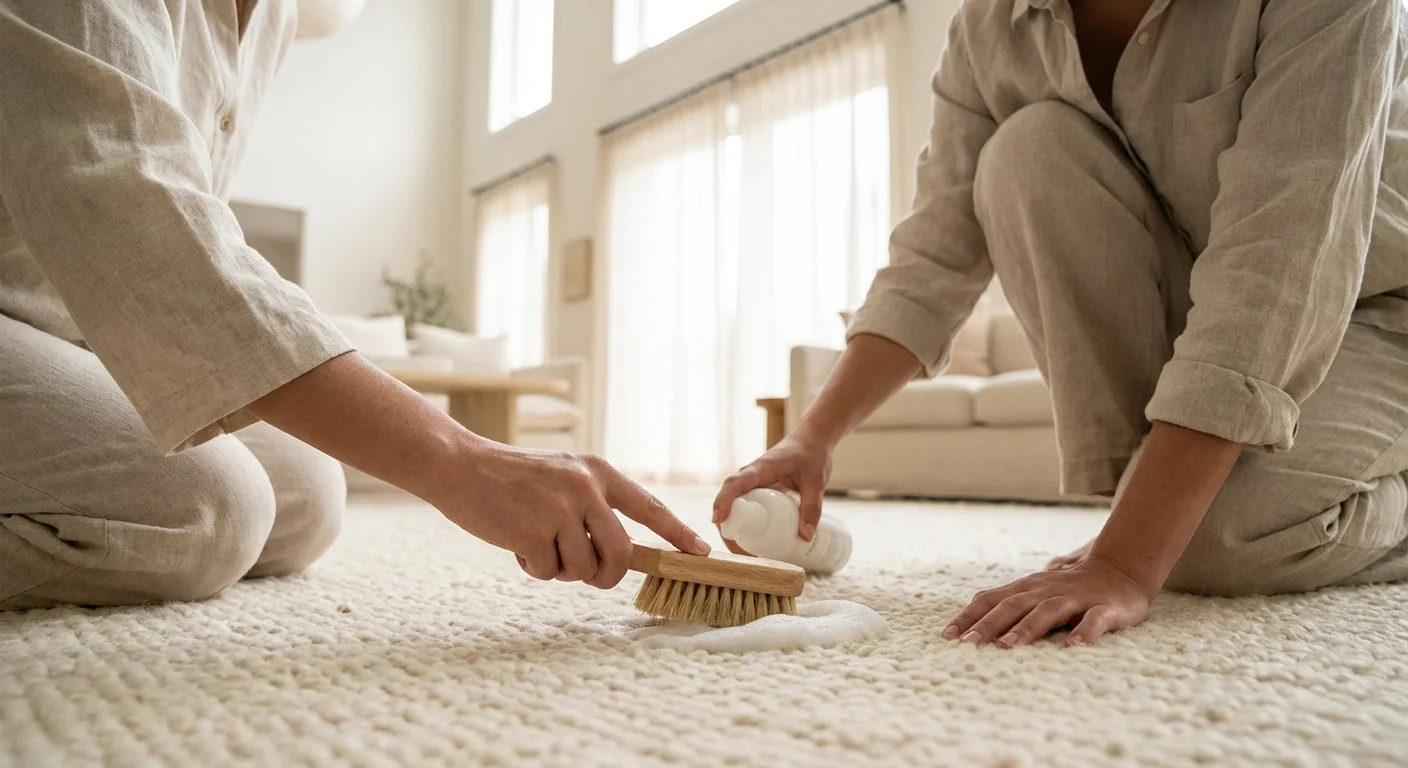
Treating a garment is relatively easy because you can toss it in the washing machine to flush out the cleaning agents. Carpet stain removal requires a completely different approach because whatever you put into the carpet must be manually extracted. If you leave soapy residue in your carpet fibers, that sticky soap will act as a dirt magnet, causing a dark, filthy spot to appear exactly where the old stain used to be.
The Golden Rules of Carpet Stains
- Never pour liquid directly on a carpet. Apply your cleaning solution to a cloth, and then dab the cloth onto the carpet. Over-wetting the carpet can soak the backing and the underpad, leading to mold and mildew growth.
- Extract thoroughly. Once the stain is lifted, you must rinse the area. Mist the spot lightly with plain water from a spray bottle, then firmly press a clean, dry towel into the fibers to pull the water and leftover soap out.
- Defeat the wick-back effect. Sometimes a carpet stain seems to disappear, only to reappear a day later. This happens when the stain seeped deep into the pad; as the surface dries, capillary action wicks the buried stain back to the top. To prevent this, place a thick stack of white paper towels over the damp, treated area, and weigh it down with a heavy stack of books overnight. The towels will absorb the moisture and the wicking stain.
For extensive carpet advice and maintenance schedules, resources like The Spruce recommend deep cleaning high-traffic areas every 12 to 18 months to prevent particulate soil from cutting the carpet fibers.

Complete Stain Removal Chart: Quick Reference
Keep this chart accessible for immediate triage when a spill occurs. Remember to test all solutions on a hidden area first.
| Stain Type | Category | Immediate Action | Ultimate Treatment |
|---|---|---|---|
| Blood | Protein | Flush with cold water immediately. | Hydrogen peroxide (if colorfast) or enzyme soak. |
| Red Wine | Tannin | Blot liquid, apply salt to absorb. | Dish soap + hydrogen peroxide mixture. |
| Coffee/Tea | Tannin | Flush with cold water (treat milk first). | Boiling water flush or white vinegar dab. |
| Cooking Oil | Grease | Blot, apply cornstarch to absorb. | Liquid dish soap, warm water wash. |
| Ink (Ballpoint) | Dye/Synthetic | Place towel behind stain to prevent bleeding. | Dab with rubbing alcohol until dissolved. |
| Grass | Organic/Dye | Do not use hot water. | Work enzyme detergent directly into fibers. |
| Mud | Earth | Do nothing. Let it dry completely. | Brush off crust, treat with heavy-duty detergent. |
| Sweat/Yellowing | Protein/Mineral | Rinse with cold water. | Paste of baking soda, peroxide, and water. |
| Tomato Sauce | Dye/Acid | Scrape excess, flush with cold water. | Dish soap, followed by white vinegar. |
| Makeup/Lipstick | Grease/Dye | Scrape gently, avoid smearing. | Rubbing alcohol to cut grease, then wash. |
Avoiding Common Errors
Even well-intentioned cleaning efforts can permanently ruin a beloved item if the wrong approach is taken. Protect your textiles by avoiding these prevalent mistakes:
- Applying Heat to Unknown Stains: If you do not know what the stain is, treat it as a protein. Using hot water or a hot iron on a mysterious spot is a gamble that frequently ends in permanent damage.
- Mixing Chemicals Dangerously: Never mix bleach with ammonia, or bleach with vinegar. These combinations create highly toxic chlorine and chloramine gases. Stick to one chemical treatment at a time, and rinse thoroughly before trying a different approach.
- Scrubbing Vigorously: Using a stiff brush or scrubbing fabric against itself creates friction that damages the surface finish of the fabric. It causes pilling (those tiny, annoying fuzz balls) and localized color loss. Always tamp, press, and blot.
- Using Chlorine Bleach on Everything: Chlorine bleach weakens natural fibers like cotton and linen over time. Furthermore, if you use bleach on protein stains (like sweat or blood), it often causes a chemical reaction that turns the area permanently yellow. Opt for oxygen-based bleaches (color-safe bleach) whenever possible.

When DIY Isn’t Enough
While this guide empowers you to handle 95% of household stains, recognize when to step back. Attempting to force a cure on delicate items can escalate a small blemish into total destruction.
Take the item to a professional dry cleaner or hire a specialized upholstery cleaner in the following scenarios:
- Dry Clean Only Garments: Fabrics like silk, wool, velvet, acetate, and rayon respond unpredictably to water and water-based solvents. A liquid spill on silk, for instance, can leave permanent water rings even if the stain itself lifts. Blot the excess and hand it over to a professional immediately.
- Antique or Heirloom Textiles: Vintage rugs, antique quilts, and fragile lace require specialized, pH-neutral conservation techniques. Standard household chemicals are far too aggressive for aged fibers.
- Deep-Set Pet Urine: If a pet urine stain has penetrated the carpet, the underpad, and reached the wooden subfloor, surface cleaning will only mask the problem. Professional extraction, enzymatic treatments, and sometimes pad replacement are required to permanently eliminate the uric acid crystals and the associated odor.
Frequently Asked Questions
Does hairspray really remove ink stains?
Historically, yes. Decades ago, hairspray was formulated with high concentrations of alcohol, which effectively dissolved ink. However, modern hairsprays are largely alcohol-free and contain sticky resins and conditioners that will just leave a hard, gummy mess on your clothes. Skip the hairspray and use plain rubbing alcohol instead.
Can I remove a stain that has already gone through the dryer?
It is significantly more difficult, but not impossible. The heat has bonded the stain to the fibers. You must rehydrate the stain first. Soak the garment in warm water mixed with an oxygen-based bleach or an enzyme detergent for up to 24 hours to break down the set bonds, then treat it according to the specific stain type.
Can vinegar and baking soda clean everything?
While they are fantastic, eco-friendly cleaners, they are not a universal cure. Mixing them together immediately neutralizes both, leaving you with essentially salty water and carbon dioxide bubbles. Use vinegar for mineral and tannin stains, and baking soda for grease and odors, but apply them separately for maximum efficacy.
How do I treat a stain when I’m out at a restaurant?
Discreetly scrape off any solid matter. Ask for a wedge of lemon or a small amount of club soda (the carbonation helps lift solids from fibers). Blot the area with a white napkin. Do not use the restaurant’s hand soap in the restroom, as these often contain moisturizers that can leave grease spots on your clothes. Treat it properly as soon as you get home.
Stain removal is a highly practical skill that simply requires the right supplies, a bit of chemical knowledge, and patience. By slowing down and addressing the specific nature of the spill, you can salvage your favorite textiles and maintain a pristine home environment. Stop throwing away lightly soiled garments and rugs; build your cleaning kit today and tackle those spots with confidence.
This guide provides general home improvement and cleaning information. Every home and fabric is different—what works in one space or on one textile may need adaptation in yours. Always read and adhere to garment care labels. For valuable antiques, structural changes, or deep-set biological hazards, consult a licensed professional.
Last updated: February 2026






Leave a Reply