In a rental property fitted with shallow builder-grade cabinets, standard organizers frequently fail because drawers lack true vertical clearance. The cabinet face frame hangs lower than the drawer sides, causing standard trays to catch on the frame every time you pull the handle.
Measuring from the drawer box rim rather than the underside of the cabinet frame leads to stuck drawers and wasted storage. Outfitting shallow rental drawers across each room requires matching low-profile modular materials to real clearance measurements without drilling or permanent alterations.
Organizer Materials to Select, Repurpose, or Skip
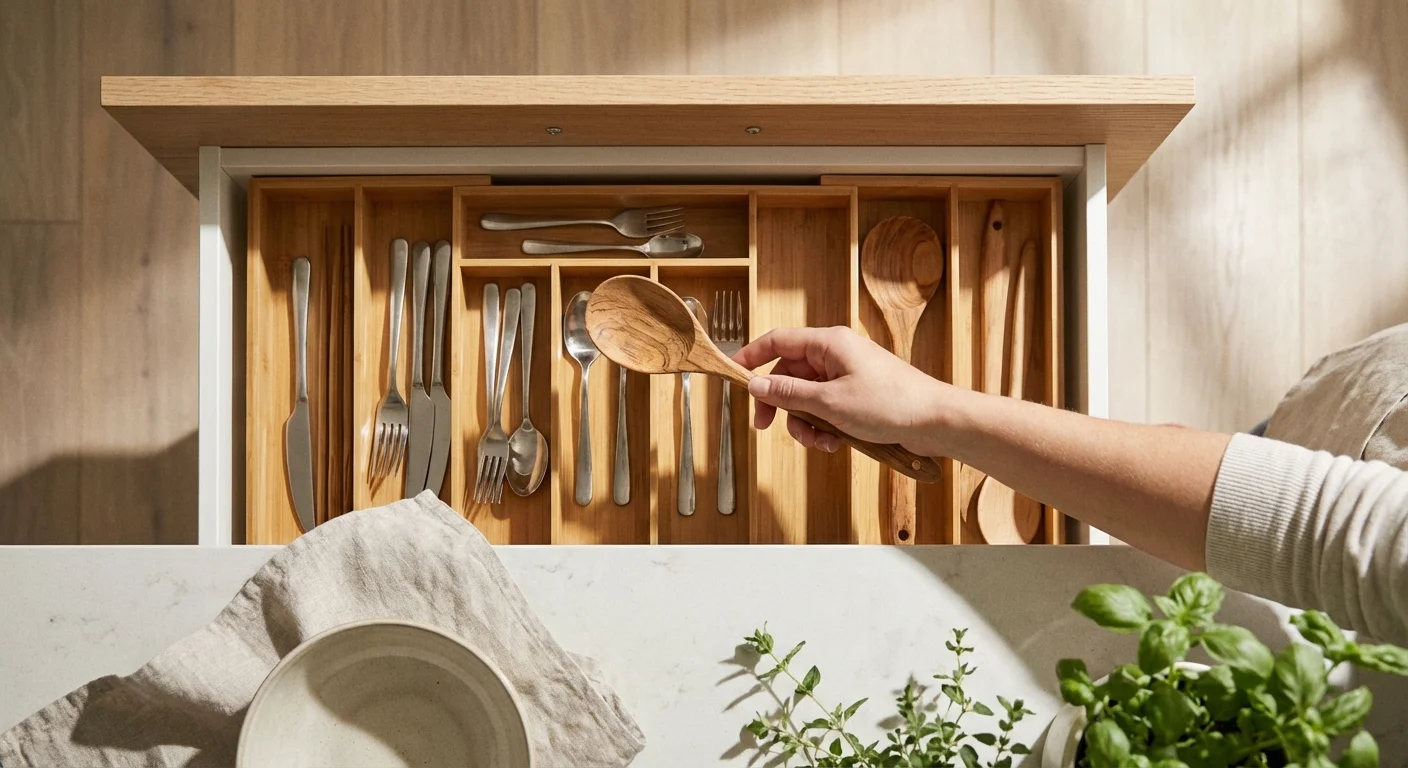
Rigid bamboo trays look clean in marketing photos but often fail in shallow rental drawers. Thick wooden walls consume up to a half inch of internal width per divider, reducing usable capacity where space is already scarce.
Thin interlocking plastic or modular acrylic inserts preserve precious interior width and vertical clearance. They lift out smoothly for sanitizing, making them ideal when moving between apartments.
| Material | Best rooms | Strength | Weak spot |
|---|---|---|---|
| Bamboo or wood | Kitchen, dining, office | Sturdy for heavy utensils; warm look | Warps if soaked; bulky walls eat width |
| Clear acrylic | Bathroom, vanity, makeup desk | Lifts out to wash; contents visible | Shows dust; can crack if dropped on tile |
| Hard plastic (polypropylene) | Desk, entryway, utility, garage, kitchen | Inexpensive; interlocking trays clip together and move as one unit | Slides without grip feet or liner |
| Silicone | Kitchen gadgets, hot-tool drawers | Flexible, non-slip, easy to wash | Little rigid structure |
| Fabric or felt | Bedroom, nursery, jewelry | Gentle on delicates; often collapsible | Absorbs spills and odors |
| Metal mesh | Desk, craft, utility | Airflow and visibility for chargers and USB drives | Small items poke through gaps |
Repurpose small shallow boxes, silicone baking cups, or sturdy plastic food containers when working on a tight rental budget. These work especially well for small hardware, hair accessories, and desk supplies.
Skip one-piece molded cutlery trays and heavy deep-sided bamboo blocks. They cannot adjust to irregular drawer depths and often exceed shallow vertical clearances.
For exterior storage comparisons in small rental spaces, read our review of clear storage bins vs fabric bins.
Listing Specifications to Check Before Ordering
Always inspect product dimension listings for exterior wall height rather than interior compartment depth. Many listings display internal storage depth, masking an outer lip or foot that adds a crucial fraction of an inch.
Look specifically for trays labeled with a total height of 1.5 to 2.5 in. Anything taller than 2.5 in risks catching against the top frame of a builder-grade drawer opening.
Examine product bases for built-in non-skid rubber feet or interlocking side clips. Modular plastic trays that clip together prevent rattling when sliding on loose budget drawer runners.
Avoid expandable sliding systems with tiered overlapping edges. Overlapping edges raise the overall profile right at the center point where clearance under the cabinet frame is lowest.
Step 1: Calculate True Clearance Below the Cabinet Frame
Empty the drawer completely and pull it forward until it stops. Many builder-grade units feature three-quarter extension runners, restricting visual access to the back several inches.
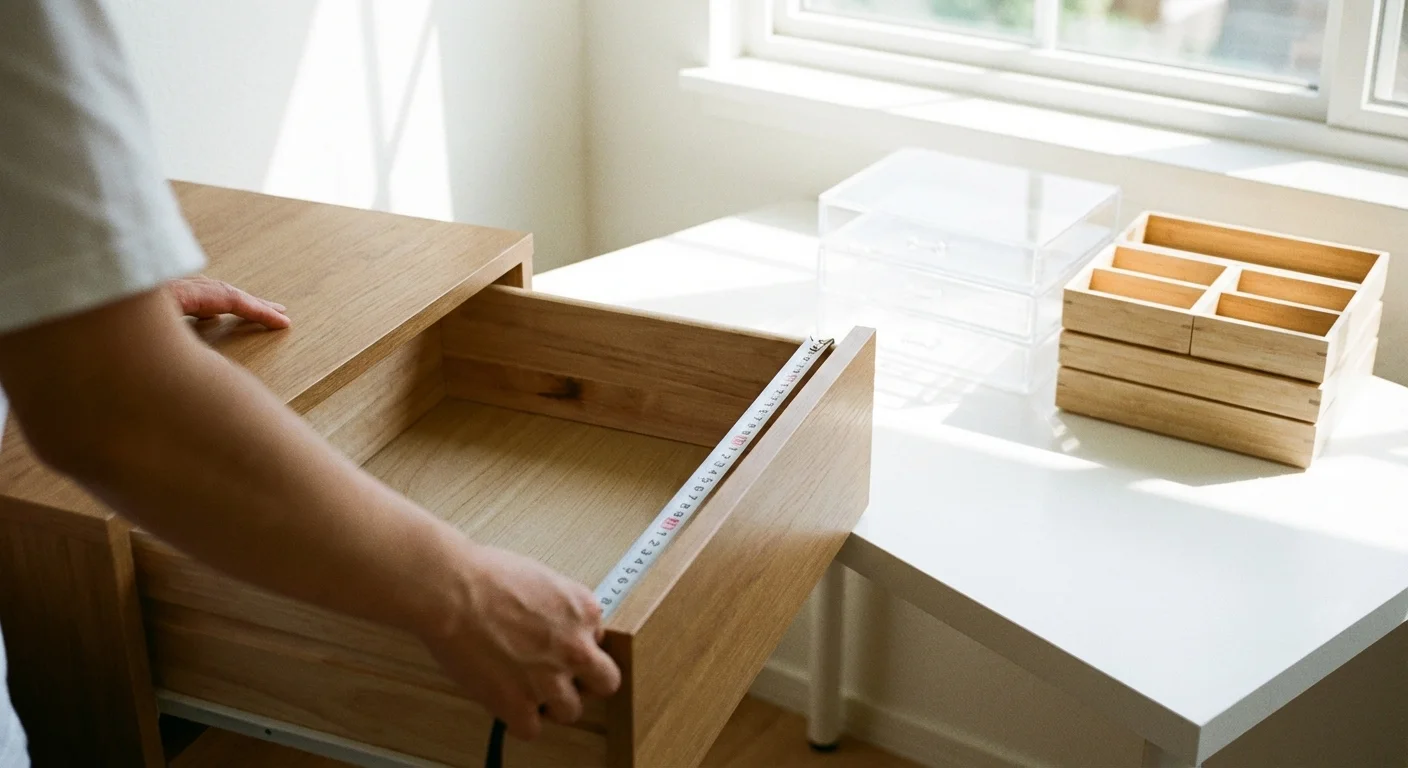
Measure width from side to side and depth from front to back. Take the vertical measurement from the drawer floor directly to the underside of the cabinet frame above it, not to the top edge of the drawer box.
Subtract at least 1/2 inch from that vertical clearance number. This buffer prevents utensils and bin edges from catching against the cabinet face as the drawer slides open.
| Drawer | Typical interior depth | Typical usable height | Organizer that fits | Leave room for |
|---|---|---|---|---|
| Kitchen top drawer (cutlery) | 18 to 22 in | 2.5 to 4 in | Expandable tray, 2 to 2.5 in tall | Serving spoons and whisk heads |
| Kitchen deep drawer (pots) | 18 to 22 in | 8 to 12 in | Peg base or upright lid divider | Pan handles and lid knobs |
| Vanity top drawer | 14 to 19 in | 3 to 5 in | Interlocking trays, about 2 in tall | Pump tops and brush handles |
| Vanity deep or U-shaped drawer | 14 to 19 in | 6 to 10 in | Tall, slim bins | The plumbing notch |
| Dresser drawer | 14 to 20 in | 5 to 10 in | Tension dividers, fabric honeycomb | Height of file-folded clothes |
| Desk pencil drawer | 12 to 20 in | 1.5 to 2.5 in | Shallow trays, 1 to 1.5 in tall | Clearance under the desktop |
| Entryway console drawer | 10 to 16 in | 2.5 to 4 in | Small modular trays | Sunglasses cases and key fobs |
Inspect the drawer cavity for structural obstructions. Note any protruding center runners, side screws, or plumbing cutouts that reduce usable floor area.
Step 2: Declutter and Group by Household Safety and Room Conditions
Purge dried pens, damaged tools, and expired toiletries before planning a layout. Sorting clutter first ensures you do not buy storage containers for items destined for disposal.
If one drawer holds a random mix of household items, use our walkthrough for organizing a junk drawer that stays organized to sort essentials rapidly.
Group loose office supplies into distinct small bins for adhesives, writing instruments, and fasteners. Keep spare batteries separated from metal objects entirely.
The EPA advises storing loose batteries in non-metallic containers and taping the terminals of 9-volt and lithium batteries to prevent dangerous electrical shorts against keys or metal clips.
Sort bedroom clothing by fabric weight and delicate construction. Reserve soft fabric honeycomb organizers for lightweight undergarments to eliminate snagging risks against raw wooden drawer sides.
Step 3: Lay Out Bins for Kitchen, Bathroom, and Bedroom Storage
In the kitchen, set flatware into shallow modular containers that fill the drawer width. Arrange long cooking utensils like spatulas and rolling pins horizontally at the back of the drawer box.
Store seasonings in shallow tiers inside dry kitchen drawers. University of Nebraska-Lincoln Extension recommends keeping seasonings in tightly sealed jars to keep pantry pests out of kitchen drawers and cupboards.
For deep kitchen drawers, a peg system keeps cookware from shifting. A movable system like the Rev-A-Shelf drawer peg system secures pans and dinnerware without permanent screws.
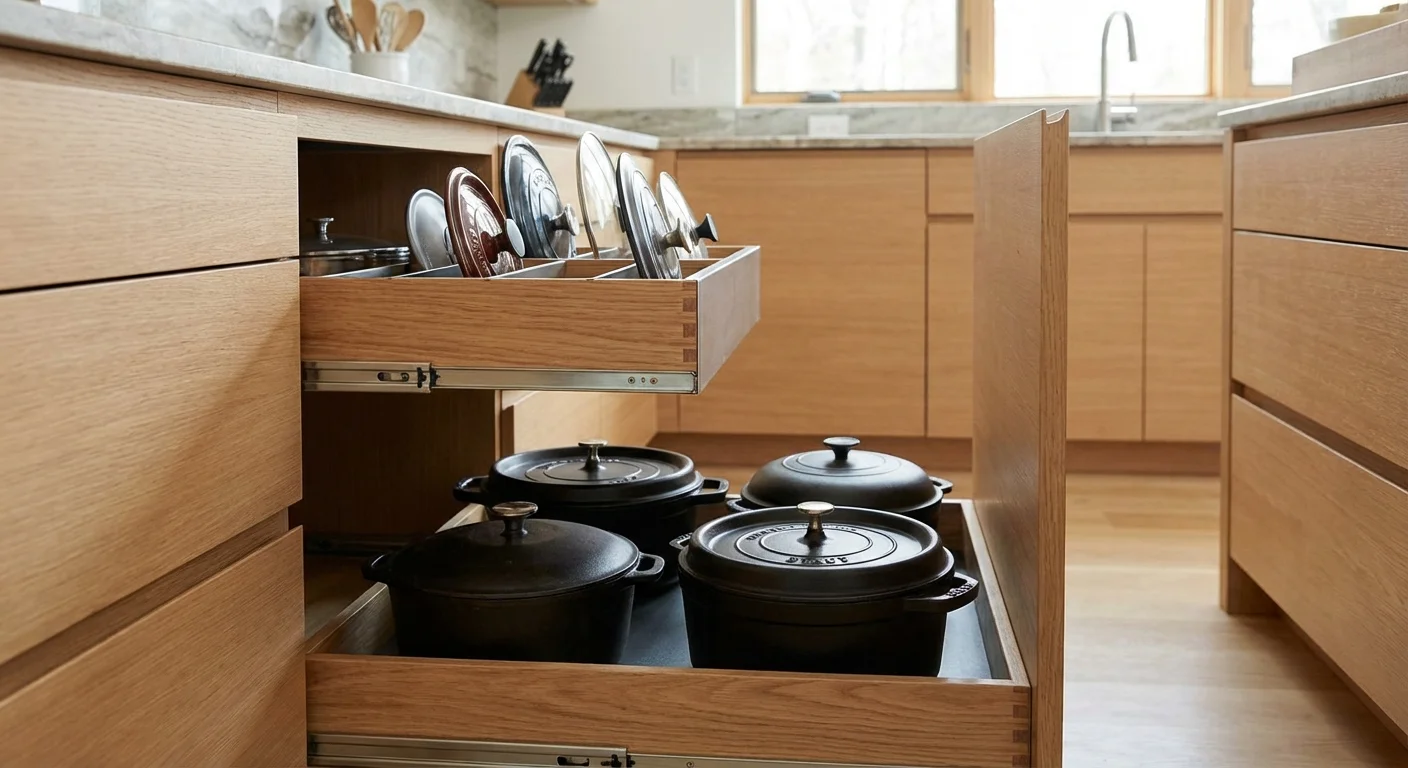
Check hardware capacity before loading heavy Dutch ovens into lower drawers. Blum publishes a 100 lb static load rating for its TANDEMBOX full-extension runners, whereas budget rental slides handle significantly less weight.
Explore additional cooking space adjustments with our tested kitchen organization ideas.
In rental bathrooms, arrange clear acrylic trays to keep cosmetics and oral care supplies separated. Acrylic protects drawer bottom boards from accidental spills and cleans up quickly with soap and water.
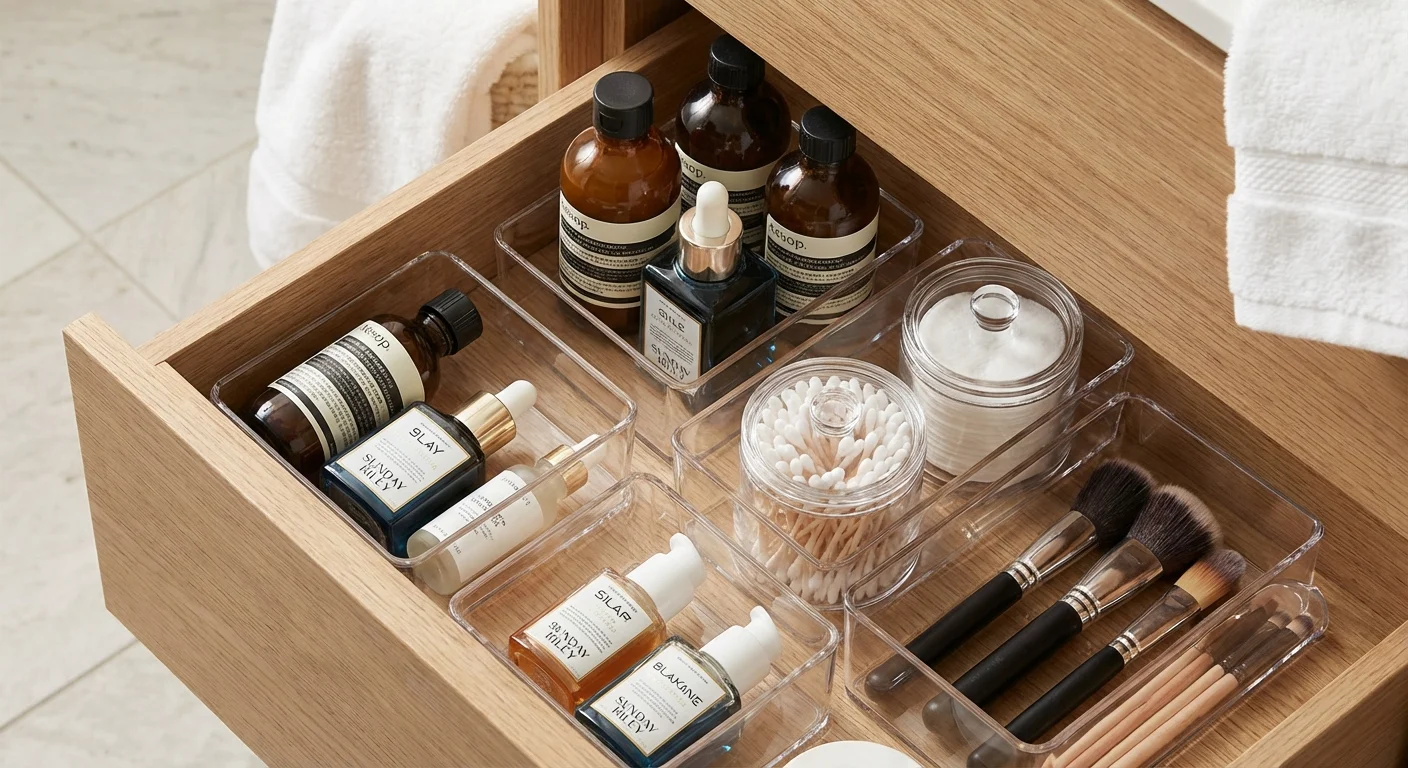
Do not store prescription drugs inside humid rental vanities. The FDA notes that bathroom heat and humidity can make medicines less effective before they expire, recommending dry storage locations such as bedroom drawers instead.
Coordinate your vanity trays with surface storage principles from our guide to bathroom counter organization.
For bedroom dressers, fold garments upright into compact rows so you can pull single garments without disturbing surrounding clothes. Spring-loaded tension dividers with cushioned pads keep stacks stable without marring drawer walls.
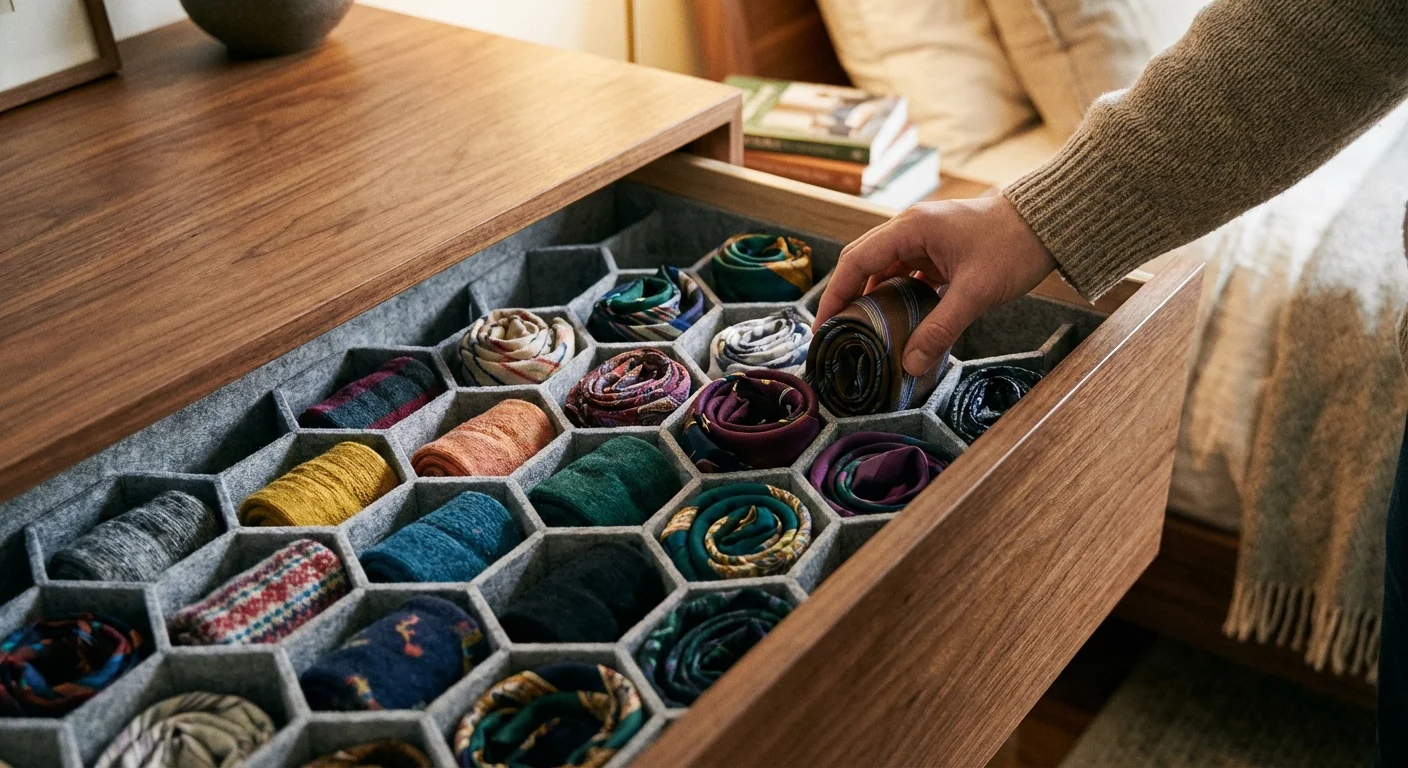
When dresser capacity is exhausted, transfer off-season sweaters and bedding into under-bed storage rather than crowding shallow drawer cavities.
Step 4: Lock Organizers in Place and Maintain Components Without Damage
Cut a non-adhesive silicone or rubber grip liner to fit the drawer bottom before placing modular trays. Grip liner prevents plastic bins from sliding to the back when opening loose rental drawers.
Pack organizers tightly across the drawer footprint to eliminate gaps. When a 12-inch tray sits in a 15-inch-wide drawer, insert a 3-inch-wide bin along the edge to wedge the arrangement securely.
Wipe wood and bamboo organizers with a damp cloth and dry them immediately. Never soak wooden components in a sink, and apply a drop of mineral oil periodically to prevent splits.
Wash acrylic trays by hand using warm water and mild dish soap. Avoid abrasive scouring pads and ammonia sprays, which scratch clear plastic surfaces and leave cloudy streaks.
Clean polypropylene plastic trays on the top rack of a dishwasher if approved by the maker. Vacuum crumbs and loose lint from felt and fabric inserts every few weeks to keep them fresh.