

Sunlight pouring through crystal-clear glass transforms a room; it makes your living spaces feel larger, warmer, and immediately more inviting. Yet, achieving that flawless, invisible finish often frustrates even the most meticulous homeowners. You spend an afternoon spraying and wiping, only to step back and find a hazy web of streaks illuminated by the late afternoon sun. The secret to flawless glass does not lie in expensive, harsh chemicals or endless scrubbing. It relies on adopting the exact techniques, tools, and timing used by industry experts.
Crystal-clear glass is a hallmark of a freshly cleaned home, making every other detail in your space shine brighter.
Transitioning from standard paper towels and blue spray to a professional window cleaning method saves you time, reduces physical strain, and delivers results that last significantly longer. When you understand how dirt interacts with glass—and how specific tools lift that dirt away without leaving residue—you gain the ability to maintain beautifully transparent windows year-round.
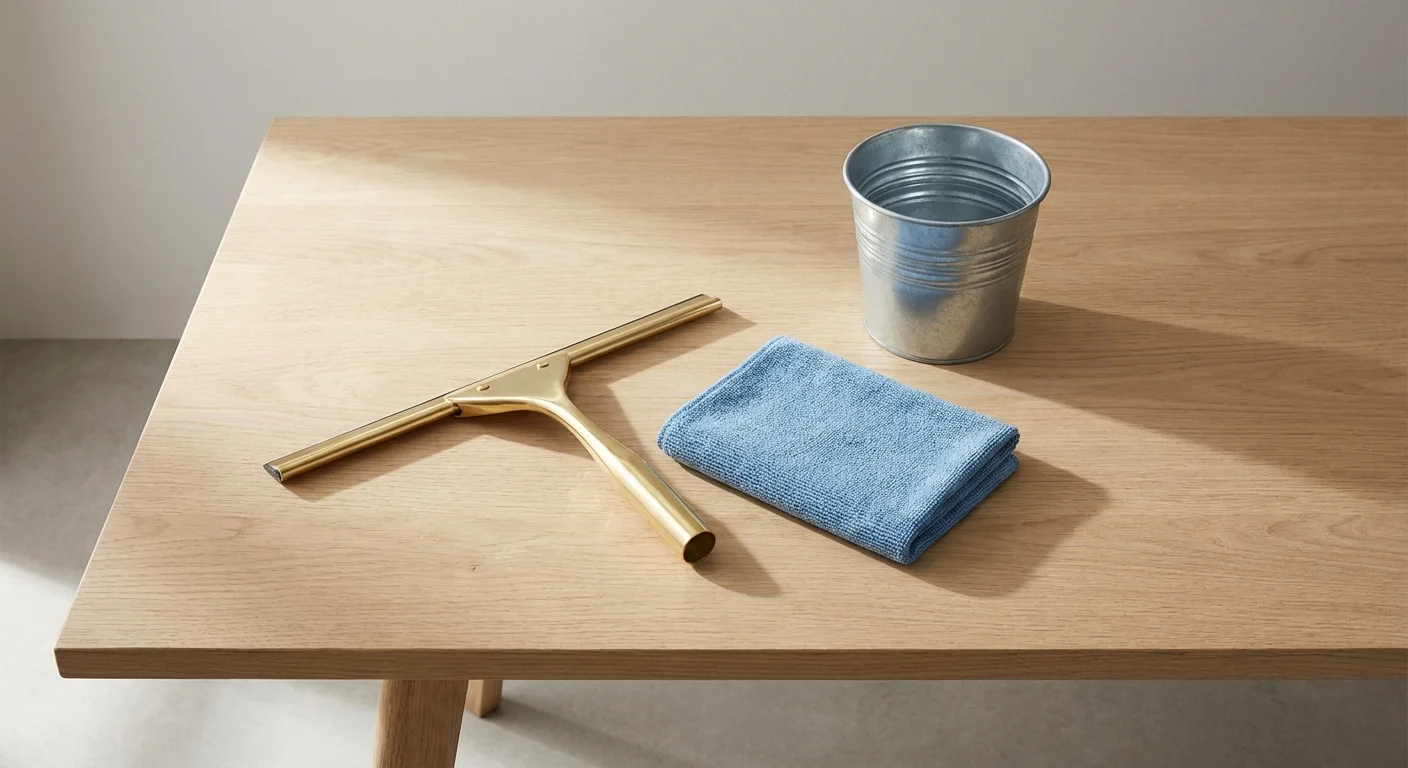
At a Glance: The Essentials of Flawless Windows
- Ditch the paper towels: Paper leaves behind lint and creates a static charge that attracts dust. Upgrade to a quality squeegee and microfiber or surgical huck towels.
- Simplify your solution: The best window cleaning liquid is often the simplest—a bucket of cool water with a few drops of high-quality liquid dish soap.
- Mind the weather: Always wash windows on an overcast day or work in the shade; direct sunlight causes cleaning solutions to evaporate before you can remove them, leaving stubborn streaks behind.
- Clean top to bottom, inside and out: Tackle the exterior window washing first to remove heavy debris, then finish with the interior for a pristine polish.
The Science of Streak-Free Window Cleaning
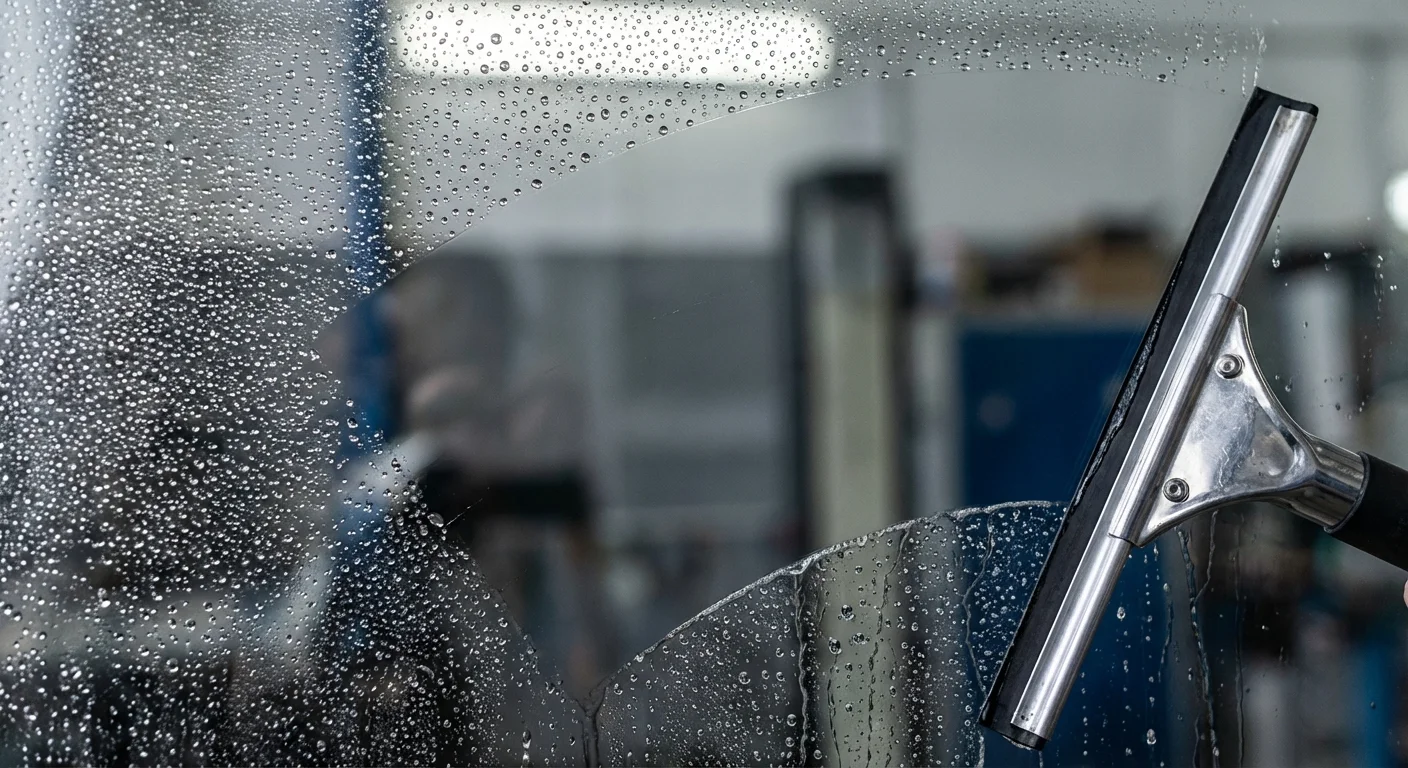
To master how to clean windows effectively, you must understand why streaks occur in the first place. Glass appears perfectly smooth to the naked eye, but under a microscope, it is actually porous and pitted. These microscopic peaks and valleys trap dirt, hard water minerals, airborne pollutants, and the soapy residue left behind by previous cleaning attempts.
While deep cleaning takes more effort, keeping glass tidy as part of your weekly house cleaning schedule prevents the heavy buildup of pollutants.
Streaks are simply leftover dirt or cleaning product that dried onto the glass before being physically removed. When you use a standard spray cleaner and a paper towel, you are largely just pushing the dirt around. The alcohol and ammonia in commercial sprays evaporate rapidly; while this sounds beneficial, it often means the liquid flashes off before the towel can absorb the suspended dirt. What remains on your window is a thin, visible film of grime and chemical residue.
“The biggest mistake homeowners make is treating glass like a standard countertop. Glass requires a targeted, fluid approach to lift dirt completely off the surface without leaving a chemical film behind.” — Sarah Petersen, Residential Home Care Specialist
Professional window washers bypass this problem by using a generous amount of a mild, slow-drying solution to suspend the dirt. They then use a squeegee to physically drag the contaminated water off the glass, leaving nothing behind to dry into a streak.
Essential Equipment: Upgrading Your Toolkit
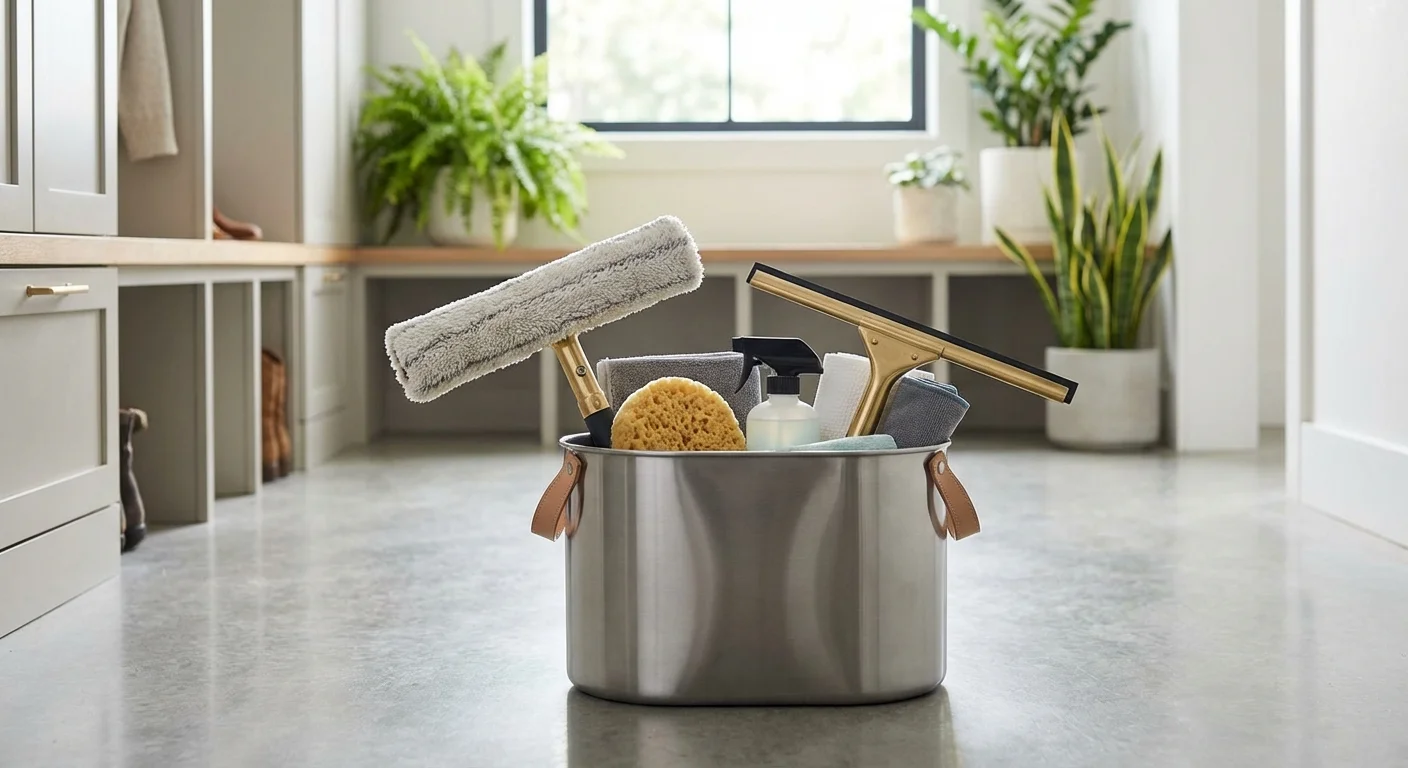
Your results are directly tied to the quality of your tools. Attempting a professional window cleaning method with substandard equipment guarantees frustration. You do not need to spend hundreds of dollars, but investing in a few core items from a hardware or janitorial supply store will dramatically alter your cleaning experience. Organizations like the American Cleaning Institute consistently highlight that using the proper ergonomic tools reduces injury and improves cleaning efficacy.
- The Squeegee: This is your most important tool. Do not buy a cheap plastic squeegee from the automotive aisle. Look for a brass or professional-grade plastic handle with a replaceable rubber blade. The rubber must be pliable and perfectly straight. Keep a 10-inch or 12-inch squeegee for standard windows and a smaller 6-inch version for French panes.
- The Scrubber (Strip Washer): This consists of a T-shaped plastic handle covered by a soft, fibrous sleeve. It holds a massive amount of water and safely agitates dirt on the glass.
- Detailing Cloths: Keep a stack of high-quality, lint-free cloths. Professionals favor surgical huck towels (often blue or green) or tight-weave waffle microfiber cloths. Use these exclusively for wiping the edges of the glass and cleaning your squeegee blade.
- A Sturdy Bucket: A wide, rectangular bucket accommodates your scrubber much better than a standard round household bucket.
- Abrasive Pads: Keep a non-scratch nylon scrub pad or fine #0000 steel wool on hand for safely lifting stubborn tree sap or insect marks from un-tinted glass.
Choosing the Right Cleaning Solution
Walk down any cleaning aisle, and you will find dozens of brightly colored glass cleaners. However, the most effective window cleaning tips often involve ingredients you already have in your kitchen. Creating your own solution allows you to control the ingredients and avoid heavy perfumes or dyes that contribute to streaking.
| Solution Type | Best Used For | Pros | Cons |
|---|---|---|---|
| Dish Soap & Water | General interior and exterior cleaning. | Inexpensive; excellent glide for squeegees; cuts grease perfectly. | Requires mixing; excessive soap causes sudsing. |
| White Vinegar & Water | Interior windows and light exterior maintenance. | Environmentally friendly; cuts through light hard water spots. | Strong odor; lacks the slick glide needed for smooth squeegee pulls. |
| Commercial Aerosol Sprays | Quick touch-ups on bathroom mirrors or small interior panes. | Convenient; usually foams to prevent dripping. | Expensive; leaves residue if not wiped perfectly; not suitable for large jobs. |
| Pure Distilled Water | Final detailing or light dusting. | Leaves absolutely zero mineral deposits or streaks. | Lacks cleaning power for heavy grease or exterior dirt. |
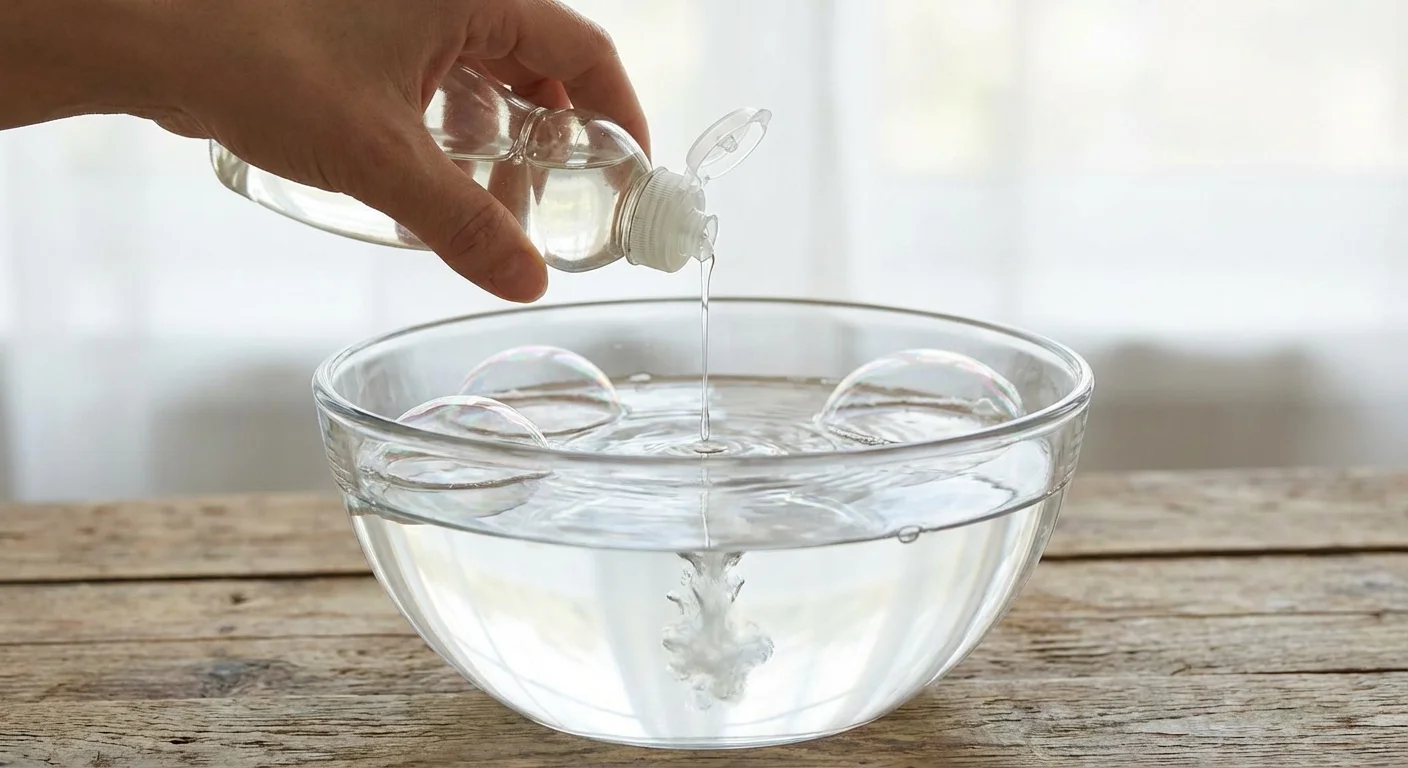
For the definitive professional mix, fill your bucket with two gallons of cool or lukewarm water. Add just one to two squirts of a high-quality liquid dish detergent (Dawn is an industry favorite). Stir gently to avoid creating excessive foam. The goal is to make the water feel slightly slippery to the touch, which provides the necessary “glide” for your squeegee rubber. Too much soap will leave a sticky film, so err on the side of using less.
The Professional Window Cleaning Method: Step-by-Step
Mastering streak free window cleaning requires practice, specifically in handling the squeegee. Once you develop the muscle memory, you will be able to clean a standard window in under a minute. Follow these steps for interior and easily accessible exterior glass.
Step 1: Prepare the Area
Clear the space around the window. Move furniture, tie back curtains, and pull up blinds. Place a large bath towel directly on the floor beneath the window and another smaller towel on the window sill to catch drips. Preparation prevents water damage to your drywall or hardwood floors.
Step 2: Scrub the Glass
Dip your scrubber into your bucket of soapy water. Squeeze out the excess so it is saturated but not dripping excessively. Apply the solution to the glass, scrubbing in circular motions. Pay special attention to the corners and edges, where spiderwebs and dust tend to accumulate. If you encounter a tough spot like dried paint or heavy sap, gently rub it with your non-scratch nylon pad.
Step 3: Cut the Edge
Take a dry, lint-free detailing cloth and wipe a one-inch strip down the left side and across the top edge of the window glass. Creating this dry perimeter gives your squeegee blade a dry starting point, which prevents water from bleeding back onto the clean glass during your pulls.
Step 4: The Squeegee Pull
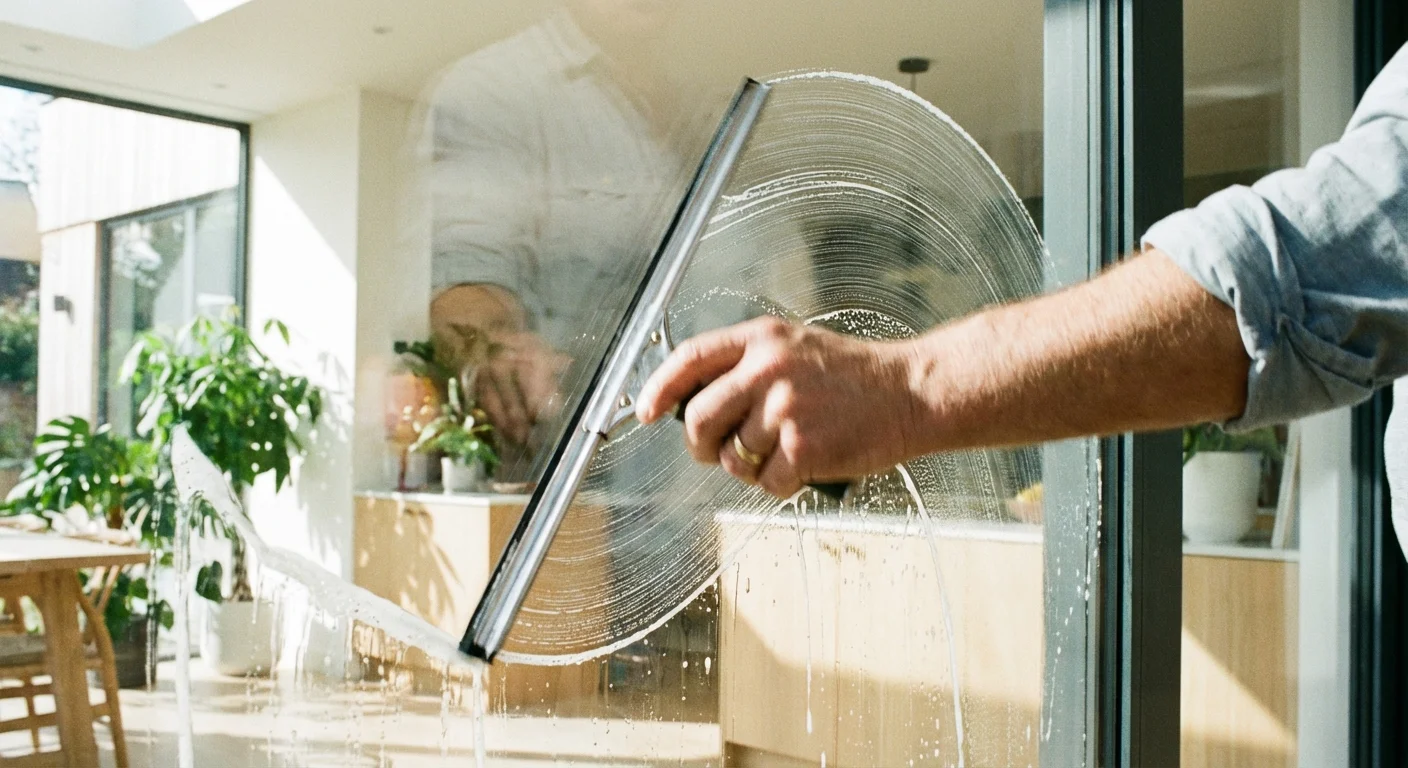
You have two options for squeegee technique: the straight pull or the professional “fanning” (swirl) method. If you are a beginner, start with the straight pull.
- The Straight Pull: Place the rubber blade horizontally at the top left corner of the glass, pressing lightly. Pull straight down to the bottom. Wipe your squeegee blade completely dry with your towel. Overlap your next stroke by about an inch, and pull down again. Repeat until you reach the opposite side of the window.
- The Fanning Method: This continuous “S” motion keeps the water flowing downward ahead of the blade without lifting the squeegee off the glass. It requires practice to master the wrist turns, but it is faster and eliminates the need to wipe the blade after every stroke.
Step 5: Detail the Edges
Once the bulk of the water is removed, you will likely see a thin line of water around the very edge of the frame where the squeegee could not reach perfectly. Take a dry corner of your microfiber or huck towel, wrap it around your index finger, and swiftly trace the entire perimeter of the glass to soak up the remaining moisture. This final detailing step is the true secret to streak free window cleaning.
Step 6: Wipe the Frame and Sill
Finish by wiping down the window tracks, the lower sill, and the frame with a separate, slightly damp rag. Do not use your good glass-detailing towels for the dirty sills.
Tackling Exterior Window Washing
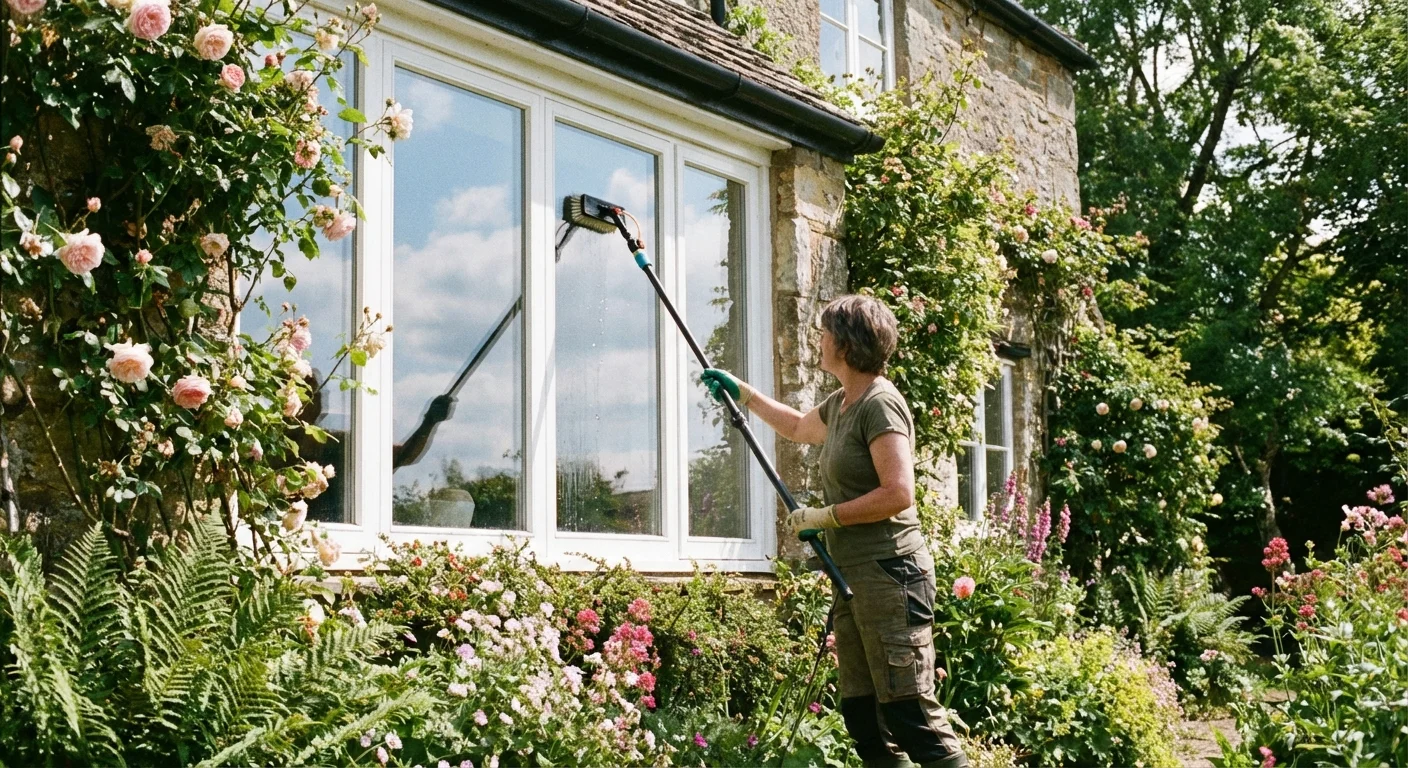
Exterior window washing presents unique challenges. Your outside glass faces harsh elements: baked-on bird droppings, sticky tree pollen, hard water from sprinkler systems, and dense road grime. Because the dirt is heavier, the process requires a bit more heavy lifting.
Keeping these outdoor surfaces clear is much easier when you follow a consistent home maintenance calendar.
While you have the equipment out for exterior glass, it is a great time to tackle other seasonal tasks like a thorough gutter cleaning to protect your home’s foundation.
Begin by removing all window screens. Never try to wash a window through a screen. Set the screens aside in your driveway or yard. Wash them gently with a soft-bristled brush and your soapy water solution, rinse them thoroughly with a garden hose, and lean them against a wall to dry completely before reinstalling them.
When washing the exterior glass, work systematically around your home, ideally following the shade to avoid direct sun. For first-floor windows, use the exact same scrubber and squeegee method described above. However, you may need to scrub twice: once to loosen the heavy, caked-on layer of dirt, and a second time to provide a clean, wet surface for your squeegee.
If you have hard water stains—white, chalky droplets caused by mineral-heavy sprinkler water baking in the sun—standard soap will not remove them. You must use a mild acid to dissolve the minerals. Create a mixture of 50 percent white vinegar and 50 percent water in a spray bottle. Spray the affected glass, let it dwell for five minutes (do not let it dry), scrub gently, and then proceed with your normal soapy wash and squeegee. Resources like Bob Vila frequently recommend this vinegar dwell method for safely dissolving calcium deposits without scratching the glass.
Cleaning Window Tracks and Frames
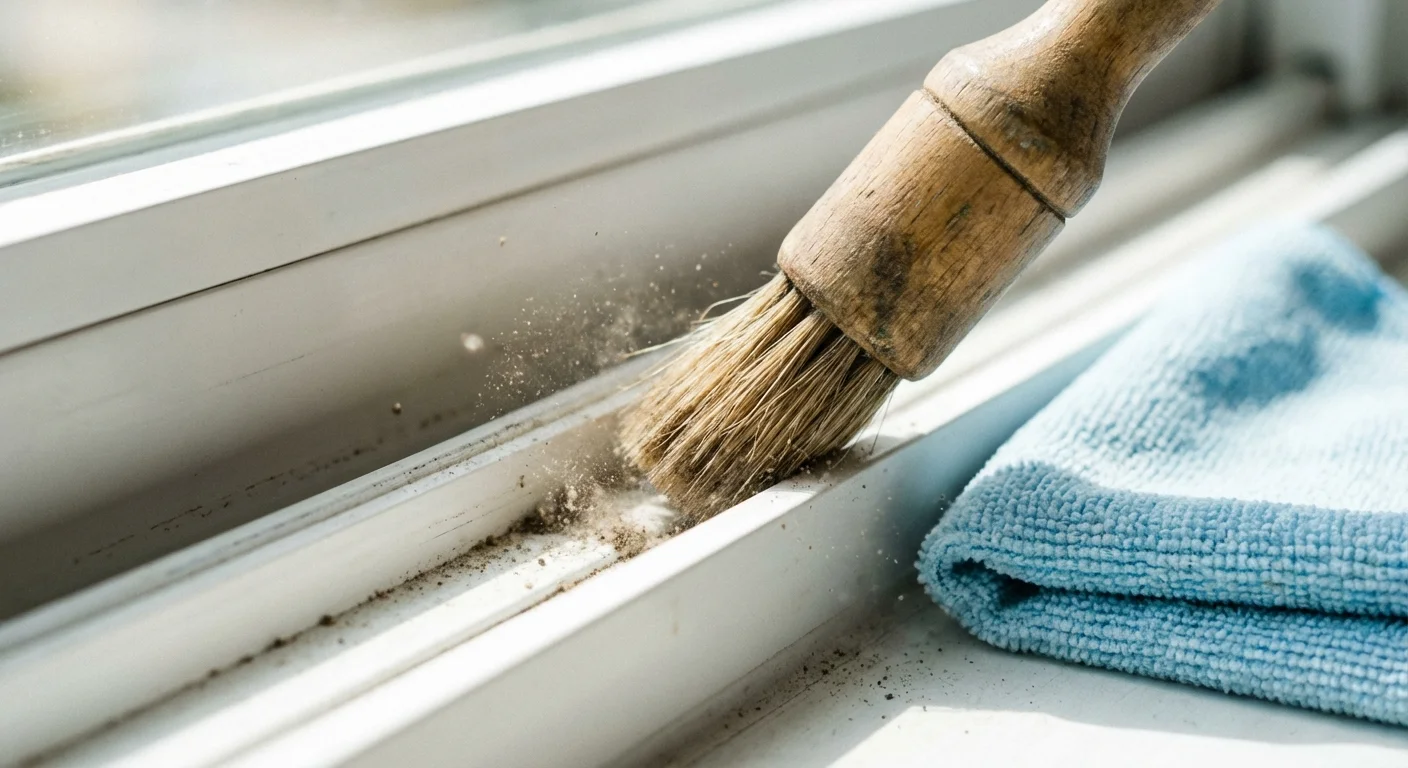
Perfectly clean glass looks out of place if it sits above a window track filled with dead insects, dust, and mold. Cleaning the tracks is a crucial component of home maintenance, as blocked tracks prevent windows from sealing properly, driving up your energy bills.
Start by opening the window fully. Use the crevice tool on your vacuum cleaner to suck up loose debris, cobwebs, and bugs. Next, sprinkle a light layer of baking soda directly into the track. Pour a small amount of white vinegar over the baking soda; it will fizz and bubble, lifting the ground-in dirt. Let it sit for ten minutes.
Take an old toothbrush and scrub the corners and tight spaces. Wipe up the resulting slurry with paper towels or old rags you do not mind ruining. For the narrowest crevices, wrap a damp cloth around the tip of a butter knife and run it along the grooves. Finally, wipe the entire track with a clean, damp rag. Keeping these tracks clear ensures smooth operation and protects the longevity of your window hardware.

Approaches for Specialty Window Types
Not all windows are standard, flat panes of glass. Different architectural styles require varied approaches to prevent damage and ensure a thorough clean.
Double-Hung Windows
Modern double-hung windows are a favorite because they allow you to perform exterior window washing from the safety of inside your home. Unlock the window, raise the bottom sash slightly, and engage the tilt latches (usually located on the top edge of the sash). Carefully pull the top of the sash toward you until it rests horizontally. Wash the exterior glass using your squeegee method, taking care not to drip soapy water onto your floors. Push the sash back into place, pull down the top sash, and repeat the process. Always support the weight of the sash when it is tilted inward.
French Doors and Multi-Pane Windows
Windows divided by small wooden or vinyl grids (muntins) are tedious to clean. A standard 12-inch squeegee will not fit. You must purchase a specialized 6-inch squeegee. Alternatively, skip the squeegee entirely for these tiny panes. Spray your cleaning solution onto a waffle-weave microfiber cloth (never spray directly onto the small panes, as liquid will pool in the bottom corners and rot the wood over time). Wipe the pane thoroughly, then immediately buff it dry with a second, completely dry microfiber cloth.
UV-Coated and Tinted Glass
Many modern, energy-efficient windows feature protective coatings or aftermarket tints applied to the interior surface. These films reflect heat and protect your furniture from fading, but they are incredibly fragile. Never use razor blades, abrasive scrub pads, or any cleaner containing ammonia (like standard Windex) on tinted glass. Ammonia eats through the adhesive holding the tint to the glass, causing it to bubble and peel. Stick strictly to a mild dish soap and water solution, and use only soft microfiber cloths or a high-quality rubber squeegee.
Sliding Glass Doors
Sliding doors accumulate greasy handprints and dog nose smudges daily. Because they sit at ground level, they also collect heavy dirt from foot traffic. Wash sliding doors exactly like large exterior windows, but pay special attention to the floor track. A jammed sliding door track forces you to yank the door, which can damage the locking mechanism over time. Vacuum the bottom track thoroughly and lightly lubricate the rollers with a silicone-based spray (avoid oil-based lubricants like WD-40, which attract and hold onto dust).
Avoiding Common Errors
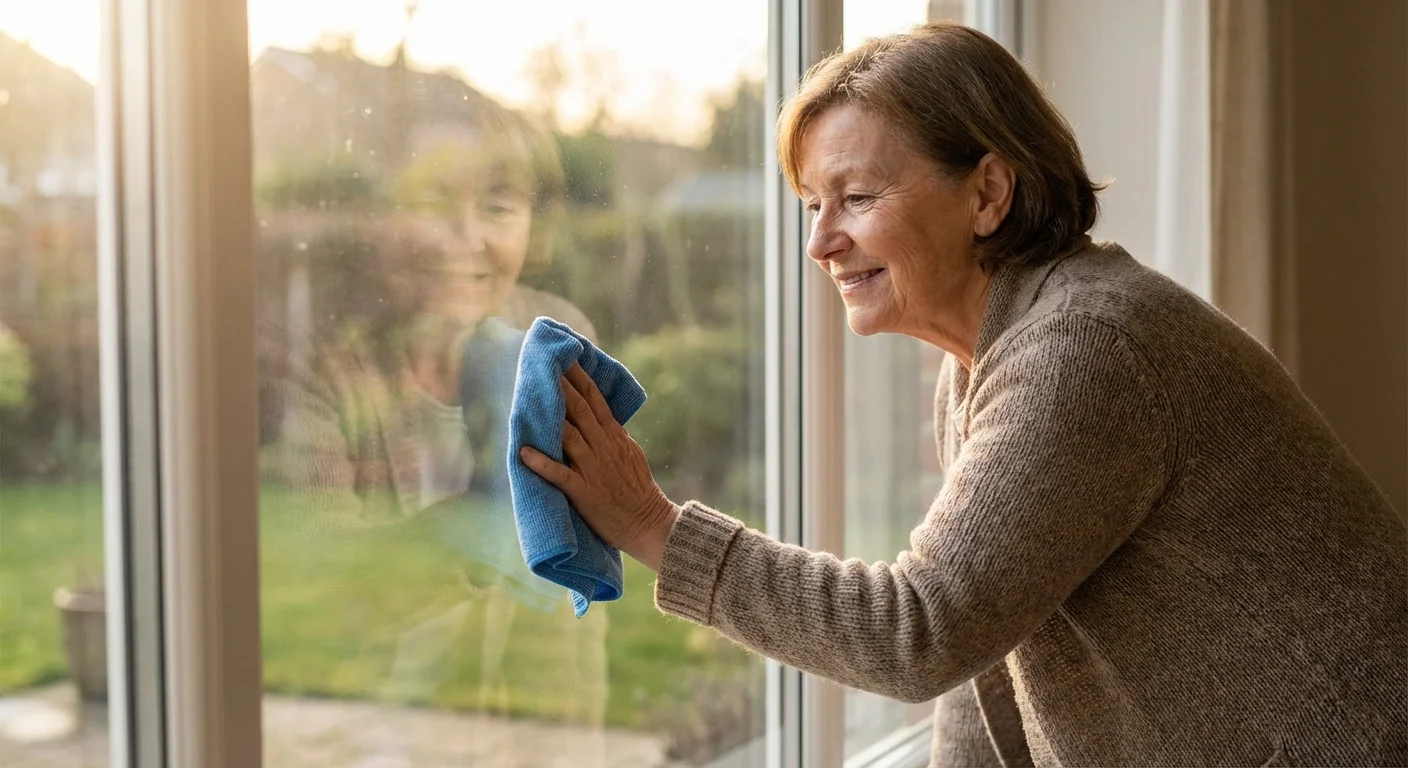
Even with the best tools, certain habits will sabotage your efforts. Avoid these common pitfalls to maintain a streak-free shine.
Cleaning in Direct Sunlight: This is the cardinal sin of window washing. When the sun beats down on the glass, it heats the surface. Any liquid you apply will evaporate in seconds, leaving behind soap scum and mineral deposits before you even pick up your squeegee. Always wait for an overcast day or track the sun and wash the shaded side of your house.
Using Too Much Soap: More soap does not equal cleaner windows. Heavy suds create a sticky film that a squeegee cannot cleanly remove. If your water looks like a bubble bath, you have used too much. One or two drops of Dawn per gallon of water is all you need.
Skimping on Squeegee Maintenance: Squeegee rubber is delicate. If you drop your squeegee on the concrete, or if you drag it over a sharp piece of dried paint, the rubber will nick. A nicked blade leaves a highly visible line of water with every pull. Inspect your rubber blade before you start; if it feels stiff, brittle, or looks uneven, slide it out of the channel and replace it. Professional rubbers are inexpensive and make all the difference.
Washing Glass Before the Frames: Always clean your window screens, tracks, and frames before you wash the glass. If you reverse the order, you risk splashing dirty water or brushing dusty screens against your pristine windows.

When DIY Isn’t Enough
While the techniques outlined above empower you to tackle the vast majority of your home’s windows, certain situations demand professional intervention. Recognizing when to put down the squeegee keeps you safe and protects your property.
- Multi-Story Homes Without Tilt-In Windows: Hanging out of a second-story window or balancing precariously on an extension ladder with a bucket of water is incredibly dangerous. Professional window cleaners use specialized water-fed extension poles that pump purified water up to 40 feet in the air, allowing them to clean high windows safely from the ground.
- Broken Thermal Seals: If you notice a hazy, foggy buildup that you cannot feel on the inside or the outside of the glass, the thermal seal between your double-pane windows has failed. Moisture has penetrated the space between the panes. No amount of surface cleaning will fix this; you must contact a glazier to replace the glass unit.
- Post-Construction Cleanup: If you recently renovated your home, your windows are likely covered in concrete dust, stucco overspray, or silicone caulk. Attempting to scrub these abrasive materials off will permanently scratch the glass. Professionals use specific chemical softeners and specialized glass scrapers to remove construction debris safely.
- Severe Hard Water Etching: If hard water sits on glass for years, the minerals eventually etch into the pores of the glass itself, causing permanent cloudiness. Restoring etched glass requires mechanical buffing with cerium oxide compounds, a process best left to experts to avoid optical distortion.
Frequently Asked Questions
Will rain ruin my freshly cleaned windows?
It is a common myth that rain makes windows dirty. Rainwater is relatively pure. Windows get dirty when rain mixes with the existing layer of dust, pollen, and dirt already sitting on the glass or the window screens. If your glass and screens are completely clean, rainwater will simply sheet off and dry clear without leaving spots.
How often should I clean my windows?
For optimal maintenance, aim to wash your exterior windows twice a year—once in the spring to remove winter grime and pollen, and once in the fall to prepare for the darker months. Interior windows should be cleaned quarterly, though high-traffic areas like glass doors and kitchen windows may require monthly touch-ups.
Can I use newspaper to clean my glass?
Decades ago, using crumpled newspaper to clean windows was a popular and effective method because the paper was dense and the ink was petroleum-based, which left a polished finish. Today, modern newspapers use thinner paper and water-based soy inks. Wetting modern newspaper will simply result in soggy paper bits stuck to your glass and dark ink smudged across your white window frames. Stick to microfiber or huck towels.
What is the best way to clean window screens?
The safest and most thorough method is removal. Take the screens outside, lay them on a flat surface like a driveway, and scrub them gently with a soft bristle brush dipped in your window washing solution. Rinse them thoroughly with a hose on a low-pressure setting. Tap them gently to knock off excess water, then leave them in the sun to dry completely before putting them back in the window frames.
Maintaining the Light
Establishing a routine for your window maintenance elevates the entire atmosphere of your home. By adopting a professional window cleaning method—relying on a high-quality squeegee, a minimalist soap solution, and proper technique—you eliminate the frustration of endless wiping and persistent streaks. The physical effort pays off immediately the next morning when you walk into a room bathed in clear, unobstructed natural light. Take your time, focus on the technique, and enjoy the transformative clarity that comes with truly clean glass.
This guide provides general home improvement information. Every home is different—what works in one space may need adaptation in yours. For structural changes, high-rise window maintenance, or working extensively on ladders, consult a licensed professional.
Last updated: February 2026






Leave a Reply