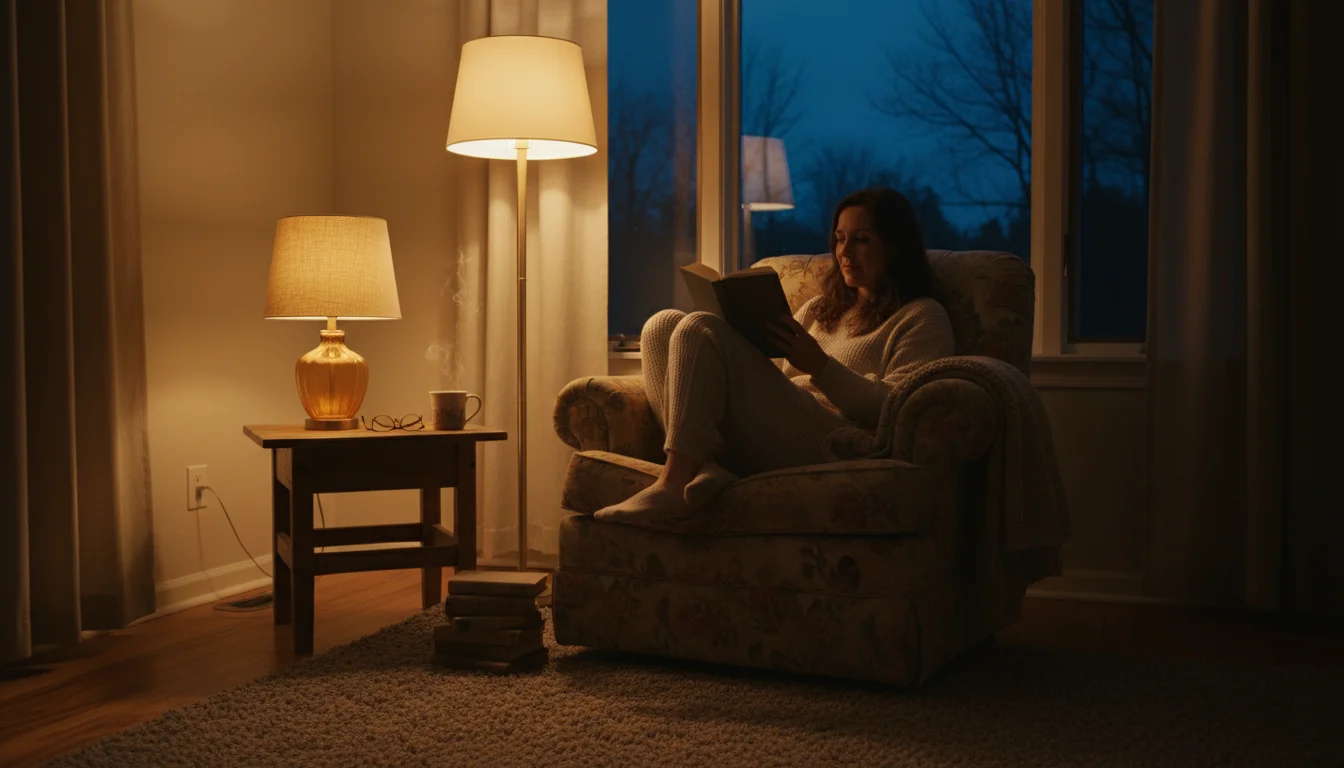
A living room that felt fine in July can feel cold and flat by October: blue-white bulbs, bare floors, drafty windows and a coffee table buried in chargers. You do not need new furniture to fix it.
Start with light and fabric. Warm 2700K bulbs on lamps, a plug-in dimmer, thermal curtains and fresh pillow covers do most of the work for around $100.
Every one of them moves with you if you rent.
The 10 Upgrades by Cost and Impact
| Upgrade | Typical cost | Renter-friendly? | Impact |
|---|---|---|---|
| 1. 2700K LED bulbs plus a plug-in lamp dimmer | $20 to $40 | Yes | High |
| 2. Thermal-lined curtain panels (pair) | $30 to $60 | Yes, with a tension rod or approved holes | High |
| 3. Door draft stopper and removable window sealing | $10 to $30 | Yes, with rope caulk or a door snake | High |
| 4. Three fall pillow covers and one throw | $65 to $125 | Yes | High |
| 5. 5 x 7 or 6 x 9 rug (on sale) plus pad | $100 to $190 | Yes | High |
| 6. Accent wall paint (one gallon) | $30 to $50 | Ask the landlord | Medium to high |
| 7. Stovetop potpourri or one candle | $0 to $15 | Yes | Medium |
| 8. Low-care plants and baked pinecones | $0 to $45 | Yes | Medium |
| 9. Baskets and a lidded bin for summer decor | $15 to $35 | Yes | Medium |
| 10. Seating pulled off cold walls, or a used reading chair | $0 to $100 | Yes | High |
Warm the Light and Stop the Window Chill
1. Light the room with lamps, not the ceiling
Once it is dark before dinner, lamps carry the room. Use two or three at seated height with LED bulbs rated around 2700K; lower Kelvin numbers give warmer, more yellow light, while 4000K and above reads as office white.
A plug-in lamp dimmer ($10 to $20) dims a lamp with no wiring; check that the bulb is labeled dimmable so it does not flicker. Our guide to layered lighting covers where task and accent lights belong.
A hardwired wall dimmer is a wiring job: turn off the breaker, confirm the circuit is dead with a non-contact voltage tester, or call a licensed electrician. Renters need the landlord’s permission first.
2. Hang thermal curtains wide and high
The Department of Energy notes that a typical home loses more than 25% of its heat through windows and suggests opening south-facing curtains on sunny days, then closing them at night.

Swap sheer summer panels for thermal-lined ones ($15 to $30 each) in a fall weight such as velvet or a linen blend.
Mount the rod 4 to 6 inches above the frame and 6 to 10 inches past each side, and let panels touch the floor so cold air cannot spill under them.
Without permission to drill, use a heavy-duty tension rod inside the frame or adhesive hooks rated for the curtain weight.
3. Block drafts before the heat comes on
On a windy day, hold the back of your hand or a strip of tissue along window sashes and the bottom of exterior doors. Anywhere it flutters or feels cold is a leak.
The Department of Energy’s renter guidance recommends sealing drafty windows and doors with weatherstripping or draft stoppers. A fabric door snake costs $10 to $20, or a rolled bath towel works free.
For window gaps, removable rope caulk ($5 to $10) presses into the seam and peels off in spring, so it suits renters. Self-adhesive foam weatherstrip handles sticky door edges for about $5 to $10 a roll.
Add Softness to the Sofa and Floor
4. Swap summer pillow covers, not pillows
Trade linen and cotton summer covers for fall ones on the inserts you already own, at $15 to $25 each. Buy covers 2 inches smaller than the insert, such as a 20-inch cover on a 22-inch insert, so they look full instead of flat.

Mix textures rather than buying a matching set: velvet squares, one chunky knit and a faux fur or boucle lumbar. Add one throw ($20 to $50) over an arm; fleece is cheaper than chunky knit and usually machine-washable.
Wash the summer covers before storing them flat, so they are ready in May.
5. Anchor the seating with a rug
Hard floors pull heat from bare feet as the weather cools, and the Carpet and Rug Institute explains that rugs add thermal resistance underfoot and absorb sound.
Size it so at least the front legs of the seating sit on it: a 6 x 9 for a sofa up to about 84 inches, a 5 x 7 for a loveseat.
Expect $80 to $150 on sale plus a $20 to $40 pad; our area rug guide compares fibers.
Shift the Color and the Scent
6. Trade cool tones for a fall palette
Move from cool grays and summer blues toward rust, terracotta, mustard, olive and cream. Accessories do it cheaply: a mustard throw, cranberry pillow covers or a few amber glass vases.
For a bigger shift, paint one wall. A 12 x 8-foot wall is 96 square feet, so two coats need about 200 square feet of coverage, well within one gallon ($30 to $50).
Renters who cannot paint have other routes; our under-$50 accent wall ideas include peel-and-stick options that come off cleanly.
7. Scent the room with stovetop potpourri
The cheapest fall scent comes from the pantry: the peel of one orange, two cinnamon sticks and a tablespoon of cloves in about 4 cups of water at a low simmer.

If you burn candles, follow the NFPA rule to keep flames at least 12 inches from anything that can burn and blow them out when you leave the room. Our candle safety and style guide covers holders and flameless options.
The EPA lists burning candles and some scented air fresheners as sources of indoor particles, so crack a window or run the range hood while they burn.
Bring Fall In, Put Summer Away
8. Add low-care plants and foraged pinecones
Snake plants, ZZ plants and pothos tolerate the lower light of shorter days and missed waterings, and small pots cost $5 to $15. Set them in terracotta or woven baskets.
If you have pets, check each plant against the ASPCA’s toxic plant list first; several common houseplants, including pothos and snake plants, are on it.
Pinecones, branches and dried grasses from the yard are free. Bake foraged pinecones on a foil-lined sheet at about 200°F for 30 minutes to drive out insects, and stay close because sap can scorch.
9. Pack up summer decor and give fall a basket
Fall pieces only read as cozy if they are not competing with beach prints, citronella candles and lightweight summer throws. Pack those into one lidded bin as the fall items come out.

Then clear the coffee table so the throw, lamp and plant are what the eye lands on. One woven basket for remotes and chargers and a larger one by the sofa for extra throws costs $15 to $35.
Aim to leave open shelves roughly half full after the swap.
Pull the Seating Toward the Warmth
10. Move seats off cold walls and windows
A sofa pushed against an exterior wall or under a drafty window feels chilly all season. Pull it 6 to 12 inches off the wall, or turn the group to face an interior wall or the fireplace.
If you use a space heater, keep it at least 3 feet from the sofa, curtains, throws and stacked pinecones, and plug it straight into a wall outlet.
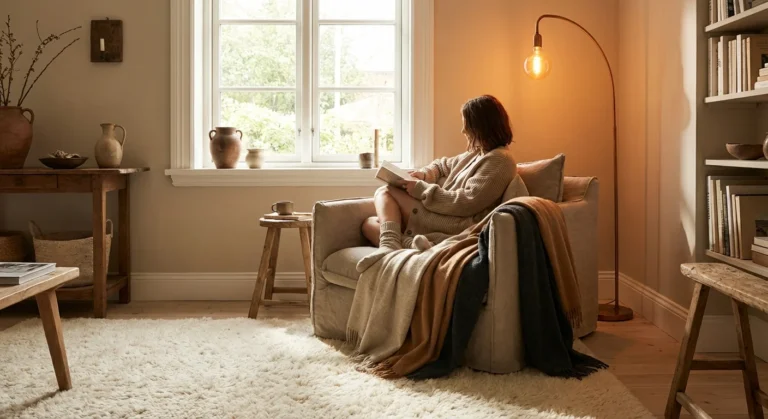
A reading chair needs a floor lamp behind one shoulder, a side table within arm’s reach and a throw, all in about a 5 x 5-foot footprint. Used armchairs often sell for $50 to $100.
In a large room, pull seats into a group no more than 8 to 10 feet across. More layouts are in our furniture arrangement guide.
How a $100 Budget Plays Out
Take a rented 13 x 16-foot apartment living room with one ceiling fixture, a gray sofa and bare laminate. A first round that stays near $100:
- Three 2700K LED bulbs: about $12
- Plug-in dimmer for the existing floor lamp: $15
- Secondhand table lamp: $15
- Two pillow covers in rust and olive: $40
- Woven basket for remotes and cables: $15
- Stovetop potpourri from the pantry: $0
That totals about $97, with no holes in the walls and nothing the landlord needs to approve.
The second round is a 6 x 9 rug, which leaves about 3.5 feet of bare floor on every side of a 13 x 16 room, plus thermal curtains and a door draft stopper. Run the draft check first and cover the worst window before the others.
Fall Purchases That Waste the $100
- Whole new pillows when covers fit the inserts you have.
- Plug-in fragrance running around the clock; it adds particles and you stop noticing the scent within days.
- A new ceiling fixture; lamps give more warmth per dollar and need no wiring.
- Decorative firewood or dried branches stacked near a space heater or fireplace opening.
- Matching decor sets in one color; mixed textures in related tones look cozier.