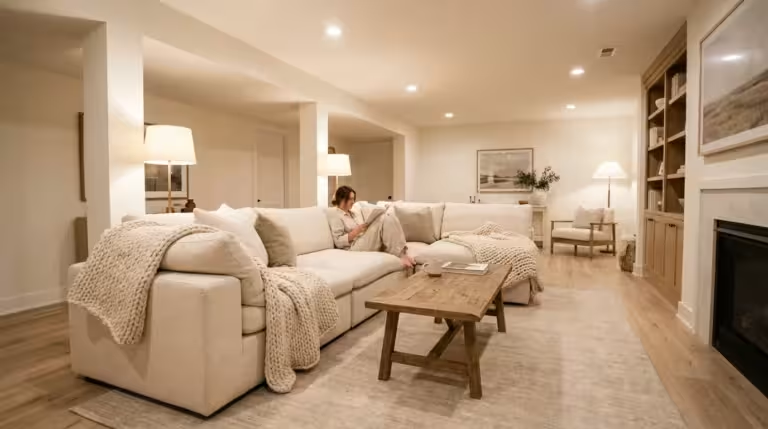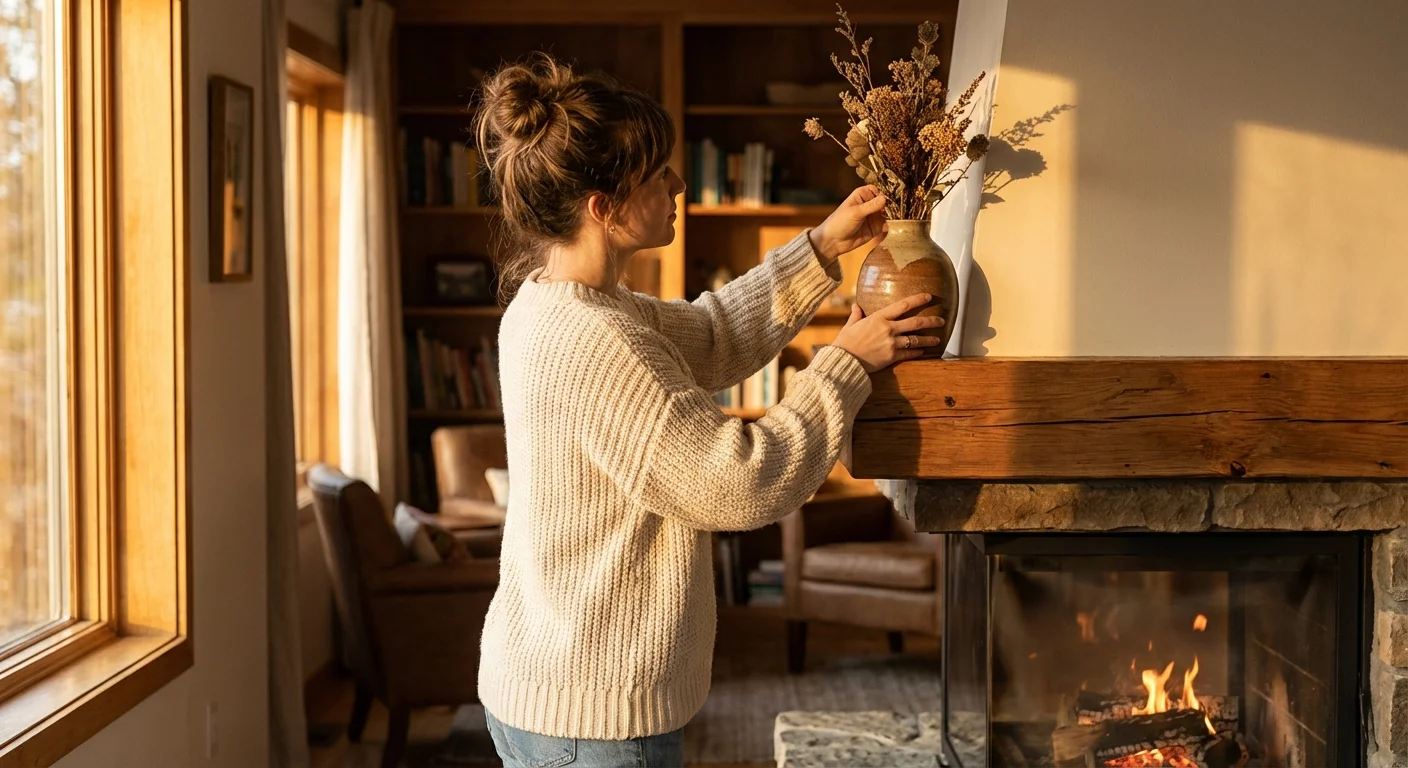
A household with an active, open-hearth wood-burning masonry fireplace lit on cold evenings faces a constant clash between cozy decor and heat clearances. Decorating the shelf and hearth like ordinary furniture scorches wood trim, stains brick, and puts fuel near sparks.
Styling an active hearth requires treating the mantel shelf as a convective heat deflector governed by clearance codes rather than decorative shelving. Fixing seven recurring failures across the mantel, upper wall, surround, hearth, and firebox protects finishes through regular fires.
Mantel Trim and Shelf Edge Scorching in the Rising Heat Plume
The cause: Rising hot air spills out of the firebox against the underside and front lip of the mantel. Combustible molding mounted too low, plus dried eucalyptus, ribbon garland, or paper on the shelf edge, quickly warps or scorches.
Under NFPA 211, combustible trim and mantels must stay at least 6 inches from the firebox opening. Within 12 inches, any combustible projection is limited to 1/8 inch per inch of vertical distance:
- Under 6 inches: noncombustible tile, stone, brick, or metal only.
- At 6 inches: up to 3/4 inch projection for flat trim or thin molding.
- At 8 inches: up to 1 inch projection for picture-frame molding.
- At 10 inches: up to 1-1/4 inches projection for slim pilaster trim.
- At 12 inches: up to 1-1/2 inches projection for shallow molding.
- Over 12 inches: full mantel depth allowed, subject to local code and insert or factory-built manuals.
The fix: Mount a combustible wood mantel 12 or more inches above the firebox opening to clear the projection limit. Pull shelf items back from the front lip, and keep dried stems and ribbon garland off the edge.
Anchor the wall above with one mirror or artwork sized two-thirds to three-quarters of the mantel width, either leaned or hung centered 3 to 6 inches up. Mirrors bounce window light across dark rooms, while art suits rooms with steady daylight.
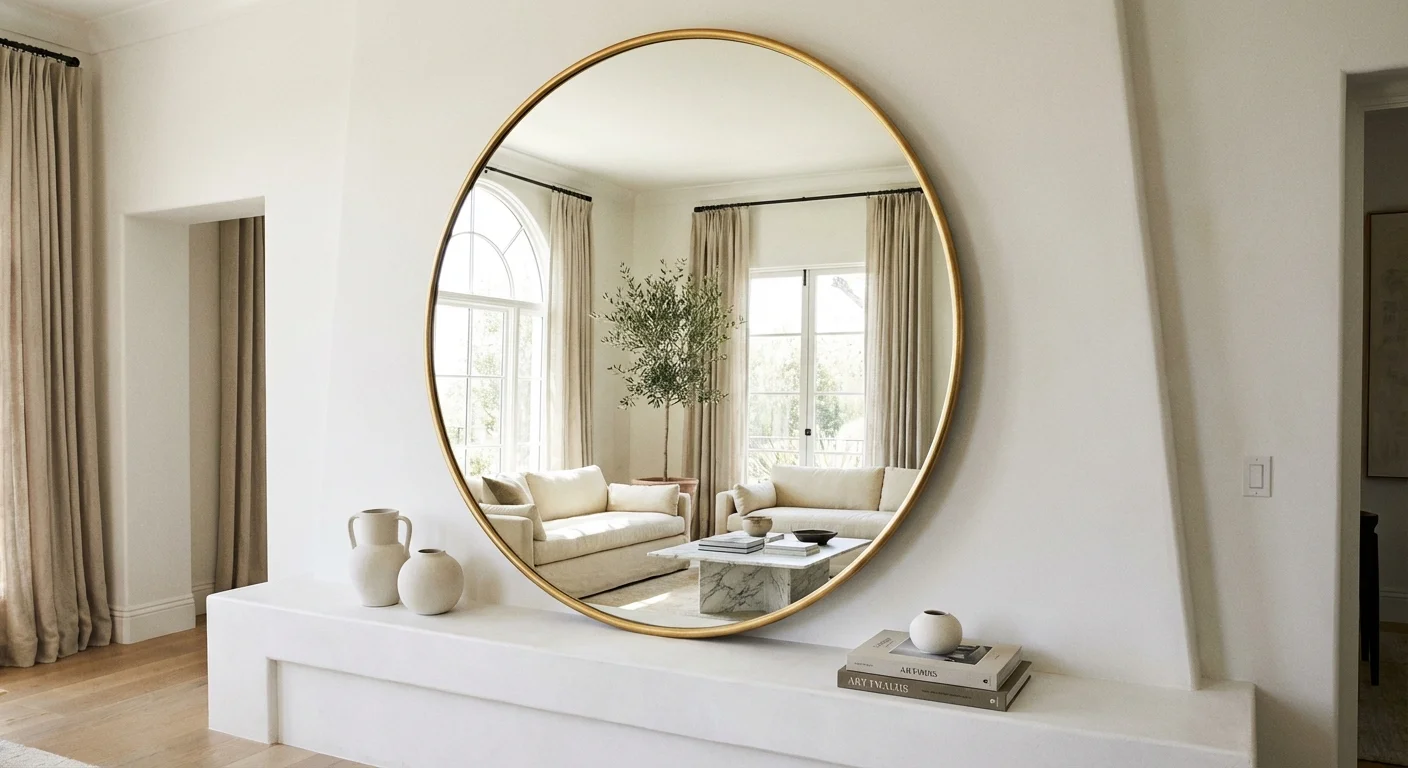
Arrange objects in a shallow triangle with the tallest piece near center, medium pieces beside it, and the smallest at the ends. Pair smooth glass with rough ceramic, use odd groups like three staggered candlesticks, and pick thrifted pieces over matched sets.
On a 60-inch painted-brick mantel, a 40-inch round mirror hung 4 inches up, three stacked books with a small bowl, and a 14-inch stoneware vase of branches balance the display. Corral stray keys or small frames on one tray.
Flank the chimney breast with sconces wired by a licensed electrician, battery LED sconces, or brass taper holders set back from the lip. Our guide to layered lighting covers lamps and dimmers for the rest of the room.
Mounted TVs and Wall Art Overheating Above Shallow Trim
The cause: Shallow molding or an undersized shelf under 12 inches high cannot deflect hot exhaust outward, so rising heat washes straight up the chimney breast. Electronics and framed art mounted inside that convective plume exceed safe operating temperatures during evening fires.
The fix: Install a deep mantel shelf at least 12 inches above the opening to deflect rising heat into the room. Keep items under a TV low and sparse, paint the wall dark so the screen recedes, or pick a frame-style TV.
Mount a TV 4 to 6 inches above the mantel only if the wall stays within the TV maker’s operating temperature. Feel the wall after an hour of fire; if hot, add a deflector or move the TV, leaving in-wall wiring to pros.
Surround Finishes Blistering and Framing Overheating Behind Tile
The cause: Standard interior paint blisters near open flames, while tile set over drywall lets heat reach wood wall studs. Extension research shows radiant heat conducts through surround materials into combustible framing concealed behind the fireplace wall.
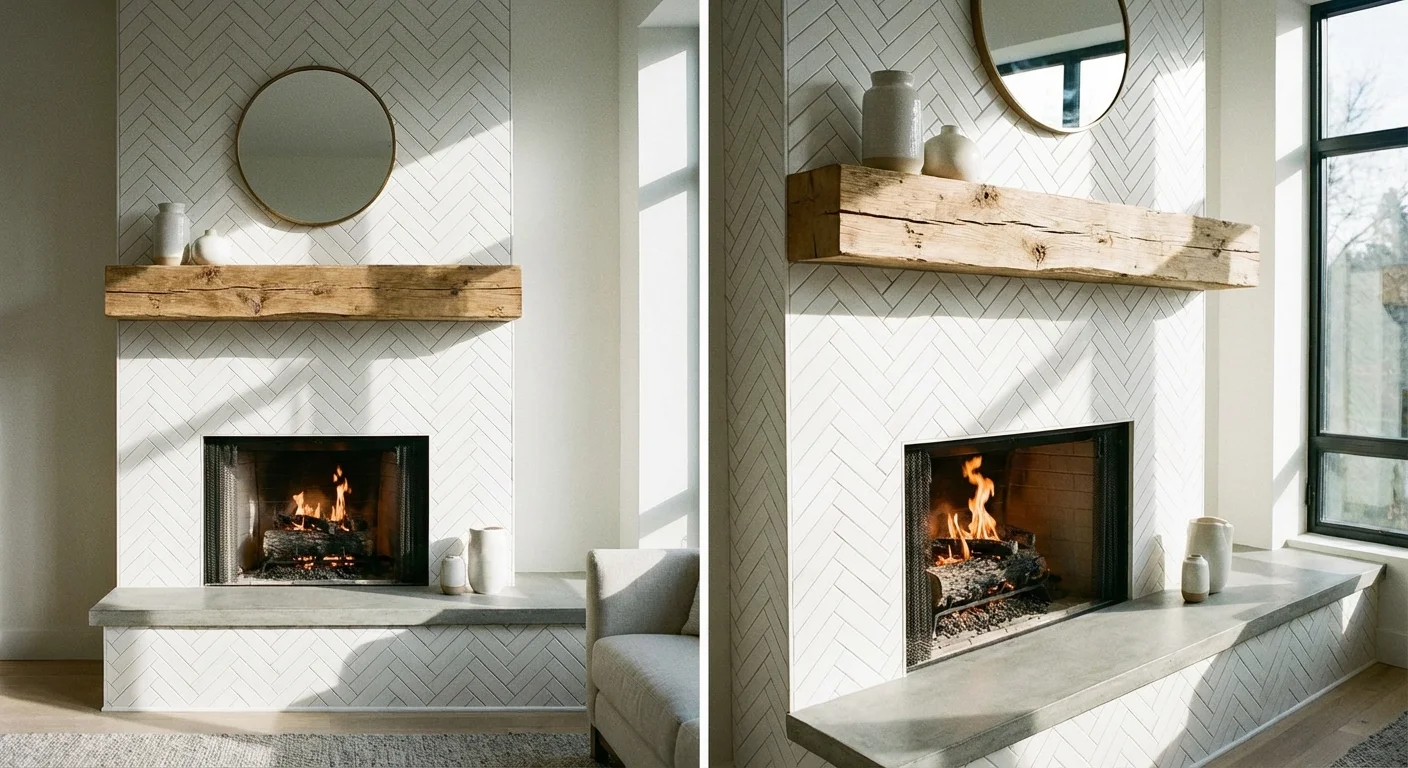
The fix: Match every primer, finish, mortar, and backing board to the exact heat exposure around the opening:
- Painted masonry face: scrub brick with mild detergent and a stiff brush, let it dry, apply masonry primer, and roll warm white or charcoal paint on the brick face.
- Firebox interior brick: apply only high-heat paint specifically rated for firebox interiors, never ordinary wall paint.
- Limewashed masonry: brush limewash onto bare brick so it soaks into the surface instead of coating it, wiping parts back while wet for an aged look.
- Re-tiled surrounds: set zellige or matte slate over cement board with heat-tolerant thinset rather than drywall near the opening.
- Masonry additions: anchor a wood mantel to brick with masonry anchors, and hire a contractor for heavy stone veneer or masonry removal.
Hearth Baskets, Throws, and Greenery Catching Popping Embers
The cause: Setting seagrass baskets of split birch, folded wool throws, or greenery right beside the firebox leaves dry fibers in the path of popping embers. Even behind a screen, radiant heat dries woven materials stacked on the hearth floor.
The NFPA advises keeping a 3-foot clearance zone between an open fire or heating appliance and anything that can burn. That boundary applies equally to baskets, throws, dried stems, and stacks of paper.
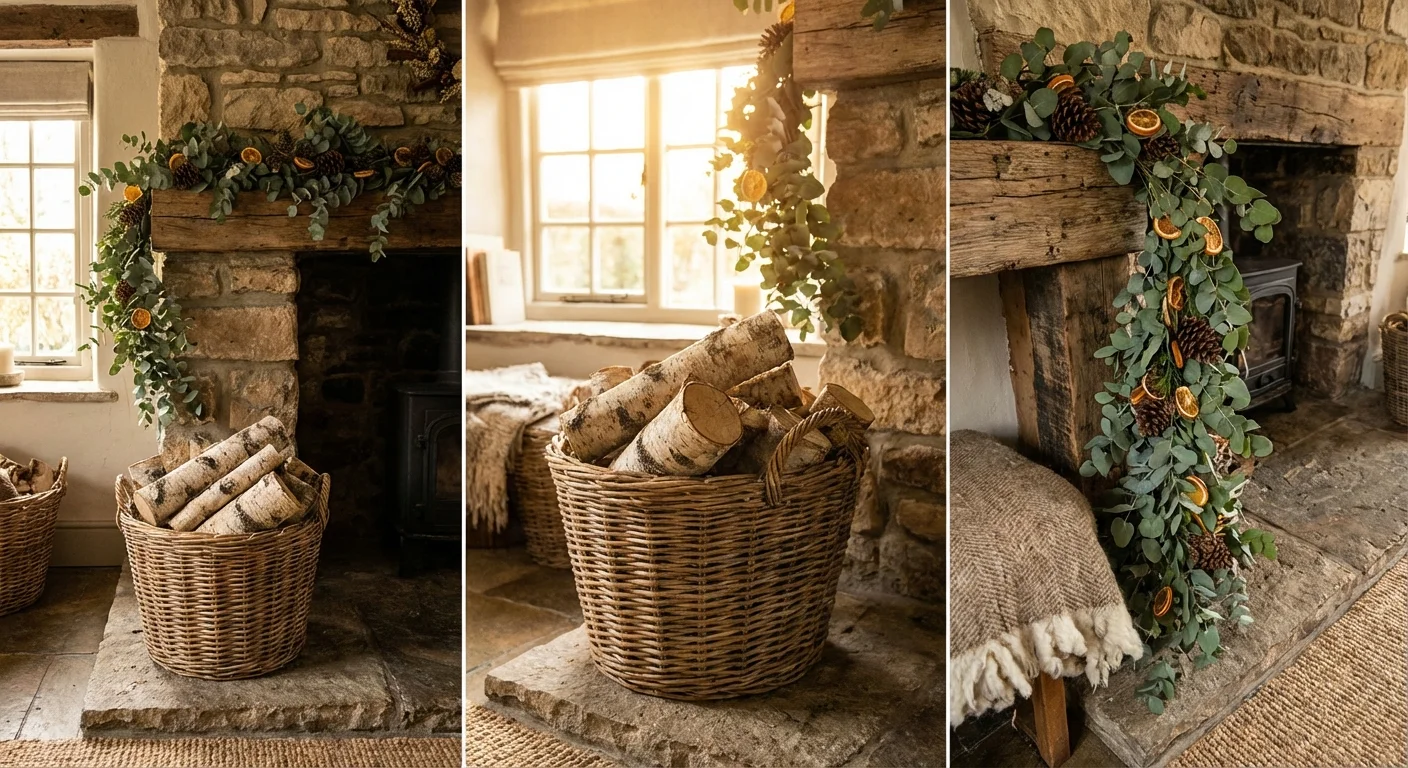
The fix: Keep everything within 3 feet strictly noncombustible, limiting hearth tools to an iron tool set, a cast-iron log holder, or a stone or heavy glass lantern. Move birch baskets, folded wool throws, and trailing pothos past that 3-foot mark.
Angle an armchair outside the 3-foot zone to build a safe reading corner beside the fire. See how to arrange furniture around a focal point for room spacing.
Off-Season Firebox Displays Trapping Ash and Leaving Wax Hazards
The cause: Setting loose pillar candles, decorative logs, or potted greenery directly on bare firebrick creates soot stains from chimney downdrafts. Melted wax and leftover dried wood also become flare-up hazards if someone lights a fire without clearing the firebox.
The fix: Use removable summer displays on noncombustible bases that lift out cleanly, or block stained firebrick with a screen:
- Mirrored candle tray: group three or five pillar candles on a stable, noncombustible tray that lifts out intact before any burn, following our candle safety and style guide.
- Low-light plant: place a potted ZZ plant inside during warm months and rotate it to a window weekly for steady light.
- Architectural split logs: stack split logs tightly to the top only in a firebox that never burns, closing the damper or capping the flue to block drafts and debris.
- Wrought-iron screen: cover cracked or soot-stained firebrick without placing any combustible material inside the opening.
Between-Fire Clutter Drifting Back Into Clearance Zones
The cause: Between winter fires, stray mail, uncontained candles, and seasonal stems migrate back onto the hearth and mantel shelf. Lighting wood without resetting those zones puts fresh combustibles inside the 6-inch mantel and 3-foot hearth boundaries.
The fix: Run a six-step reset before lighting any fire, returning off-duty pieces only after ashes cool completely:
- Move baskets, throws, plants, and paper at least 3 feet from the firebox opening.
- Clear dried stems, garland, and paper decor from the mantel’s front edge.
- Take candles, trays, and potted plants out of the firebox.
- Open the damper and set the screen or glass doors in place.
- Feel the wall under any TV or art after an hour of fire, relocating the piece if hot.
- Confirm alarms work using our five-minute guide to testing smoke and CO detectors.
Open-Hearth Smoke Roll-Out Staining Finishes and Chilling the Room
The cause: Open masonry fireboxes pull heated room air up the chimney and spill smoke into the room when the flue is cold. That backdrafting coats painted brick, limewash, and mantel anchors in soot while leaving the living area cold.
The EPA notes that traditional open masonry fireplaces are inefficient and used mainly for ambiance. When an active hearth needs to heat the living space without smoking up the wall, an open firebox cannot solve the airflow problem.
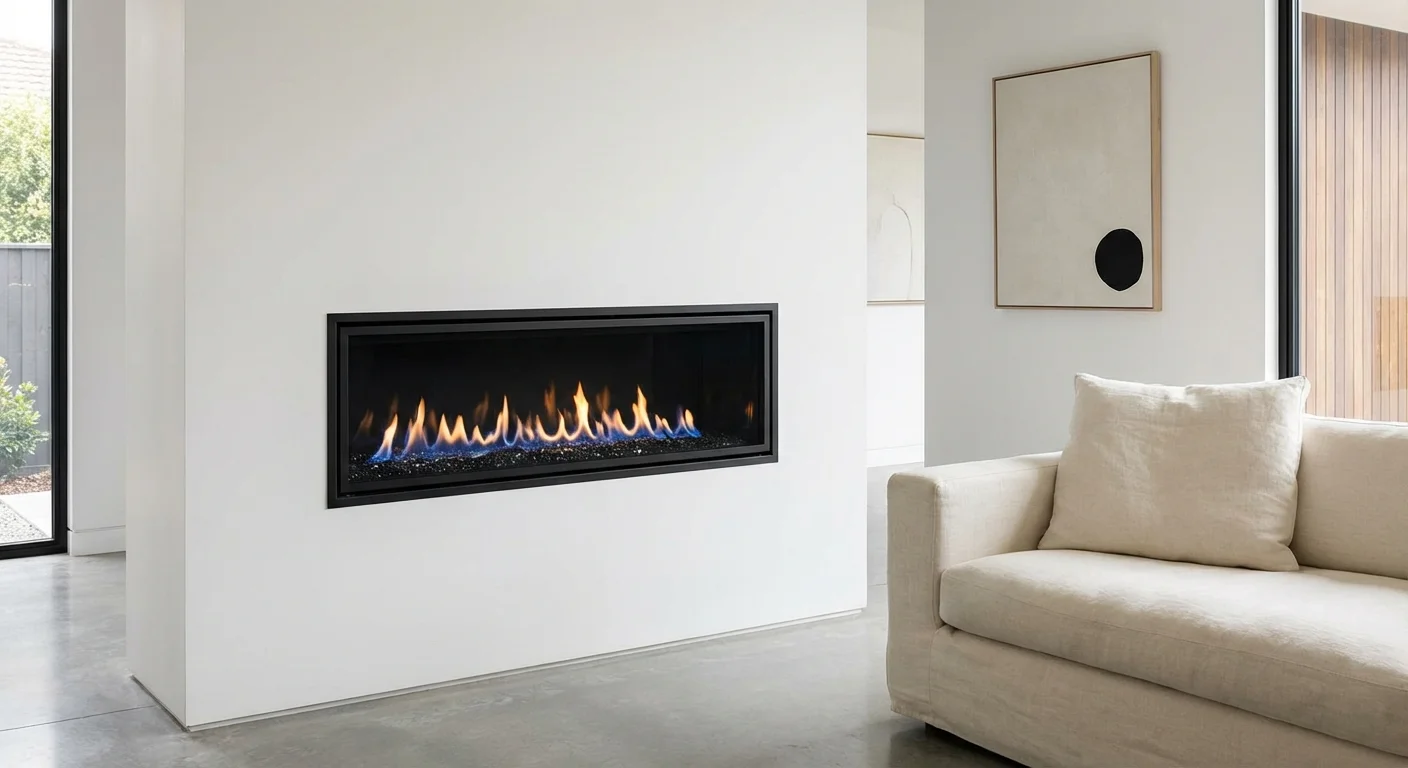
The fix: Retrofit the masonry firebox with a sealed insert matched to the home’s fuel supply and chimney condition:
- Direct-vent gas insert: uses a gas line, sealed glass front, and chimney vent installed by a licensed gas professional for push-button heat without ash.
- Electric insert: slides into a 120V outlet, with heater models drawing about 1,500 W best served by a dedicated circuit for renters or damaged chimneys.
- EPA-certified wood insert: adds a stainless flue liner installed by a certified professional for real wood fires with modern efficiency.
For gas units, the Department of Energy recommends direct-vent inserts with sealed glass doors, which draw combustion air from outside rather than the room.
For wood inserts, the EPA states a masonry chimney needs a properly installed flue liner sized to the unit. Gas lines, liners, hardwired sconces, and in-wall TV wiring all belong to licensed pros.
Any fireplace you burn also requires a yearly inspection to prevent creosote buildup and draft failures before winter fires begin. Follow our chimney and fireplace maintenance guide alongside working smoke and carbon monoxide alarms.