
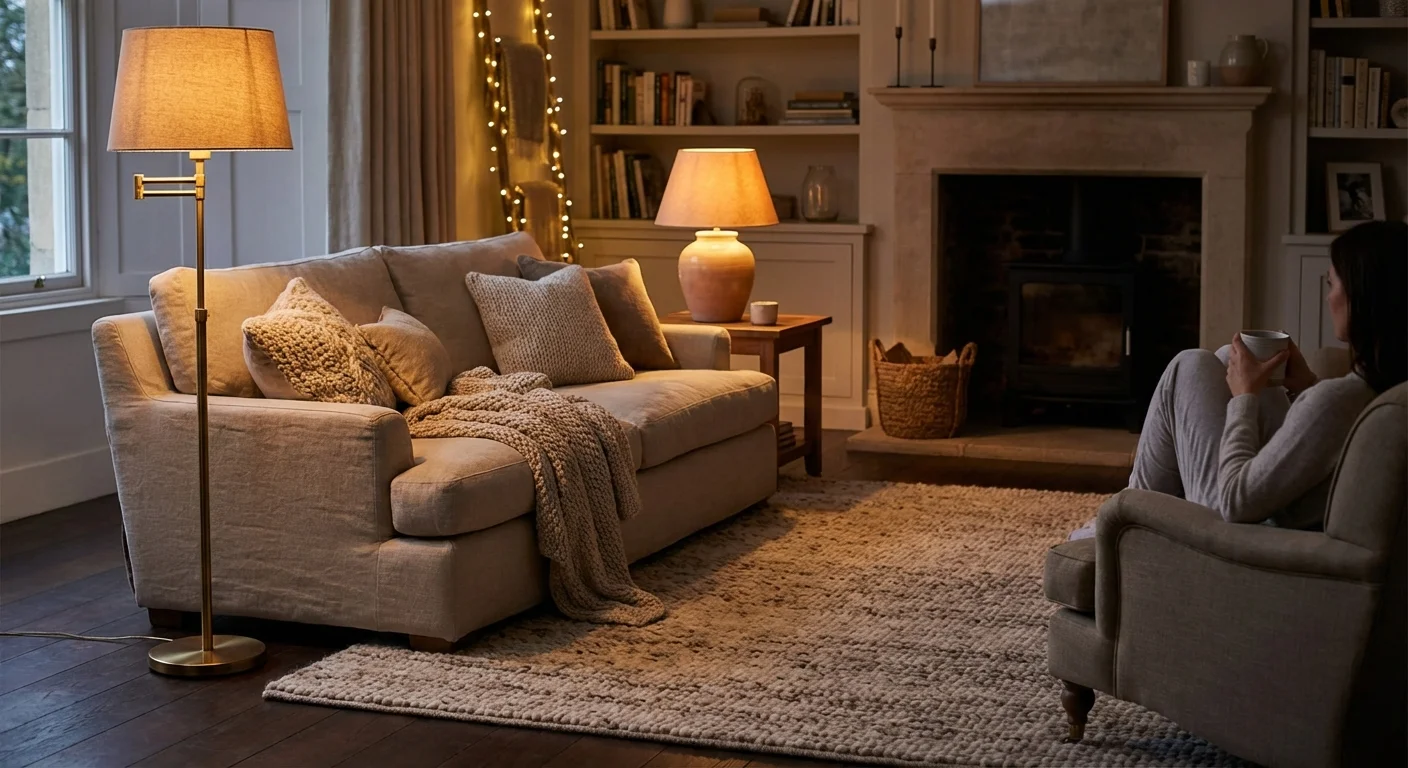
Most people walk into their living room after a long day, flip the main wall switch, and are immediately hit with the harsh, flat glare of a single ceiling fixture. We affectionately call it “the big light,” but there is nothing affectionate about the way it makes a space look. It washes out the room, casts unflattering downward shadows, and completely destroys any chance of winding down for the evening. If you want a space that actually feels welcoming, relying on a single overhead fixture is the fastest way to fail. The secret to a truly inviting space lies in a strategic layered lighting guide.
Adjusting your environment is one of the most effective ways to reduce stress at home after a busy day.
Lighting dictates how you experience your home. It tells your brain when it is time to focus and when it is time to relax. By blending different light sources at varying heights and intensities, you transform a basic room into a textured, relaxing retreat. Whether you live in a sprawling open-concept house or a compact apartment, mastering cozy living room lighting requires stepping away from the switch and rethinking how you illuminate your space.
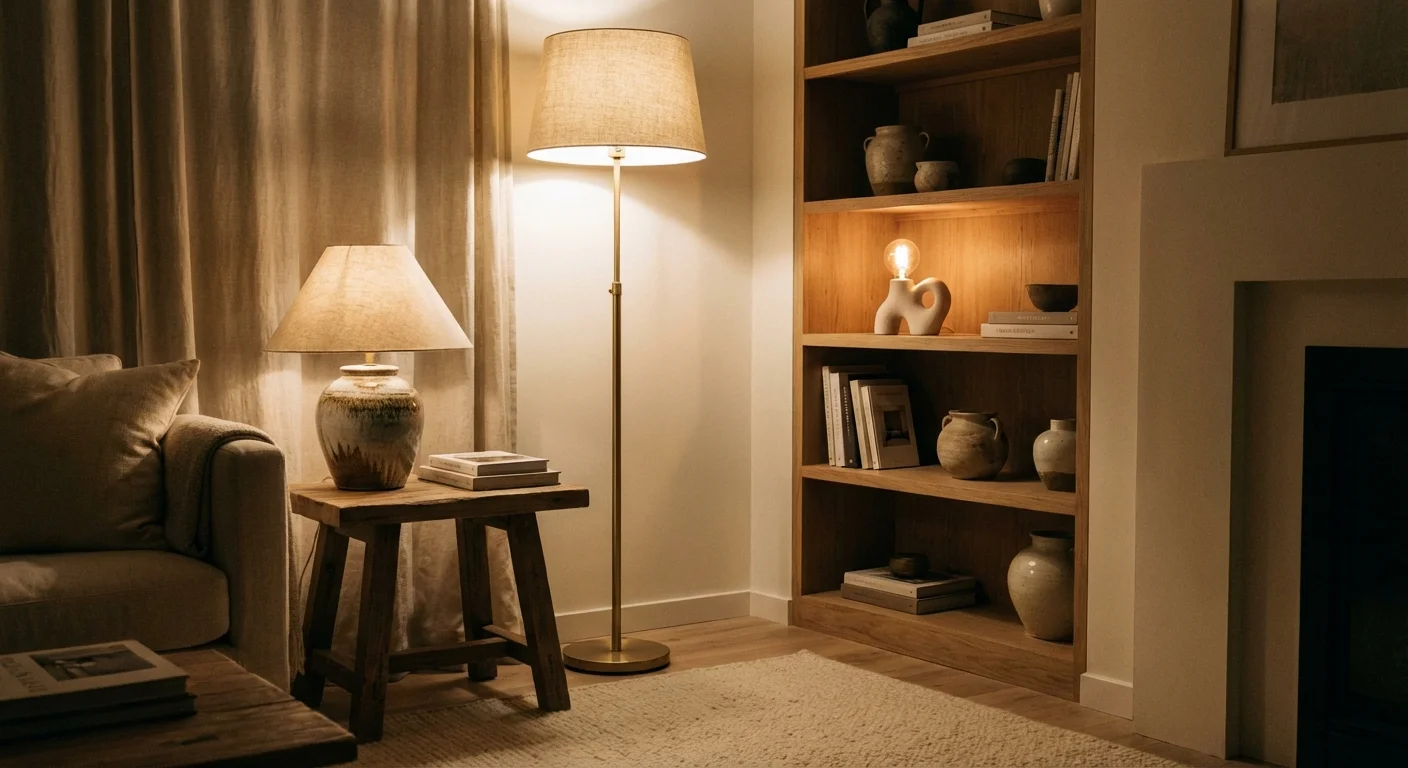
The Essentials at a Glance
- Ambient lighting: Provides the overall base level of illumination, ensuring safe navigation and a general glow.
- Task lighting: Highlights specific zones, giving you focused light for reading, working, or playing games.
- Accent lighting: Adds depth and drama by highlighting architectural features, bookshelves, or artwork.
- Color temperature: The crucial metric—measured in Kelvin—that determines whether your room feels like a cozy den or a sterile hospital corridor.
The Science and Art of Layered Lighting
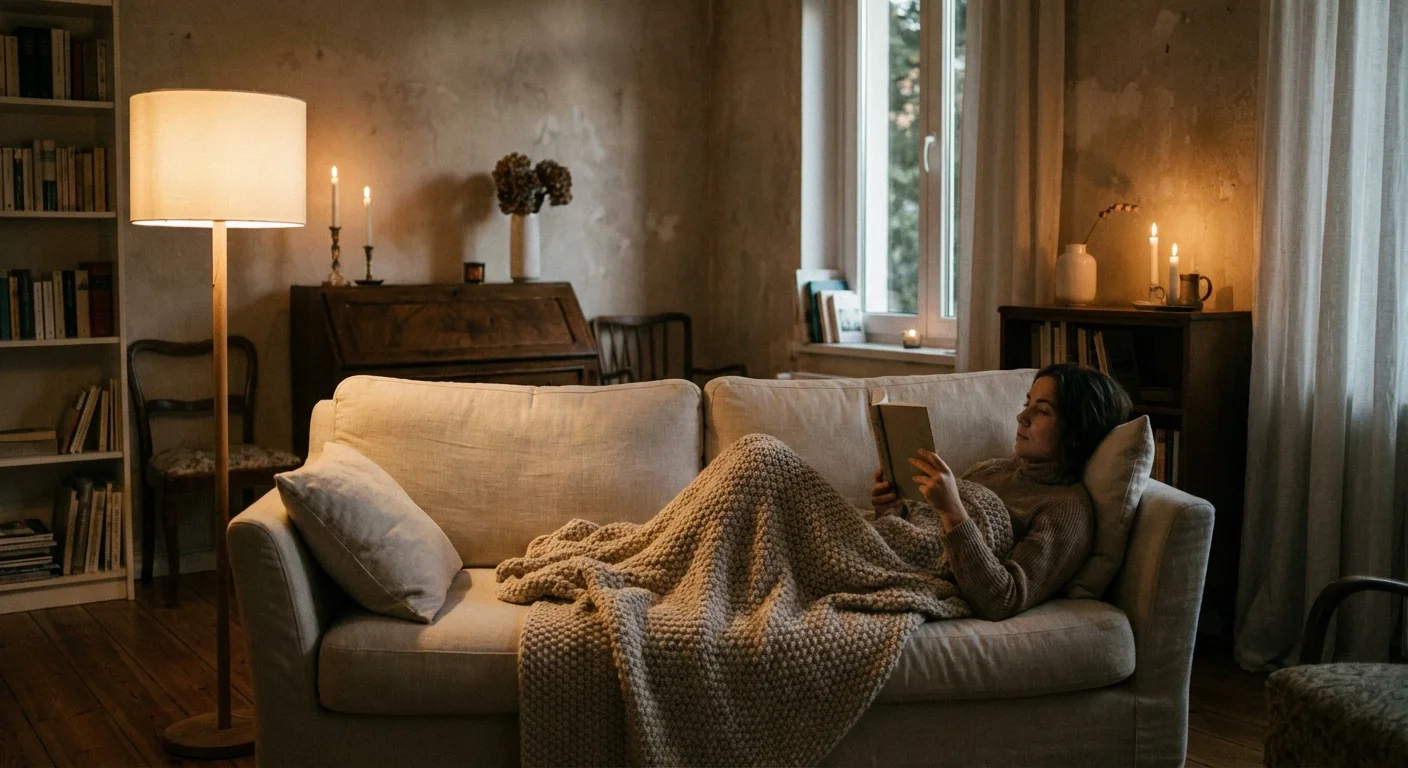
A well-designed living room utilizes three distinct layers of light. When you balance these layers, you create an ambient lighting home environment that feels warm and multidimensional.
This layered approach is a cornerstone of hygge home design, which emphasizes soft, warm pools of light over harsh, uniform brightness.
Remember that your lighting works in tandem with your windows; choosing the right window treatments can help manage natural light during the day and enhance coziness at night.
While this approach works wonders for social areas, you can also use these principles when creating a cozy bedroom for a more relaxing end to your day.
Improving your atmosphere doesn’t have to be expensive, as many lighting upgrades under $100 can significantly change the look and feel of a room.
The first layer is ambient lighting. This is your foundation. Ambient lighting acts as a substitute for natural daylight, providing a uniform level of illumination across the entire room. While overhead chandeliers or recessed lights often provide this layer, you can also achieve it through large, multi-directional floor lamps that bounce light off the ceiling.
The second layer is task lighting. As the name suggests, this lighting helps you perform specific tasks. Think of a reading lamp beside your favorite armchair or a desk lamp on your living room workspace. Task lighting needs to be brighter and more focused than your ambient layer, ensuring you do not strain your eyes while reading a book or knitting.
The final layer is accent lighting. This is the jewelry of your living room. Accent lighting draws the eye to specific focal points, such as a beautiful piece of art, a textured fireplace surround, or a curated bookshelf. It creates contrast; without contrast, a room looks flat and lifeless.
“Design is defined by light and shade, and appropriate lighting is enormously important.” — Albert Hadley, Interior Designer
Understanding Color Temperature and Bulbs
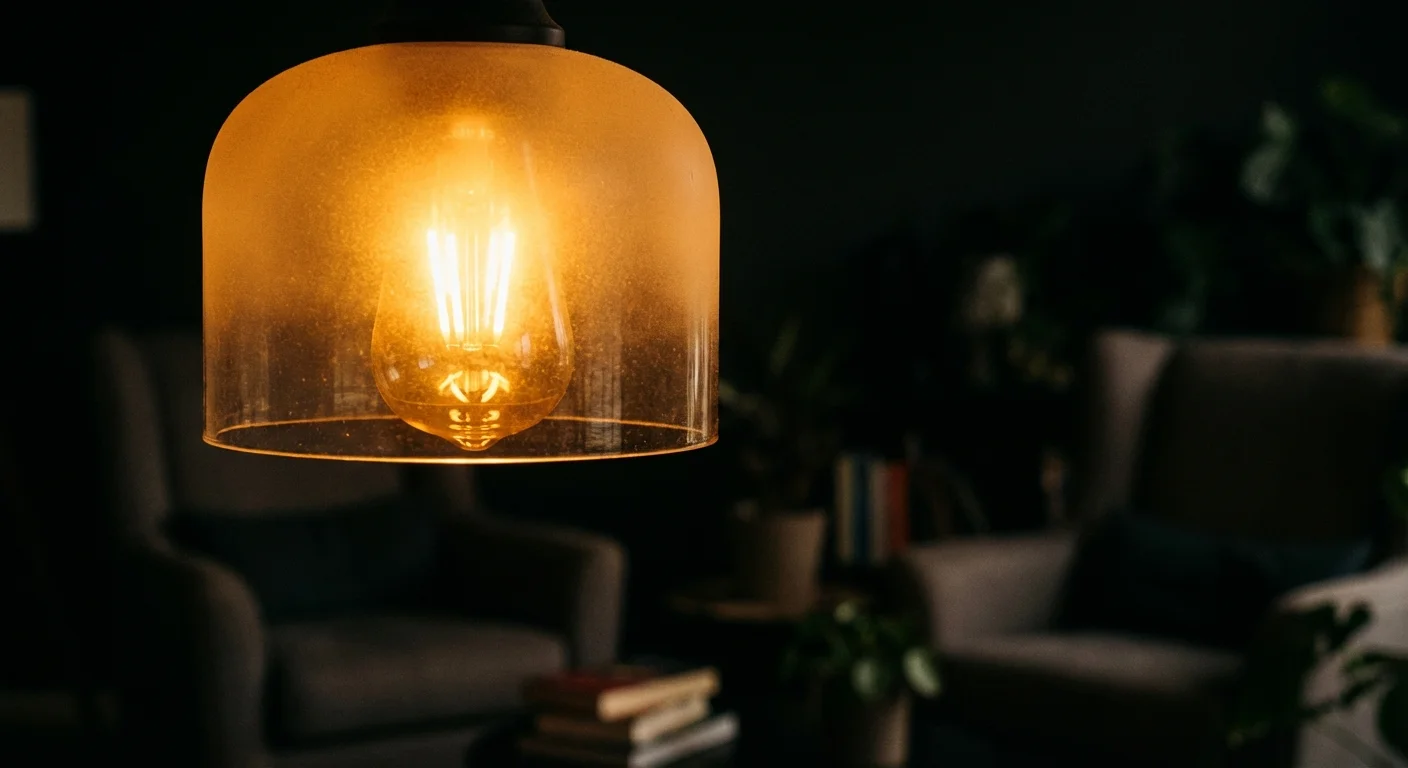
Before you purchase a single new fixture, you need to understand color temperature. Bulb manufacturers measure color temperature in degrees Kelvin (K). The lower the number, the warmer and more yellow the light appears. The higher the number, the cooler and bluer the light becomes. Implementing warm lighting ideas relies entirely on selecting the correct Kelvin rating for your bulbs.
If you want to go even warmer than a standard bulb, creating ambiance with candles provides a flicker of natural, low-Kelvin light that is impossible to replicate with LEDs.
For a living room, you generally want to avoid anything above 3000K unless you are executing a specific task that requires daylight-level clarity. A cool blue light suppresses melatonin production and makes it incredibly difficult to relax before bed. When choosing LED bulbs, you should also look for high CRI (Color Rendering Index) ratings, ideally 90 or above. High CRI ensures the colors of your furniture, paint, and fabrics look true and vibrant.
| Light Appearance | Kelvin Range | Best Use in the Living Room | Mood Generated |
|---|---|---|---|
| Soft White / Warm White | 2700K – 3000K | General ambient lighting, table lamps, and floor lamps. | Cozy, inviting, traditional, relaxing. |
| Warm Candlelight | 2000K – 2400K | Accent lighting, decorative Edison bulbs, night-time wind down. | Intimate, ultra-relaxing, dramatic. |
| Cool White | 3500K – 4100K | Avoid in living rooms; keep to kitchens or garages. | Energetic, clinical, alert. |
| Daylight | 5000K – 6500K | Avoid completely in relaxation spaces. | Harsh, stark, sterile. |
If you want to dive deeper into bulb efficiency and lifespan, the Energy Star website provides excellent resources on choosing LEDs that save money while delivering superior color quality.
Building Your Ambient Layer: The Foundation
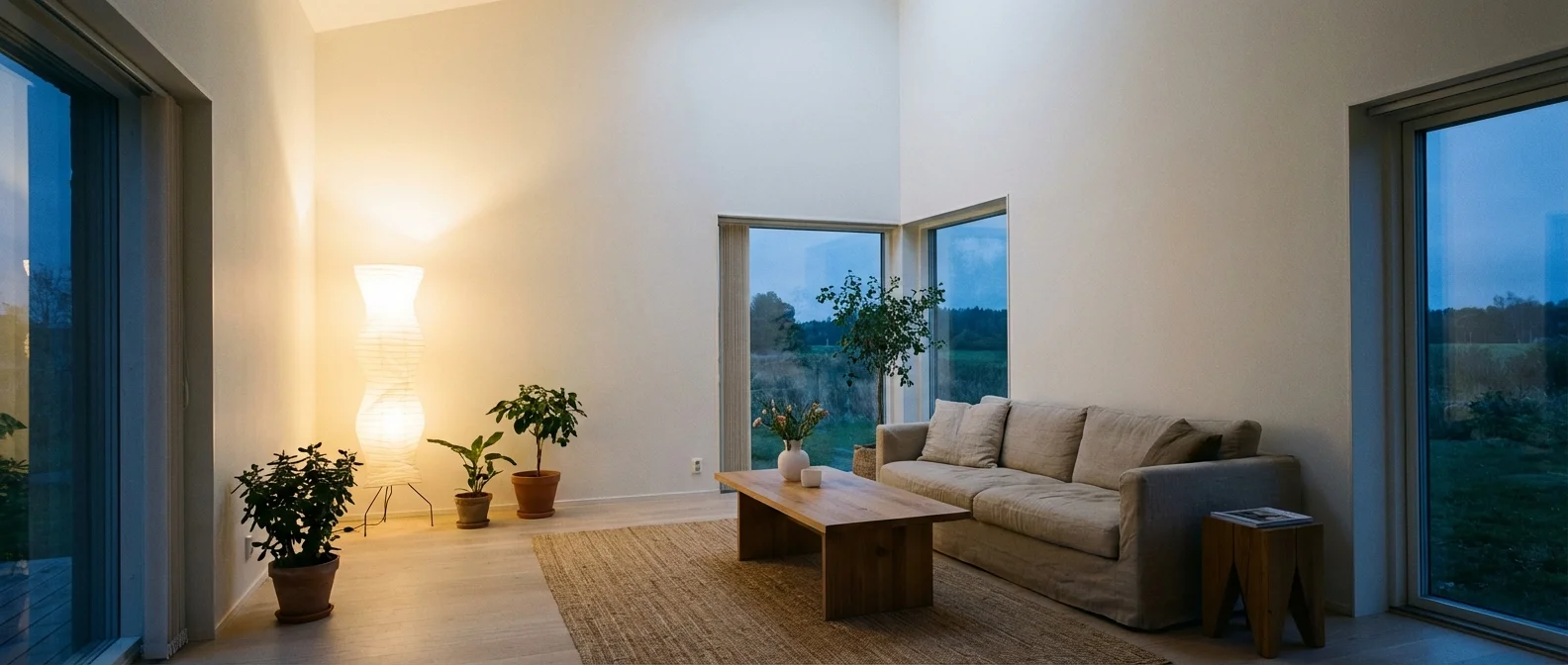
Your ambient layer sets the baseline for the room. While you might want to avoid “the big light,” you still need a way to illuminate the room when you are cleaning, hosting a large gathering, or searching for a lost remote. The trick to making overhead lighting bearable is diffusion and control.
If you find that your current overhead light is too dated to be fixed with a simple bulb change, you can learn how to update light fixtures without an electrician for a quick DIY fix.
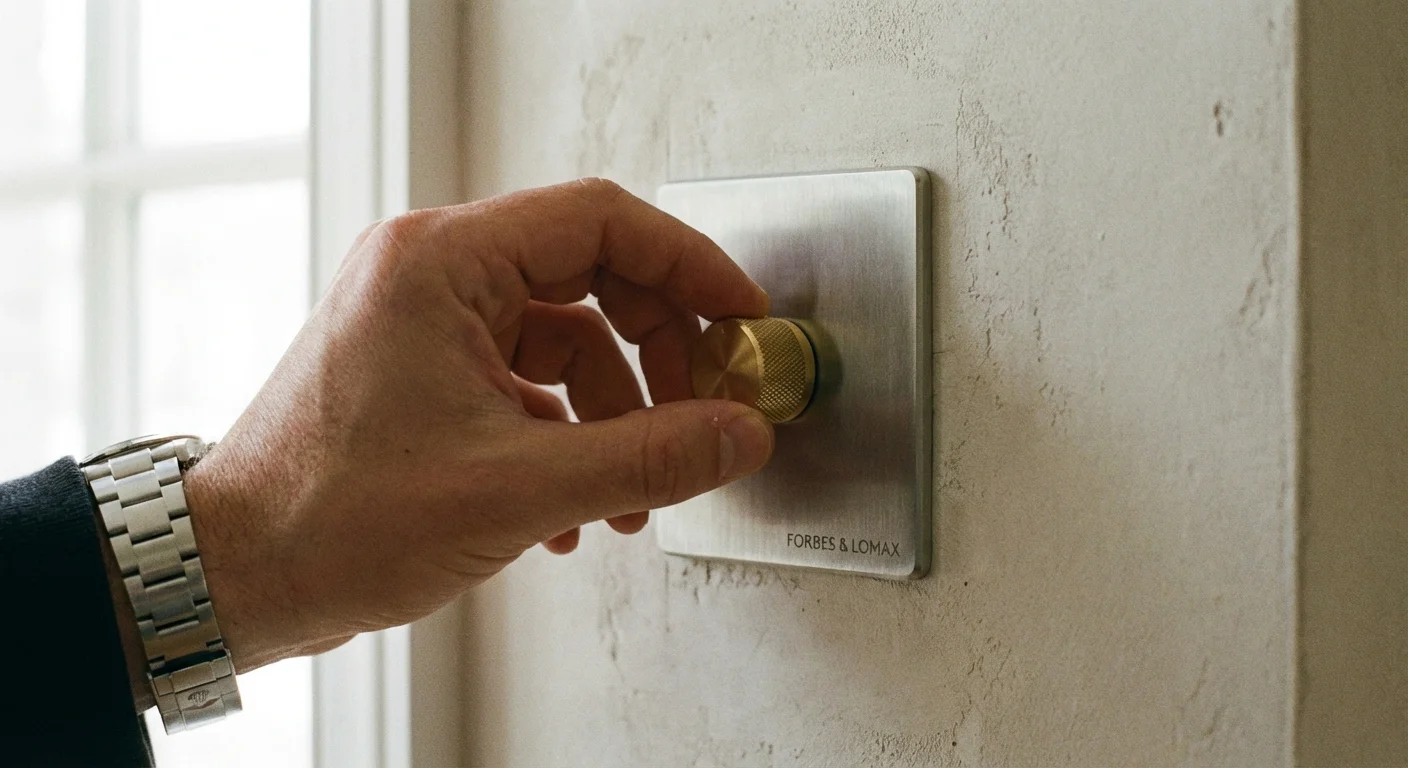
Never leave your ceiling fixtures on a simple on/off switch. Install dimmer switches on every hardwired fixture in your living room. A chandelier that feels overpowering at 100 percent brightness becomes a beautiful, glowing focal point when dimmed to 30 percent. If you rent and cannot change the wall switches, invest in smart LED bulbs. These allow you to adjust both the brightness and the color temperature directly from your smartphone.
Consider the shape and material of your overhead fixtures. A flush-mount light with a frosted glass dome diffuses light evenly, reducing harsh glares. Drum pendants with fabric shades provide a softer, more residential feel than exposed bulbs. If you have recessed lighting (can lights), ensure you point them toward the walls to wash the room in light, rather than pointing them directly down at your seating area.

Introducing Task Lighting: Form Meets Function
Once you establish your ambient layer, you need to add practical illumination. Task lighting brings the light source closer to human height, making the room feel grounded and comfortable.
These lighting principles are also vital if you are trying to create a cozy home office within your living area, ensuring you have focus without sacrificing comfort.
Focusing your light in this way also helps define specific zones, such as dedicated reading nooks or quiet corner workspaces.
When curating living room lamp ideas, look at your furniture layout. Every primary seating spot requires a dedicated light source within arm’s reach. If you have a sofa flanked by end tables, pair two matching or complementary table lamps. The bottom of the lamp shade should sit at roughly eye level when you are seated—typically 58 to 64 inches from the floor. This prevents the bare bulb from shining directly into your eyes.
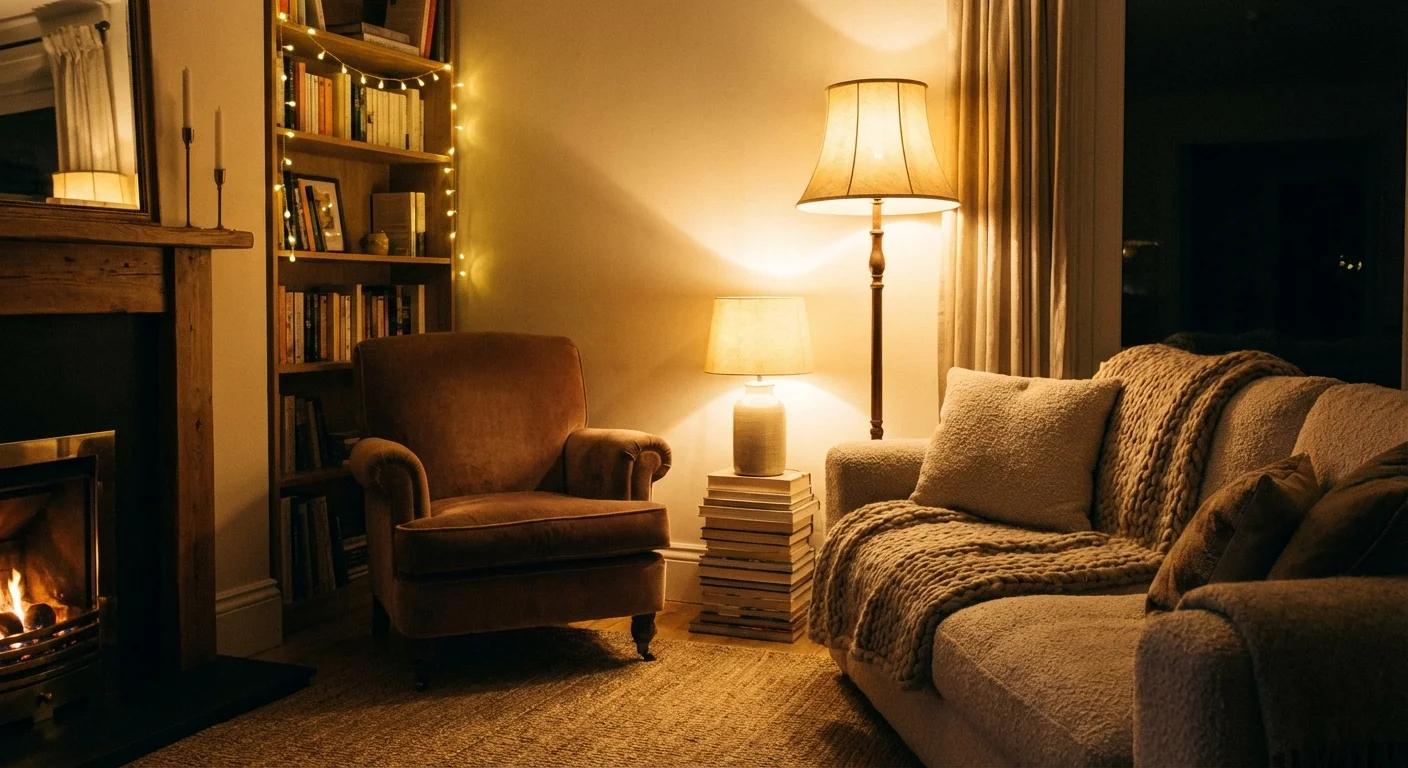
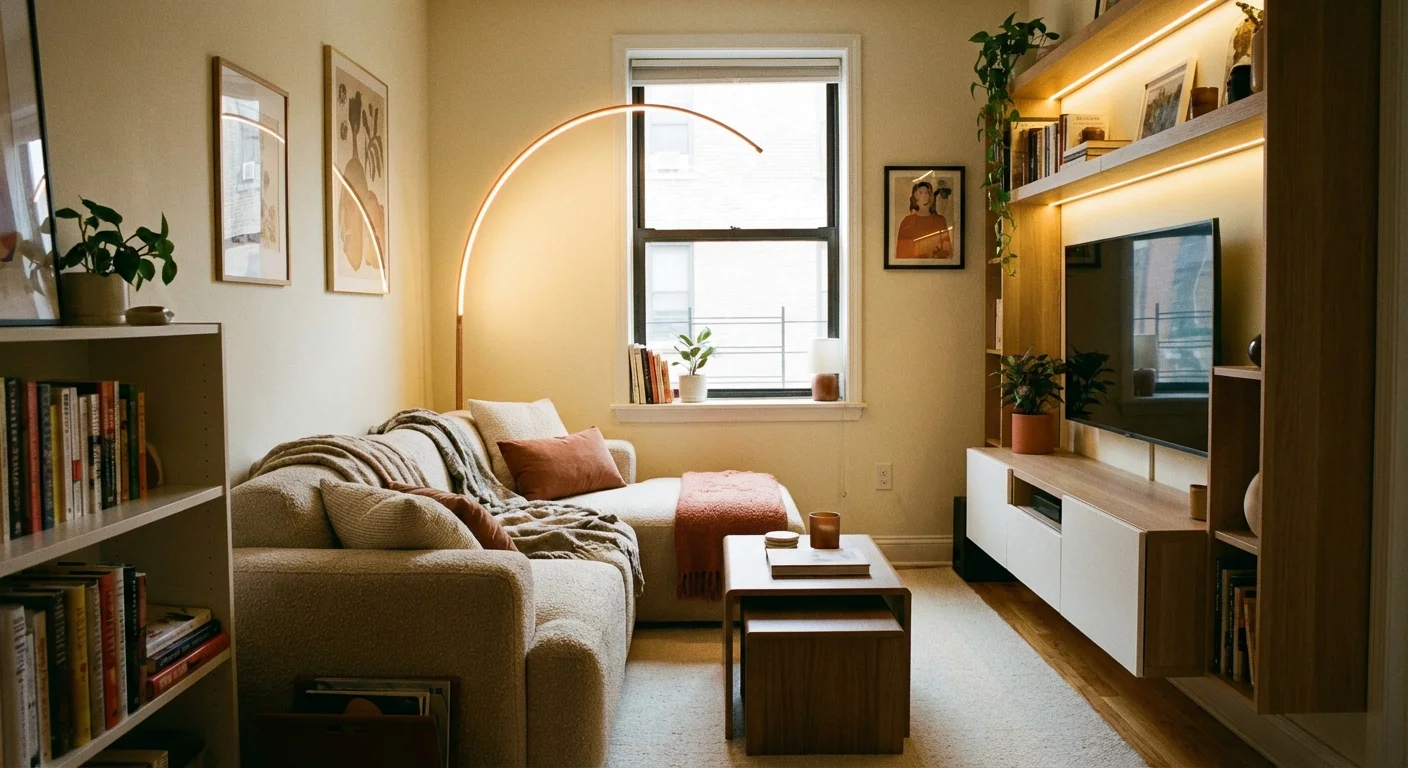
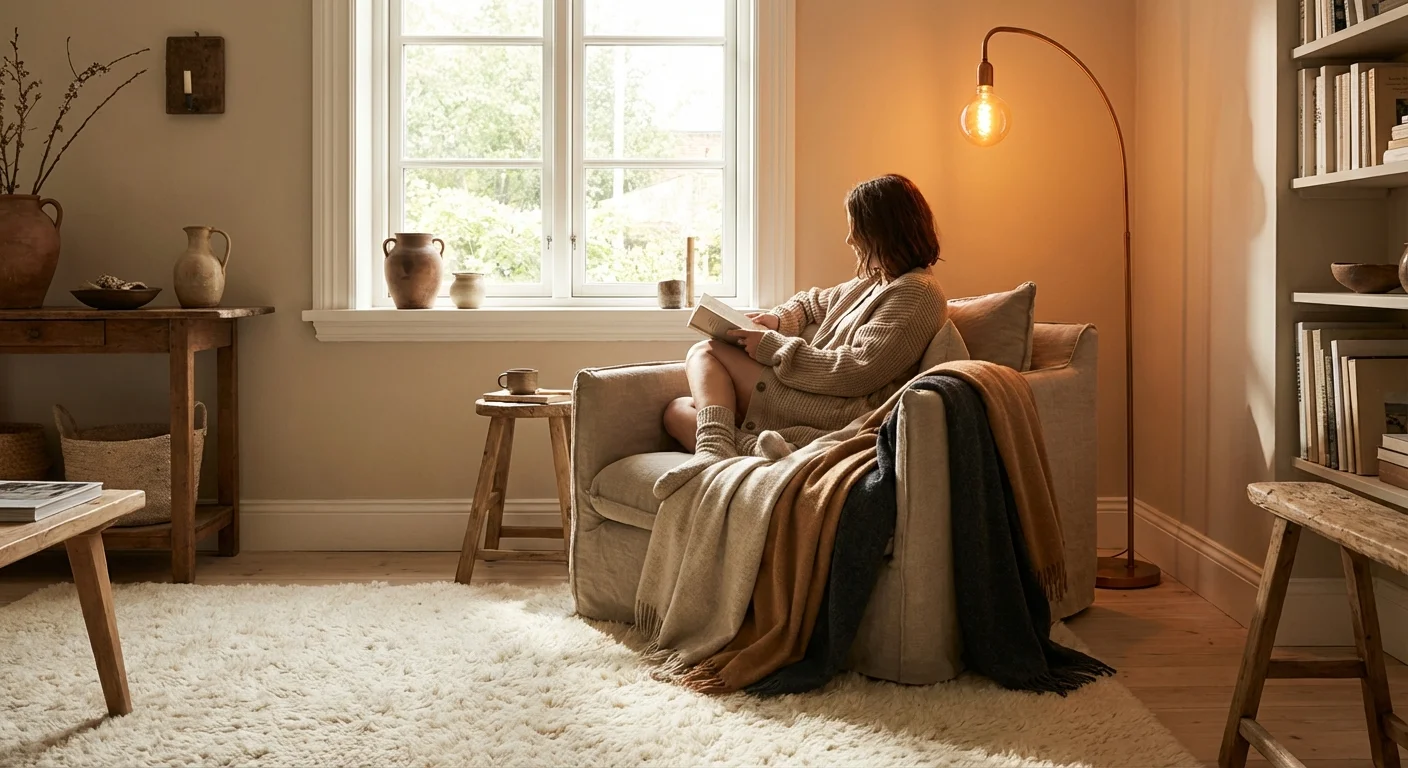
Floor lamps offer excellent task lighting solutions for areas where end tables do not fit. An arc floor lamp swoops gracefully over a sectional sofa, providing overhead illumination without the need for hardwiring. A slim pharmacy-style reading lamp tucks neatly beside an armchair, offering a focused beam of light specifically for your favorite novel.
Pay close attention to your lampshades. The material of the shade dictates how the light behaves. A white linen shade diffuses light softly in all directions, contributing to the room’s overall ambient glow. A dark or opaque metal shade forces the light straight down, creating a dramatic pool of task lighting while leaving the rest of the room darker.

Mastering the Accent Layer: Creating Depth and Drama
The accent layer elevates a room from functional to beautiful. Accent lighting plays with shadows, highlights architectural details, and gives your eyes multiple points of interest to explore.
Once the lighting is perfect, you can finish the look by layering in the best throw blankets and pillows to maximize the room’s physical comfort.
Wall sconces serve as brilliant accent lights. Flank a fireplace or a large piece of art with a pair of sconces to create symmetry and elegance. If you lack the budget or permission to hire an electrician, you can find incredible plug-in sconces that mount directly to the wall and plug into a standard outlet. Alternatively, many design enthusiasts now mount hardwire-style sconces and place battery-operated, remote-controlled LED puck lights inside them—a perfect hack for renters. You can find many variations of this renter-friendly trick on design sites like Apartment Therapy.
Do not forget about picture lights. A sleek brass picture light mounted above a favorite painting instantly makes the room feel like a custom-designed space. Uplighting is another powerful, often overlooked tool. Place a small, inexpensive can light on the floor behind a large potted plant or a piece of furniture, pointing it upward. This casts beautiful, structural shadows on the ceiling and corners, eliminating dark, dead zones in the room.
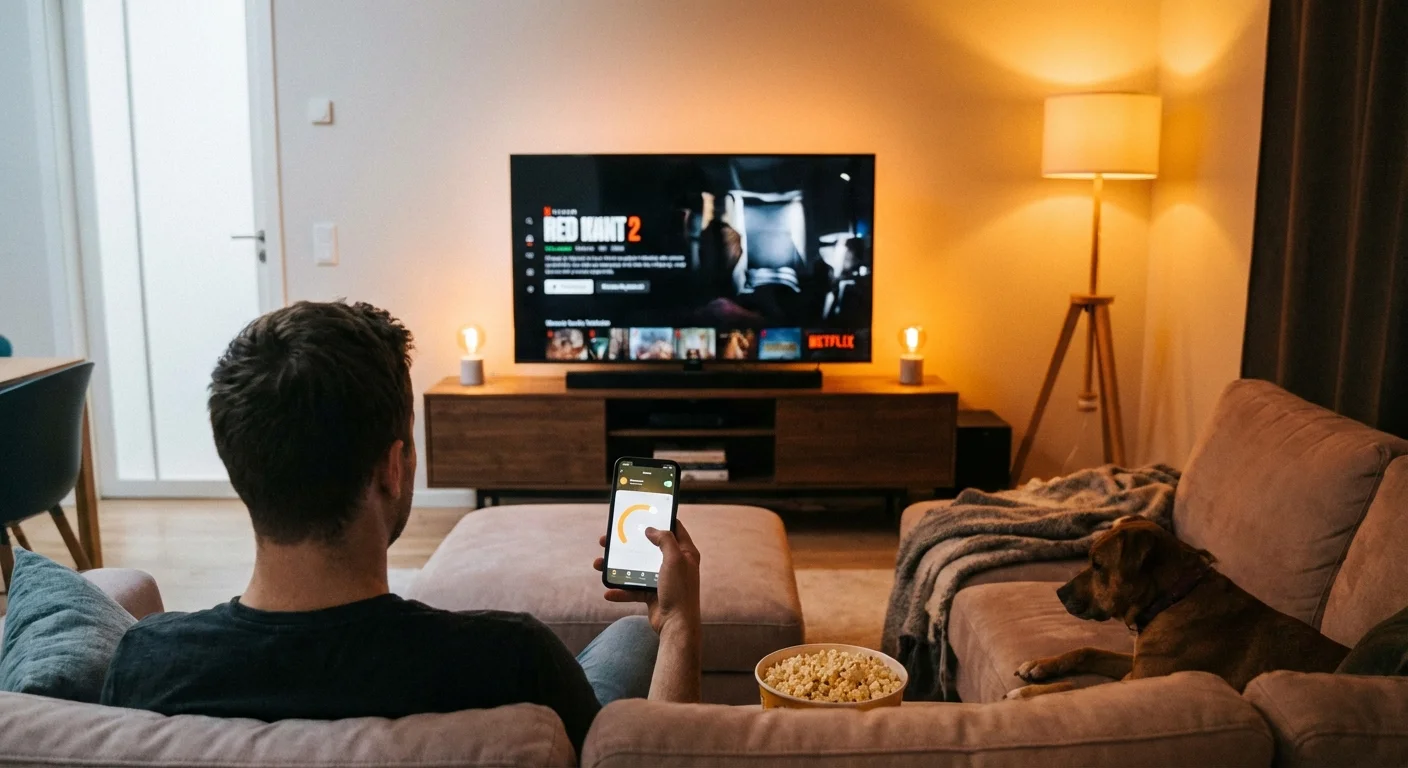
Finally, consider the subtle glow of LED strip lighting. Running a warm-toned LED strip behind your television (known as bias lighting) reduces eye strain when watching movies in the dark. You can also hide strip lights under floating shelves or inside glass-front cabinets to highlight your favorite books and decor.
Avoiding Common Errors in Living Room Lighting
Even with the best intentions, lighting design can go wrong. Watch out for these frequent missteps as you build your cozy living room lighting plan.
Upgrading your lamps and fixtures is a high-impact part of any budget living room makeover, changing the entire mood without a massive price tag.
For more inspiration on soft updates beyond lighting, explore these budget-friendly ways to make your living room cozier throughout the year.
Mixing color temperatures awkwardly: If your ceiling lights are a cool 4000K and your table lamps are a warm 2700K, turning them both on will make the room feel disjointed and confusing. Keep your color temperatures consistent across the room, or at least within the same layer. You might use 3000K for your ambient overheads and 2700K for your cozy evening lamps, but avoid mixing cool and warm extremes.
Ignoring the scale of the room: A tiny table lamp looks ridiculous on a massive, chunky end table, just as a giant, oversized floor lamp will overwhelm a delicate, small-scale armchair. Match the visual weight of your light fixtures to the furniture they accompany.
Creating a runway effect: When installing recessed lighting, people often space the lights in a perfect, rigid grid across the ceiling. This creates a stark, commercial look. Instead, place recessed lights near the perimeter of the room to wash the walls with light, which makes the space feel larger and softer.
Forgetting cord management: Nothing ruins the illusion of a beautifully curated room faster than a tangled rat’s nest of black power cords. Use zip ties, cord covers painted to match your baseboards, or command hooks attached to the back of furniture legs to keep cables out of sight.
When DIY Isn’t Enough
While plugging in floor lamps and swapping out bulbs are easy weekend projects, lighting often touches the electrical bones of your home. You must recognize when a project exceeds your skill level.
- Running new hardwired fixtures: If you want to install wall sconces or a new ceiling chandelier where no junction box currently exists, you need a professional. Cutting into drywall, fishing wires, and tying into your home’s electrical circuits carry significant risks of fire and electric shock.
- Upgrading older homes: If you live in an older home with knob-and-tube wiring, or if your breaker trips frequently when you turn on multiple devices, call an electrician before adding more fixtures. Your electrical panel may need an upgrade to handle the load safely.
- High ceiling installations: Hanging a heavy chandelier in a two-story vaulted living room requires specialized scaffolding and mounting hardware. A professional ensures the fixture is safely anchored to a structural joist, preventing a catastrophic fall.
Living Room Lamp Ideas for Specific Layouts
Your living room layout dictates your lighting strategy. A strategy that works for a cramped urban apartment will not translate perfectly to a sprawling suburban family room.
The Open-Concept Space: In rooms where the living area flows directly into the dining room and kitchen, you need lighting to define distinct zones. Use a large, low-hanging pendant light over the coffee table to anchor the seating area. Place a console table behind the floating sofa and flank it with two matching table lamps. This creates a visual boundary that separates the living zone from the rest of the open space.
The Small Apartment: Floor space is a premium in compact rooms. Ditch the bulky floor lamps and chunky end tables. Instead, rely on wall-mounted plug-in sconces featuring articulating arms. You can pull them out when you need to read and push them flat against the wall when entertaining. Choose fixtures with glass or acrylic elements; transparent materials visually recede, making the room feel less cluttered.
The Dark, Windowless Room: If your living room lacks natural light, you must work harder to create the illusion of daylight. Rely heavily on wall-washing techniques. Point directional lights at light-colored walls to bounce illumination back into the room. Place a large mirror opposite your brightest light source to double its impact. Ensure your ambient layer reaches into every corner so the room does not feel like a cave.
Smart Lighting Integration for the Ultimate Vibe
The easiest way to achieve the perfect layered lighting guide is to embrace smart technology. You no longer need an expensive, hardwired central control system to manage your home’s atmosphere.
By outfitting your table lamps, floor lamps, and ambient fixtures with smart bulbs, you can group them together in an app. You can create a “Movie Night” routine that turns off the ceiling lights, dims the floor lamps to 10 percent, and turns on the LED bias lighting behind the television—all with a single voice command or tap on your phone. You can also create an “Evening Wind Down” schedule that automatically shifts your smart bulbs to a warmer, dimmer setting at 8:00 PM, signaling to your body that it is time to relax.
If you prefer using the vintage or specialty lamps you already own, simply plug them into smart outlets. While you lose the ability to change the color temperature, you gain the convenience of scheduling and remote control, ensuring you never have to walk into a dark house again.
Frequently Asked Questions
How many light sources should a living room have?
A standard-sized living room generally requires between four and six light sources, depending on the square footage. This allows you to mix overhead ambient light, task lamps near seating, and accent lights highlighting decor. The goal is multiple dimmable sources rather than one bright source.
Can I mix different metal finishes on my lighting fixtures?
Yes, mixing metals adds a layered, collected-over-time aesthetic to your room. The key to mixing metals successfully is choosing a dominant metal (perhaps matte black for your curtain rods and ceiling fixture) and an accent metal (like antique brass for your table lamps and picture lights). Avoid using more than three different metal finishes in a single room.
What is the best color temperature for cozy living room lighting?
Aim for 2700K. This temperature perfectly mimics the warm, inviting glow of traditional incandescent bulbs. It is soft enough to encourage relaxation but bright enough to allow you to read and socialize comfortably.
How do I light a living room with no overhead lighting?
If your room lacks a ceiling fixture, rely heavily on floor lamps that direct light upward (torchiere lamps) to bounce light off the ceiling, simulating overhead illumination. Supplement this with multiple table lamps spread evenly around the perimeter of the room, and use plug-in wall sconces to pull light upward from the floor level.
Designing the lighting in your living room does not have to be an intimidating process. Start by evaluating the tasks you perform in the space, layer your light sources thoughtfully, and pay strict attention to the warmth of your bulbs. With a few strategic adjustments, you can banish the glare of the big light forever and craft a space you genuinely look forward to unwinding in every night.
This is educational content based on general best practices. Individual results vary based on your home, budget, and circumstances. Always prioritize safety and consult professionals for major projects involving electrical work.
Last updated: February 2026



Leave a Reply