
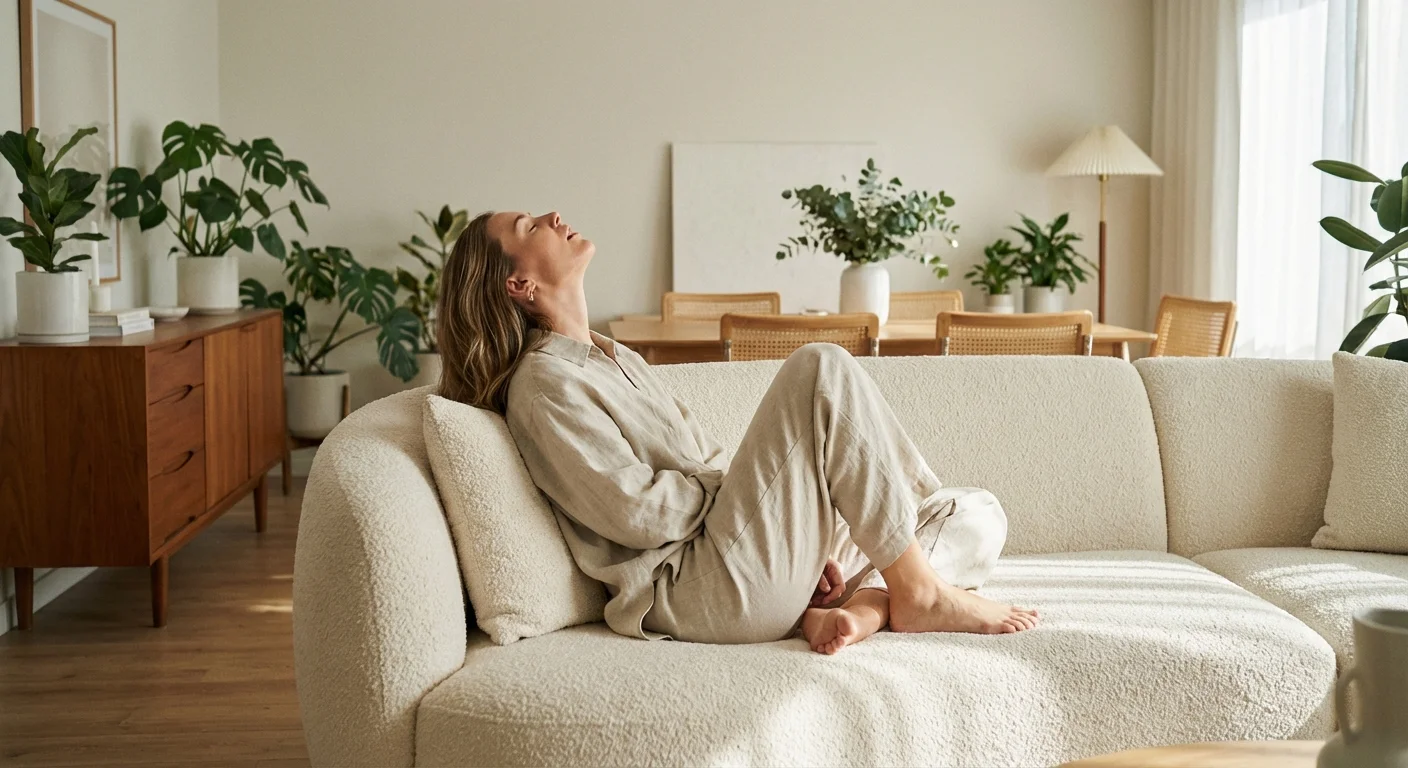
You turn the key, push open your front door, and step inside after a long, exhausting day. Instead of feeling a wave of relief wash over you, your heart rate spikes. A pile of mail blankets the kitchen counter; shoes block the hallway; harsh overhead lighting illuminates a stack of unfolded laundry on the sofa. Your home, which should serve as your ultimate sanctuary, is actively contributing to your daily anxiety.
To further enhance your mental well-being, consider creating a meditation space at home as a dedicated zone for daily mindfulness.
The relationship between your physical environment and your mental health is profound. Environmental psychologists have long studied how our surroundings impact our nervous systems. When your home is filled with visual noise, disorganized systems, and uncomfortable lighting, your brain perceives it as a never-ending to-do list—keeping your cortisol levels elevated when they should be dropping.
Creating a calming home environment does not require a massive renovation budget or an interior designer. It requires intentionality. By making specific, targeted adjustments to your space, you can transform how your home looks, feels, and functions. Here are twenty practical, achievable environment changes that will help you reduce stress at home.
Optimize Your Entryway for a Smoother Arrival
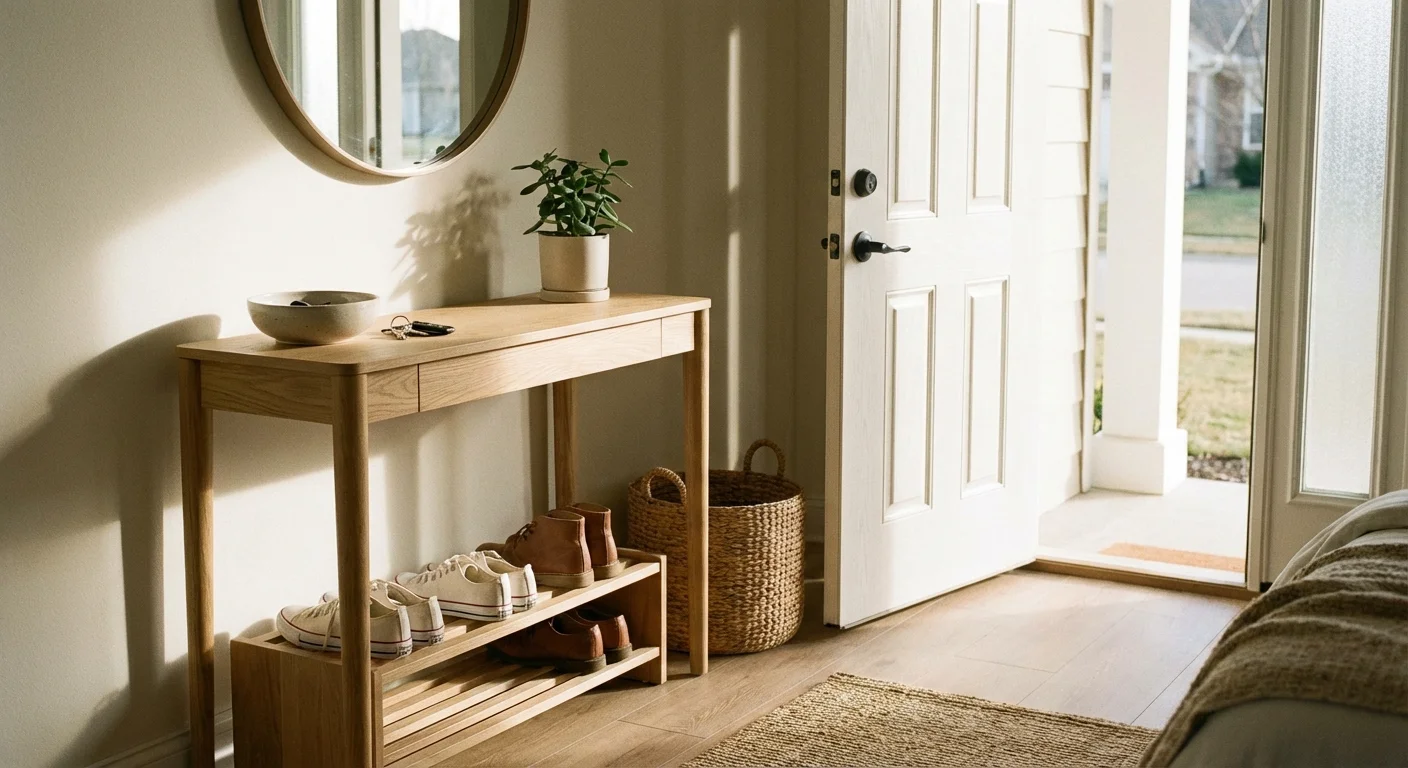
Your entryway sets the tone for your entire evening. If you walk into chaos, you carry that chaotic energy into your living room and kitchen. Streamlining this transitional space is the first step in creating home wellness ideas that stick.
Establishing effective mudroom organization can help manage the daily flow of gear and keep your entrance feeling orderly.
If you are short on time, you can still organize your entryway in under an hour by focusing on high-impact zones like the shoe rack and mail drop.
1. Create a Dedicated “Drop Zone”
When you walk inside, your hands are usually full. Without a designated drop zone, keys, sunglasses, and bags inevitably land on the nearest flat surface. Set up a console table, a floating shelf, or even a small decorative bowl near the door. Train yourself to empty your hands into this specific spot. Knowing exactly where your keys are the next morning eliminates the frantic, stress-inducing search before work.
2. Implement a No-Shoes Policy
Walking through your house in outdoor shoes brings in dirt, allergens, and toxins from the street; it also creates extra cleaning work. Establish a hard-and-fast no-shoes rule at the door. Place a sturdy, attractive basket or a multi-tiered shoe rack right at the entrance. Provide comfortable house slippers for yourself and your guests. This physical act of removing outdoor shoes serves as a mental cue that the workday is officially over.
3. Conceal Immediate Visual Clutter
Visual noise is a primary trigger for domestic stress. If your entryway is lined with an overflowing coat rack and a dozen pairs of boots, your brain immediately registers a mess. Utilize closed storage whenever possible. If you lack a coat closet, invest in an entryway bench with hidden compartments or use opaque canvas bins on high shelves. Keeping the immediate visual field clear lowers your blood pressure the moment you arrive.
4. Streamline Your Leave-the-House Routine
Mornings set the trajectory for your entire day. If you regularly scramble to find an umbrella, a reusable grocery bag, or the dog’s leash, you start your day in a state of deficit. Install sturdy wall hooks for everyday coats and leashes, and keep a small basket by the door for items that need to leave the house with you. The Apartment Therapy methodology frequently highlights how organizing your exit strategy makes your eventual return much sweeter.
Control the Lighting to Regulate Your Rhythm
Lighting profoundly impacts human biology. Before artificial lighting, our circadian rhythms aligned perfectly with the rising and setting of the sun. Today, glaring screens and improper bulbs confuse our brains, making it difficult to wind down.
5. Master Color Temperature
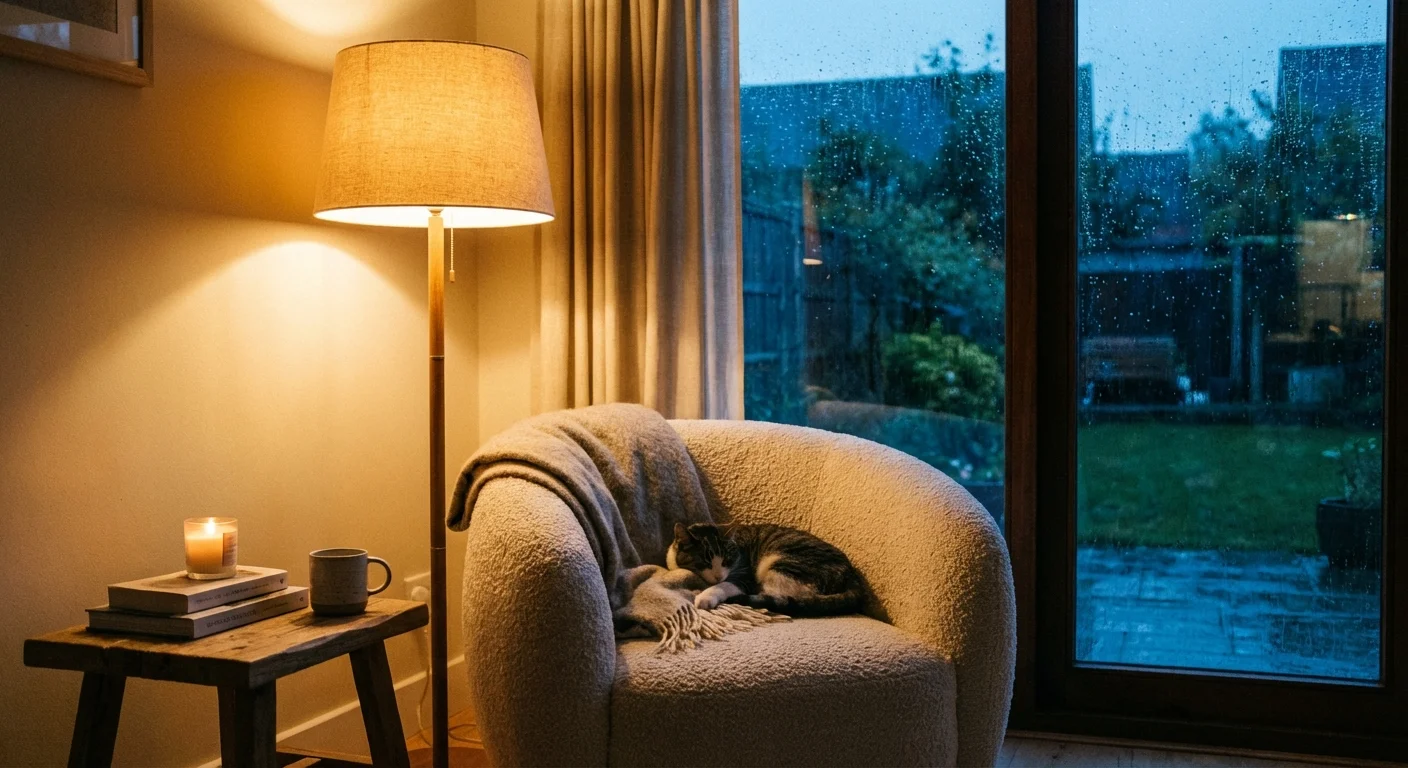
Light bulbs are measured in Kelvins (K). A 5000K bulb emits a stark, bluish-white light that mimics the midday sun—excellent for an operating room or a garage, but terrible for a living room. To create relaxing home changes, swap the bulbs in your living areas and bedrooms to warm white, typically ranging between 2700K and 3000K. This amber glow signals your brain to start producing melatonin.
6. Install Dimmer Switches
Dimmer switches are one of the most cost-effective upgrades you can make for home comfort. They grant you absolute control over the mood and intensity of a room. As the evening progresses, gradually lower the lights. This transition helps shift your body from active, alert mode into a state of rest.
7. Embrace Layered Lighting
Relying solely on a single overhead fixture casts harsh, unflattering shadows and makes a room feel clinical. Instead, use a layered lighting approach: combine overhead ambient light, task lighting for reading or cooking, and accent lighting to highlight art or architectural features. Turn off the overhead lights completely an hour before bed and rely on table and floor lamps.
8. Maximize Natural Light During the Day
While darkness is necessary for sleep, abundant natural light is crucial for daytime energy and mood regulation. Pull back heavy drapes during the day. Clean your windows regularly to allow maximum sunlight to penetrate. If you have a dark room, place a large mirror directly opposite the window to bounce natural light deeper into the space.
Declutter and Reclaim Your Flat Surfaces
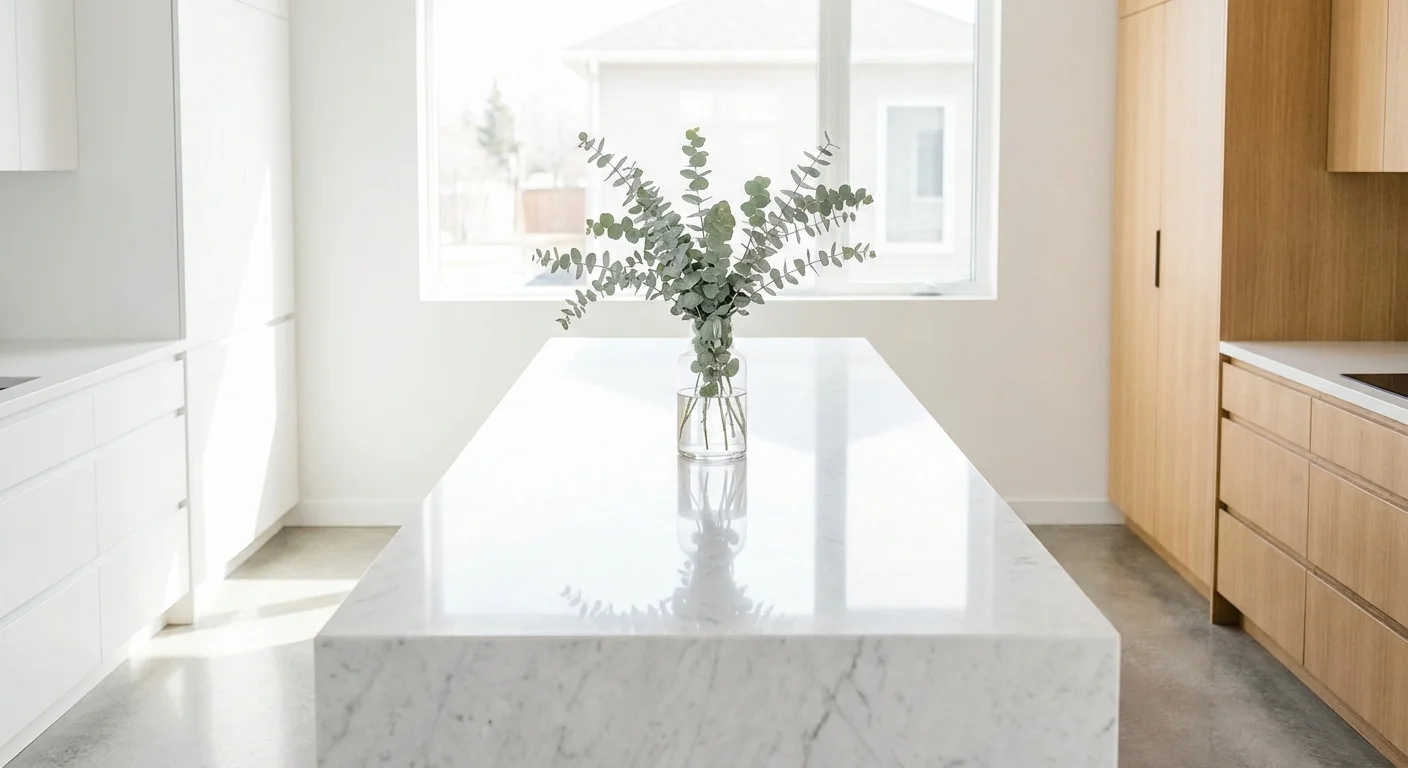
Flat surfaces—kitchen islands, dining tables, and dressers—are magnets for clutter. A clear surface instantly translates to a clear mind.
Maintaining these clear surfaces is much easier when you follow a 20-minute daily cleaning routine that keeps messes from accumulating.
For those dealing with deep-seated messes, using a system to declutter when overwhelmed can break the process down into manageable, 15-minute tasks.
“The objective of cleaning is not just to clean, but to feel happiness living within that environment.” — Marie Kondo, Organizing Consultant
9. Enforce the “One Touch” Rule for Mail
Paper clutter is an insidious source of domestic anxiety. Bills, school notices, and junk mail multiply rapidly. Implement the “one touch” rule: when you bring the mail inside, deal with it immediately. Recycle the junk, file the important documents, and place bills in a designated action folder. Do not set a piece of paper down with the intention of dealing with it later.
10. Edit Your Kitchen Countertops
The kitchen is the workhorse of the home, but crowded countertops make cooking feel like a chore rather than a joy. Evaluate every appliance taking up permanent residence on your counters. If you use the blender once a month, store it in a cabinet. Leave out only the items you use daily, such as the coffee maker. According to experts at Real Simple, clearing your counters cuts down on cleaning time and drastically reduces visual stress.
11. Implement the “One In, One Out” Methodology
Consumer culture encourages us to constantly acquire more, but our homes have finite square footage. Prevent your storage spaces from bursting by adopting a strict “one in, one out” policy. If you buy a new sweater, donate an old one. If you purchase a new coffee mug, let go of the chipped one sitting in the back of the cupboard. This maintains an equilibrium in your household inventory.
12. Create a “To-Be-Sorted” Basket
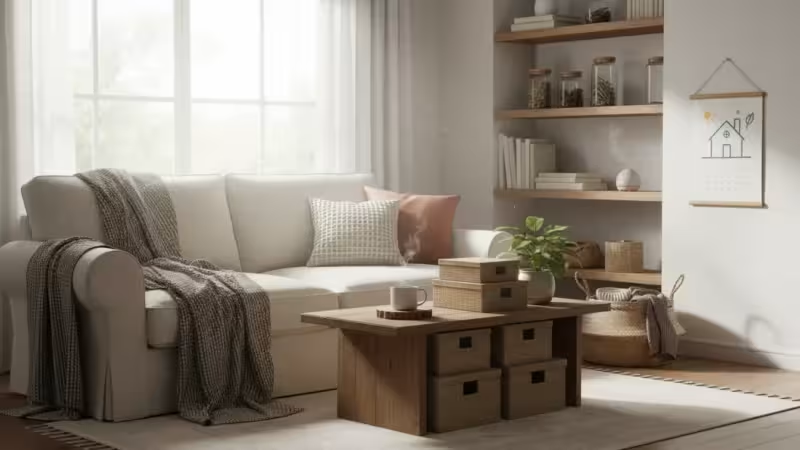
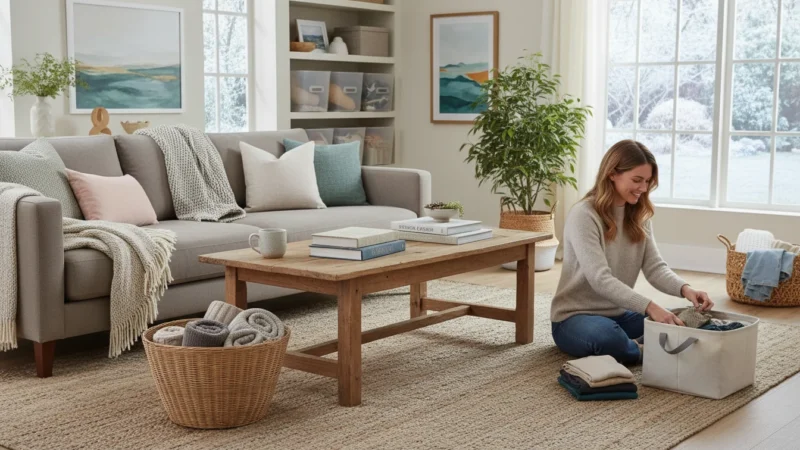
We all have days where we lack the energy to put everything away perfectly. Acknowledge this reality by keeping a stylish, opaque basket in the living room. When you need to tidy up quickly before relaxing, toss stray chargers, toys, or magazines into the basket. Commit to emptying and properly sorting the basket once a week. This gives you grace on busy days without letting the mess permanently take over.
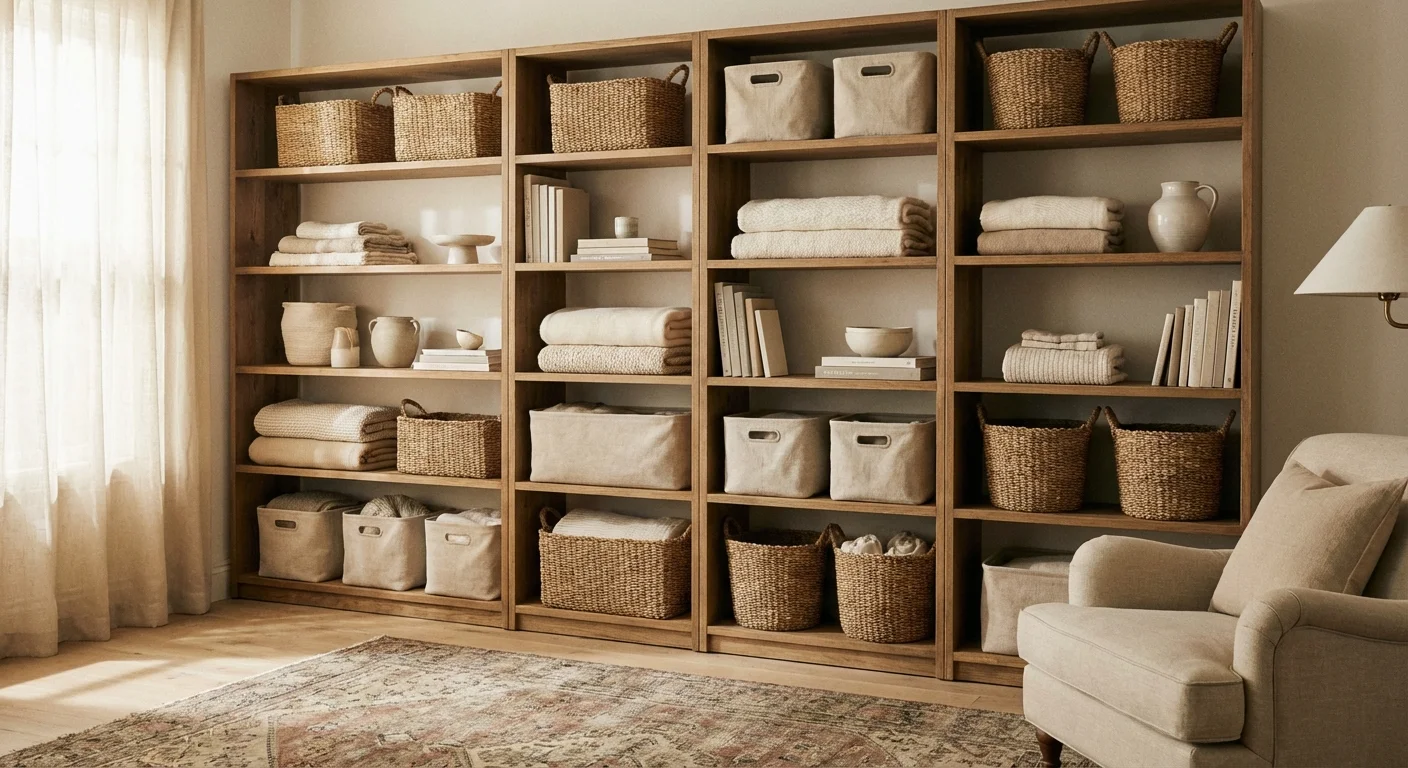
Comparing Storage Solutions for a Calming Home Environment
Choosing the right storage is critical. Not all organization methods work for every personality type. Review the table below to find the best approach for managing your belongings.
| Storage Type | Best Used For | Stress-Reduction Factor | Maintenance Level |
|---|---|---|---|
| Closed Cabinets | Ugly essentials (cleaning supplies, mismatched Tupperware, paperwork). | High. Completely hides visual noise from view. | Low. The interior doesn’t need to look perfect, just functional. |
| Open Shelving | Beautiful, cohesive items (books, matched dishware, plants, art). | Moderate. Looks beautiful when styled, but can feel chaotic if overstuffed. | High. Requires regular dusting and careful arrangement to avoid looking messy. |
| Opaque Bins & Baskets | Cords, toys, seasonal accessories, craft supplies. | High. Groups tiny, messy items into one visually cohesive block. | Low. You can quickly toss items inside without careful stacking. |
| Clear Acrylic Bins | Pantry staples, refrigerator items, makeup. | Moderate. Helps you find exactly what you need instantly. | Medium. Must be kept relatively neat since you can see the contents. |
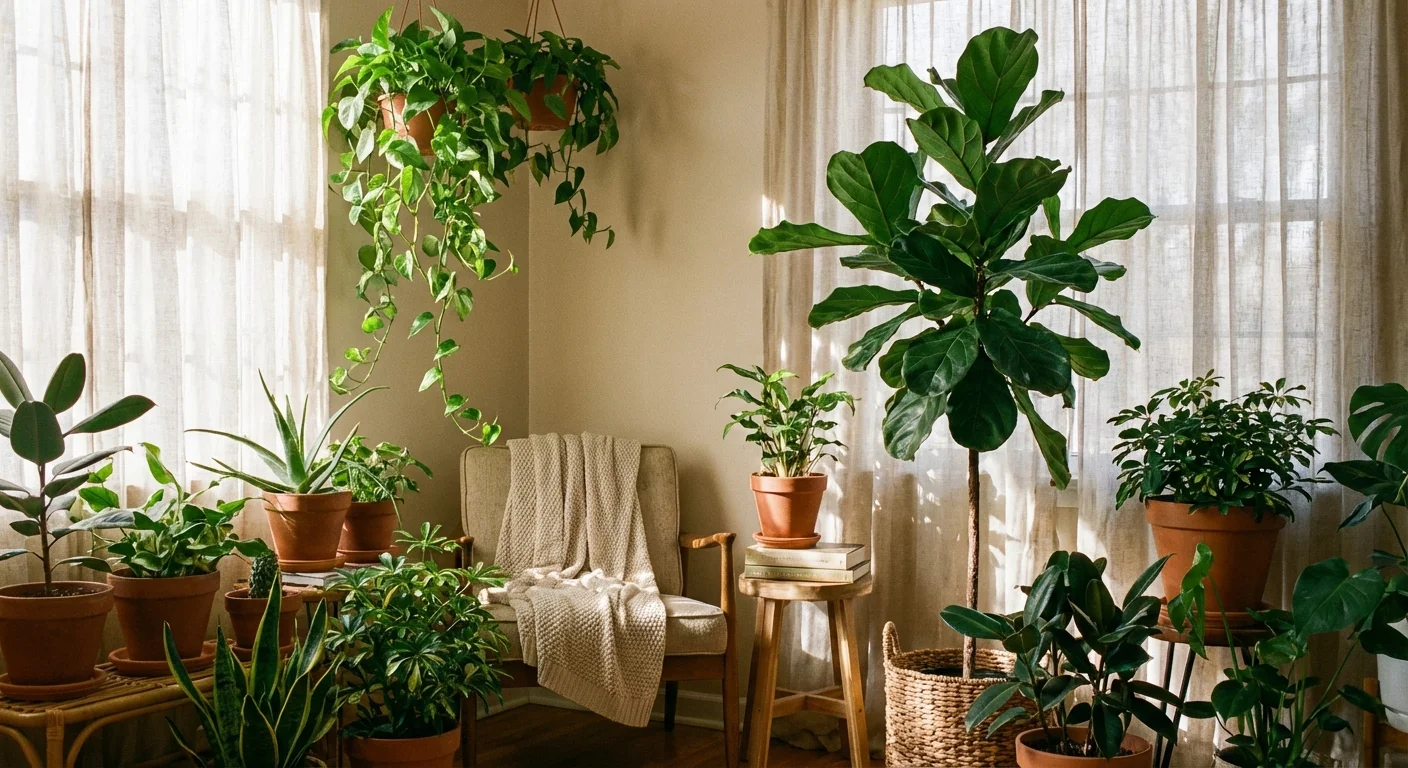
Bring Nature Indoors for Psychological Comfort
Biophilic design—the practice of connecting people and nature within our built environments—is a proven method for reducing stress. Humans are intrinsically wired to feel at peace around natural elements.
Beyond visual elements, optimizing scent and ambiance through essential oils can deepen the feeling of peace in your sanctuary.
Connecting with nature and soft textures is a central pillar of the art of hygge, which encourages creating a sanctuary through simple, cozy details.
13. Introduce Low-Maintenance Houseplants
You do not need a green thumb to reap the benefits of indoor greenery. Plants add life, texture, and color to sterile spaces. Start with resilient varieties like Snake Plants, Pothos, or ZZ plants. According to resources like The Spruce, engaging in the routine care of houseplants offers a meditative, grounding experience that temporarily pulls you away from screens and digital demands.
14. Prioritize Indoor Air Quality
Stuffy, stagnant air can lead to headaches, fatigue, and irritability. The Environmental Protection Agency notes that indoor air can be significantly more polluted than outdoor air. Open your windows for at least ten minutes a day to create a cross-breeze, even in the winter. Invest in a high-quality HEPA air purifier for the rooms you spend the most time in, particularly the bedroom.
15. Incorporate Natural Textures and Materials
Synthetic fabrics and harsh plastics often feel sterile. Introduce organic materials into your decor to soften the environment. Layer a chunky wool throw over your sofa; lay down a natural jute rug; choose wooden furniture over metal or plastic when possible. These tactile elements provide a subconscious sense of warmth and grounding.
Designate Spaces for Rest and Recharging
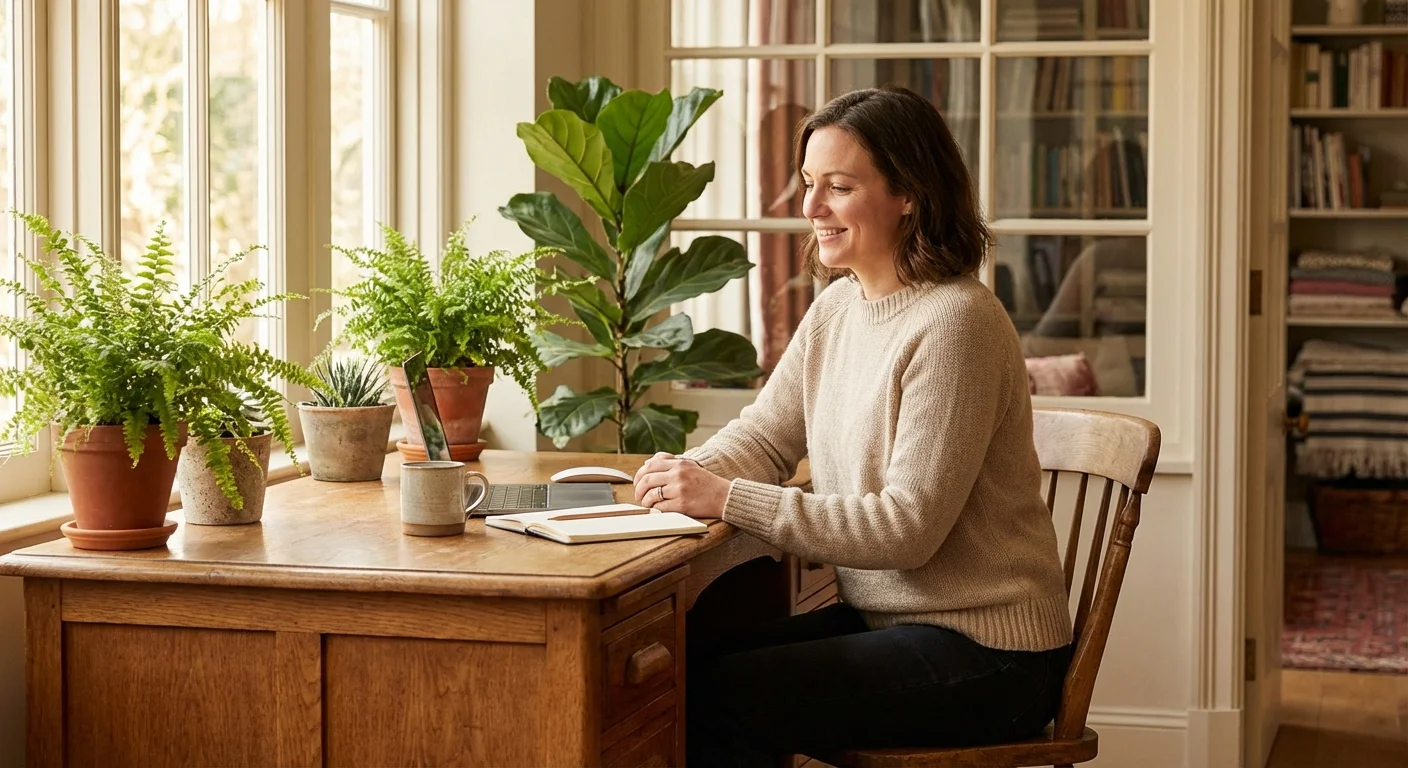
If your dining table is your home office, your bed is your movie theater, and your living room is a gym, your brain struggles to switch gears. Boundaries are essential for stress free home tips.
Separating your professional life from your personal life is much easier with a well-organized home office that has clear physical boundaries.
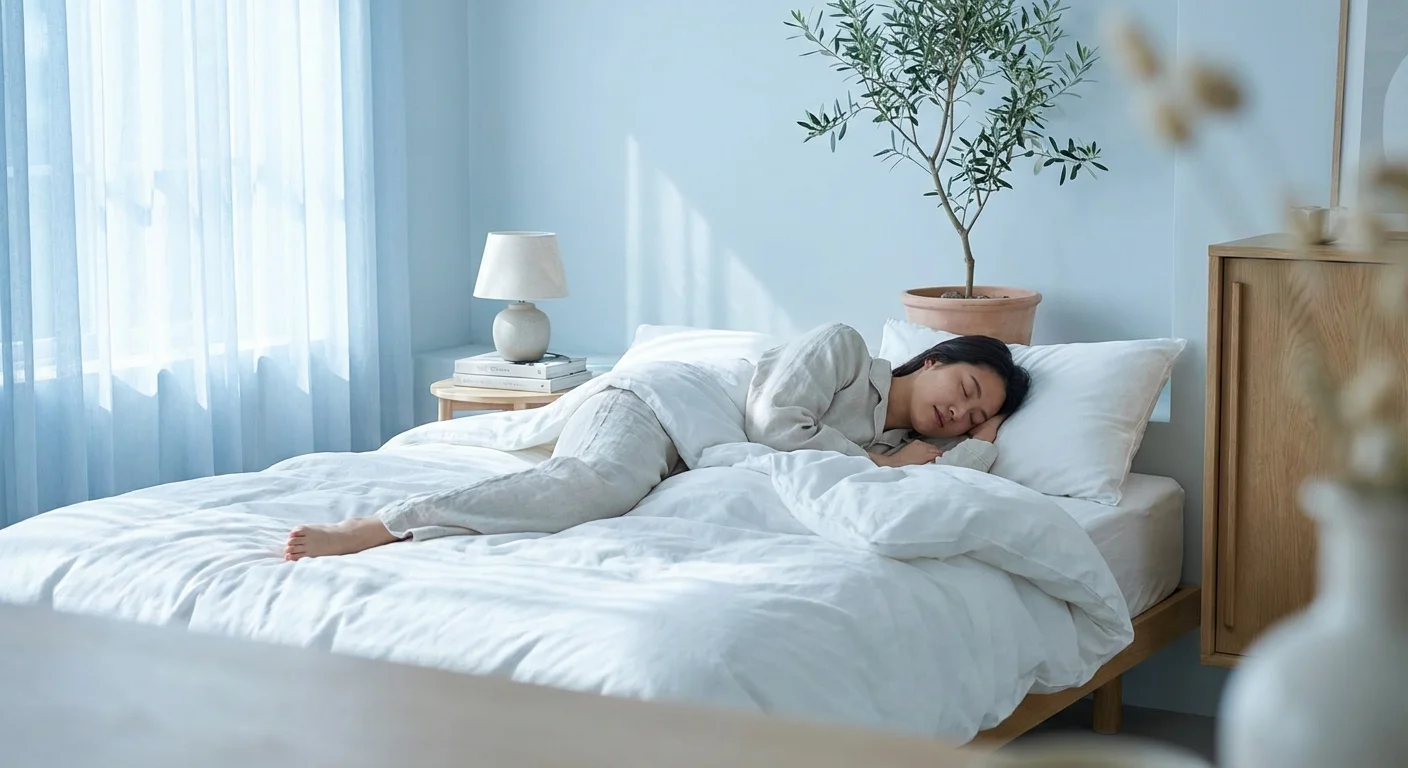
16. Transform the Bedroom into a Sanctuary
Your bedroom should serve two primary purposes: sleep and intimacy. Remove the television, banish the laptop, and leave your smartphone in another room to charge overnight. When your bedroom is free from work reminders and digital distractions, your brain begins to associate the space exclusively with rest.
17. Upgrade Your Bedding
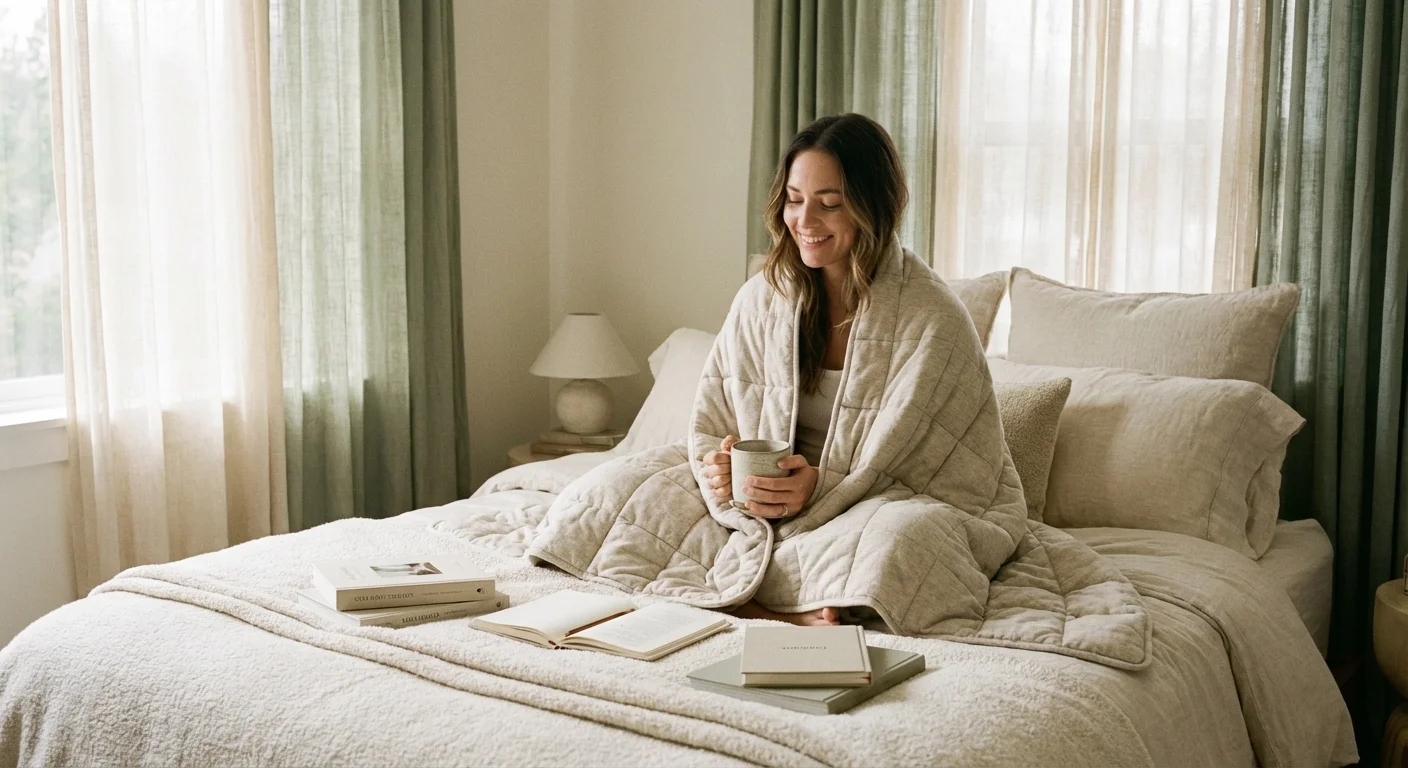
You spend a third of your life in bed; do not compromise on the quality of your rest. Ditch the scratchy, synthetic sheets that trap heat and disrupt sleep. Invest in high-quality, breathable fabrics like 100% cotton percale, linen, or bamboo. Choose a duvet weight that matches your climate and sleeping preferences. A comfortable bed makes the end of the day something to eagerly anticipate.
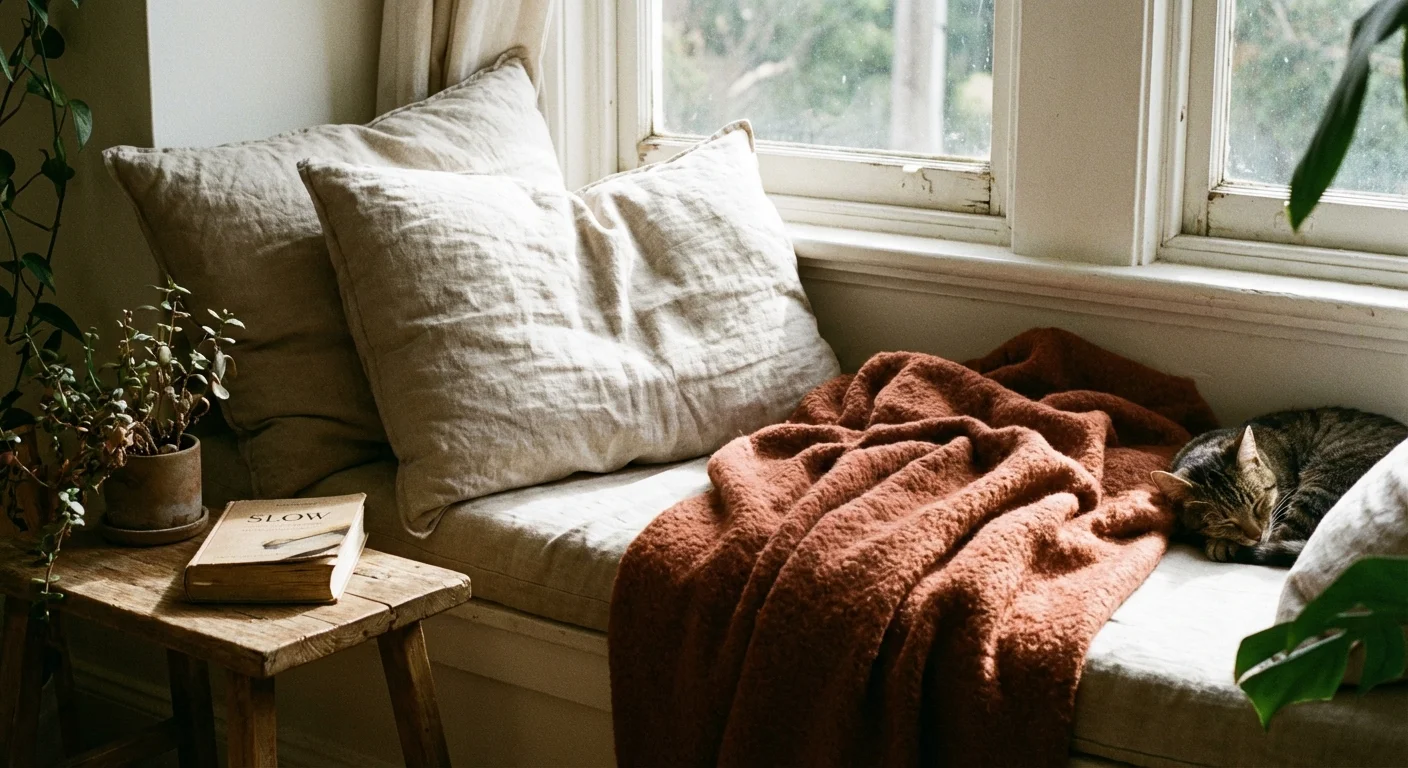
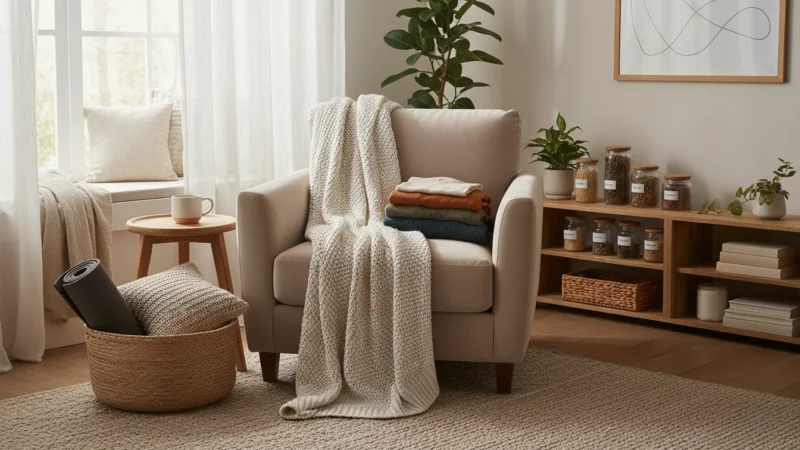
18. Carve Out a “Quiet Nook”
Everyone needs a small corner of the house that is exclusively theirs. It doesn’t require an entire room—a comfortable armchair placed near a sunny window, accompanied by a small side table and a good reading lamp, is entirely sufficient. Declare this spot a work-free, argument-free zone where you go to read, meditate, or simply drink a cup of tea in peace.
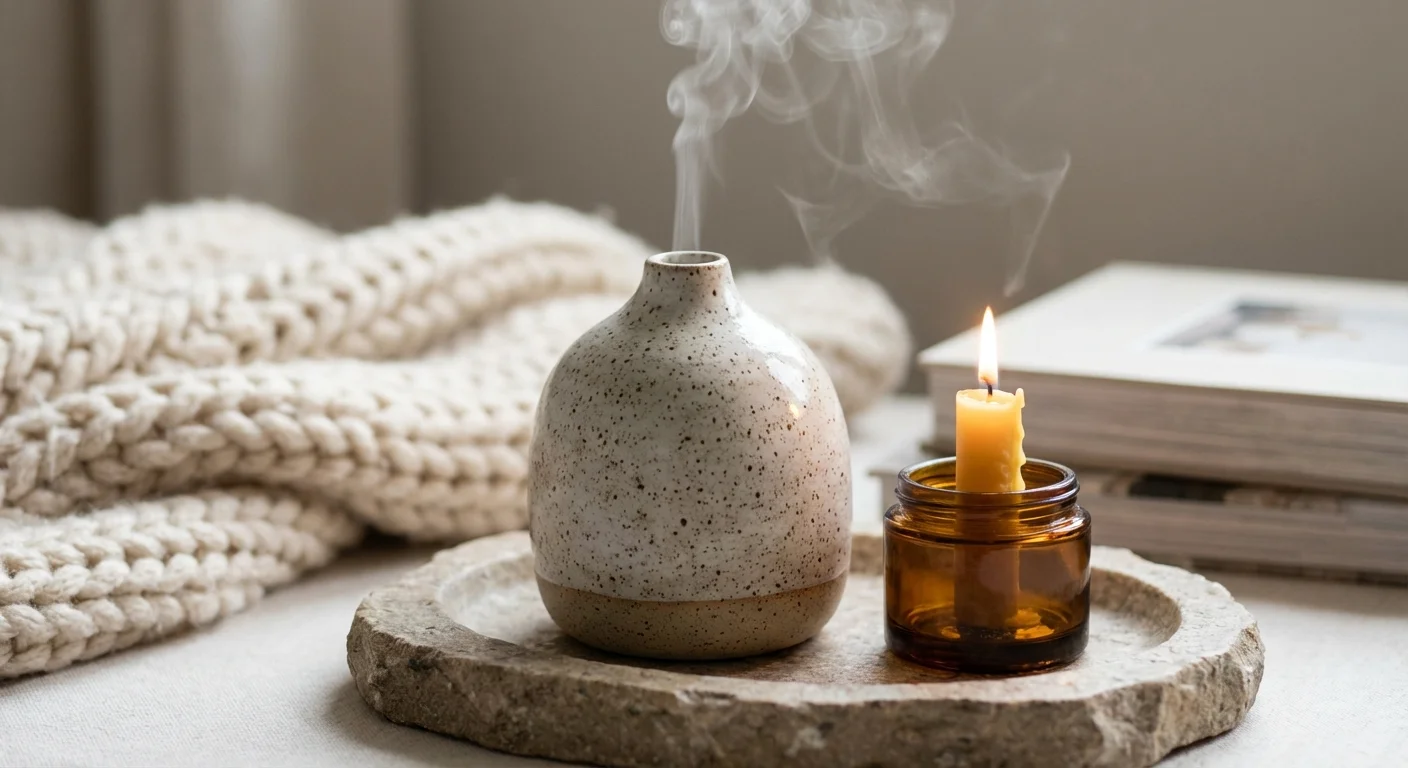
Engage the Senses for Subconscious Relaxation
We often focus on how a home looks, but how a home smells and sounds is equally important when trying to lower daily anxiety.
19. Utilize Calming Aromatherapy
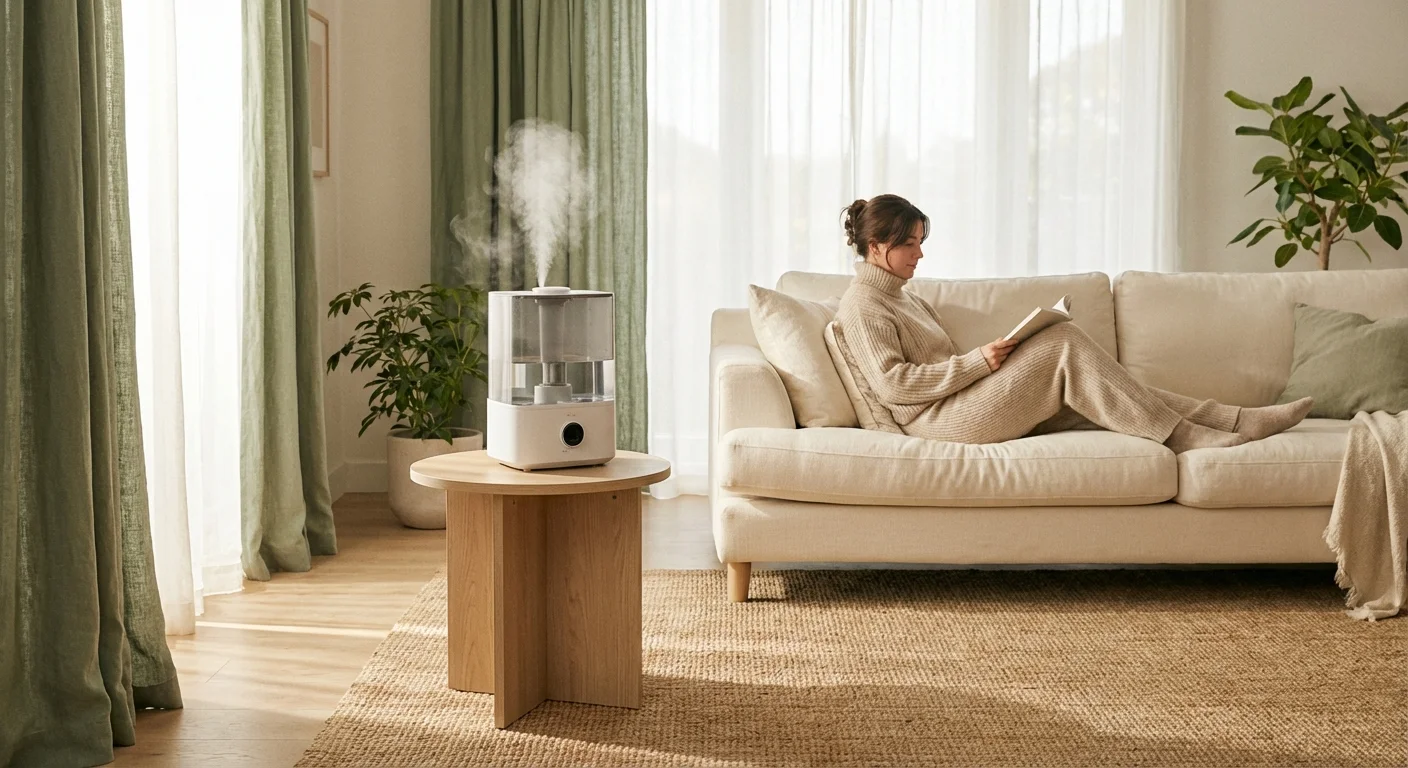
Your olfactory system is directly tied to the emotional center of your brain. Unpleasant odors cause immediate stress, while pleasant scents can actively lower heart rates. Avoid synthetic air fresheners, which can cause headaches. Instead, use an ultrasonic essential oil diffuser. Lavender, bergamot, and cedarwood are renowned for their relaxing properties. Establish a habit of turning on the diffuser when you finish the dinner dishes.
20. Mitigate Intrusive Noise
If you live in a bustling neighborhood or a noisy apartment building, auditory clutter will keep your nervous system on edge. Hardwood floors and bare walls amplify sound. Soften the acoustics of your home by adding heavy window draperies, large area rugs, and upholstered furniture. For background noise, consider playing low-volume acoustic music or running a white noise machine to drown out traffic and sirens.
Frequently Asked Questions
How long does it take to create a calming home environment?
Transforming your home is a marathon, not a sprint. Attempting to overhaul your entire house in a single weekend will likely cause more stress than it relieves. Start with one small area—like clearing your entryway or swapping out light bulbs—which takes less than an hour. Gradual, consistent changes usually yield the most sustainable results.
What is the most important room to organize first?
Focus on the spaces that cause you the most daily friction. For many, this is the entryway or the kitchen, as these dictate how smoothly mornings and evenings run. Alternatively, if sleep deprivation is your primary source of stress, tackle your bedroom first. Removing visual clutter from your line of sight while in bed can drastically improve your rest.
How can I reduce stress at home on a tight budget?
The most effective stress-reduction strategies cost absolutely nothing. Decluttering, opening windows for fresh air, implementing a no-shoes rule, and establishing screen-free zones are entirely free. When you do spend money, focus on high-impact, low-cost items like warm-hued light bulbs, a few budget-friendly houseplants, or a simple basket for catching daily clutter.
Moving Forward with a Calmer Home
Your home should rise up to greet you, offering a safe harbor from the demands of the outside world. You do not need a perfect, magazine-worthy house to achieve peace. By addressing visual clutter, optimizing your lighting, introducing natural elements, and establishing clear boundaries for work and rest, you take active control over your environment. Start today by choosing just one or two tips from this list. The result—a calmer mind and a significantly more enjoyable space—is well worth the effort.
This is educational content based on general best practices. Individual results vary based on your home, budget, and circumstances. Always prioritize safety and consult professionals for major projects.
Last updated: February 2026

Leave a Reply