
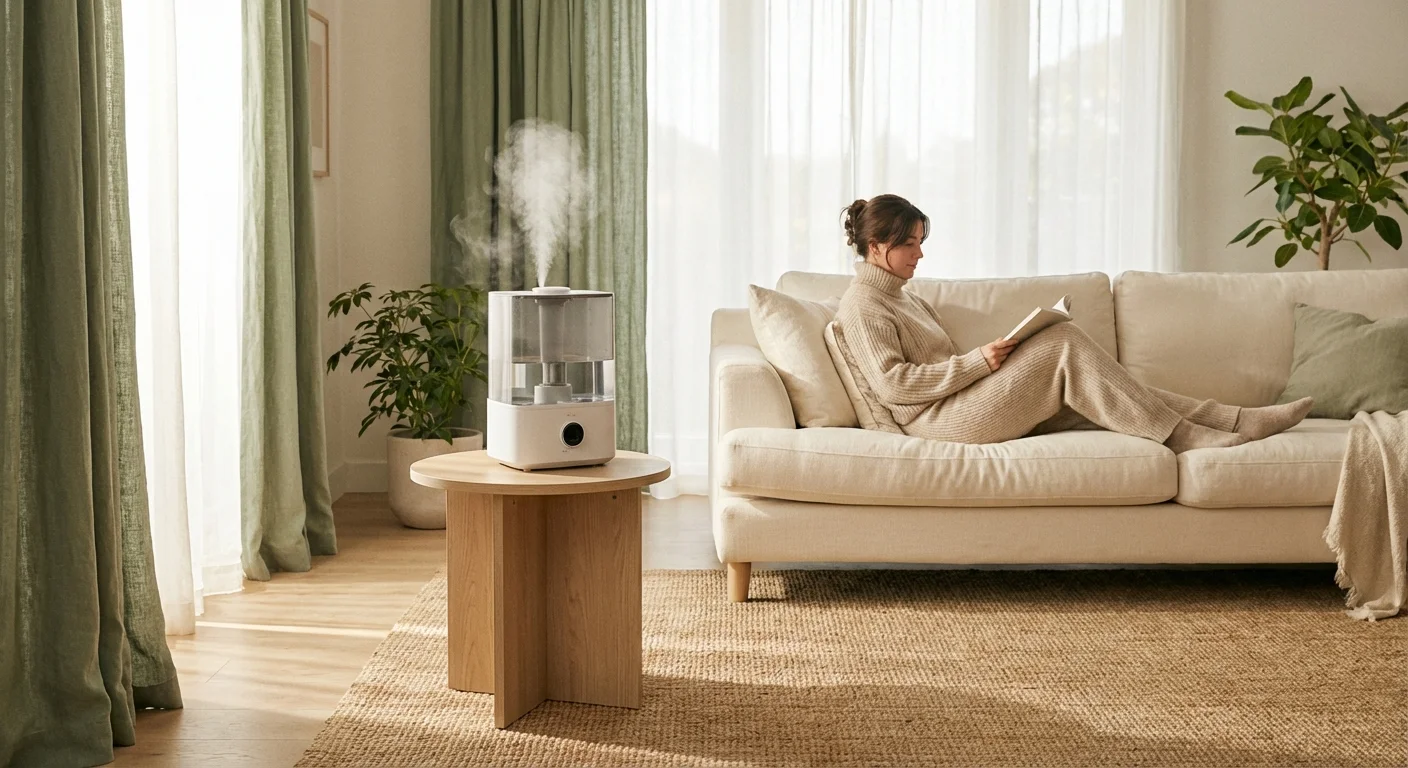
Waking up with a sandpaper throat, cracked lips, and skin that feels two sizes too small is a harsh welcome to the colder months. When the temperature drops outside and the heater blasts continuously inside, your indoor humidity plummets. This drastic drop pulls moisture directly from your body, your furniture, and your hardwood floors. Finding a reliable humidifier for dry air transforms your home from an arid desert into a comfortable sanctuary, protecting your respiratory health while preserving your home’s interior.
Maintaining proper humidity levels is a cornerstore of a comprehensive strategy to improve indoor air quality during the winter.
Navigating the current market can feel overwhelming. Manufacturers bombard you with technical jargon—ultrasonic, evaporative, warm mist, cool mist, built-in hygrometers—making a simple purchase surprisingly complex. This comprehensive humidifier buying guide cuts through the marketing noise to deliver practical, actionable advice. Whether you need a whisper-quiet unit for your bedside table or a robust system to condition your entire home, understanding how these machines operate ensures you invest in the right solution for your specific needs and budget.
The Essentials: What You Need to Know Before Buying
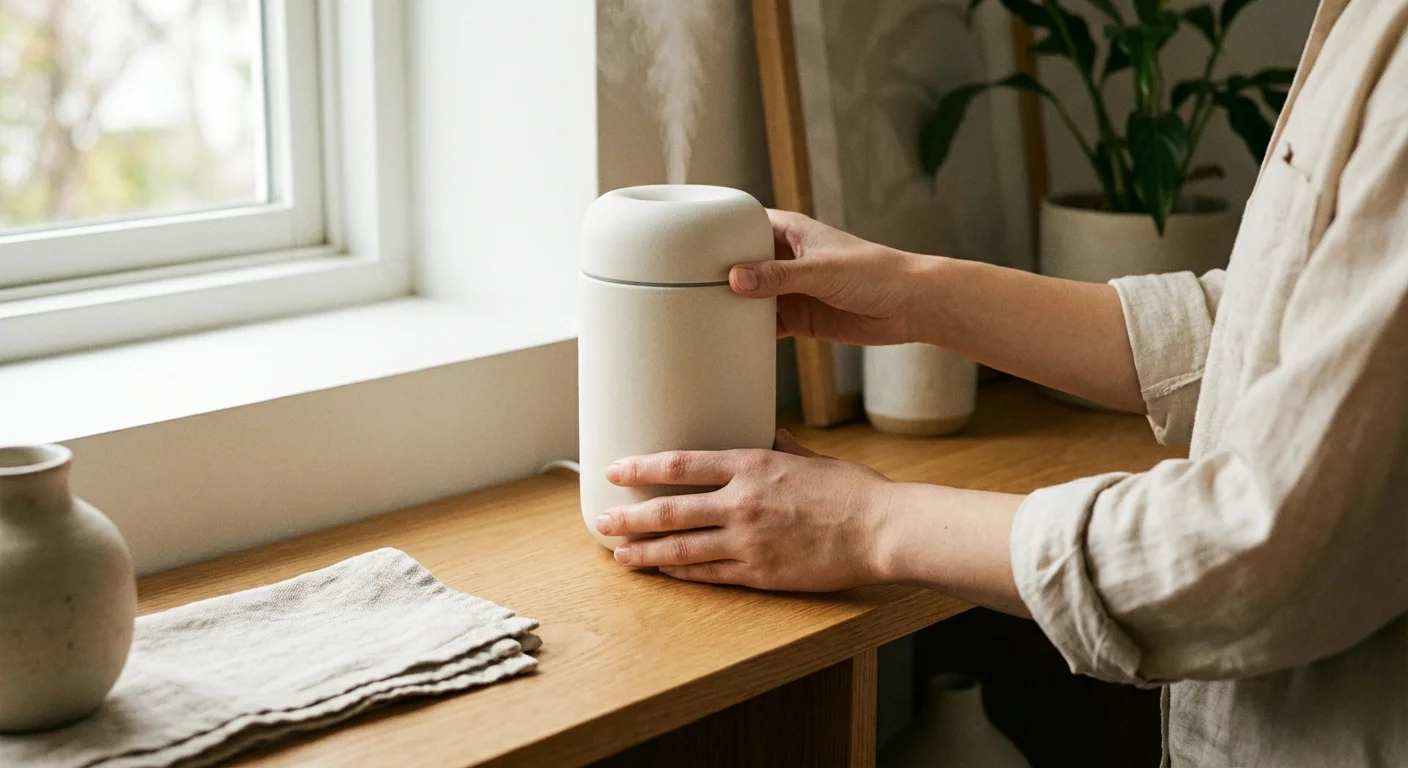
Before diving into specific models and mechanisms, you must evaluate your living space and your lifestyle. A humidifier is not a set-it-and-forget-it appliance; it requires regular interaction, refilling, and diligent maintenance to remain safe and effective.
- Size matters more than style: A machine designed for a 200-square-foot bedroom will run endlessly—and pointlessly—in an open-concept living room. Conversely, an oversized unit in a small room quickly turns the space into a damp, condensation-covered swamp.
- Maintenance is non-negotiable: If you know you will ignore a complex cleaning routine, opt for a dishwasher-safe evaporative model rather than a fussy ultrasonic unit with hard-to-reach crevices.
- Water quality dictates your choice: Homes with hard tap water produce fine white mineral dust when using ultrasonic humidifiers; if you do not want to purchase distilled water constantly, an evaporative model is your best defense against this chalky film.
- Cost extends beyond the purchase price: Factor in the recurring costs of replacement wicks, decalcification cartridges, and distilled water when calculating your true budget.
Understanding the Main Types of Humidifiers
The humidifier market divides into three primary technologies, each utilizing a completely different method to introduce moisture into your air. Understanding these mechanical differences is the secret to choosing the right best humidifiers 2026 has to offer for your specific household environment.
While humidifiers tackle dry air in living spaces, learning how to set up a home sauna offers a more intensive way to enjoy therapeutic moisture at home.
Evaporative humidifiers operate on a simple, time-tested principle. They utilize an internal fan that pulls dry room air through a saturated paper or cloth wick filter. As the air passes through the wet filter, it absorbs moisture and cools down before being pushed back into the room. This process is self-regulating; as the room’s humidity rises, the air naturally absorbs less water. The filter also traps minerals and larger airborne dust particles, making evaporative units an excellent choice for homes with hard water.
Ultrasonic humidifiers take a high-tech approach. Instead of a fan and a wick, they rely on a small metal diaphragm vibrating at ultrasonic frequencies. These rapid vibrations shatter water droplets into a microscopic, fog-like mist that drifts into the air. Because they lack a fan, ultrasonic models are incredibly quiet—making them the dominant choice for bedrooms. However, without a filter to trap impurities, they will aerosolize everything in the water tank, including minerals and bacteria.
Steam vaporizers, or warm mist humidifiers, use an internal heating element to boil water, releasing pure, warm steam into the room. Boiling the water naturally neutralizes bacteria and mold spores, making the output incredibly hygienic. However, these units consume significantly more electricity than their cool-mist counterparts and present a distinct burn hazard, making them unsuitable for homes with curious toddlers or energetic pets.
Comparing Humidifier Technologies
| Humidifier Type | Primary Benefits | Drawbacks | Best Suited For |
|---|---|---|---|
| Evaporative | Self-regulating humidity; traps hard water minerals; no white dust; energy efficient. | Fan noise can be noticeable; requires regular, costly filter replacements. | Large living spaces; homes with hard tap water; users who want low-maintenance operation. |
| Ultrasonic | Whisper-quiet operation; no recurring filter costs; produces a visible, soothing mist. | Requires distilled water to prevent mineral dust; strict cleaning needs to prevent bacteria growth. | Bedrooms; nurseries (cool mist only); small home offices; light sleepers. |
| Warm Mist / Steam | Kills waterborne bacteria; operates quietly; warms the ambient air slightly during winter. | High energy consumption; burn risk from boiling water and steam output. | Cold drafty rooms; households without young children or pets; combating winter illness. |

The Best Bedroom Humidifier: Finding Quiet Comfort
Your bedroom serves as your primary recovery zone, making the air quality in this space critical to your overall health and energy levels. A bedroom humidifier must strike a delicate balance: it needs a tank large enough to run for at least eight hours uninterrupted, yet it must operate quietly enough to avoid disturbing your sleep cycles.
In addition to mechanical humidification, you can naturally boost humidity and wellness by adding air-purifying plants to your sleep space.
When shopping for this specific room, prioritize ultrasonic models equipped with an “auto-sleep” or “display off” function. Many modern appliances feature bright LED screens that aggressively illuminate a dark room; you want a unit that allows you to black out the control panel entirely. Look for models featuring top-fill designs. Traditional humidifiers require you to remove the tank, carry it to a sink, flip it upside down, and balance it under a faucet. Top-fill models allow you to simply remove a lid and pour water directly into the machine using a pitcher, drastically reducing spills and physical strain.
For budget-friendly bedroom options, smaller ultrasonic units consistently perform well in Consumer Reports testing for output and noise levels. While you might sacrifice smart-home connectivity or built-in humidistats at lower price points, a basic manual dial controlling mist output is highly reliable and rarely breaks down.
Safeguarding the Nursery and Kids’ Rooms
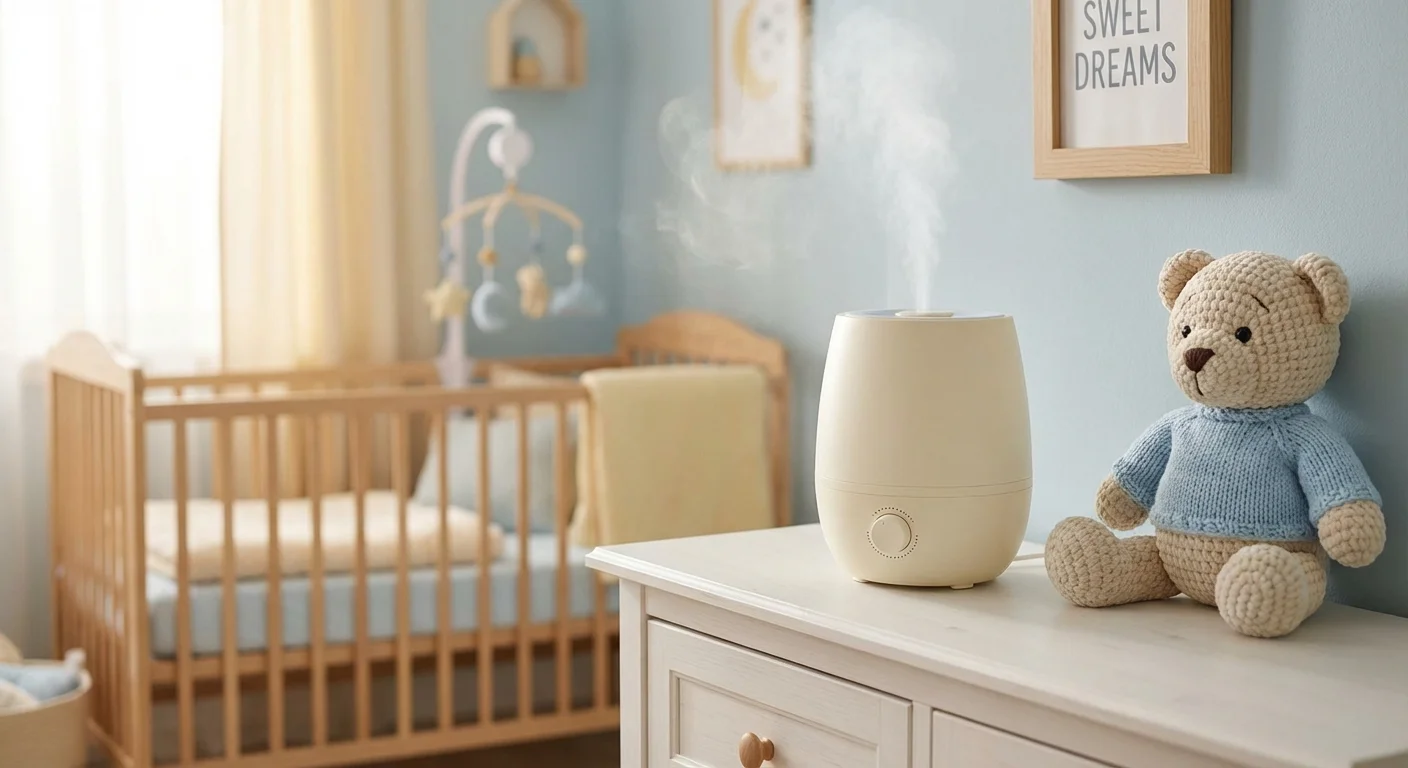
Introducing moisture into a child’s room requires stringent safety considerations. Pediatricians uniformly recommend cool mist models over warm mist vaporizers for children’s spaces to eliminate accidental burn risks entirely. The priority here shifts heavily toward hygiene and ease of cleaning.
Keeping your maintenance supplies and extra filters organized with a label maker makes the seasonal transition much smoother for busy parents.
To keep the nursery environment even cleaner, consider pairing your humidifier with one of the best air purifiers to capture dander and fine dust.
Because children’s immune systems are still developing, preventing mold and bacterial growth inside the water tank is paramount. Seek out humidifiers designed with wide-mouth openings that allow you to fit your entire hand inside the tank for scrubbing. Models featuring dishwasher-safe components offer a massive advantage for busy parents. Many modern nursery humidifiers also pull double duty, incorporating gentle nightlights or essential oil diffusing trays—though you should always consult your pediatrician before introducing volatile organic compounds like essential oils into a baby’s environment.

Conquering Large Living Spaces and Open Concepts
Humidifying a spacious living room, vaulted ceiling area, or open-concept floor plan demands serious output capacity. A tiny bedside unit placed in a massive family room is entirely ineffective; the dry air will simply absorb the meager mist before it reaches across the room.
For these demanding spaces, console-style evaporative humidifiers are the gold standard. These large units often hold multiple gallons of water and utilize dual-wick systems paired with powerful fans to circulate conditioned air throughout the entire floor. Because they rely on evaporation, you never have to worry about over-humidifying the room or finding damp spots on your rugs and furniture. They naturally slow their output as the room reaches optimal humidity.
When positioning a high-capacity humidifier, elevate it off the floor if possible, and keep it at least three feet away from walls, curtains, and sensitive electronics. Placing the unit on a waterproof boot tray or a specialized silicone mat protects your hardwood floors from accidental spills during refilling sessions. According to the EPA Indoor Air Quality guidelines, managing moisture strategically prevents structural damage to your home while keeping the environment healthy.
“Maintaining indoor relative humidity between 30 and 50 percent is ideal for health and comfort, as it prevents the growth of mold and keeps airborne viruses at bay.” — Environmental Protection Agency (EPA) Indoor Air Quality Division

When Portable Units Aren’t Enough: The Whole House Humidifier
If you find yourself spending an hour every day carrying water pitchers from room to room, cleaning multiple tanks, and swapping out half a dozen filters, a portable approach may no longer serve your lifestyle. A whole house humidifier offers the ultimate, hands-off solution by integrating directly into your home’s forced-air heating and cooling system.
If you install a built-in unit, ensure it is serviced during your seasonal HVAC maintenance to keep the water panels clean.
These permanent fixtures tie directly into your home’s plumbing, drawing water automatically as needed. They operate in tandem with your furnace blower, distributing humidified air uniformly through your existing ductwork. You control the humidity level centrally via your thermostat or a wall-mounted humidistat. There are three main types of whole-house systems:
- Bypass Humidifiers: These use the furnace’s blower to push warm air through a water-saturated panel. They are affordable, reliable, and require only an annual water panel replacement.
- Fan-Powered Humidifiers: Similar to bypass models, but they include their own internal fan. This allows them to push more air through the water panel, producing higher daily moisture output without relying entirely on the furnace motor.
- Steam Humidifiers: The most powerful and expensive option. These boil water internally and inject pure steam directly into the ductwork. They can operate independently of the furnace heat, making them ideal for massive homes or locations with extreme winter dryness.
While the initial cost and professional installation of a whole-house system represent a significant investment, the return on convenience is immense. You eliminate daily refilling, daily cleaning, and the visual clutter of portable appliances scattered across your living spaces.
Avoiding Common Errors: The Maintenance Trap
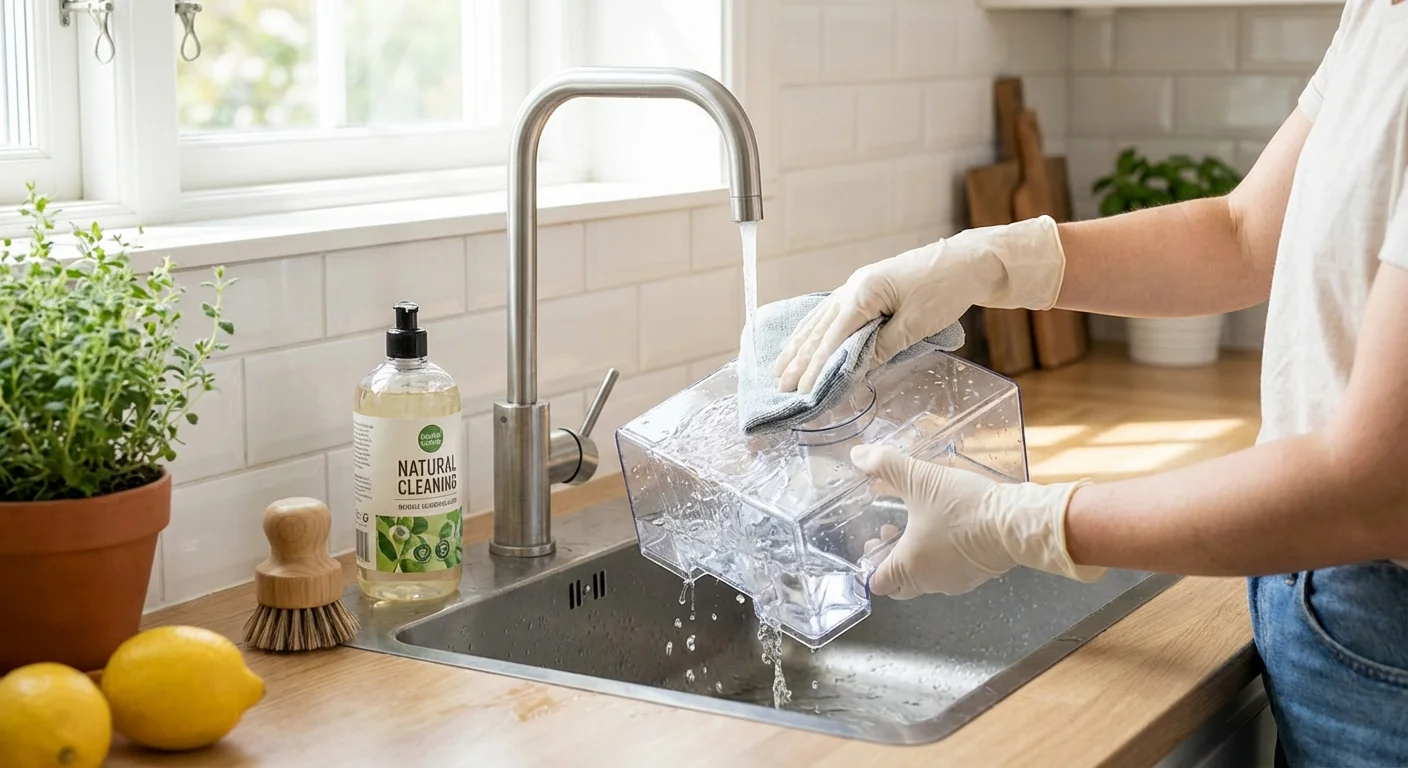
The single greatest mistake people make with humidifiers is neglecting the cleaning schedule. A neglected water tank becomes a breeding ground for pink mold (Serratia marcescens), black mold, and various airborne bacteria. When the machine runs, it aggressively disperses these pathogens directly into the air you breathe, potentially triggering asthma, allergies, or respiratory infections.
To keep your home healthy, establish a strict maintenance rhythm. Empty the tank completely every morning; never let water sit stagnant for days. Rinse the basin and refill it with fresh water daily. Once a week, commit to a deep clean. Disassemble the unit and soak the tank and base in a solution of undiluted white vinegar for 20 minutes to break down hard water scaling. Use a small, soft-bristled brush—an old toothbrush works perfectly—to scrub the ultrasonic disk or the heating element. After thoroughly rinsing away the vinegar, disinfect the components using a mild bleach solution (one teaspoon of liquid bleach per gallon of water), letting it sit for another 10 minutes before the final, extensive rinse.
Never mix bleach and vinegar during your cleaning routine, as the combination produces toxic chlorine gas. Clean with vinegar first, rinse completely, and then sanitize with bleach if necessary.
Water Quality: The Tap vs. Distilled Debate
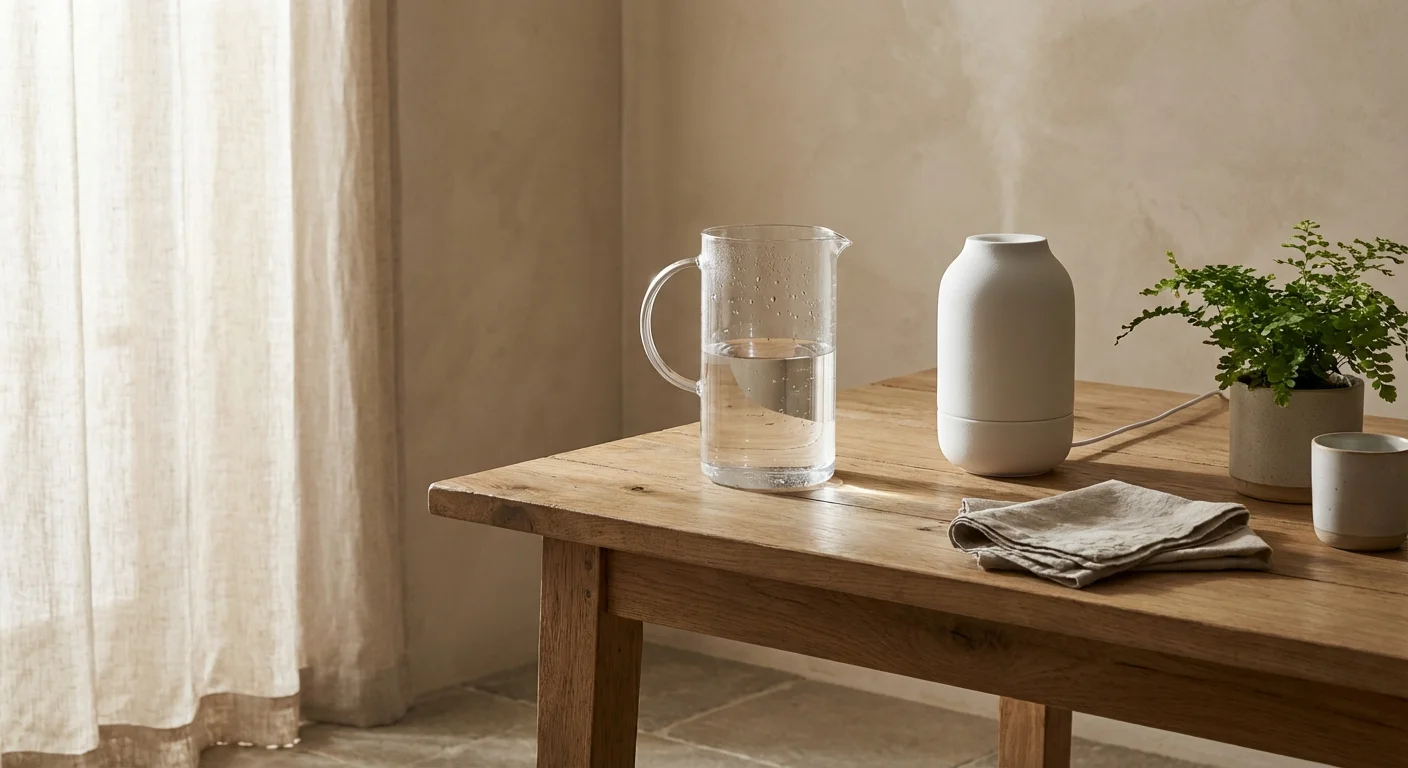
The type of water you pour into your humidifier dramatically impacts its performance, its lifespan, and your indoor air quality. Evaporative models handle regular tap water beautifully; their paper wick filters capture the calcium and magnesium present in hard water. You will need to replace the filter more frequently if your water is exceptionally hard, but your air will remain clean.
Ultrasonic models, however, are highly sensitive to water chemistry. If you use tap water in an ultrasonic machine, the high-frequency vibrations shatter the dissolved minerals alongside the water molecules. As the mist evaporates in the air, the minerals fall to the ground, settling as a fine, stubborn white dust over your furniture, electronics, and floors. More concerningly, breathing in these aerosolized minerals can irritate sensitive lungs.
If you commit to an ultrasonic unit, plan to purchase distilled water—which has been boiled into steam and condensed back into liquid, leaving all minerals behind—or invest in a reverse osmosis water filtration system for your home. Some premium ultrasonic units feature decalcification cartridges to soften tap water, but these represent an ongoing replacement cost and rarely capture 100 percent of the mineral content.
Smart Features Worth Paying For
As smart home technology matures, humidifiers have evolved from simple manual appliances into sophisticated climate control devices. While you do not need Wi-Fi connectivity to achieve comfortable air, certain features genuinely elevate the user experience and justify a slightly higher price point.
Built-in Humidistats: A machine with a digital humidistat constantly measures the room’s moisture levels and adjusts its output automatically to maintain your target percentage. This prevents the common issue of over-humidification, which can warp wood floors and encourage mold growth on windowsills. However, be aware that sensors located directly on the machine often read higher than the actual room humidity; relying on an external, wall-mounted hygrometer offers better accuracy.
Auto-Shutoff: This is a crucial safety and longevity feature. When the tank runs dry, the machine should immediately power down. Running a humidifier without water can quickly burn out the motor or damage the ultrasonic vibrating plate.
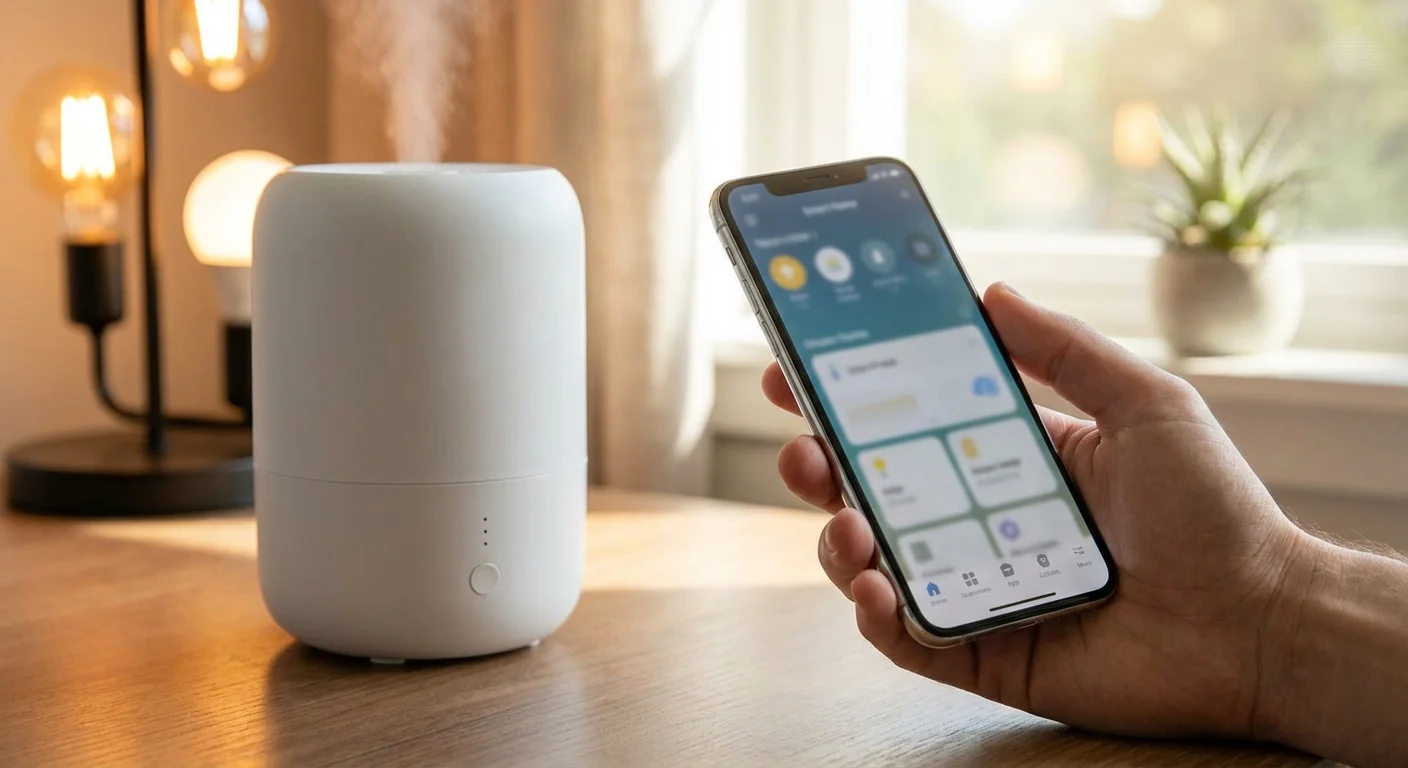
App Connectivity: Units that connect to your smartphone allow you to monitor humidity levels remotely, adjust fan speeds from the couch, and set complex operating schedules. More importantly, companion apps send push notifications to your phone when the tank is empty or when it is time to perform your weekly cleaning, serving as a reliable digital assistant for your maintenance routine.
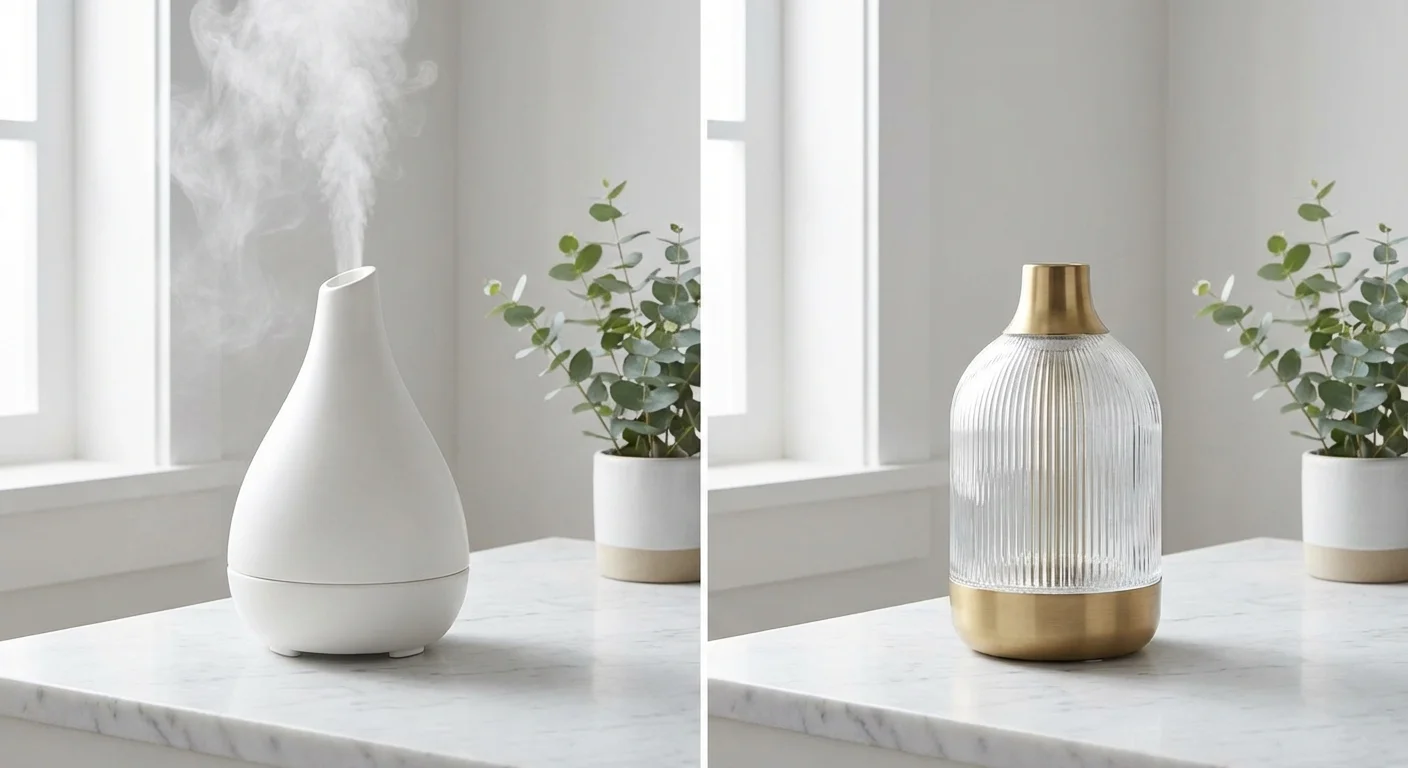
Design authorities like Good Housekeeping consistently highlight how modern manufacturers are finally treating humidifiers as decor rather than clinical medical devices. Brands like Canopy and Vitruvi offer minimalist, sculptural designs that blend seamlessly into carefully curated living spaces, proving you no longer have to compromise your home’s aesthetic for the sake of comfort.
Frequently Asked Questions
How do I know what size humidifier I need?
Manufacturers rate humidifiers by square footage, but this assumes doors remain closed and ceilings are a standard eight feet high. A good rule of thumb is to measure your room’s square footage and purchase a unit rated for slightly more space than you actually have. For a standard 150-square-foot bedroom, a unit with a one-gallon tank usually suffices for a full night of use without needing a refill.
Can I leave my humidifier running all the time?
You should only run your humidifier when the indoor relative humidity falls below 30 percent. Running a unit continuously without monitoring the environment can push humidity levels above 50 or 60 percent. Excessive moisture encourages dust mites, promotes mold growth inside wall cavities, and causes condensation to pool on cold windowpanes, which eventually rots wooden window frames.
Why does my humidifier smell like mildew?
A musty or sour smell indicates that mold or bacteria has established a colony inside the water tank, the base, or the filter. This happens when water sits stagnant for too long or when regular cleaning is neglected. If you smell mildew, turn the machine off immediately. Discard the filter if it is an evaporative model, thoroughly disinfect the entire unit using a bleach solution, and start fresh with a brand-new wick.
Do humidifiers really help with heating bills?
Yes, indirectly. According to Energy Star principles regarding indoor climate control, humid air naturally feels warmer to the human skin than dry air at the exact same temperature. By maintaining optimal humidity levels around 40 percent, you can often lower your thermostat by two or three degrees while feeling just as comfortable, leading to measurable savings on your winter heating costs.
Taking Control of Your Indoor Climate
Improving your home’s air quality does not require an engineering degree or an unlimited budget. It requires an honest assessment of your daily habits and the specific environmental challenges of your living space. By choosing an evaporative console for your large living room, a whisper-quiet ultrasonic model for your bedside, and committing to a weekly cleaning schedule, you banish the discomfort of dry winter air for good.
Your home should be a space of restoration, not a source of physical irritation. Start small: invest in an inexpensive digital hygrometer to monitor your current humidity levels, identify the driest rooms in your house, and select a machine that fits seamlessly into your daily routine. The tips in this article are meant as general guidance. Your specific situation—including your home’s age, layout, and local building codes—may require different approaches. When in doubt, consult a professional.
Last updated: February 2026









Leave a Reply