

Tossing and turning at 2 AM is a uniquely frustrating experience; your mind races while your body refuses to settle. For decades, occupational therapists utilized heavy, weighted garments to help patients manage sensory processing disorders and calm the nervous system. Today, that specialized clinical tool has evolved into a mainstream household staple. Weighted blankets now drape across millions of beds and living room sofas, offering a simple, drug-free way to signal your brain that it is time to wind down.
Beyond tactile pressure, learning how to soundproof a bedroom can further eliminate the environmental distractions that keep you awake.
Finding the right one, however, involves more than picking a pretty color off a shelf. You must consider weight distribution, breathability, internal fill materials, and maintenance requirements. A poorly chosen blanket might leave you sweating through the night or struggling to shift positions, completely defeating the purpose of the purchase. This guide breaks down everything you need to know to select the ideal option for your sleep habits and lifestyle.
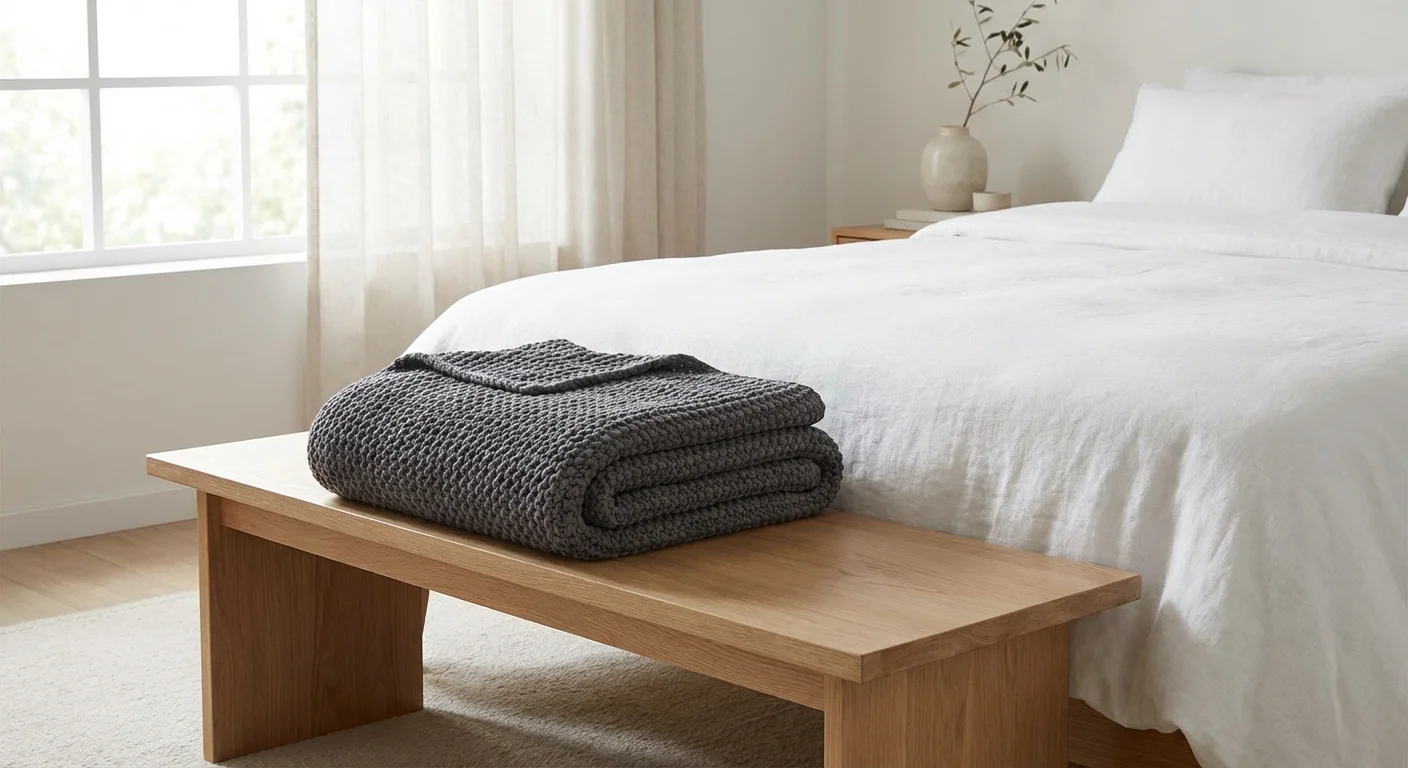
At a Glance: The Essentials
- The 10 Percent Rule: Choose a blanket that represents roughly 10 percent of your total body weight.
- Material Matters: Hot sleepers should seek out a cooling weighted blanket made of bamboo or Tencel, while cold sleepers benefit from minky or fleece covers.
- Fill Types: Micro-glass beads offer smoother weight distribution and a thinner profile compared to bulky plastic poly-pellets.
- Size for the Body, Not the Bed: Weighted blankets should cover the person, not drape over the edges of the mattress, to prevent gravity from pulling them to the floor.

The Science Behind Weighted Blanket Benefits
To understand why a heavy blanket feels so good, you have to understand Deep Pressure Stimulation (DPS). DPS uses firm, tactile sensory input—like a firm hug, a gentle squeeze, or swaddling—to relax the nervous system. When you drape heavy layers over your body, the gentle, distributed pressure triggers an autonomic nervous system response.
This approach to comfort aligns with the art of hygge, where creating a soothing, sensory-focused atmosphere is key to emotional well-being.
Implementing a few other cozy bedroom ideas can help turn your sleeping area into a true restorative retreat.
This pressure physically encourages your body to switch from its sympathetic nervous system—the network responsible for your “fight or flight” stress response—to the parasympathetic nervous system, which manages “rest and digest” functions. As your body recognizes the calming pressure, it lowers the production of cortisol, the primary stress hormone. Simultaneously, the pressure stimulates the production of serotonin and dopamine, neurotransmitters associated with happiness and calm. Serotonin subsequently converts into melatonin, the hormone responsible for regulating your sleep-wake cycle.
For individuals dealing with chronic stress or insomnia, securing a weighted blanket for anxiety can break the cycle of bedtime overthinking. You physically interrupt the stress loop, allowing your muscles to unclench and your breathing to deepen.
“Your bedroom should be a sanctuary dedicated to rest and recovery. Every element in the room—from the lighting down to the weight and texture of your bedding—should actively serve to lower your heart rate and prepare your mind for sleep.”
— Amanda Lauren, Home and Lifestyle Expert
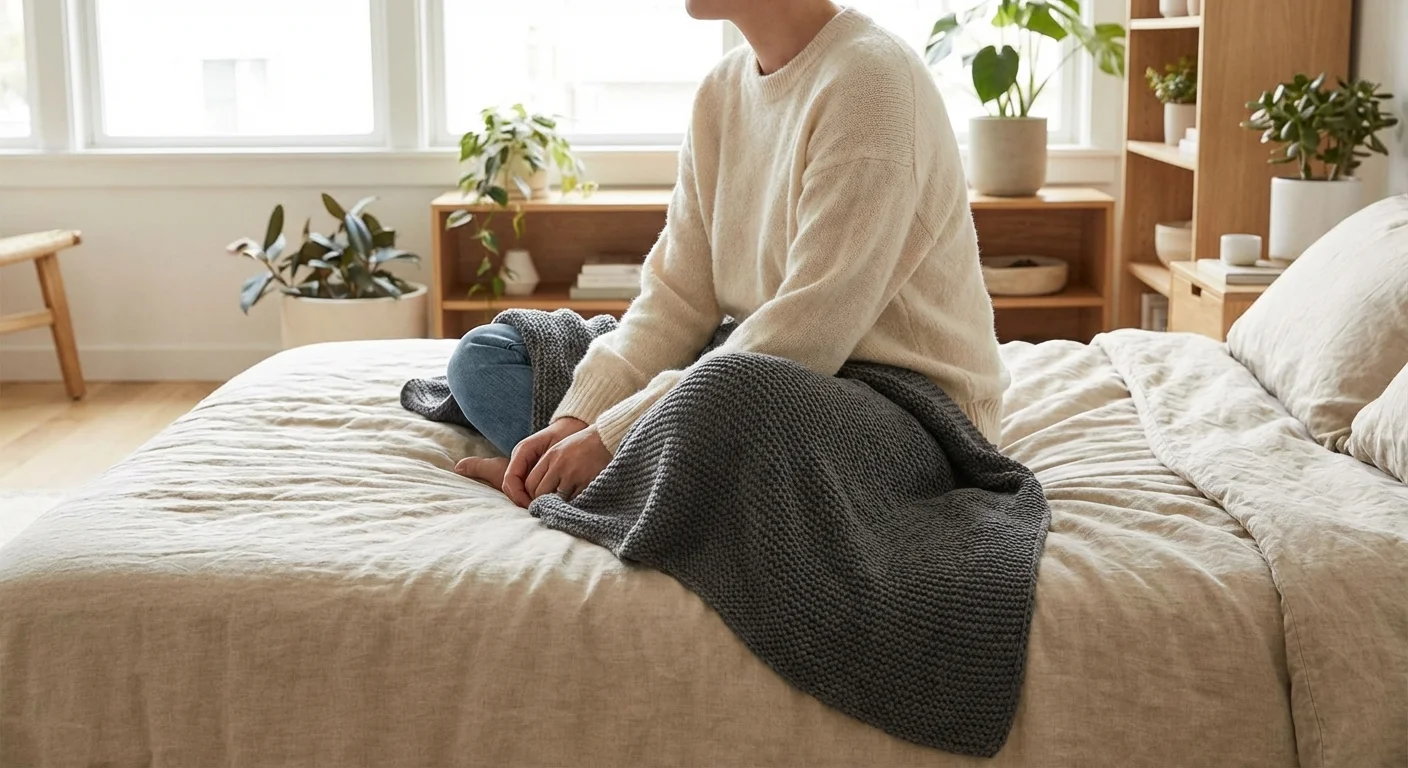
Choosing Your Ideal Weight and Size
The most crucial decision in your buying journey dictates how effective your blanket will actually be: selecting the correct weight. A blanket that is too light fails to deliver the necessary Deep Pressure Stimulation, while one that is too heavy can cause joint pain, restrict your breathing, or make you feel trapped.
To complete the tactile experience of your room, consider how warm area rugs can complement your heavy bedding by grounding the space.
The standard industry guideline is the “10 Percent Rule.” You calculate 10 percent of your body weight and choose the blanket that comes closest to that number. Manufacturers typically offer weights in 5-pound increments, most commonly 10, 15, 20, and 25 pounds.
- For a 130-pound adult: A 12-to-15-pound blanket is ideal.
- For a 160-pound adult: A 15-pound blanket works perfectly.
- For a 200-pound adult: A 20-pound blanket provides the right amount of pressure.
If your calculation lands squarely between two available weights—for instance, you weigh 175 pounds and must choose between 15 and 20 pounds—sleep specialists generally advise sizing up. The slightly heavier option usually delivers more reliable DPS benefits.
Beyond weight, dimensions matter significantly. Unlike a traditional comforter or duvet designed to hang elegantly off the sides of your mattress, a weighted blanket should only cover the surface of the bed. If you buy a king-sized heavy blanket and let the edges drape over the sides, gravity will inevitably pull the blanket to the floor while you sleep. Buy for your body size and the flat surface of your mattress, keeping the edges safely on top of the bed.
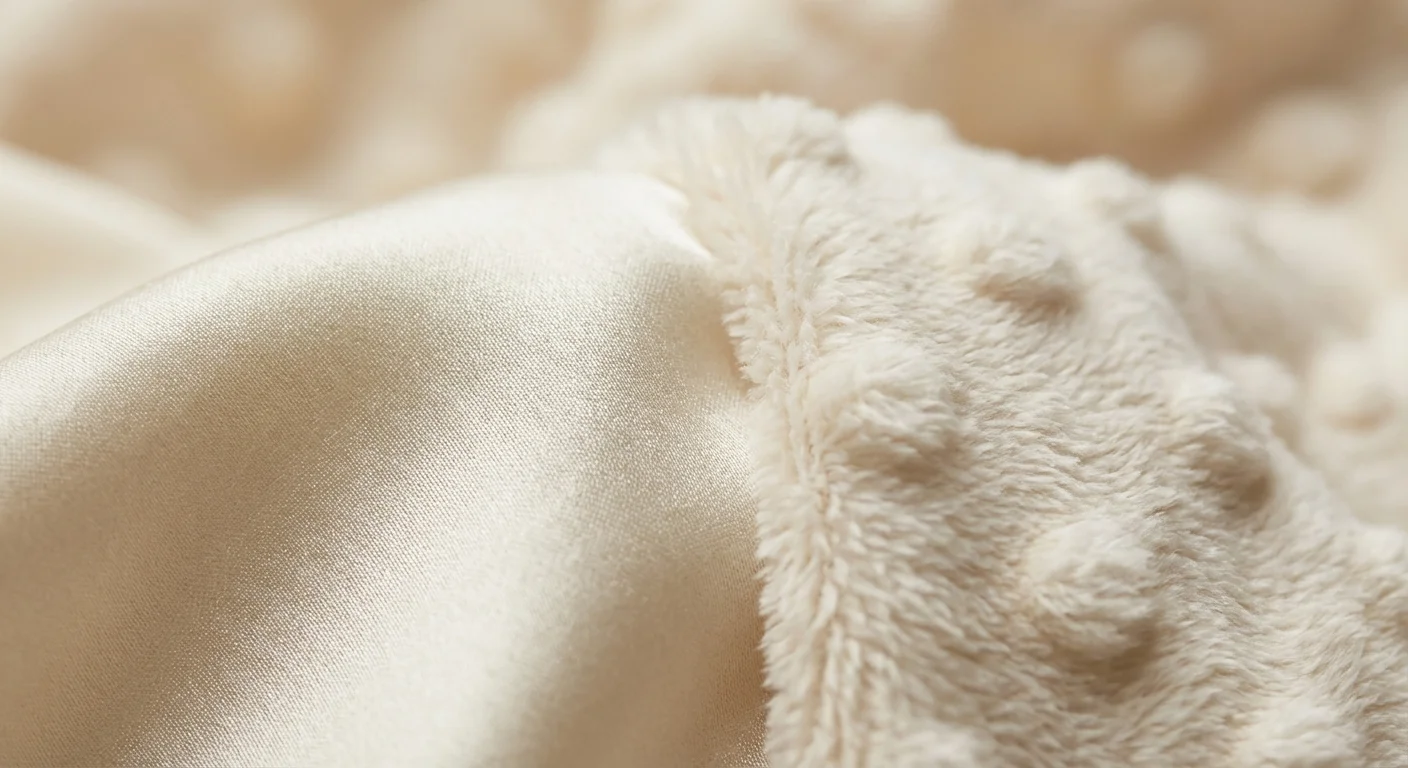
Navigating Fabrics and Fillings
Your comfort relies heavily on the textiles encasing the weight. You can break blanket construction into two distinct components: the outer shell and the inner fill.
Besides weight and temperature, adding one of the best humidifiers can improve air quality for even better respiratory comfort while you sleep.
Outer Shell Fabrics
If you overheat easily at night, you must prioritize breathable fabrics. A cooling weighted blanket typically utilizes bamboo-derived viscose, Tencel, or breathable percale cotton. Bamboo naturally wicks moisture away from the skin and feels cool to the touch, making it the superior choice for warm climates or those prone to night sweats.
Conversely, if you seek maximum coziness and often feel chilly, look for covers made from minky fabric, microfiber, or fleece. These textiles trap body heat and offer a plush, soft sensory experience.
Inner Fill Materials
The substance creating the weight dramatically affects the blanket’s profile and sound.
- Micro-glass Beads: The premium standard. Glass beads resemble fine white sand. Because glass is denser than plastic, manufacturers need fewer beads to achieve the target weight, resulting in a significantly thinner, more flexible blanket that drapes smoothly over your body’s contours.
- Plastic Poly-Pellets: Found in budget-friendly models. These small plastic beads are non-toxic but bulkier than glass. They can make the blanket feel slightly lumpy and often produce a subtle rustling sound when you shift underneath them.
- Chunky Knits: A modern innovation completely eliminates inner fillers. Instead, manufacturers knit the blanket using highly dense, thick cotton or velvet yarn. The weight comes entirely from the heavy fabric itself, offering unmatched breathability since air flows freely through the knitted loops.
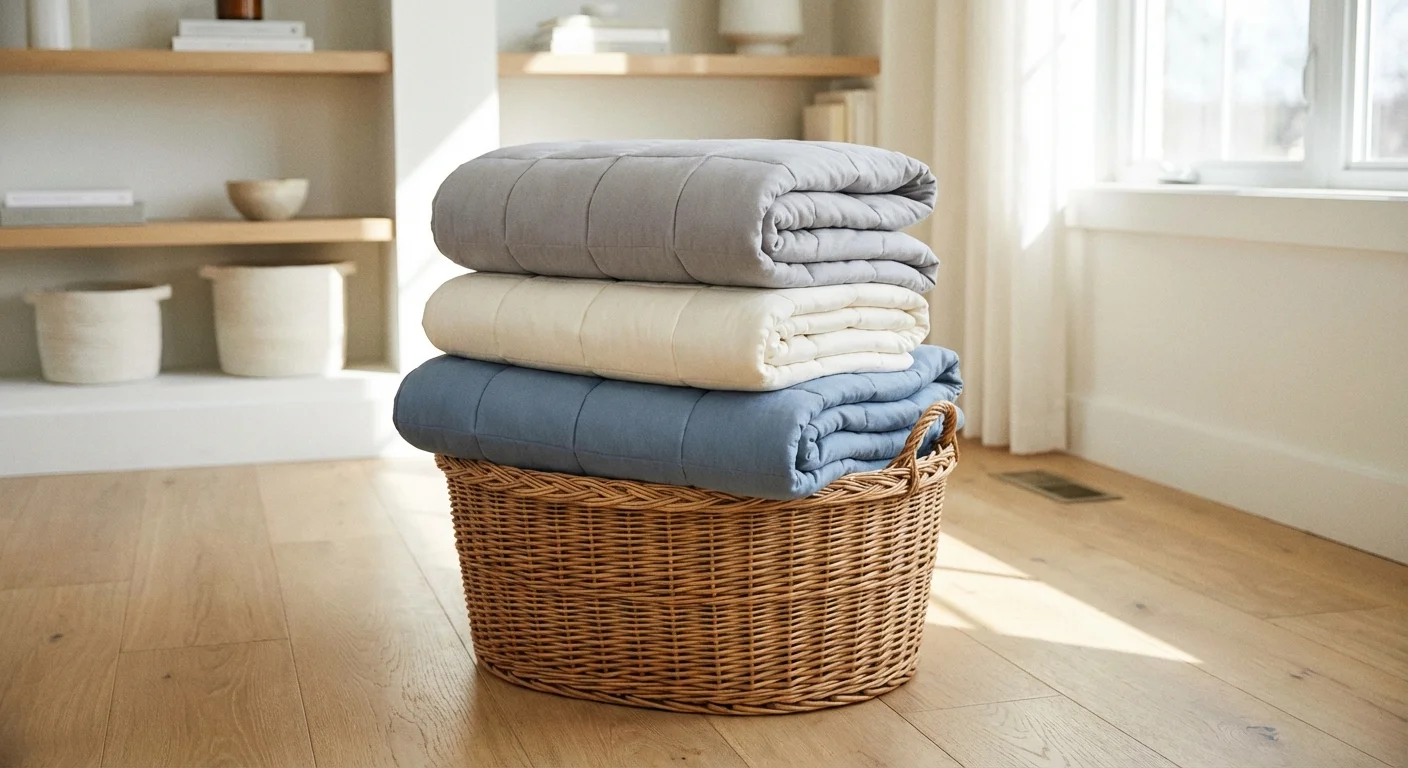
The Best Weighted Blankets by Category
To simplify your weighted blanket buying guide experience, we categorized the top approaches based on specific sleep needs and aesthetic preferences. Use this comparison to narrow down your search.
| Category | Primary Material | Best Suited For | Key Benefit |
|---|---|---|---|
| The Cooling Blanket | Bamboo Viscose or Tencel with Glass Beads | Hot sleepers, summer use, menopausal women | Actively wicks moisture; feels cool to the touch. |
| The Classic Cozy | Minky or Fleece over Cotton shell | Cold climates, intense anxiety relief | Provides maximum sensory comfort and warmth. |
| The Aesthetic Knit | Heavy woven cotton yarn (No beads) | Living room display, balanced temperatures | Looks beautiful draped over furniture; highly breathable. |
| The Dual-Sided | Cotton on one side, Minky on the reverse | People experiencing seasonal temperature shifts | Offers year-round versatility without buying two products. |
When shopping, look for designs featuring intricate grid stitching. Smaller quilted squares (typically 4×4 inches or smaller) ensure the glass beads remain locked in place. If the squares are too large, the weight pools into the corners of each pocket, creating an uneven, uncomfortable experience.

How to Wash and Maintain Your Blanket
Maintenance often catches new owners off guard. Washing a 20-pound textile is dramatically different than laundering a standard set of cotton sheets. In fact, laundering heavy items incorrectly can damage both the blanket and your washing machine.
Once your bedding is fresh, using window treatments that make rooms feel cozier can help maintain the perfect sleeping climate year-round.
When switching to lighter bedding for the summer, keep your heavy blankets dust-free by using vacuum storage bags to maximize closet space.
To preserve the life of your purchase, invest in a blanket that includes a removable duvet cover. The cover takes the brunt of body oils, sweat, and pet dander. You can easily unzip the cover, toss it in a standard washing cycle, and dry it according to the fabric type. This strategy keeps the heavy inner core perfectly clean, requiring only occasional spot cleaning with a mild detergent and a damp cloth.
If you must wash the heavy inner core, proceed with caution. Consumer Reports notes that residential washing machines have strict weight limits. Top-loading machines with center agitators can easily tear the fabric or break the delicate internal baffling that holds the beads in place. If your machine lacks the capacity for a 15-to-20-pound load, take the blanket to a commercial laundromat and use an oversized front-loading machine.
Always wash heavy bedding on a gentle cycle using cold water. Avoid harsh chemicals like bleach or fabric softeners, which degrade the fabric fibers and clump the internal filling. Never put the heavy inner core in a standard dryer. High heat melts plastic poly-pellets and destroys the protective coatings on glass beads. Instead, lay the blanket flat to dry across a clean floor or a large drying rack. Hanging it over a single clothesline will stretch the fabric and distort the shape under its own extreme weight.

Avoiding Common Errors
Even armed with good information, buyers frequently make easily avoidable mistakes when incorporating heavy bedding into their sleep routine.
- Buying to share: Weighted blankets are fundamentally single-user products. Because the weight calculation depends strictly on individual body mass, a couple with a significant weight difference cannot effectively share one blanket. If a 120-pound partner and a 200-pound partner share a 20-pound blanket, it will feel suffocating to one and ineffective to the other. Furthermore, tossing a large blanket between two people often results in a “tenting” effect, allowing cold drafts into the bed. Opt for twin-sized individual blankets instead.
- Ignoring the ties: If you buy a blanket with a removable cover, you must securely fasten the internal ties. Inside the cover, you will find fabric loops or strings designed to tie to the corners and edges of the heavy insert. If you skip this step out of frustration, the heavy insert will bunch up into a heavy ball at the bottom of the cover by morning.
- Forcing immediate all-night use: Your body needs time to adapt to new sensory input. Tossing a 20-pound layer over yourself for eight hours on the first night often causes restless legs or mild claustrophobia. Start by using it on the couch for 30 minutes while reading. Gradually increase the duration over a week before attempting a full night of sleep.
- Overlooking bedroom aesthetics: Heavy blankets are notoriously difficult to fold neatly. If aesthetics matter to you, learn how to drape it correctly at the foot of the bed. Resources like The Spruce offer excellent visual guides on styling chunky knits and heavy textiles so they look intentional rather than messy.
Frequently Asked Questions
Can children use weighted blankets?
Yes, but with strict safety parameters. You must never use a weighted blanket on infants, toddlers, or young children under the age of three due to suffocation risks. For older children, the blanket should never exceed 10 percent of their body weight plus one to two pounds. Crucially, the child must possess the physical strength to independently lift and remove the blanket at all times. Always consult your pediatrician before introducing heavy bedding to a child’s sleep environment.
Do I still need a top sheet?
Using a top sheet under your blanket significantly extends the time between required washings. The top sheet absorbs your body’s natural oils and sweat, acting as a protective barrier. Since washing a heavy blanket is a chore, a standard top sheet is a highly practical addition to your bedding setup.
How long does a quality blanket last?
With proper care, a high-quality glass-bead or chunky knit blanket should last five to seven years. You will know it is time for a replacement if you notice the beads pooling excessively in the corners, indicating the internal baffles have torn, or if the outer fabric shows signs of thinning or fraying.
Can I travel with it?
While physically possible, traveling with heavy bedding is highly impractical for air travel. A 15-pound blanket will consume roughly one-third of your standard 50-pound checked baggage allowance. For road trips, however, packing your blanket in the trunk is a great way to guarantee familiar, anxiety-reducing comfort in a hotel room or rental property.
When you prioritize comfort and understand your own sleep preferences, upgrading your bedding becomes an investment in your daily well-being. A heavier layer requires a slight adjustment period, but the resulting deep, restorative sleep makes the transition well worth the effort. Determine your ideal weight, pick a fabric that aligns with your home’s climate, and respect the washing instructions.
This is educational content based on general best practices. Individual results vary based on your home, budget, and circumstances. Always prioritize safety and consult professionals for major projects or ongoing medical concerns.
Last updated: February 2026









Leave a Reply