
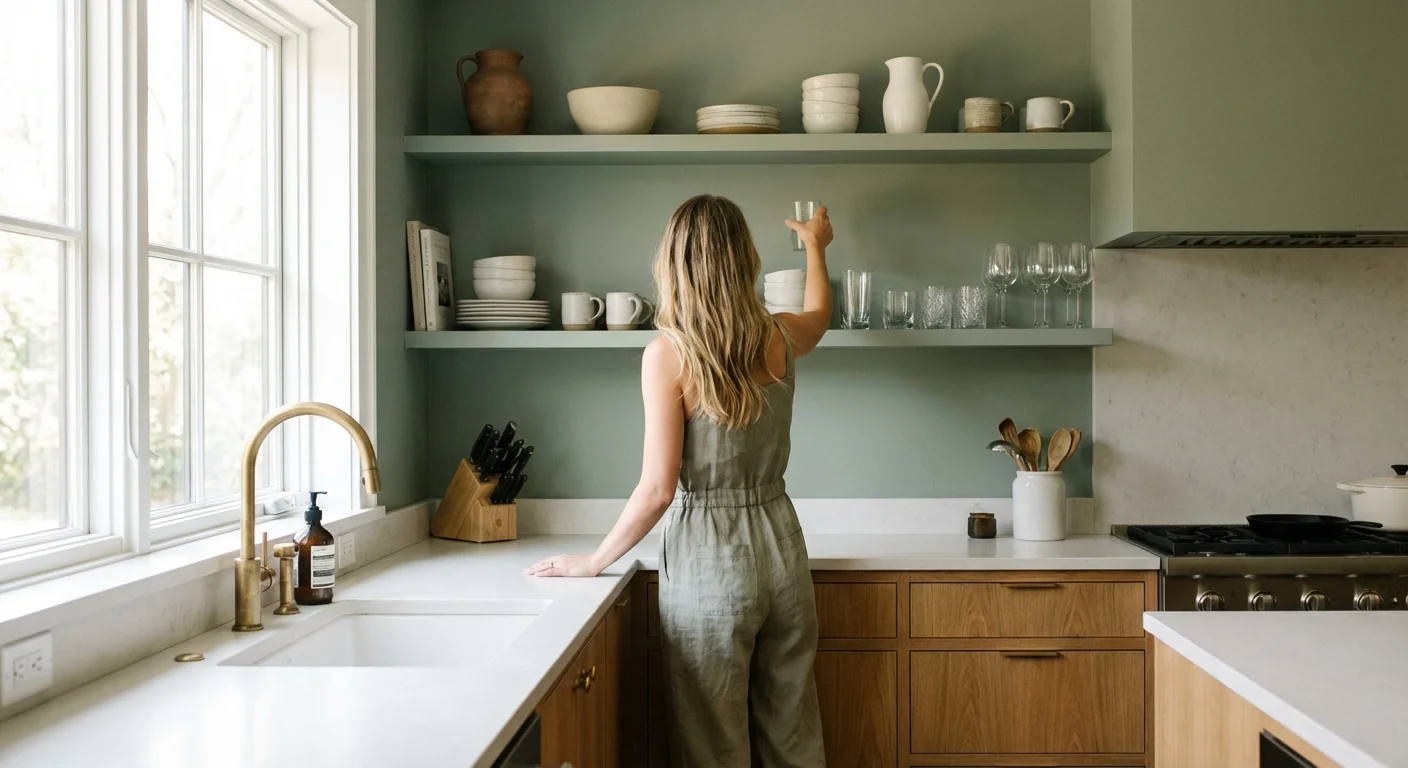
Open a cabinet door in a busy kitchen, and you might just face an avalanche of mismatched plastic lids or a chaotic jumble of baking sheets. If you spend more time searching for the right spatula than actually flipping your pancakes, your kitchen is actively working against you. A truly functional cooking space requires more than just aesthetic appeal; it demands systems that naturally support your daily routines.
Before you begin implementing these systems, it is often helpful to start with a fresh slate by deep cleaning your kitchen from top to bottom.
Implementing effective kitchen organization ideas shifts your cooking environment from a source of daily friction into a streamlined workspace. We have compiled a comprehensive guide to reclaiming your space, focusing entirely on practical methods that survive the reality of daily meal prep, messy breakfasts, and late-night snacking.
“The objective of cleaning is not just to clean, but to feel happiness living within that environment.” — Marie Kondo, Organizing Consultant
Transforming Your Kitchen Cabinet Organization
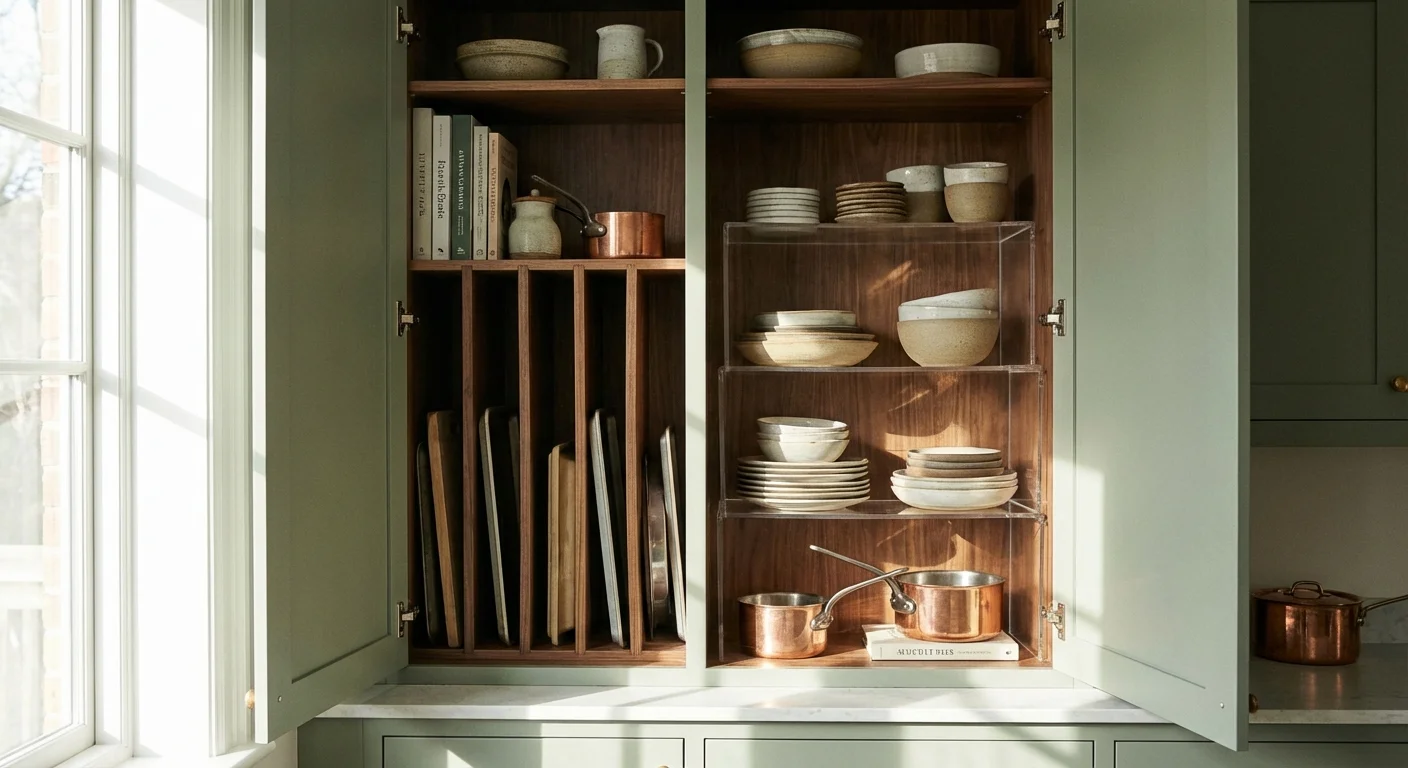
Cabinets often become black holes where good ingredients and useful tools go to disappear. Proper kitchen cabinet organization requires utilizing the entire volume of the box, not just the flat bottom shelf.
Before you start moving items, it is helpful to learn how to organize kitchen cabinets using a zone-based system to maximize efficiency.
1. Deploy Adjustable Drawer Inserts for Food Containers
Food storage containers represent the most common pain point in any kitchen. Instead of tossing lids and bottoms into a deep drawer, install adjustable bamboo or acrylic dividers. Dedicate one section to nested bottoms and another tightly constrained section for lids stored vertically—much like files in a cabinet. This prevents the inevitable lid migration that drives home cooks crazy.
2. Install Tension Rods for Baking Sheets
Stop stacking your heavy cutting boards, muffin tins, and baking sheets in a heavy, unstable pile. Install three or four inexpensive tension rods vertically between the top and bottom of a lower cabinet. This allows you to slide individual pans out upright without disturbing the rest of the stack.
3. Double Capacity with Shelf Risers
Most cabinet shelves leave roughly six to eight inches of dead air above your plates and bowls. Insert wire or acrylic shelf risers to instantly create a secondary level. You can store your dinner plates on the bottom tier and your salad plates directly above them, entirely eliminating the need to unstack heavy dishes to reach the ones at the bottom.
4. Utilize Vertical Pan Organizers
Frying pans suffer deep scratches when stacked haphazardly. A heavy-duty vertical pan organizer sits safely in a lower cabinet and holds skillets horizontally or vertically in individual slots. This protects your non-stick coatings while making it incredibly simple to grab the exact skillet you need.
5. Maximize Blind Corners with Turntables
Deep corner cabinets easily hide expired canned goods and forgotten appliances. Placing a large, high-walled turntable (commonly known as a Lazy Susan) in these dark corners allows you to rotate items into the light effortlessly. Use these specifically for bulky, less-frequently used items like large bottles of oil or vinegar.
6. Hang Under-Shelf Wire Baskets
Clip under-shelf wire baskets onto the sturdy shelves of your upper cabinets to catch small, lightweight items. These baskets brilliantly hold aluminum foil boxes, sandwich bags, or delicate linen napkins, utilizing space that otherwise remains entirely empty.
The Great Kitchen Counter Declutter
Your countertops dictate the visual weight of your entire kitchen. A successful kitchen counter declutter does not mean stripping the surfaces bare; rather, it means intentionally selecting what earns the right to stay visible.
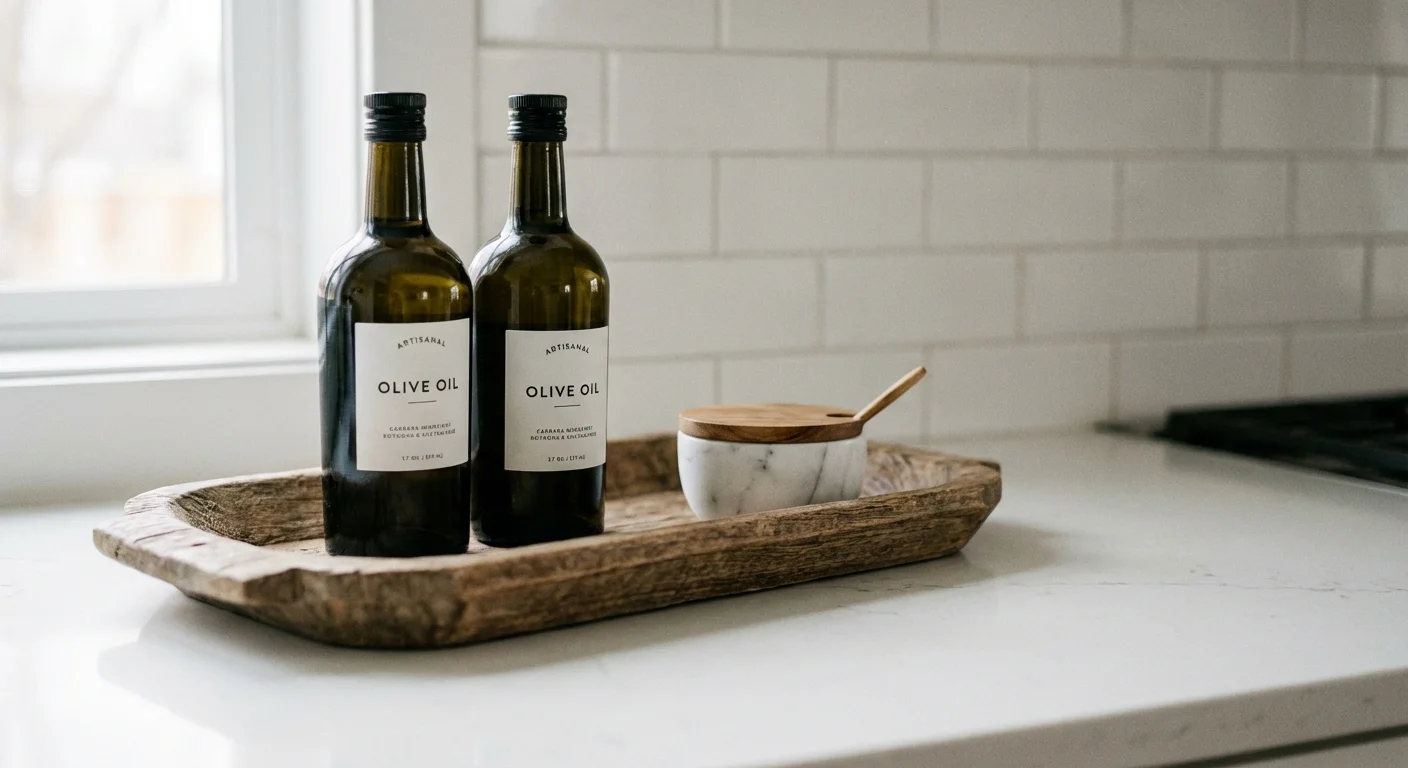
7. Corral Essentials on Decorative Trays
When you scatter olive oil, salt cellars, and pepper grinders across the counter, they look like clutter. When you group those exact same items on a textured wood or polished stone tray, they instantly look like intentional decor. This method also makes wiping down the counters infinitely easier, as you only need to lift one tray instead of five individual bottles.
8. Mount Magnetic Knife Strips
Bulky wooden knife blocks consume premium countertop real estate and harbor dangerous bacteria in their deep crevices. Mount a strong magnetic walnut or stainless steel strip on the wall above your prep zone. This keeps your blades sharp, visible, and completely off the counter.
9. Designate an Appliance Garage
If you use your coffee maker and toaster every single day, pulling them out of a cabinet is a nuisance. Create an “appliance garage” in a corner—either by having a carpenter install a tambour door or simply sliding them behind a stylish, freestanding bread box—to keep cords and bulky electronics hidden but accessible.
10. Install Floating Shelves for Daily Dishware
Remove bulky upper cabinets around the sink and replace them with open floating shelves. Store only your daily coffee mugs and most frequently used bowls here. This opens up the visual space of the room while keeping your most vital items within arm’s reach.
11. Streamline the Sink Zone with a Caddy
Wet sponges, dish soap bottles, and scrub brushes instantly ruin a clean aesthetic. Invest in a stainless steel sink caddy that suctions directly to the inside of your sink basin. The water drips straight down the drain, and your counter remains pristine.
Best Kitchen Storage Solutions for Drawers
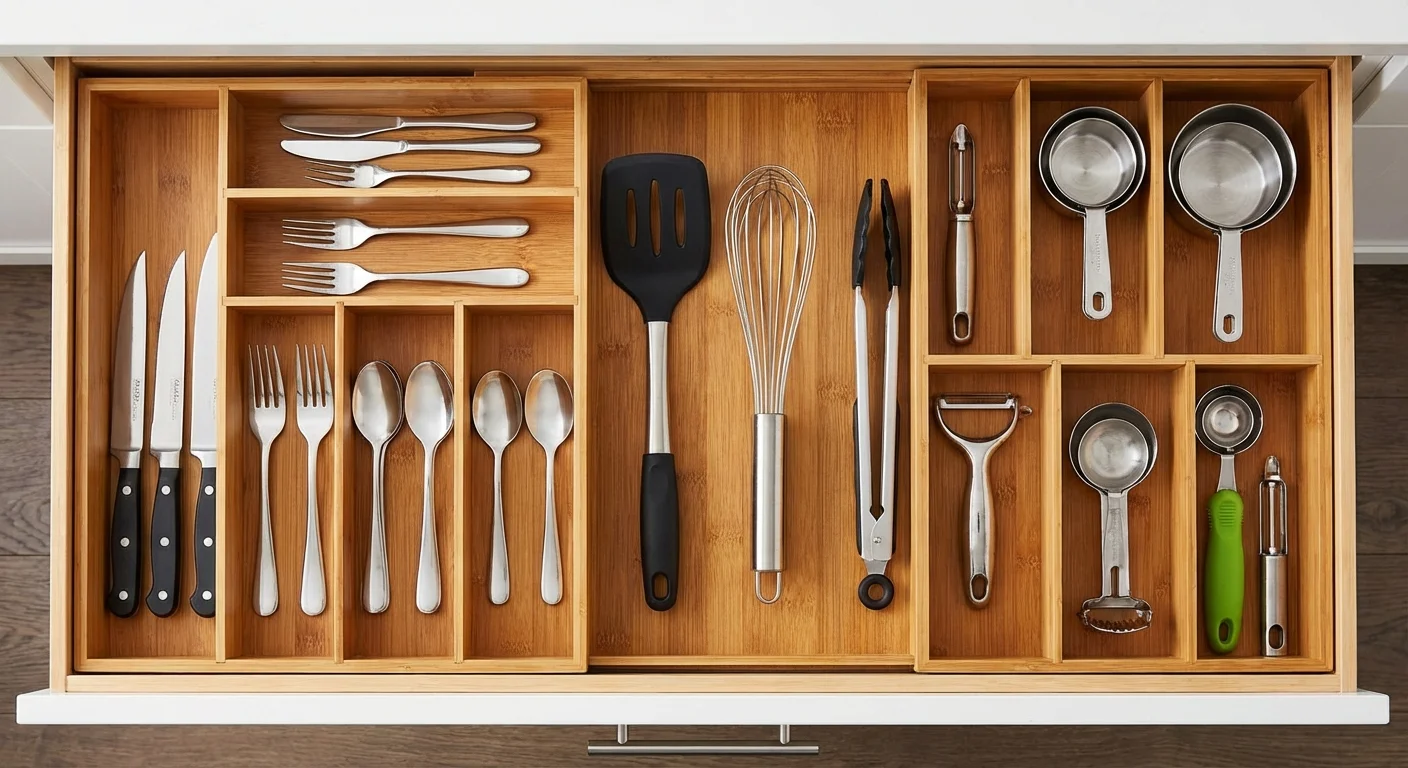
Drawers offer incredible ergonomic benefits compared to cabinets, but only if they feature rigid internal structures. Without boundaries, a drawer quickly devolves into a junk drawer.
12. Use Diagonal Dividers for Long Utensils
Standard rectangular drawer organizers never accommodate long wooden spoons, ladles, or rolling pins. By installing diagonal drawer dividers, you stretch the usable length of the compartment, finally giving oversized utensils a proper home where they won’t jam the drawer shut.
13. Implement Tiered Spice Drawer Inserts
Searching through a cluttered upper cabinet for paprika while a sauce is boiling is a recipe for disaster. Dedicate a shallow top drawer near your stove to spices. Use a slanted, tiered acrylic insert so all jars lay at an angle, displaying their labels clearly and making selection instantaneous.
14. Secure Plates with Deep Drawer Peg Systems
If you prefer keeping heavy plates in deep lower drawers to save your back, you must prevent them from sliding when the drawer opens. Install a wooden pegboard base with adjustable vertical dowels. You can reposition the dowels to tightly hug your stacks of plates and bowls.
15. Customize Acrylic Dividers for the Junk Drawer
Every home needs a utility drawer for scissors, tape, and spare batteries. Stop using flimsy plastic trays and instead buy individual, modular acrylic bins. Arrange them like a puzzle to perfectly fit the dimensions of your drawer, keeping rubber bands permanently separated from loose change.
16. Thread Measuring Spoons on a Binder Ring
Loose measuring spoons scatter easily and get lost in the corners of baking drawers. Remove them from the cheap plastic ring they came on and thread them onto a sturdy, oversized metal binder ring. You can easily unclip the exact spoon you need and snap it right back into place.
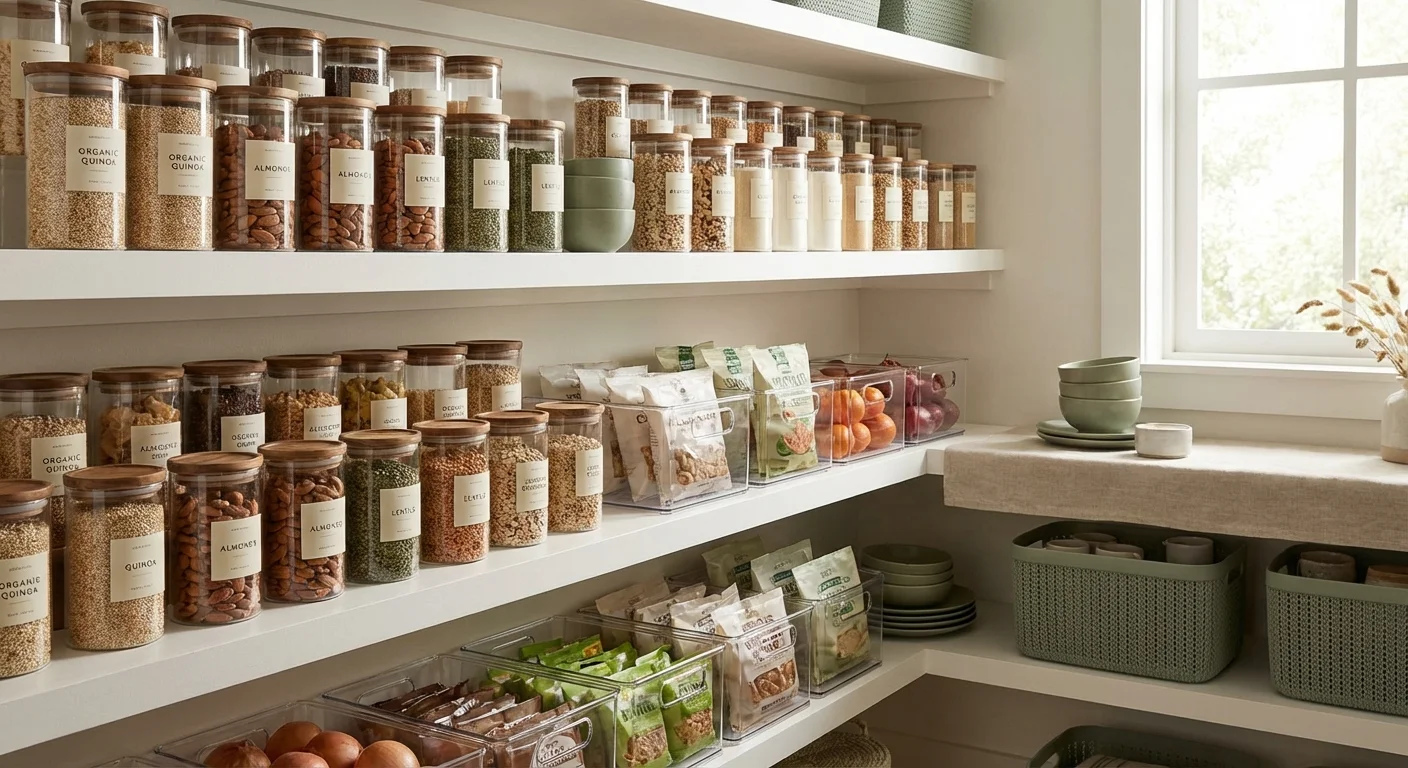
Tested Kitchen Hacks for the Pantry and Fridge
Food storage requires systems that prioritize visibility and expiration management. The most effective tested kitchen hacks rely on categorizing items to prevent overbuying and food waste.
Choosing the right pantry storage systems ensures that your layout remains functional even as your grocery habits change.
If you are looking for a more thorough overhaul of your food storage area, check out our pantry organization makeover guide for a professional finish.
17. Categorize Snacks in Clear Bins
Cardboard packaging creates tremendous visual noise and takes up unnecessary space. Unbox granola bars, fruit snacks, and individual chip bags, then place them into deep, clear acrylic bins. When you can see exactly how many snacks remain, you avoid buying unnecessary duplicates. You can find excellent options for this method at The Container Store.
18. Decant Bulk Dry Goods
Flour, sugar, pasta, and rice belong in airtight, clear canisters. Decanting protects your expensive ingredients from pantry pests and keeps essential baking supplies incredibly fresh. Furthermore, a row of matching canisters transforms a chaotic pantry shelf into a highly organized, professional-looking display.
19. Hang Over-the-Door Pantry Racks
The back of a pantry door represents prime, entirely unused storage space. Mount a customizable wire shelving system on the inside of the door to hold lightweight, shallow items like spice bottles, small jars of condiments, and packets of gravy mix.
20. Utilize Turntables for Fridge Condiments
The back of the refrigerator shelves is where mustard goes to die. Place a smooth-spinning plastic turntable on the top shelf of your fridge to hold all your jars, hot sauces, and jams. A simple spin brings the exact jar you need straight to the front.
21. Clamp Open Freezer Bags with Binder Clips
Frozen vegetables in half-open bags spill everywhere, creating a mess at the bottom of the freezer. Clip heavy-duty metal binder clips to the wire shelves in your freezer, and hang the tops of the bags directly from the clips. This seals the bags tightly and utilizes the empty air space directly beneath the shelf.
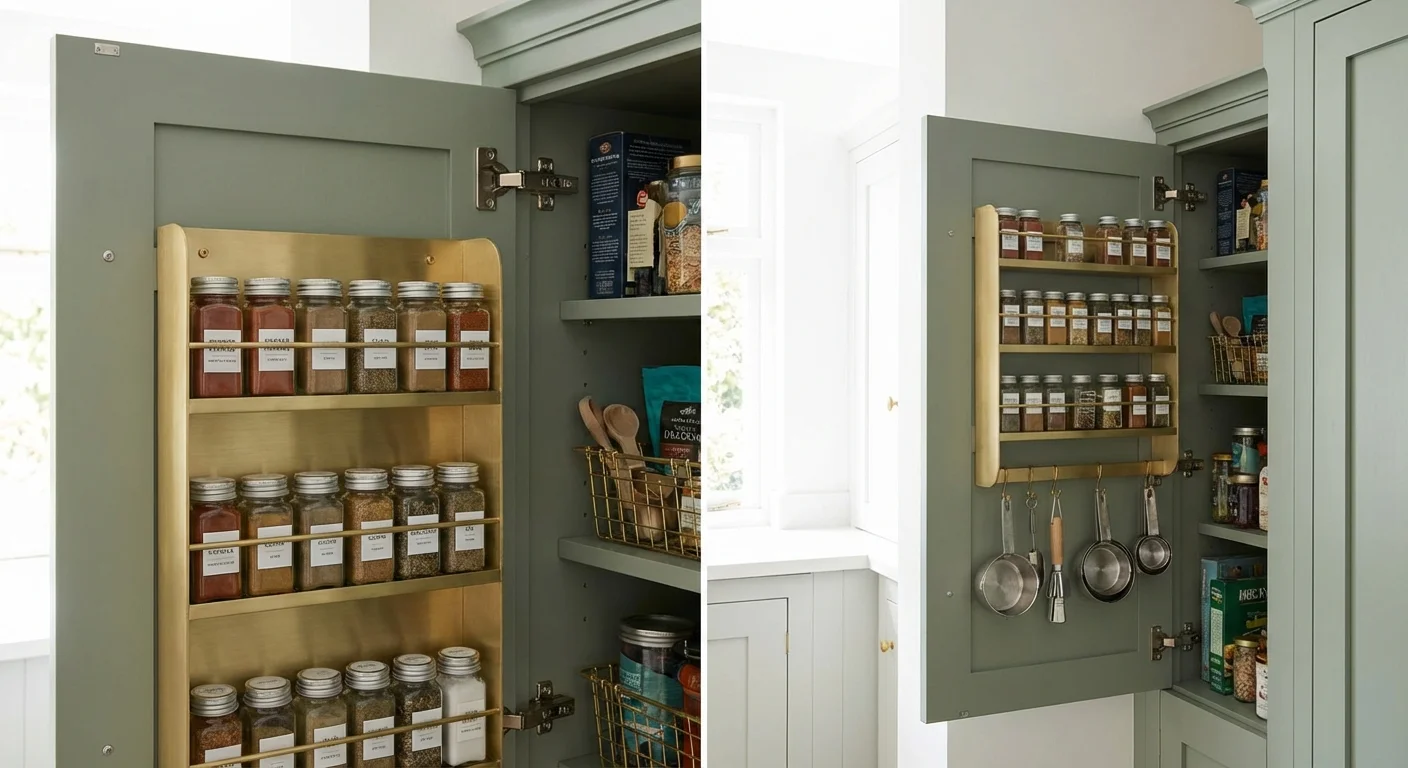
Utilizing Unconventional Kitchen Zones
When you have exhausted your standard cabinets and drawers, you must look to the architectural gaps in your kitchen layout for hidden storage potential.
These creative hacks are especially effective for tiny kitchen organization when standard cabinets aren’t enough.
These creative zones are especially vital if you are hunting for small kitchen solutions to make a tiny layout feel much larger.
22. Add Baskets Above the Cabinets
If your upper cabinets do not reach the ceiling, you possess a massive amount of underutilized storage volume. Purchase matching woven baskets to line this high space. Use them to store items you pull out only once a year, such as holiday baking tins, turkey roasters, or seasonal paper goods.
23. Install Side-of-Fridge Magnetic Racks
The exposed side of your refrigerator is a blank canvas. Attach strong magnetic organizers to hold paper towel rolls, frequently used spices, or oven mitts. This is particularly effective in small apartments where every square inch of vertical space matters.
24. Rig Under-Sink Tension Rods for Sprays
The cabinet beneath the sink is notoriously difficult to organize due to the plumbing pipes. Install a simple, heavy-duty tension rod across the top width of the cabinet. Hang the triggers of your glass cleaners and multi-surface sprays directly over the rod, freeing up the entire floor of the cabinet for dishwasher pods and sponges.
25. Retrofit Toe-Kick Drawers
The four inches of space behind your baseboards (the toe-kick) is entirely hollow. Hiring a carpenter to install shallow, push-to-open toe-kick drawers provides the ultimate secret storage for flat items like baking sheets, serving platters, or even step stools for young helpers.
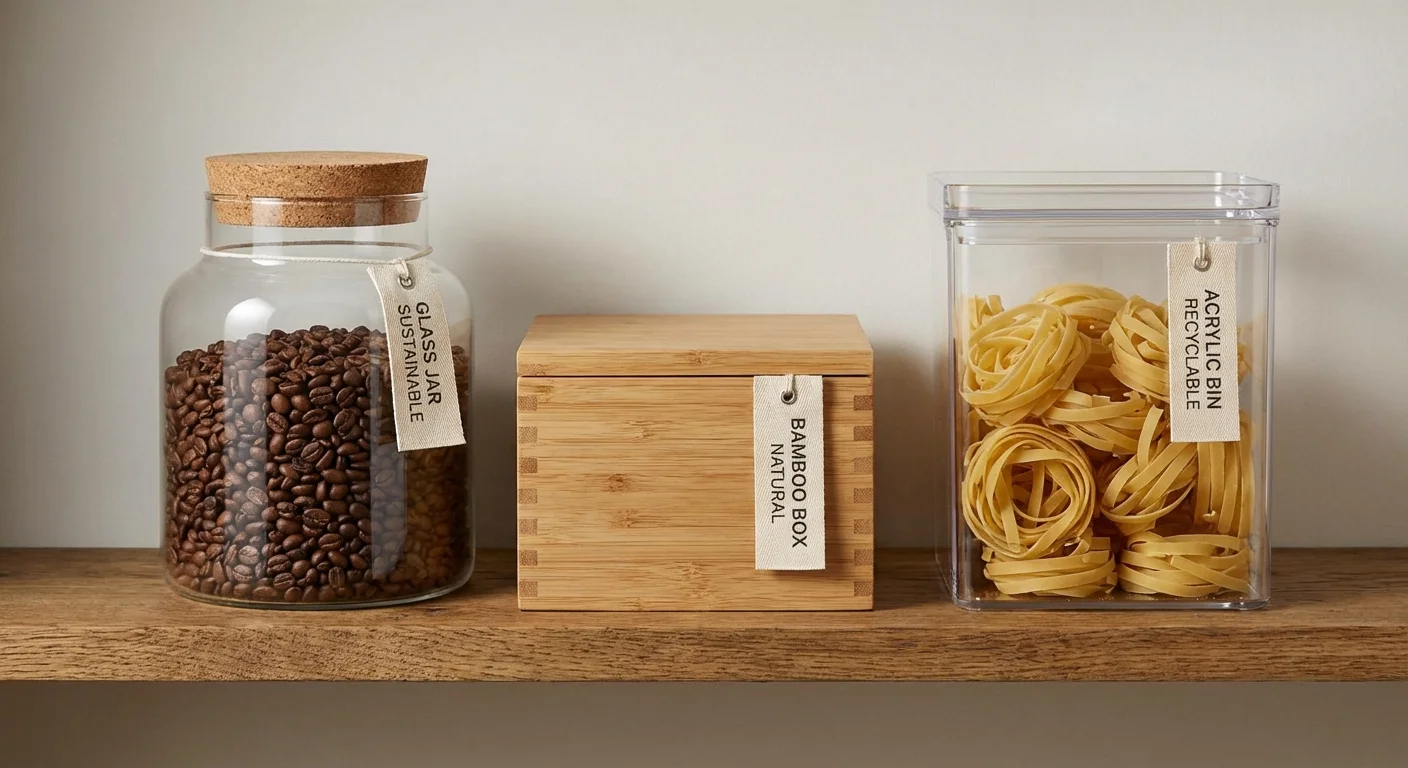
Comparing Popular Pantry Storage Materials
When upgrading your food storage, the material you choose heavily impacts longevity, aesthetic, and functionality. Use this breakdown to make an informed decision based on your specific needs.
| Material Type | Best Used For | Major Pros | Major Cons |
|---|---|---|---|
| Borosilicate Glass | Leftovers, bulk dry goods, acidic foods | Microwave safe, won’t stain, highly durable, eco-friendly | Heavy, expensive, can shatter if dropped on hard tile |
| Acrylic / Clear Plastic | Snack bins, high-shelf pantry storage, kids’ items | Lightweight, shatterproof, incredibly clear visibility | Scratches easily, can warp in the dishwasher, absorbs odors |
| Ceramic / Stoneware | Coffee beans, tea bags, items needing dark storage | Blocks UV light, beautiful aesthetic, heavy and stable | Opaque (cannot see contents), chips easily, bulky |
| Stainless Steel | Flour, sugar, intense spices | Extremely durable, lightweight, rust-resistant | Opaque, can dent if dropped, limited visual appeal for open shelves |
Common Mistakes to Avoid
As you dive into overhauling your space, watch out for these frequent organizing pitfalls that can derail your progress.
Buying Containers Before Purging and Measuring
The fastest way to waste money is heading to the store and buying beautiful bins before you know exactly what you need to store. Always pull everything out, throw away expired items, group what is left, and then take exact measurements of your drawers and shelves. According to experts at Good Housekeeping, measuring internal dimensions—accounting for hinges and plumbing—is the non-negotiable first step.
Decanting Absolutely Everything
While decanting looks stunning on social media, you do not need to empty a box of cereal into a glass jar if your family eats the whole box in two days. Decant items that sit for weeks (flour, rice, oats) to preserve freshness, but leave high-turnover snacks in their original packaging, organized inside bins.
Ignoring the Work Triangle
Organizing items far away from where you actually use them defeats the purpose. Keep your pots, pans, and spatulas near the stove. Keep your cutting boards and knives near the sink and prep counter. Keep your food storage containers near the refrigerator so you can quickly pack up leftovers.
Frequently Asked Questions
How do I organize a small kitchen with no pantry?
When you lack a dedicated pantry, you must treat your cabinetry as one. Dedicate one full vertical cabinet strictly to food. Utilize over-the-door organizers, shelf risers, and pull-out drawers to maximize depth. You can also repurpose a freestanding bookshelf or armoire in an adjacent dining room to hold overflow bulk goods.
What is the rule of thumb for kitchen counter organization?
The rule of thumb is the “Daily Use Rule.” If you do not use an appliance or tool every single day, it does not belong on your counter. Weekly items (like a stand mixer or waffle iron) belong in accessible lower cabinets. Monthly items (like roasting pans) belong in deep storage or above the fridge.
How often should I clean out and reorganize my kitchen?
Aim for a deep audit twice a year—once before the heavy holiday cooking season (October) and once during spring cleaning (April). Check expiration dates, donate unused specialty gadgets, and wipe down the interiors of all your cabinets and drawers.
Taking control of your kitchen does not require thousands of dollars in custom cabinetry; it requires deliberate, thoughtful systems. By addressing your specific friction points—whether that means taming the Tupperware drawer or clearing off the countertops—you create a space that invites you in rather than stresses you out. Start with just one drawer or one shelf this weekend, and build your momentum from there.
This is educational content based on general best practices. Individual results vary based on your home, budget, and circumstances. Always prioritize safety and consult professionals for major projects.
Last updated: February 2026







Leave a Reply