

Research suggests the average person spends over two days a year searching for misplaced items, and disorganized paperwork sits at the top of the lost-and-found list. You know the feeling—frantically digging through a stack of mail, school flyers, and receipts on the kitchen counter to find an expiring car registration or a crucial tax document. Paper clutter does more than take up physical space; it occupies your mental space, creating a persistent hum of anxiety about forgotten deadlines and lost records.
For most households, the best way to catch incoming documents before they spread is to create a central command center in a high-traffic area of the home.
Transforming your home from a paperwork nightmare into a streamlined sanctuary requires more than just buying a new set of folders. You need a dedicated home filing system designed around your actual daily habits. Whether you manage a busy household, run a small business from your dining table, or simply want to find your passport without experiencing a minor panic attack, establishing a reliable paper organization system will save you time, money, and stress.

The Psychology of Paper Clutter: Why Piles Accumulate
Before you begin buying supplies or ripping open envelopes, it helps to understand why paper accumulates in the first place. Every piece of mail or printed document that enters your home represents an unmade decision. A medical bill represents a decision to check your budget and schedule a payment; a wedding invitation represents a decision to check your calendar and coordinate travel. Because making decisions takes energy, you naturally place the paper down on the nearest flat surface to deal with later.
Managing the daily influx of mail is much easier when you have mudroom storage solutions designed to catch papers before they reach the kitchen counter.
To prevent these piles from growing, many experts recommend adopting the one-touch rule to handle each piece of mail immediately as it arrives.
“Clutter is caused by a failure to return things to where they belong. Therefore, storage should reduce the effort needed to put things away, not the effort needed to get them out.” — Marie Kondo, Organizing Consultant
When you implement a clear, logical paperwork organization guide, you remove the friction of the decision-making process. If every type of document has a designated home, you never have to wonder what to do with a piece of paper. You either take action on it, file it for reference, or shred it.

Gathering and Sorting: The Great Paper Purge
Building a functional home filing system starts with taking inventory of what you currently own. Dedicate a large surface—like your dining room table or a cleared-off bed—and gather every stray piece of paper in your house. Empty your existing folders, grab the pile from the entryway console, and pull the receipts out of your wallet.
If you are struggling with a cramped foyer, implementing small entryway organization can prevent mail from piling up on the floor.
If the sheer volume of paper feels paralyzing, try using a 15-minute-a-day system to chip away at the mountain without getting burned out.
Once you have everything in one place, sort your papers into four distinct categories:
- Action: Documents requiring your immediate attention within the next week. This includes unpaid bills, forms requiring a signature, and invitations requiring an RSVP.
- Reference: Papers you need to keep for historical, legal, or financial reasons but do not require immediate action. Think tax returns, medical records, and property deeds.
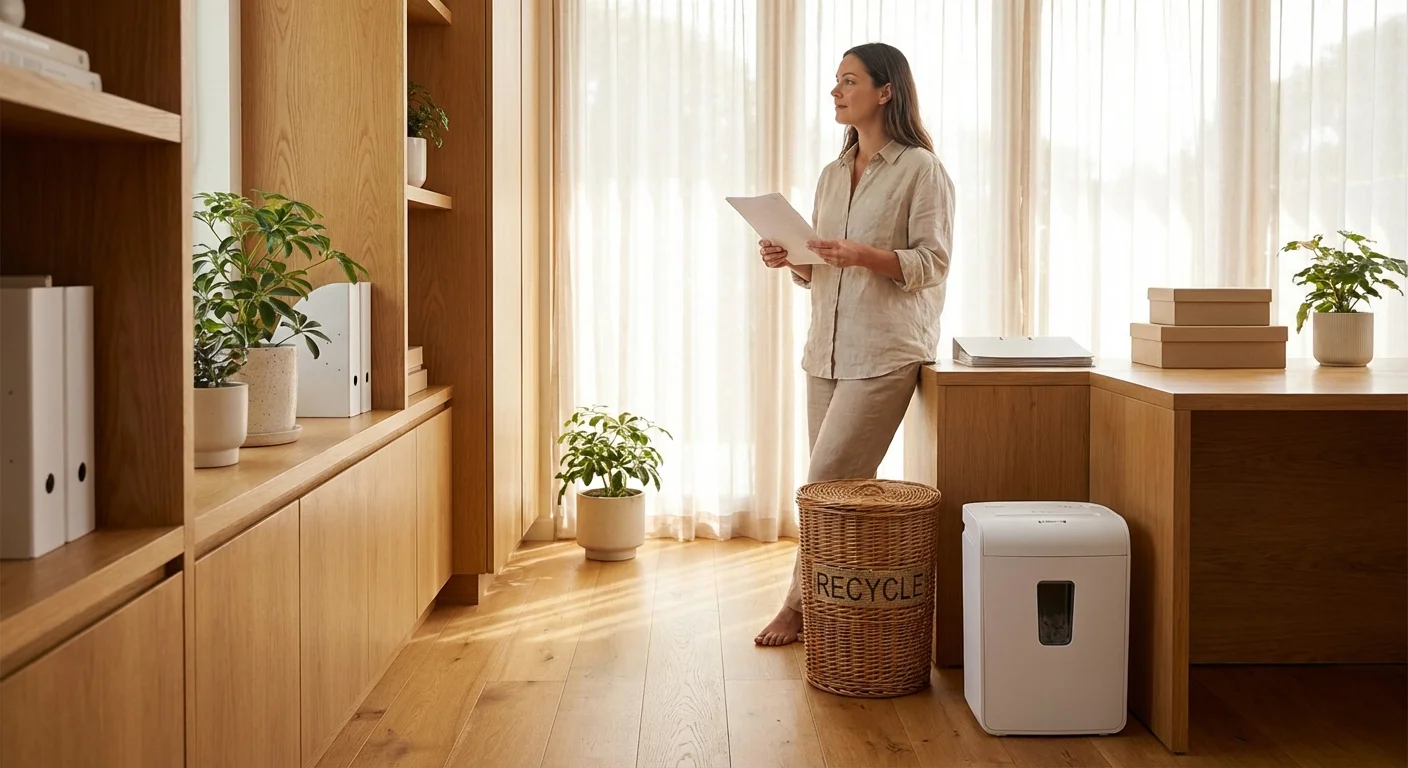
- Shred: Any document containing personally identifiable information that you no longer need. This includes pre-approved credit card offers, old bank statements, and expired insurance policies.
- Recycle: Generic paperwork containing no personal information, such as junk mail, expired coupons, and outdated catalogs.
Be ruthless during this sorting phase. According to organizing experts at Real Simple, most people keep far more paperwork than legally or practically necessary. If you can easily find a document online—such as a monthly utility bill or a credit card statement—you rarely need to keep the physical copy.
Structuring Your Home Filing System: Categories That Make Sense
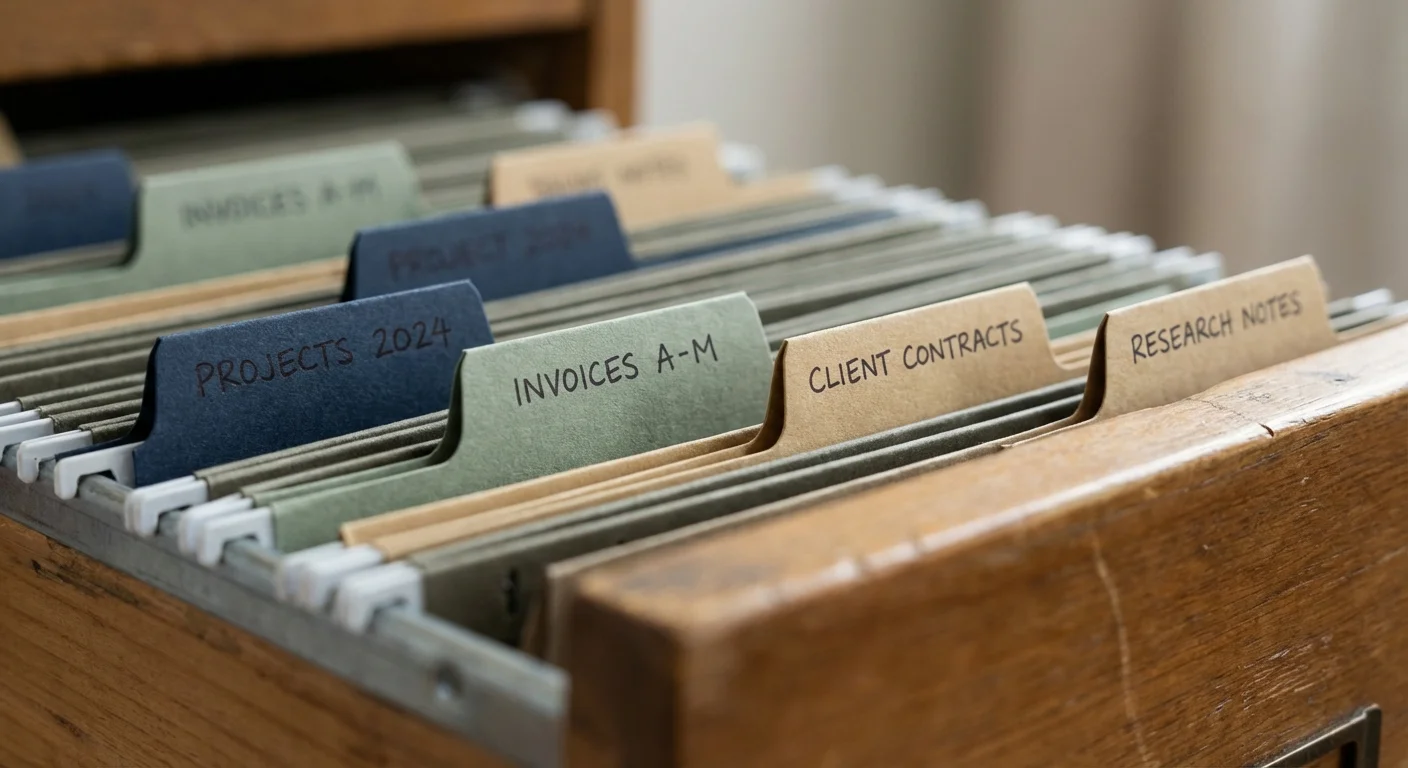
The foundation of any successful paper organization system relies on intuitive categorization. If your categories are too broad, you will spend too much time digging through thick folders. If they are too narrow, you will end up with dozens of empty folders and a confusing system that takes too long to maintain.
Divide your reference paperwork into these essential macro-categories:
- Financial: Bank statements, investment summaries, loan documents, and credit card agreements.
- Home and Property: Mortgage documents, lease agreements, appliance manuals, warranties, and home repair receipts.
- Medical and Health: Immunization records, explanation of benefits (EOBs), prescription histories, and physician contact information.
- Auto: Vehicle titles, registration paperwork, maintenance logs, and auto insurance policies.
- Taxes: Seven years of past tax returns and all supporting documentation (W-2s, 1099s, donation receipts).
- Vital Records: Birth certificates, passports, marriage licenses, social security cards, and estate planning documents.
Document Retention Guidelines: What to Keep and How Long
Understanding how long to keep specific documents prevents your filing cabinet from overflowing with useless information. Follow these general retention guidelines to maintain a lean, efficient system:
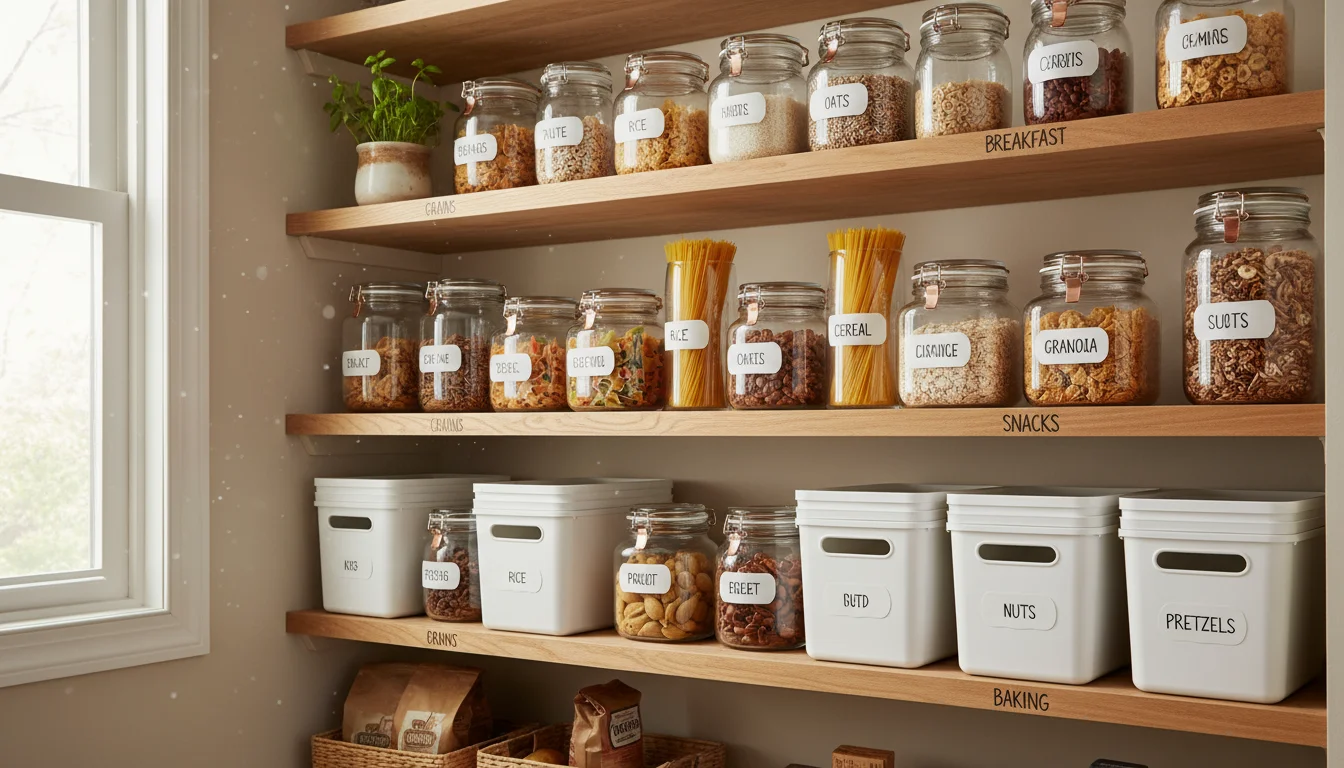
Once your papers are under control, you can apply similar sorting logic to your kitchen with a complete pantry makeover.
- Keep for one month: ATM receipts and minor purchase receipts (discard once reconciled with your bank statement).
- Keep for one year: Pay stubs (until you receive your annual W-2), utility bills, and undisputed medical bills.
- Keep for seven years: Tax returns and all supporting documents. The IRS has three years to audit you in standard cases, but up to six years if they suspect significant underreported income. Keep them for seven years to be safe.
- Keep indefinitely: Vital records, property deeds, mortgage discharge paperwork, and legal decrees.
Document Filing Ideas: Choosing Your Hardware
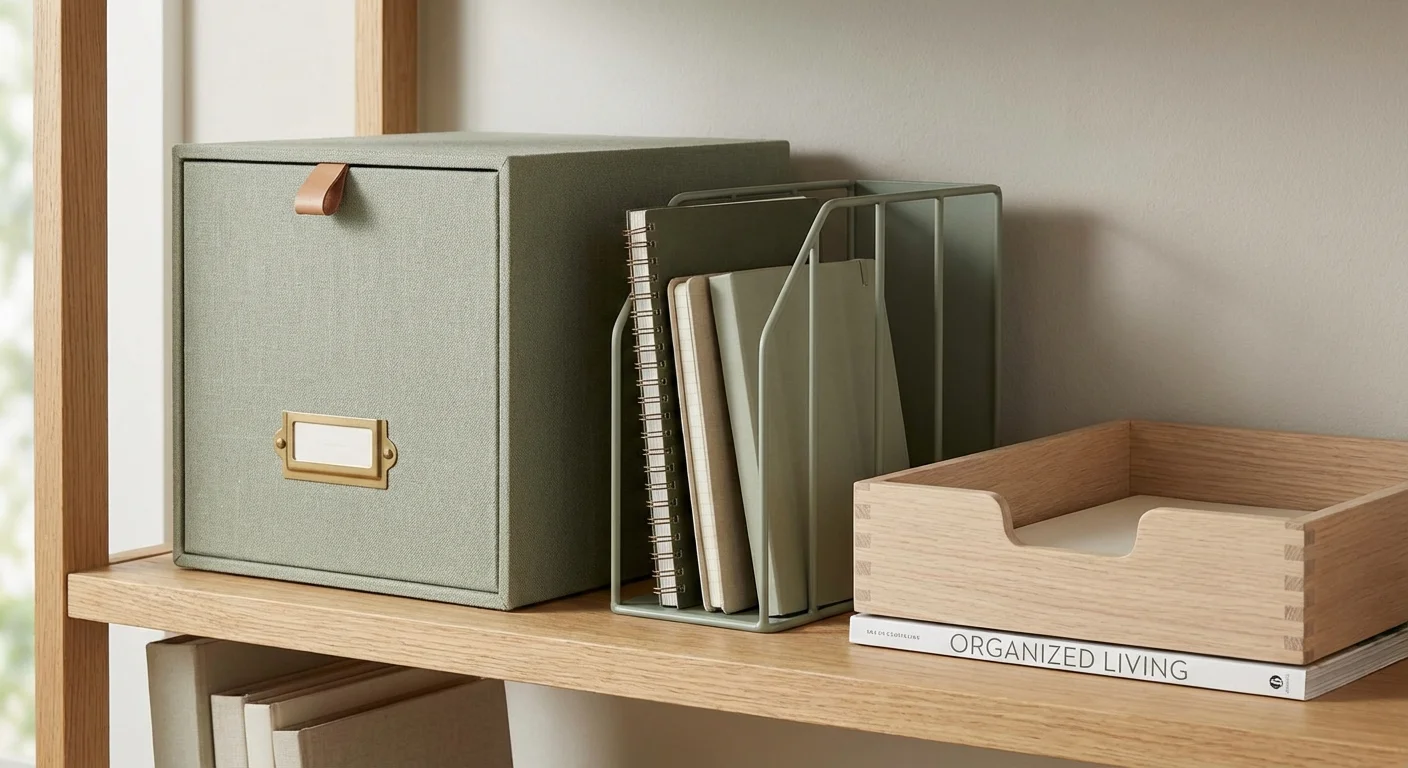
Not all paper needs to live in a traditional filing cabinet. Depending on your space constraints and the volume of documents you manage, you might benefit from a hybrid approach. Choosing the right storage hardware dictates how effectively you will maintain your system over time.
If you have limited floor space for a cabinet, consider vertical storage ideas like wall-mounted file pockets to keep your documents organized.
| Storage Method | Best Used For | Pros | Cons |
|---|---|---|---|
| Traditional Filing Cabinet | Long-term reference documents, tax records, and bulk household paperwork. | High capacity; durable; keeps documents flat and protected. | Requires significant floor space; heavy; can encourage hoarding if not purged regularly. |
| Binder Systems | Medical records, home renovation projects, and appliance manuals. | Highly portable; easy to flip through like a book; visually appealing on a shelf. | Requires hole-punching or buying sheet protectors; lower capacity than cabinets. |
| Accordion Folders | Current year tax receipts, monthly bills, or organizing paperwork for a specific trip. | Compact; budget-friendly; easy to store in a desk drawer. | Can become bulky and difficult to close; tabs often degrade over time. |
| Fireproof Safe | Vital records, passports, property deeds, and estate documents. | Protects against fire and water damage; highly secure. | Expensive; heavy; limited interior space. |
For high-quality organizational supplies that withstand years of use, many experts recommend browsing specialized retailers like The Container Store to find file boxes, sturdy hanging folders, and label makers that fit your specific aesthetic and functional needs.
Setting Up Your Home Office Filing Cabinet
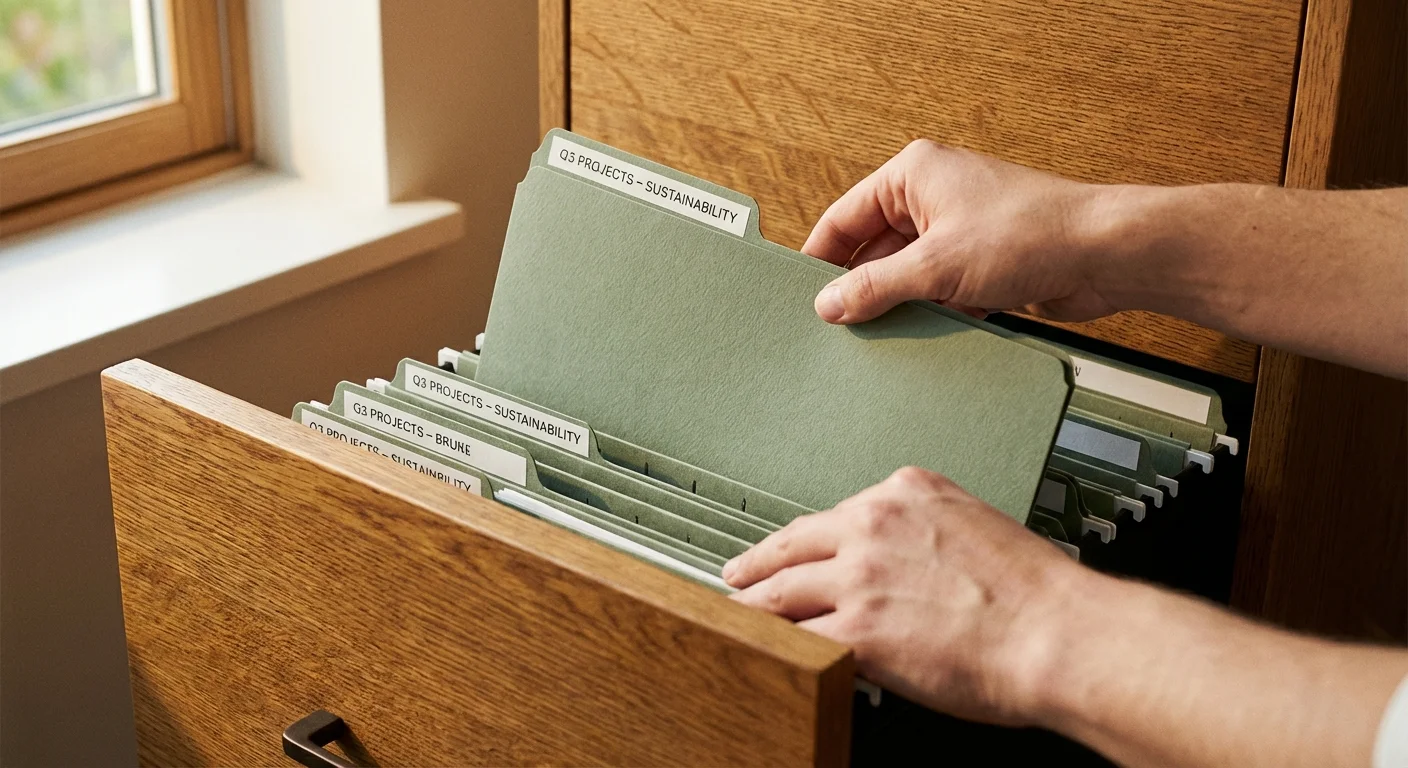
If you choose to use a home office filing cabinet, setting the drawers up correctly is crucial. A common mistake is tossing individual sheets of paper directly into hanging folders. Instead, you need a two-tier system utilizing both hanging folders and interior manila folders.
You can also supplement your cabinet with wall-mounted storage ideas to keep active project files within arm’s reach.
Use sturdy hanging folders for your broad macro-categories—such as “Auto.” Inside that hanging folder, place standard manila folders for your specific sub-categories—such as “2020 Honda Accord” and “2018 Ford Escape.” This allows you to easily pull out a specific file and take it to your desk without dismantling your entire drawer.
When labeling your folders, align all your plastic tabs in a single straight line down either the left or right side of the drawer. While many people stagger their tabs in a zig-zag pattern, a straight line allows your eye to scan quickly from front to back without darting side to side.
The Digital Transition: Scanning and Storing
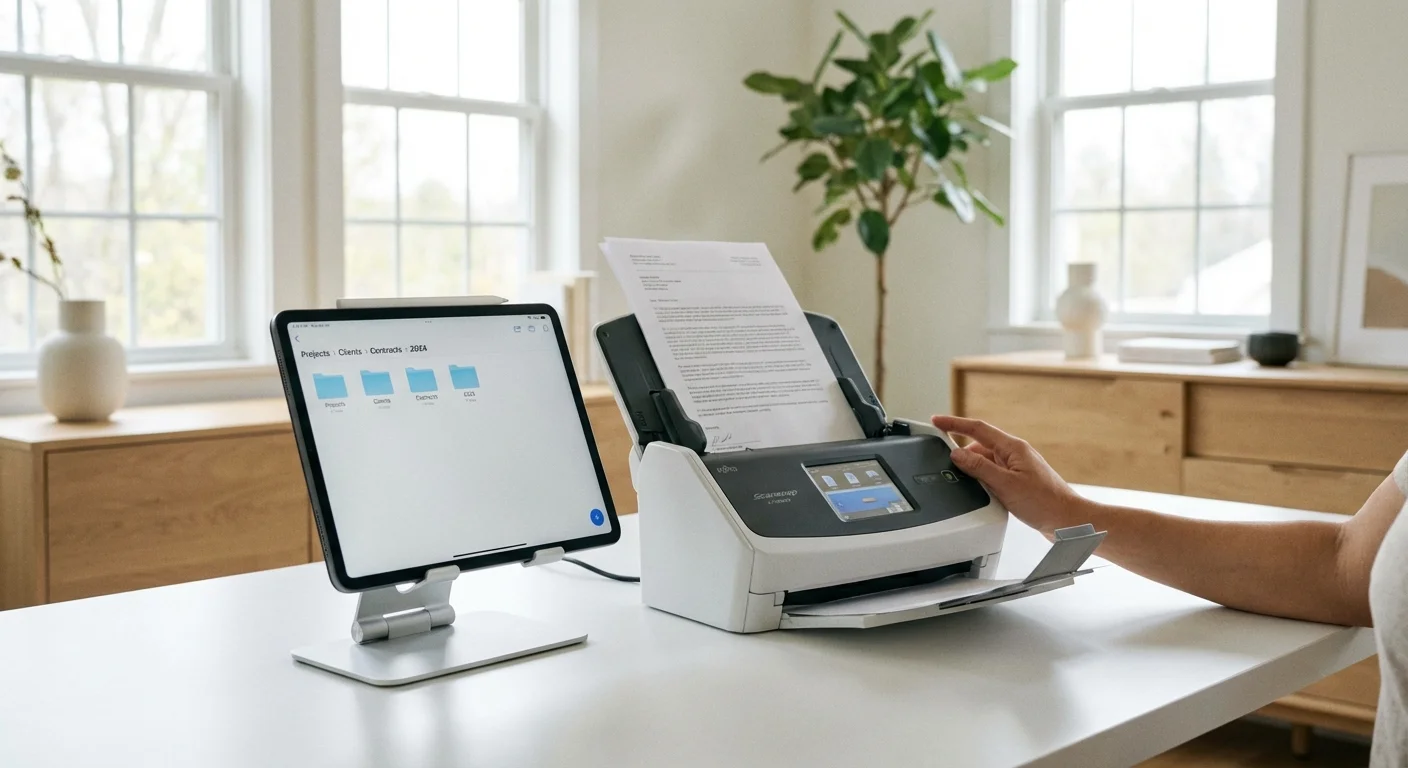
You can significantly reduce the physical footprint of your home filing system by digitizing non-vital documents. Modern smartphones feature excellent built-in scanning tools—such as the Notes app on iOS or Google Drive on Android—that crop and convert photos of paper into clean, searchable PDFs.
When creating a digital filing system, mirror the folder hierarchy of your physical cabinet. If you have a physical drawer for “Financial,” create a digital folder named “Financial.” Consistent naming conventions across physical and digital spaces ensure you always know where to look. Once you scan a document and secure it in a cloud storage service or an external hard drive, safely shred the physical copy.

Hiring a Professional Organizer vs. DIY
Tackling paper clutter independently works for most household maintenance, but certain situations warrant calling in outside help. Evaluate your specific circumstances before deciding whether to push forward alone or hire a professional.
When to DIY: If you are simply setting up a system for your daily mail, organizing last year’s tax receipts, or transitioning a few physical files to digital formats, a dedicated weekend of DIY effort is entirely sufficient.
When to Hire a Professional: You should consider hiring a certified professional organizer if you are managing an estate after a family member’s passing, combining households after a marriage, or dealing with decades of accumulated, unpurged paperwork that triggers severe overwhelm or anxiety. Professionals bring objectivity, strict confidentiality, and proven systems to process massive volumes of paper efficiently.
Common Mistakes to Avoid When Organizing Paperwork
Even with the best intentions, certain filing habits can derail your system. Avoid these common pitfalls to keep your paperwork streamlined:
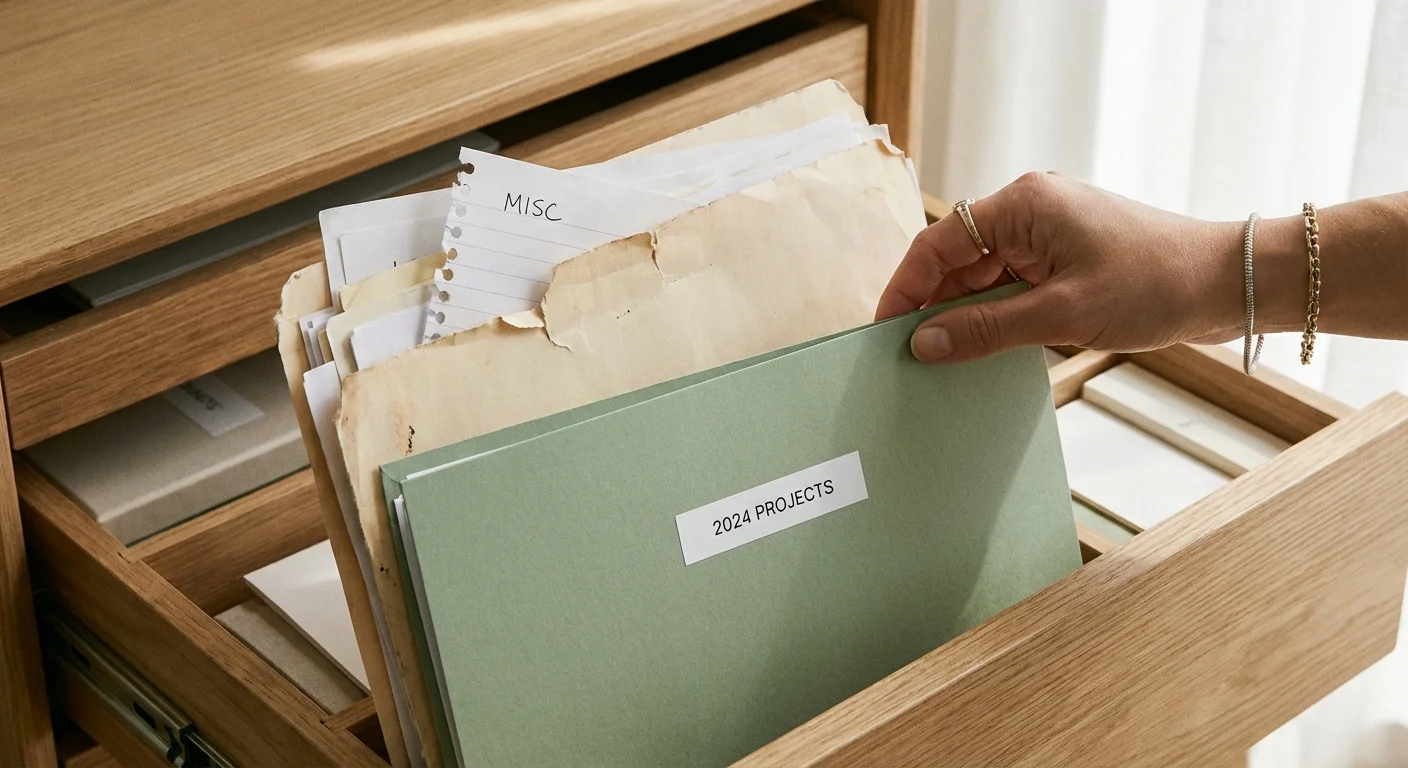
- Creating a “Miscellaneous” Folder: This is a trap. A miscellaneous folder quickly becomes a graveyard for deferred decisions. Force yourself to categorize every paper or discard it.
- Failing to Establish an “Inbox”: Your system needs a physical entry point. Designate a specific tray on your desk or a basket in your entryway where all incoming mail and school papers live until you process them. Never leave mail scattered across kitchen counters.
- Over-Complicating Categories: Do not create separate folders for your electric, water, and gas bills if you only keep two statements for each. Group them together in one simple “Utilities” folder to save space and time.
- Ignoring Annual Maintenance: A filing system is a living entity. If you never purge old documents, your drawers will eventually jam. Schedule a yearly review—tax season is an ideal trigger—to shred expired policies and outdated records.

Maintaining Your Document Filing System
The secret to a pristine home filing system lies in consistent, low-effort maintenance. Adopt the “one-touch” rule for incoming mail: when you pick up a piece of paper, do not set it back down until you have made a decision about it. Immediately recycle the junk mail, place the bills in your Action folder, and file the reference documents. By processing your inbox weekly, you prevent towering piles from ever forming.
For broader guidance on maintaining a tidy and functional workspace that supports your new filing habits, The Spruce offers excellent insights on arranging your home office layout for maximum productivity and minimal visual clutter.
Frequently Asked Questions About Paper Organization
How long should I keep tax returns?
You should keep your tax returns and all supporting documentation for at least seven years. This covers the maximum window the IRS typically uses for audits involving suspected underreported income.
What is the best way to store birth certificates and passports?
Vital records like birth certificates, passports, social security cards, and property deeds should be stored in a fireproof and waterproof safe. For added security, you can also store these documents in a bank safe deposit box.
Should I alphabetize or categorize my files?
Categorizing is generally more effective for home filing systems than strict alphabetizing. Grouping by macro-categories ensures related documents stay together. You can then alphabetize the sub-folders within those main categories to easily locate specific files.
How do I securely dispose of old paperwork?
Any document containing personally identifiable information—such as account numbers, social security numbers, medical IDs, or signatures—should be run through a cross-cut shredder. For high volumes of paper, look for local community shredding events or hire a secure mobile shredding service.
Final Thoughts on Mastering Your Paper Flow
Conquering your paper clutter pays ongoing dividends in your daily life. When you trust your document filing ideas and maintain your system, you eliminate the frantic searches for missing bills and the sinking feeling of forgetting an important deadline. Start small by establishing your daily inbox, gradually work your way through the backlog, and enjoy the profound peace of mind that comes from knowing exactly where everything belongs.
The tips in this article are meant as general guidance. Your specific situation—including your home’s age, layout, and local building codes—may require different approaches. When in doubt, consult a professional.
Last updated: February 2026




Leave a Reply