
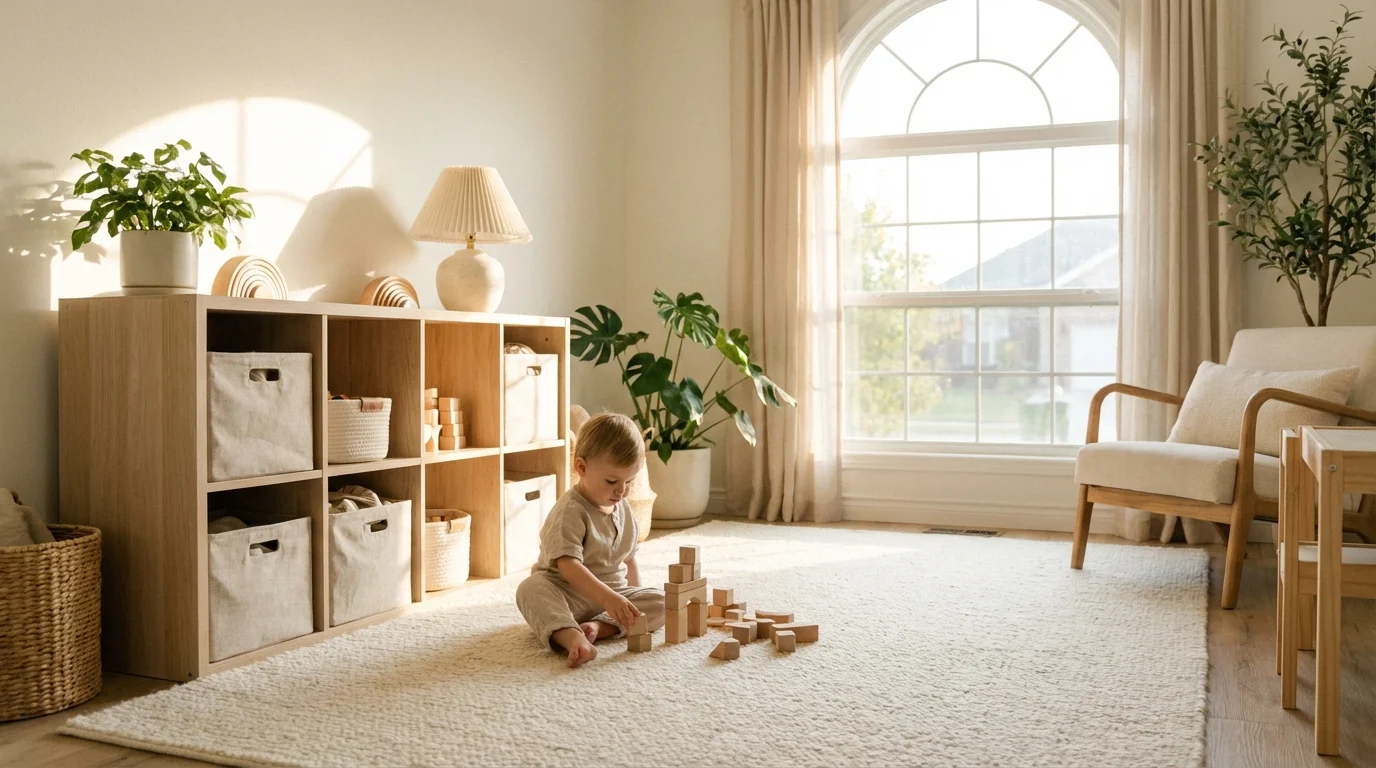
The sharp pain of stepping on a stray building block in the dark is a universal rite of passage for parents. You buy baskets, you dedicate entire closets to playtime, and you spend your weekends sorting action figures from puzzle pieces; yet, by Tuesday afternoon, the living room floor looks like a vibrant, chaotic plastic explosion. The cycle is exhausting. When traditional toy boxes and haphazard baskets fail, you need a strategy that actually aligns with how children play and—more importantly—how they clean up.
Coupling these systems with a 15-minute daily reset can keep the chaos at bay without exhausting busy parents.
Effective kids toy storage systems rely on a blend of accessibility, visibility, and physical boundaries. Children thrive on order, even if their playtime activities suggest otherwise. When every item has a specific, logical home, the friction of cleanup disappears. Building a successful system requires shifting your focus from hiding the mess to managing the inventory.
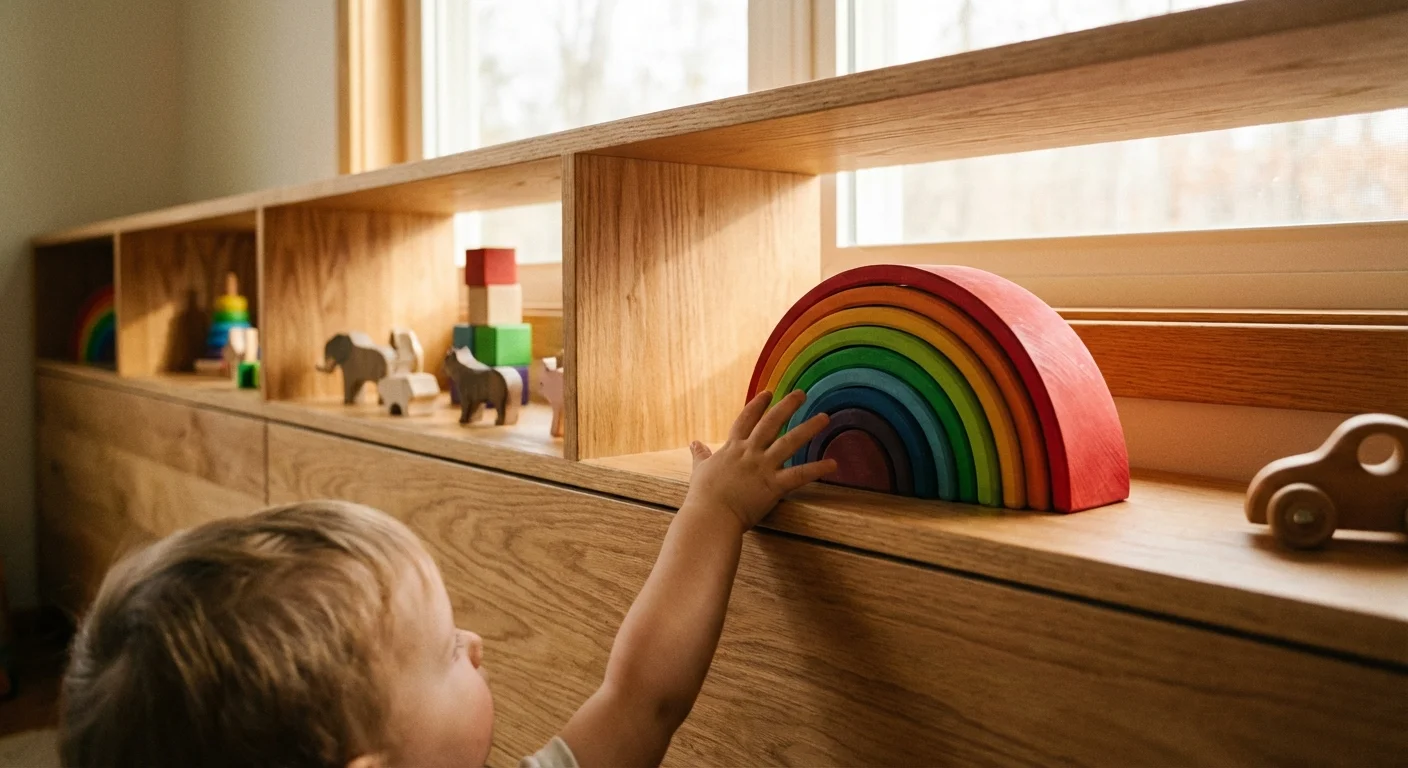
The Core Philosophy of Children’s Playroom Storage
Traditional toy boxes are the enemy of organization. They encourage a “dump and dig” mentality. When a child wants a specific toy at the bottom of a deep chest, they will inevitably empty the entire contents onto the floor to find it. Once playtime is over, throwing everything back into a cavernous dark hole teaches nothing about categorization or care for belongings.
Much like mudroom storage solutions, a toy system should focus on easy-access zones that work for every family member.
In homes without much room, small entryway organization techniques can help catch toys before they spread into the main living areas.
If you’re really short on room, consider these under-bed storage ideas for tucked-away toy bins.
For smaller items, using the best drawer organizers ensures that tiny accessories don’t get lost in larger bins.
Instead, the best toy organizers act like a library. Toys should be grouped by category and displayed in a way that allows a child to see what they have without destroying the room. This concept of micro-organization transforms how spaces function. You stop dealing with one massive, unidentifiable pile and start managing distinct zones: a zone for building, a zone for imaginative play, and a zone for arts and crafts.
“The objective of cleaning is not just to clean, but to feel happiness living within that environment.” — Marie Kondo, Organizing Consultant
Creating this environment means matching the storage container to the item. Tiny beads and doll shoes require small, latched boxes. Bulky plush toys and oversized trucks belong in open floor baskets. When you tailor the storage solutions to the physical dimensions and use-case of the toys, the system maintains itself.
Evaluating the Best Toy Organizers on the Market
Walking down the storage aisle of any big-box store presents a dizzying array of options. To build a system that lasts from the toddler years well into middle childhood, you need modularity. Furniture and bins that adapt as your child’s interests change will save you money and frustration.
Building a foundation with toy organization systems that work long-term allows your storage to evolve alongside your child.
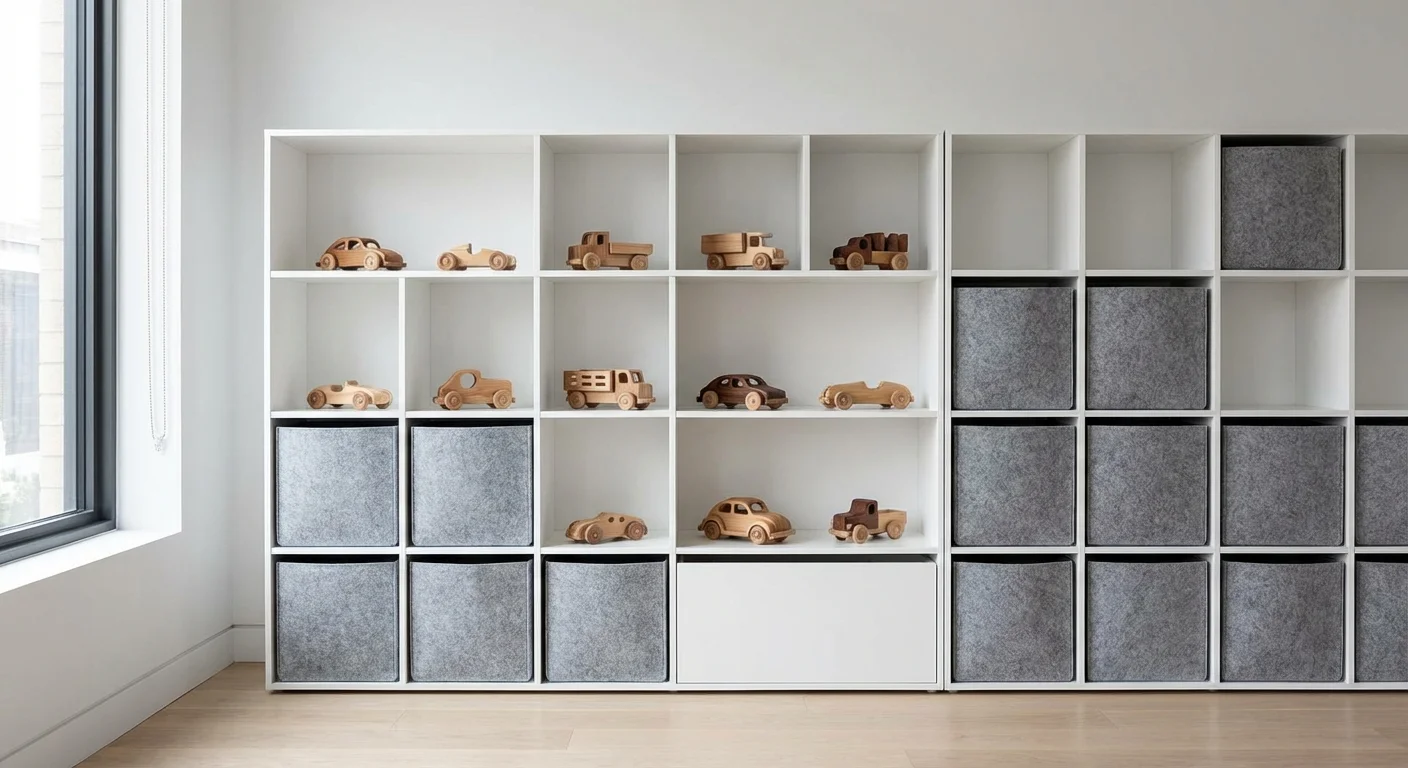
Cubby and Cube Shelving
Cube shelving remains the gold standard for versatility. You can leave cubes open to display beautiful wooden toys or slide in fabric bins to conceal visually noisy items like electronic gadgets or mismatched block sets. The strict boundaries of a square cubby naturally limit how many items fit, forcing you to declutter when a bin overflows.
Track-and-Bin Systems
Systems that utilize sliding plastic bins on wooden tracks are incredibly effective for toy bin organization. They allow a child to pull a lightweight drawer completely out, carry it to their play mat, and slide it back onto the rails when finished. If you need inspiration on configuring these modular setups for awkwardly shaped rooms, IKEA Ideas offers excellent visual blueprints for maximizing vertical track storage.
Clear Lidded Containers
For intricate building sets, puzzles, and craft supplies, clear containers are mandatory. Opaque bins hide the contents, leading to forgotten toys. Transparent bins stack neatly on closet shelves and instantly communicate what resides inside. Use uniform, standardized sizes—such as a matching set of 6-quart bins—so they stack securely without tipping.
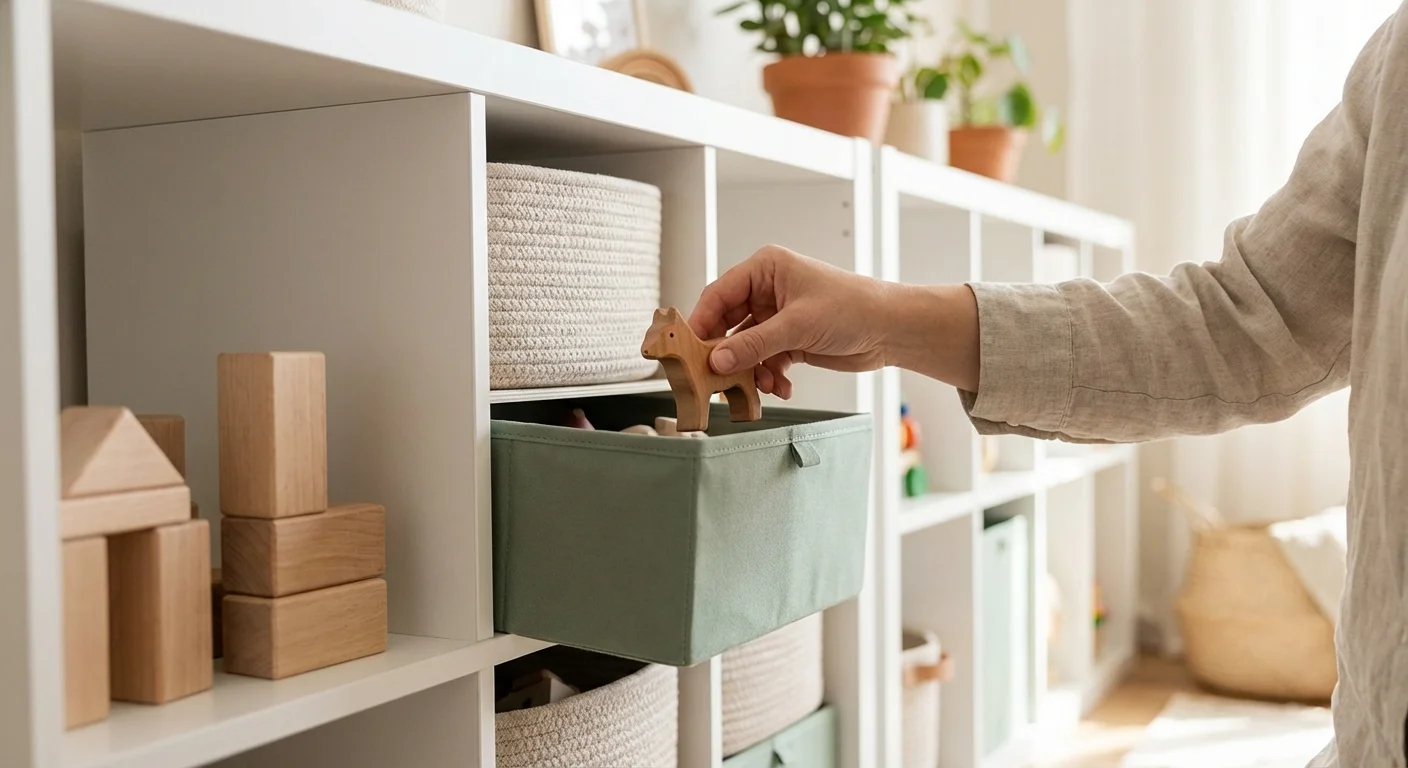
Categorization and Toy Bin Organization
A storage system is only as strong as its sorting logic. If you mix play kitchen food with race cars, the system will eventually break down. Categorization needs to be intuitive enough for a four-year-old to understand.
If you find yourself struggling with tiny accessories, the logic used to organize a junk drawer can be applied to small bin dividers.
Sort toys into broad, logical families:
- Vehicles: Cars, trains, airplanes, and tracks.
- Building Materials: Interlocking bricks, magnetic tiles, and wooden blocks.
- Imaginative Play: Costumes, play kitchen gear, and dolls.
- Puzzles and Games: Board games, jigsaw puzzles, and card decks.
- Arts and Crafts: Crayons, clay, paper, and washable paints.
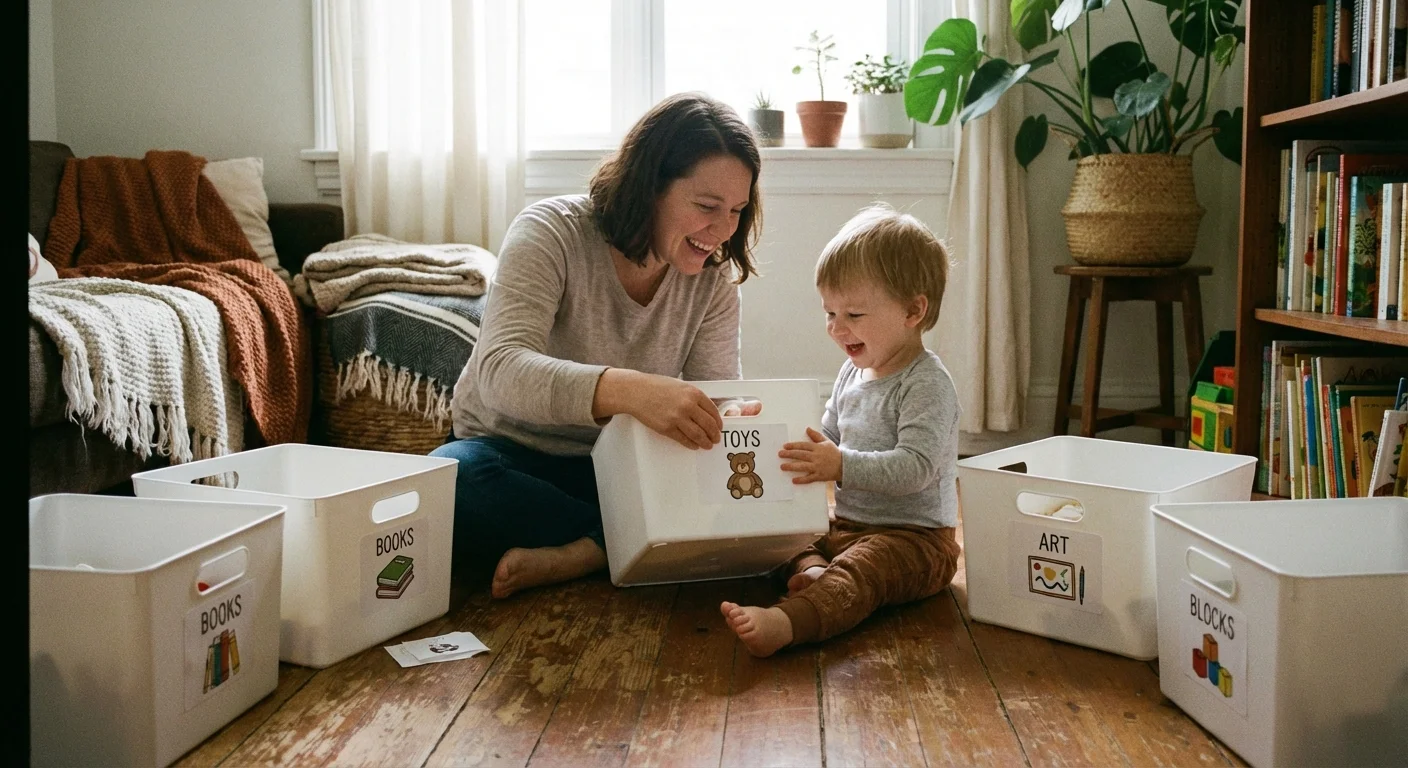
Once sorted, apply labels. For pre-readers, print out clear, color photographs of the toys and tape them to the outside of the bin. For older children, large, bold text works perfectly. If you are outfitting a large closet or playroom, the Container Store provides excellent specialized labeling clips that attach to fabric baskets and woven bins without damaging the material.
The Magic of Toy Rotation
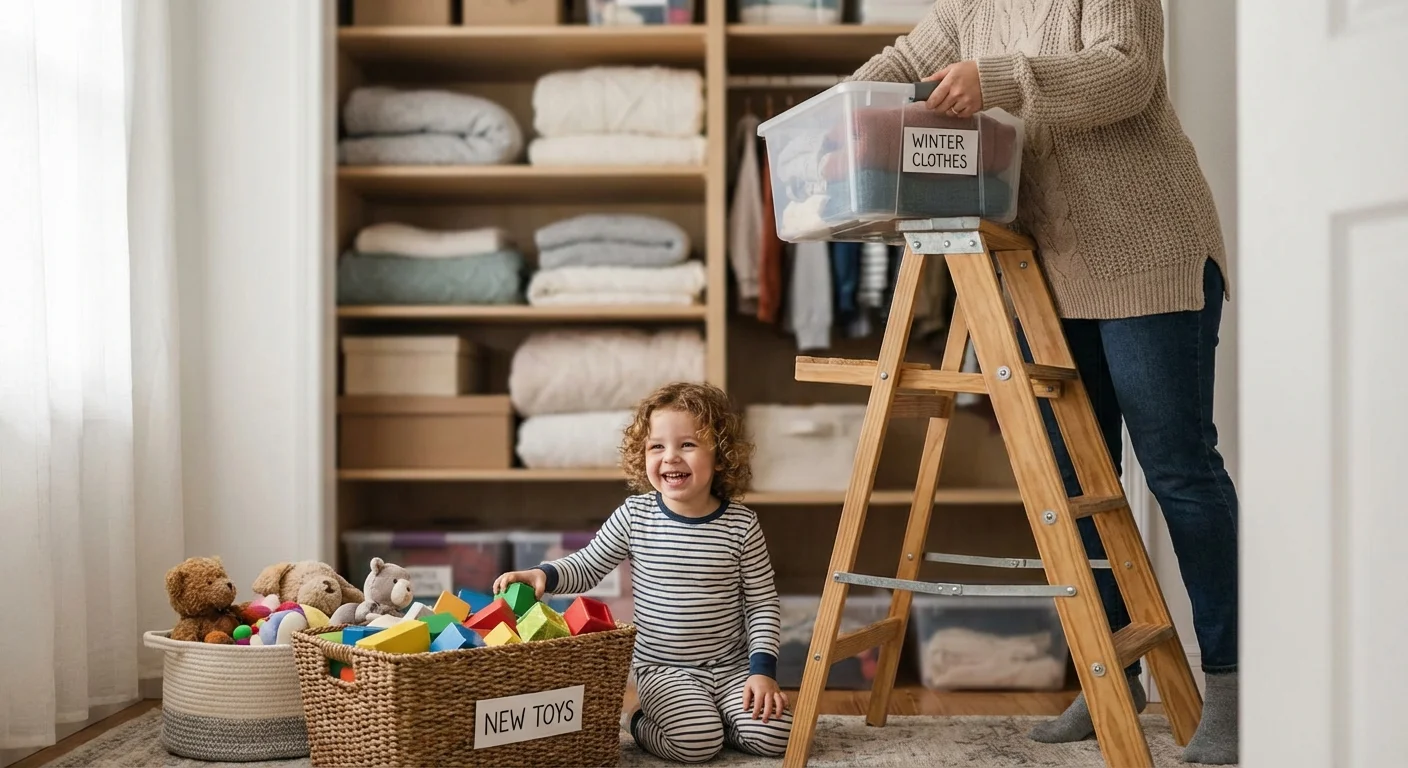
You cannot organize your way out of too much stuff. If a room is packed wall-to-wall with toys, no amount of bin sorting will create peace. This is where toy rotation becomes your most powerful tool.
Keeping a schedule of these swaps on your family command center ensures you don’t forget to refresh the play area.
This strategy also helps maintain kids’ room organization during the school year when schedules get more hectic.
Children experience decision fatigue just like adults. When presented with fifty options, they often bounce from one toy to the next without deeply engaging with any of them. By limiting the available inventory, you encourage sustained, focused play. A rotating system keeps the environment fresh and makes cleanup manageable.
- Audit the Collection: Pull every toy out into the center of the room. Discard anything broken, and donate items your child has outgrown.
- Create the Baseline: Select a well-rounded mix of toys to leave out. Include one type of building toy, one imaginative play set, a few vehicles, and a puzzle.
- Pack the Reserve: Place the remaining toys into large, opaque storage totes. Store these totes in a basement, garage, or top closet shelf out of sight.
- Rotate on a Schedule: Every two to four weeks, swap the available toys with a box from the reserve. Toys that haven’t been seen in a month suddenly feel brand new.
Comparing Toy Storage Systems
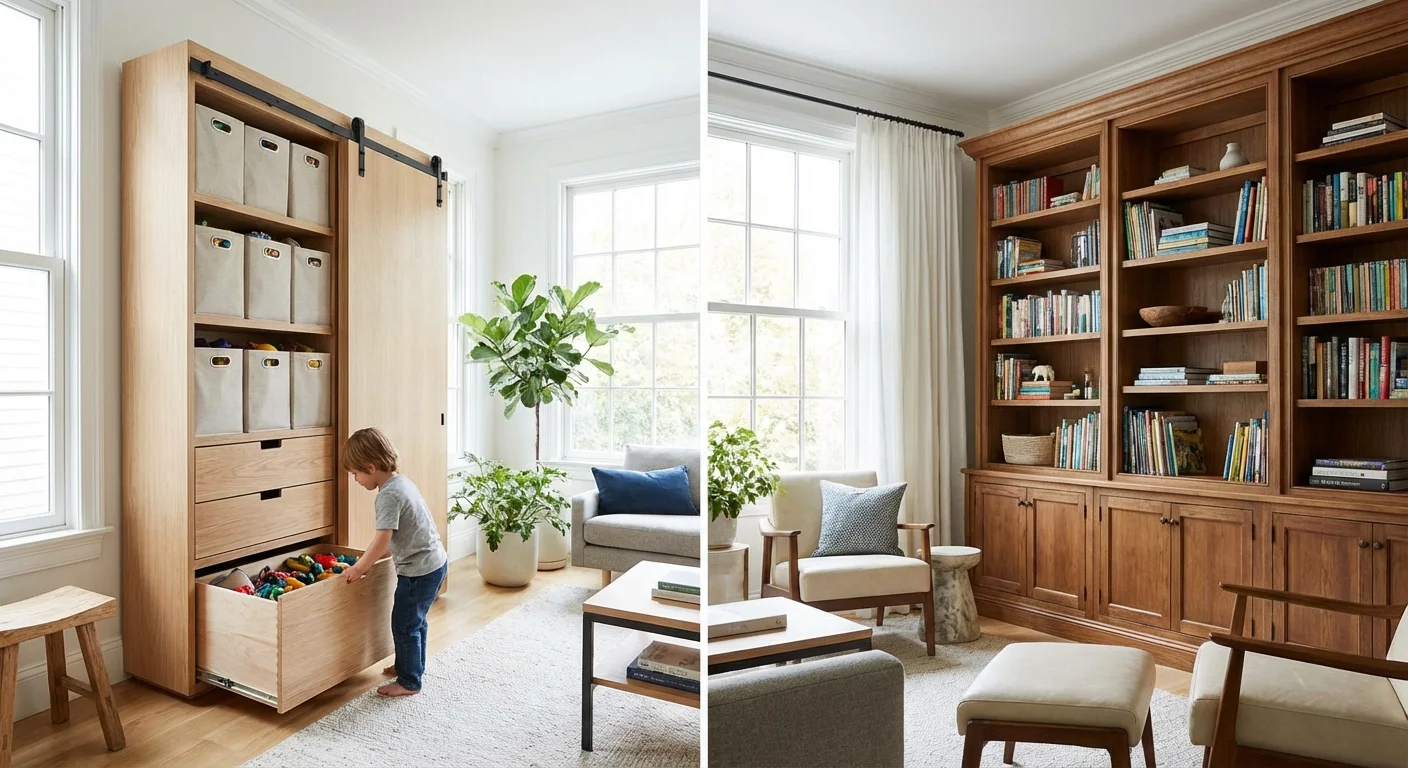
Understanding the strengths and limitations of different systems helps you select the right furniture for your specific home layout. Use the table below to evaluate which method suits your space.
| Storage Type | Pros | Cons | Best For |
|---|---|---|---|
| Cube Shelving (Cubbies) | Highly versatile; mixes open display with hidden baskets; blends with adult decor. | Deep bins can become mini “dump boxes” if not micro-organized. | Living rooms, shared family spaces, and displaying books. |
| Track-and-Bin Systems | Bins pull out completely for floor play; extremely easy for toddlers to access. | Distinctly “kid-like” aesthetic; dust can settle in open top bins. | Dedicated playrooms and sorting large collections of small parts (e.g., building bricks). |
| Clear Stacking Totes | Maximum visibility; excellent use of vertical closet space; moisture and dust resistant. | Lids can be frustrating for young toddlers; requires a separate closet or shelf to store. | Toy rotation reserves, intricate craft supplies, and long-term storage. |
| Dual-Purpose Furniture | Hides toys completely; maximizes small floor plans; offers seating. | Items get buried at the bottom; heavy lids can pinch little fingers. | Small apartments, living rooms, and storing soft, bulky items like plush toys. |
Children’s Playroom Storage Strategies for Small Spaces
Not everyone has the luxury of a dedicated basement or spare bedroom. When your living room must simultaneously serve as an entertainment space, a home office, and a children’s play area, integration is crucial.
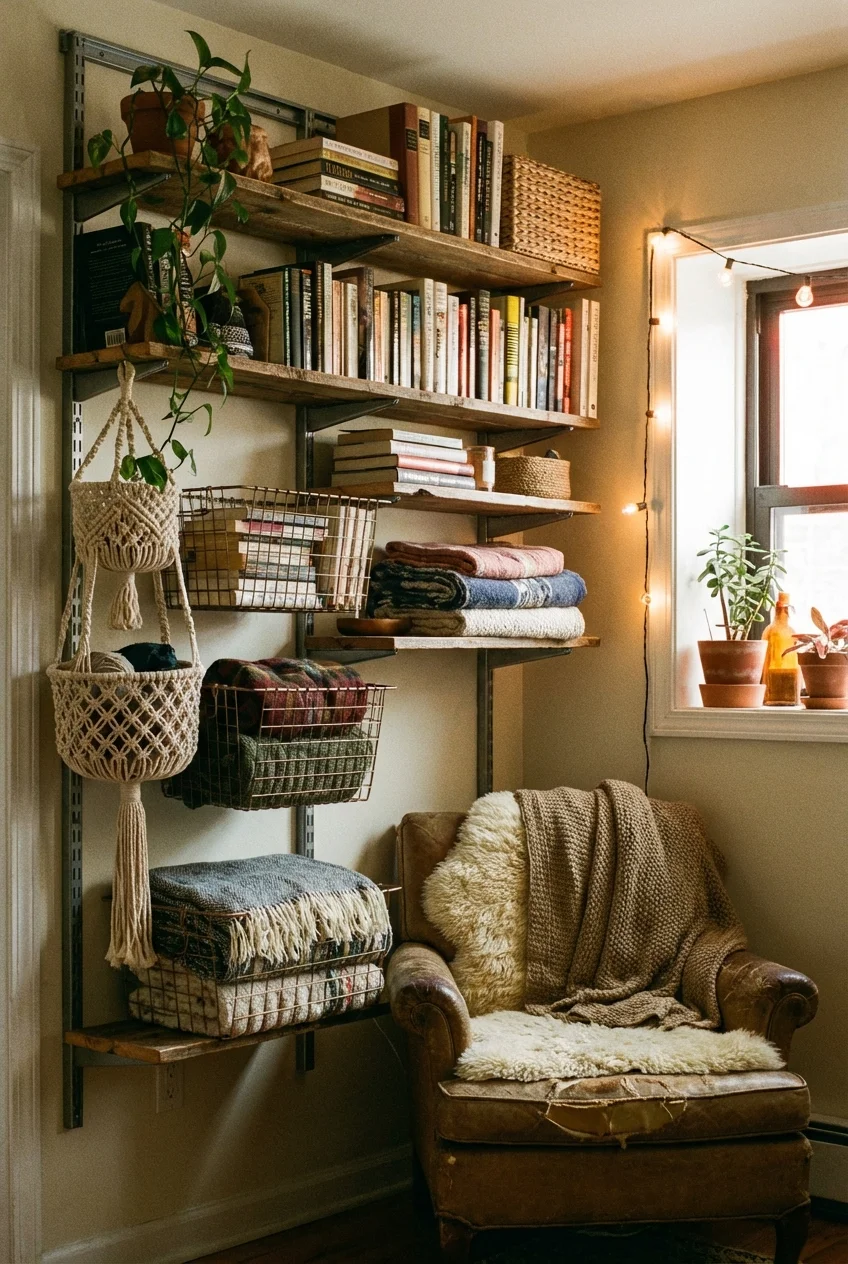
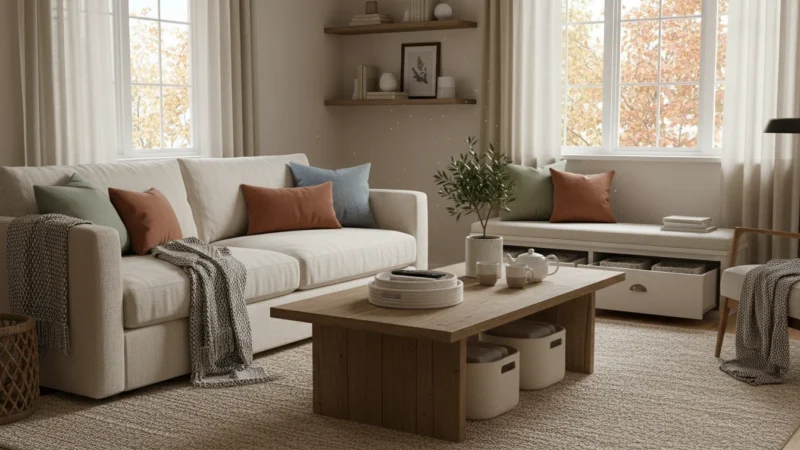
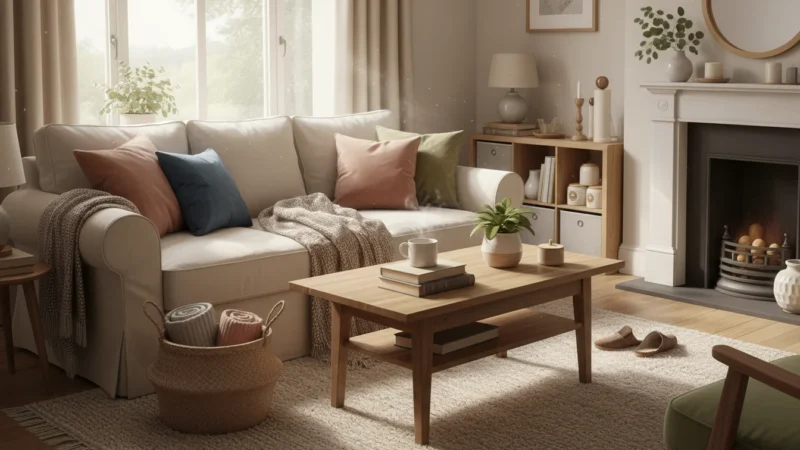
Look for dual-purpose furniture. Storage ottomans can hold an impressive volume of wooden train tracks while providing a place to rest your feet during a movie. Hollow coffee tables or window benches offer concealed spaces that keep the home feeling mature after an 8:00 PM bedtime.
Maximize your vertical space. Use floating shelves to display completed brick models or beautiful dollhouses, turning toys into decor. If you are working with an incredibly tight floor plan, you can find brilliant, space-saving layouts on Apartment Therapy, which frequently highlights how urban families utilize vertical wall tracks and behind-the-door organizers to reclaim square footage.
Common Mistakes to Avoid
Even with the best intentions, organizational systems can fall apart if they contain hidden friction points. Avoid these common pitfalls to ensure your toy storage remains functional.
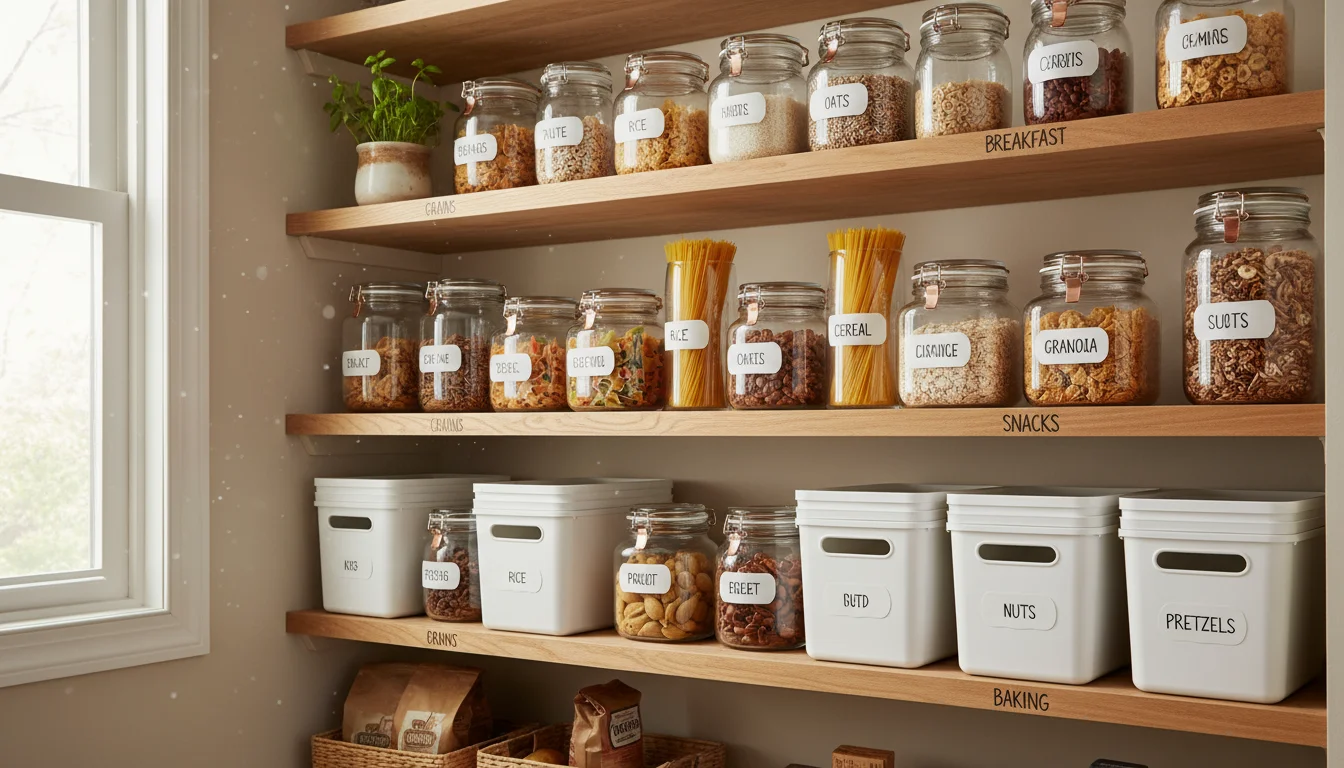
Avoid the trap of over-complicating things; often, the best pantry storage systems succeed because they prioritize simple, reachable zones, a lesson easily applied to toys.
Using Complicated Lids
If a child has to pry off a tight-fitting lid or maneuver a complicated latch, they won’t put the toy away. For everyday access, use open-top bins or magnetic closures. Save the heavy-duty latching lids for deep storage and toy rotation boxes.
Over-Categorizing
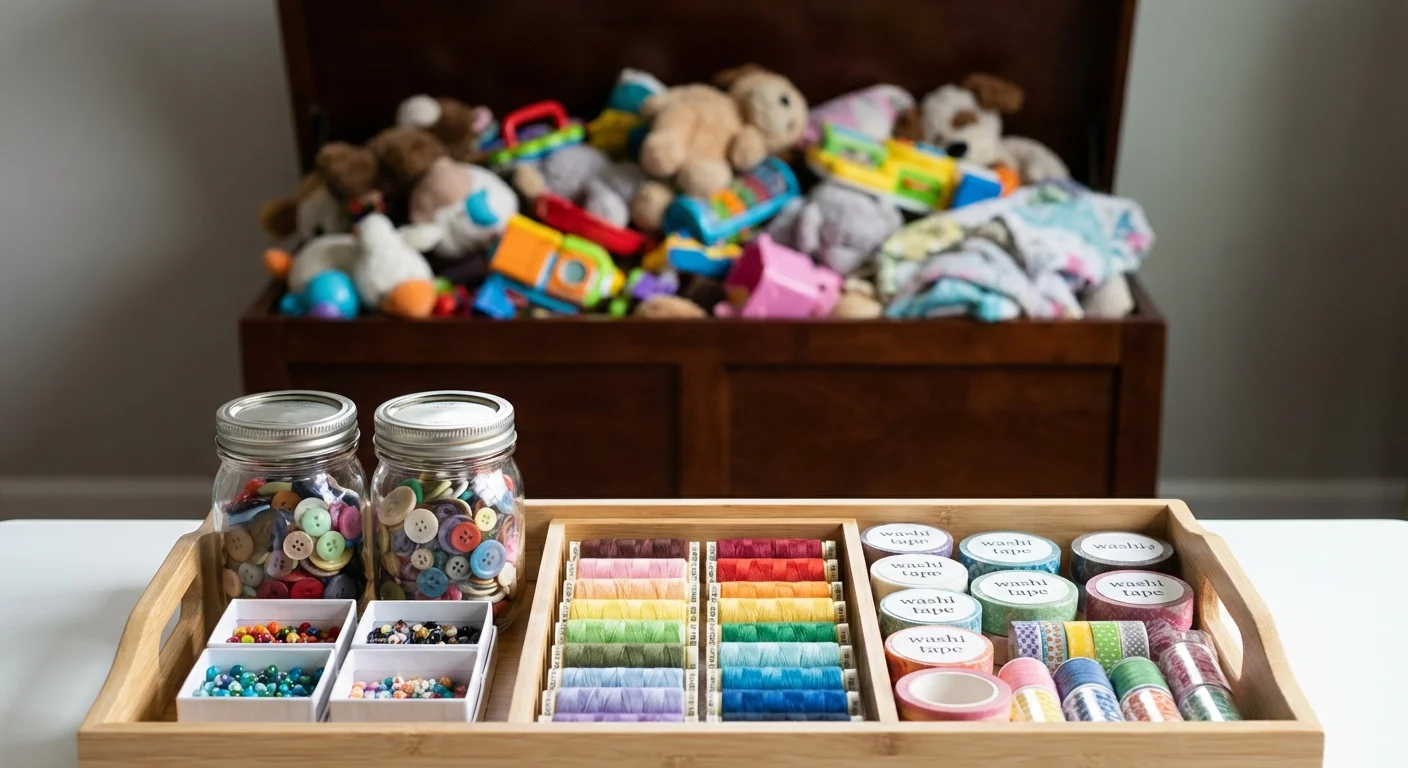
While sorting is necessary, hyper-categorization guarantees failure. If you create a separate bin for red cars, blue cars, and green cars, your child will abandon the system on day one. Keep categories broad. A single bin labeled “Things with Wheels” is highly achievable for a toddler.
Organizing Out of Reach
Store heavy or frequently used items at the child’s eye level or on the floor. Reserving the top shelves for board games and puzzles prevents a heavy box from tumbling onto a small head and requires adult supervision for activities with dozens of easily lost pieces.
Professional vs. DIY: Choosing the Right Approach
Depending on your budget and the permanence of your living situation, you will eventually face the choice between installing custom storage or relying on off-the-shelf modular products.
Scenario 1: The Forever Home Playroom
If you own your home and have a dedicated playroom with awkward architectural features—like sloped ceilings or strange alcoves—hiring a carpenter for custom built-ins offers an incredible return on investment. Professionals can build seamless window seats with deep drawers and floor-to-ceiling shelving that maximizes every inch. Later, as the kids grow, these built-ins transition beautifully into teen study spaces or home libraries.
Scenario 2: The Renter’s Reality
If you rent your home or plan to move within the next five years, stick to DIY modular furniture. Systems like cube shelving can be easily disassembled, reconfigured, and adapted to fit a completely different room in your next house. Freestanding furniture protects your security deposit while delivering high-level functionality.
Scenario 3: The Hybrid Approach
Many homeowners achieve a high-end look on a budget by purchasing standard bookcases and adding custom trim and crown molding to the top and bottom. This DIY “faux built-in” approach anchors the furniture to the wall for safety, prevents toys from rolling underneath, and provides a premium aesthetic without the premium price tag.
Frequently Asked Questions About Toy Bin Organization
How many toys should a child actually have out at one time?
Experts generally recommend keeping between 10 to 20 distinct play options available at any given time, depending on the child’s age. This volume provides enough variety to prevent boredom but remains manageable for a child to tidy up independently in under ten minutes.
What is the safest way to store heavy toys?
Always store dense, heavy items—like solid wooden blocks or large robotic toys—in floor-level bins. Additionally, any shelving unit taller than three feet must be securely anchored to the wall studs using anti-tip hardware to prevent tragic accidents if a child attempts to climb.
How do I handle sets with hundreds of tiny pieces?
Keep intricate sets grouped together in zip-top canvas bags or hard plastic containers with secure latches. Instead of dumping them into a communal bin, store these smaller contained sets inside a larger “master” bin. This prevents small pieces from settling at the bottom of a deep basket.
How can I get my kids to actually use the storage system?
Make cleanup part of the daily routine rather than a punishment. Use visual labels, maintain broad and easy categories, and lead by example. Playing a specific “cleanup song” creates a predictable transition that signals the end of playtime and the beginning of the tidying process.
Building functional toy storage solutions takes initial effort, but the payoff is a calmer, more predictable home environment. By establishing logical homes for toys, utilizing vertical space, and implementing a steady rotation, you reclaim your floors and your sanity. Take a hard look at your current inventory this weekend, pull out the donation bags, and start grouping items by how your children actually play.
This is educational content based on general best practices. Individual results vary based on your home, budget, and circumstances. Always prioritize safety and consult professionals for major projects.
Last updated: February 2026
Leave a Reply