

You open the pantry door to grab a can of diced tomatoes, only to find three identical, half-expired cans hiding behind a wall of cereal boxes. Somewhere in the back, a rogue bag of flour has tipped over, dusting the lower shelves in white powder. If this scenario sounds familiar, your kitchen is suffering from a lack of structural organization. A well-designed pantry storage system eliminates food waste, speeds up meal prep, and brings a sense of calm to your daily routines.
For more inspiration on streamlining your cooking space, explore our kitchen organization ideas that actually work.
For those ready to overhaul their entire setup, our pantry makeover guide provides a step-by-step roadmap for a total transformation.
Creating a functional space goes far beyond buying a matching set of plastic bins. True organization requires a strategic approach to your physical space, an understanding of your cooking habits, and the right combination of shelving and storage tools. Whether you are dealing with a spacious walk-in or a narrow reach-in cabinet, building a system tailored to your household will transform how you interact with your kitchen.
The Blueprint: Developing an Organized Pantry Layout
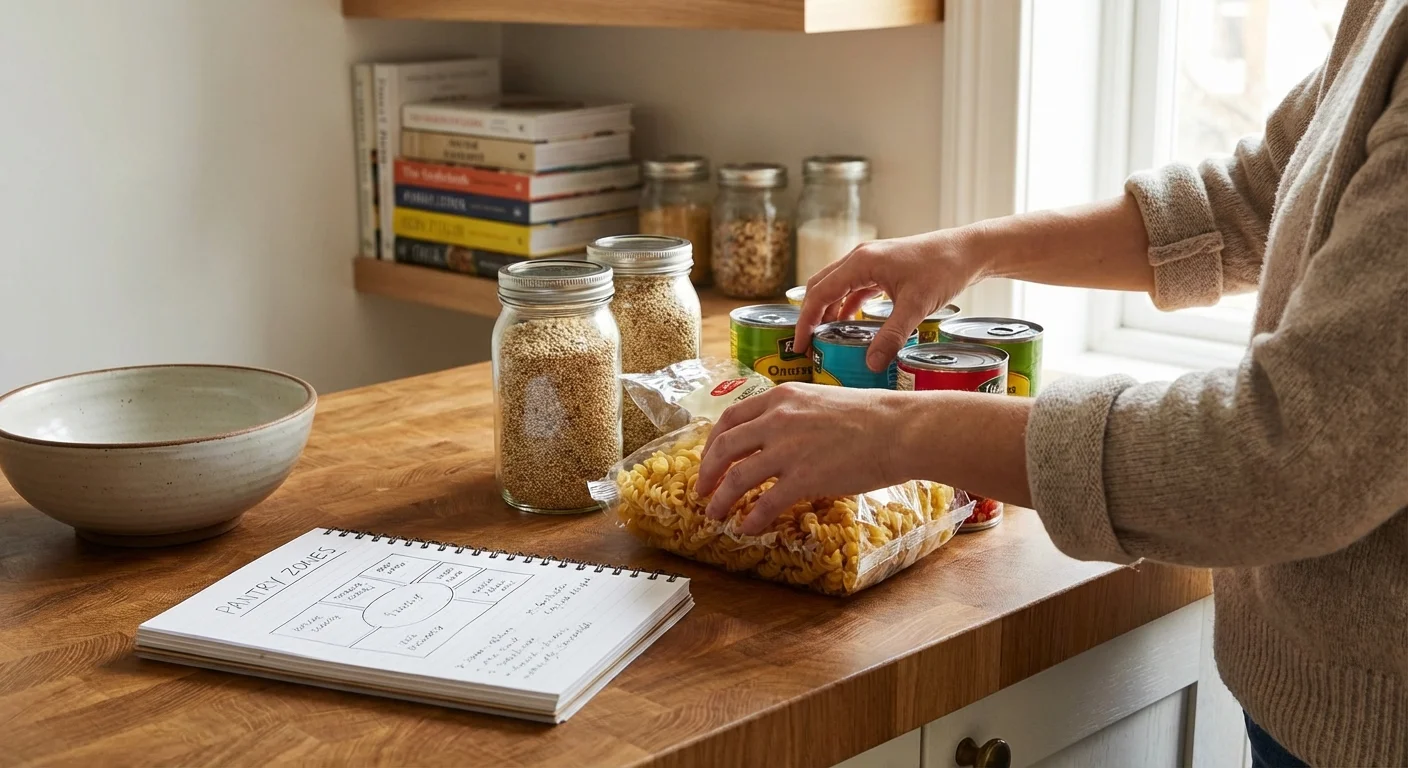
The foundation of any successful pantry begins with layout planning. Before purchasing a single basket or jar, you must assess the volume of food you keep on hand and how you access it. An organized pantry layout relies on the concept of zoning—grouping items by category or function so you instinctively know where to look.
Empty your pantry completely. Wipe down the shelves, vacuum the corners, and check expiration dates on every item. Discard expired food and donate unopened, non-perishable items you know your family will never eat. Once you have a blank slate, begin sorting your remaining inventory into logical zones.
Consider implementing these core pantry zones:
- The Daily Grab-and-Go: Place high-turnover items like breakfast cereals, bread, and lunchbox snacks at eye level or just below. This ensures family members can find what they need without rummaging.
- The Dinner Prep Station: Group canned goods, pasta, grains, and broths together on waist-high shelves. Storing heavy jars and cans lower prevents strain and reduces the risk of dropped glass.
- The Baking Center: Flour, sugar, baking soda, chocolate chips, and extracts should live together. If you bake infrequently, place these items on a higher, less accessible shelf.
- The Backstock and Bulk Zone: Store heavy bulk items—like paper towels, extra cases of sparkling water, and oversized bags of rice—on the floor or the very bottom shelf.
“When you are choosing what to keep, ask your heart; when you are choosing where to store something, ask your house.” — Marie Kondo, Organizing Consultant
Choosing Your Pantry Container System
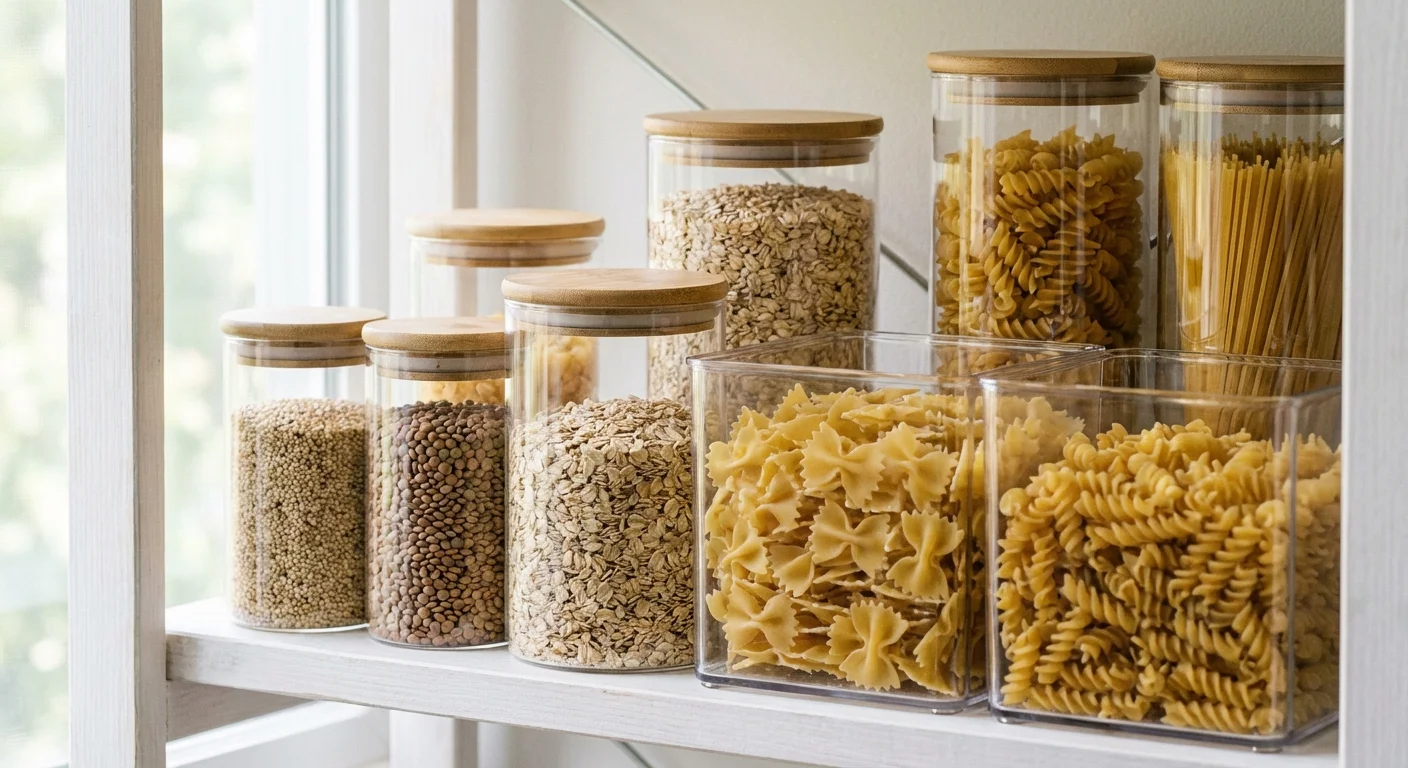
Decanting—the process of transferring food from its original packaging into clear containers—is highly popular, but it is not mandatory for every item. A functional pantry container system strikes a balance between visual appeal and practical maintenance. Pouring every single item into a glass jar looks beautiful, but if it takes you an hour to unpack groceries, the system will inevitably fail.
Focus on decanting dry goods that benefit from airtight storage or items that come in bulky, visually cluttered packaging. Flour, sugar, oats, and rice stay fresher longer in sealed containers. Conversely, individually wrapped snacks or canned goods are better suited for open bins or baskets.
When selecting your materials, consider how you use the space. For further guidance on product durability and safety, Good Housekeeping regularly tests and reviews food storage solutions.
| Material Type | Best Used For | Pros | Cons |
|---|---|---|---|
| Clear Acrylic/Plastic | Pasta, cereals, grains, baking staples | Lightweight, shatter-resistant, stackable, allows instant inventory checks. | Can scratch easily; not always dishwasher safe; absorbs strong odors. |
| Glass Jars | Spices, nuts, seeds, specialty flours | Eco-friendly, non-porous, odor-resistant, dishwasher safe. | Heavy, prone to shattering if dropped, often more expensive. |
| Wire or Woven Baskets | Potatoes, onions, root vegetables, bagged snacks | Provides excellent airflow, hides bright packaging, easy to pull out. | Small items can fall through gaps; woven materials can snag or collect dust. |
| Opaque Plastic Bins | Backstock, paper goods, appliance attachments | Hides visual clutter entirely, highly durable, easy to clean. | Requires diligent labeling; out-of-sight items are easily forgotten. |
Custom Pantry Shelving vs. Modular Upgrades
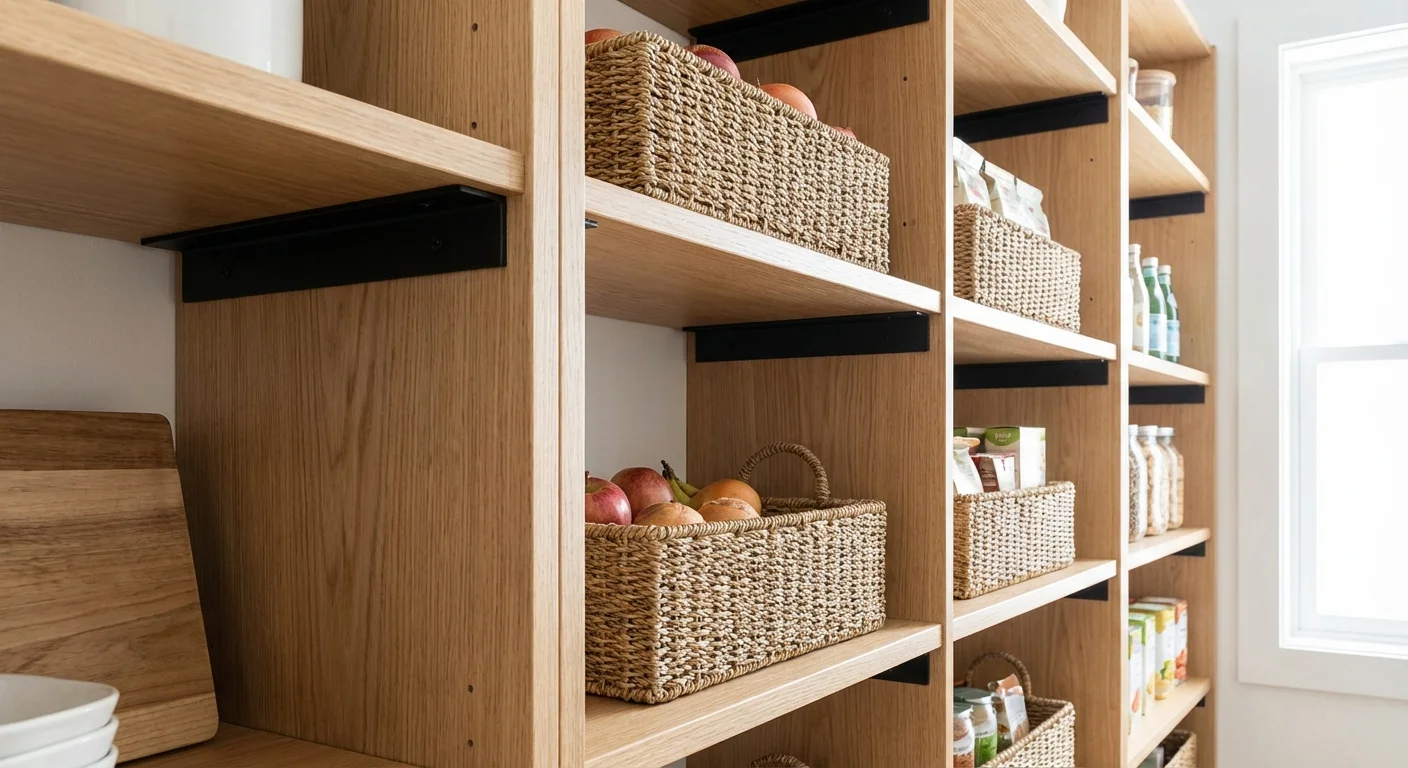
The physical structure of your pantry dictates how efficiently you can store items. Many builder-grade homes come with 24-inch deep wire shelving. While deep shelves seem advantageous, they are actually the enemy of an organized space. Items pushed to the back vanish into a dark abyss, leading to expired food and duplicate purchases.
Many of the modular components used in pantries are similar to closet organization systems that help keep wardrobes tidy.
The ideal depth for pantry shelving is between 12 and 14 inches. This depth allows you to line up cans and boxes two or three rows deep, keeping everything visible. If you are stuck with deep shelves and cannot remodel, employ deep pull-out bins that act as drawers, allowing you to slide the entire contents forward.
If you have the budget, upgrading to custom pantry shelving offers the highest return on investment. Custom builds allow you to dictate the exact height between shelves. You can design tight 6-inch clearances for canned goods and generous 18-inch clearances for cereal boxes and small appliances. Integrating solid wood or melamine shelving also prevents small packages from tipping over—a common frustration with wire racks.
To maximize vertical space without a full remodel, utilize shelf risers. These simple metal or acrylic tiers elevate the back rows of canned goods or spices, essentially creating stadium seating for your food. Look for adjustable options that expand to fit the width of your specific cabinets.
Maximizing the Hidden Real Estate
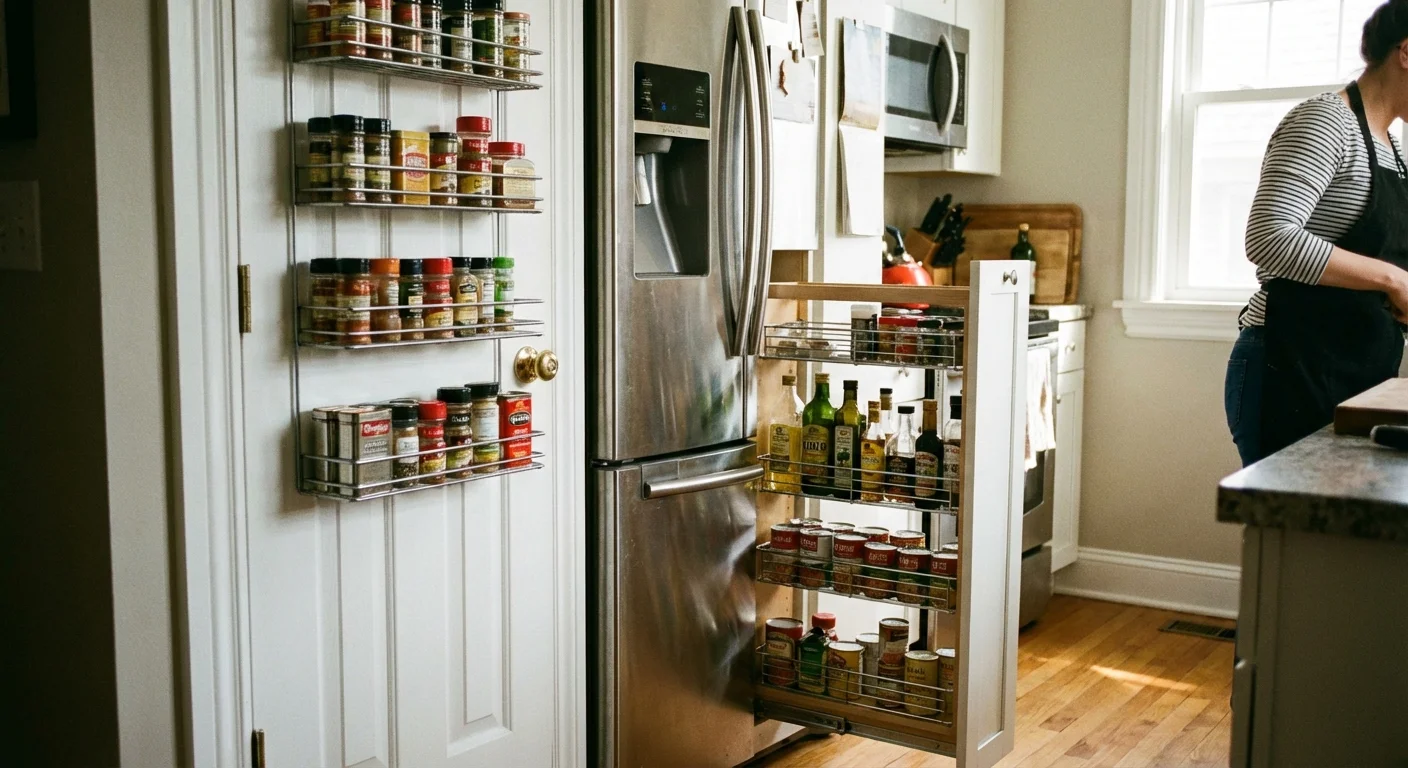
Even small pantries contain untapped storage potential. Look beyond the main shelves and evaluate your walls, the back of the door, and the floor space.
Utilizing these vertical areas is a key part of implementing pantry organization systems that work for the long term.
The back of a swinging pantry door is prime real estate. Install a specialized over-the-door rack to hold narrow items like spice jars, hot sauces, oil bottles, and boxes of foil or parchment paper. Moving these small, easily lost items to the door frees up significant space on your main shelves. For extensive product ideas and spatial solutions, browse the Container Store Organization Tips section.
Corners are notoriously difficult to organize. The deep, dark angles often become graveyards for forgotten snacks. Implement large lazy Susans—or turntables—in these corners. A quick spin brings the exact bottle of vinegar or jar of peanut butter right to your fingertips. Use turntables with raised edges so items do not fly off when rotated quickly.
Professional vs. DIY: Building Your Pantry Storage System
Deciding whether to tackle your pantry organization yourself or hire professionals depends entirely on the scope of the project, your budget, and your structural goals.
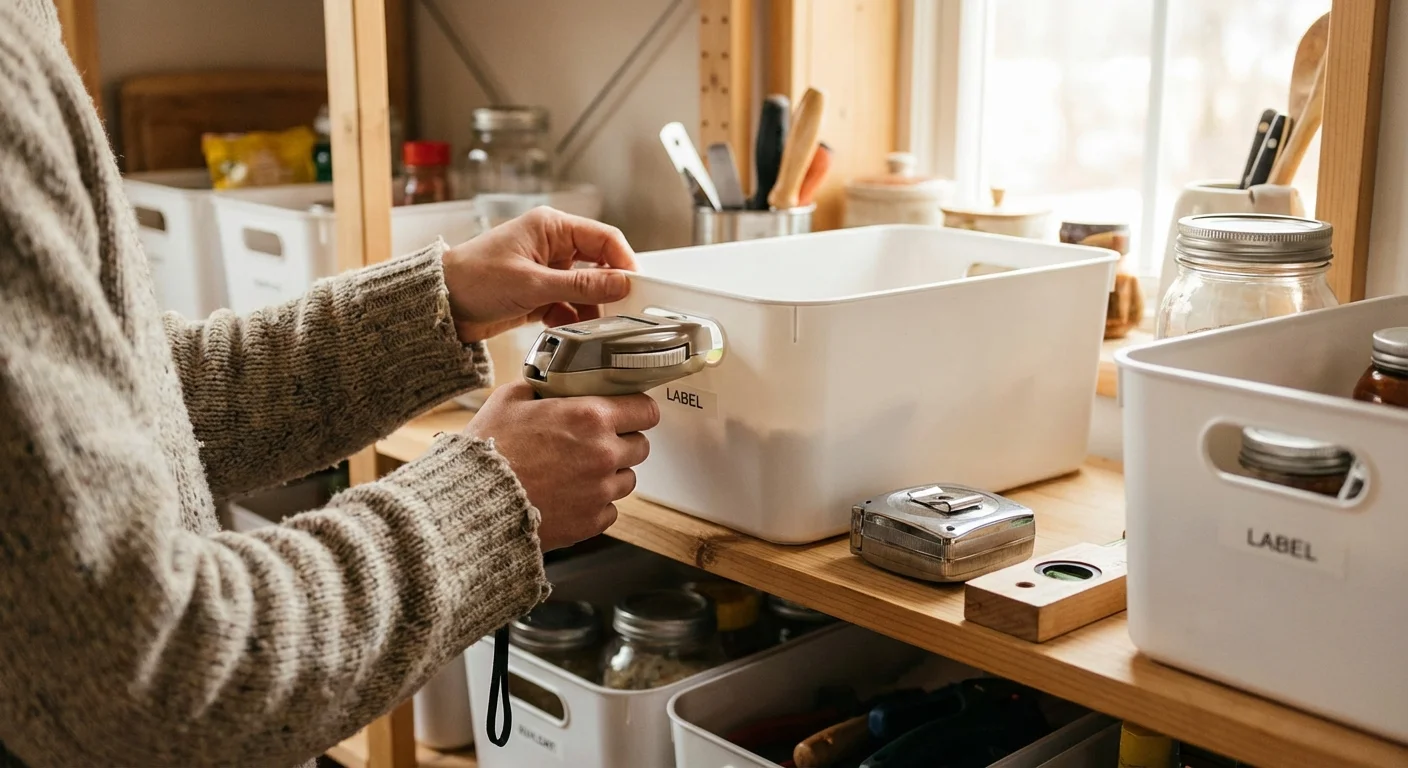
Scenario 1: Adding modular bins and shelf risers to existing shelves.
Verdict: DIY. Measuring your current shelves and purchasing appropriate acrylic bins, baskets, and turntables is a highly manageable weekend project. Use painter’s tape to map out where bins will sit before making a purchase.
Scenario 2: Removing wire shelves and installing track-based adjustable wood shelves.
Verdict: DIY or Professional. If you are comfortable locating wall studs, patching drywall, and using a level, installing a wall-mounted track system is an accessible intermediate DIY project. However, if your walls are uneven or you lack the proper tools, hiring a handyman ensures the shelves will safely hold the weight of heavy canned goods.
Scenario 3: Designing floor-to-ceiling cabinetry with pull-out drawers.
Verdict: Professional. Custom cabinetry requires precise measurements, specialized joinery, and professional installation. A custom closet or cabinet company can build integrated spice racks, soft-close drawers, and seamlessly fitted corners that maximize every fraction of an inch.
Scenario 4: Hardwiring interior lighting or adding electrical outlets.
Verdict: Professional. If you want to store your microwave, coffee maker, or toaster inside the pantry to free up kitchen counter space, you will need dedicated electrical outlets. Always hire a licensed electrician to run new wiring or install hardwired overhead lighting to ensure the work meets local building codes.
Common Mistakes to Avoid
Even with the best intentions, certain organizing habits can actually make your pantry harder to use. Avoid these frequent missteps when setting up your new system:
Buying containers before decluttering and measuring.
Purchasing an expensive set of bins before assessing your inventory guarantees you will end up with containers that are too big, too small, or entirely unnecessary. Always sort your food first, measure your shelf depth and height (factoring in the door hinges), and then buy exactly what you need.
Creating overly specific labels.
Labels are essential, especially for opaque bins and white powders, but being too specific locks you into a rigid system. If you label a bin “Penne Pasta,” you cannot use it for macaroni next month. Instead, use broad categories like “Pasta,” “Salty Snacks,” or “Baking Goods.” Broad categories allow your system to breathe and adapt as your grocery list changes.
Ignoring the lighting.
You cannot organize what you cannot see. Pantries are notoriously poorly lit. If you do not have the budget for hardwired fixtures, install motion-sensor LED light strips along the underside of each shelf. The Spruce offers excellent guides on selecting battery-operated lighting solutions that instantly brighten dark alcoves.
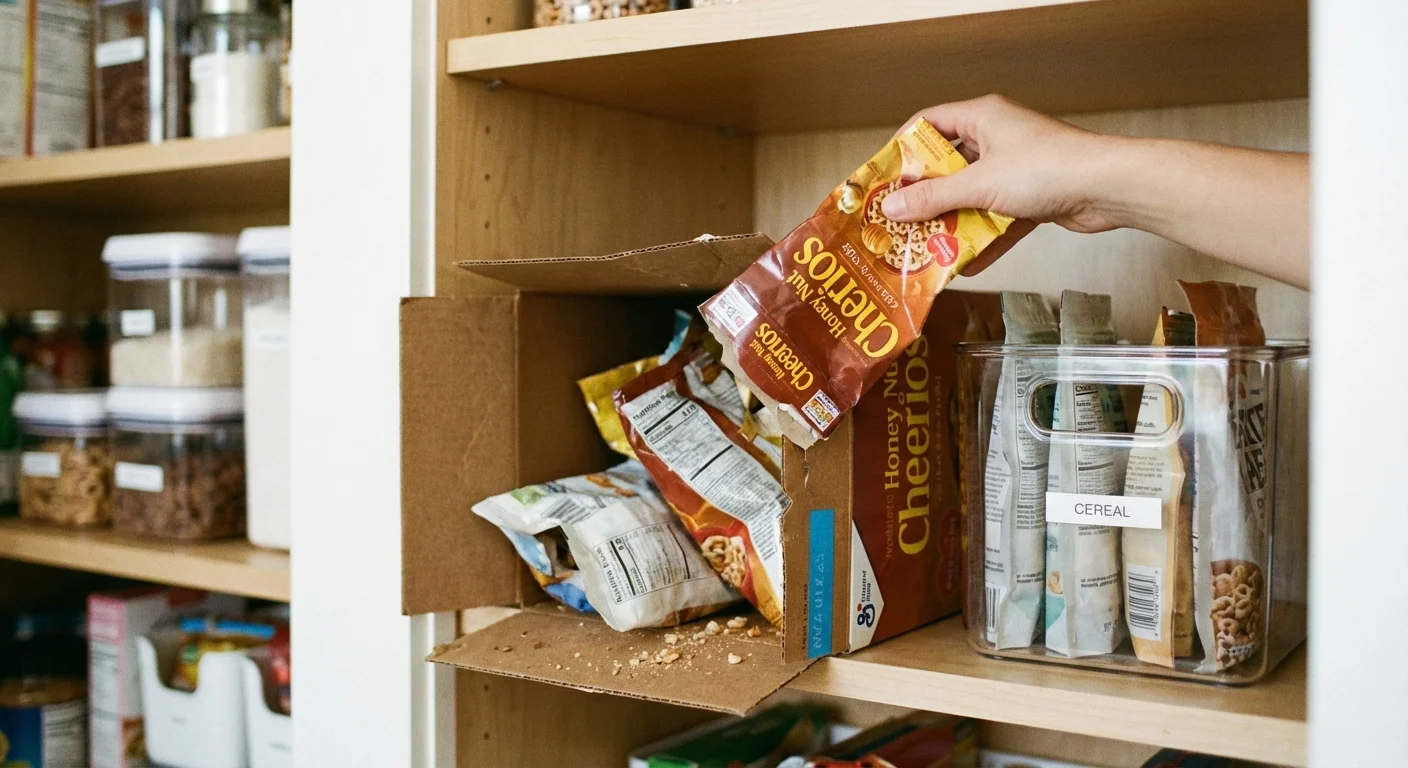
Failing to unpack bulk boxes.
Shoving a massive cardboard box from a warehouse club straight onto a shelf eats up valuable space and creates visual clutter. Immediately unbox individually wrapped items like granola bars, fruit snacks, or single-serve chips and drop them into a designated open bin.
Frequently Asked Questions
How deep should custom pantry shelving be?
For general food storage, a depth of 12 to 14 inches is ideal. It prevents items from getting lost in the back. If you are storing large appliances like slow cookers or stand mixers, dedicate one lower shelf to a depth of 16 to 18 inches.
What is the best way to store spices?
Spices degrade quickly when exposed to direct sunlight and heat. Keep them in a cool, dark place. A tiered shelf riser on a shallow pantry shelf, a door-mounted rack, or a dedicated pull-out drawer are the most effective methods for keeping spices visible but protected.
How do I organize a deep pantry with no slide-out drawers?
Treat the depth as a drawer by using long, narrow, clear acrylic bins. Group similar items into one long bin. When you need something from the back, you simply pull the entire bin forward, grab what you need, and slide it back into place.
How often should I clean and reorganize my pantry?
Perform a quick maintenance check once a month before a major grocery trip to toss expired items and wipe up spills. Plan for a deep clean and system reassessment once or twice a year to adjust zones based on seasonal eating habits.
Taking the First Step Toward a Calmer Kitchen
Designing an organized pantry layout does not happen overnight. It is a process of analyzing how you cook, evaluating the space you have, and implementing systems that make your daily life easier. Start small. Pick one weekend to pull everything out, toss the expired goods, and group your remaining items into logical zones. Once you experience the ease of finding exactly what you need exactly when you need it, expanding the system to the rest of your kitchen will feel like a natural next step.
Remember that the best pantry storage system is the one you can actually maintain. Allow your setup to evolve over time, tweaking bin sizes and shelf heights until the space works effortlessly for your family.
This guide provides general home improvement information. Every home is different—what works in one space may need adaptation in yours. For structural changes or electrical/plumbing work, consult a licensed professional.
Last updated: February 2026





Leave a Reply