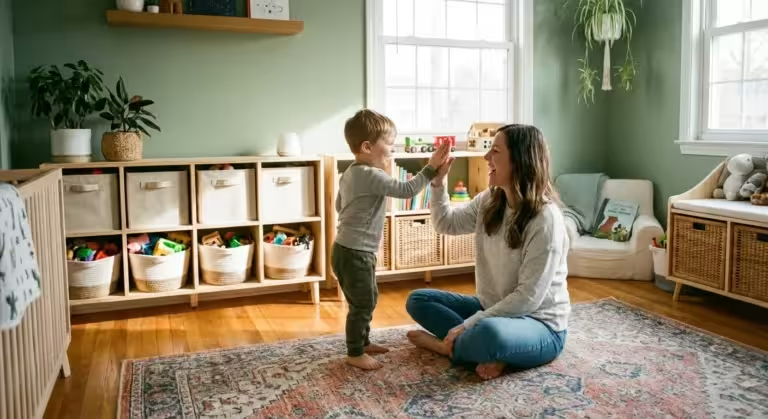
Relatives arrive for Thanksgiving in fourteen days. They will sleep on the sofa bed in your living room, because your apartment has one bathroom and no spare room.
Every closet is already full, so anything you clear has nowhere obvious to go. That is why most pre-holiday plans stall in small homes.
Those plans start with the rooms guests see. The cleared piles end up stacked in the hallway that is also the only path to the bathroom.
This plan reverses the order. Measure the sofa bed’s open footprint first, empty one closet you control second, and only then clear the living room, bathroom and kitchen.
Why the Closet Comes Before the Living Room
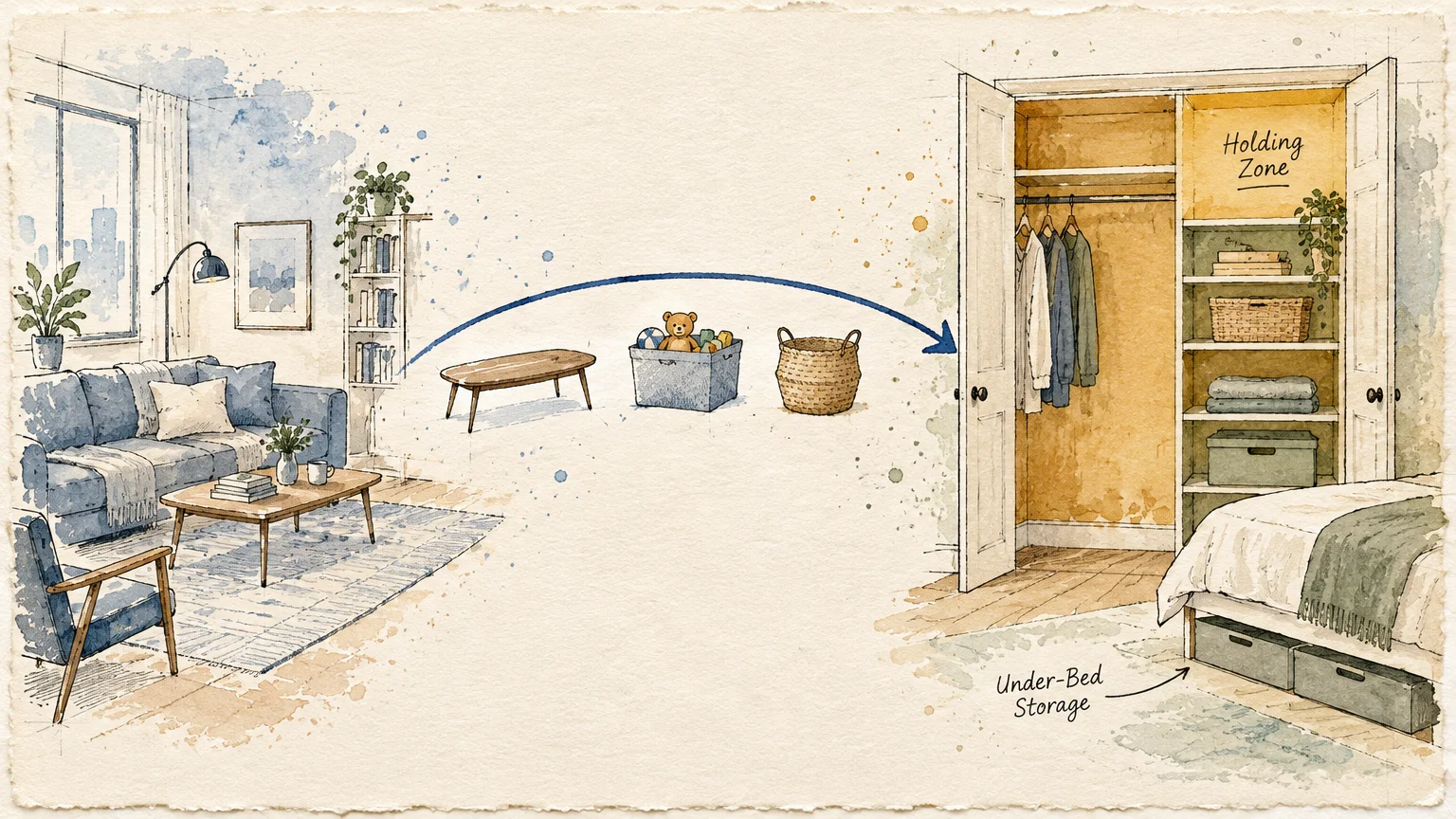
A house with a guest room has a basement or garage to absorb cleared items. An apartment without either needs a specific landing spot for every object you pull from the living room, or that object stays in the way.
A half-empty bedroom closet and the space under your bed are that landing spot. Clearing them first turns every later session into a move instead of a new pile.
The second reason is the living room’s double job. By day it is where everyone gathers; at night it is a bedroom, and the open sofa bed claims floor that the coffee table, toy bins and baskets now use.
Skip rooms guests never enter. Your dresser drawers, bedroom bookshelf and storage unit can wait until January.
Keep each session to 20 to 45 minutes. Short evening sessions fit around work and school and avoid a weekend marathon that leaves everything half sorted.
If you have a month rather than two weeks, the 30-day declutter challenge spreads the same work into short daily sessions.
Day 14: Tape Out the Night Layout
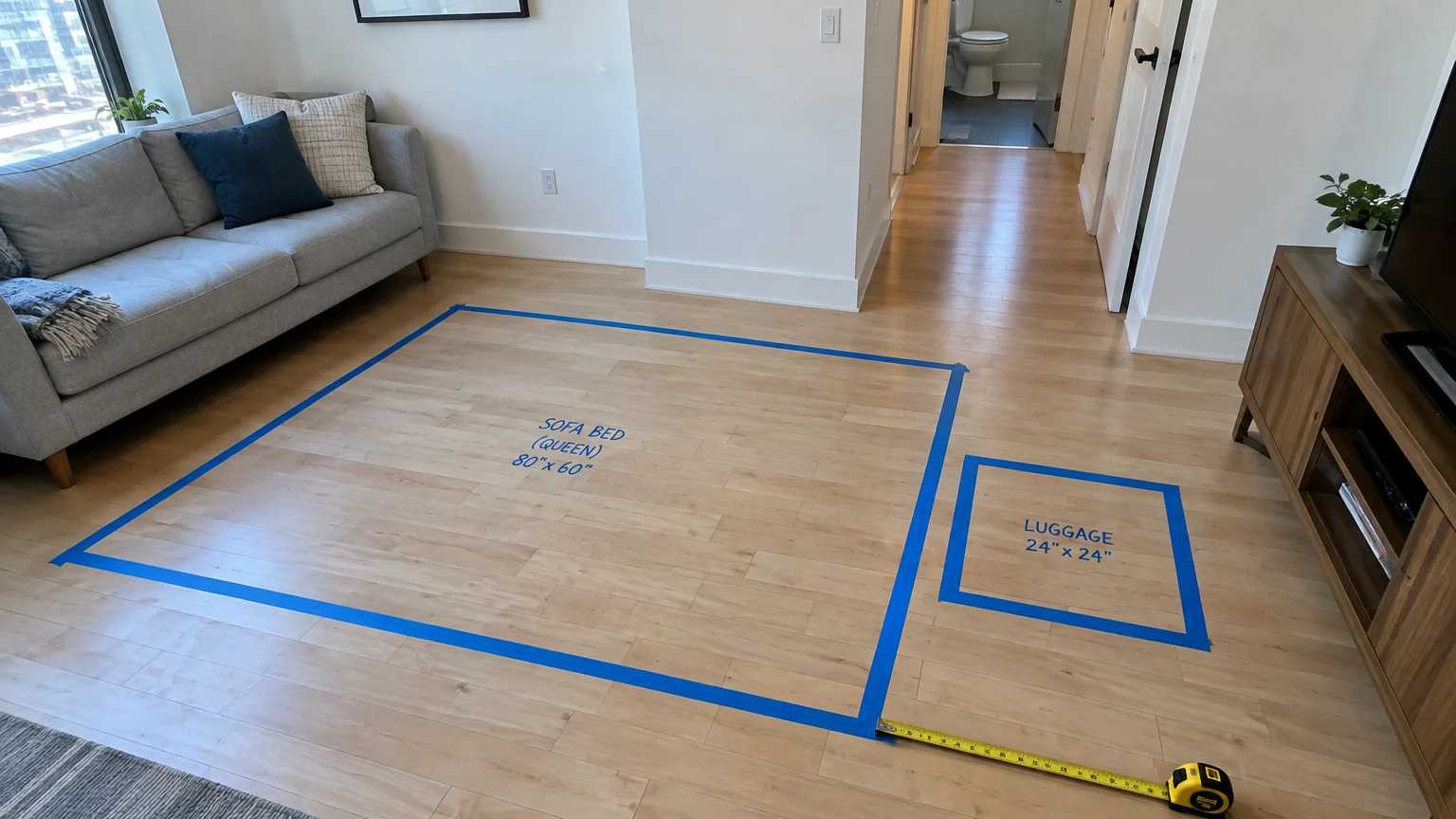
Open the sofa bed fully, or find its open length and width in the maker’s manual. Outline that rectangle on the floor with painter’s tape, plus a square at least three feet by three feet for guest luggage.
Walk from the taped bed to the bathroom door and to the front door. That route must stay clear at night, when guests are moving around in the dark.
Our guide to organizing a small entryway covers hooks and shoe storage for a tight front hall.
Write down everything inside the tape or across the route. That list is your living room assignment: each item leaves the room or moves flat against a wall.
Using an air mattress instead? Check its inflated size on the box before you tape, since it may not match the sofa bed’s footprint.
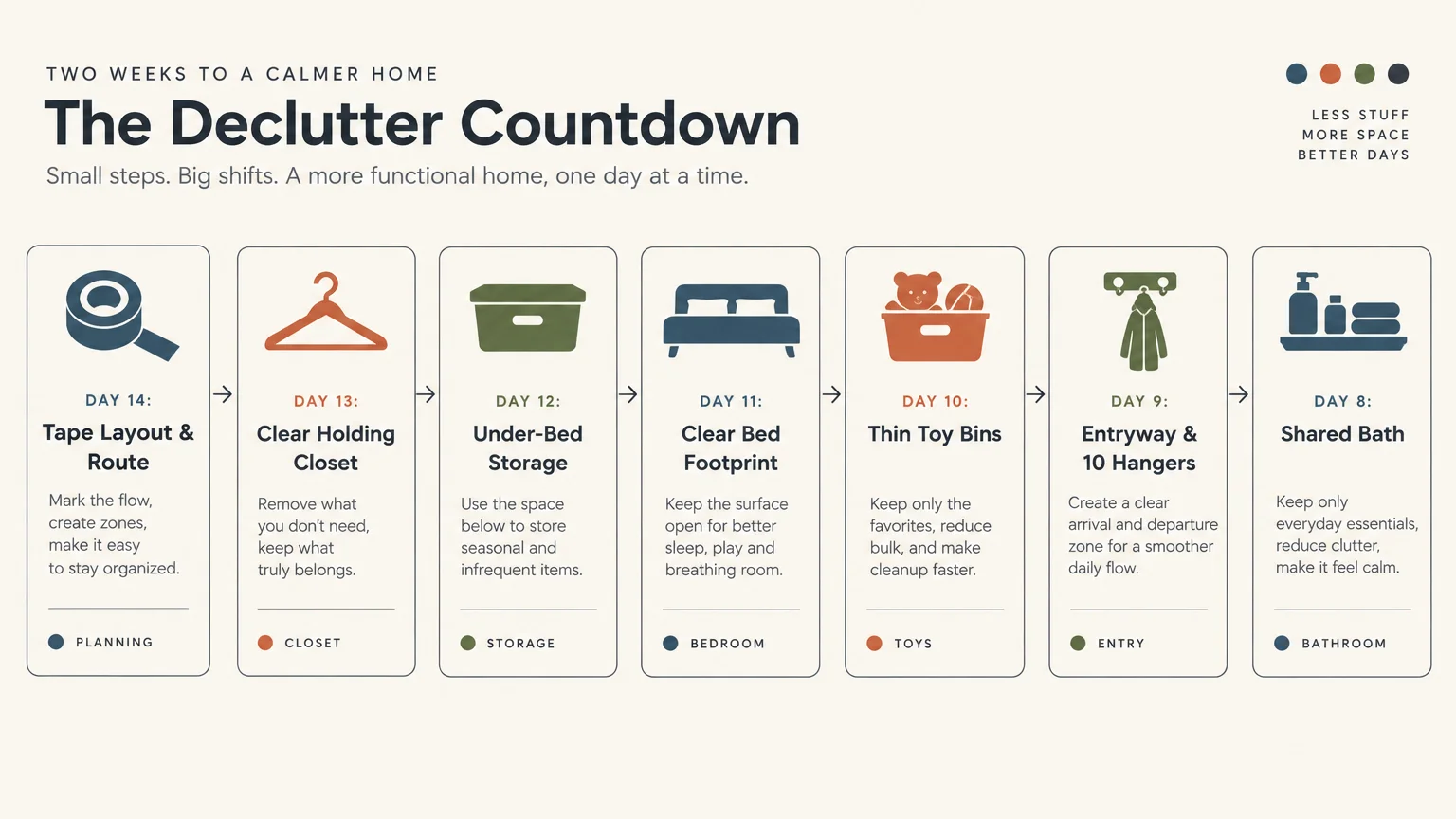
The 14-Day Schedule, Working Backward From Arrival
- Day 14: Tape the footprint and route. Make the list described above.
- Day 13: Clear a holding closet. Pick the bedroom closet you control. Pull off-season clothes, broken hangers and unworn shoes until half the floor or one full shelf is empty.
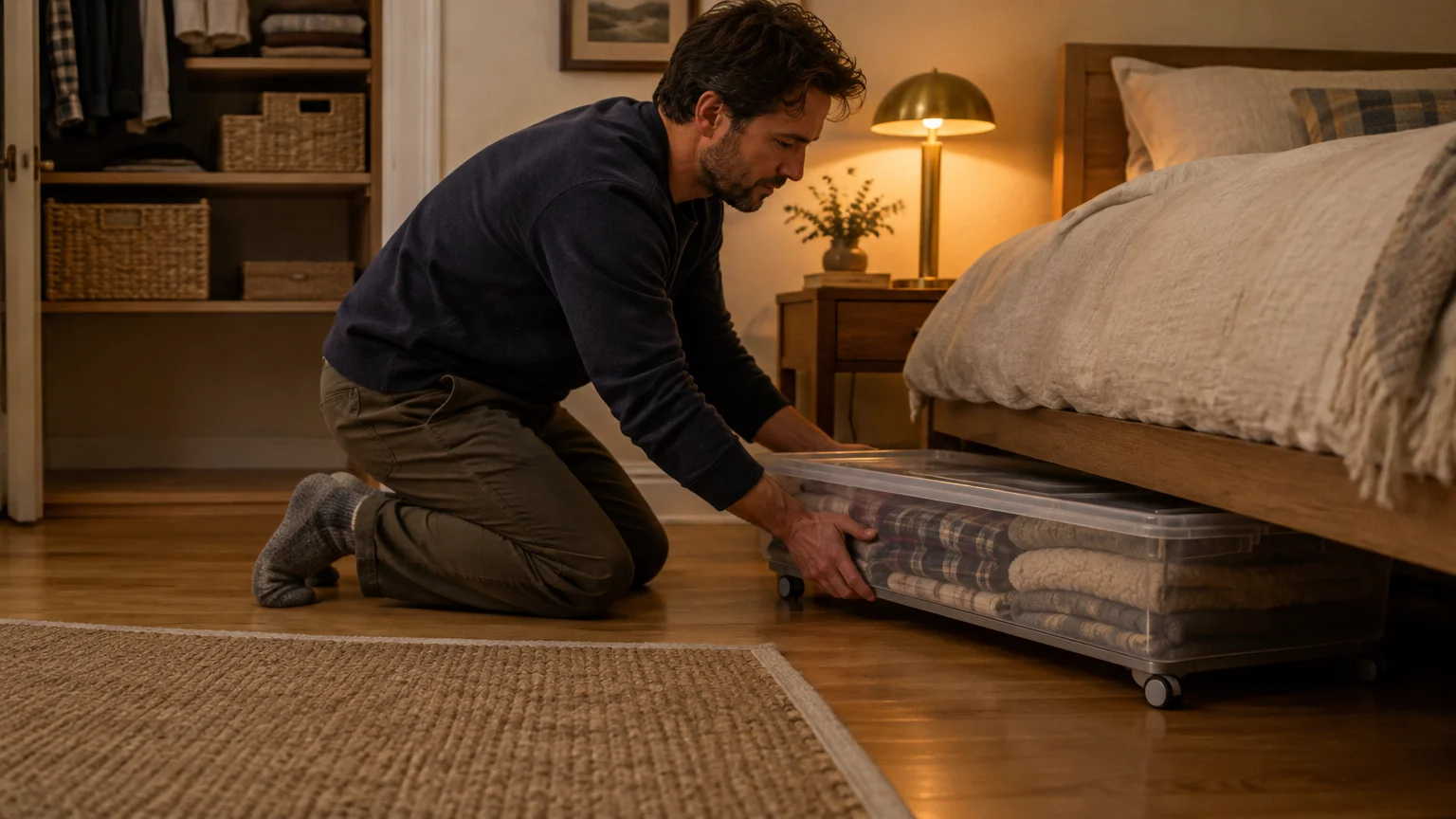
- Day 12: Set up under-bed storage. Pack spare linens and off-season items into lidded, low-profile bins. Measure the clearance under your bed frame before buying bins.
- Day 11: Clear the taped footprint. Move every listed item into the holding closet, a donation box or its proper home. Leave a lamp, a small surface and an outlet or power strip for phone chargers.
- Day 10: Thin the toy bins. Remove broken toys, dried play dough, outgrown puzzles and duplicate games. Keep living room toys to one lidded bin that slides into the holding closet at bedtime.
- Day 9: Set up the entry. Cut hooks or the coat closet to one coat per resident and hang about ten empty hangers, or add an over-the-door hook rack. Put a boot tray by the door.
- Day 8: Clear the shared bathroom counter. Move prescriptions and daily medicines to your bedroom, and check dates while you do; the FDA warns against using expired medicines.
- Day 7: Give guests a bathroom zone. Empty one shelf, drawer or caddy for their toiletries. Set out clean towels, hand soap, extra toilet paper and a small wastebasket.
- Day 6: Cull the pantry. Toss expired spices, broths and canned goods to open shelf space for Thanksgiving groceries.
- Day 5: Purge the refrigerator and freezer. Discard moldy leftovers, outdated condiments and ice-crusted packages until one shelf is empty for the roasting pan and sides.
- Day 4: Clear the prep counter. Move blenders, bread machines and drying racks into the holding closet. Aim for four to six continuous feet of counter, or the longest run your kitchen has.
- Day 3: Check cookware. Confirm the roasting pan, sheet pans and carving knife are clean and reachable, and that the roasting pan fits your oven.
- Day 2: Make the donation run. Take boxes out the same day rather than parking them in the hallway. Hazardous items go on a separate trip.
- Day 1: Do a trial night. Open the sofa bed, make it with clean sheets, walk the route to the bathroom with the lights off, then fold it back.
If the bathroom faucet drips or an outlet stops working, report it now. In a rental, request the repair through your landlord or building maintenance; otherwise hire a licensed plumber or electrician.
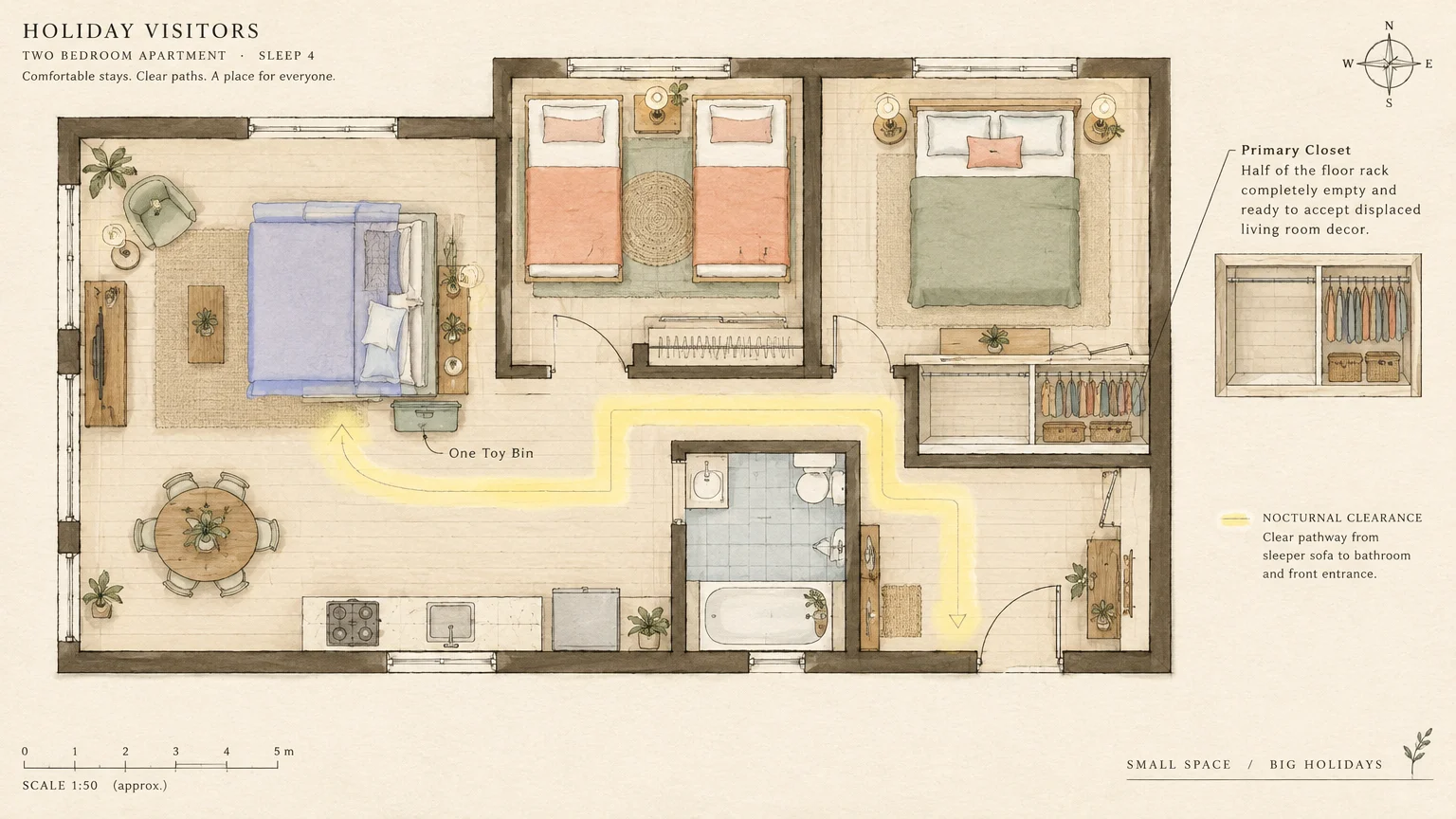
Worked Example: A Two-Bedroom Apartment With a Preschooler
Two adults and a preschooler share a two-bedroom apartment with one bathroom. Two relatives arrive the day before Thanksgiving and sleep three nights on the living room sofa bed.
Supplies: one roll of painter’s tape, three boxes labeled Keep, Donate and Discard, one lidded toy tote and an over-the-door hook rack.
Day 14, 20 minutes: The taped outline covers the coffee table, a basket of clean laundry, the toy bin and a floor lamp. The route to the bathroom crosses a pile of shoes in the hall.
Day 13, 40 minutes: The adults’ closet floor holds summer sandals, an unused exercise mat and a box of old cables. Sandals go under the bed, the mat goes to Donate, and dead devices and loose batteries are set aside for drop-off.
The same session, they look up the hazardous waste site’s posted hours. That way Day 2 lands on a day it is open.
Day 11, 30 minutes: The coffee table is too heavy to store, so it slides against the window wall each evening. The floor lamp moves beside the sofa arm as the guests’ reading light.
Day 10, 35 minutes: Two toy bins become one tote. The empty closet floor now holds that tote and the laundry basket overnight.
Days 9 to 7, 45 minutes total: Hall shoes drop to one pair per person, and the hook rack goes on the coat closet door. The guests get the top shelf above the toilet and a hand towel on the door hook.
Days 6 to 3: Pantry and fridge each take one session. The counter clear sends the bread machine to the closet’s top shelf.
Day 2: Donation boxes go to a thrift drop-off. The batteries and an old can of spray paint go to the hazardous waste site.
By Day 1, the sofa bed opens without moving anything except the coffee table, and the luggage square stays empty. The only nightly chore is sliding the toy tote into the closet.
Once the guests leave, a 15-minute daily reset keeps the cleared surfaces clear.
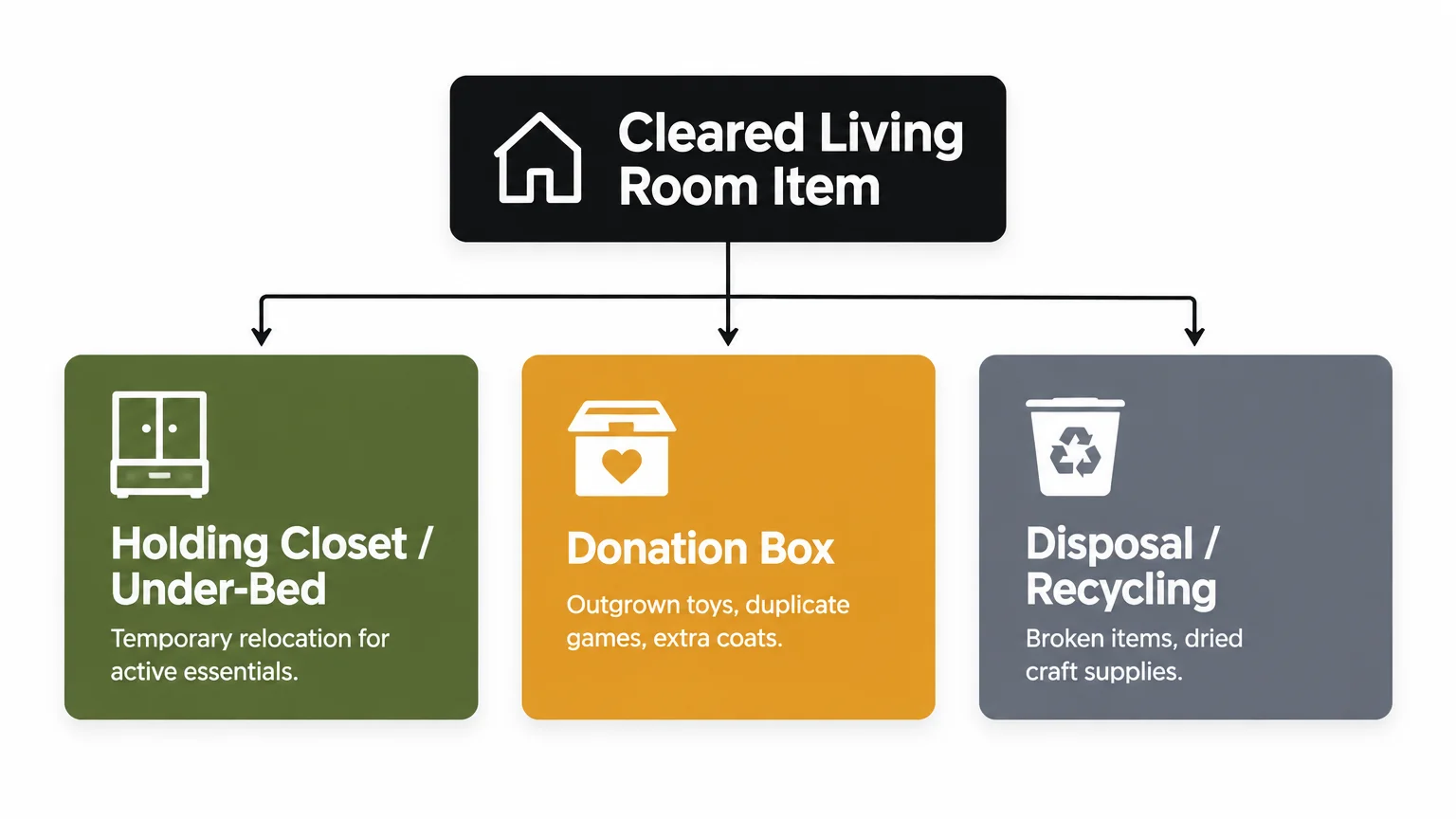
Where Cleared Items Should Go
Decluttering only works when items leave the apartment. In a small home, a bag left by the door is one more obstacle on the guests’ night route.
Match each category to its route before you fill the boxes, so nothing is turned away at the donation dock.
| Disposal Route | Accepted Item Types | Check Before You Go | Preparation Requirement |
|---|---|---|---|
| Thrift Store Drop-Off Center | Clean clothing, intact cookware, boxed games, small furniture | Posted acceptance list and drop-off hours | Sort into sturdy boxes or sealed bags |
| Local Buy Nothing Group | Mismatched mugs, half-used craft supplies, surplus pantry cans | Group rules and your building’s rules on lobby or door pickups | Post clear photos and specific pickup windows |
| Municipal Hazardous Waste Facility | Aerosol spray paints, lithium batteries, expired solvents, old cleaners | Scheduled drop-off days and any residency requirement | Transport in original labeled containers without mixing chemicals |
| Textile Recycling Drop Box | Torn clothing, stained towels, worn sheets, single socks | The bin’s posted list of accepted textiles | Wash items and bag them securely |
For old cleaners, follow the US Environmental Protection Agency and your municipal waste authority. Never pour concentrated chemicals, ammonia or bleach down household drains, and do not toss them in with regular trash.
For broken electronics and rechargeable batteries, read the US Consumer Product Safety Commission’s warning on loose lithium-ion cells. Keep them intact and take them to a battery drop-off.
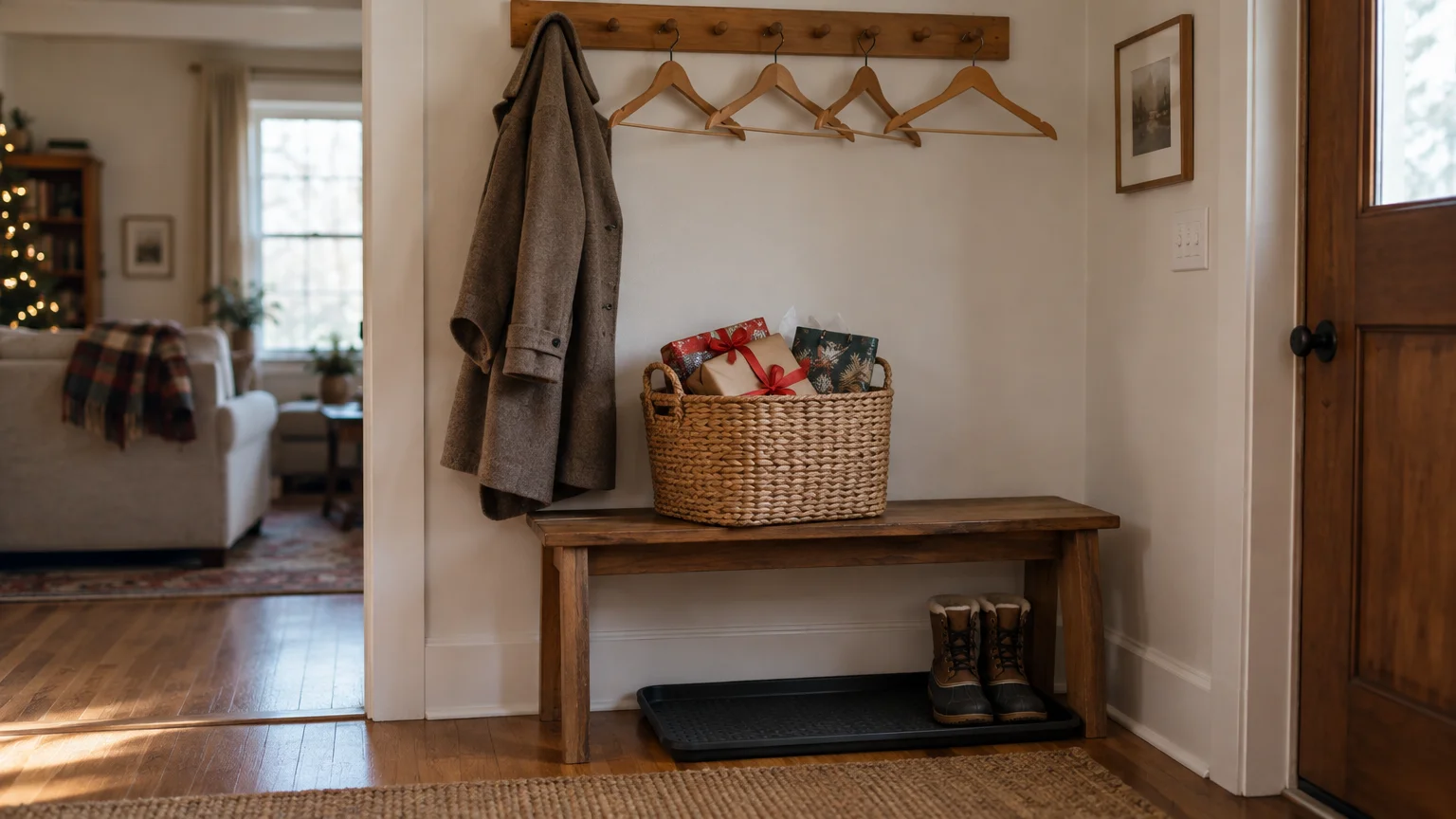
Hold the Line When Gifts Arrive
Gifts land in the same small footprint you just cleared. Agree on one-in, one-out before the holidays: each new game, sweater or gadget sends one older item out.
Keep a single outgoing tub in the holding closet. Older duplicates go straight in as gifts are unpacked, and the tub goes to donation the week after guests leave.
Ask children to pick three outgrown toys before opening new ones. Store wrapping paper, tape and gift bags in one shallow under-bed bin so wrapping never spreads across the guests’ bed area.
The one-touch rule stops gift boxes and packaging from landing in a pile to deal with later.
Frequently Asked Questions
Where should I hide everyday clutter if I run out of time?
Pack it into lidded plastic totes and stack them in the holding closet, never in the living room or hallway. Sort these boxes the week after guests leave.
How do I declutter sentimental holiday decor without guilt?
Display only what fits on surfaces outside the taped bed area, and photograph fragile heirlooms that stay boxed. Donate extra decor early in November so others can use it this season.
What should I do with unopened gifts from previous holidays?
Regift unopened items to community gift drives or post them on your local Buy Nothing group. Storing items out of guilt uses closet space a small apartment cannot spare.