Your living room is in an older house. It has two-prong outlets, drafty windows and a portable space heater that runs most December evenings.
Now a fresh-cut tree and a box of reused light strands are headed into that same room. The heater shapes every decision: where the tree stands, how fast it dries and how much power is left for lights.
Here is the call most checklists skip. If the heater and the tree outlet share one 15-amp circuit, the tree lights do not belong on that circuit while the heater runs, and switching to LEDs will not fix it.
A 15-amp household circuit carries 1,800 watts at most, and steady loads are planned at about 80 percent of that, or 1,440 watts. A 1,500-watt space heater on high uses nearly all of that by itself, so the real fix is a different circuit, not smaller bulbs.
Map the Living Room Circuit the Evening Before
Do this before the tree arrives, while the room is still clear. You need a working lamp, painter’s tape, a marker and access to your breaker panel.
- Find the heater’s breaker. Plug the lamp into the outlet where the heater usually runs, then switch breakers off one at a time until the lamp goes dark. Label that breaker.
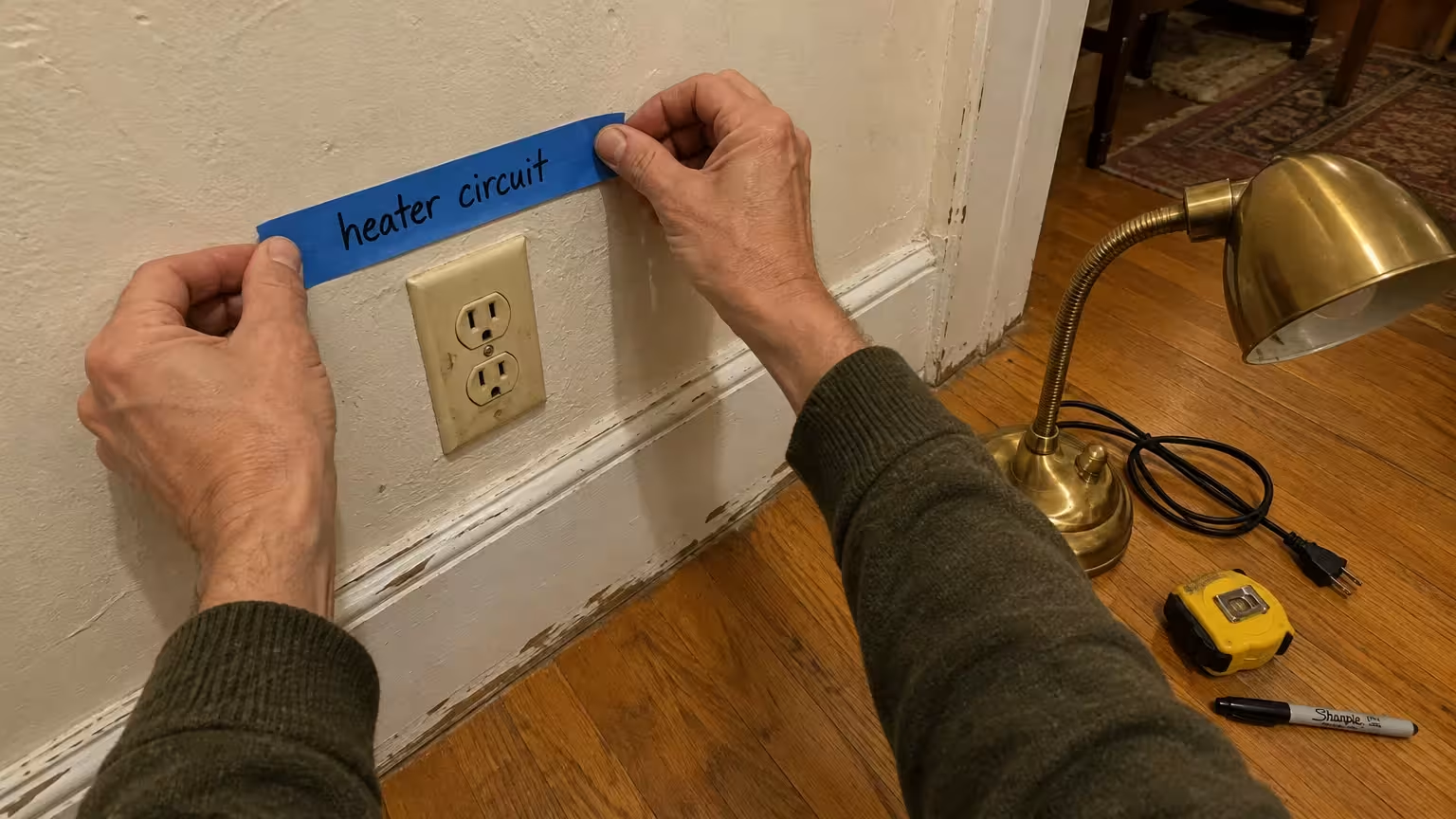
- Test the rest of the room. With that breaker still off, move the lamp to every living room outlet, including the one nearest your planned tree spot. Tape each dead outlet and write “heater circuit.”
- Pick the tree outlet. Turn the breaker back on. Choose a tree outlet that stayed lit during the test, because it sits on a different circuit.
If every outlet in the room shares one breaker, make a rule and stick to it. Either the heater runs only while the tree lights are off, or the heater moves to a room on another circuit.
Two-prong outlets are ungrounded. Never cut or bend off a grounding prong to make a plug fit, and check the heater maker’s manual for its outlet requirements before using any adapter.
Have a licensed electrician evaluate ungrounded outlets, warm switches or breakers that trip repeatedly. Grounding and circuit changes are not homeowner jobs.
Position the Tree Three Feet from the Heater and Fireplace
Living rooms host roughly 40 percent of Christmas tree fires. National Fire Protection Association (NFPA) data puts the U.S. average at 155 tree fires a year, causing four deaths, seven injuries and $15 million in property damage annually.
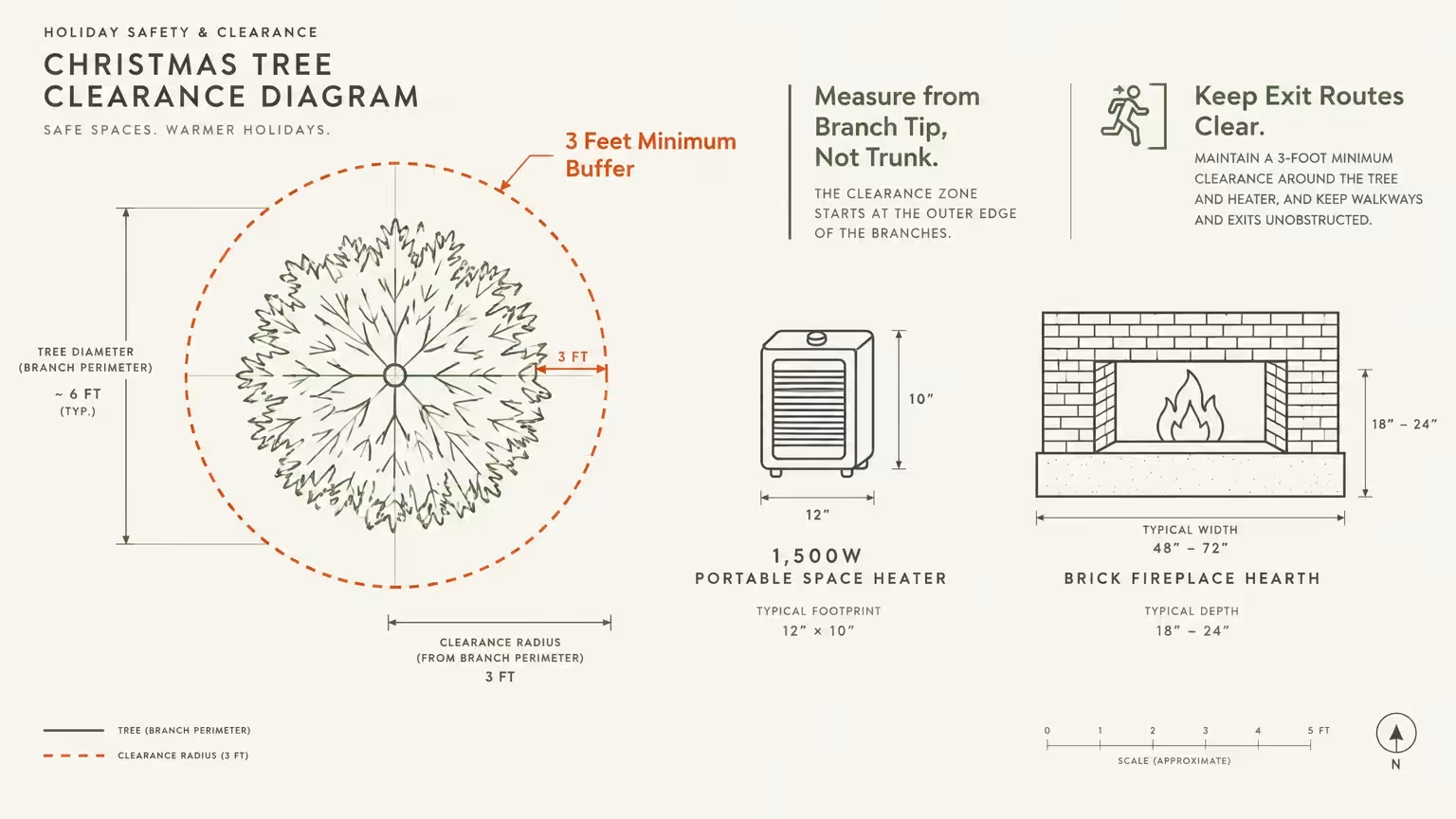
NFPA guidance is to keep your tree at least three feet away from all heat sources. In your room, that means fireplaces, radiators, baseboard units, forced-air registers and the space heater.
Measure from the heater’s grille to the tip of the nearest branch, not to the trunk. Then mark the line with painter’s tape, because heaters tend to drift toward cold corners on bad nights.
Plug the heater directly into a wall outlet and keep it three feet from the tree skirt. Never leave it running in an unattended room.
If you burn wood, close the fireplace screen whenever logs are lit. One ember on dry needles can ignite the tree within seconds.
Candles cause 11 percent of Christmas tree fires and 46 percent of December holiday decoration fires. Keep open flames out of any room holding a cut tree.
Our candle safety and style guide covers spacing for flames elsewhere in the house.
Check that the tree and its cords leave windows, hallways and exterior doors fully clear. Your exit routes must stay open.
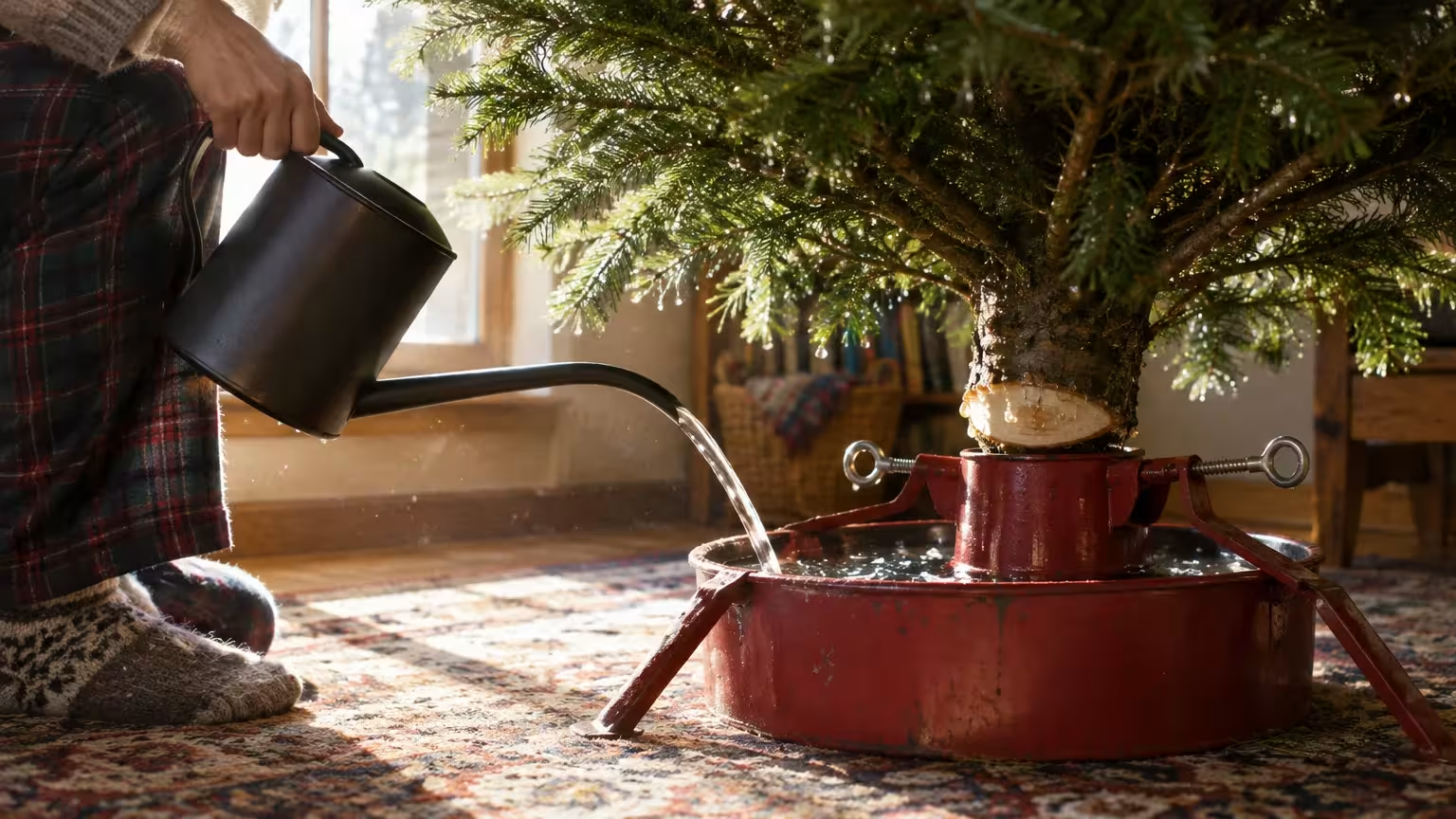
Cut the Trunk and Check Water Morning and Evening
Flammability testing by the Consumer Product Safety Commission (CPSC) and NIST shows a dry tree can bring a room to flashover in under one minute. A well-watered tree resists flame spread.
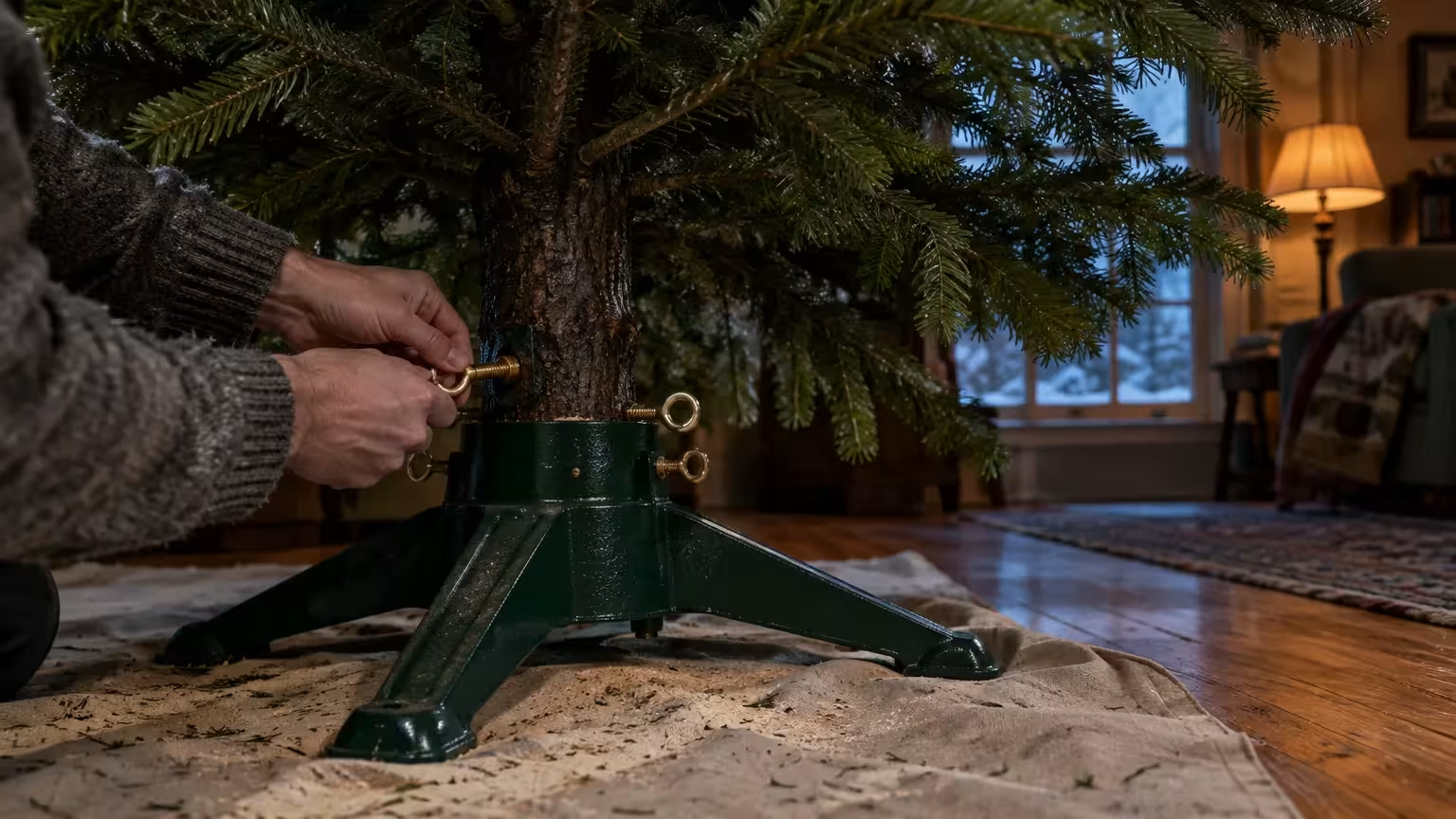
Cut 0.5 to 2 inches off the trunk base before mounting it to reopen channels sealed by dried sap. Make a level cut perpendicular to the trunk, not an angle or V, so it drinks well and sits stable.
A fresh tree drinks roughly one quart of water per inch of trunk diameter daily. A four-inch trunk can take a full gallon a day in its first week.
Trees lose moisture faster under indoor heating, and your room runs a heater most evenings. Check the reservoir every morning and every evening instead of once a day.
Never let the water line drop below the trunk base. If it does, sap can seal the cut within hours, and you will need to recut the trunk.
Use plain tap water. Skip additives, sugar, aspirin and bleach, which also keeps the stand safer for pets.
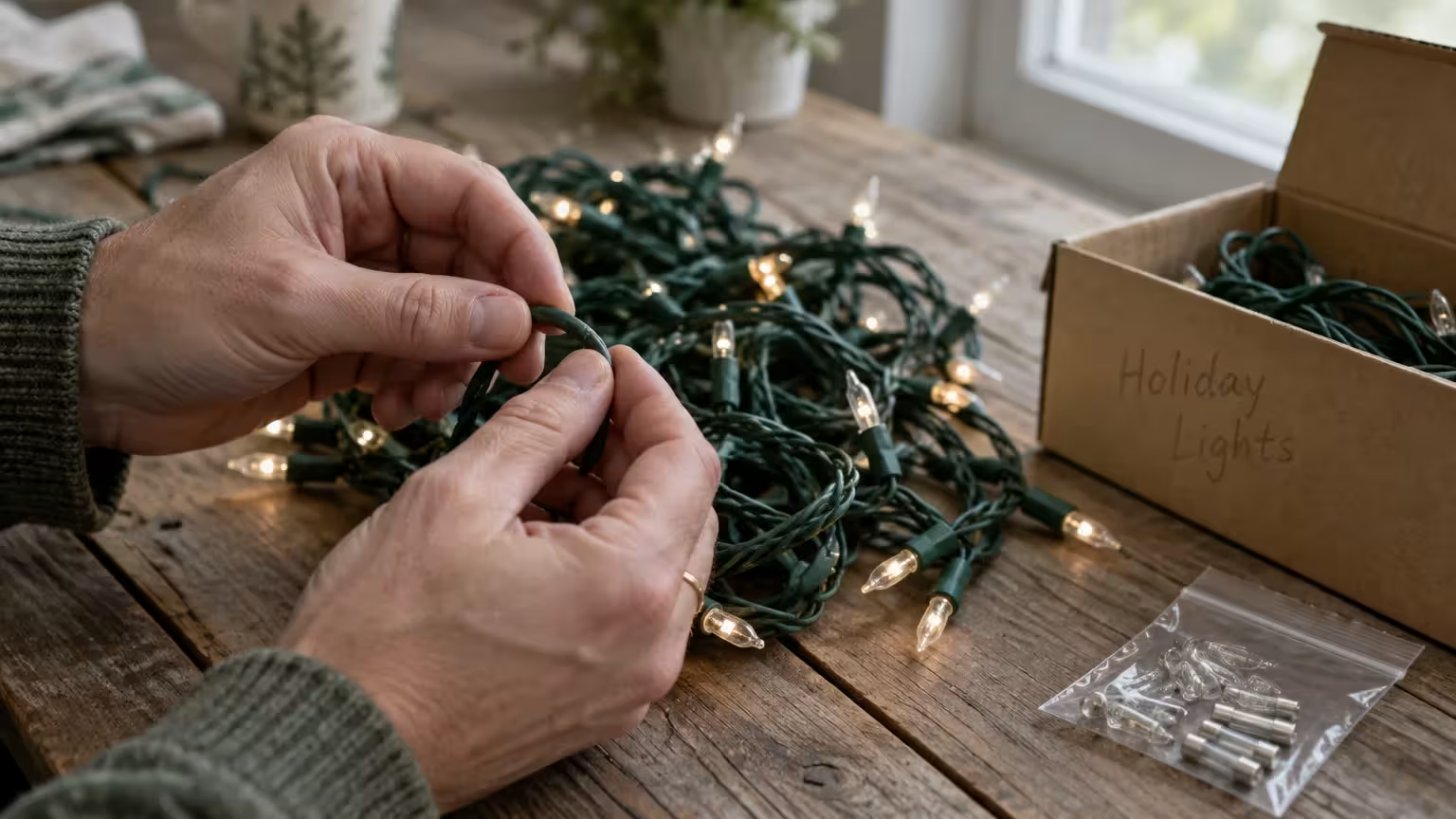
Inspect Reused Strands Before They Touch a Branch
Electrical distribution and lighting equipment cause 41 percent of Christmas tree fires, and lamps or bulbs cause another 20 percent. Reused strands from storage are where that risk hides.
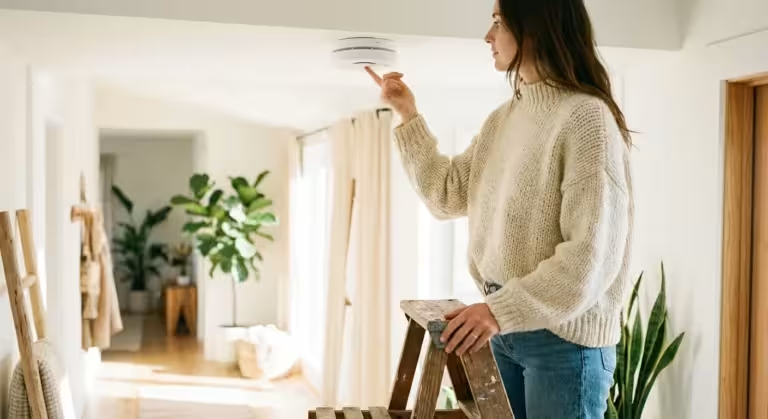
It is also a good week to test your smoke and carbon monoxide alarms.
Lay every strand flat on the floor. Run your fingers along each foot of wire for cracked insulation, fraying, chewed casing and loose sockets.
Confirm each strand carries a tag from a recognized lab such as UL or ETL. A red UL mark means indoor and outdoor use; green means indoor only.
Throw damaged strands in the trash. Light strings are disposable goods, so never splice, tape or patch them.
Standard seasonal strands are certified under UL 588 and National Electrical Code Article 590 for a maximum of 90 days. If you want year-round accent lighting, buy commercial strands certified under UL 153.
CPSC records show roughly 14,900 decorating injuries per season, averaging 160 hospital visits daily. Falls cause nearly half, with ladders involved in roughly 17 percent.
Use a sturdy, slip-resistant step stool instead of the sofa or a chair. Keep your hips centered between the rails.
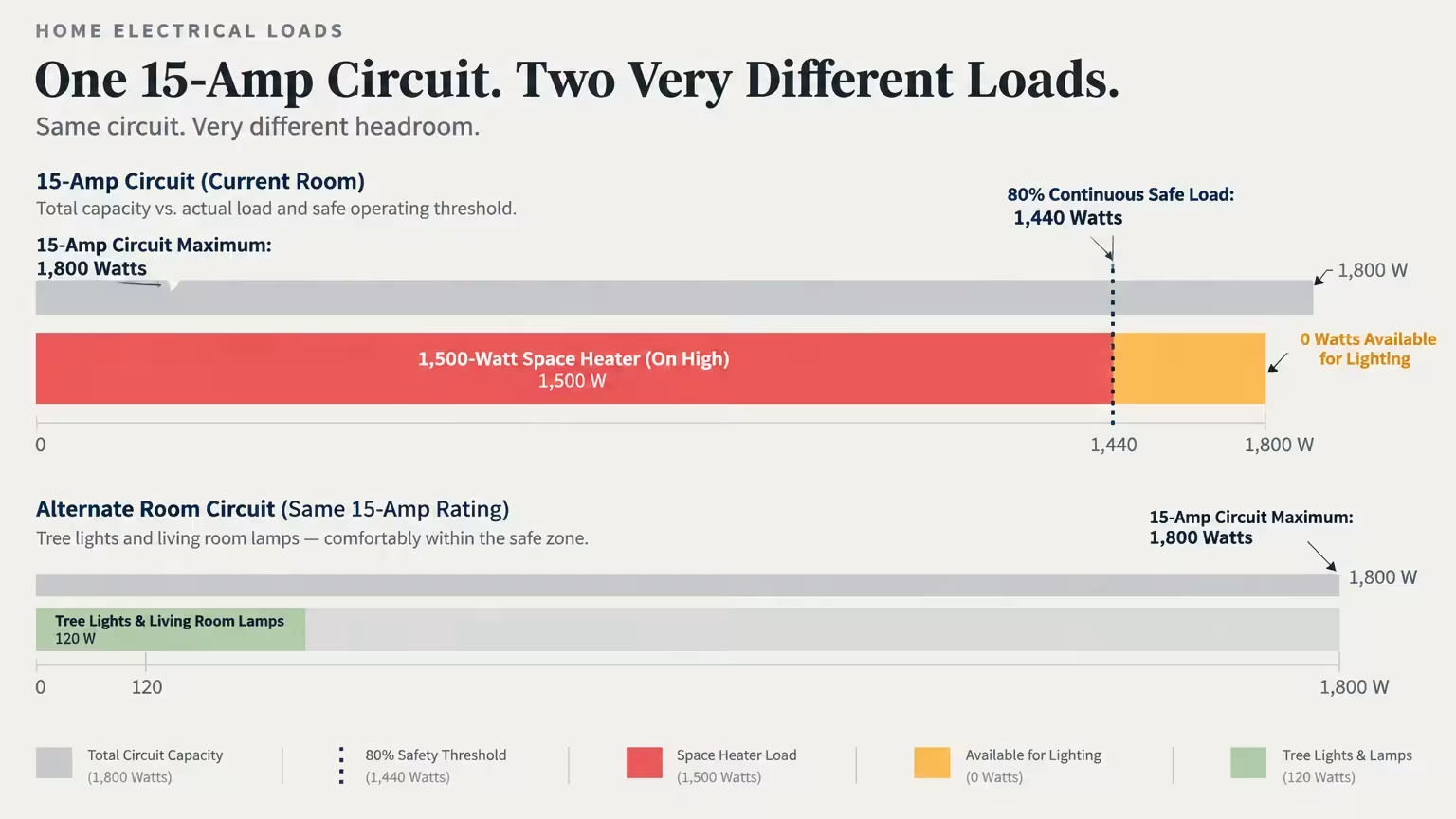
Budget the Circuit: A Worked Example
UL 588 limits end-to-end strand connections by total wattage, not the old three-strand rule. Read watts on each strand’s tag or box, and on the label on the heater’s base or back.
Here is the room described above, with one 15-amp circuit and its 1,440-watt continuous budget.
| Setup on One Circuit | Where to Read Watts | Total Watts | Within 1,440 W? |
|---|---|---|---|
| Five incandescent strands at 40.8 W | Strand tag or box | 204 | Yes |
| Five 100-bulb LED strands at 4.8 W | Strand tag or box | 24 | Yes |
| One 1,500 W space heater | Heater label | 1,500 | No, nearly all of it |
| Heater plus five incandescent strands | Both labels | 1,704 | No |
| Heater plus five LED strands | Both labels | 1,524 | No |
The last row is the point. LEDs cut the light load by 180 watts, yet the heater alone uses nearly the whole budget, so the tree needs another circuit or the heater rule.
Each strand run also has its own ceiling set by wire thickness. Too much current through thin wire builds heat that melts insulation.
| Wire Type | Gauge Printed on Cord | Maximum Capacity | Practical Connection Limit |
|---|---|---|---|
| Standard Mini-Lights | 22 AWG | 210 Watts | 3 to 5 incandescent strands, or up to 40 LED strands |
| Heavy Seasonal Strands | 20 AWG | 420 Watts | 8 to 10 incandescent strands, or up to 80 LED strands |
| Household Extension Cord | 16 AWG | 1,625 Watts (13 Amps) | Multiple light runs combined below cord rating |
| Heavy Utility Extension Cord | 14 AWG | 1,875 Watts (15 Amps) | High-draw multi-display setups and outdoor inflatables |
Five incandescent strands linked end to end draw 204 watts, just under the 210-watt limit for 22 AWG wire. A sixth overloads the small fuse in the plug.
Five LED strands draw 24 watts, leaving more than 185 watts of margin. LEDs are worth it for the strand run, even though they cannot rescue a shared heater circuit.
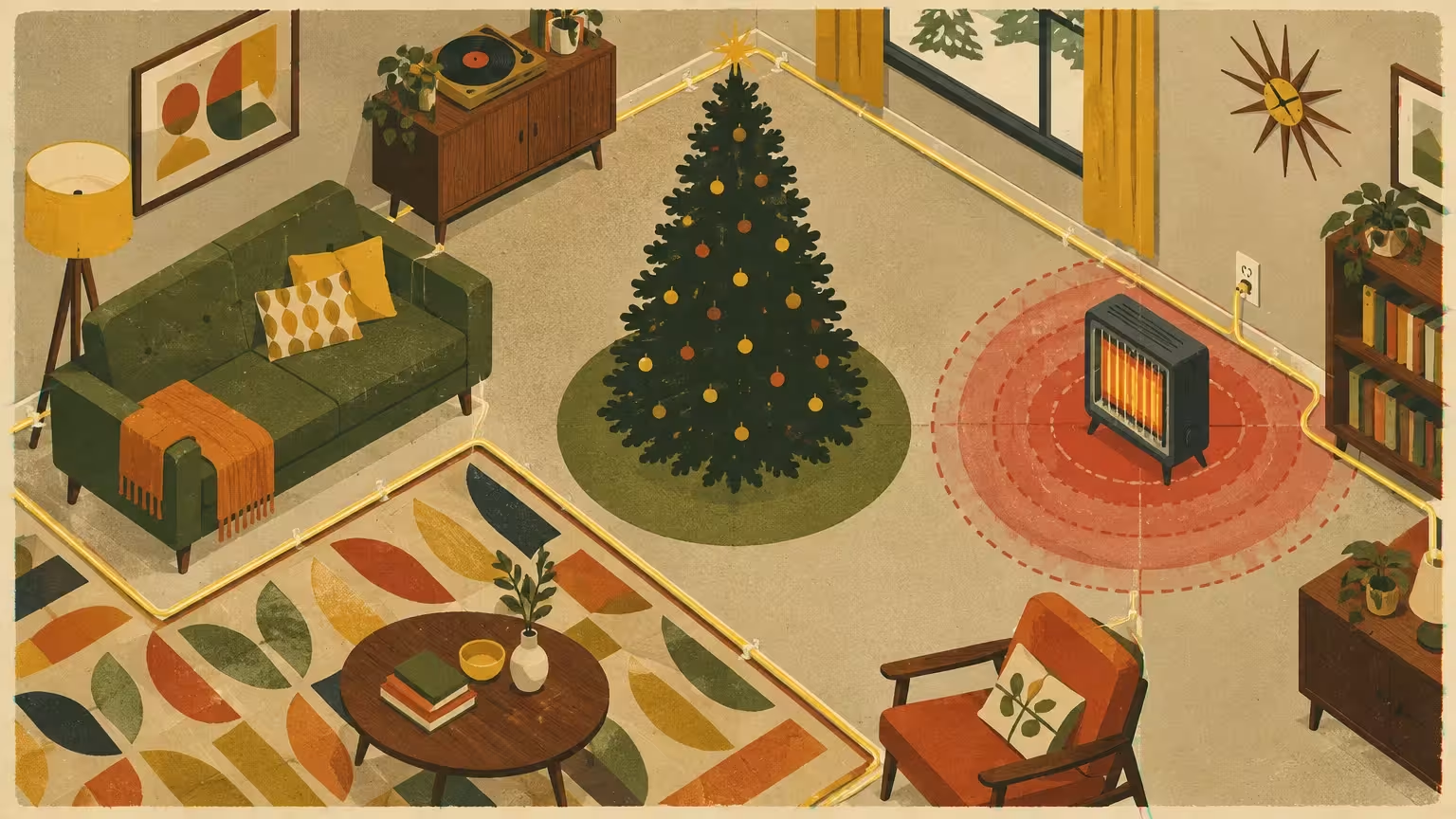
Route Cords Around the Heater Zone and Old Outlets
CPSC data shows roughly 4,000 emergency room visits a year from extension cord incidents. About half involve fractures, sprains and contusions from tripping.
Run cords flat along baseboards and secure them with painter’s tape or gaffer tape. Keep every cord outside the taped three-foot heater line and off open walkways.
Drafty rooms tend to gain extra rugs in winter, but never run power cords underneath area rugs, runners or furniture. Foot traffic damages the wire, and rugs trap heat.
After the lights run thirty minutes, touch the outlet faceplate. If it feels hot, unplug everything at once.
Warm faceplates, flickering strands or buzzing switches point to faulty wiring. Stop using that outlet and call a licensed electrician.
Plug the tree run into a mechanical timer or smart plug rated for the load, and set it to shut off when you sleep or leave. Check the label to confirm its plug fits a two-prong outlet without forcing.
Your Setup Schedule
- Evening before, 15 minutes: Map the living room circuit, label the heater’s breaker and pick a tree outlet on a different circuit.
- Minutes 0 to 10: Measure three feet from the heater, fireplace and registers to the nearest branch tip, tape the heater line and confirm exits are clear.
- Minutes 10 to 20: Saw 0.5 to 2 inches straight across the trunk base.
- Minutes 20 to 30: Mount the tree in a sturdy stand, tighten bolts evenly and pour in about a gallon of tap water for a four-inch trunk.
- Minutes 30 to 45: Inspect each strand on the floor, check UL or ETL tags and test each for five minutes.
- Minutes 45 to 55: Add up strand watts, stay under 210 per 22 AWG run and wrap from the inner trunk outward.
- Minutes 55 to 60: Tape cords along baseboards, set the timer and post your heater rule if both share a circuit.
- Every day after: Check water morning and evening; start the needle test the day after Christmas.
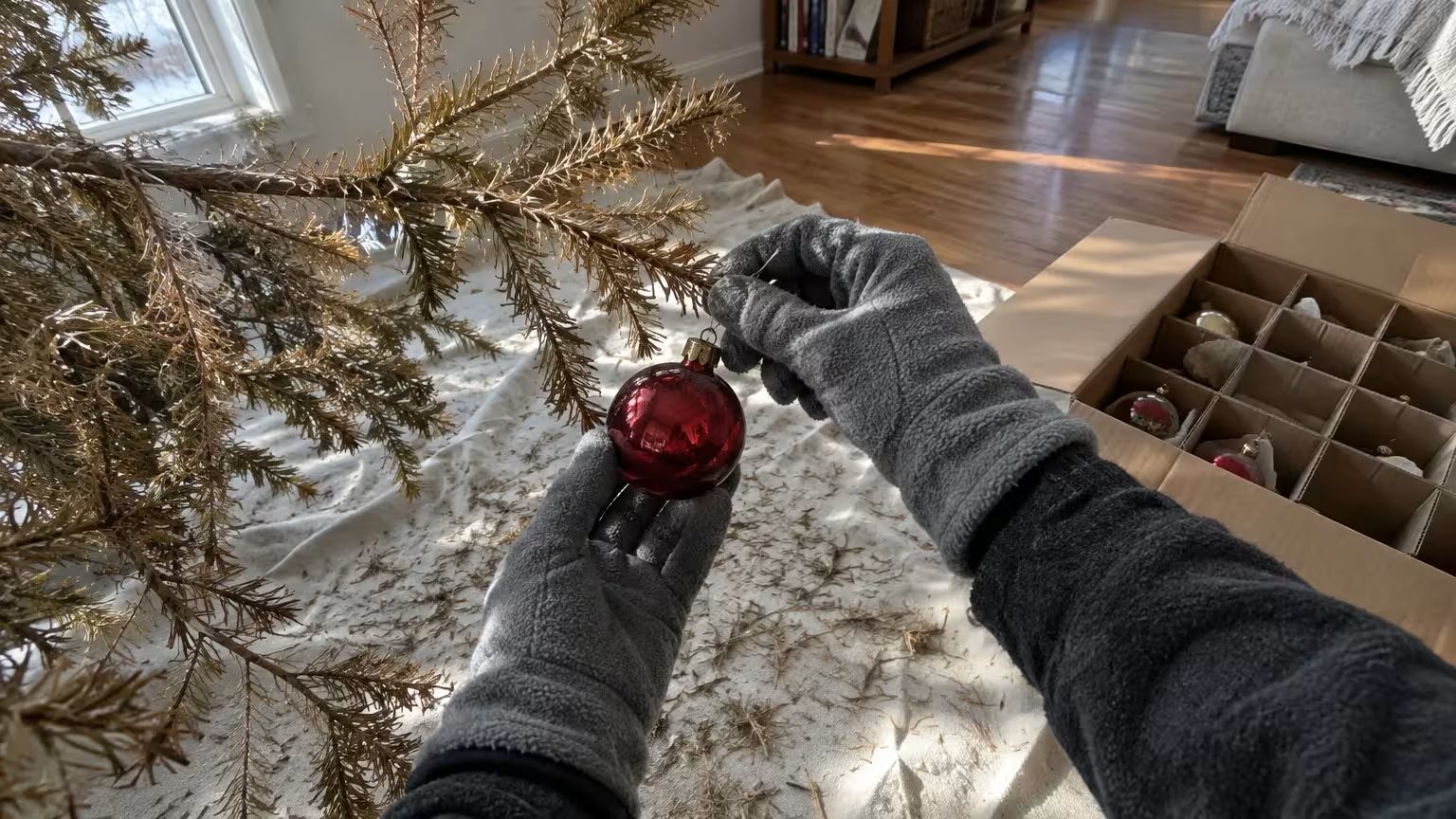
Take the Tree Down Before January Dries It Out
Risk rises as a cut tree loses moisture under indoor heat. NFPA reports that 35 percent of all home Christmas tree fires happen in January.
Bend a few needles each day. Fresh needles flex; dry ones snap.
If shaking a branch drops a shower of brown needles, take the tree down that day. A brittle tree in a room with a running heater is not worth another week.
Unplug every strand before removing ornaments or pulling wires out of dry branches. Energized strands dragged through brittle foliage can break hot bulbs onto needles.
Recycle the tree through curbside yard-waste pickup or a community drop-off site, where many programs chip trees into mulch.
Never burn branches, trunks or needles in your fireplace or wood stove. Resin burns fast and leaves creosote deposits that can start chimney fires.
If you burn wood this season, start with chimney and fireplace maintenance before winter.