
A small bathroom often feels like a design puzzle. You want functionality, comfort, and style, but a cramped space makes achieving those goals challenging. Many homeowners and renters face this dilemma, feeling restricted by limited square footage. The good news is you can transform even the tiniest washroom into a sanctuary that feels surprisingly spacious. You do not need to knock down walls or undertake a massive renovation. Instead, you can employ clever design tactics and smart organizational principles to create a welcoming, expansive feel. This guide provides practical, actionable insights to help you maximize your small bathroom’s potential, making it feel brighter, airier, and significantly larger.
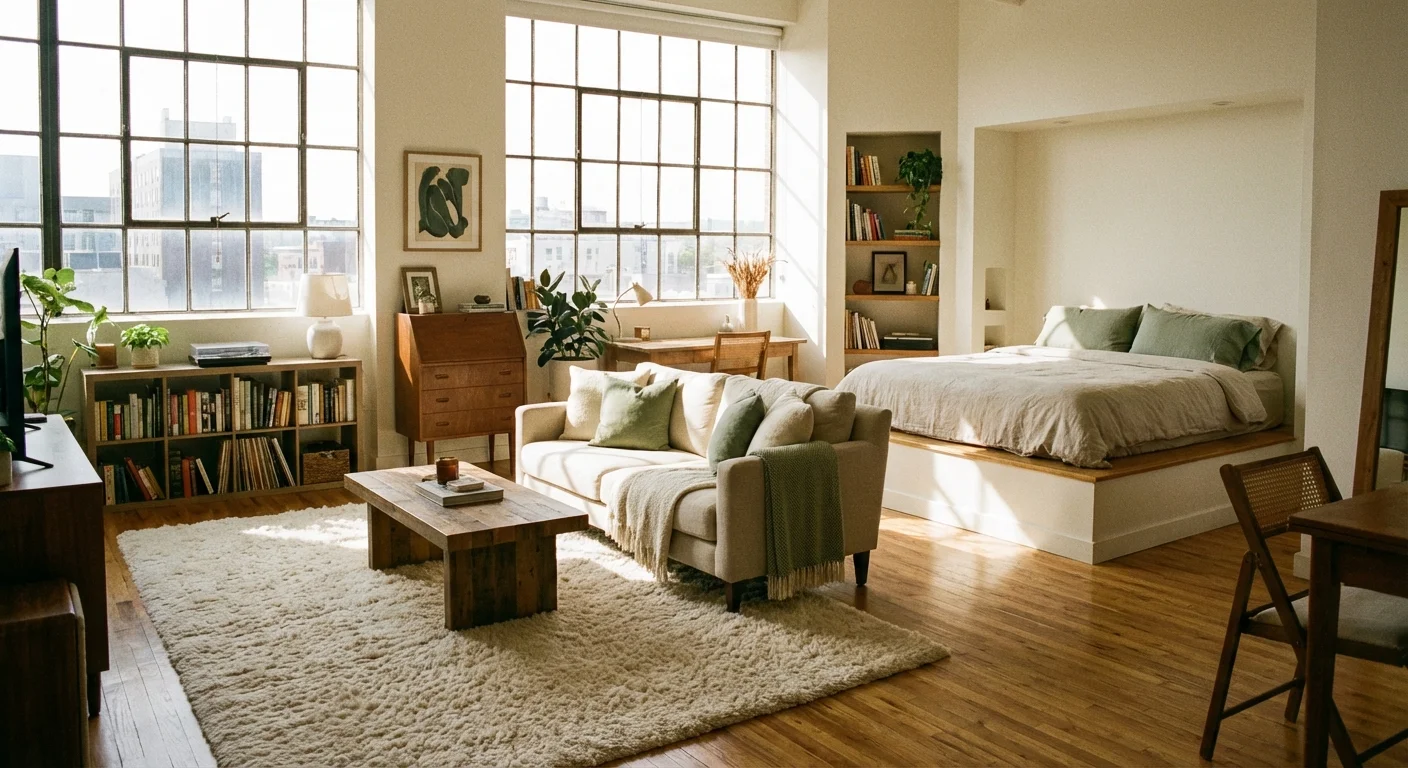
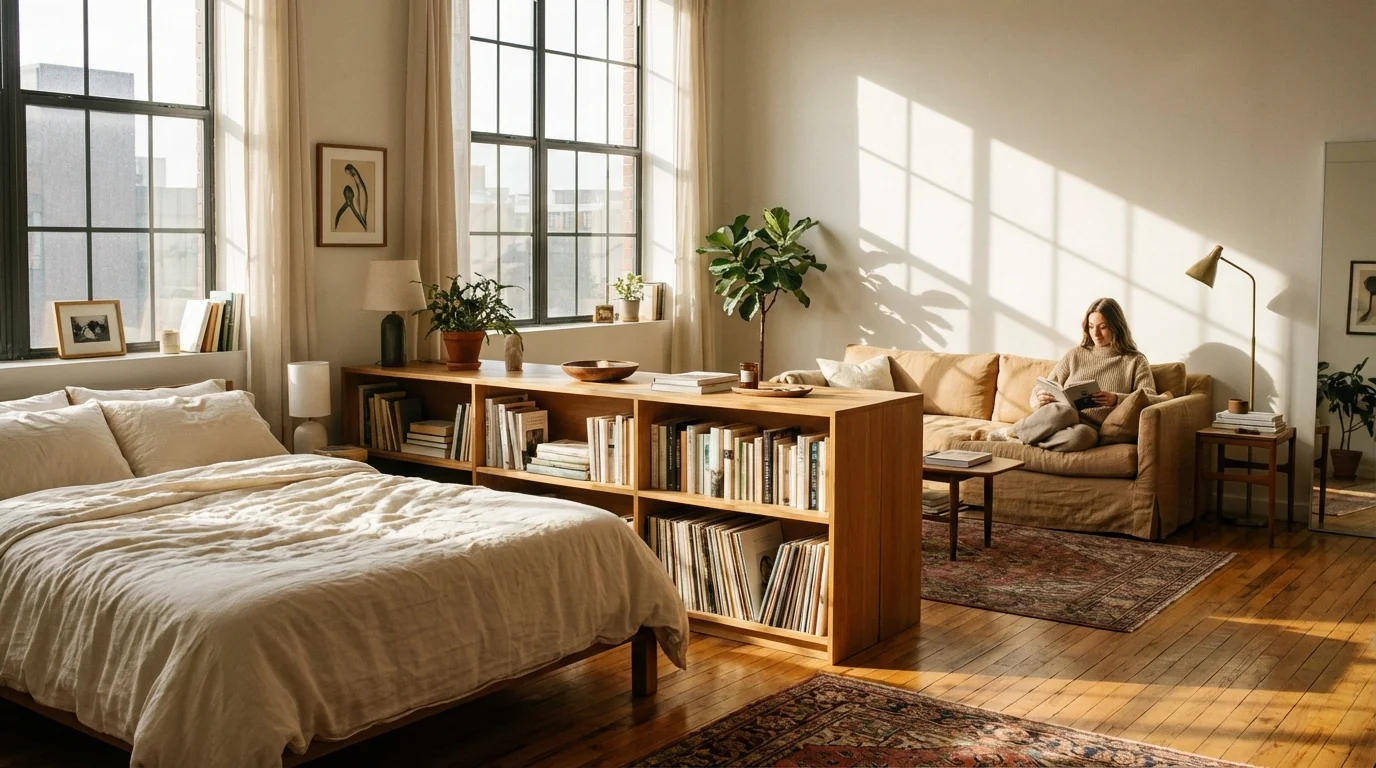
Applying these visual tricks is a core part of effective studio apartment layout tips for any compact living area.
The Magic of Space Illusion: How Your Brain Interprets “Bigger”
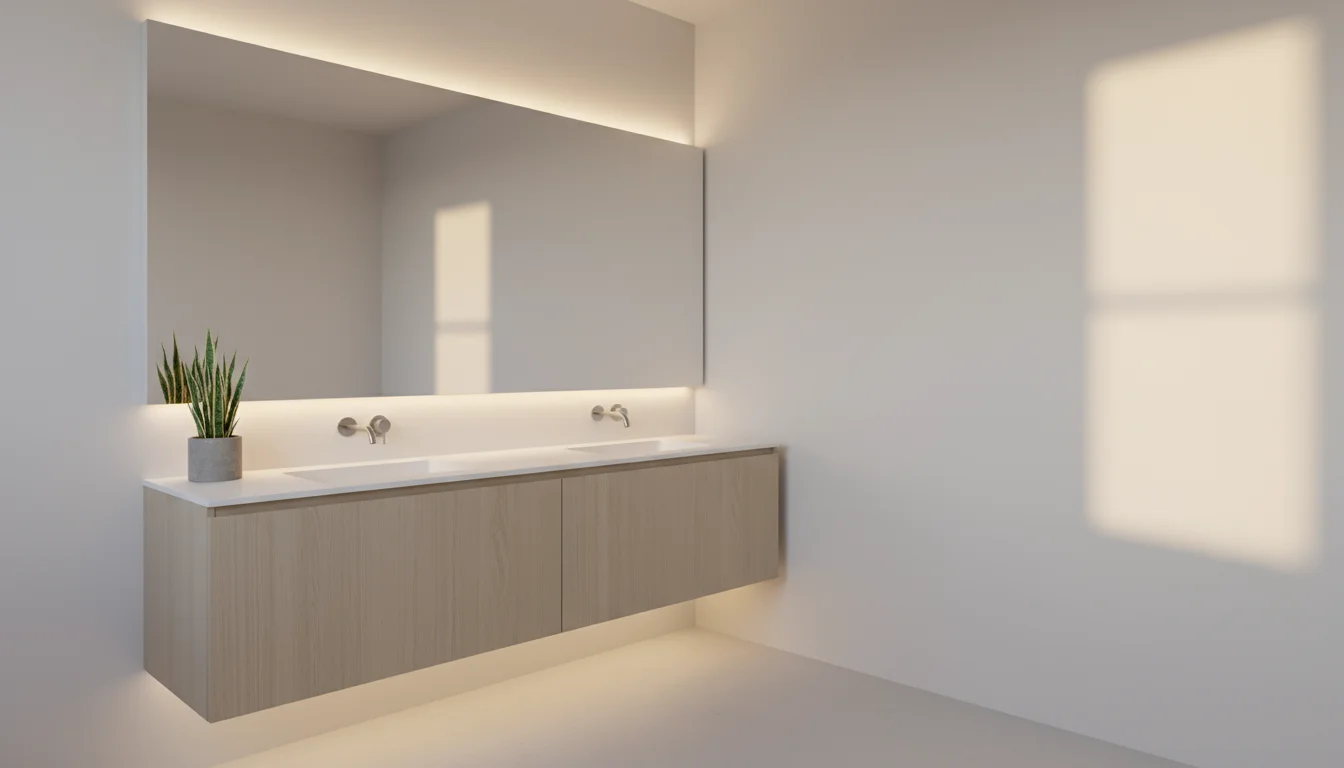
Understanding how your brain perceives space is the first step in making a small bathroom feel bigger. Your perception of size is not just about physical dimensions; it is heavily influenced by visual cues like light, color, and reflections. When you walk into a room, your eyes scan for boundaries, textures, and points of interest. By manipulating these elements, you can trick your brain into perceiving openness where there might be physical confinement. This is the core of creating a successful space illusion. You are not physically expanding the room, but you are creating an environment that feels less enclosed and more breathable.
For instance, an unbroken line of sight can make a room feel longer, while a well-lit corner appears less imposing than a dark one. The strategic use of vertical lines draws the eye upward, suggesting height, while reflective surfaces bounce light, mimicking additional space. Implementing these techniques allows you to design a small bathroom that actively works against its physical limitations, offering a comforting and more spacious experience.
Strategic Color and Lighting: Brighten and Expand Your Canvas
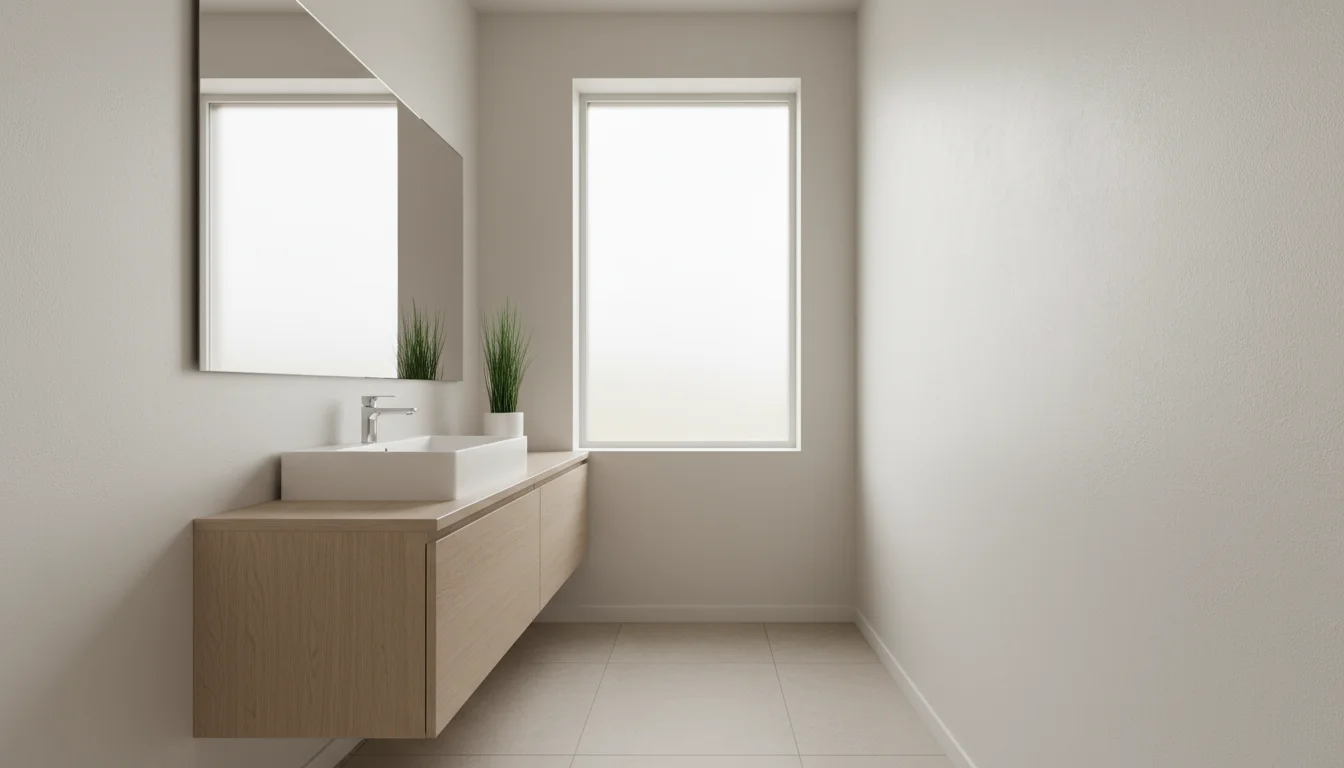
Color and light are your most powerful allies in expanding a small bathroom visually. Light colors reflect more light, making walls recede and creating an open, airy atmosphere. Dark colors absorb light, causing surfaces to appear closer and making a small room feel even smaller and more enclosed.
Choose Your Palette Wisely
Opt for a light, monochromatic color scheme. Whites, off-whites, pastels, and cool neutrals like light grays or blues work best for walls, ceilings, and even floors. This creates a seamless visual flow, preventing your eyes from stopping at harsh color changes that define boundaries. According to Good Housekeeping, using a uniform color throughout the space, including the ceiling, helps blur the lines between surfaces, making the room feel taller and wider. You can introduce texture and subtle variations within this palette to add interest without sacrificing the illusion of space.
Illuminate Every Corner
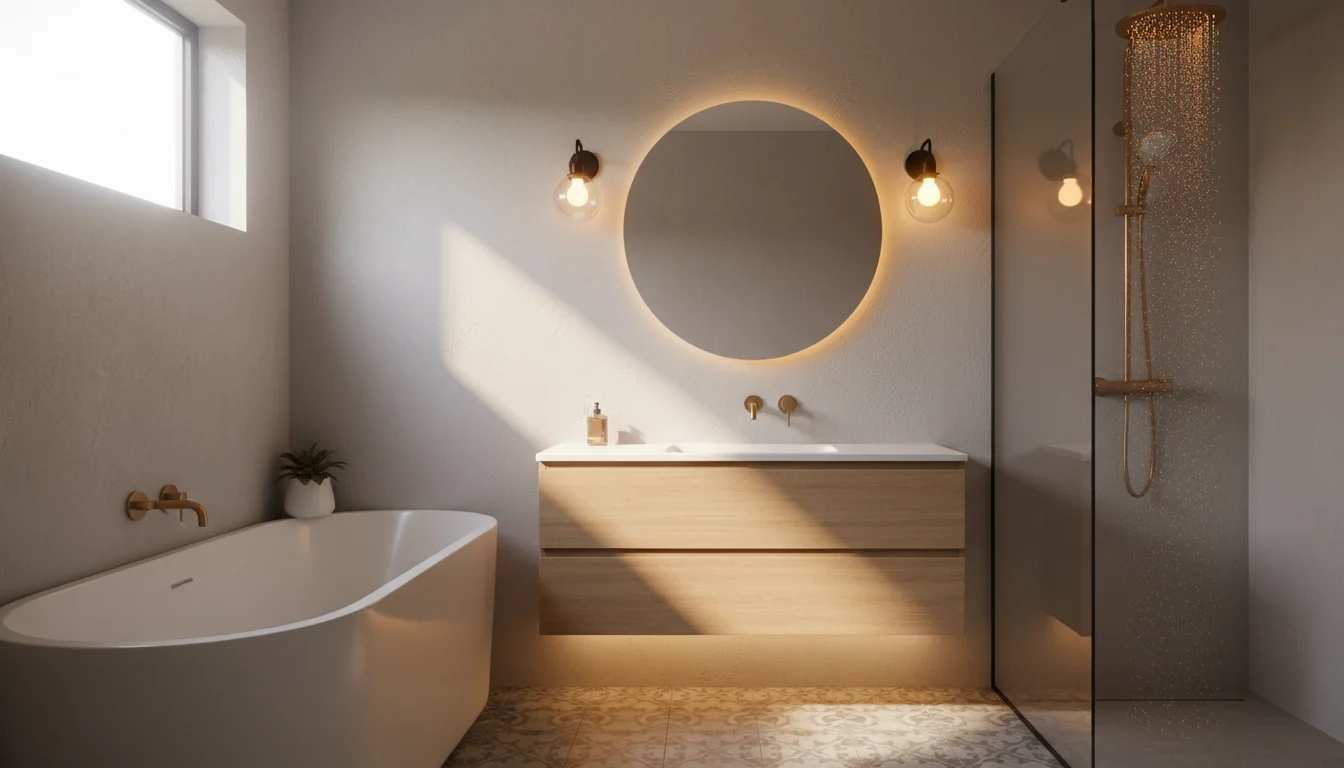
Lighting plays an equally crucial role. Maximize natural light as much as possible. Keep windows uncovered or use light, sheer window treatments that allow sunlight to filter through. For artificial lighting, layer your sources. Instead of a single overhead fixture, incorporate multiple light sources:
- Ambient Lighting: A bright, diffused overhead light provides general illumination.
- Task Lighting: Sconces or LED strips around your mirror eliminate shadows and provide functional light for grooming.
- Accent Lighting: Small recessed lights or a subtle strip light in a niche can highlight features and add depth.
Avoid harsh, single-source lighting that creates shadows and visually shrinks the room. Bright, even illumination throughout the space makes it feel more expansive and inviting.
Maximize Reflections with Mirrors and Glass
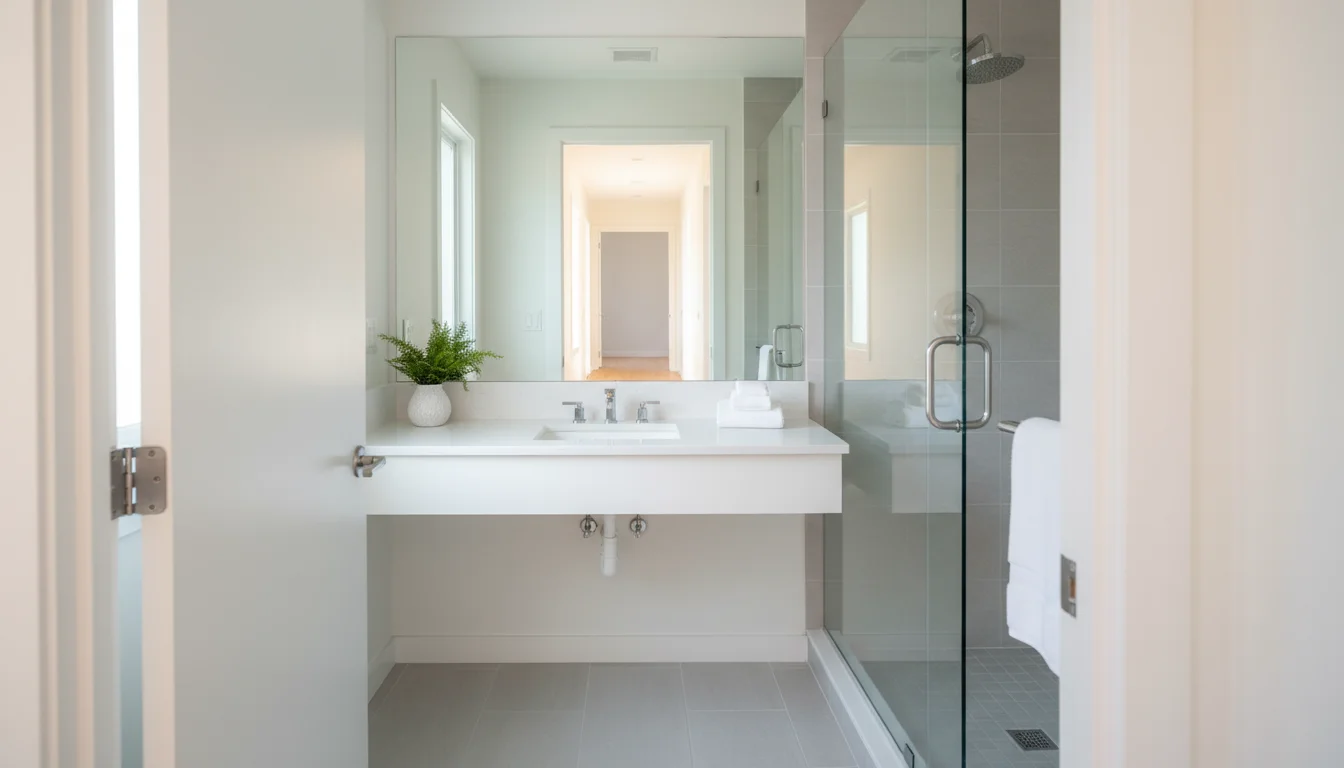
Reflective surfaces are an essential tool for creating a powerful space illusion in a small bathroom. They bounce light, multiply views, and essentially double the perceived size of your room.
The Power of Large Mirrors
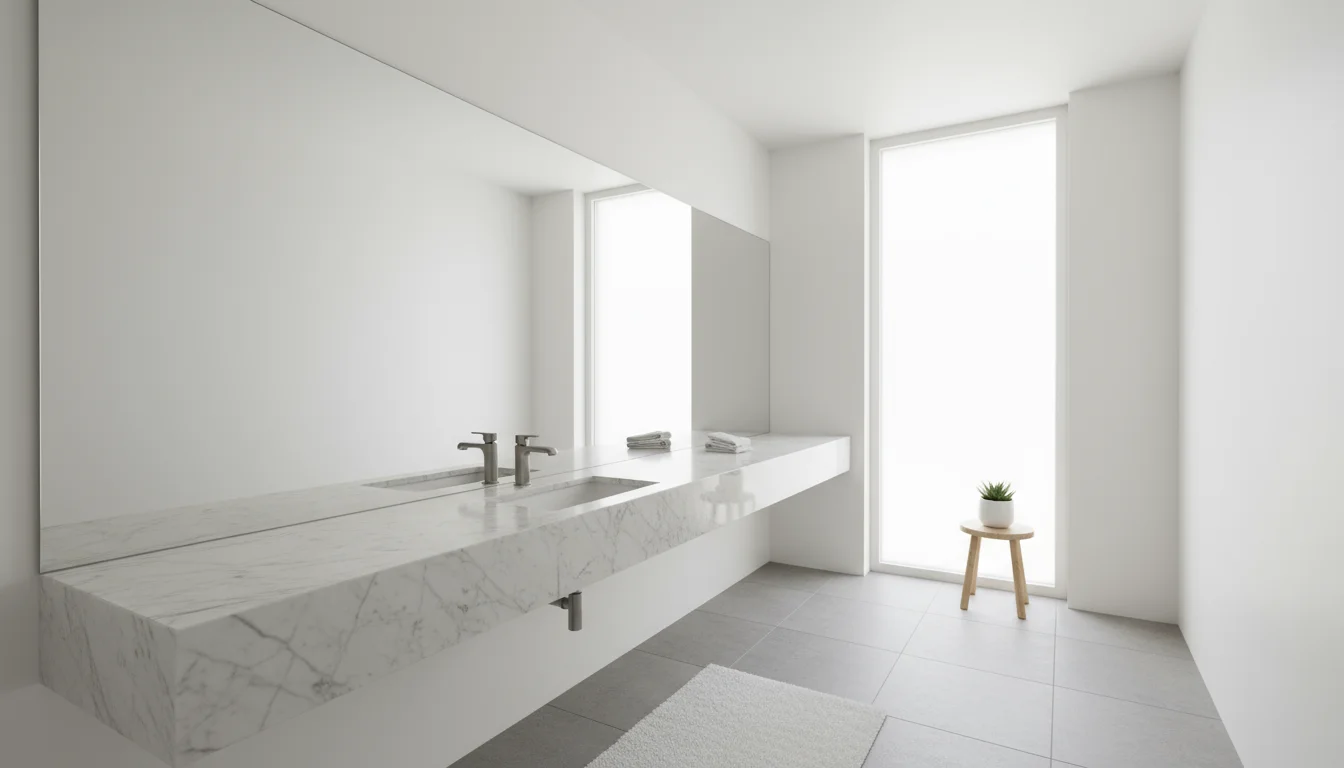
A generously sized mirror is a non-negotiable element in a small bathroom design. Instead of a standard vanity mirror, consider a wall-to-wall mirror or one that extends almost to the ceiling. Place it strategically to reflect light from a window or an attractive part of the room, like a decorative wall or a plant. The reflection tricks your eye into believing there is more space beyond the mirror’s surface. Opt for frameless mirrors or those with very thin, light frames to maintain a clean, unbroken line. A well-placed large mirror offers one of the most impactful ways to create a significant sense of openness.
Embrace Glass Shower Enclosures
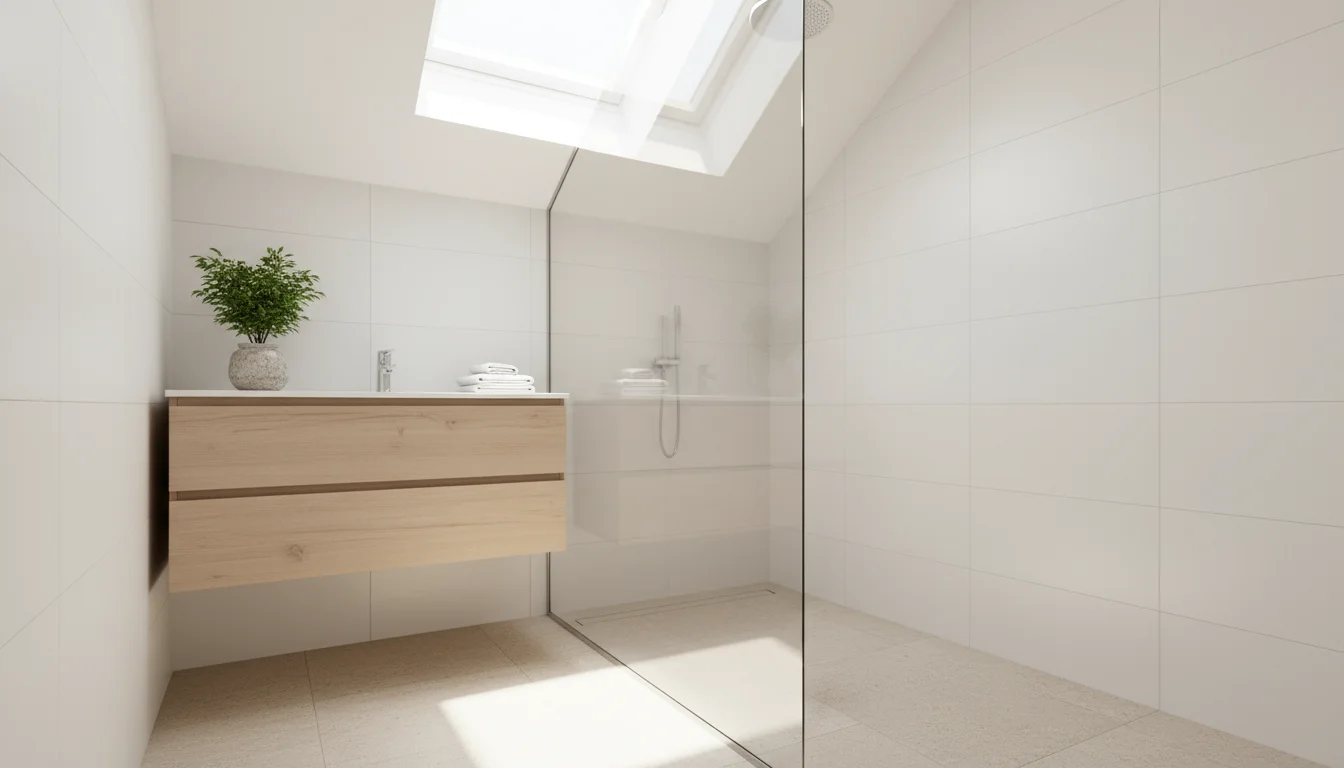
If your bathroom has a shower, ditch the opaque shower curtain. A clear glass shower enclosure is a game-changer. It allows your eye to see all the way to the back wall of the shower, eliminating a visual barrier that would otherwise chop up the room. This uninterrupted line of sight immediately makes the bathroom feel larger and more cohesive. Opt for frameless or minimal-frame glass to keep the look sleek and modern. This design choice contributes immensely to the overall space illusion, making your small bathroom feel more open and connected.
Unlock Every Inch with Smart Storage Solutions
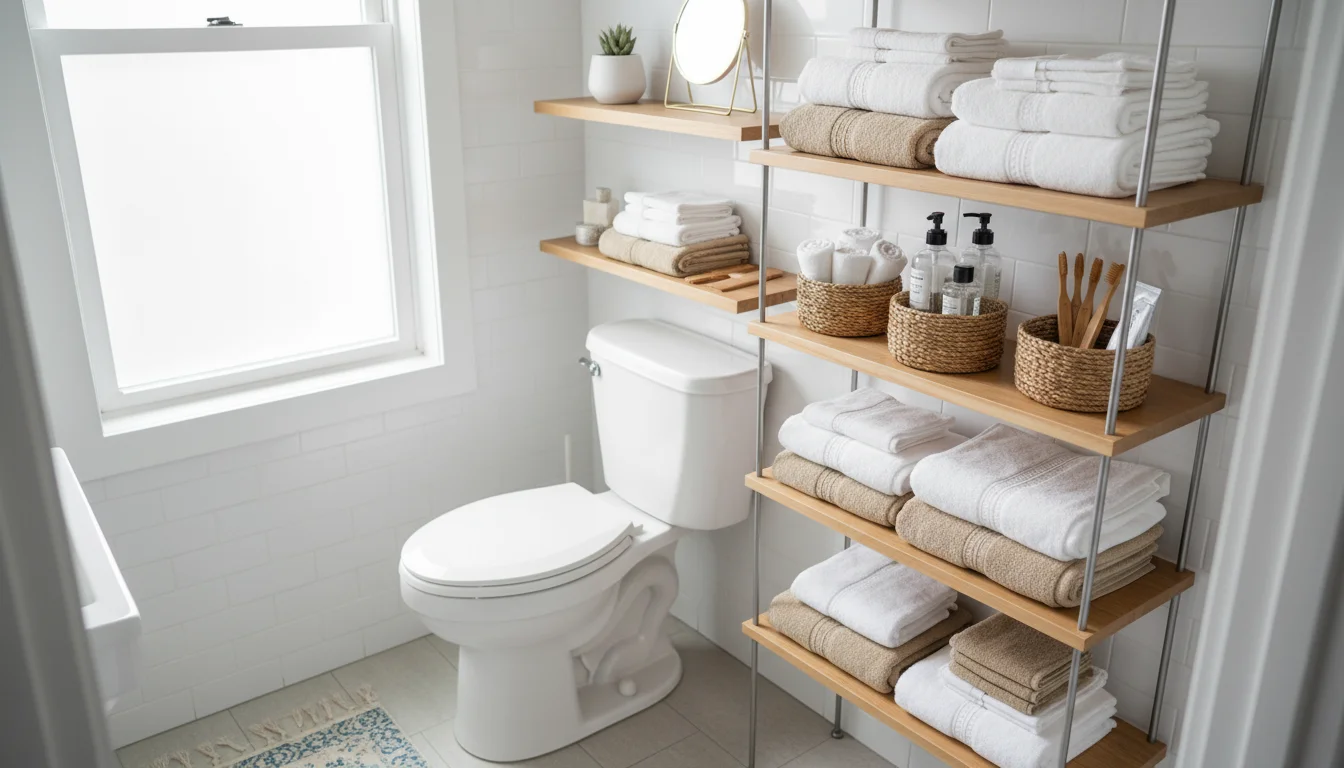
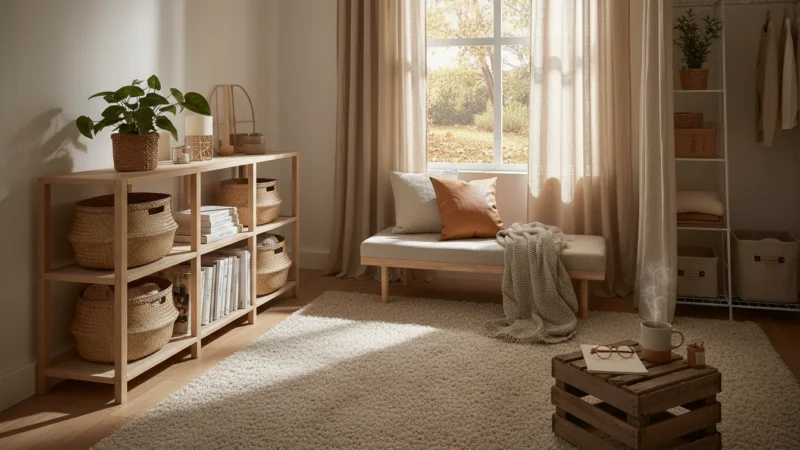
Clutter instantly shrinks a room, and nowhere is this more true than in a small bathroom. Efficient, vertical storage is critical to keeping surfaces clear and maximizing functionality without sacrificing valuable floor space. You need practical, actionable systems to maintain order, even in the tightest quarters.
Managing tight quarters here requires a similar mindset to tiny kitchen organization, where every square inch must be intentional.
Think Vertically: Look Up
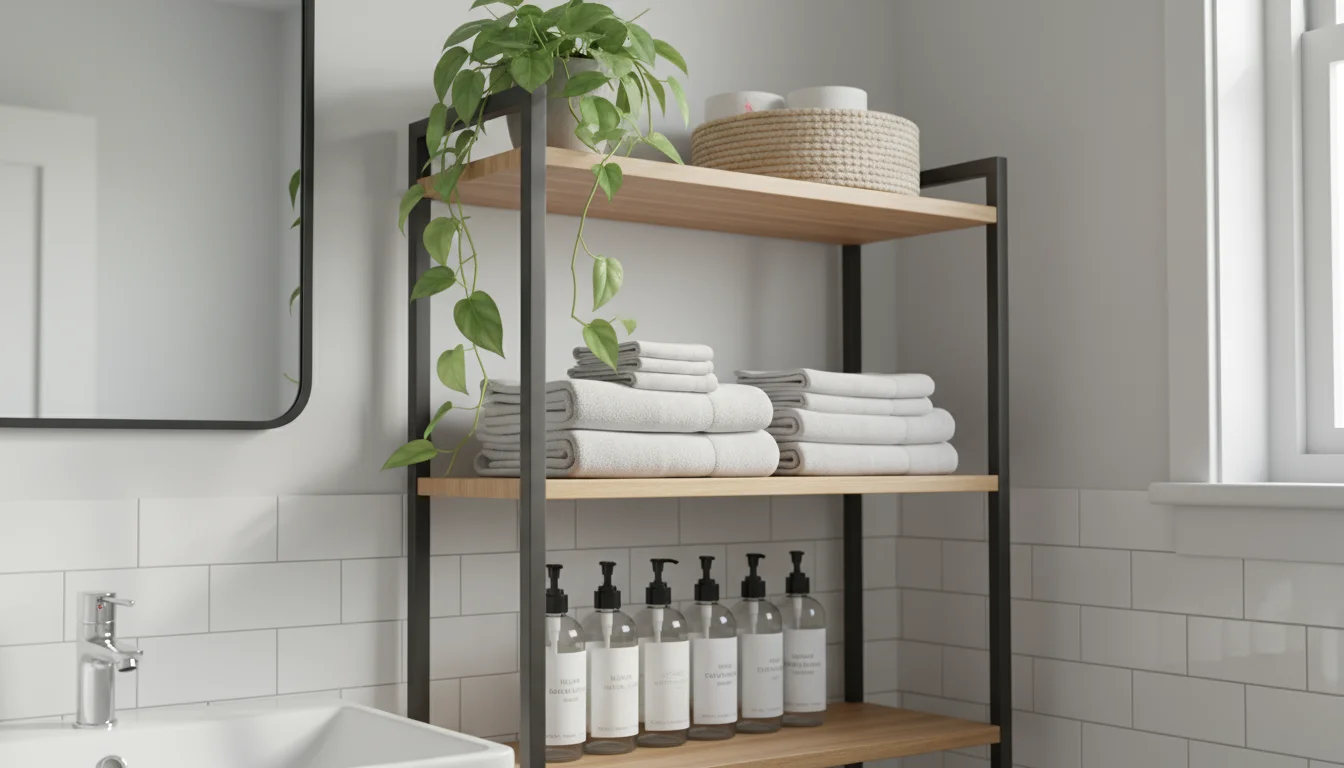
When floor space is scarce, build up. Vertical storage draws the eye upward, emphasizing height and creating additional storage capacity. Here are some effective strategies:
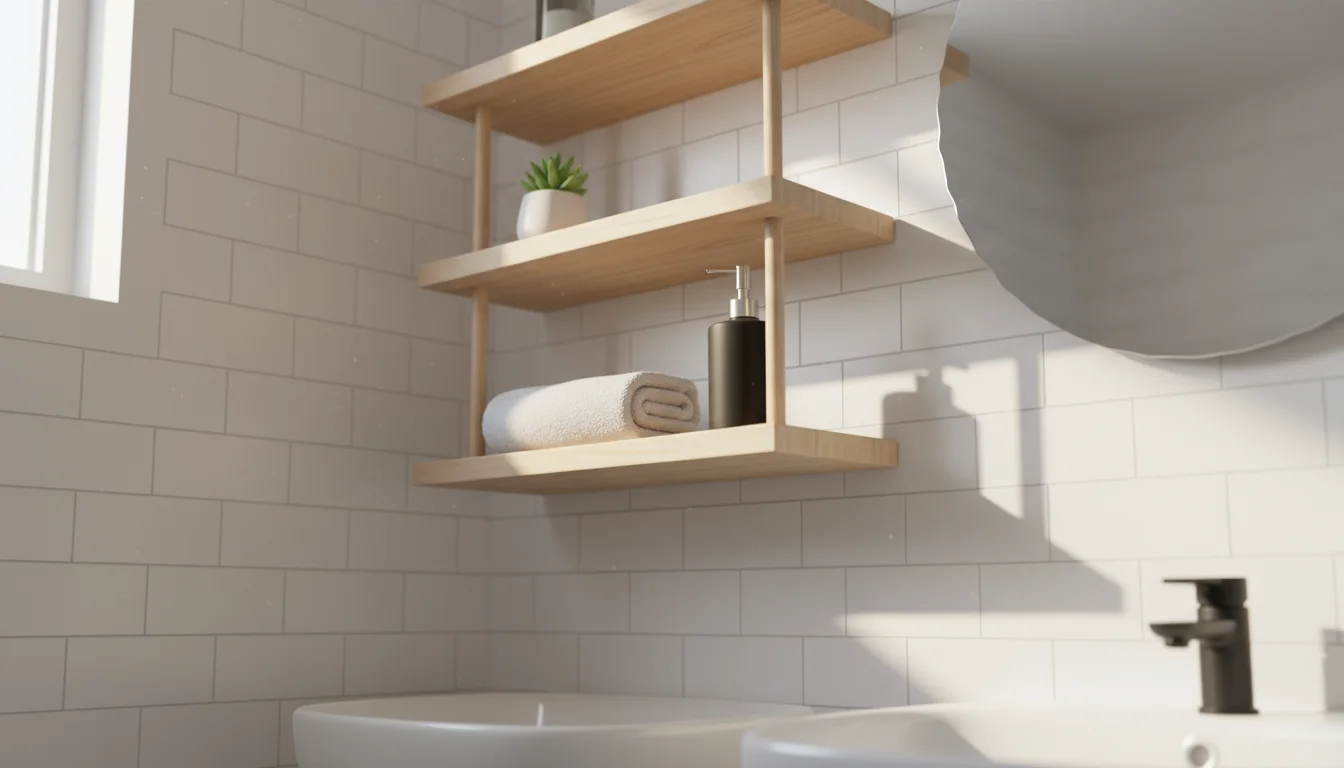
- Wall-Mounted Shelves: Install floating shelves above the toilet, next to the mirror, or even over the doorframe. These provide visible storage for essentials or decorative items without cluttering the floor.
- Over-the-Toilet Storage Units: These units utilize often-unused space above the toilet, offering shelves or cabinets for towels, toiletries, and cleaning supplies.
- Tall, Narrow Cabinets: If you have a sliver of wall space, a slim, tall cabinet can offer significant storage for linens and bulkier items.
- Recessed Niches: If renovating, consider adding recessed niches within the shower or wall cavities. These provide storage that is flush with the wall, creating a clean, integrated look without protruding into the space.
Under-Sink and Inside-Door Organization
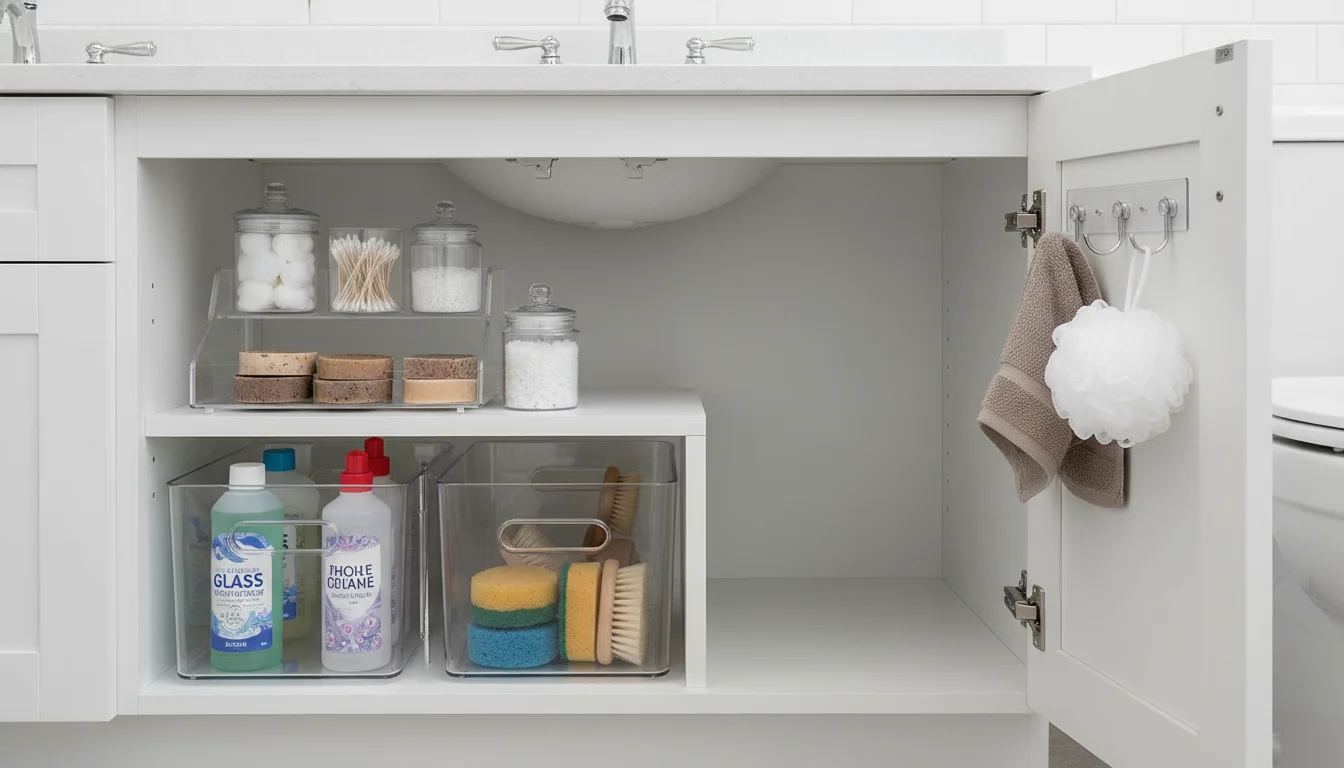
Your vanity or sink area often holds untapped potential. Use smart organizers to make the most of this space:
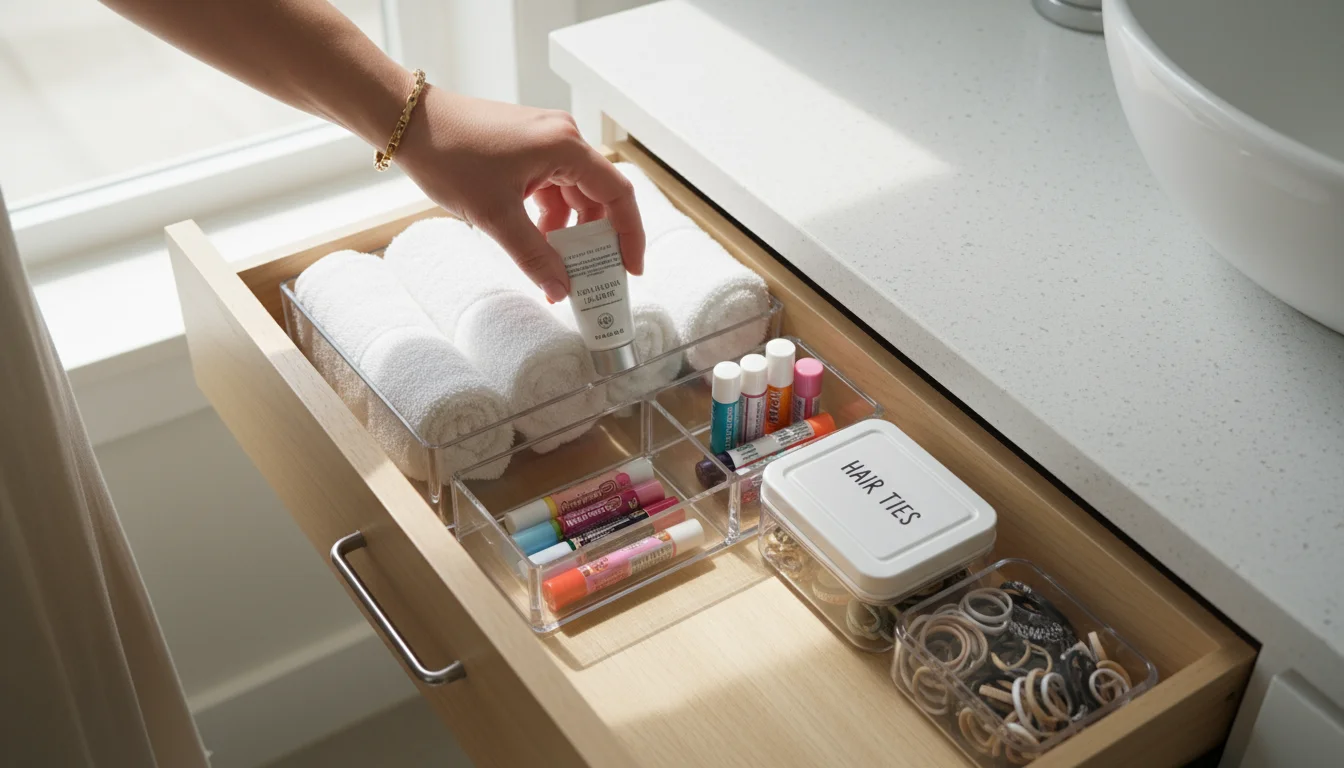
- Pull-Out Drawers and Bins: For vanities, use pull-out drawers or bins to categorize items and prevent them from getting lost in the back.
- Tiered Organizers: These maximize vertical space inside cabinets, allowing you to store more items efficiently.
- Door-Mounted Storage: Add hooks or slim organizers to the inside of cabinet doors or the main bathroom door for hair tools, small toiletries, or cleaning cloths.
According to Apartment Therapy, employing multi-functional furniture and utilizing every vertical plane transforms a cramped space into a highly organized and efficient area. By strategically storing items, you reduce visual clutter, which helps a small bathroom feel more open and welcoming.
Choose Space-Saving Fixtures and Clever Layouts
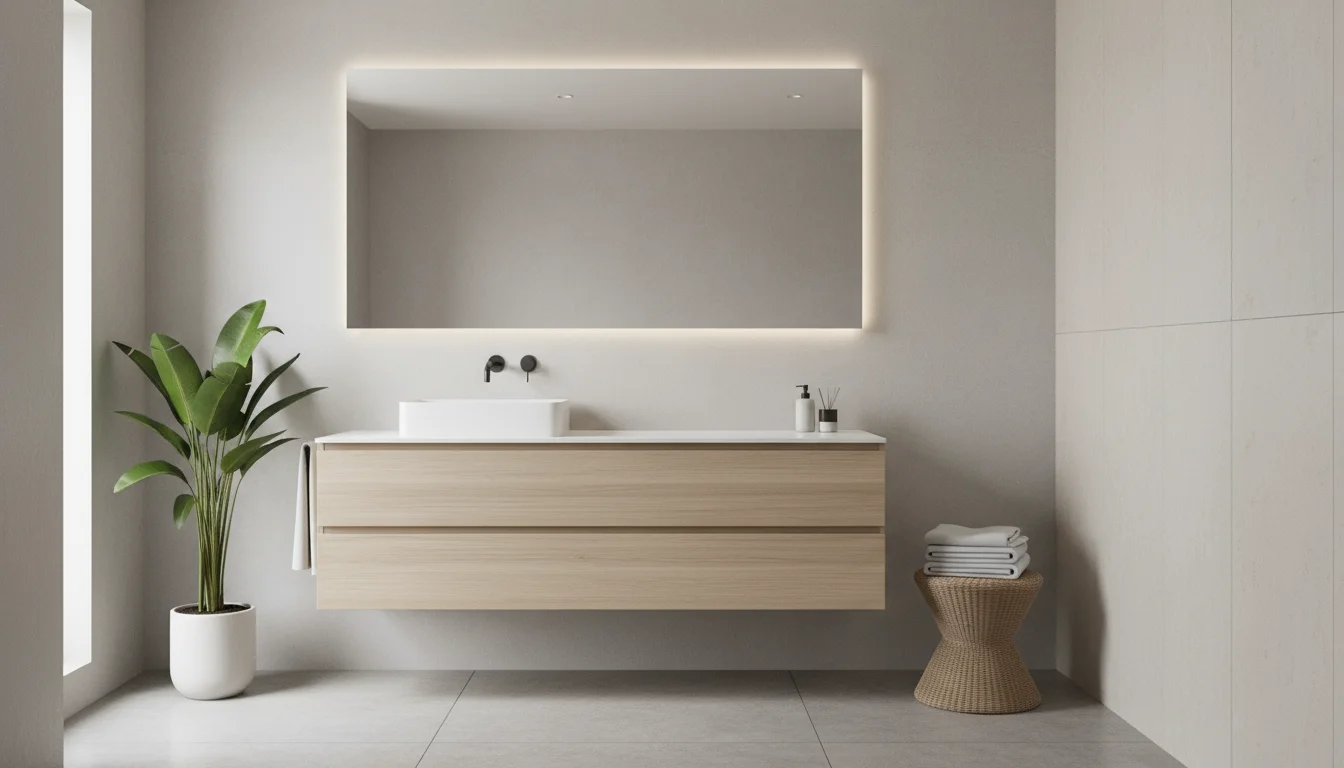
The fixtures you select and their placement significantly impact how spacious your small bathroom feels. Prioritize compact, wall-mounted, and visually light options to free up floor space and create an open aesthetic.
Many of these swaps are part of a bathroom refresh under $200 that can modernize your space on a budget.
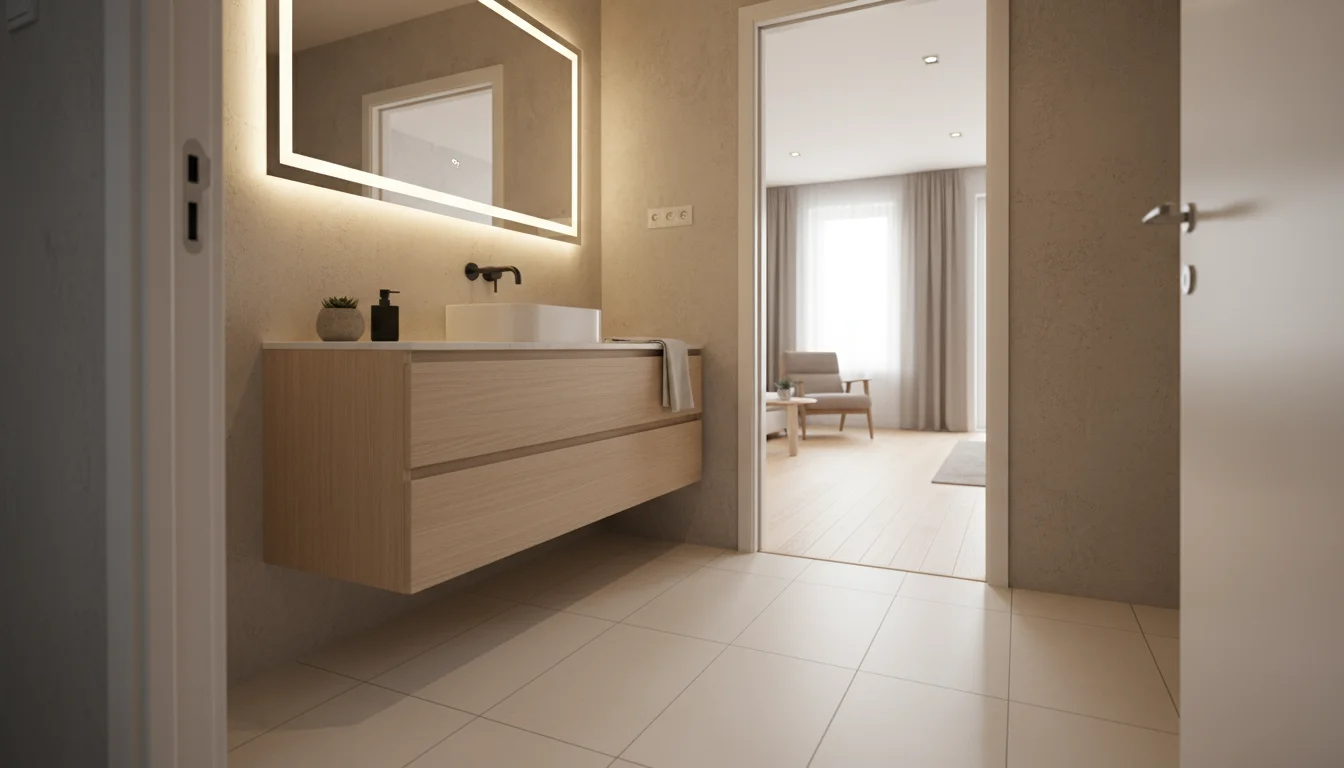
Floating Vanities and Pedestal Sinks
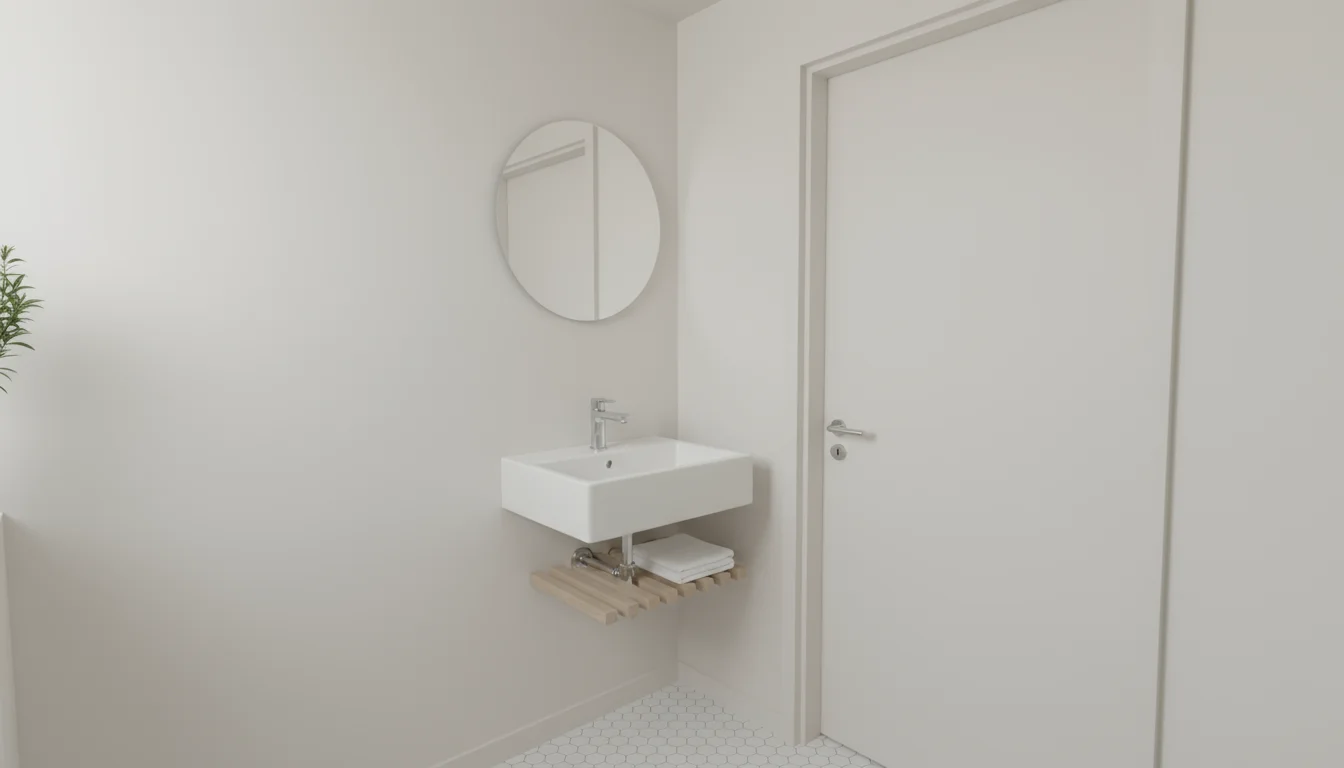
Instead of a bulky vanity that extends to the floor, opt for a floating vanity. Mounting the vanity to the wall creates an open space beneath it, making the floor visible and extending the eye line across the room. This simple change offers a significant visual expansion. If a vanity is not essential, a pedestal sink or a wall-mounted sink achieves a similar effect, exposing more of the floor and making the room feel larger. Experts at This Old House often recommend pedestal sinks for small bathrooms due to their minimal footprint, which maximizes visual floor space.
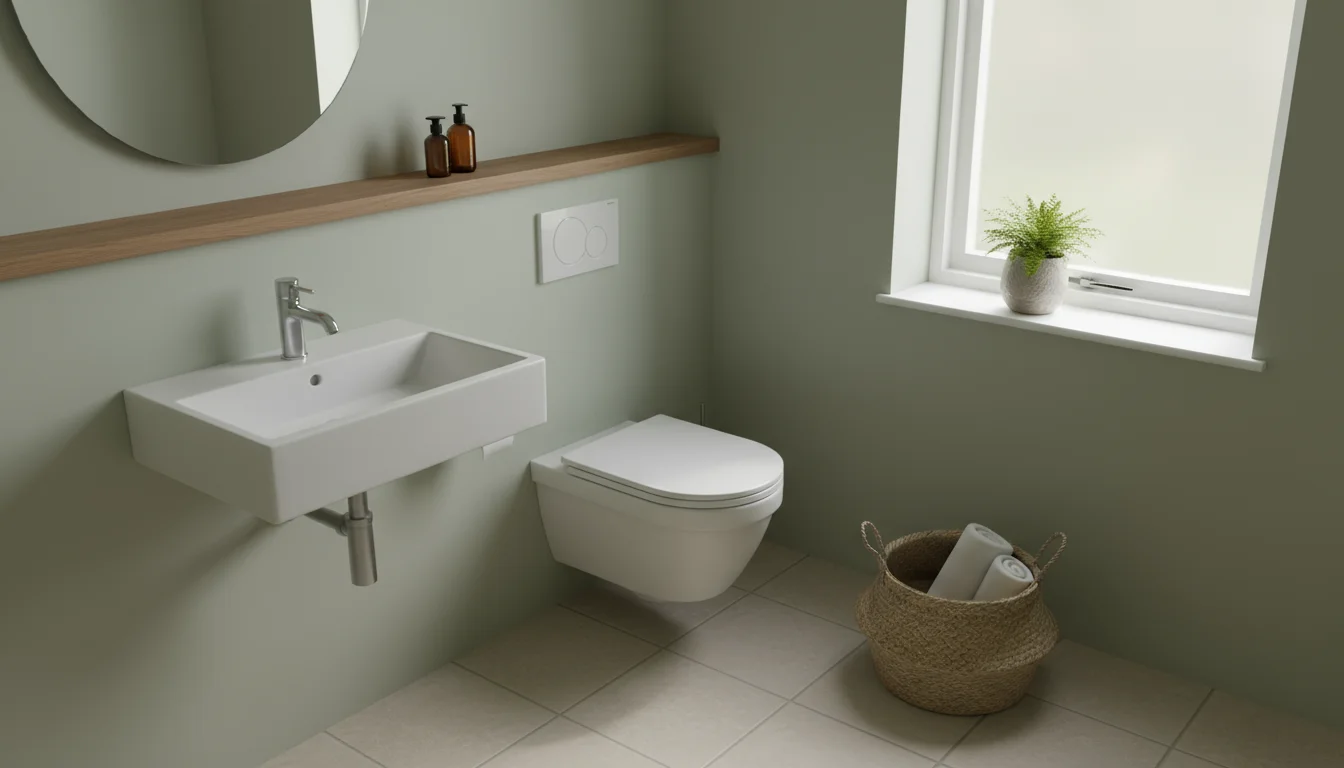
Wall-Mounted Toilets
Similar to floating vanities, a wall-mounted toilet conceals the tank within the wall, leaving only the bowl visible and floating above the floor. This provides a sleek, modern look and frees up a few precious inches of floor space, contributing to the overall illusion of openness. While a more involved installation, the impact on perceived space is considerable.
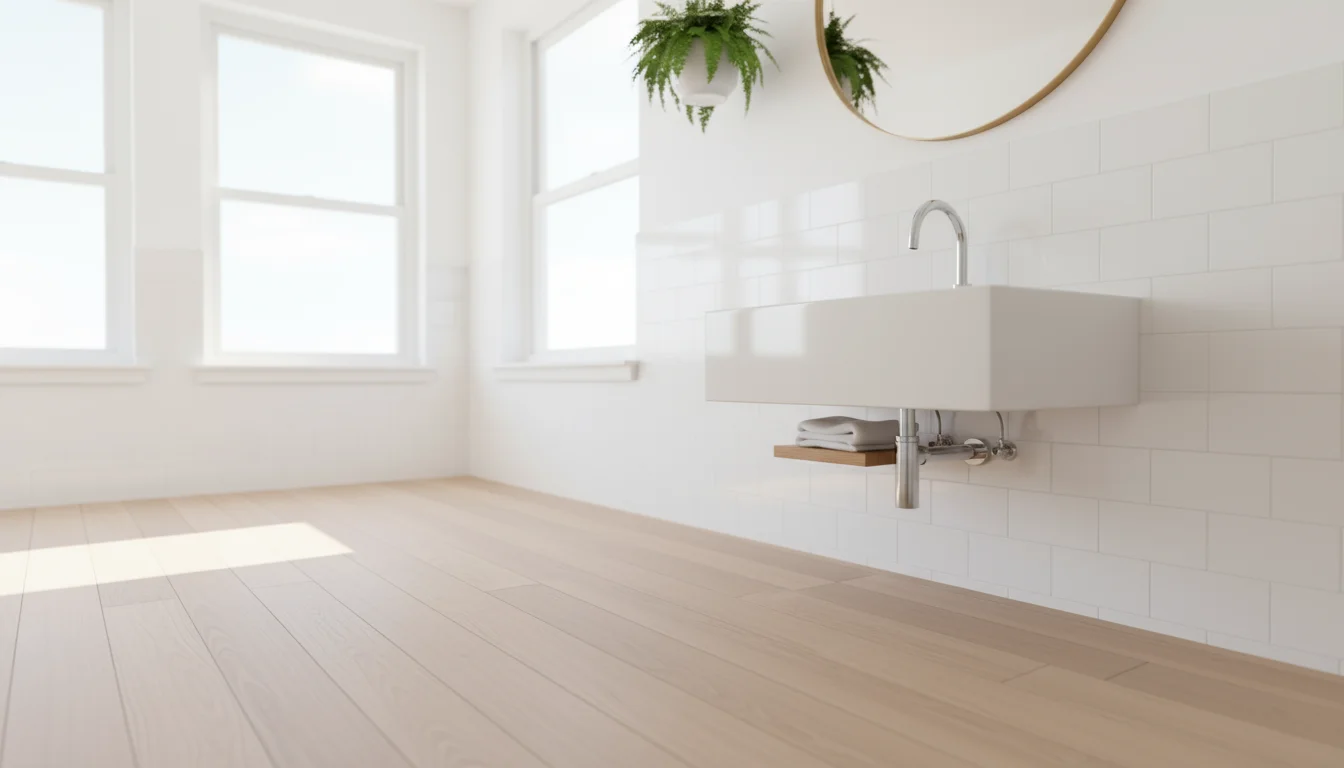
Corner Fixtures
If your bathroom layout allows, consider corner sinks or even corner toilets. These fixtures are specifically designed to fit into tight angles, making efficient use of otherwise awkward or unused space. This allows for better traffic flow through the main part of the room.
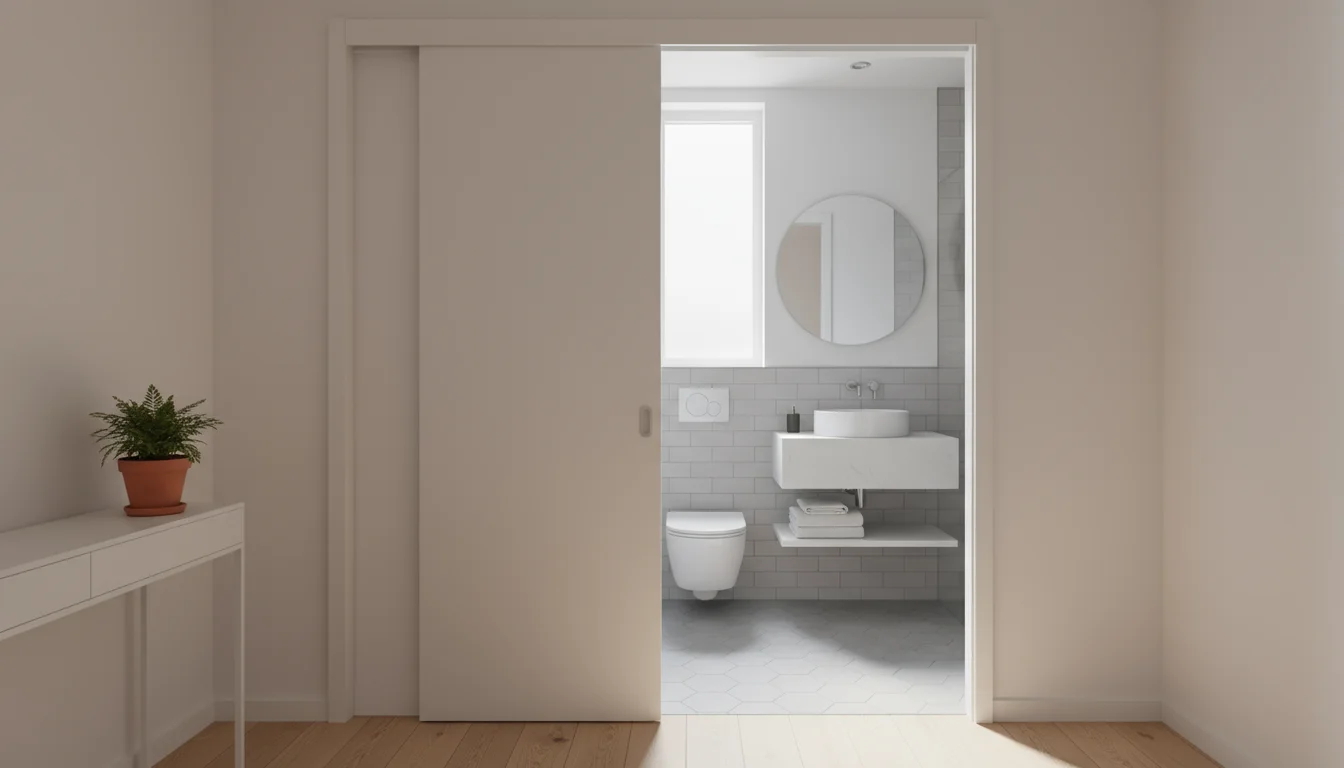
Sliding Doors or Pocket Doors
A traditional swing door requires significant clearance, eating into both bathroom and adjacent room space. Replace it with a sliding barn door or, even better, a pocket door that slides into the wall. This eliminates the need for door swing space, allowing for more flexible placement of fixtures and furnishings inside the bathroom, and greatly improving the functional flow of your home.
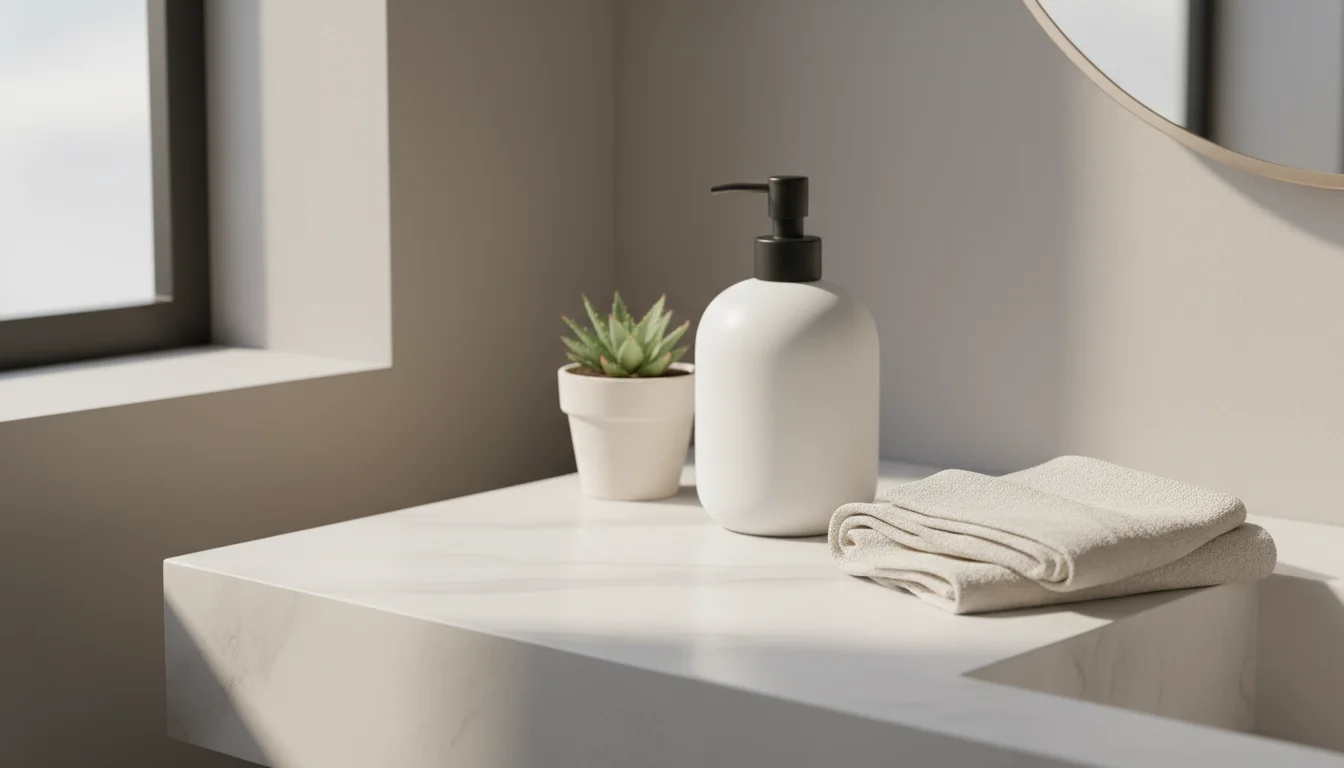
Declutter and Curate: Less Truly Reveals More Space
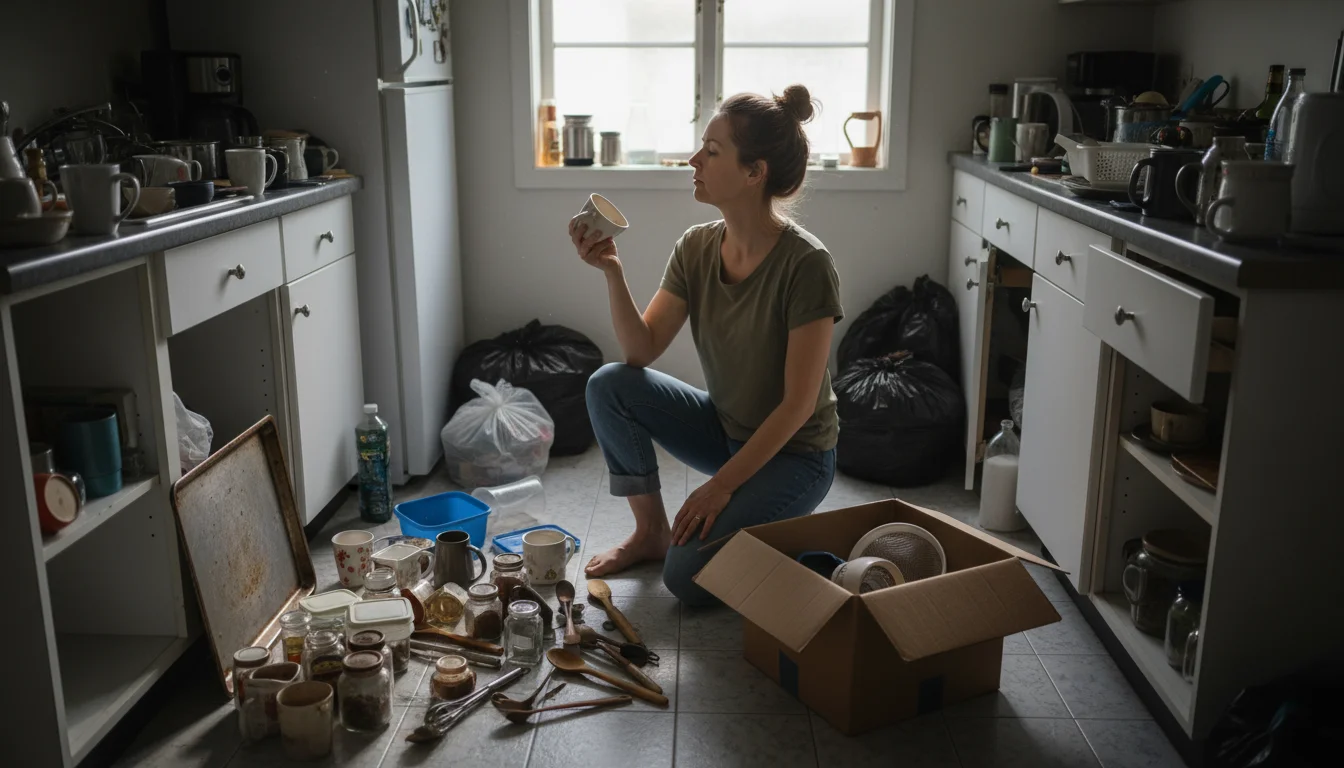
Even with the most strategic design choices, a cluttered small bathroom will always feel cramped. Ruthless decluttering is not just about tidiness; it is a fundamental aspect of creating a sense of spaciousness. Every item you keep on a counter or shelf occupies visual space and adds to the feeling of confinement. The goal is to curate your belongings, keeping only what is essential and beautiful.
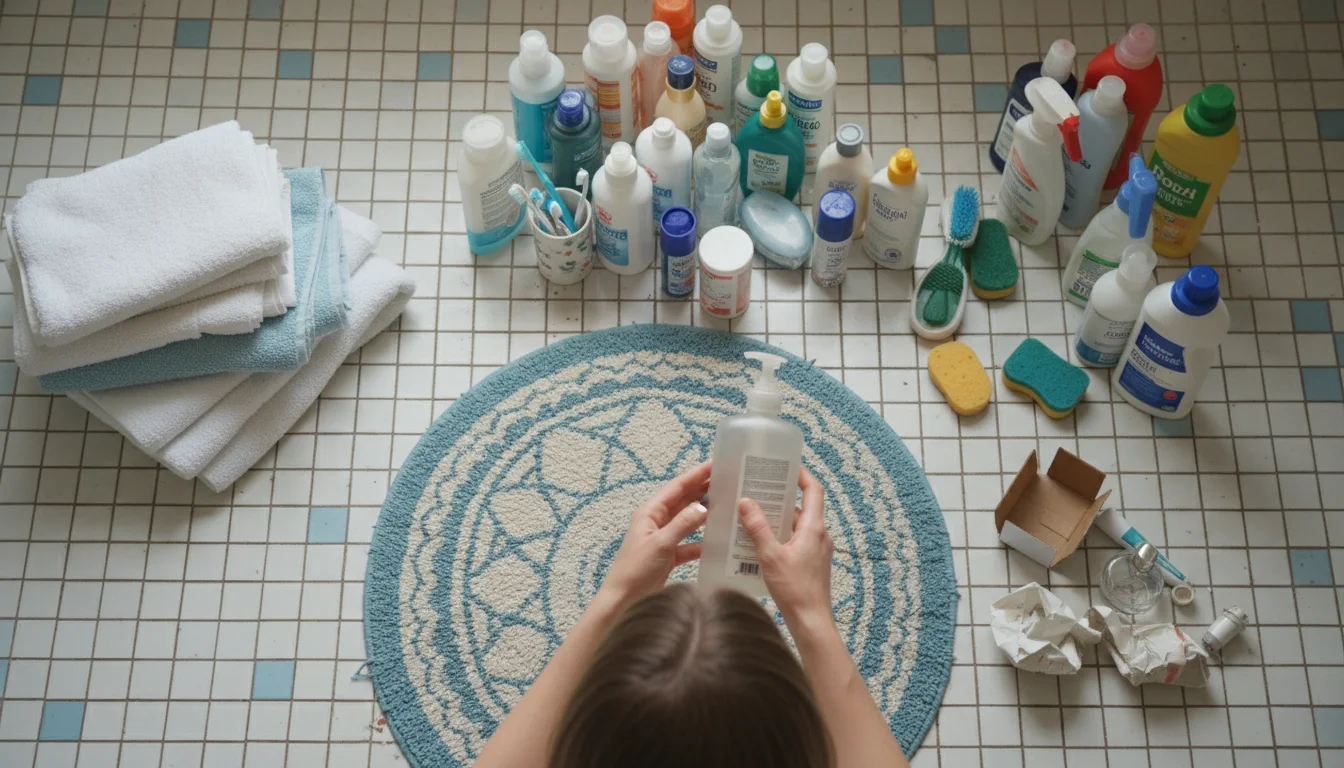
The Decluttering Process
Approach decluttering your small bathroom with intention:
- Empty Everything: Remove all items from shelves, drawers, and countertops.
- Categorize: Group similar items: skincare, hair products, cleaning supplies, medicines, towels.
- Purge Non-Essentials: Be honest with yourself. Get rid of expired products, empty bottles, items you rarely use, and anything that does not belong in the bathroom. Ask yourself: “Do I use this daily or weekly?” and “Do I love this?”
- Implement “One In, One Out”: For items like shampoo, conditioner, or lotions, commit to replacing an item only when it is completely used up. Do not buy backups until absolutely necessary. This prevents accumulation.
- Designate a Home for Everything: Every single item that returns to your bathroom needs a specific home. This prevents clutter from creeping back onto surfaces.
According to the National Association of Professional Organizers, creating designated homes for items and adhering to a regular decluttering schedule significantly reduces visual noise and improves the functionality of any space, especially small ones. You are creating zones for specific activities, making it easy to find and put away items. This also reinforces the overall bathroom design.
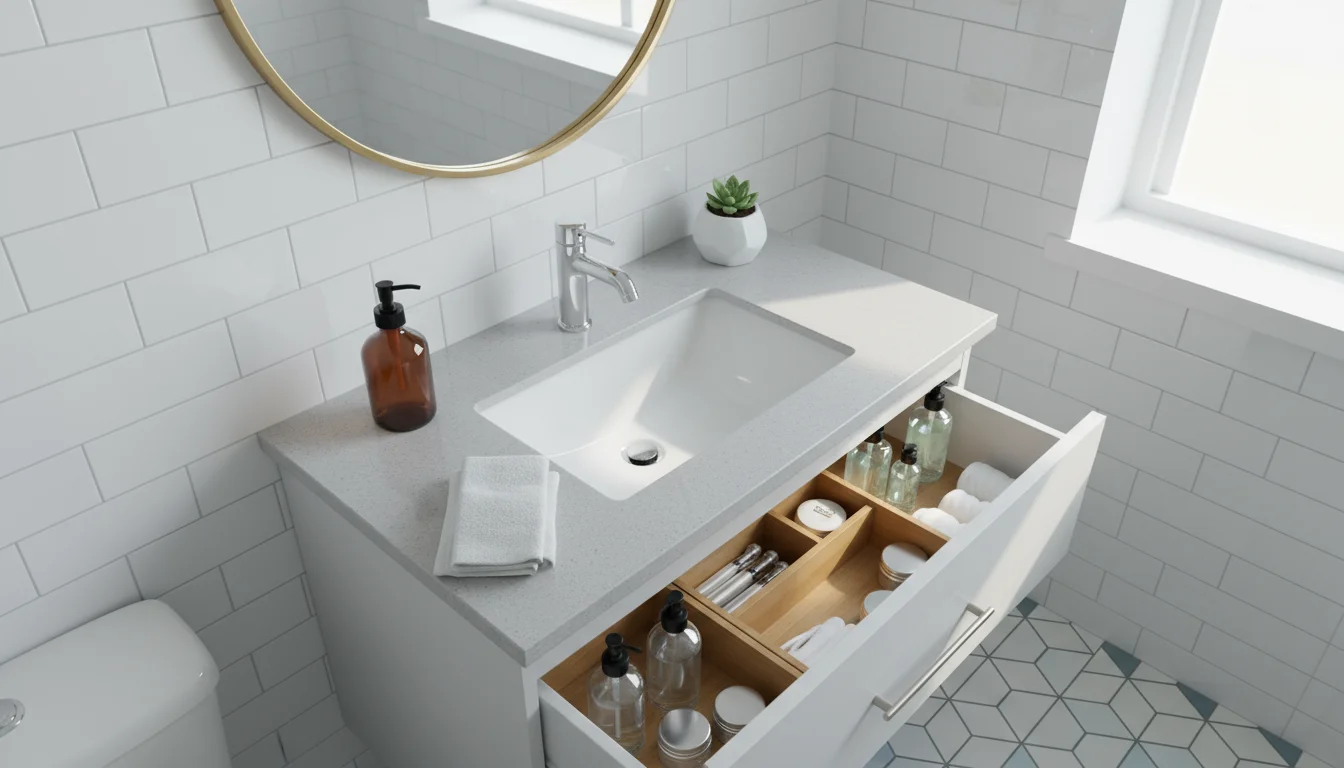
Curate What Stays Visible
Only your most attractive and frequently used items should remain on open display. For example, a beautifully scented soap, a small plant, or a folded hand towel. Store everything else out of sight in cabinets or drawers. This disciplined approach ensures that your hard work in design and organization translates into a consistently spacious and serene environment.
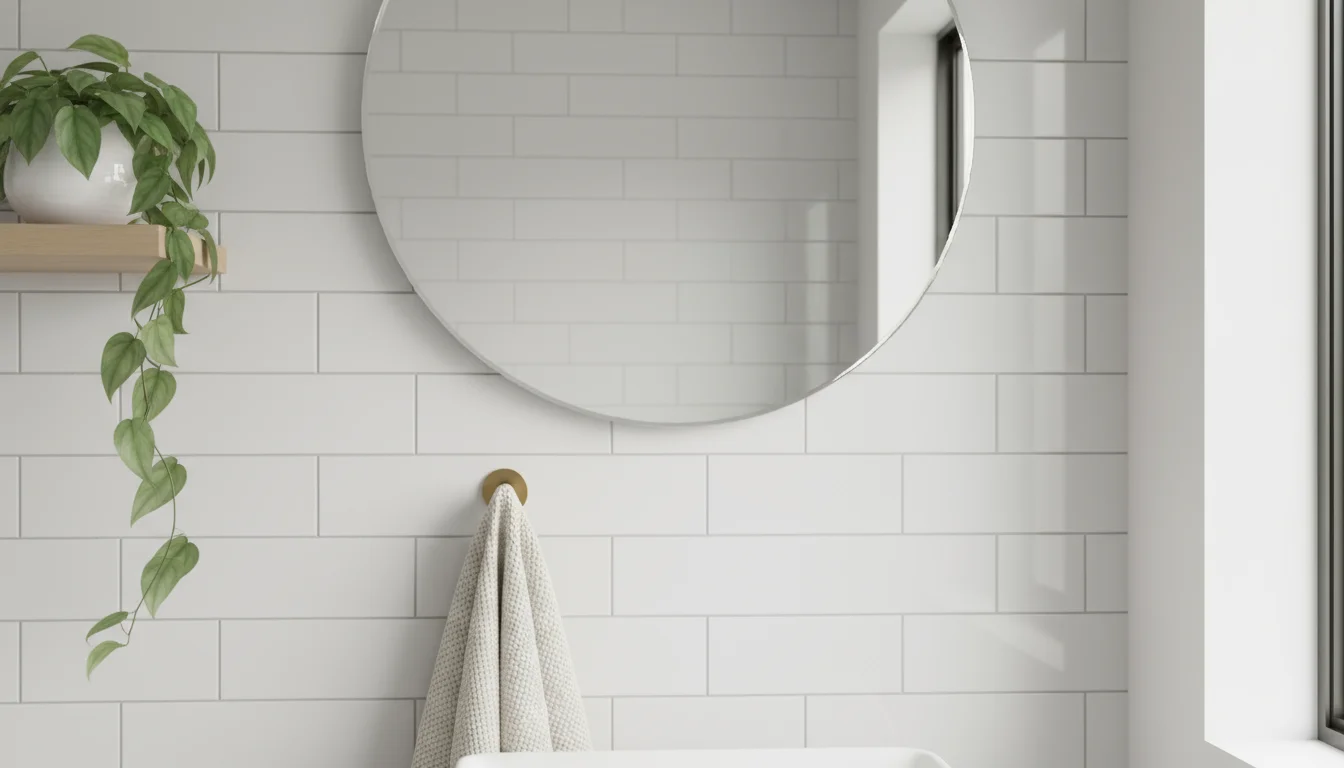
Strategic Decor and Minimalist Touches
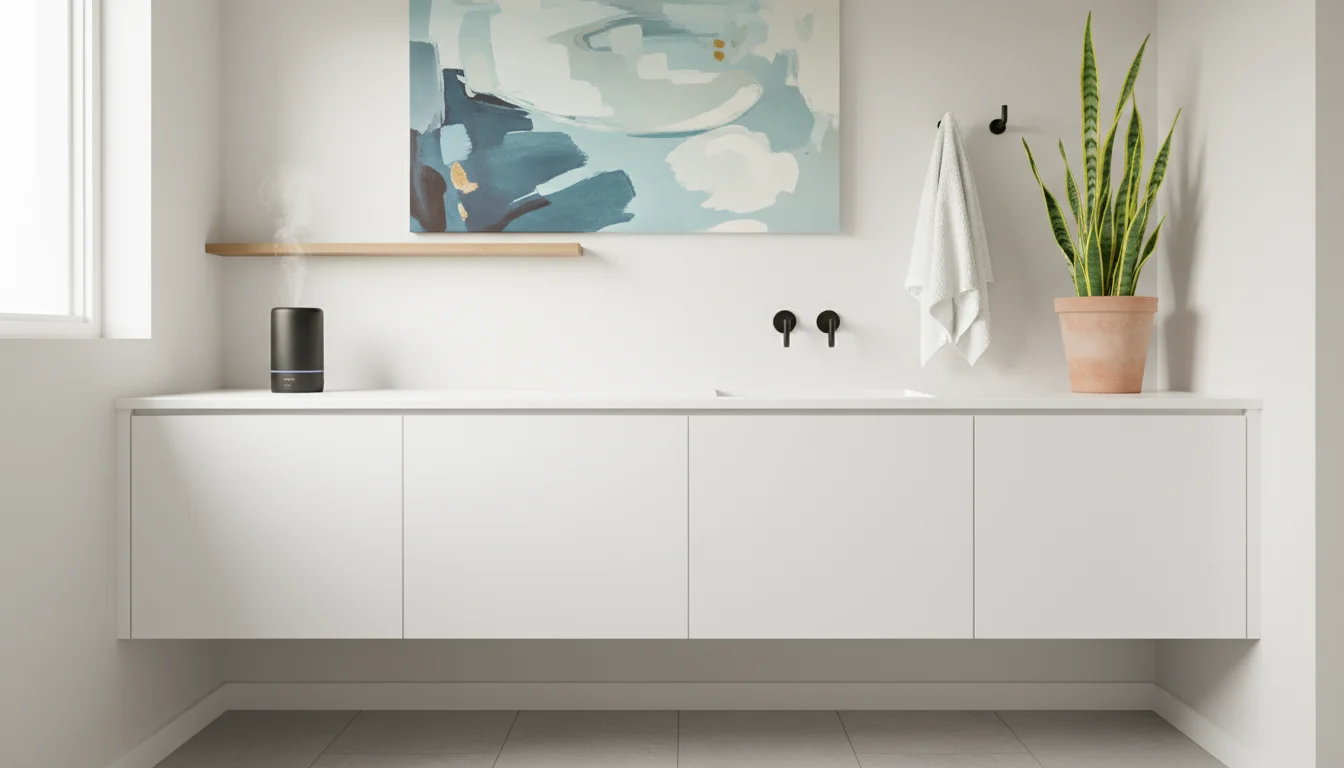
Decorating a small bathroom requires a minimalist mindset. Every decorative choice should serve a purpose, contributing to the feeling of space rather than detracting from it. The aim is to add personality without adding clutter.
Less is More
Resist the urge to fill every empty space with knick-knacks. A few carefully chosen pieces make a more significant impact than many small, unrelated items. Consider:
- One Statement Piece of Art: Hang a single, larger piece of artwork on an empty wall. This draws the eye and creates a focal point, making the room feel more intentional and stylish.
- Minimalist Towel Solutions: Instead of bulky towel racks, use sleek towel hooks on the back of the door or wall. This keeps towels off the floor and maintains clean lines.
- Plants: Introduce a small, humidity-loving plant (like a ZZ plant, snake plant, or fern) on a floating shelf or windowsill. Greenery adds life and color without taking up much visual space.
- Scent Diffusers: A subtle essential oil diffuser or a single, elegant candle adds to the ambiance without contributing to clutter.
Choose décor items that complement your chosen light color scheme and reflective surfaces. Ensure they do not block lines of sight or protrude excessively into the room. Each item should enhance the feeling of calm and spaciousness.
Maintain the Feeling: Keep Your Small Bathroom Expansive
Achieving the illusion of a bigger bathroom is an accomplishment, but maintaining that feeling requires ongoing effort. Small spaces are particularly susceptible to reverting to clutter if you do not implement consistent habits. Regular maintenance ensures your beautiful, organized bathroom remains a haven.
If you are ready for a transformation, consider a high-impact bathroom refresh that creates a new look without a major investment.
Daily Reset
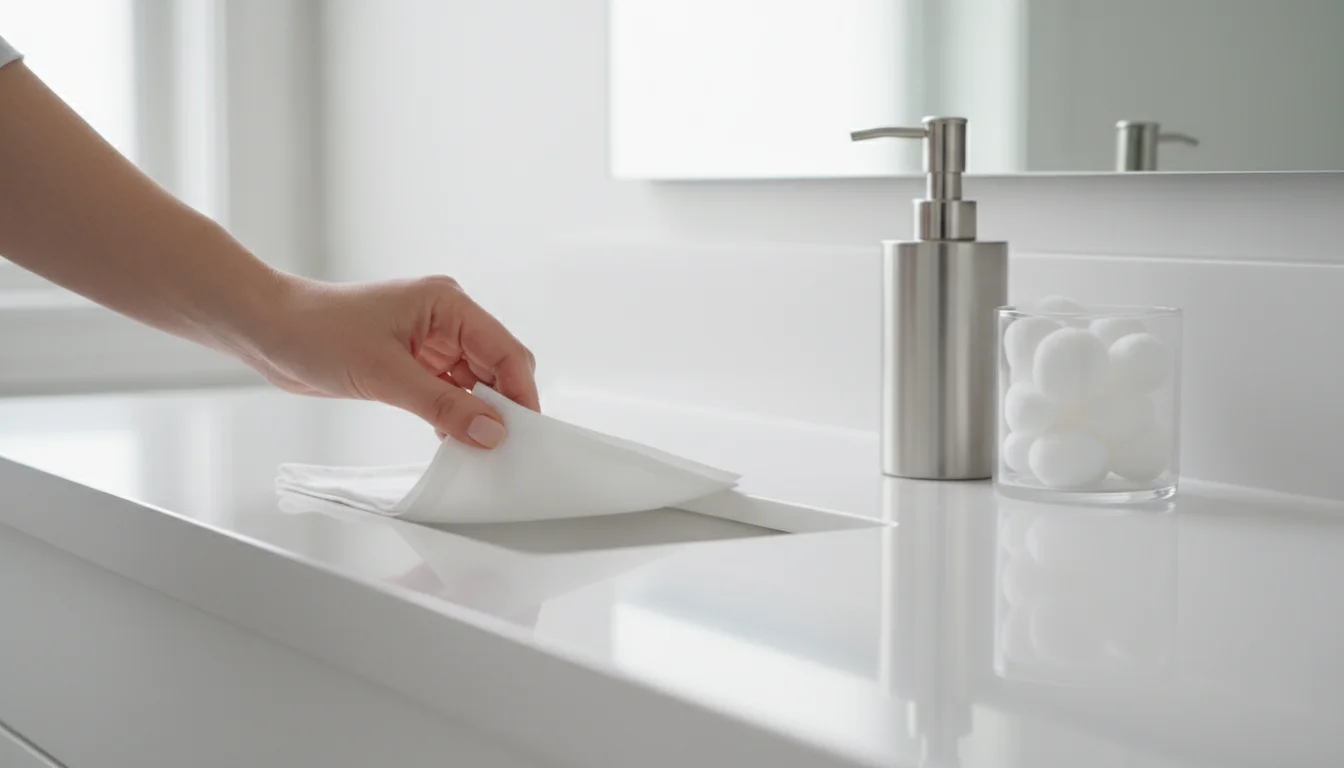
Adopt a quick daily reset routine. After you finish getting ready, take two minutes to put everything back in its designated place. Wipe down the counter, hang up your towel, and ensure all bottles are neatly tucked away. This prevents small items from accumulating and overwhelming your limited counter space. A daily reset is a simple yet powerful habit that preserves the visual calm you have worked to create.
Weekly Declutter Check
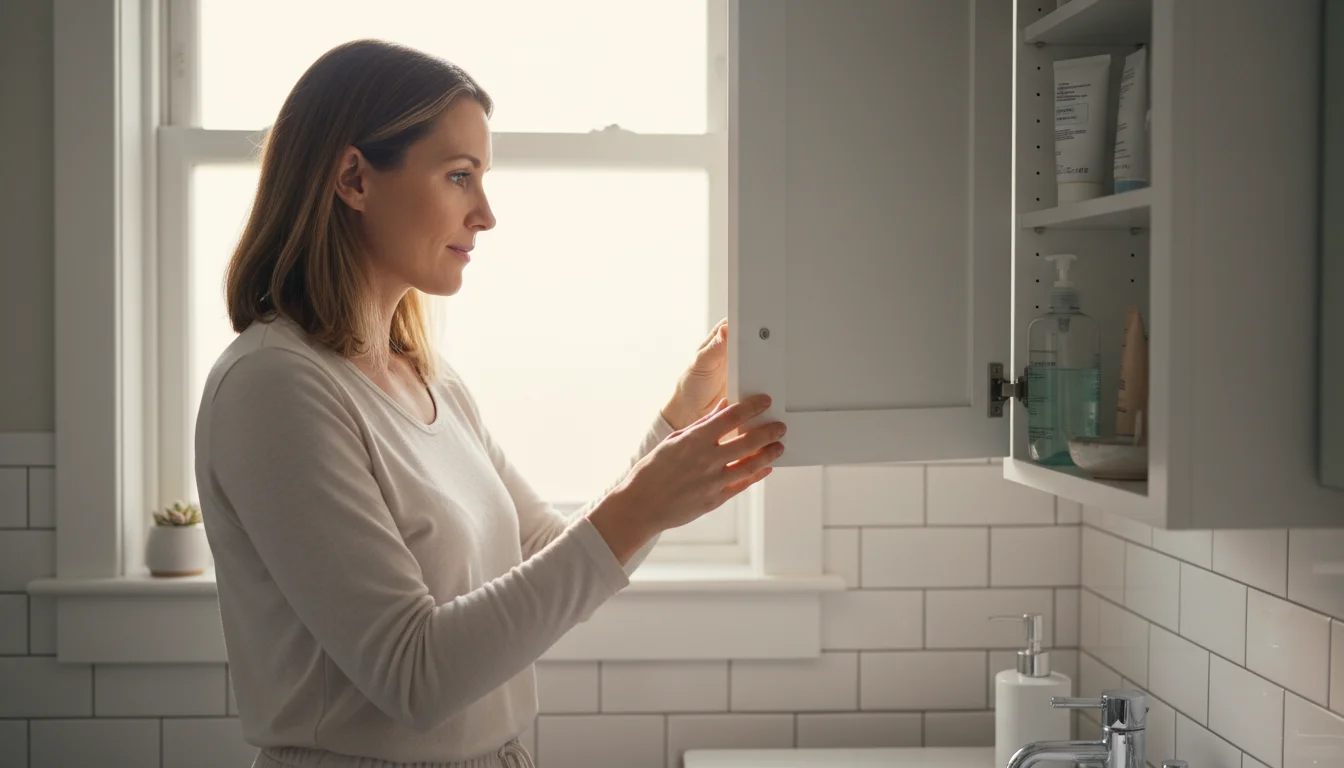
Once a week, take a few minutes to do a deeper check. Scan your shelves, drawers, and cabinet interiors. Look for items that have migrated, new purchases that need a home, or products that are almost empty and can be discarded. This proactive approach prevents overwhelming decluttering tasks later on. By consistently reviewing and tidying, you keep the space functioning efficiently and feeling expansive.
Embrace Minimalism Continually
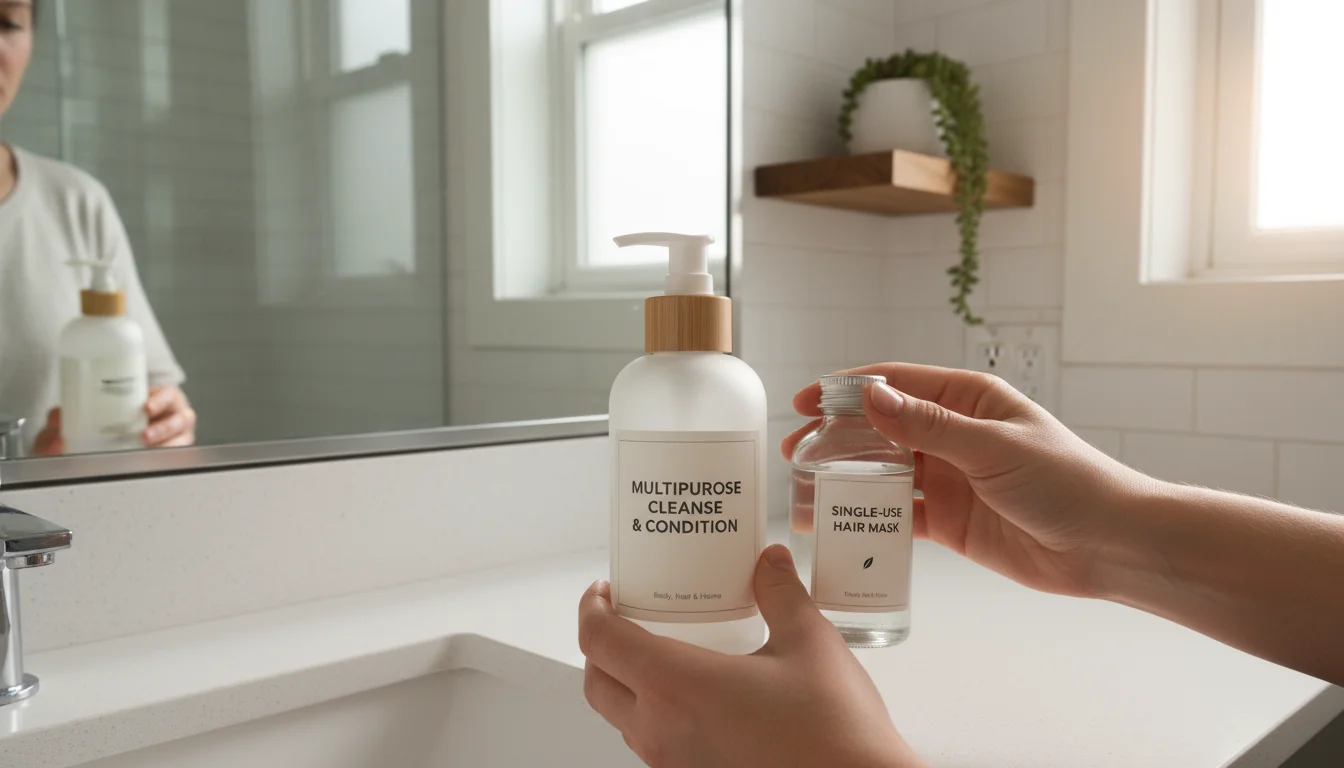
Continue to practice a minimalist mindset in your small bathroom. Before buying new products, consider if you truly need them and where they will live. Favor multi-purpose products that reduce the number of bottles and containers. The less you bring into the space, the easier it becomes to maintain its open and airy feel. By making these habits a natural part of your routine, you ensure your small bathroom remains a bright, organized, and inviting space.
Frequently Asked Questions
What is the most effective single change I can make to make my small bathroom feel bigger?
Installing a large, wall-to-wall or generously sized mirror is arguably the most impactful single change. It instantly reflects light and the room itself, creating a powerful illusion of depth and space. This immediate visual expansion often yields the most dramatic results for your small bathroom design.
Can I use any dark colors at all in a small bathroom?
While light colors are generally recommended, you can strategically introduce dark colors in very small doses, such as a single accent tile, a thin strip of trim, or a small decorative object. Avoid painting entire walls or large surfaces dark. If you absolutely love dark colors, consider a dark floor with light walls and ceiling, or a dark vanity base with a light top and walls. The key is to keep the majority of the visible surfaces light and reflective to maintain the feeling of openness.
What is the biggest mistake people make when trying to make a small bathroom feel bigger?
The biggest mistake is over-cluttering surfaces and failing to utilize vertical space. Even with light colors and mirrors, a bathroom covered in toiletries, towels, and decorative items will always feel cramped. Prioritize ruthless decluttering and smart, hidden storage to clear countertops and floors, making the design truly effective.
Are there budget-friendly ways to achieve a bigger feel without renovating?
Absolutely. You can implement many strategies without costly renovations. Focus on painting with light colors, maximizing natural light, upgrading to a larger mirror, replacing a shower curtain with a clear liner, and implementing smart, vertical organization solutions like over-the-toilet shelves or floating shelves. Decluttering costs nothing and makes a huge difference. These changes are highly effective and budget-conscious.
For expert home organization guidance, visit
American Cleaning Institute,
National Association of Professional Organizers,
Institute for Challenging Disorganization and
Consumer Reports — Home.
Disclaimer: This article is for informational purposes only and is not a substitute for professional advice. Consult professional organizers or specialists for personalized recommendations.
To further optimize these areas, consider implementing corner shelving ideas to hold toiletries without taking up wall-center real estate.
This method of rigorous sorting is just as effective when maximizing closet space in a small bedroom.
Leave a Reply