

Cluttered drawers often create daily frustration, making it difficult to find what you need. Whether you live in a spacious home or a cozy apartment, managing the contents of your drawers transforms your everyday experience. Drawer organizers provide simple, effective solutions, turning chaos into calm and maximizing every inch of available space. You can easily locate items, reduce stress, and reclaim valuable time when your drawers function efficiently.
This guide helps you choose the best drawer organizers for every room in your home, delivering practical, actionable insights. We cover various materials, types, and room-specific strategies to ensure your home organization efforts lead to lasting order, all while respecting your budget and real-life constraints.
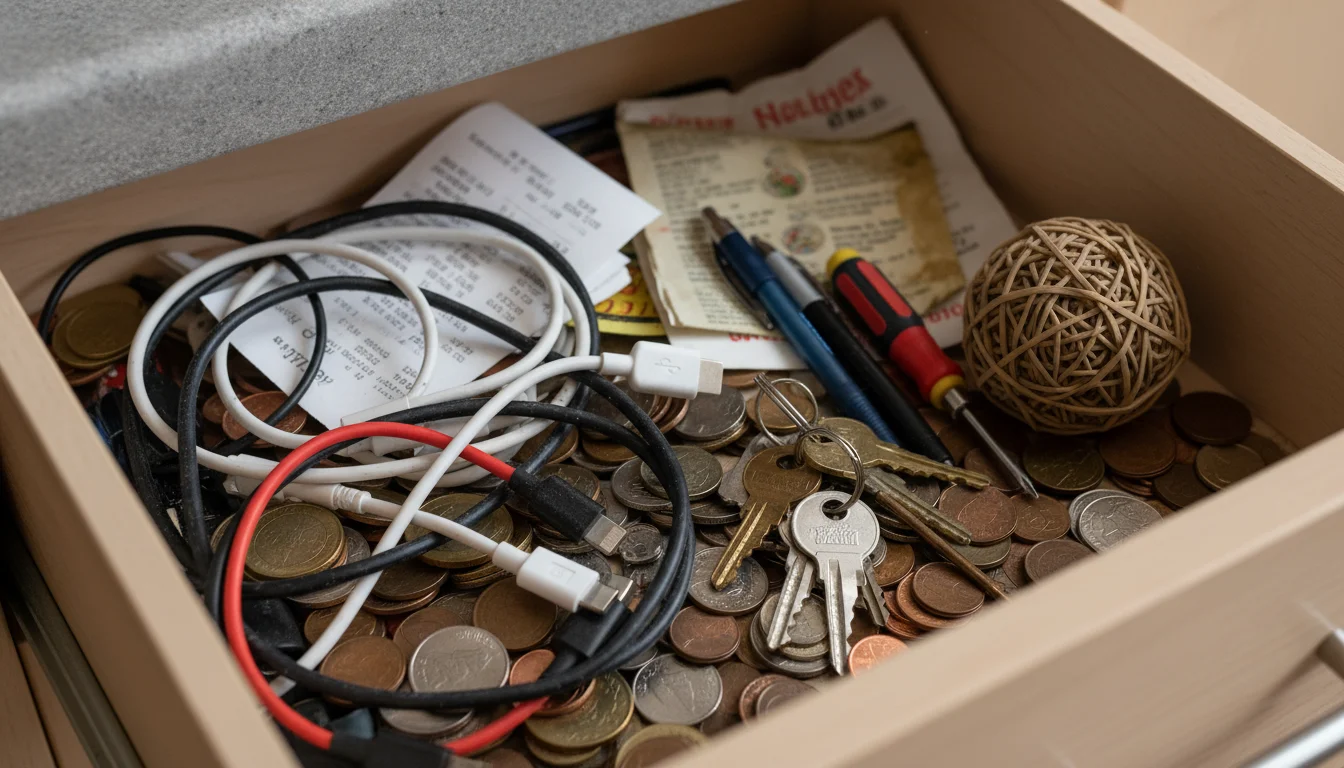
Why Drawer Organizers Matter: Beyond Tidiness
Many homeowners and renters face the challenge of overwhelming clutter. Drawers, in particular, become catch-alls for miscellaneous items. Without proper organization, you spend precious minutes searching for car keys, a specific spice, or that favorite pair of socks. This daily scavenger hunt wastes time and creates unnecessary stress.
Drawer organizers provide structure, giving every item a designated home. This strategy, known as “zoning,” involves assigning specific areas for specific categories of items. A well-organized drawer immediately reveals its contents, preventing you from buying duplicates or misplacing essentials. According to the National Association of Professional Organizers, effective organization systems streamline daily routines and reduce decision fatigue. You gain time, reduce mental load, and prevent items from getting lost or damaged.
Consider the benefits you gain:
- Time Savings: You find items instantly. No more rummaging.
- Stress Reduction: An orderly environment promotes calm.
- Maximized Space: Organizers use vertical and horizontal space more effectively, allowing you to store more in less area.
- Clear Visibility: You see everything you own, making it easier to utilize your belongings.
- Preventing Duplicates: Knowing what you have stops unnecessary purchases.
- Item Protection: Separated items are less likely to scratch, bend, or break.
Implementing drawer organizers empowers you to take control of your possessions, turning previously frustrating spaces into functional assets. This applies whether you tackle a kitchen utensil drawer or a bathroom vanity, transforming small spaces into highly efficient storage hubs.
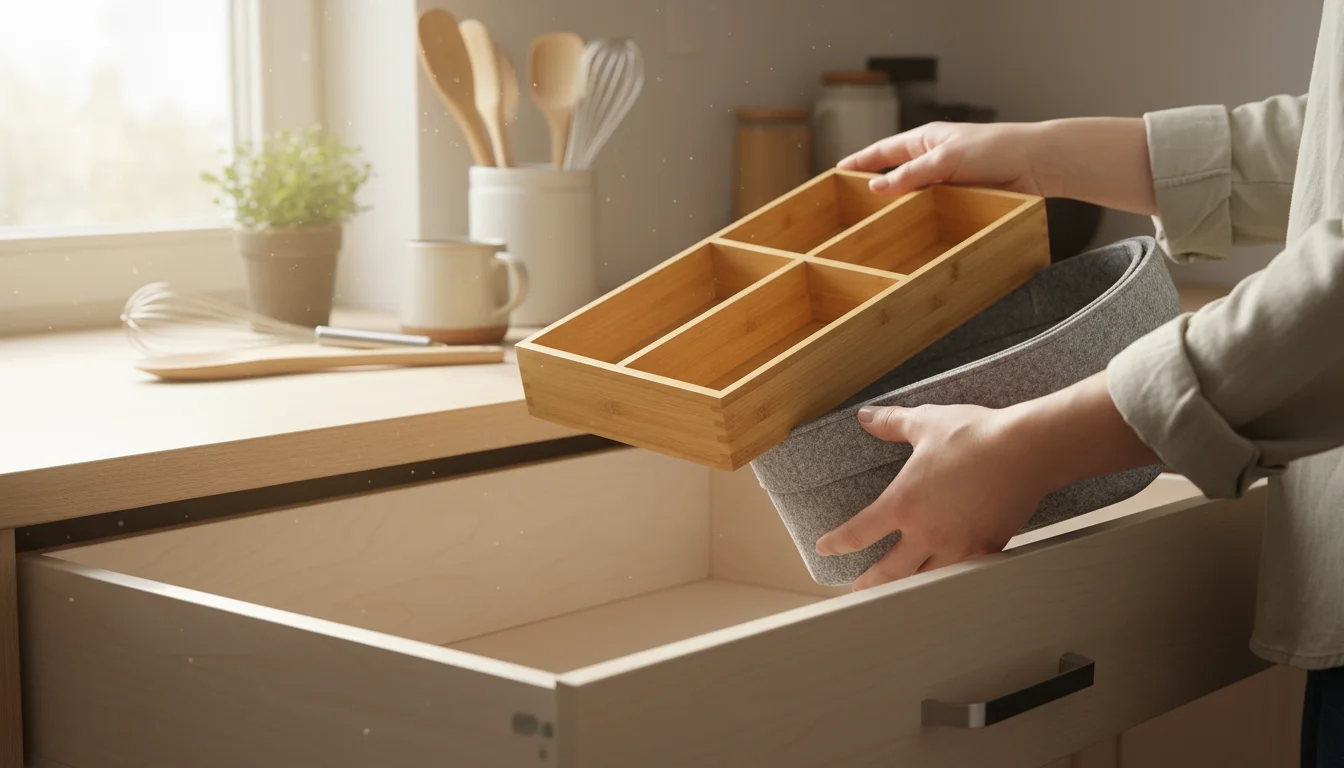
Choosing the Right Organizer: Materials and Types
Selecting the ideal drawer organizer depends on the items you store, the drawer’s dimensions, and your aesthetic preferences. Understanding the common materials and types helps you make informed choices that stand the test of time and budget.
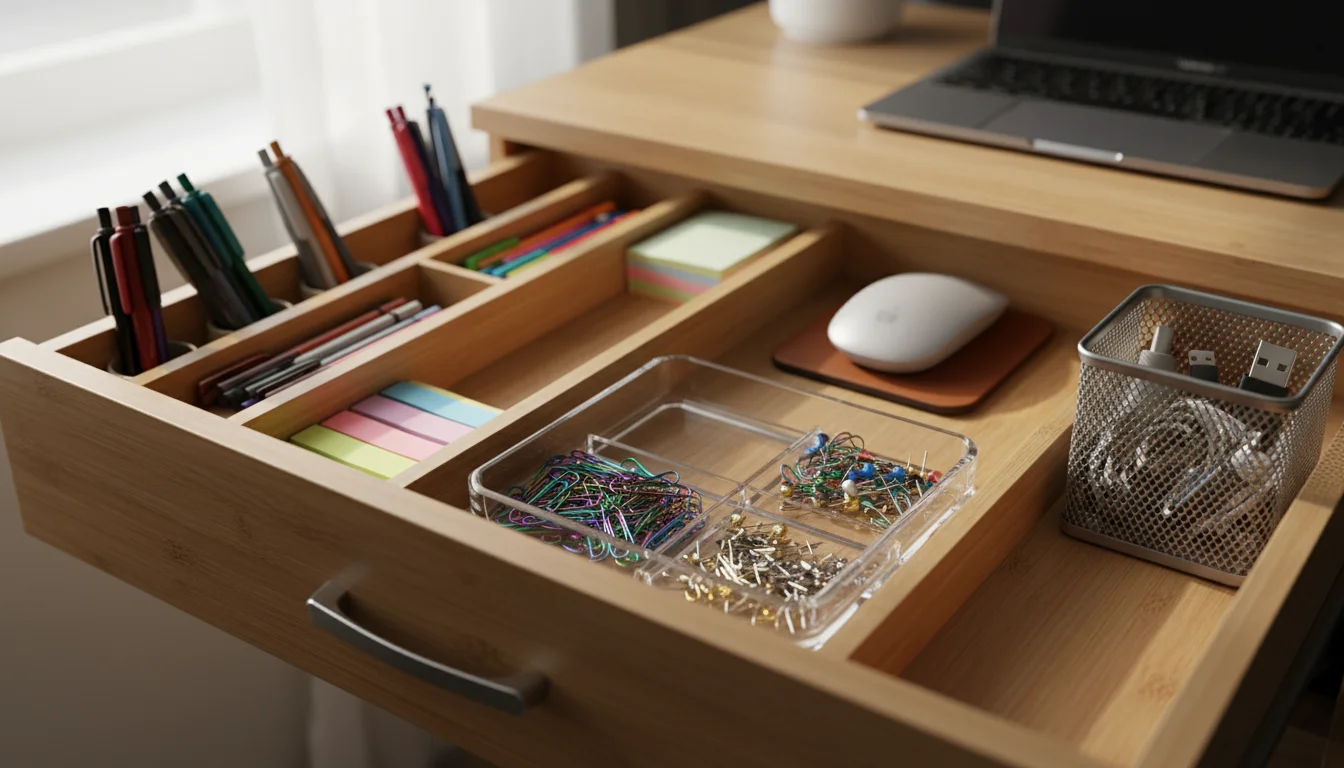
Popular Materials and Their Benefits:
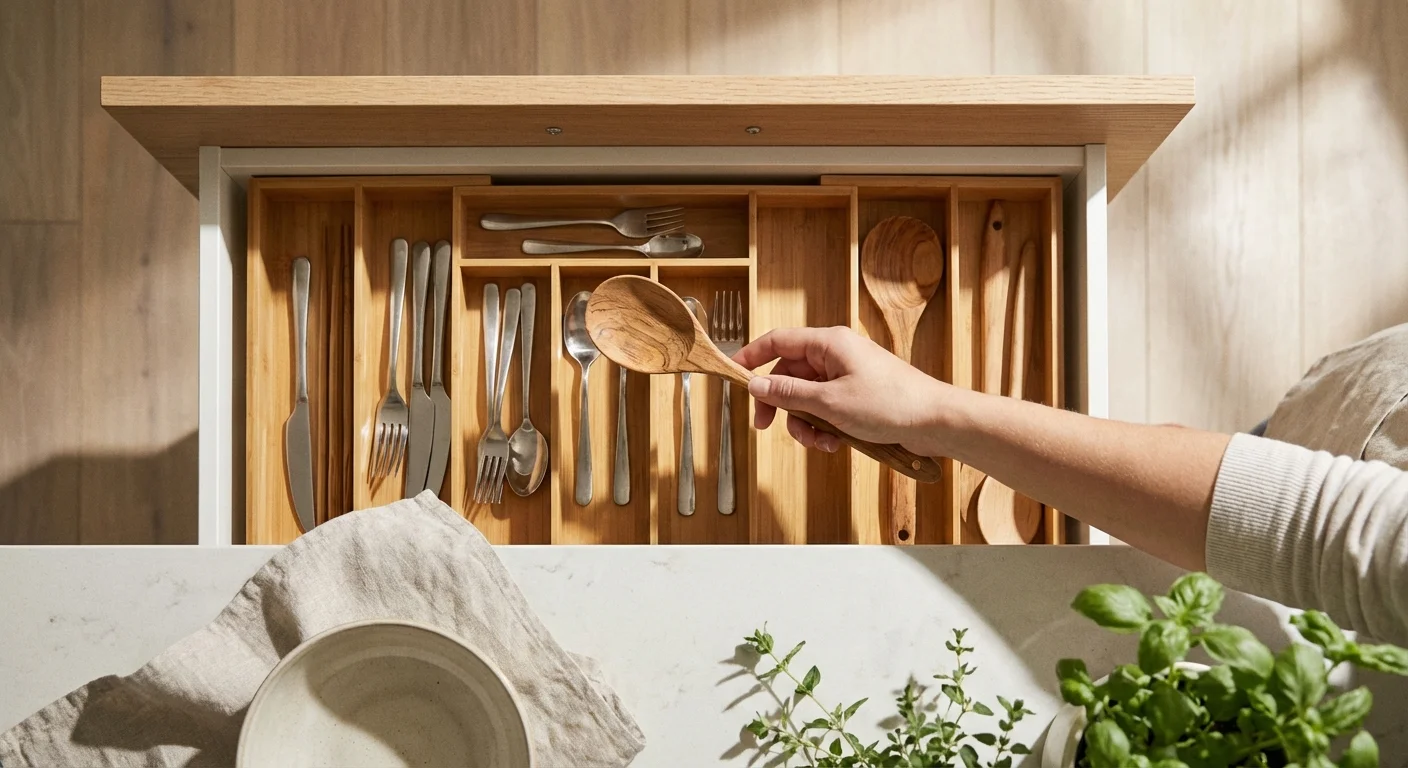
- Bamboo/Wood: These organizers offer durability and an attractive, natural look. They work well for kitchen utensils, office supplies, and clothing. They resist warping and provide a sturdy structure. Cleaning wood requires a damp cloth and immediate drying to prevent moisture damage.
- Plastic (Acrylic, PP, PET): Plastic organizers are lightweight, often clear, and highly versatile. Acrylic options provide a sleek, modern look, excellent for makeup, jewelry, or office supplies. Polypropylene (PP) and PET plastics are durable, easy to clean, and often budget-friendly. They excel in bathrooms or kitchens where moisture exposure is common.
- Mesh (Metal): Metal mesh organizers provide excellent visibility and airflow, preventing dust buildup. They suit office supplies, craft items, or even light tools in a utility drawer. Their open design means you see contents at a glance.
- Silicone: Soft, flexible, and non-slip, silicone organizers are perfect for delicate items, small gadgets, or tools that might scratch. They are easy to clean and often come in modular designs, allowing for custom configurations within your drawer.
- Fabric/Felt: Ideal for clothing, intimates, and delicate accessories, fabric organizers protect items from snags. They come in various sizes and colors, often with collapsible designs for easy storage when not in use. Felt linings add an extra layer of protection for jewelry or watches.
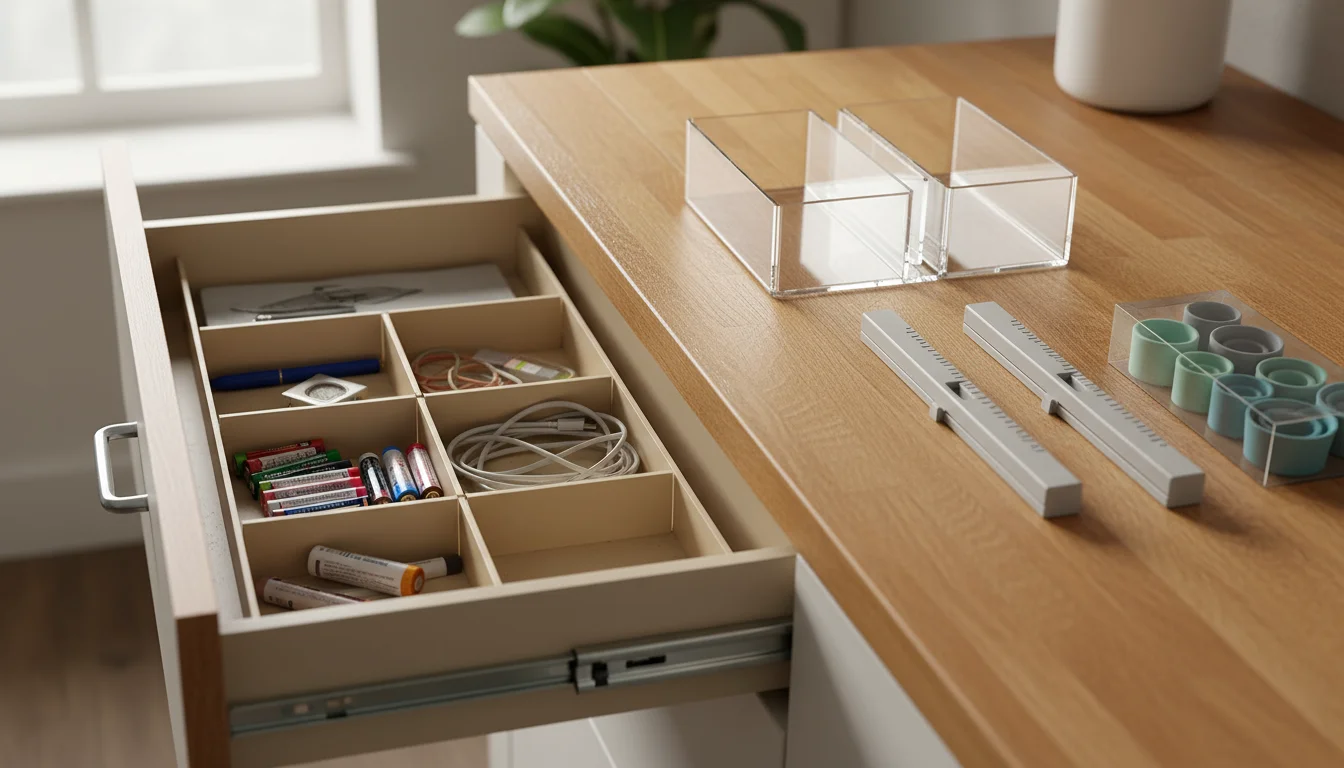
Common Organizer Types:
- Adjustable Dividers: These expand or contract to fit various drawer widths, creating custom compartments. They are highly flexible for changing needs.
- Interlocking Bins/Trays: Modular pieces that fit together like a puzzle, allowing you to customize your layout. You can mix and match sizes for different items.
- Fixed Compartment Trays: Pre-divided trays offer specific slots for items like silverware or office supplies. They provide rigid structure and consistent organization.
- Expandable Organizers: These units slide open to fit the full width of your drawer, providing additional compartments as needed. Many utensil trays offer this feature.
- Tiered Inserts: Great for spices or small containers, tiered inserts allow you to see items at the back of the drawer by elevating them.
When choosing, measure your drawer’s interior dimensions precisely. Consider the depth, width, and length. Opt for organizers that fit snugly to prevent shifting, but allow enough clearance for the drawer to close smoothly. For example, The Spruce recommends using interlocking bins for maximum flexibility in drawers with varied contents.
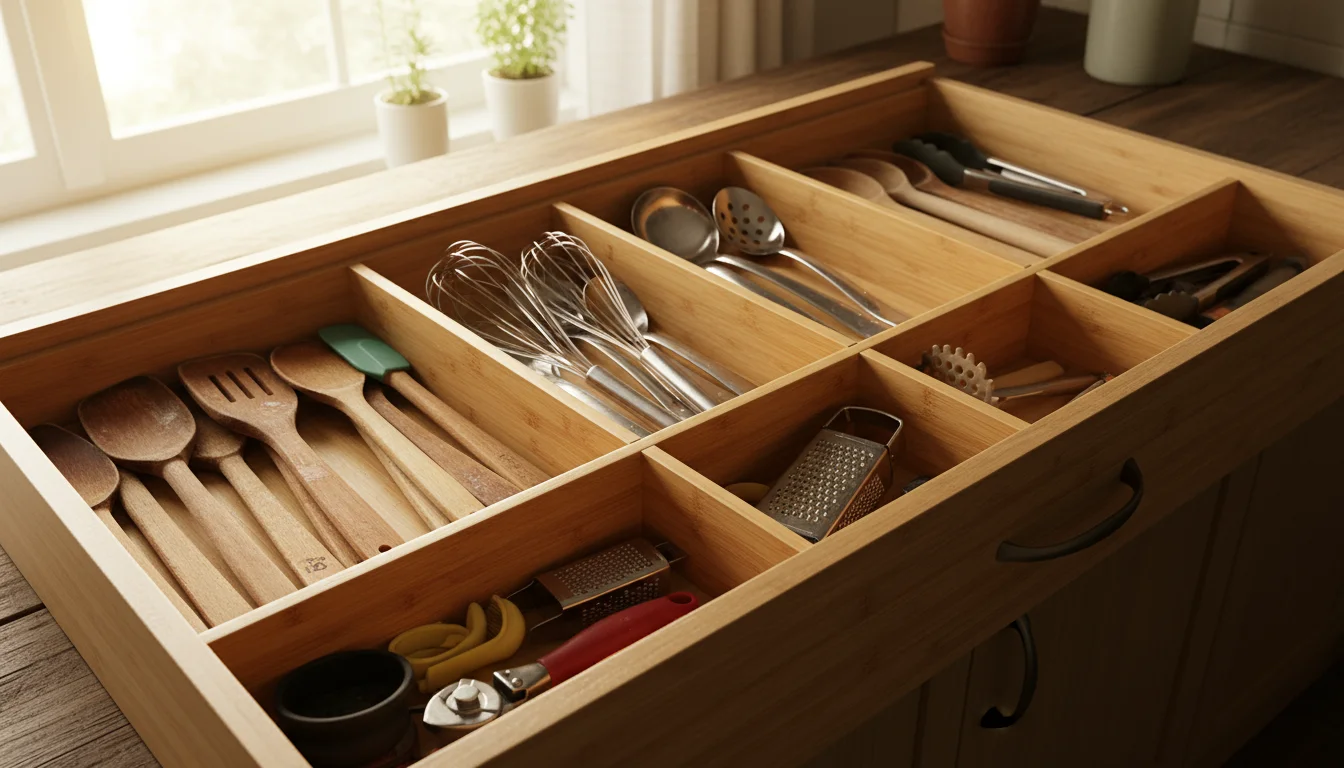
Organizing Your Kitchen Drawers for Efficiency
Kitchen drawers endure heavy use and often become prime candidates for clutter. From cutlery to cooking gadgets, proper organization transforms your cooking and cleaning routines. You achieve greater efficiency and enjoy a more pleasant kitchen environment.
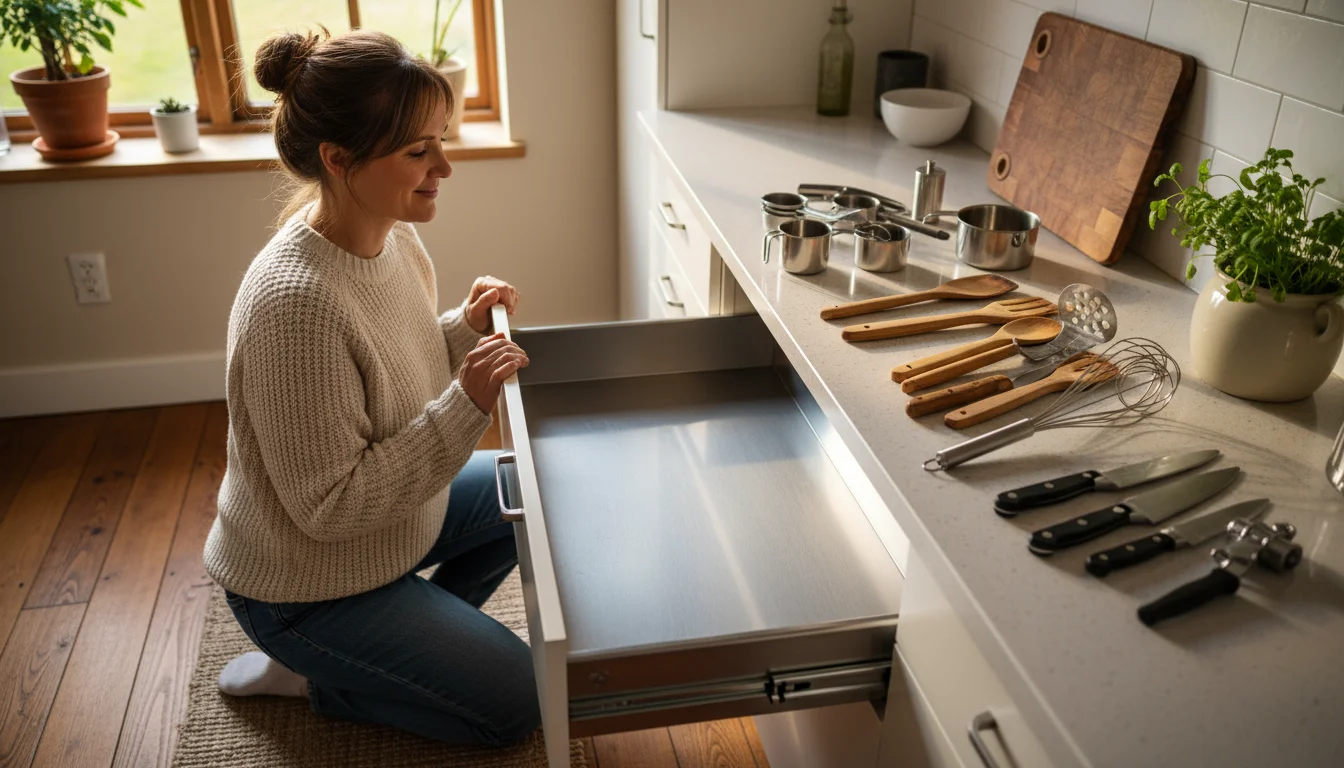
Step-by-Step Kitchen Drawer Decluttering and Organization:
- Empty and Clean: Remove everything from the drawer. Wipe down the interior, removing crumbs and debris.
- Sort and Purge: Go through each item. Keep only what you use regularly and what remains in good condition. Discard broken items, donate duplicates, and relocate anything that does not belong in the kitchen.
- Categorize: Group similar items. For example, all spatulas together, all measuring spoons together, all dish towels together. This forms the basis of your “zones.”
- Measure and Select Organizers: Measure the interior length, width, and depth of your empty drawer. Choose organizers that fit these dimensions. Consider expandable trays for utensils, deep bins for gadgets, or tiered inserts for spices.
- Implement Your System: Place your chosen organizers in the drawer. Arrange your categorized items into their new homes.
For example, a standard utensil drawer benefits from an expandable bamboo tray, allocating specific slots for forks, knives, and spoons. A deeper drawer holding larger cooking utensils like ladles and whisks might use adjustable plastic dividers to separate them efficiently. You can also utilize silicone inserts to prevent smaller items, such as corn on the cob holders or wine stoppers, from rolling around.
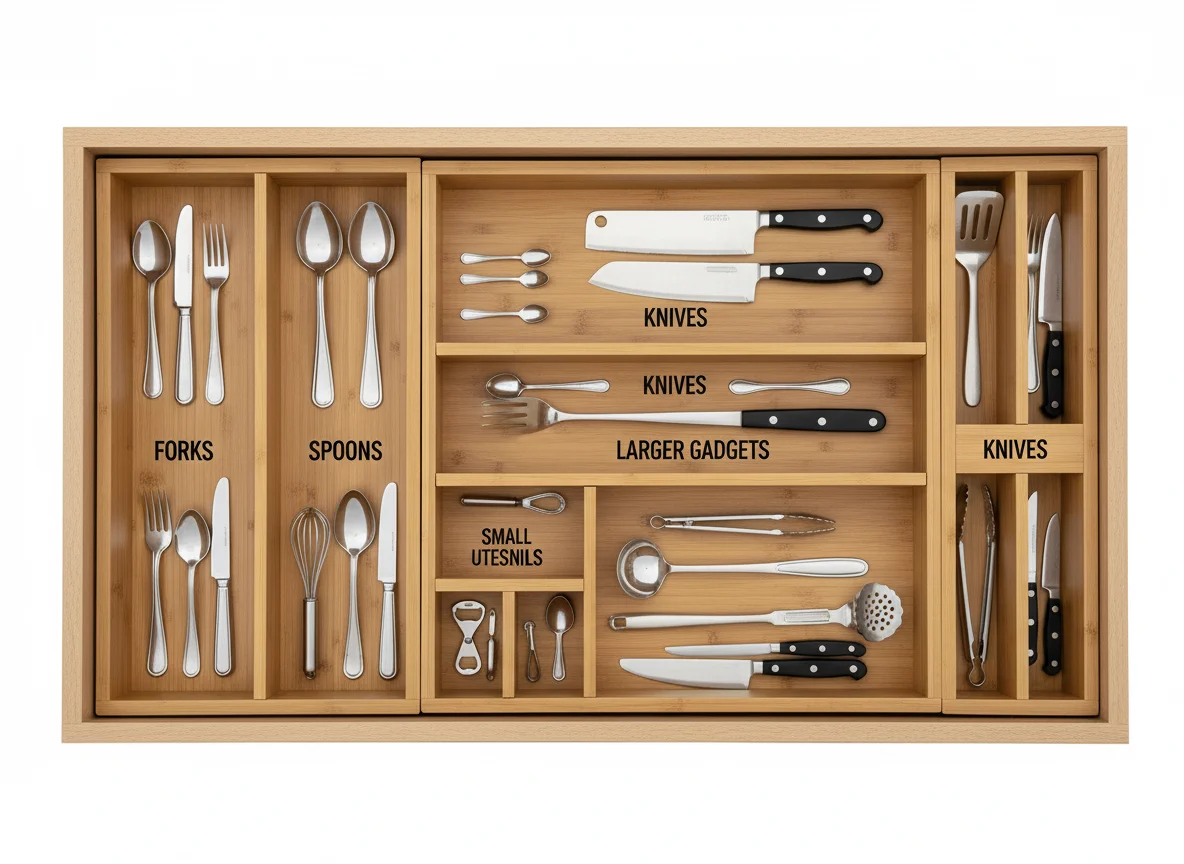
For spice drawers, tiered inserts allow you to see every label at a glance, preventing you from fumbling through a jumbled collection. For baking supplies, consider deeper bins for cookie cutters and small measuring cups. You gain a highly functional workspace when your kitchen drawers support your cooking habits.
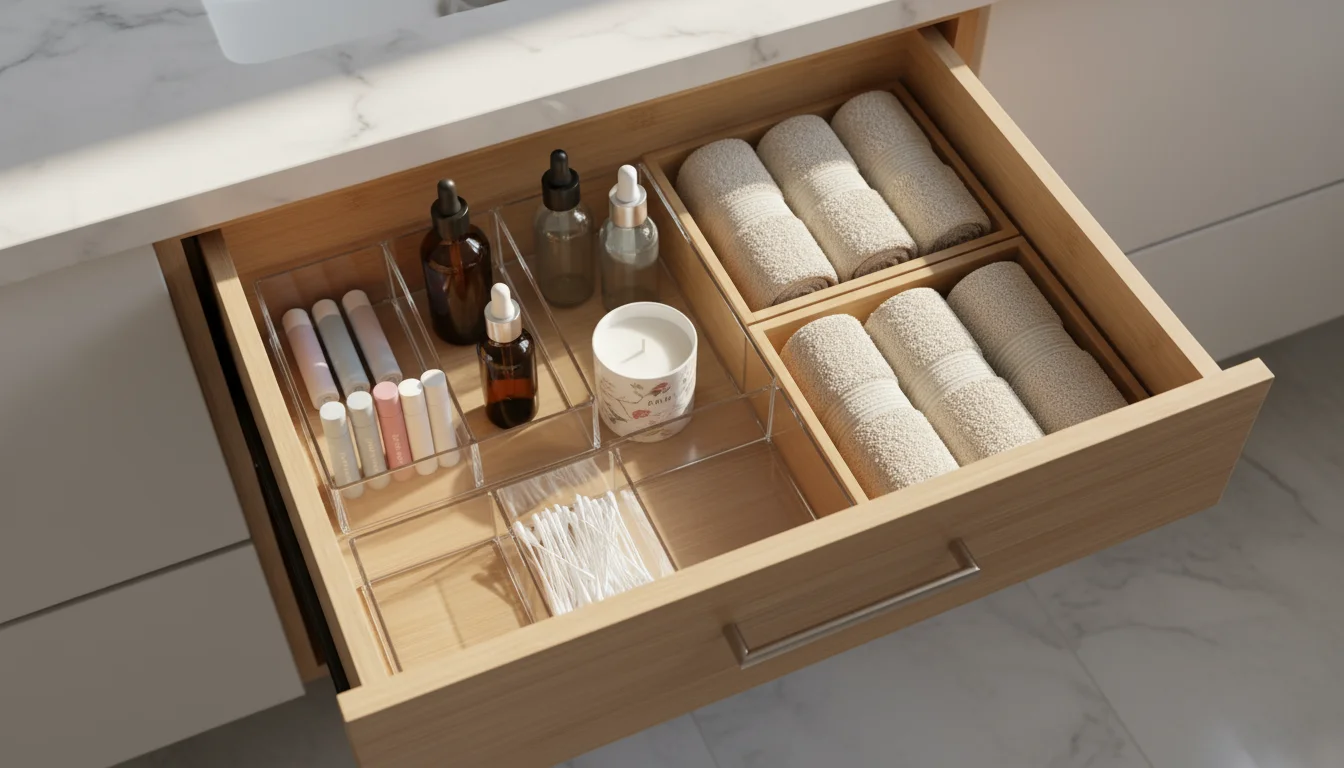
Transforming Bathroom Drawers into Serene Spaces
Bathroom drawers often become repositories for half-used products, stray hair ties, and forgotten toiletries. Transforming these spaces creates a more serene and functional bathroom environment. You simplify your morning routine and maintain a tidy vanity.
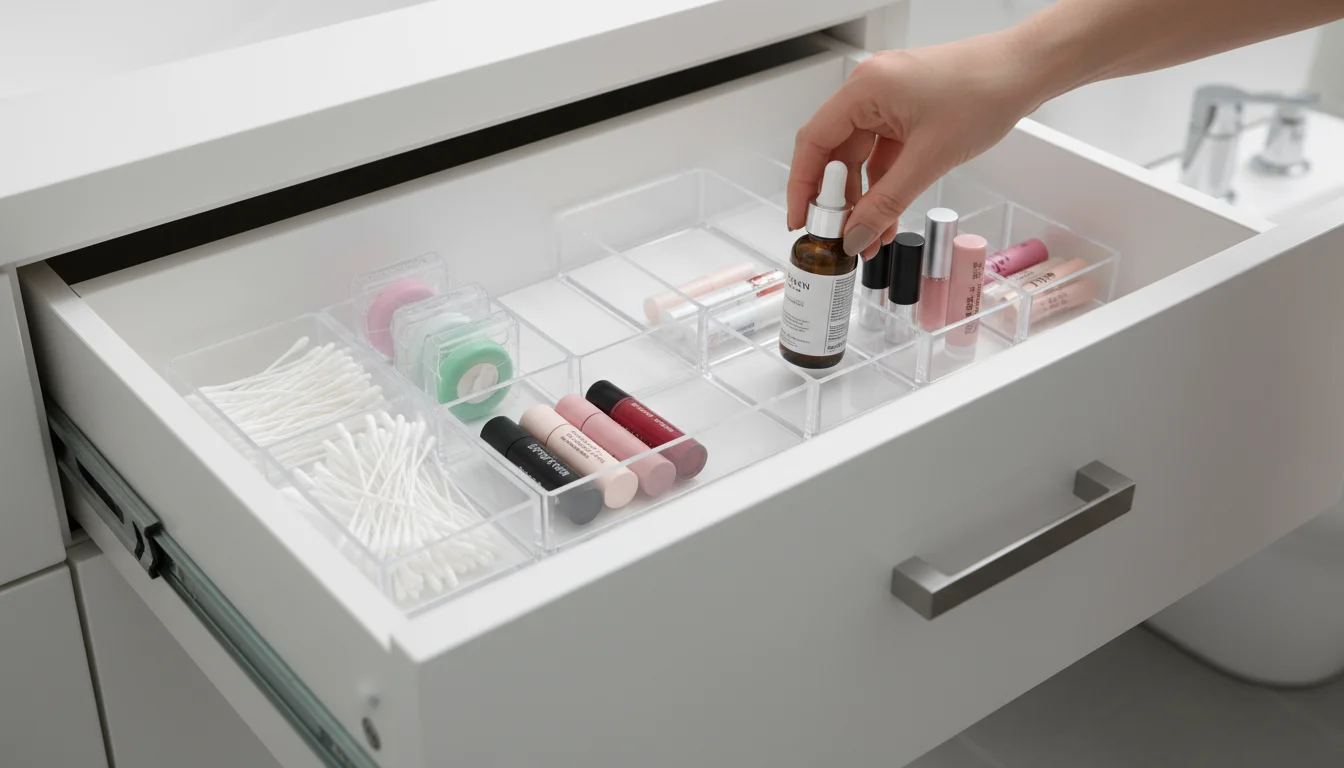
Key Considerations for Bathroom Organizers:
- Moisture Resistance: Bathrooms are humid. Opt for plastic, acrylic, or silicone organizers, which resist moisture and clean easily.
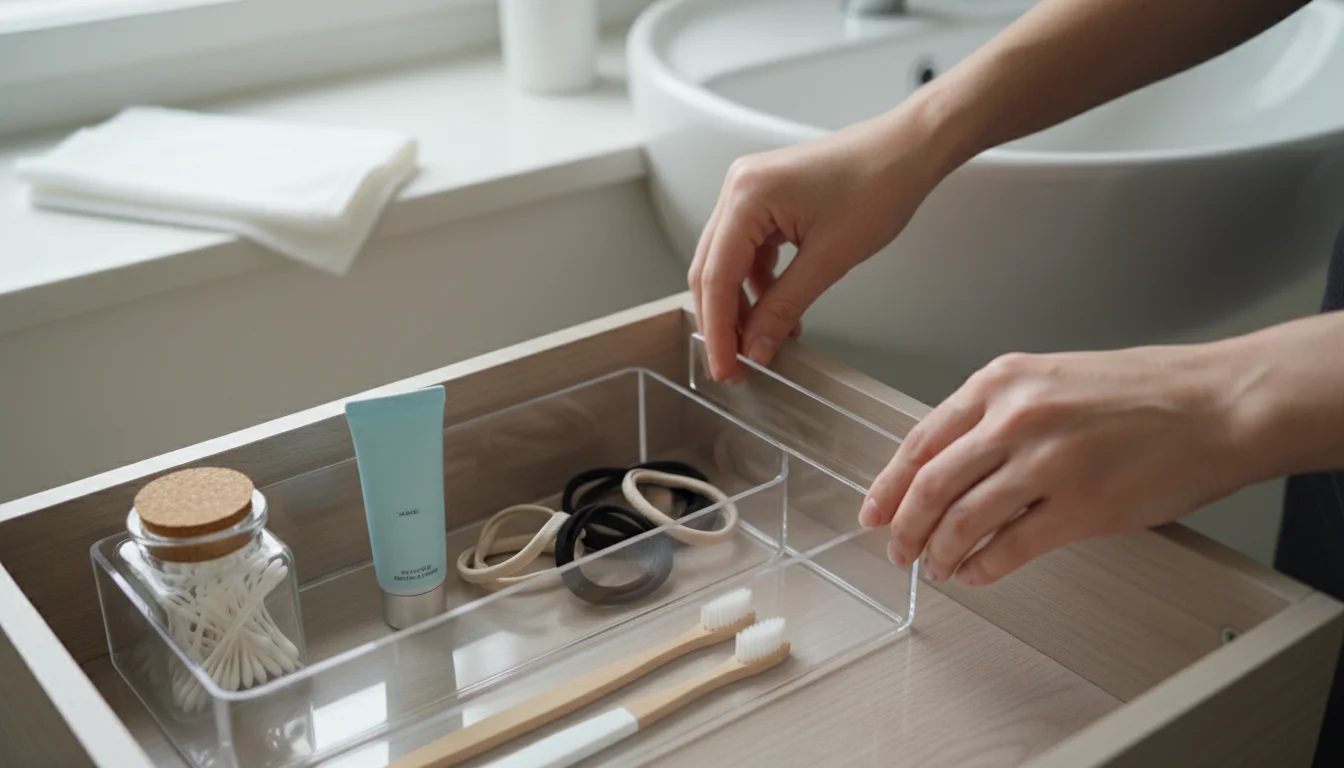
- Clear Visibility: Clear acrylic bins help you quickly identify products, from skincare to makeup.
- Small Compartments: Bathroom drawers hold many small items: cotton swabs, dental floss, lip balms, hairpins. Organizers with multiple small compartments are essential.
- Vertical Storage: Maximize deeper drawers with stackable bins or risers, making the most of vertical space.
Begin by emptying your bathroom drawers, discarding expired products, and cleaning the interiors. Sort items into categories: skincare, makeup, hair accessories, dental care, first aid. Choose organizers that fit these categories. For instance, a shallow drawer for makeup benefits from interlocking acrylic trays of varying sizes. A deeper drawer for toiletries can use tall, slim bins to hold upright bottles, preventing them from toppling over.
For instance, one homeowner transformed her cluttered vanity drawer by implementing a set of clear acrylic dividers. She assigned a small square for bobby pins, a rectangular bin for lipsticks, and a longer section for brushes. This simple change made her morning routine significantly faster and eliminated the need to hunt for specific items. As noted by experts at Real Simple, clear organizers are particularly effective in bathrooms, helping you see what you have at a glance and encouraging maintenance.
Remember that even small bathroom drawers can become highly efficient with the right organization. You create a calm, orderly space that supports your daily self-care rituals.
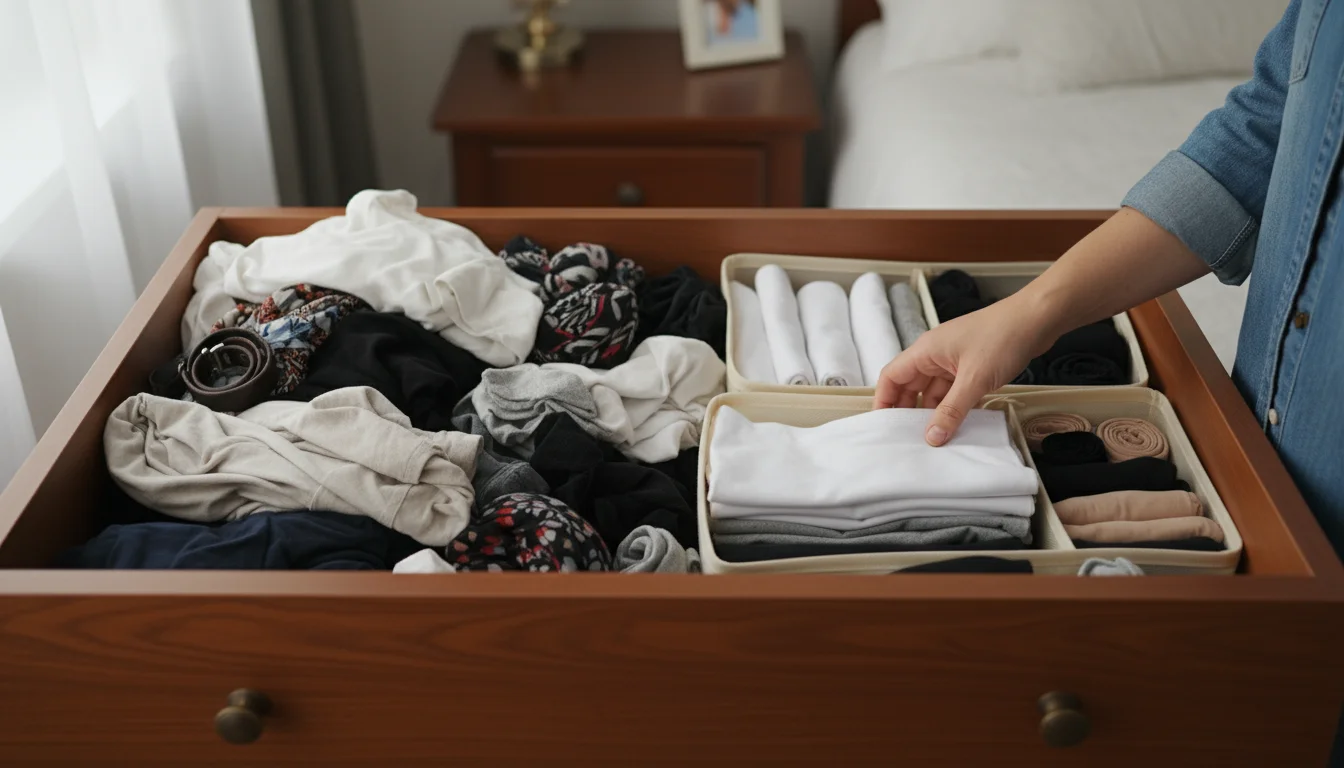
Bedroom Dresser Drawers: Taming Clothes and Accessories
Dresser drawers often house a variety of items, from folded clothes to socks, underwear, and accessories. Without proper structure, they quickly devolve into a jumbled mess. Effective drawer organizers keep your garments tidy, reduce wrinkles, and simplify your dressing routine.
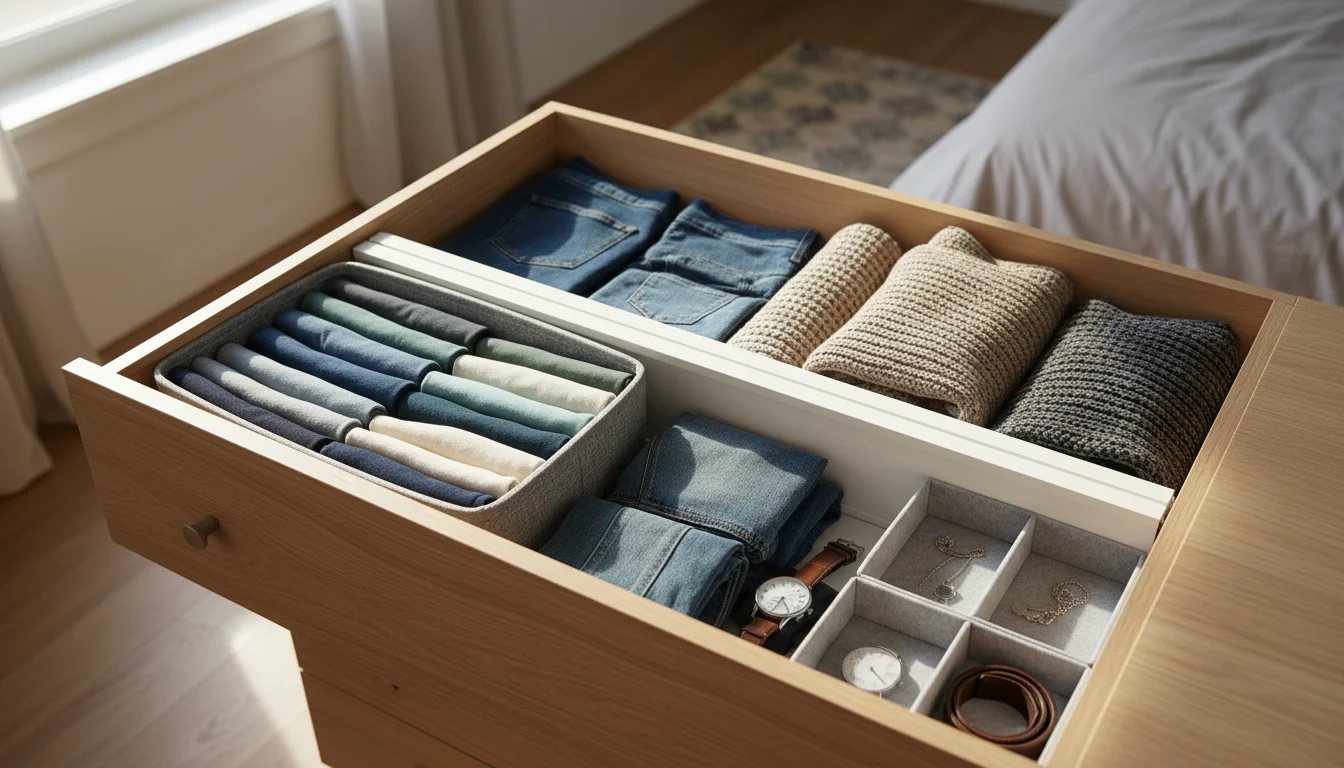
Strategies for Bedroom Dresser Drawers:
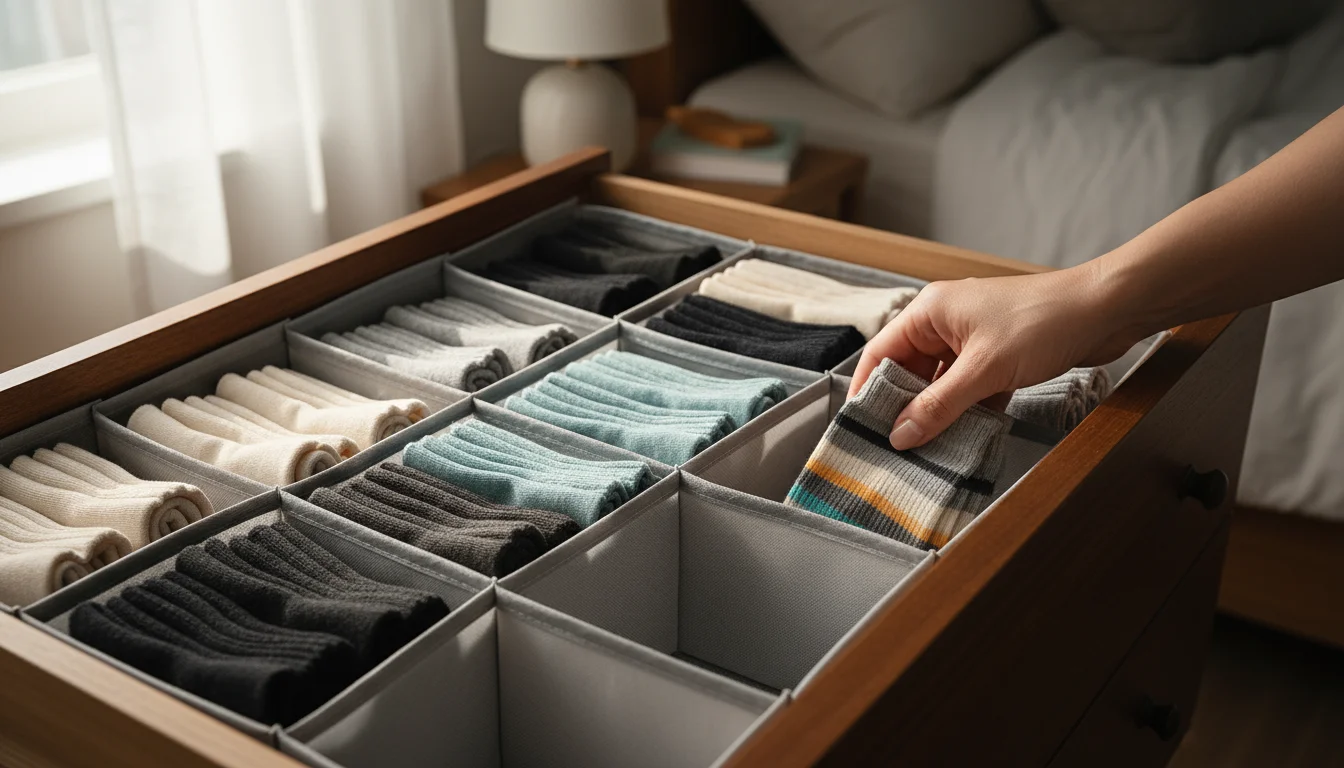
- Folding Techniques: Implement vertical folding methods, such as the KonMari method, which allow you to see every item at once. This works well for t-shirts, pajamas, and even towels.
- Fabric Bins: Collapsible fabric bins with dividers are excellent for separating socks, underwear, or activewear. They protect delicate fabrics and keep categories neatly contained.
- Adjustable Dividers: For larger items like sweaters or jeans, adjustable drawer dividers help maintain neat stacks and prevent piles from collapsing.
- Small Trays for Accessories: Use shallow felt-lined trays for jewelry, watches, belts, or scarves. This prevents tangling and protects delicate items.
Start by completely emptying your dresser drawers. Purge any clothes that no longer fit, are worn out, or you haven’t worn in over a year. Categorize remaining items: socks, underwear, t-shirts, pants, sweaters. Measure your drawer dimensions and select appropriate organizers. For example, a homeowner found great success using fabric drawer dividers to sort her children’s socks and underwear, making it easier for them to choose their own outfits each morning. This simple system helped her family maintain order consistently.
For deeper dresser drawers, consider stacking fabric bins or using drawer organizers designed for vertical storage. This maximizes the drawer’s capacity without creating messy piles. You transform your dresser from a storage void into a well-curated wardrobe system.
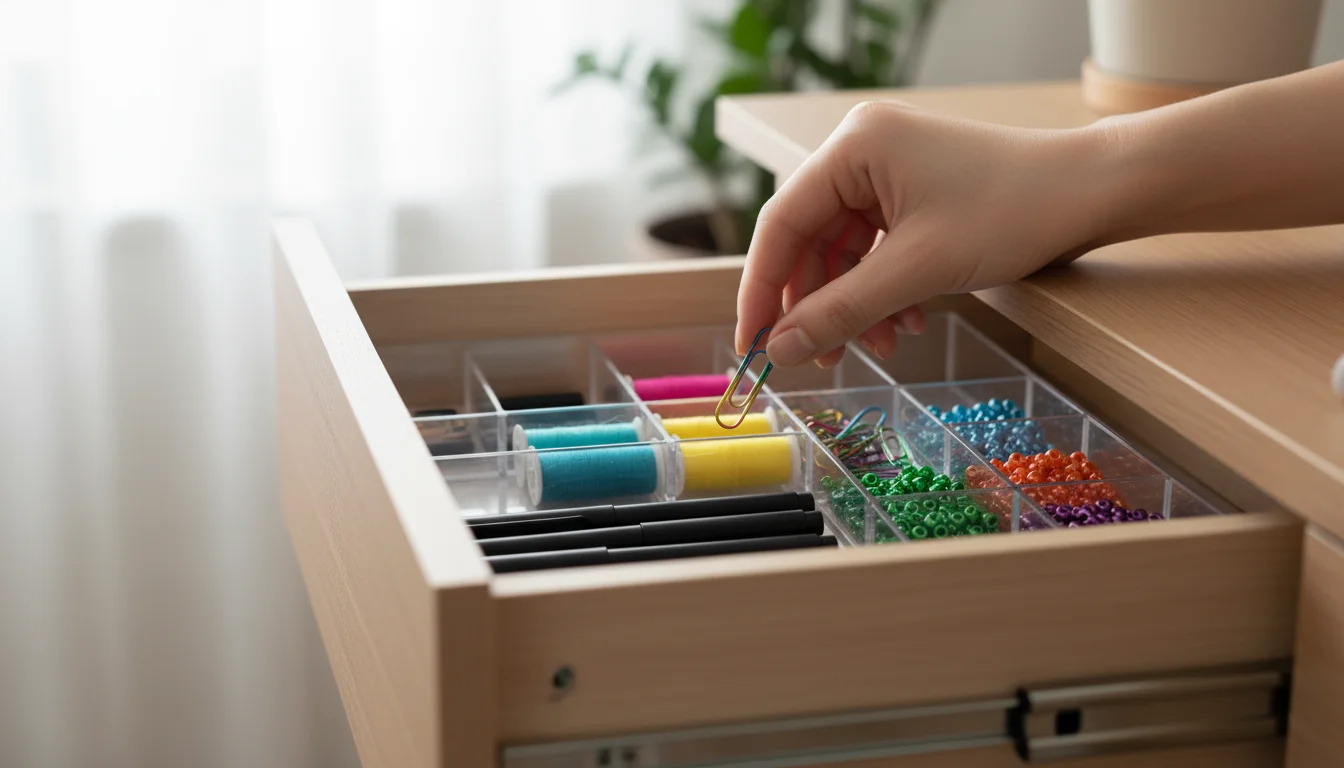
Office and Craft Room Drawers: Boosting Productivity
Office and craft room drawers hold a multitude of small, essential items: pens, paper clips, scissors, paints, beads, and fabric scraps. Disorganized drawers directly impact productivity, as you waste time searching for tools or supplies. Effective drawer organizers streamline your workflow and foster creativity.
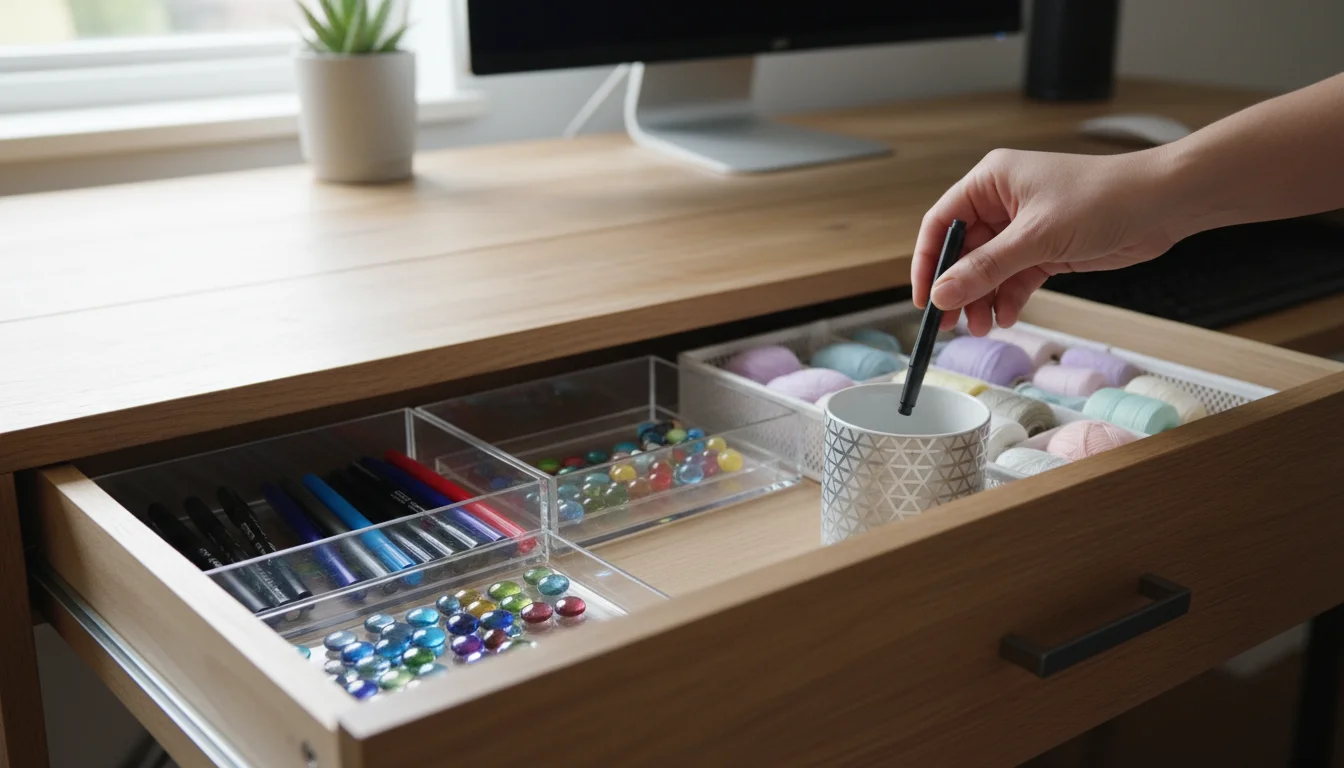
Organizing Office and Craft Drawers:
- Categorize by Function: Group similar items together. All writing instruments in one section, all stapling supplies in another, all adhesives in a third. For crafts, group by type: paints, brushes, yarns, beads.
- Clear or Mesh Organizers: These allow you to see contents instantly, crucial for quick access during creative projects or busy work sessions.
- Tiered or Stackable Bins: Maximize vertical space, especially in deeper drawers, for items like sticky notes, small notebooks, or various craft supplies.
- Dedicated Trays for Small Items: Use small, rigid trays for paper clips, thumbtacks, beads, buttons, or embellishments. This prevents them from scattering.
Empty and clean your drawers, then sort through every item. Discard dried-up pens, broken tools, or craft supplies you no longer use. For an office desk drawer, interlocking plastic bins provide flexible storage for pens, highlighters, erasers, and sticky notes. A craft room might benefit from larger, modular containers to hold skeins of yarn, fabric quarters, or small bottles of paint. For example, one crafter organized her embroidery floss into individual compartments within a clear plastic organizer, drastically cutting down search time for specific colors.
According to Good Housekeeping, creating a dedicated home for every item is key to maintaining an organized workspace. You enhance your focus and output by ensuring every tool and supply remains easily accessible.
Specialty Drawer Solutions for Unique Needs
Beyond the primary rooms, many homes have other drawers that require specialized organization. These include entryway consoles, garage workbenches, kids’ rooms, and under-bed storage. Addressing these unique areas ensures your entire home benefits from efficient storage solutions.
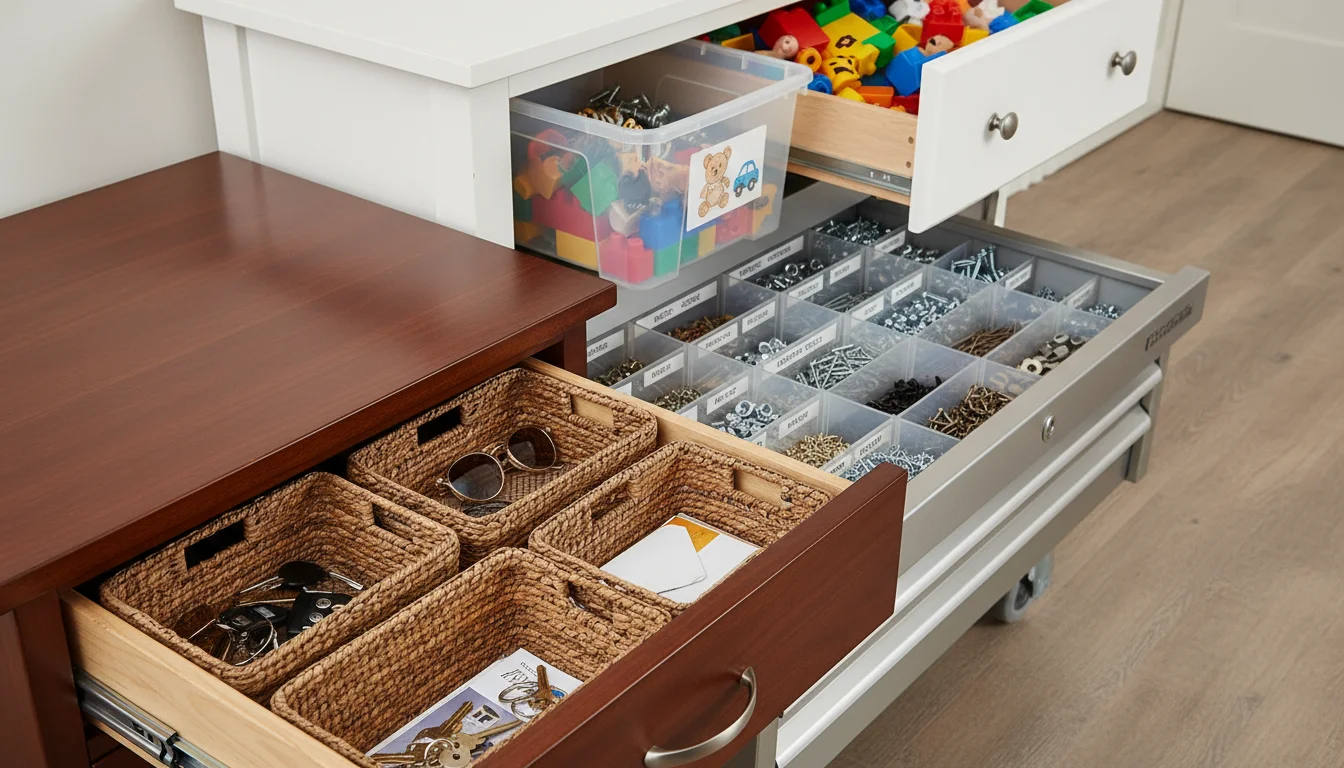
Ideas for Specific Specialty Drawers:
- Entryway Drawers: These are often “drop zones.” Use small bins for keys, loose change, sunglasses, and mail. A deeper section can hold gloves, hats, or pet leashes. Choose durable materials like wood or sturdy plastic.
- Garage Workbench Drawers: For tools, hardware, and small parts, robust metal or plastic compartment organizers are essential. Clearly label sections for screws, nails, washers, and specific tools. Foam inserts cut to shape can hold delicate tools securely.
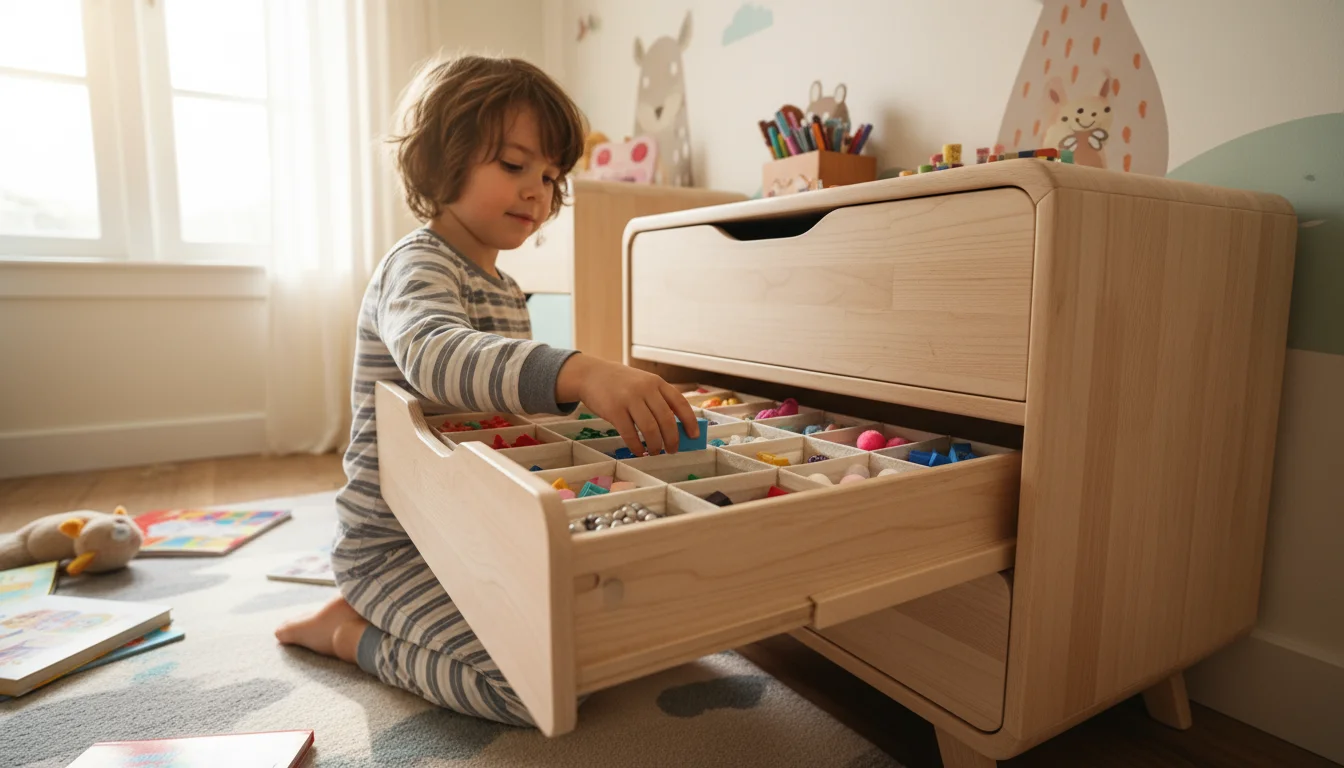
- Kids’ Room Drawers: Small toys, art supplies, and craft kits often reside here. Use colorful, durable plastic bins with lids for easy categorization. Label drawers with pictures for younger children to encourage independent tidying. Fabric cube organizers also work well in dresser-style units.
- Under-Bed Drawers: These large, often deep drawers are perfect for seasonal clothing, extra linens, or bulkier items. Opt for fabric storage bags with clear tops to identify contents, or large, shallow bins that fit the under-bed clearance. Ensure they have wheels for easy access.
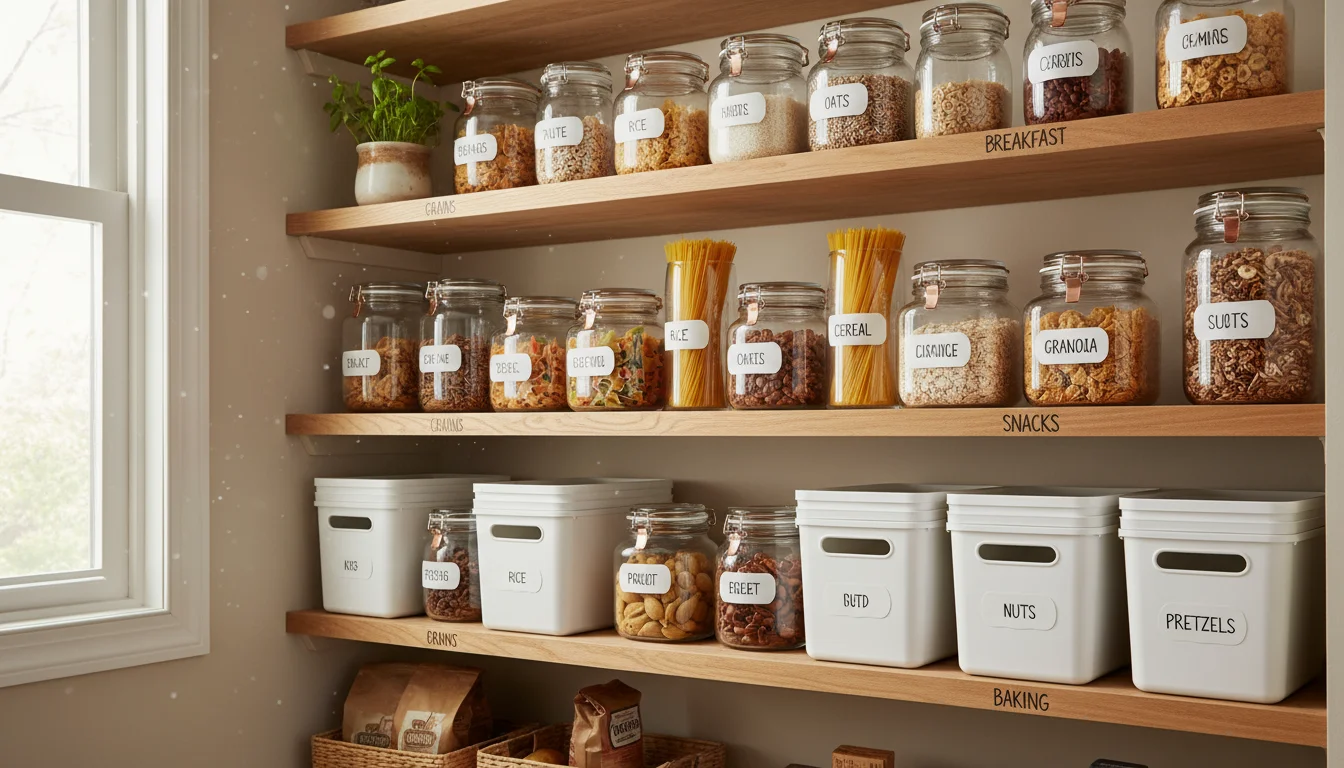
- Pantry Drawers: In kitchen pantries, use clear acrylic bins for snack packets, smaller bags of spices, or baking ingredients. Tiered inserts work well for jars and cans. You create a system that simplifies meal prep and grocery shopping.
Each of these spaces presents distinct organizational challenges and opportunities. By applying the principles of decluttering, categorization, and appropriate organizer selection, you transform overlooked storage areas into highly functional components of your home.
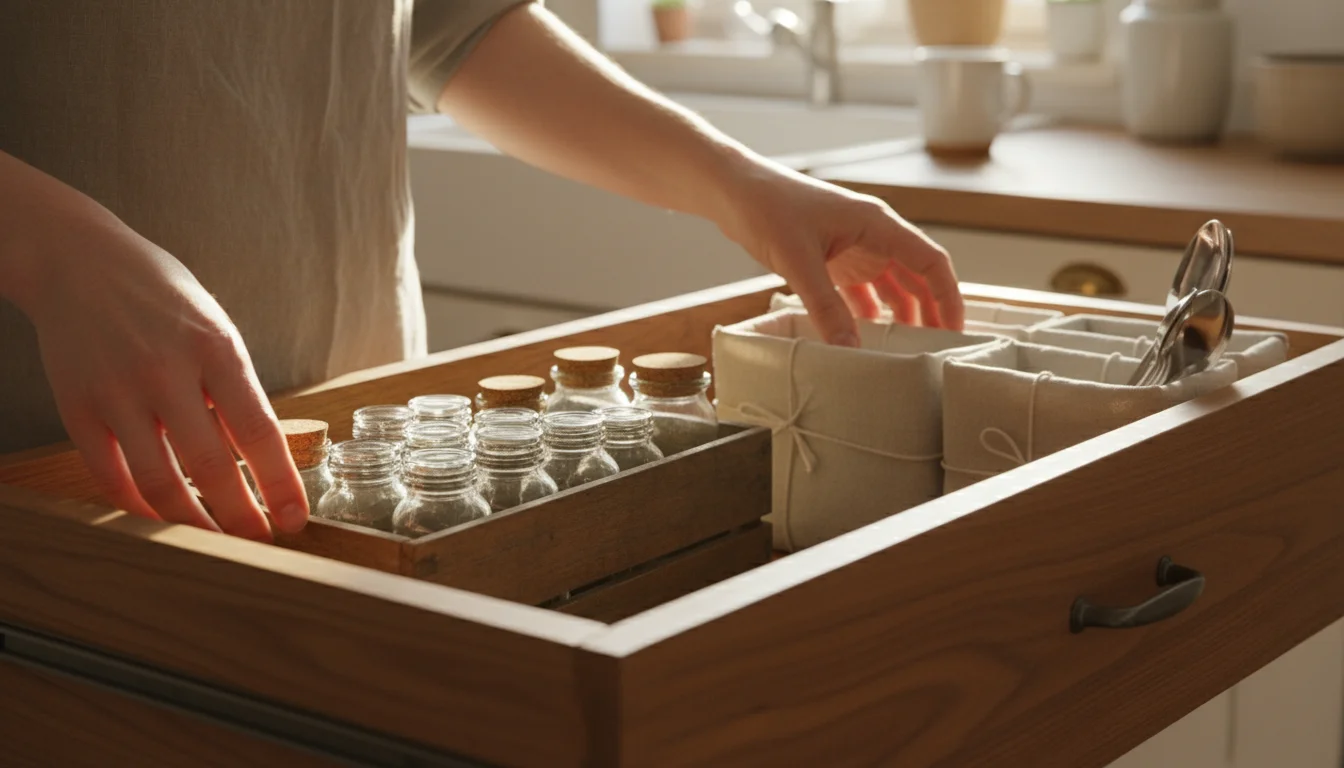
DIY Drawer Organizer Solutions for Every Budget
Professional drawer organizers offer excellent solutions, but you do not need to spend a fortune to achieve an organized space. Many effective drawer organization methods involve repurposed household items or simple DIY projects. This approach is budget-friendly and allows for highly customized solutions.
Creative DIY Organizer Ideas:
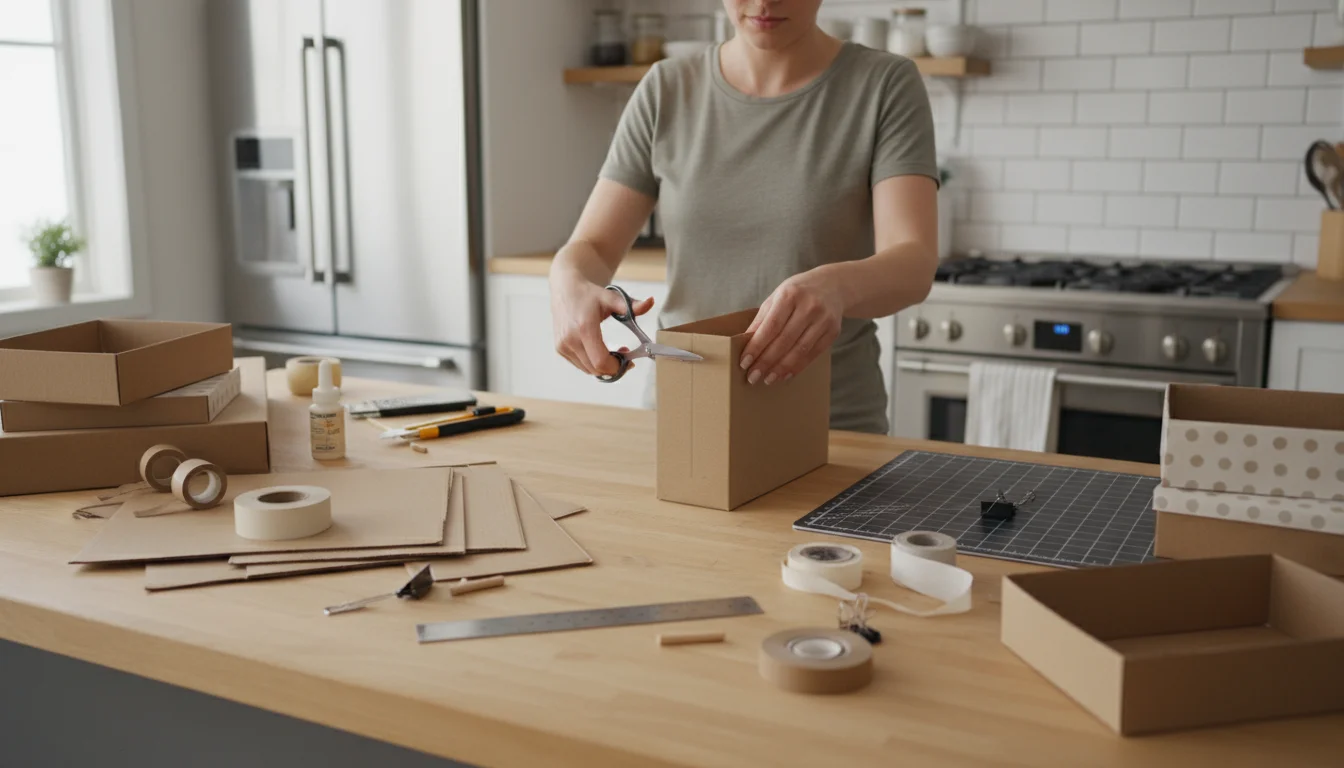
- Cardboard Boxes and Cereal Boxes: Cut down cardboard boxes or empty cereal boxes to fit your drawer dimensions. Cover them with decorative paper or fabric for a polished look. They work perfectly for separating items in dresser drawers, office supplies, or even pantry items.
- Plastic Food Containers: Repurpose clean, empty yogurt containers, takeout boxes, or deli containers. They are excellent for small items like craft supplies, hardware, or makeup. Their varied sizes often fit together like puzzle pieces, creating custom compartments.
- PVC Pipes: For deeper drawers, especially in craft rooms or garages, cut PVC pipes into short sections to create cylindrical compartments. These are ideal for storing rolls of tape, cables, or small tools.
- Wood Scraps: If you have basic woodworking skills, cut thin pieces of plywood or balsa wood to create custom drawer dividers. This provides a truly tailored and durable solution. Sites like Family Handyman offer excellent tutorials for simple woodworking projects.
- Ice Cube Trays: Perfect for very small items like earrings, beads, buttons, or thumbtacks.
The key to successful DIY organization lies in careful measurement and thoughtful repurposing. Before you begin, measure your drawer’s interior dimensions and the items you intend to store. You might be surprised by how many useful organizers you already possess. This approach saves money and aligns with a sustainable, eco-conscious lifestyle. You demonstrate that effective home organization does not always require purchasing new products.
Maintaining Your Organized Drawers Long Term
Implementing drawer organizers provides a fantastic start, but maintaining that order requires ongoing effort. Without a consistent system, even the best organization can unravel. You ensure lasting order and continue to reap the benefits of an organized home by establishing simple maintenance routines.
Tips for Long-Term Drawer Organization:
- The “One In, One Out” Rule: When you bring a new item into a drawer, remove an old, similar item. This prevents accumulation and keeps your inventory at a manageable level.
- Regular Decluttering Sessions: Schedule quick, quarterly or bi-annual reviews of your drawers. Dedicate 10-15 minutes per drawer to quickly remove anything that has found its way in but does not belong, or any items you no longer use.
- Immediate Put-Away: Always return items to their designated spots immediately after use. This simple habit prevents clutter from forming in the first place.
- Adjust as Needed: Your needs change over time. If a system stops working, do not hesitate to adjust your organizers or re-categorize items. Flexibility remains key to sustainable organization.
- Keep it Clean: Periodically remove organizers and wipe down the drawer interiors. This prevents dust and debris buildup and keeps your organized space feeling fresh.
Maintaining an organized drawer system does not require excessive time or effort. It integrates into your daily habits, becoming a natural part of living in your home. You experience continued peace and efficiency, avoiding the frustration of repeated clutter. Remember, the goal is not perfection, but a functional system that serves your lifestyle.

Frequently Asked Questions
What type of drawer organizer is best for kitchen utensils?
For kitchen utensils, expandable bamboo or plastic trays with fixed compartments often work best. They provide dedicated slots for forks, spoons, and knives, and many expand to fit your drawer’s width, maximizing space efficiently. Deeper plastic bins with adjustable dividers also work well for larger cooking tools like ladles and spatulas.
How do I measure my drawers for organizers?
Measure the interior length, width, and depth of your drawer. Use a tape measure to get precise dimensions. Note any internal obstructions, such as screws or odd shapes, that might affect the organizer’s fit. Choose organizers that fit snugly but allow enough clearance for the drawer to open and close smoothly.
Can I mix and match different types of drawer organizers?
Absolutely, mixing and matching often provides the most effective solution. You can combine an expandable utensil tray with small interlocking bins for unique items, or use a combination of clear acrylic containers and silicone inserts. This flexible approach allows you to tailor the organization system to your specific needs and the items you store.
How often should I declutter my drawers?
A good rule of thumb is to conduct a quick decluttering session for each drawer quarterly or semi-annually. This involves removing any items that have accumulated, no longer belong, or you no longer use. For high-traffic drawers, like an entryway catch-all, you might find a monthly quick tidy beneficial.
Are custom drawer organizers worth the investment?
Custom drawer organizers, such as built-in inserts or professional solutions, can be a significant investment. They are often worthwhile for highly specialized needs, awkward drawer sizes, or if you seek a seamlessly integrated, high-end look. For most common organizational challenges, a combination of off-the-shelf and DIY solutions offers excellent functionality at a fraction of the cost.
Drawer organizers offer practical, budget-conscious solutions for achieving lasting order in your home. You transform frustrating clutter into functional, beautiful spaces, enhancing daily life and reducing stress. Start small, implement systems one drawer at a time, and enjoy the profound impact effective home organization brings to your everyday living.
For expert home organization guidance, visit
Family Handyman, Bob Vila and HGTV — Home.
Disclaimer: This article is for informational purposes only and is not a substitute for professional advice. Consult professional organizers or specialists for personalized recommendations.






Leave a Reply