

Your mudroom, entryway, or landing strip serves as the critical transition point between the outside world and your home’s interior. It catches everything from muddy boots and backpacks to mail and car keys. Without a practical system, this area quickly transforms into a chaotic clutter zone. You deserve an organized mudroom, one that simplifies your daily routine and keeps the mess out of your main living spaces.
This guide provides actionable strategies and realistic solutions for effective mudroom storage, whether you have a sprawling dedicated room, a tight apartment entryway, or a small corner by the door. We focus on budget-friendly approaches and durable systems that truly work for busy households, helping you maintain order effortlessly.
Understanding Your Mudroom’s Purpose and Potential
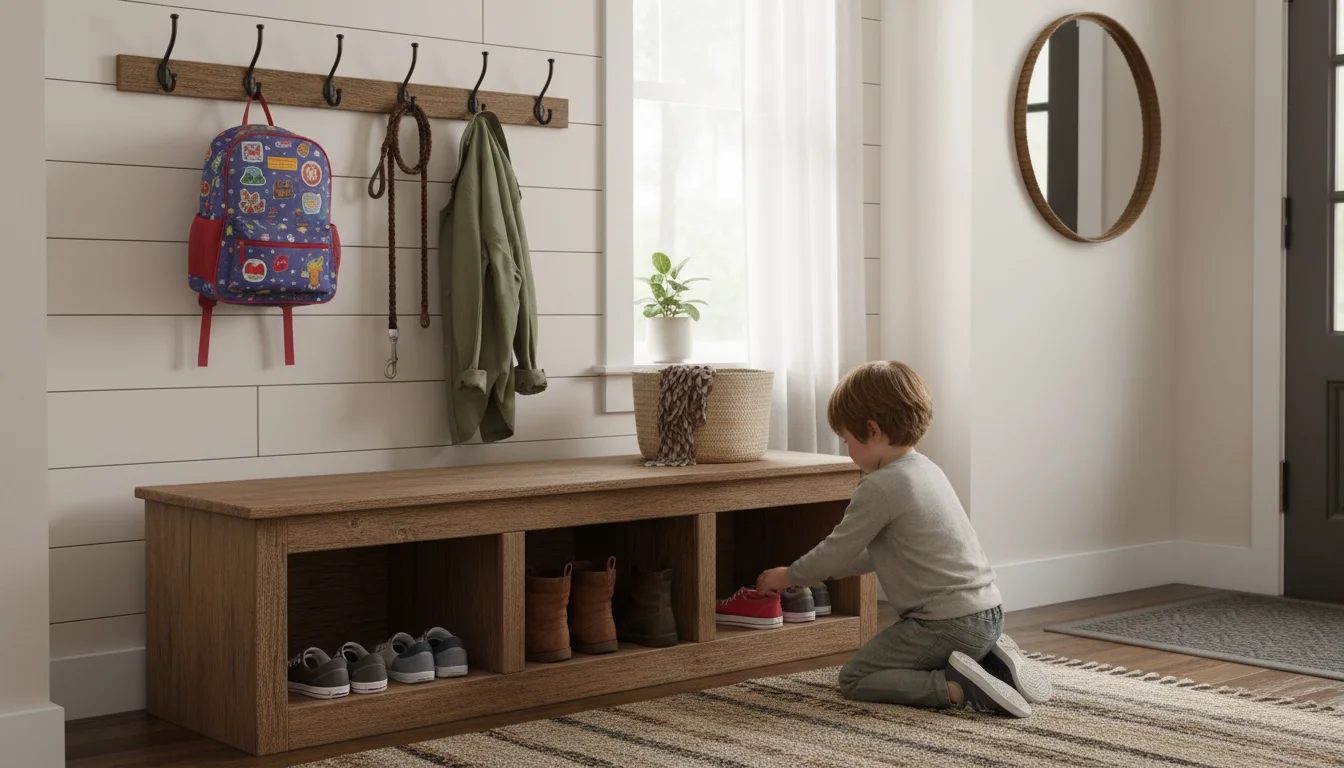
A mudroom is far more than just an entrance. It is your home’s first line of defense against dirt, disarray, and the detritus of daily life. This space handles coats, shoes, bags, sports equipment, pet leashes, and incoming mail. When you effectively organize your mudroom, you prevent these items from migrating into kitchens, living rooms, and bedrooms.
Many homeowners associate “mudroom” with a large, dedicated room. However, your mudroom might be a compact entryway, a hallway niche, or even just the space inside your front door. Regardless of its size, its function remains the same: to act as a buffer and a storage hub for items frequently carried in and out of the house. Recognizing this purpose is the first step toward implementing effective mudroom storage solutions.
Clutter accumulates in this area for understandable reasons. It serves as a drop zone for everyone entering your home. Without designated spots for items, things pile up on floors, benches, and tables. You can change this pattern by creating clear, functional systems that streamline daily transitions. Your goal is to make it easy for everyone to put things away, not just drop them.

The Foundation: Declutter and Define Zones
Before you purchase any storage containers or build new shelves, you must clear out the existing clutter. A proper decluttering session reveals the true potential of your space and clarifies what you actually need to store. Follow these steps for a thorough declutter:
- Empty Everything Out: Remove every item from your mudroom or entryway. This includes coats, shoes, bags, mail, and any decorative elements. Seeing an empty space gives you a fresh perspective.
- Sort into Categories: Create distinct piles: “Keep,” “Donate/Sell,” “Trash,” and “Relocate.” Be honest about what you truly use. That old jacket you haven’t worn in years, or the single glove you can’t find a match for, should go.
- Address the “Relocate” Pile: Take items that do not belong in the mudroom to their proper homes immediately. Backpacks that primarily store school supplies might belong in a child’s bedroom or a dedicated study area, only passing through the mudroom briefly.
- Clean Thoroughly: With the space empty, give it a deep clean. Wipe down surfaces, sweep, and mop. This creates a clean slate for your new system.
Once decluttered, you can define “zones.” Zones are designated areas for specific types of items or activities. This concept makes organization intuitive and sustainable. For mudroom storage, consider these essential zones:
- Shoe Zone: A dedicated area for footwear, preventing shoes from scattering across the floor.
- Coat/Outerwear Zone: Hooks or hangers for jackets, scarves, and hats.
- Bag/Backpack Zone: Hooks or cubbies for purses, work bags, and school backpacks.
- Mail/Key Zone: A small shelf, wall organizer, or bowl for incoming mail and keys.
- Grab-and-Go Zone: An area for items you frequently need when leaving, like sunglasses, dog leashes, or umbrellas.
According to Real Simple – Organizing, creating these specific zones significantly reduces decision fatigue and makes it easier for everyone in the household to maintain order. When every item has a “home,” clutter has no place to settle.
Maximizing Vertical Space with Smart Storage
Many mudrooms and entryways are constrained by square footage. The key to effective mudroom storage, especially in smaller areas, lies in leveraging vertical space. Think upwards, utilizing walls from floor to ceiling.
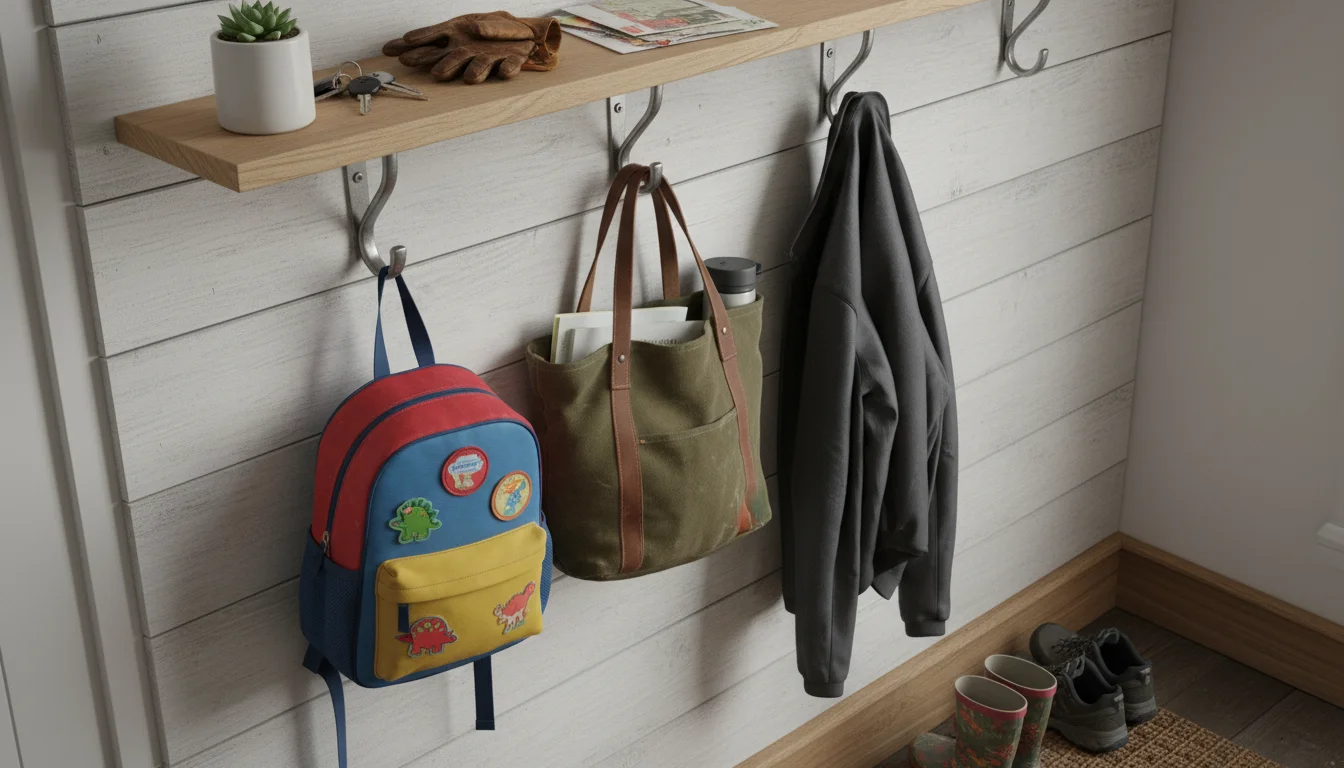
- Wall-Mounted Shelves: Install floating shelves or bracketed shelving units above eye level. Use these for storing less frequently accessed items, decorative accents, or baskets holding hats and gloves. Ensure shelves are sturdy enough for the items you place on them.
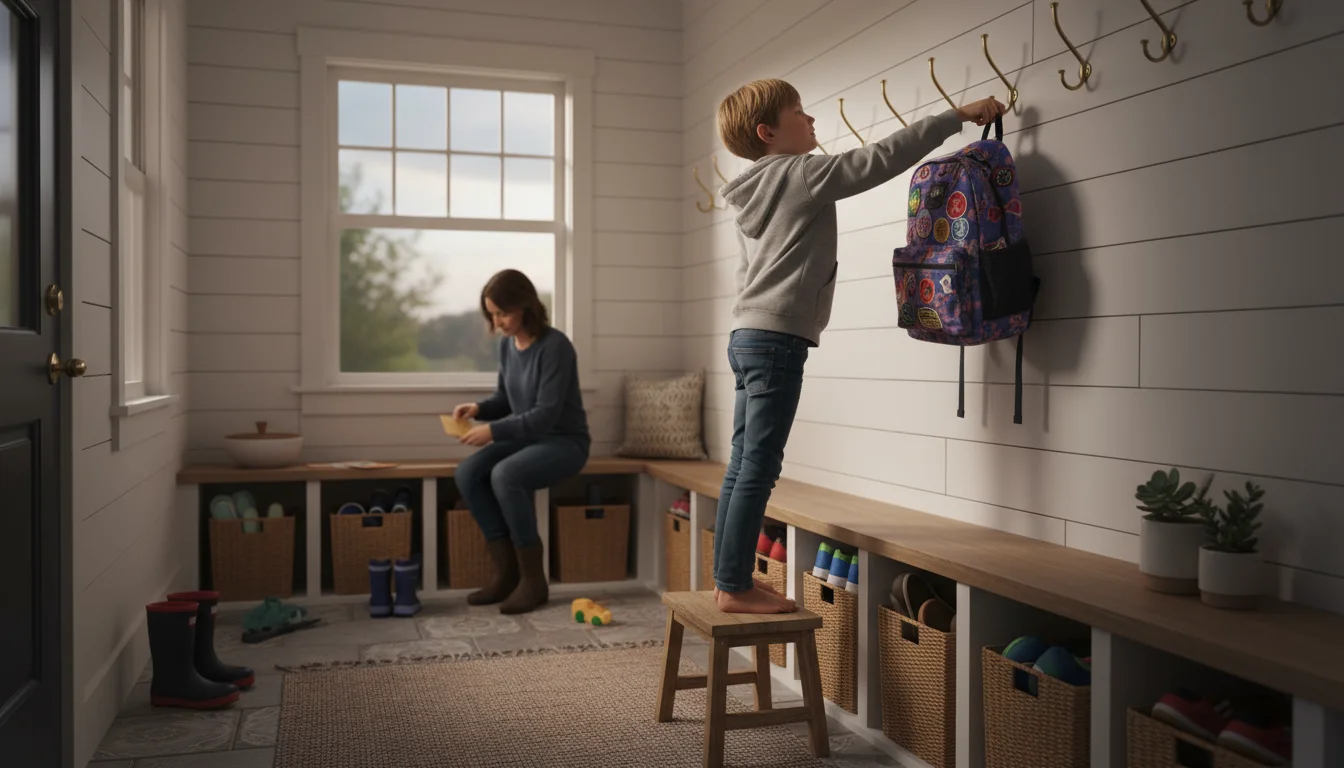
- Hooks, Hooks, and More Hooks: A classic for a reason. Install sturdy hooks at varying heights. Place lower hooks for children’s coats and backpacks, and higher ones for adult outerwear and larger bags. Consider multi-hook racks or individual hooks strategically placed.
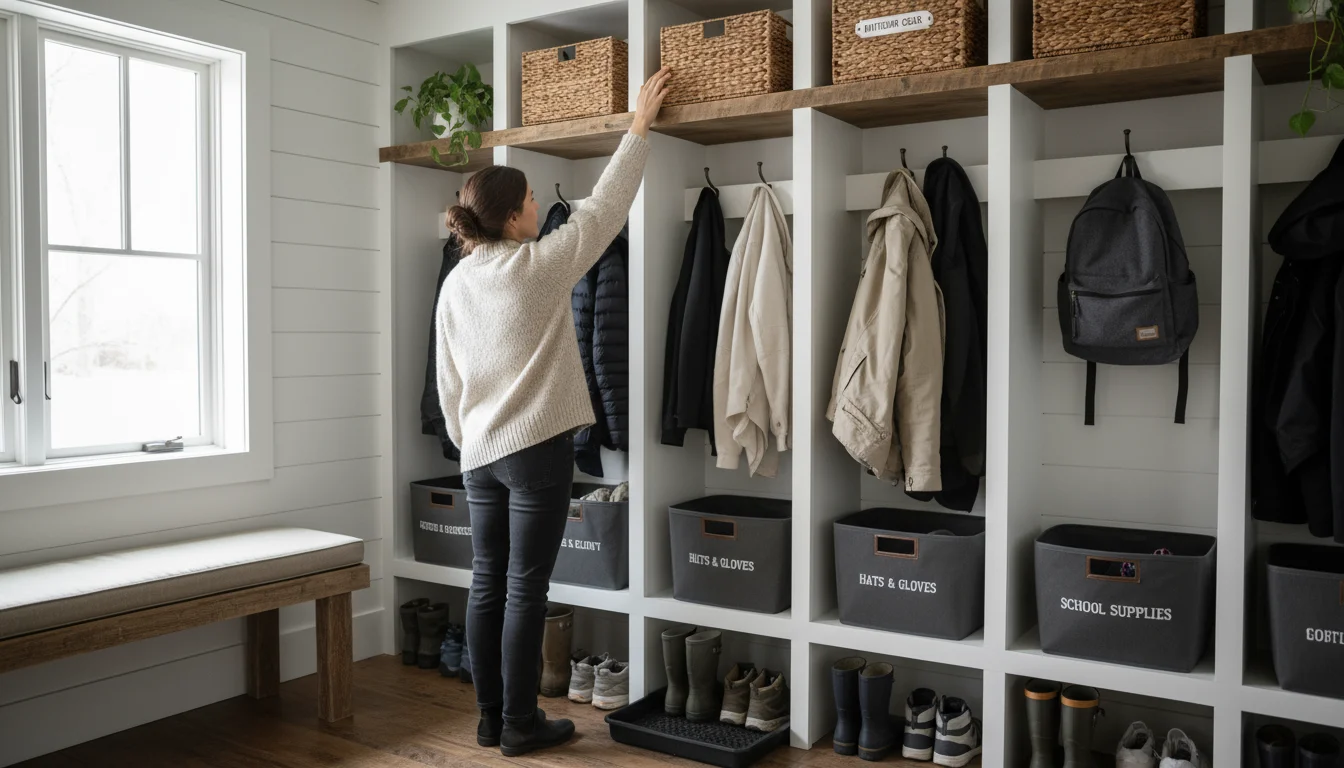
- Cubbies and Lockers: These are ideal for families. Each family member gets a dedicated cubby or locker for their daily essentials. Cubbies can be built-in, freestanding, or wall-mounted. They provide distinct compartments for shoes, backpacks, and outerwear.
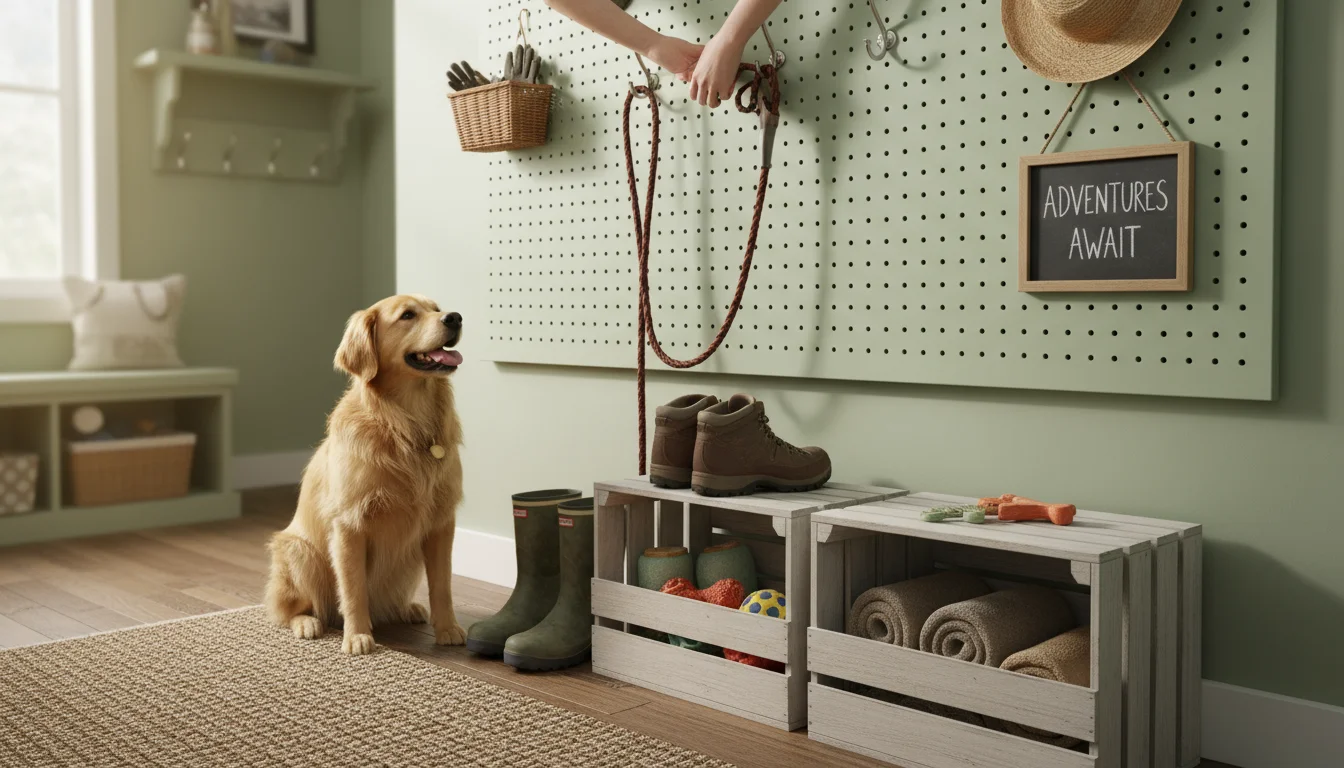
- Pegboards: A versatile and customizable solution. Mount a pegboard to an empty wall and use various hooks, baskets, and small shelves to store keys, dog leashes, umbrellas, and small tools. You can rearrange it as your needs change. This option is particularly excellent for tight spaces where every inch counts.
- Tall Cabinets and Armoires: If your space allows, a slim, tall cabinet can hide a multitude of items. Look for models with adjustable shelves to accommodate boots, cleaning supplies, or even sports equipment. Ensure the cabinet fits the scale of your space; you do not want it to overwhelm the entryway.
- Over-the-Door Organizers: These are a renter-friendly favorite. Use them on the inside of a closet or entry door for shoes, cleaning supplies, or other small items. They are easy to install and remove, providing instant vertical storage.
Maximizing vertical space effectively doubles your usable storage area without expanding your physical footprint. As The Spruce – Home Organization suggests, looking up is a powerful strategy for home organization, especially in high-traffic, compact zones like mudrooms.
Essential Mudroom Storage Solutions for Every Item
Now that you have decluttered and considered vertical space, let us look at specific mudroom storage solutions for the most common items that accumulate in your entryway.
Shoe Storage Strategies
Shoes are often the biggest culprit for mudroom clutter. A clear system for `shoe storage` is paramount.
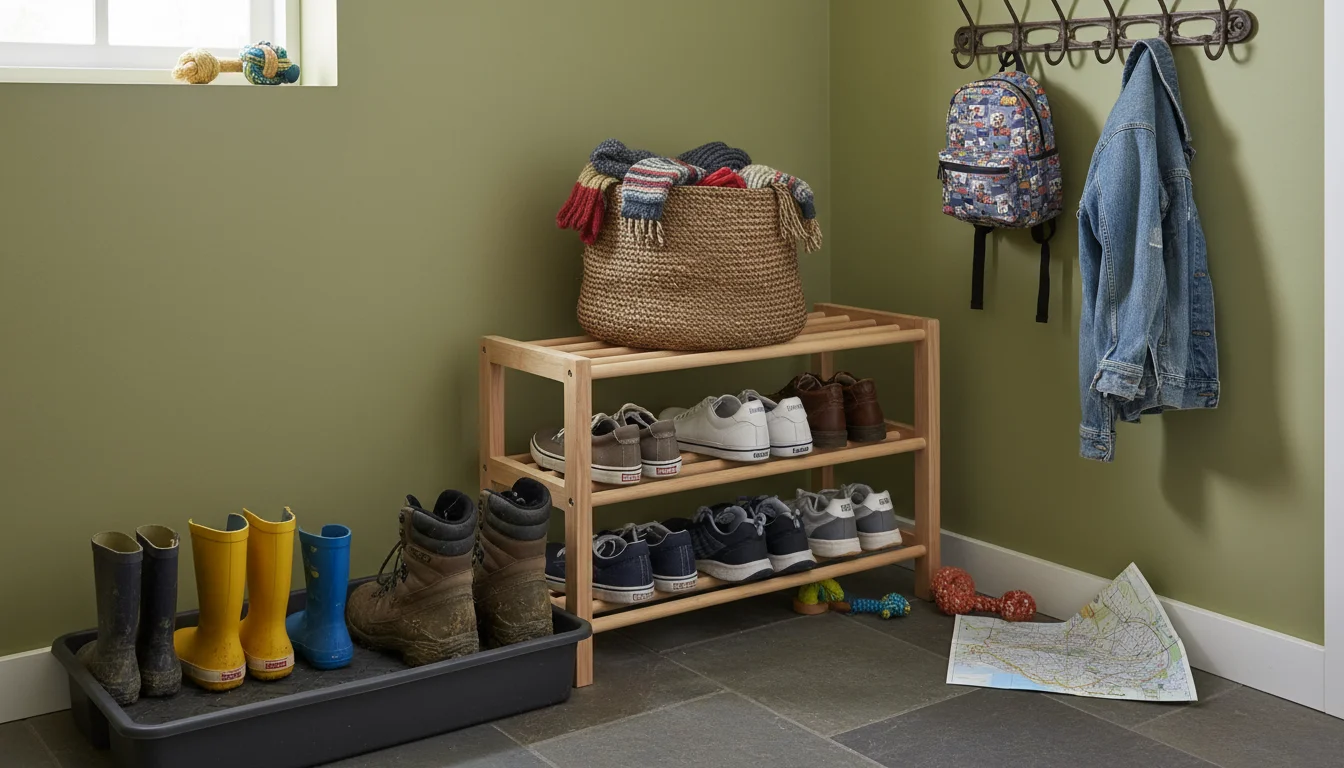
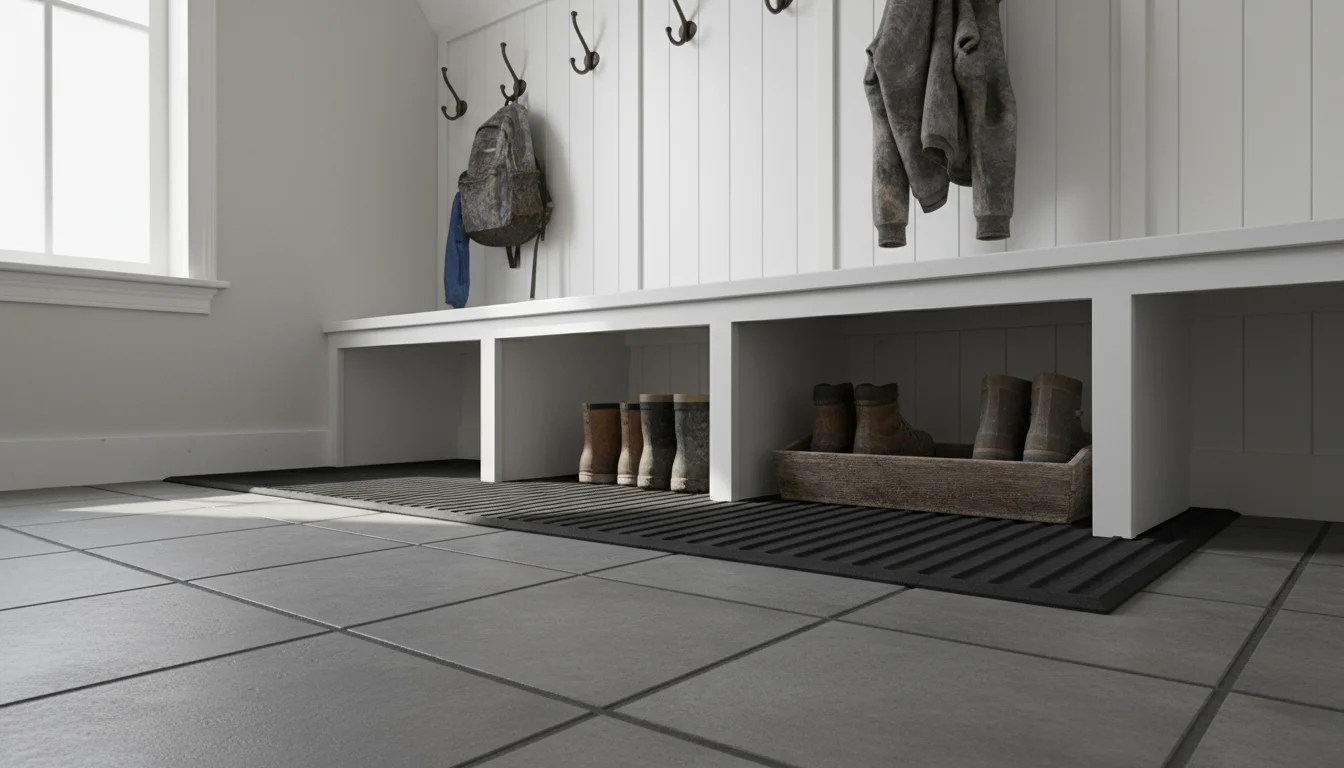
- Shoe Trays and Mats: Essential for wet or muddy footwear. Place a sturdy tray with a raised edge directly inside the door to catch dirt and water. This protects your floors and contains the mess.
- Shoe Racks: Simple wire, plastic, or wood racks keep shoes off the floor and in neat rows. Choose stackable options for more vertical `shoe storage`.
- Shoe Cubbies: Individual compartments for each pair of shoes prevent piles. These can be built into benches or standalone units.
- Boot Trays/Racks: For taller boots, use specialized racks that allow them to air dry properly without collapsing.
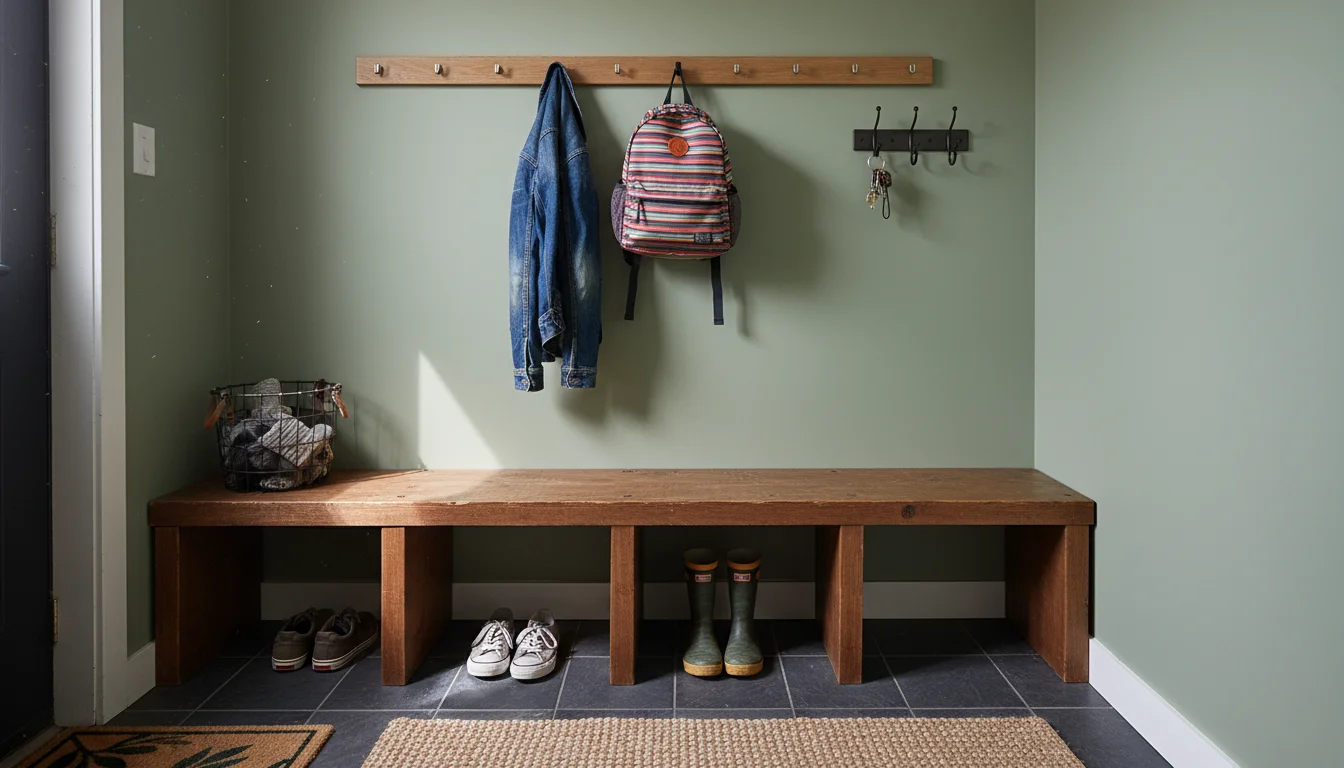
- Benches with Shoe Storage: A multi-functional piece that provides both a place to sit while putting on shoes and hidden or open `shoe storage` underneath. Look for benches with hinged tops, pull-out drawers, or open cubbies.
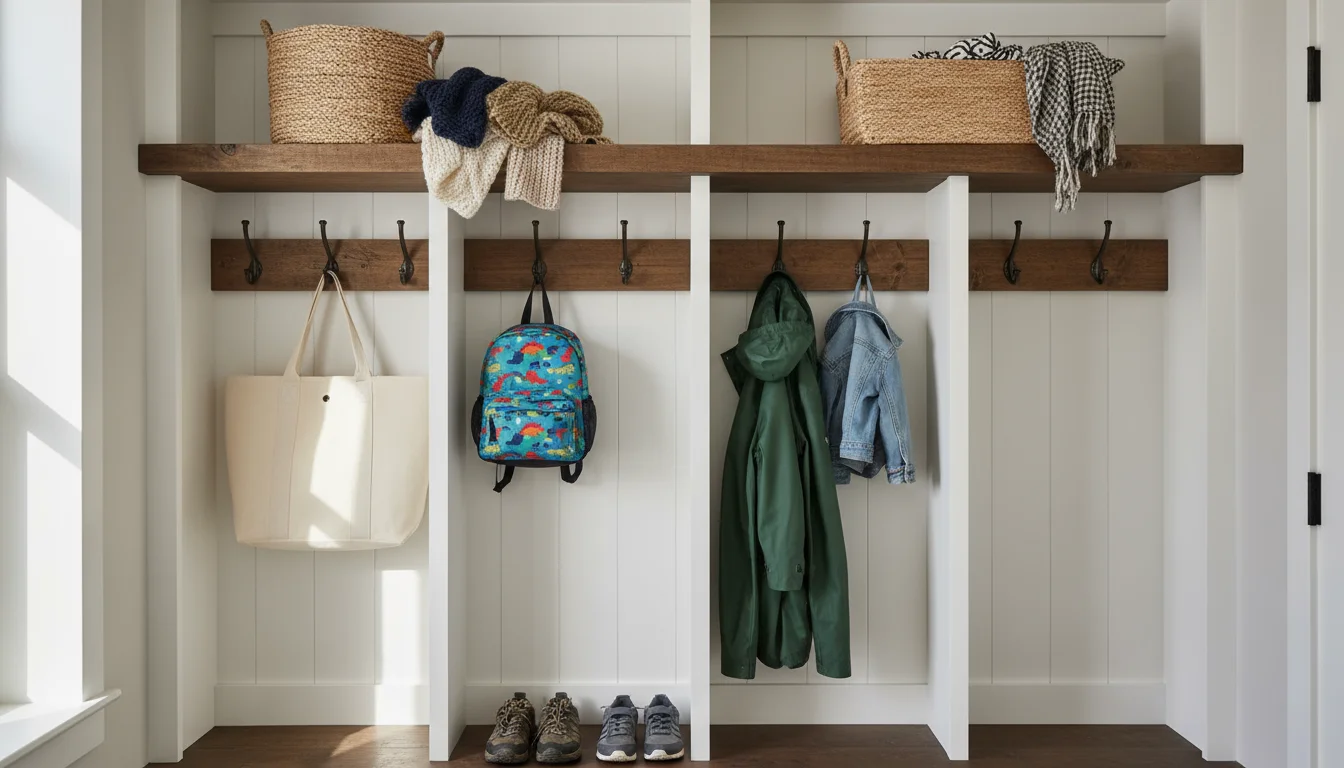
Coat and Bag Storage
Coats, jackets, and bags need accessible yet contained solutions.
- Wall Hooks: Install sturdy hooks directly into wall studs. Use different types: single hooks for individual coats, or multi-hook racks for more capacity. Place them at varying heights for easy access for all family members.
- Coat Racks: Freestanding coat racks work well if you have floor space. Choose models with a wide, stable base to prevent tipping, especially in homes with active children.
- Open Shelving: Incorporate open shelves above hooks for baskets holding scarves, hats, and gloves. This keeps frequently used accessories contained and visible.
- Lockers or Built-in Units: For a more custom look and robust `mudroom storage`, consider installing a locker system or built-in cubbies. Each section can have hooks, a small shelf, and a designated spot for a bag or backpack. These create a streamlined and tidy appearance.
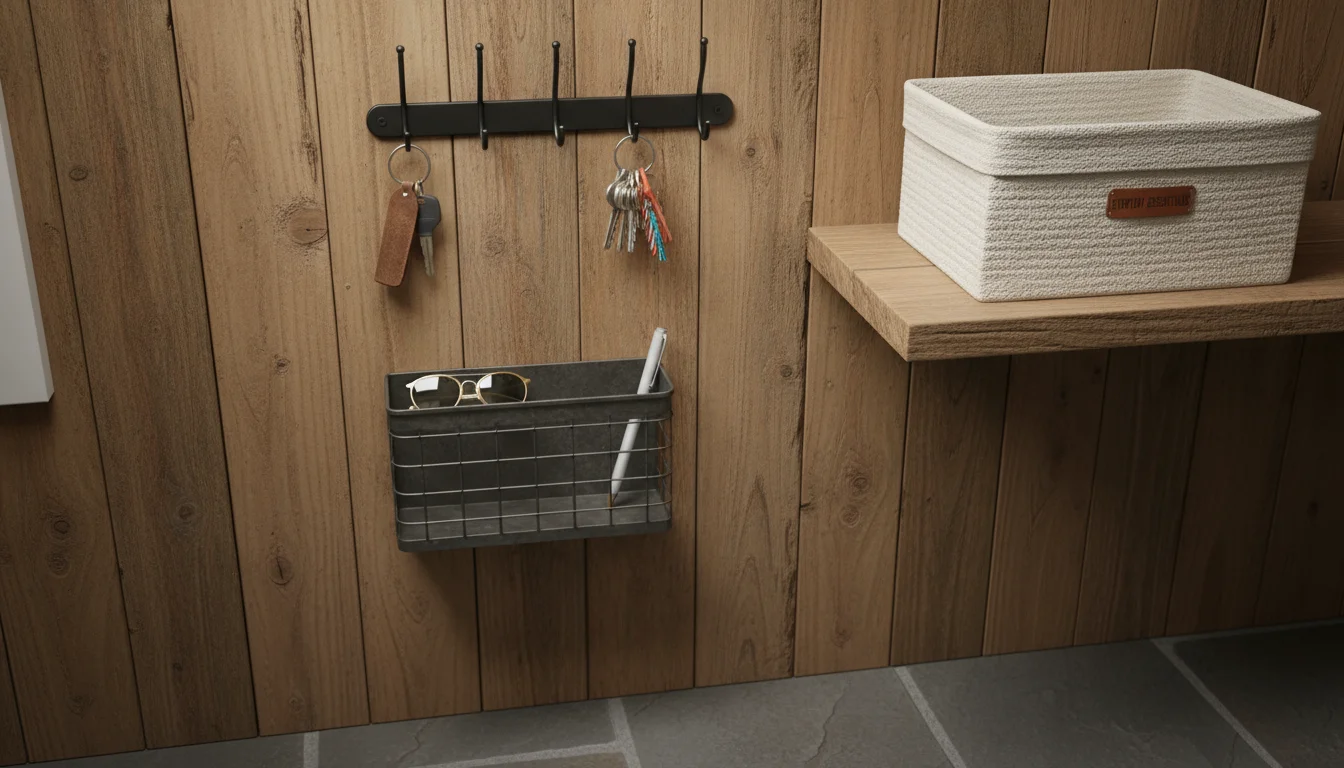
Small Item Management
Keys, mail, sunglasses, dog leashes, and loose change easily create visual clutter. Designate a specific spot for each category.
- Baskets and Bins: Use attractive baskets or fabric bins on shelves or inside cubbies to hold smaller items. Label them clearly (e.g., “Hats,” “Gloves,” “Dog Supplies”).
- Wall-Mounted Organizers: Key racks, mail slots, or small caddies mounted on the wall keep items off flat surfaces.
- Drawer Organizers: If your mudroom includes a console table or built-in drawers, use dividers or small trays to keep the contents neat.
- Charging Station: Dedicate a small area for device charging, keeping cords organized and phones off countertops.
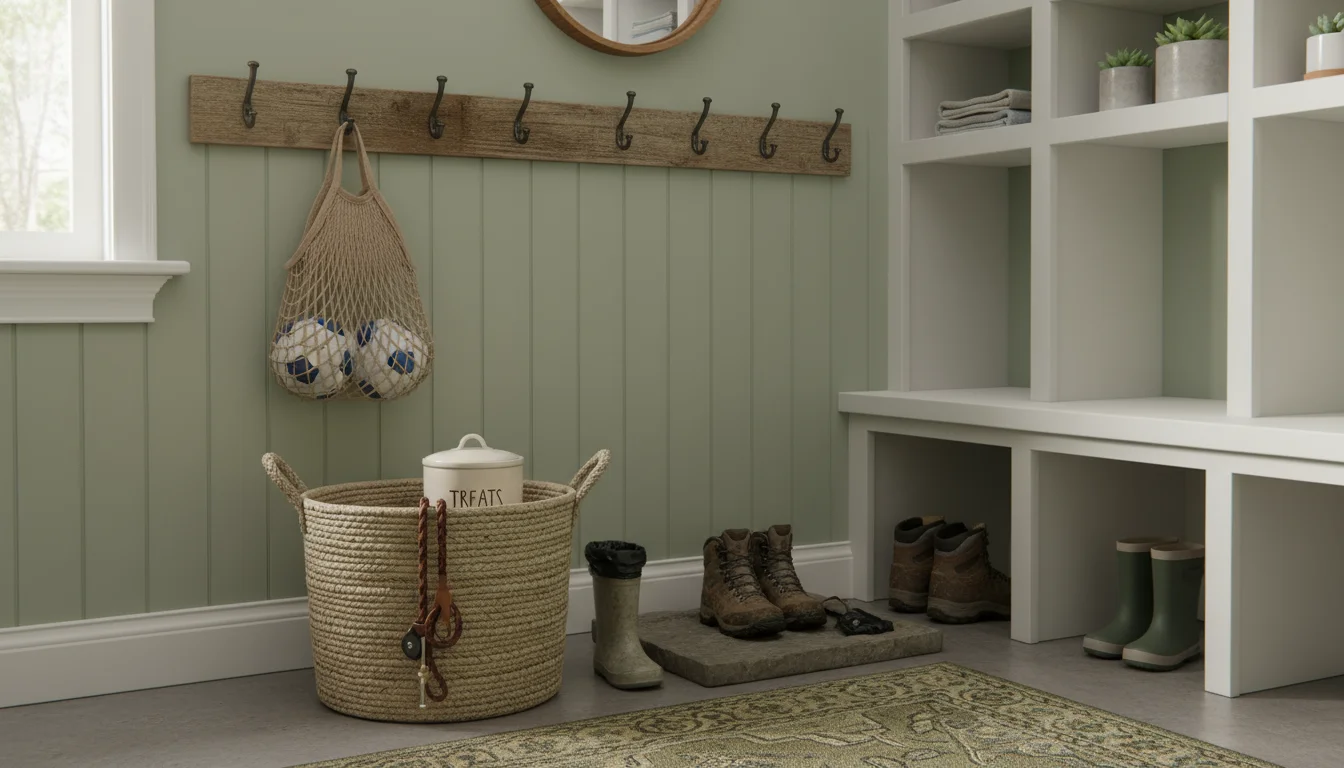
Specialty Items
Your mudroom also serves as a hub for specific household items.
- Sports Gear: Mesh bags, large bins, or specific wall-mounted racks can hold balls, helmets, and other sports equipment, preventing them from scattering.
- Pet Supplies: A small bin for leashes, waste bags, and treats. If you have a larger mudroom, consider a dedicated pet station with food and water bowls.
- Cleaning Supplies: Keep a few essential cleaning items, like a small broom, dustpan, and floor cleaner, easily accessible for quick cleanups. A wall-mounted holder for a mop or broom keeps it off the floor.
By categorizing your items and selecting appropriate mudroom storage solutions, you create an efficient system where everything has a home. This disciplined approach to `entryway organization` makes daily routines smoother.
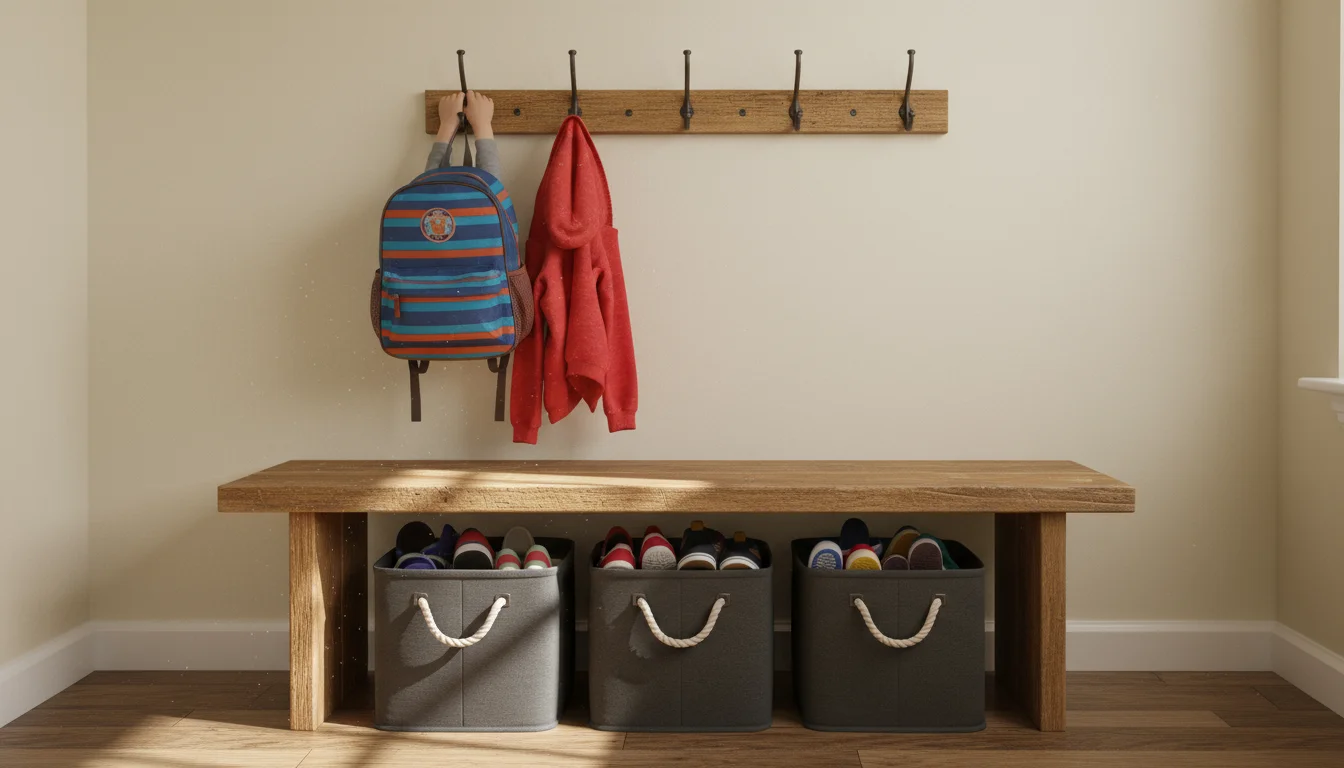
Budget-Friendly and DIY Mudroom Storage Ideas
Effective mudroom storage does not require an extravagant budget or a complete renovation. Many practical solutions are affordable, and some you can even create yourself. These options are particularly helpful for renters or anyone looking for cost-effective `entryway organization`.
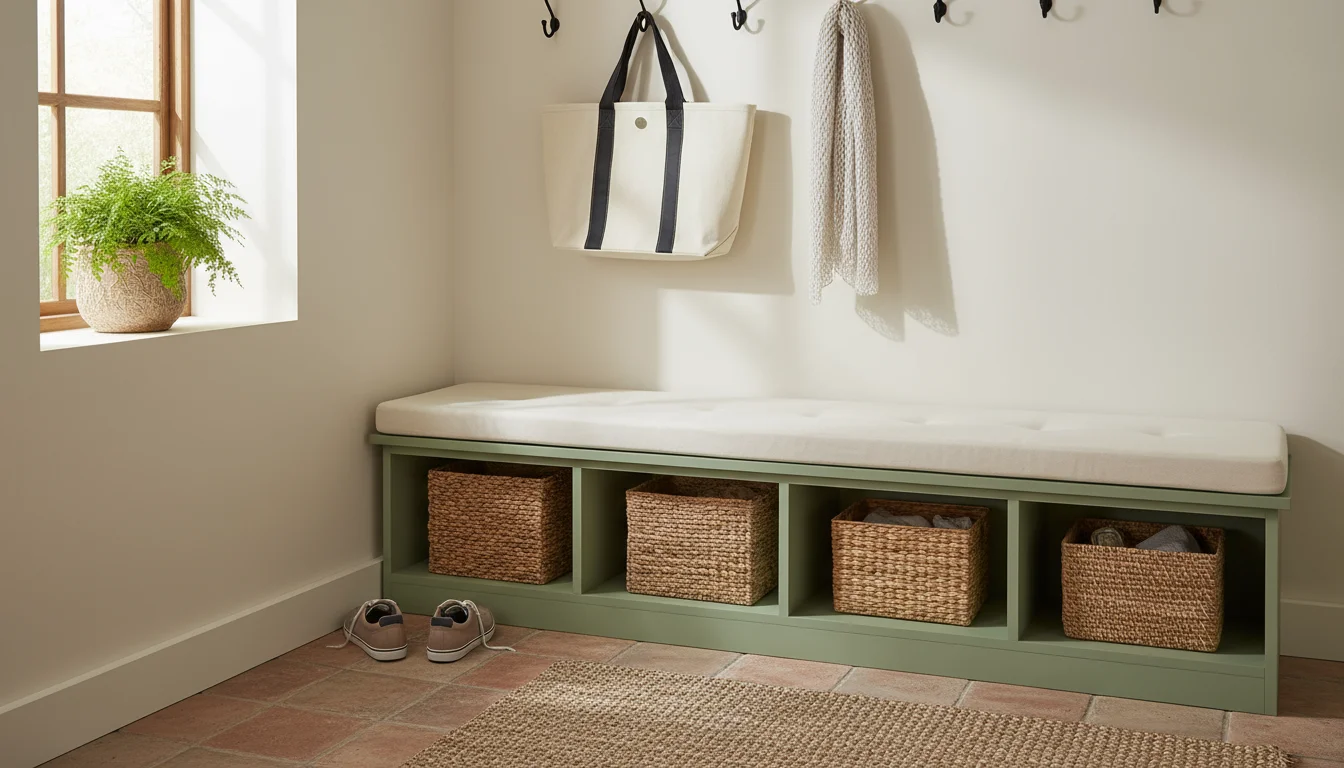
Repurposing Furniture
Look for items you already own or can find at thrift stores and flea markets:
- Old Dressers or Cabinets: A narrow dresser can be repainted and repurposed as a console table with drawer storage for keys, mail, and small items. Remove drawers and add baskets for an open cubby look.
- Bookcases: A sturdy, shallow bookcase can become a fantastic storage unit for bins, baskets, and even `shoe storage` on lower shelves. Lay it horizontally for bench seating with cubbies.
- Old Benches: A simple wooden bench provides a place to sit and put on shoes. Add storage underneath with bins or by installing a lower shelf.
DIY Storage Solutions
For those handy with basic tools, DIY projects offer customized and budget-friendly options:
- DIY Pegboard Wall: Purchase a large pegboard sheet from a hardware store. Paint it to match your decor, mount it securely, and then customize it with hooks, small baskets, and shelves. This provides incredibly flexible `mudroom storage` for various items. According to Family Handyman, pegboards are one of the most versatile and easy-to-install storage solutions for any utility space.
- Crate Cubbies: Wooden or plastic crates can be stacked, secured, and used as individual cubbies for shoes, backpacks, or even recycling bins. Paint them for a cohesive look.
- Floating Shelves: Install simple floating shelves yourself. All you need are shelf boards, brackets, and basic tools. This is a quick way to add vertical storage.
- PVC Pipe Shoe Rack: Cut large diameter PVC pipes into sections, stack them, and glue them together. Each section becomes a cubby for a single pair of shoes, offering unique `shoe storage`.
Affordable Organizational Products
Many retailers offer budget-friendly storage solutions that make a big impact:
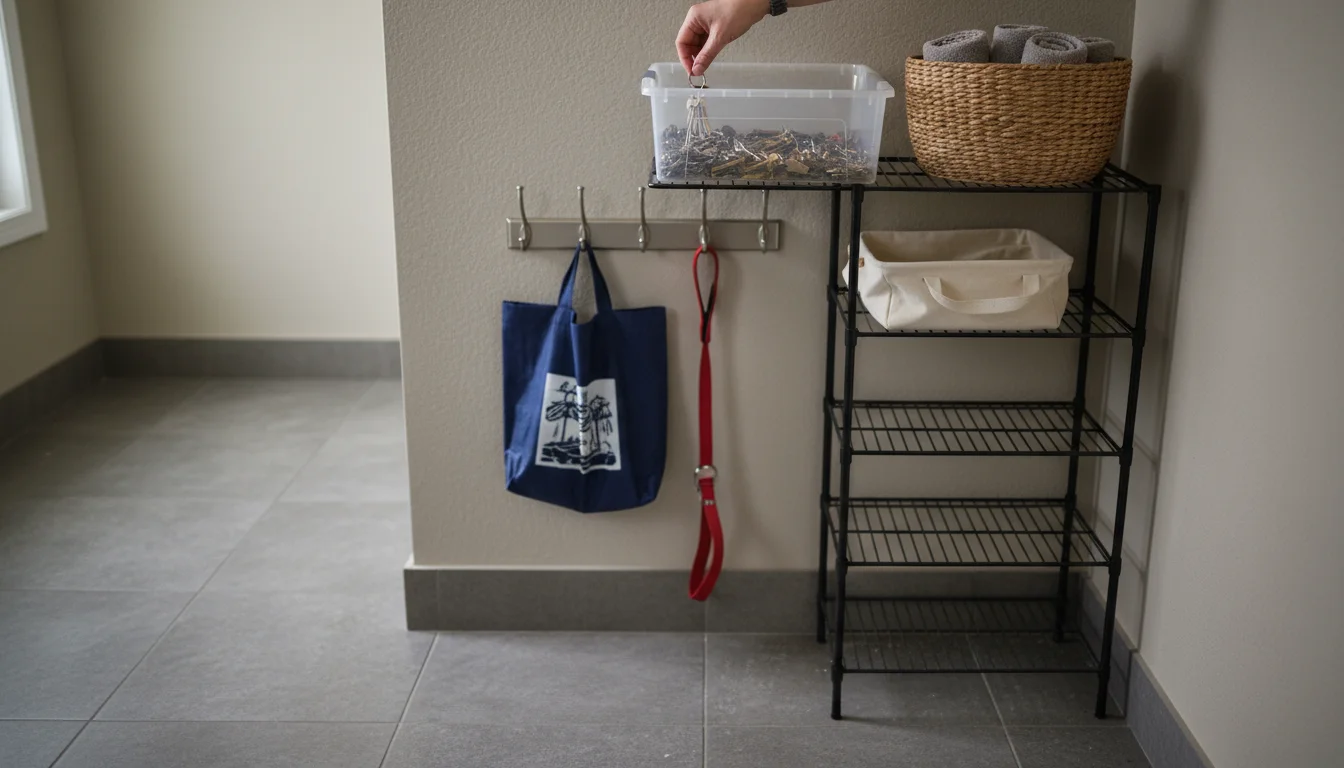
- Basic Bins and Baskets: Stores like IKEA, Target, or dollar stores offer a wide range of inexpensive bins and baskets. Choose durable, easy-to-clean materials like plastic, canvas, or woven blends.
- Utility Hooks: Simple and affordable, utility hooks come in various sizes and materials. Purchase sets to create a uniform look.
- Over-the-Door Organizers: As mentioned, these are a quick and inexpensive way to add storage for shoes, scarves, or cleaning supplies.
- Wire Shelving Units: Inexpensive wire shelving units provide sturdy, open storage for larger items or multiple bins. They are easy to assemble and reconfigure.
By blending repurposed items, DIY projects, and strategically chosen affordable products, you can create a highly functional and organized mudroom without breaking your budget. This practical approach makes `entryway organization` accessible to everyone.
Designing for Durability and Daily Use
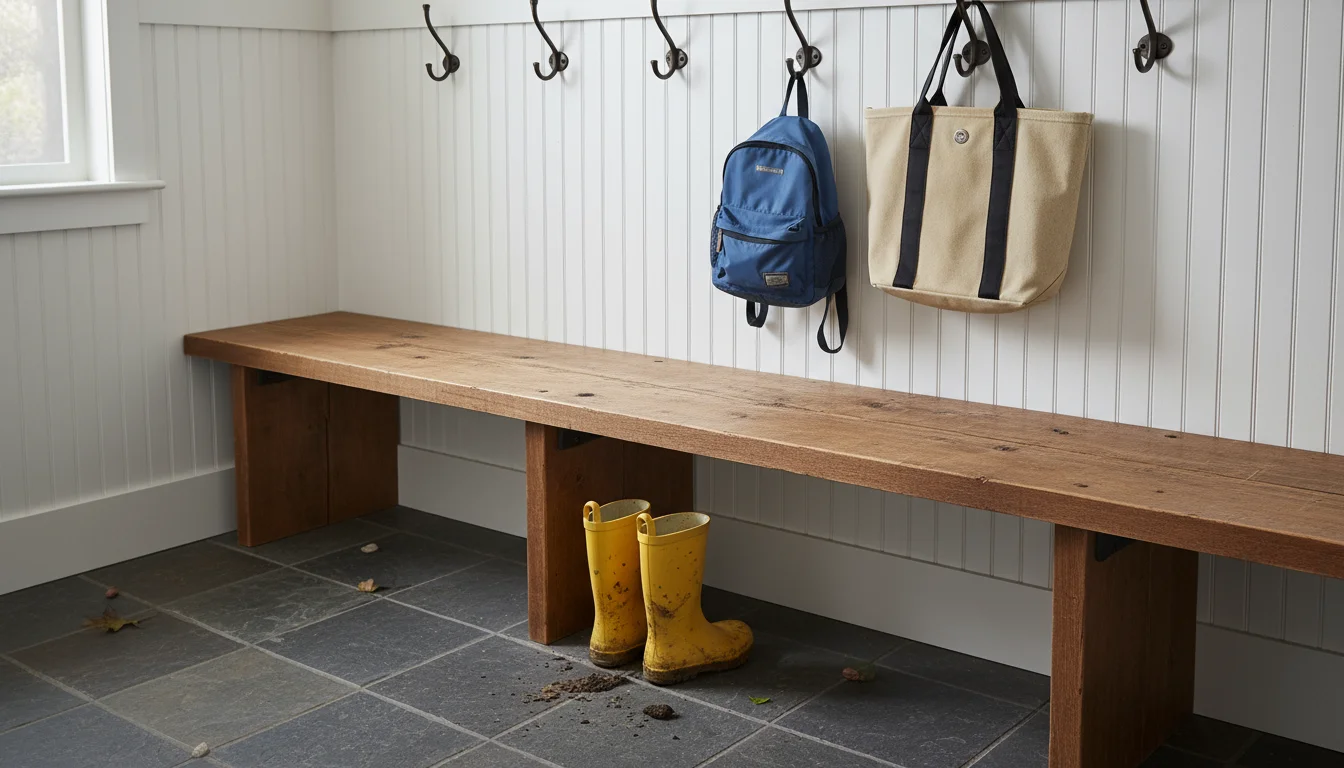
A mudroom, by its very nature, is a high-traffic area subjected to dirt, moisture, and heavy use. Your storage solutions must withstand daily wear and tear. Durability and ease of maintenance are crucial for systems that truly keep clutter out long-term.
Material Considerations
When selecting or building mudroom storage, prioritize materials that are robust and easy to clean:
- Flooring: Opt for resilient, waterproof flooring like tile, vinyl, or concrete. These materials tolerate dirt and moisture and wipe clean easily. If you have carpet or wood, use large, durable floor mats.
- Surfaces: Choose cabinets, benches, and shelves made from materials that resist scratches and moisture. Melamine, laminate, or painted wood are excellent choices. Avoid untreated wood that can warp or stain easily.
- Hardware: Select heavy-duty hooks, drawer pulls, and shelf brackets. Flimsy hardware will break under the weight of heavy coats and bags.
- Bins and Baskets: Look for plastic, metal, or durable canvas bins. Wicker or natural fibers are charming but can be harder to clean if they accumulate mud or spills.
Maintaining the System
An organized mudroom requires ongoing attention. Establishing simple routines keeps the system working:
- Daily Reset: Encourage everyone in your household to spend five minutes each evening putting items back in their designated spots. This prevents small piles from becoming mountains.
- Weekly Tidy: Dedicate a few minutes once a week for a quick wipe-down of surfaces, emptying any mail trays, and returning any stray items to their proper “homes.”
- Seasonal Purge: Twice a year, typically when seasons change (e.g., swapping winter coats for spring jackets), take everything out, declutter, and re-evaluate your system. Get rid of outgrown items or things no longer used. This process ensures your mudroom storage remains relevant to your current needs. According to Good Housekeeping – Organization, regular seasonal purges are key to preventing clutter from overwhelming any area of your home.

Designing for Kids and Pets
Families with children and pets have unique mudroom storage needs:
- Accessible Heights: Install hooks and cubbies at child-friendly heights. This empowers children to hang their own coats and store their own backpacks, fostering independence.
- Durable Storage: Kids can be rough on storage. Choose sturdy bins and furniture that can withstand bumps and spills.
- Pet-Friendly Zones: Designate a specific, easy-to-clean spot for pet leashes, toys, and food. Use airtight containers for pet food to maintain freshness and prevent pests.
- Easy-Clean Surfaces: Anticipate mud and paw prints. Ensure all surfaces are wipeable, and keep cleaning supplies nearby for quick tidies.
By focusing on robust materials and integrating simple maintenance habits, you design a mudroom storage system that stands the test of time and truly simplifies your daily life, rather than adding to your chores.
Tailoring Solutions for Small Entryways and Apartments
Living in an apartment or a home with a tiny entryway presents specific challenges for `mudroom storage`. You might not have a dedicated “mudroom,” but you still need efficient `entryway organization` to prevent clutter from spilling into your living space. The good news is that clever design and multi-functional items can transform even the smallest space.
Compact Furniture is Your Ally
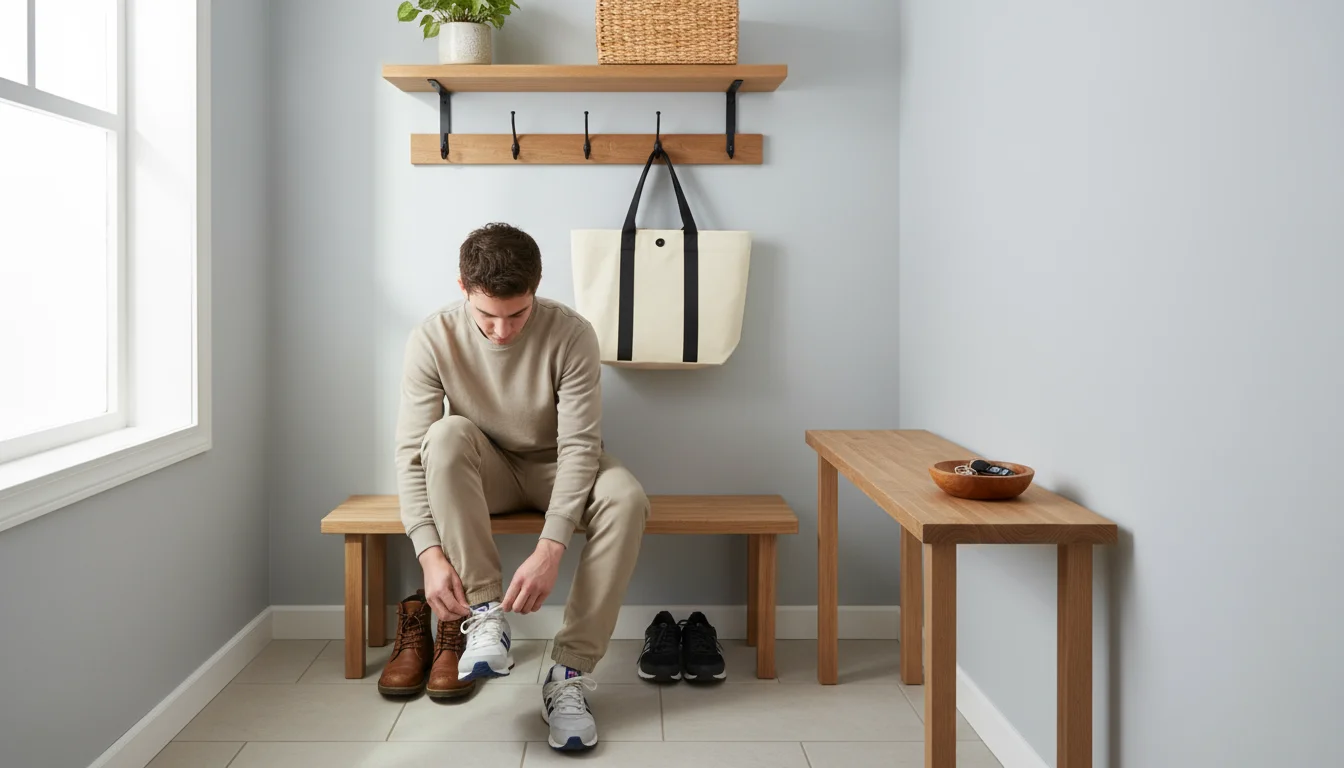
- Slim Benches with Storage: A narrow bench that offers seating and under-seat `shoe storage` or cubbies is invaluable. Look for benches that are no more than 12-14 inches deep to avoid blocking the doorway.
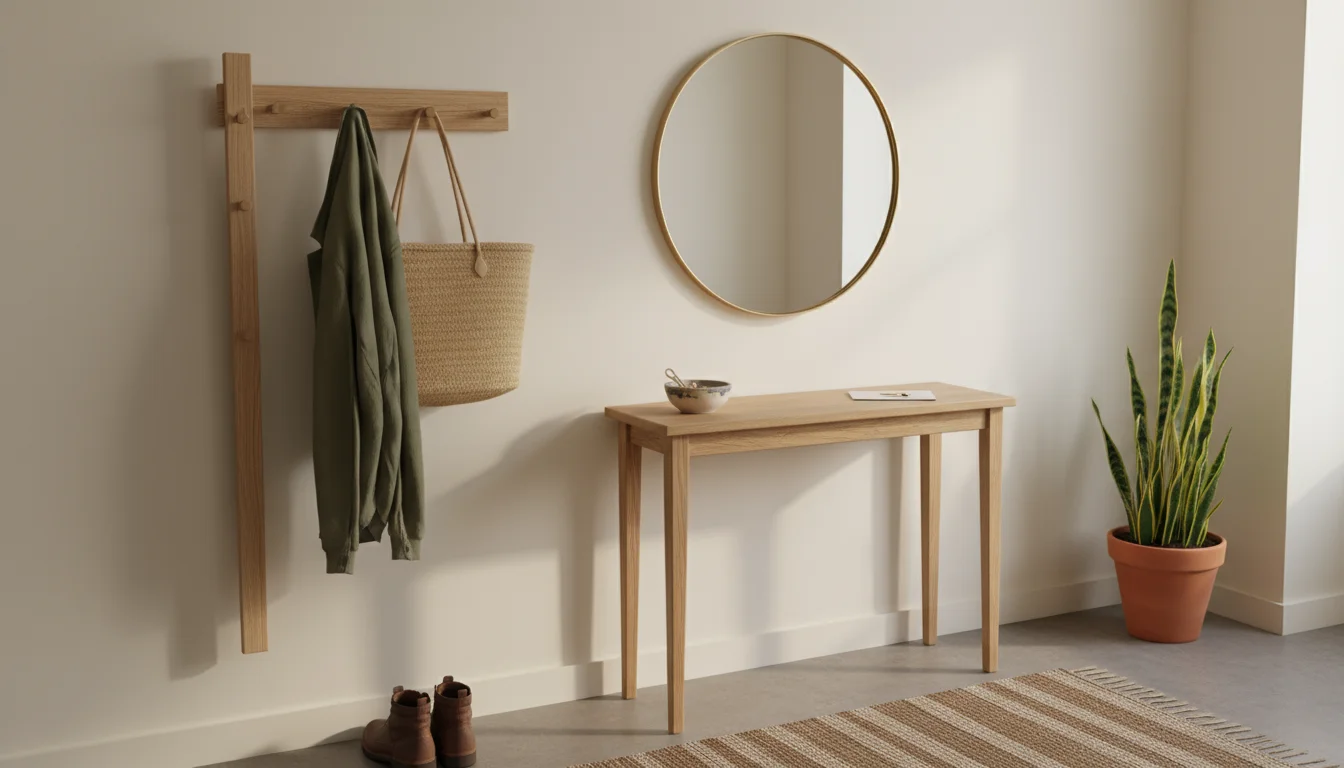
- Floating Shelves and Hooks: Instead of bulky furniture, rely heavily on wall-mounted solutions. A series of floating shelves and sturdy hooks can provide ample storage without taking up precious floor space.
- Console Tables: Choose a shallow console table with drawers or a lower shelf. This provides a surface for keys and mail, plus a little extra storage underneath for a basket or two. Ensure it does not impede the flow of traffic.
Multi-Functional Pieces
When space is at a premium, every item should ideally serve more than one purpose:
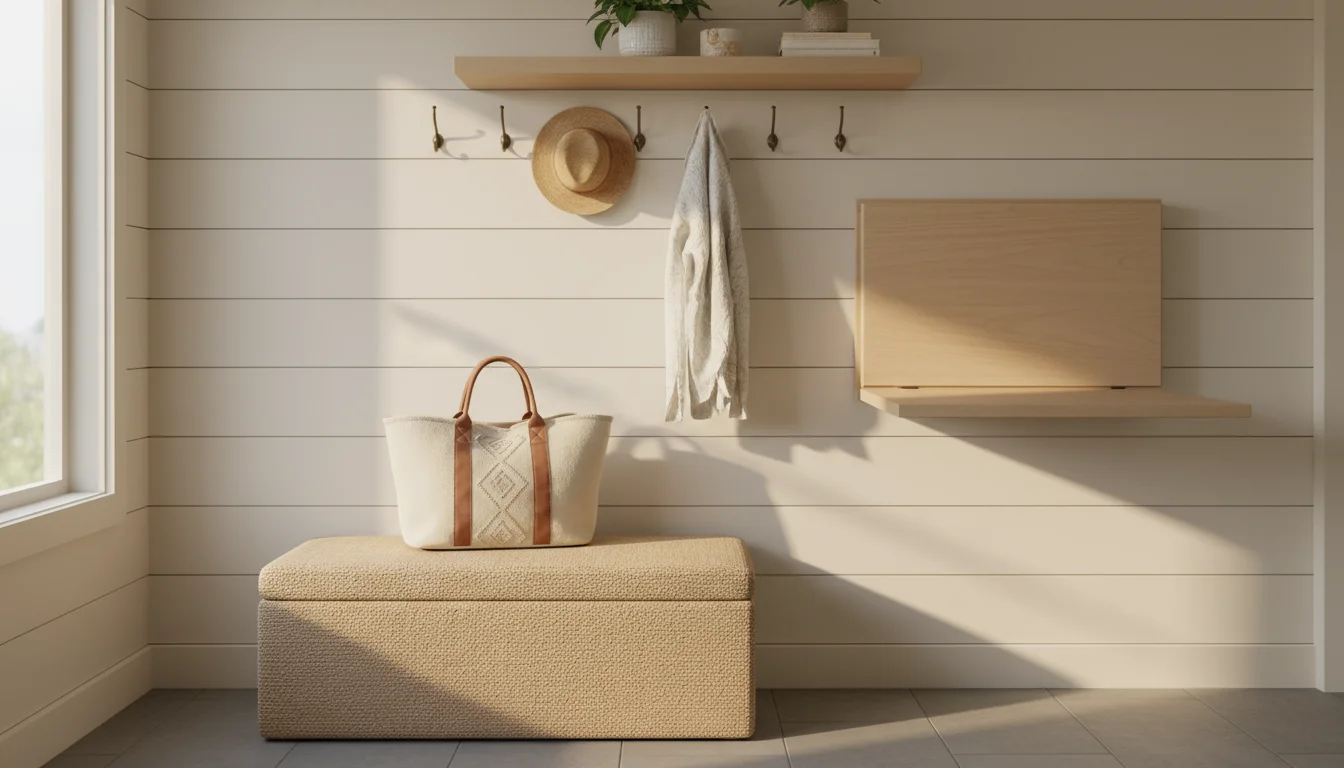
- Ottomans with Storage: A stylish ottoman can provide extra seating, a surface for bags, and hidden storage for blankets, toys, or extra `shoe storage`.
- Wall-Mounted Desks or Drop-Down Tables: If you need a temporary surface for sorting mail or setting down groceries, a wall-mounted desk that folds up when not in use is a brilliant space-saver.
- Mirror with Hooks or Shelves: A mirror is often a mudroom essential for a final check before leaving. Look for models that integrate hooks for keys or scarves, or a small shelf for mail.
Utilizing Every Inch
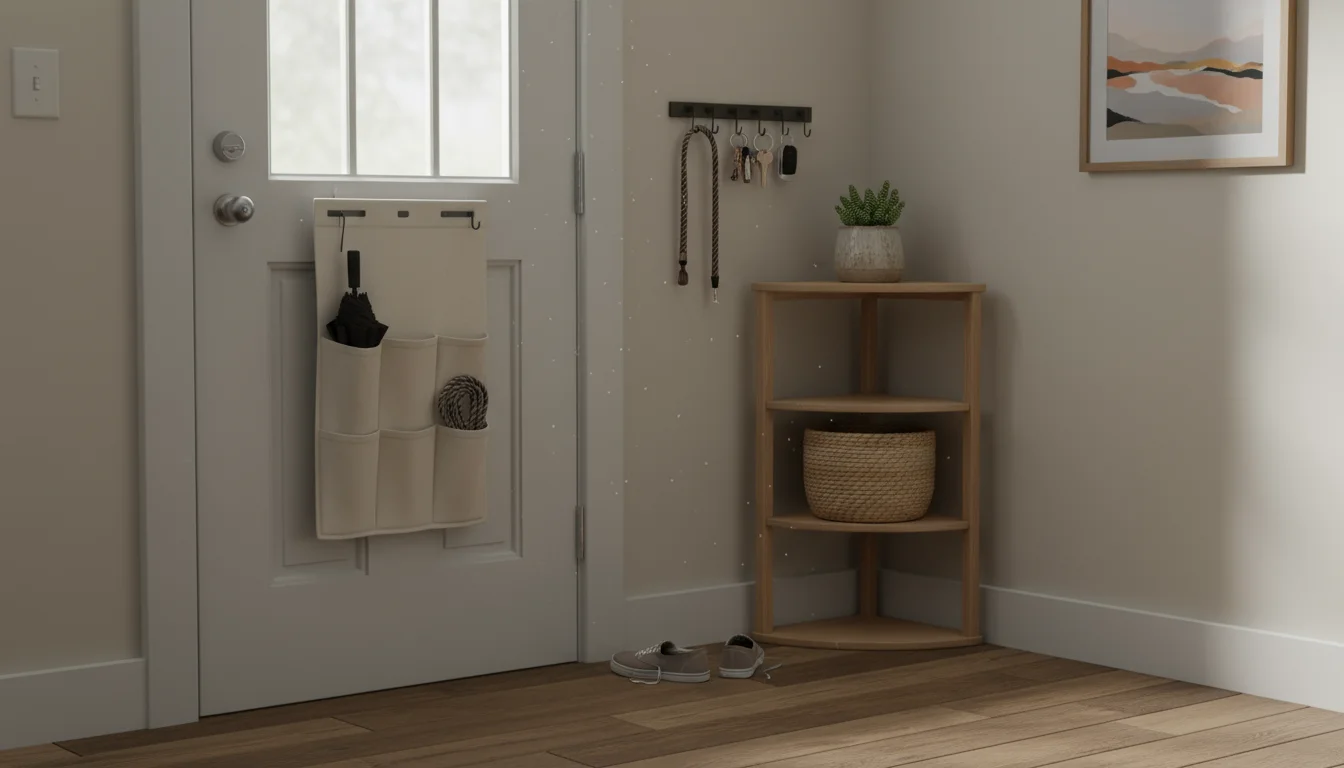
- Behind the Door: Install an over-the-door shoe organizer or a series of hooks on the inside of your entry door. This is an immediate, zero-footprint storage solution.
- Corner Units: If you have an empty corner, a narrow corner shelf unit can provide surprising amounts of storage for baskets, decorations, or a small plant.
- Magnetic Strips: Install a magnetic strip near the door for keys or small metal items.
- Tension Rods: In a shallow closet or alcove, a tension rod can hold hangers for a few coats or provide a spot to dry umbrellas.
For individuals in smaller living spaces, thoughtful `entryway organization` extends beyond functionality. It influences the overall feeling of your home. According to Apartment Therapy, strategic design in small areas can create a sense of calm and spaciousness, even when square footage is limited. By carefully selecting compact, multi-functional items and leveraging vertical space, you can create an organized and welcoming entryway that effectively manages clutter.
Frequently Asked Questions
How do I keep the mudroom clean and tidy regularly?
Consistent habits are key. Establish a “reset” routine where each family member takes five minutes at the end of the day to put their items away. Store a small handheld vacuum or broom and dustpan nearby for quick cleanups. A durable, easy-to-clean floor mat also traps most dirt before it spreads, simplifying daily maintenance.
What if I don’t have a dedicated mudroom? How can I create one in a small entryway?
You can create a functional mudroom in a small entryway by focusing on a few essential pieces. Use a slim bench with built-in `shoe storage`, a wall-mounted coat rack or a series of strong hooks, and a small wall organizer for keys and mail. Maximize vertical space with floating shelves above. The goal is to define specific zones for your daily items, even if the “room” is just a wall.
How often should I declutter my mudroom storage?
Perform a quick tidy-up weekly, returning stray items to their homes. Conduct a more thorough declutter and re-evaluation of your mudroom storage system at least twice a year, ideally with seasonal changes. This allows you to remove outgrown items, unused gear, and adjust your system to current needs, ensuring it remains efficient and clutter-free.
What are the best materials for mudroom storage that will last?
Choose durable and easy-to-clean materials. For flooring, opt for tile, vinyl, or concrete. For furniture and built-ins, consider painted wood, laminate, or melamine which resist moisture and wear. Use sturdy metal or high-grade plastic for bins, baskets, and hooks. These materials withstand the heavy use and potential dampness associated with a mudroom.
Creating an organized mudroom or entryway is an achievable goal, regardless of your space or budget. By starting with a thorough declutter, defining clear zones, and choosing practical `mudroom storage` solutions, you transform a potential clutter zone into a functional, welcoming space. Embrace these strategies, adapt them to your unique household, and enjoy the lasting benefits of a streamlined home entrance. Your daily routine will feel smoother, and your home will thank you.
For expert home organization guidance, visit
Houzz — Home,
The Spruce — Home Organization,
Real Simple — Organizing,
Good Housekeeping — Organization and
Better Homes & Gardens — Home Organization.
Disclaimer: This article is for informational purposes only and is not a substitute for professional advice. Consult professional organizers or specialists for personalized recommendations.



Leave a Reply