

Living in a small apartment presents unique challenges, especially when it comes to maximizing every square inch. A common dilemma for many renters and homeowners is how to comfortably accommodate a bed without sacrificing valuable living space. This is where a murphy bed, also known as a wall bed or pull-down bed, becomes a game-changer. These ingenious space-saving beds offer a practical solution, allowing you to transform a single room to serve multiple functions throughout the day. You can enjoy a comfortable night’s sleep and then reclaim your floor space for work, exercise, or entertaining.
A well-placed wall bed is just the start; you can also explore other cozy bedroom ideas to create a truly restful sanctuary regardless of your room’s size.
This type of unit is often considered among the best multifunctional furniture for small homes because it serves as both a primary sleeping area and a storage or work hub.

What is a Murphy Bed?
A murphy bed is a bed that hinges at one end to store vertically against a wall or inside a cabinet when not in use. This clever design allows you to neatly tuck your bed away, freeing up significant floor space. Originally patented by William Lawrence Murphy around 1900, these beds quickly became popular in urban apartments where space was a premium. Today’s murphy beds have evolved far beyond simple fold-down designs, incorporating advanced mechanisms, integrated storage, and stylish cabinetry that blend seamlessly with your home decor. Think of it as a hidden room transformation tool, allowing your living area to function as a bedroom at night and a versatile multi-purpose room by day.
Understanding how a murphy bed works is crucial for appreciating its benefits. Most modern murphy beds utilize a spring or piston lift system, making the act of raising and lowering the bed surprisingly easy and safe. This mechanism counterbalances the weight of the bed and mattress, allowing you to smoothly operate it with minimal effort. You simply unlatch the bed, guide it down, and it’s ready for use. When you are ready to reclaim your space, you lift the bed back into its cabinet, where it stays securely in place.

Why Choose a Murphy Bed for Your Small Apartment?
For anyone living in a small apartment, the benefits of a murphy bed extend far beyond merely providing a place to sleep. It offers a practical solution to several common small-space challenges, empowering you to live more comfortably and efficiently.
To further define your living area, you can pair your bed with studio apartment room divider ideas that maintain privacy without blocking natural light.
- Maximizes Floor Space: This is the most obvious advantage. By storing your bed vertically, you instantly free up several square feet of floor space. This transforms a cramped studio into a spacious living area or allows a spare room to serve as both an office and a guest bedroom. Imagine enjoying your morning coffee in a spacious living room, only to convert it into a cozy bedroom when the day ends.
- Creates Multi-Functional Rooms: Murphy beds are perfect for creating zones, which are designated areas for specific activities. A single room can become your home office during the day, a gym in the afternoon, and a comfortable bedroom at night. This adaptability is invaluable in apartments where every room needs to pull double duty.
- Reduces Clutter: When your bed is stored away, it immediately makes your space feel less cluttered and more organized. This psychological benefit alone can significantly improve your daily living experience. According to experts at The Spruce Home Organization, intelligent storage solutions like murphy beds are key to maintaining an orderly home.
- Enhances Aesthetics: Modern murphy beds come in a variety of styles and finishes, from sleek minimalist designs to classic wood paneling. They integrate seamlessly with your existing decor, often appearing as attractive cabinetry or shelving units when closed. This avoids the visual bulk of a traditional bed frame permanently occupying your living area.
- Offers Guest Accommodation: For those who enjoy hosting, a murphy bed allows you to provide a comfortable sleeping arrangement for guests without needing a dedicated guest room. You can easily convert a den or living room into a temporary guest bedroom, offering a much more comfortable alternative to air mattresses or pull-out sofas.
- Increases Home Value: While not a primary driver for many, installing a well-designed murphy bed system can add functionality and appeal, potentially increasing your home’s perceived value or marketability, especially in urban areas where space is highly sought after.

Types of Murphy Beds: Finding Your Perfect Match
The murphy bed market offers a surprising variety of options, each designed to meet different needs, budgets, and aesthetic preferences. Understanding these types will help you choose the best space-saving bed for your small apartment.
If you are focused on productivity, you might also be interested in other fold-down desk ideas for tiny home offices to complement your wall bed setup.
Here are the primary types you will encounter:
- Vertical Mount Murphy Beds: This is the classic design where the bed stands upright and folds down from the longer side. They typically require more ceiling height but less wall width, making them ideal for narrower rooms or alcoves. When closed, they often resemble a large cabinet or wardrobe.
- Horizontal Mount Murphy Beds: Unlike vertical beds, these beds fold down from the shorter side, storing lengthwise against the wall. They are an excellent solution for rooms with lower ceilings, wider walls, or beneath windows where a vertical unit would obstruct the view.
- Murphy Bed Desks: These clever units combine a functional desk with a hidden bed. When the bed is folded up, a desk surface is available for work or study. When it is time to sleep, you simply fold the desk down, and the bed emerges. The desk surface often remains level during the transition, meaning you do not have to clear off your belongings. This is an ideal solution for studio apartments or home offices.
- Murphy Bed with Sofa: This integrated design features a sofa or loveseat that sits in front of the closed murphy bed. When you need the bed, you simply fold down the bed frame, often tucking the sofa cushions underneath or behind the bed. This allows a living room to seamlessly transform into a bedroom, offering comfortable seating during the day and a full bed at night.
- Bookcase Murphy Beds: These units integrate shelves or a full bookcase into the murphy bed cabinet. When the bed is up, you have functional storage and display space. Some designs even feature sliding bookcases that reveal the bed behind them. This is an excellent option for creating a library or adding significant storage capacity.
- Cabinet Murphy Beds (Freestanding): Unlike wall-mounted systems, cabinet murphy beds are freestanding units that do not require attachment to a wall. They are often smaller, resembling a large chest or console when closed, and the bed typically folds out from the front. These are perfect for renters who cannot modify walls or those who prefer a less permanent solution. They typically house smaller mattresses, like twin or full size.
When selecting your type, consider your room’s dimensions, your need for additional functionality like storage or a desk, and your personal style. Each type offers distinct advantages, allowing you to tailor the solution to your specific apartment layout.

Integrating Your Murphy Bed into Your Decor
A murphy bed should enhance your living space, not just provide a hidden bed. Thoughtful integration into your decor is crucial for achieving a cohesive and stylish look. You want your wall bed to appear as an intentional design element, not just an afterthought.
Understanding how to arrange furniture for maximum coziness will ensure your room feels inviting whether the bed is tucked away or in use.
- Match Cabinetry Style: Choose a murphy bed cabinet that complements your existing furniture and decor. If your apartment has modern, minimalist aesthetics, opt for a sleek, handle-less design in a neutral color. For a more traditional look, select a unit with crown molding, paneling, or wood finishes that align with your current pieces. Many manufacturers offer customization options for finishes, hardware, and accessories.
- Create a Feature Wall: Consider making the murphy bed unit the focal point of a wall. Surround it with built-in shelving, display cabinets, or even a fireplace facade to create a grand, integrated look. This strategy diverts attention from the bed’s primary function and makes the unit feel like a permanent part of the room’s architecture. As Apartment Therapy often highlights, clever design can make small spaces feel luxurious.
- Seamless Blending with Other Furniture: If your murphy bed includes a desk or sofa, ensure these components also align with your overall decor. The desk chair, sofa cushions, and accent pillows should all contribute to a unified design scheme. For example, if you have a neutral color palette, incorporate a few vibrant throw pillows on the murphy bed sofa for a pop of color.
- Lighting is Key: Incorporate lighting into or around your murphy bed unit. Recessed LED lighting inside the cabinet, sconces mounted on the sides, or even a floor lamp positioned nearby can create ambiance and highlight the unit’s design. Strategic lighting can also make the room feel larger and more inviting, especially when the bed is stored.
- Accessorize Smartly: When the bed is closed, treat the murphy bed cabinet as a piece of furniture. Place decorative items, framed photos, or artwork on top of it, if the design allows, or on adjacent shelves. If your murphy bed has an integrated desk, keep it styled with practical yet attractive items, like a small plant, a stylish pen holder, and a desk lamp.
- Consider the Visual Weight: A large murphy bed unit can sometimes feel visually heavy in a small space. Counteract this by choosing lighter finishes or incorporating open shelving to break up the solid surfaces. Alternatively, select a unit that has mirrored panels to reflect light and make the room appear larger.
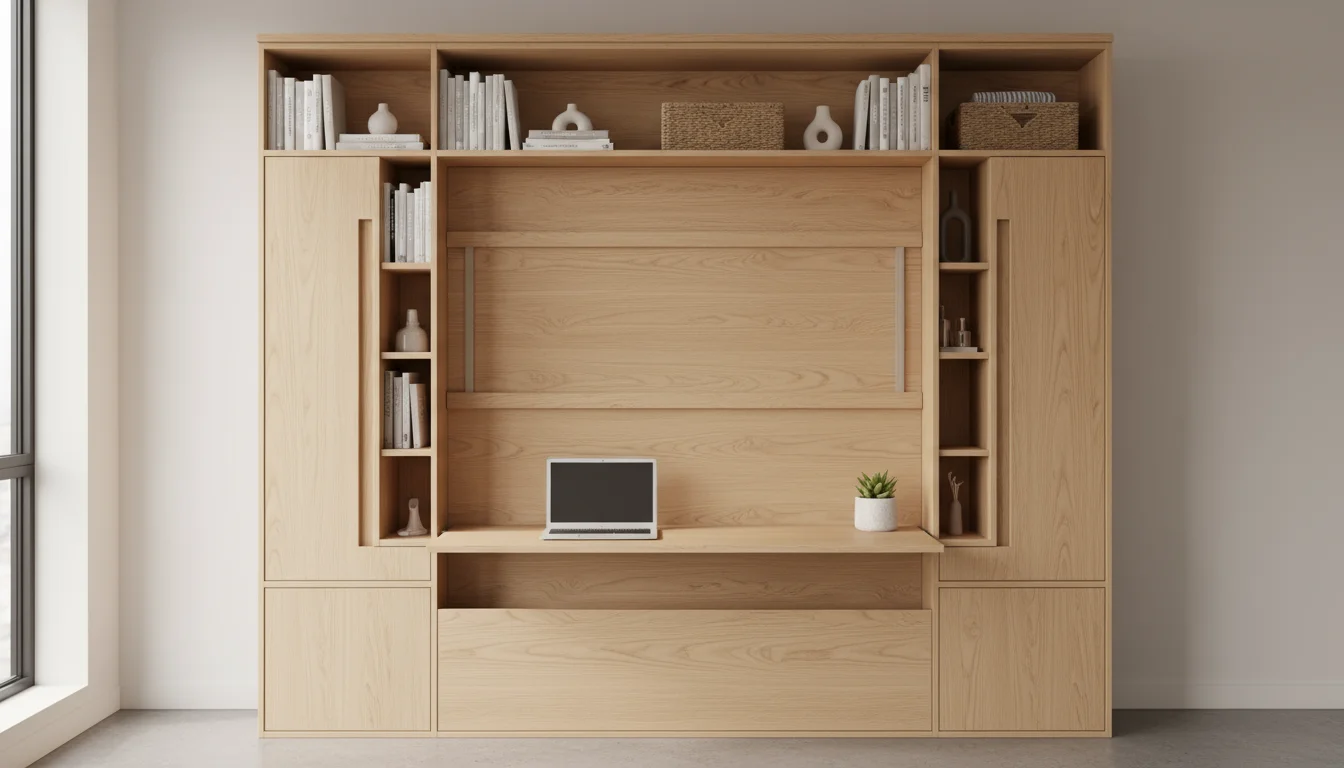
Optimizing Small Spaces with Murphy Bed Features
Modern murphy beds often come with integrated features that elevate their utility beyond simply providing a bed. When you choose a space saving bed, look for these design elements to truly optimize your small apartment.
Once you have your storage sorted, explore cozy bedroom ideas to make your pull-down bed feel just as luxurious as a traditional one.
Here are key features to consider:
- Integrated Storage: Many murphy bed systems include side cabinets, drawers, or shelving units. These are perfect for storing linens, clothing, books, or office supplies. Some even feature wardrobe sections, effectively creating a hidden closet. Prioritize units that offer a variety of storage options to help keep your apartment clutter-free.
- Desk or Table Attachments: As mentioned, murphy bed desks are incredibly practical. Other models might feature pull-out tables or flip-down dining surfaces, allowing a single wall to serve as a workspace, dining area, and bedroom. This maximizes the functionality of your wall space.
- Lighting: Built-in LED lighting, often along the headboard area or within the cabinet, provides ambient light for reading or soft illumination for the room. This eliminates the need for bedside lamps, saving more space and contributing to a streamlined look.
- USB Charging Ports and Outlets: Some advanced murphy beds include integrated USB ports and electrical outlets, perfect for charging your devices overnight or powering a laptop at an integrated desk. This convenience helps keep cords organized and accessible.
- Adjustable Shelving: Look for units with adjustable shelves in accompanying bookcases or side cabinets. This flexibility allows you to customize storage to fit various items, from tall books to decorative objects.
- Sofa Integration: For living rooms, a murphy bed with an integrated sofa is a highly efficient solution. During the day, it functions as comfortable seating, and at night, it easily converts to a bed without needing to move heavy furniture.
- Hidden Storage Compartments: Some clever designs incorporate hidden drawers or compartments beneath the mattress platform or within the cabinet structure, providing discreet storage for valuables or infrequently used items.
When you evaluate different models, consider how these features align with your daily routine and storage needs. A murphy bed that offers multiple functionalities provides the best return on your investment, making your small apartment feel significantly larger and more organized. For more insights on maximizing storage, consider advice from Consumer Reports Home, which often covers space-saving furniture options.

Choosing the Right Mattress and Hardware
The quality of your sleep and the ease of operating your murphy bed largely depend on your choice of mattress and the underlying hardware system. Do not overlook these critical components; they are essential for long-term satisfaction.

Selecting Your Mattress
Not just any mattress will work with a murphy bed. Most murphy beds are designed for standard innerspring or foam mattresses, but there are specific considerations:
- Weight: The mattress must be within the weight limits specified by the murphy bed manufacturer. Too heavy, and the lift mechanism might struggle or become unsafe. Too light, and the bed might not stay down properly. Most systems are calibrated for mattresses between 60 and 90 pounds for a queen size.
- Thickness: Thickness is paramount. Most murphy beds accommodate mattresses between 8 and 12 inches thick. Thicker mattresses can prevent the bed from closing completely or may put undue stress on the mechanism. Always check the manufacturer’s maximum recommended thickness.
- Flexibility: Foam mattresses (memory foam, latex) tend to be more flexible and lighter, making them an excellent choice for murphy beds. Innerspring mattresses can also work, but ensure they are not excessively rigid or heavy. Avoid ultra-plush pillow-top mattresses as their extra bulk might impede closure.
- Retention Straps: Regardless of mattress type, you will use straps to secure your bedding to the mattress when the bed is stored vertically. This prevents your sheets, blankets, and pillows from falling off. Ensure your mattress is compatible with these straps.
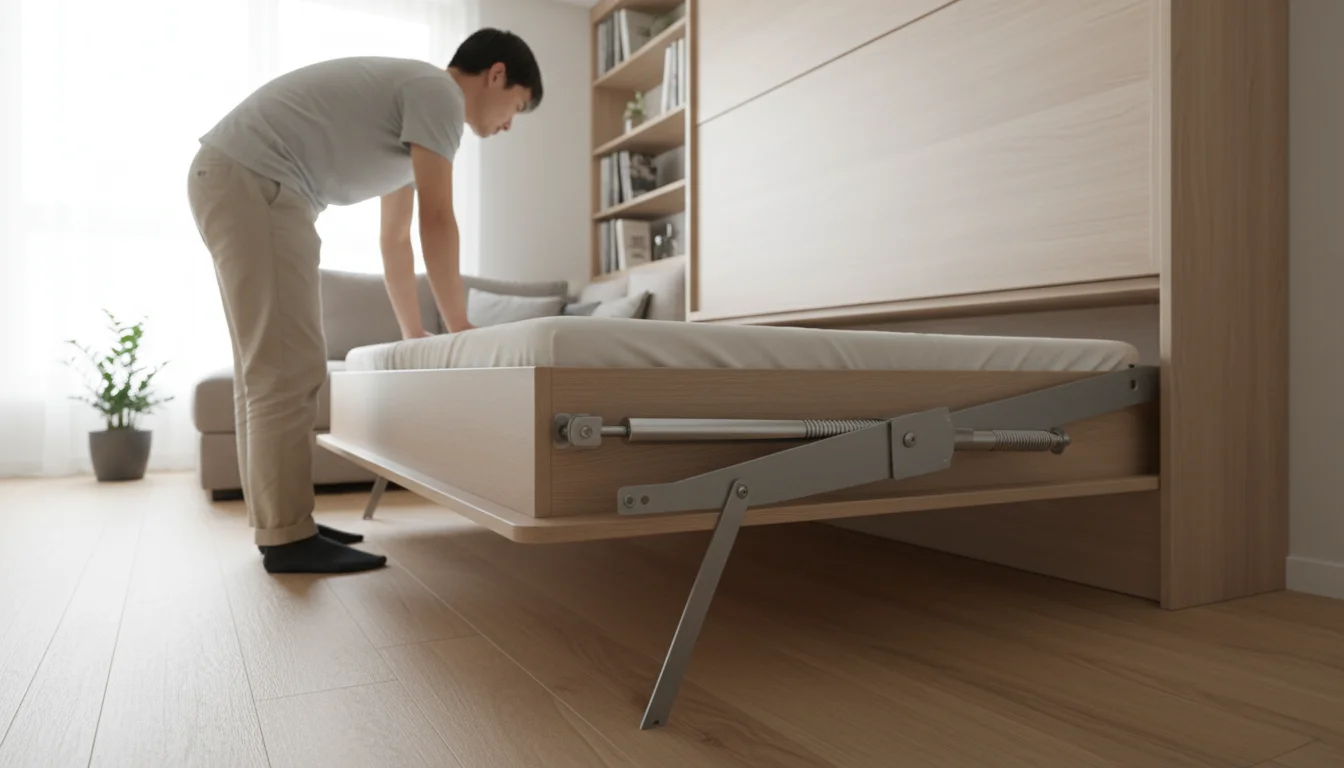
Understanding the Hardware System
The hardware is the heart of your murphy bed, responsible for its smooth and safe operation. Two main types exist:
- Spring Piston Mechanism: This system uses gas pistons, similar to those found on car trunks. They offer a very smooth, controlled motion and are generally quieter. Piston systems are often more compact, allowing for thinner cabinet designs. They are typically found in higher-end murphy beds.
- Spring Mechanism: This system uses heavy-duty coil springs to counterbalance the bed’s weight. While effective, they can sometimes be noisier and may require more maintenance or adjustment over time. They are often more budget-friendly and widely available.
When evaluating hardware:
- Safety: Ensure the system has a locking mechanism to prevent accidental opening or closing. Look for designs that prevent fingers from being pinched during operation.
- Durability: Opt for high-quality steel components. The mechanism should feel robust and stable. Read reviews regarding the longevity of the lift system.
- Ease of Use: Test the mechanism if possible. It should operate smoothly and with minimal effort. A well-designed system will make raising and lowering the bed feel effortless.
- Weight Capacity: Check the total weight capacity of the bed, including both the mattress and the occupants. This ensures safety and long-term durability.

Installation Considerations and DIY vs. Professional
Installing a murphy bed is a significant home improvement project. Careful consideration of the installation process, whether you tackle it yourself or hire a professional, ensures safety and functionality.

Key Installation Considerations
- Wall Structure: Most murphy beds require secure attachment to wall studs. This Old House experts often emphasize the importance of identifying and anchoring to studs for stability. You need to verify your wall type (drywall, plaster, concrete) and the location of studs before purchasing. If you have metal studs or concrete walls, specialized anchors are necessary.
- Clearance: Measure carefully. You need sufficient floor space to fully extend the bed and enough ceiling height for vertical units. Account for baseboards, crown molding, and any adjacent furniture.
- Floor Levelness: While not as critical as wall attachment, a relatively level floor helps ensure the bed sits properly when down and operates smoothly.
- Assembly Time: Murphy beds are complex furniture pieces. Assembly can take several hours, sometimes a full day, even for experienced DIYers.
- Tools Required: Expect to need standard power tools: a drill, level, stud finder, measuring tape, and various wrenches/screwdrivers.

DIY Installation
Opting for DIY installation can save you money, but it requires patience, attention to detail, and a good level of DIY experience. Manufacturers provide detailed instructions, and many offer video tutorials. If you are comfortable with power tools and precise measurements, and you have a helper (many steps require two people), then DIY is a viable option. However, correctly anchoring the bed to wall studs is non-negotiable for safety. Improper installation can lead to the bed falling, causing significant injury or damage.

Professional Installation
Hiring a professional installer offers peace of mind, especially if you are not confident in your DIY skills or if the bed system is particularly complex. Here is why you might choose professional help:
- Expertise: Professionals have the tools and experience to ensure the bed is safely and securely mounted. They can also troubleshoot unexpected issues, like unusual wall structures.
- Efficiency: They can typically complete the installation much faster than an amateur.
- Warranty Protection: Some manufacturers or retailers might require professional installation to maintain certain warranties.
- Safety Assurance: Knowing the bed is correctly installed to industry standards prevents future accidents. For critical structural installations like this, consulting resources like This Old House can offer practical guidance.
Always weigh the cost savings of DIY against the potential risks and the value of professional assurance. For a critical piece of furniture like a murphy bed, safety must be your top priority.

Budgeting for Your Space-Saving Bed Solution
Murphy beds range widely in price, from budget-friendly options to high-end custom systems. Establishing a clear budget before you start shopping helps you narrow down choices and find a space saving bed that meets your needs without overspending.
Factors influencing price:
- Type of Bed:
- Cabinet Murphy Beds (Freestanding): Generally the most affordable, ranging from $800 to $2,000. These are often made from engineered wood and house smaller mattresses.
- Basic Vertical/Horizontal Wall Beds: Expect to pay $1,500 to $3,500 for a queen-size unit with a standard cabinet. Materials often include engineered wood or laminate.
- Integrated Systems (Desk, Sofa, Bookcase): These multi-functional units typically fall into the $2,500 to $6,000 range, depending on materials, size, and features.
- Custom-Built/High-End Systems: Prices can easily reach $6,000 to $10,000 or more for solid wood, premium hardware, and bespoke designs.
- Materials and Finishes: Laminate and engineered wood are more budget-friendly. Solid wood, custom veneers, and high-gloss finishes increase the cost.
- Hardware Quality: Piston-lift mechanisms are generally more expensive than spring-based systems but offer smoother operation and greater durability.
- Additional Features: Integrated lighting, USB ports, drawers, and extra cabinetry add to the overall price.
- Mattress: Most murphy beds do not include a mattress. Factor in an additional $300 to $1,000 or more for a suitable mattress.
- Installation: Professional installation can add $300 to $800 to the total cost, depending on your location and the complexity of the unit.

Tips for Budget-Conscious Shopping:
- Compare Retailers: Check major furniture stores, online retailers, and specialized murphy bed companies. Prices vary significantly.
- Look for Sales: Holiday weekends and seasonal sales are good times to find discounts.
- Consider DIY Assembly: If you are handy, assembling the bed yourself can save on installation costs.
- Prioritize Needs: Decide which features are essential and which are nice-to-haves. Do you really need built-in lighting, or can a nearby lamp suffice?
- Read Reviews: Customer reviews often provide insights into the quality and durability of different models, helping you avoid costly mistakes.
- Check for Package Deals: Some retailers offer discounts if you purchase the murphy bed, mattress, and installation together.
A well-chosen murphy bed is an investment in your small apartment’s functionality and comfort. By carefully planning your budget and prioritizing features, you can find a high-quality space saving bed that fits your lifestyle without breaking the bank.

Maintaining Your Murphy Bed
Proper maintenance ensures your murphy bed remains safe, functional, and aesthetically pleasing for years. These practical steps help extend the life of your space saving bed and keep it operating smoothly.
If your wall bed doesn’t include a built-in cabinet for linens, you can still find clever under-bed storage ideas for items you need close at hand.
Here is how you can maintain your murphy bed:
- Regular Cleaning:
- Cabinetry: Dust the exterior and interior of the cabinet regularly with a soft, damp cloth. Use a mild wood cleaner if your unit is wood, or a general-purpose cleaner for laminate surfaces. Avoid harsh chemicals that could damage the finish.
- Mattress: Vacuum your mattress periodically to remove dust mites and allergens. Spot clean any stains with a mild upholstery cleaner and allow it to air dry completely before making the bed or closing the unit.
- Check Hardware Periodically:
- Lift Mechanism: Inspect the spring or piston mechanism every 6-12 months. Look for any signs of wear, rust, or loose connections. Most mechanisms are designed to be maintenance-free, but if you notice squeaking or difficulty in operation, consult the manufacturer’s manual for troubleshooting or consider calling a professional. Do not attempt to lubricate piston systems unless specifically instructed by the manufacturer, as this can sometimes damage them.
- Fasteners and Screws: Over time, screws and bolts can loosen. Periodically check all visible fasteners, especially those attaching the bed frame to the wall and the cabinet components, and tighten them if necessary. This is crucial for safety.
- Operate Smoothly: Always raise and lower the bed slowly and deliberately. Avoid letting it drop or spring up forcefully. Smooth operation reduces wear and tear on the mechanism and prevents accidental damage.
- Do Not Exceed Weight Limits: Be mindful of the bed’s maximum weight capacity, including the mattress and occupants. Exceeding this limit stresses the hardware and can lead to failure.
- Secure Bedding: Always use the provided straps to secure your bedding (sheets, blankets, pillows) to the mattress before closing the bed. This prevents items from getting caught in the mechanism or falling out when the bed is vertical.
- Address Issues Promptly: If you notice any unusual noises, resistance when operating the bed, or visible damage, address it immediately. Do not continue to use the bed if you suspect a safety issue. Refer to your owner’s manual for troubleshooting or contact the manufacturer’s support.
By following these simple maintenance steps, you ensure your murphy bed remains a reliable, safe, and attractive asset in your small apartment for years to come.

Frequently Asked Questions
Are murphy beds comfortable for everyday use?
Yes, absolutely. Modern murphy beds accommodate standard mattresses, meaning you can choose a high-quality, comfortable mattress just like you would for a traditional bed. The comfort level depends entirely on the mattress you select, not the bed frame itself. Many people use murphy beds as their primary sleeping solution, finding them just as comfortable as conventional beds.
Can I install a murphy bed myself?
DIY installation is possible for those with solid home improvement skills and the right tools. Most murphy beds come with detailed instructions, and some manufacturers provide online video guides. However, proper and secure attachment to wall studs is critical for safety. If you are not confident in your ability to perform precise measurements and secure wall anchoring, hiring a professional installer is strongly recommended to prevent accidents.
Do murphy beds require a special mattress?
While not strictly “special,” mattresses for murphy beds do have specific requirements. They need to be within certain weight and thickness limits specified by the bed manufacturer. Typically, mattresses between 8 and 12 inches thick and weighing 60-90 pounds (for a queen) work best. Foam mattresses or lighter innerspring models are generally preferred. Always check the bed’s specifications before purchasing a mattress.
Are murphy beds safe for children?
Modern murphy beds are designed with safety features like slow-descent mechanisms and secure latches. However, like any large piece of furniture, caution is necessary around children. Educate children on proper operation and supervision is advised, especially with younger children, to prevent them from attempting to operate the bed or playing underneath it. Some models also offer child safety locks.
How much space does a murphy bed take up when closed?
When closed, a murphy bed typically resembles a cabinet or wardrobe. The depth of the closed unit usually ranges from 16 to 24 inches, depending on the mattress thickness and cabinet design. The width and height will correspond to the size of the bed (twin, full, queen, king) it houses. Always check the exact dimensions of the specific model you are considering to ensure it fits your designated space.
For expert home organization guidance, visit
The Spruce — Home Organization,
Real Simple — Organizing,
Good Housekeeping — Organization,
Better Homes & Gardens — Home Organization,
National Association of Professional Organizers,
Institute for Challenging Disorganization,
Consumer Reports — Home,
This Old House,
Family Handyman,
Bob Vila,
HGTV — Home,
Apartment Therapy,
The Container Store — Organization Tips,
IKEA Home Organization and
Martha Stewart — Home.
Disclaimer: This article is for informational purposes only and is not a substitute for professional advice. Consult professional organizers or specialists for personalized recommendations.
While wall beds are great, you can also look into under-bed storage ideas for any traditional bed frames in secondary rooms.









Leave a Reply