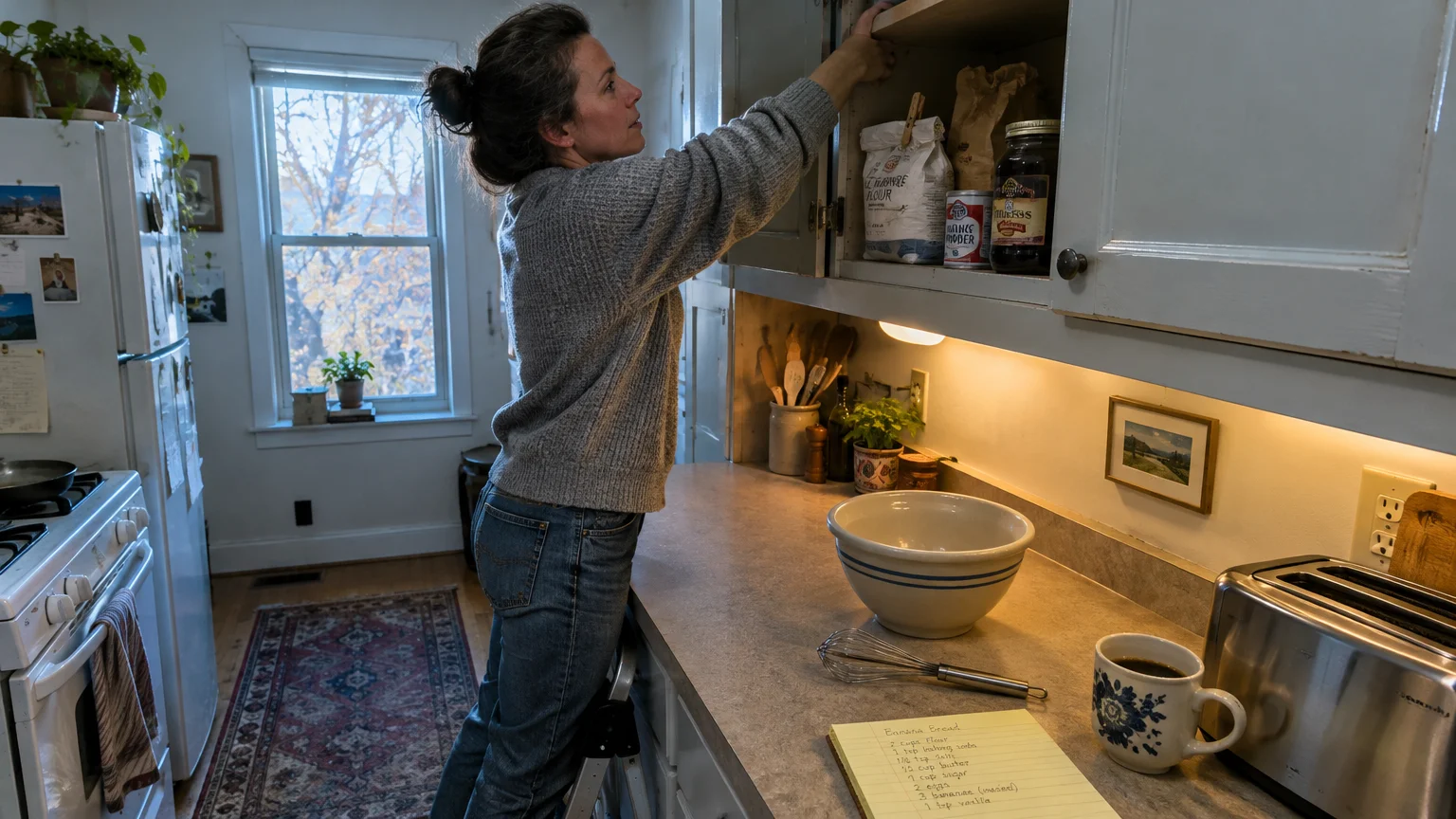
This check is for the once-a-year baker. You have a small kitchen, one upper cabinet shelf for baking supplies, and a cookie weekend two or three weeks out.
On that shelf sit half-used bags from last December. The usual advice is to test everything, then restock with full-size packages.
For a tight cabinet and a seasonal baker, that advice creates next year’s problem.
The rule here is simple. Buy to this year’s batch count, not to the biggest bag.
Size each container to what you will actually bake, because most of what survives into next November will be past its quality window anyway.
Why Leftovers Are the Real Cost
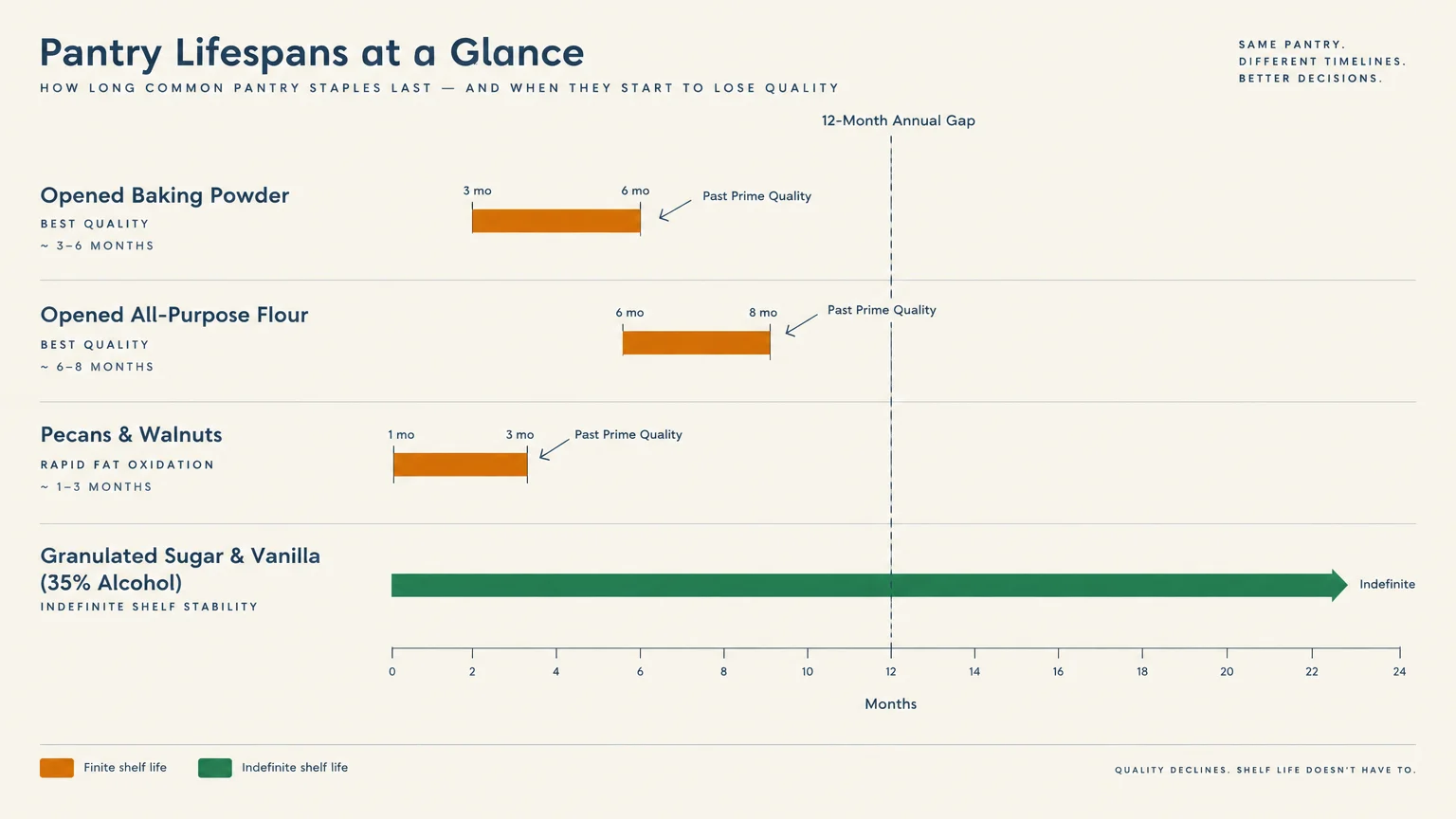
Most baking staples have quality windows shorter than the gap between your baking seasons. Opened baking powder loses lift within three to six months per USDA FoodKeeper, while Kansas State extension notes heat and moisture chemically alter leaveners before their 18- to 24-month best-by dates.
USDA FoodKeeper guidance gives all-purpose white flour six to twelve months of prime quality at room temperature. Once opened, FoodKeeper’s pantry window drops to six to eight months, so a bag opened last December is already past prime.
Whole-wheat flour runs shorter, because its natural wheat germ oils turn rancid quickly on a pantry shelf. Pecans and walnuts carry polyunsaturated fats that oxidize in a warm pantry.
So the extra cups in a bulk bag are rarely savings for you. They crowd a small cabinet for eleven months, then fail the smell test.
Our zero-waste grocery storage guide covers keeping everyday staples fresh the rest of the year.
Three items are fair to buy larger: granulated sugar, pure vanilla extract and baking soda kept bone-dry. Dry sugar keeps indefinitely, and vanilla’s alcohol base of at least 35 percent keeps it stable in a cool, dark cupboard.
Step 1: Measure the Cabinet First
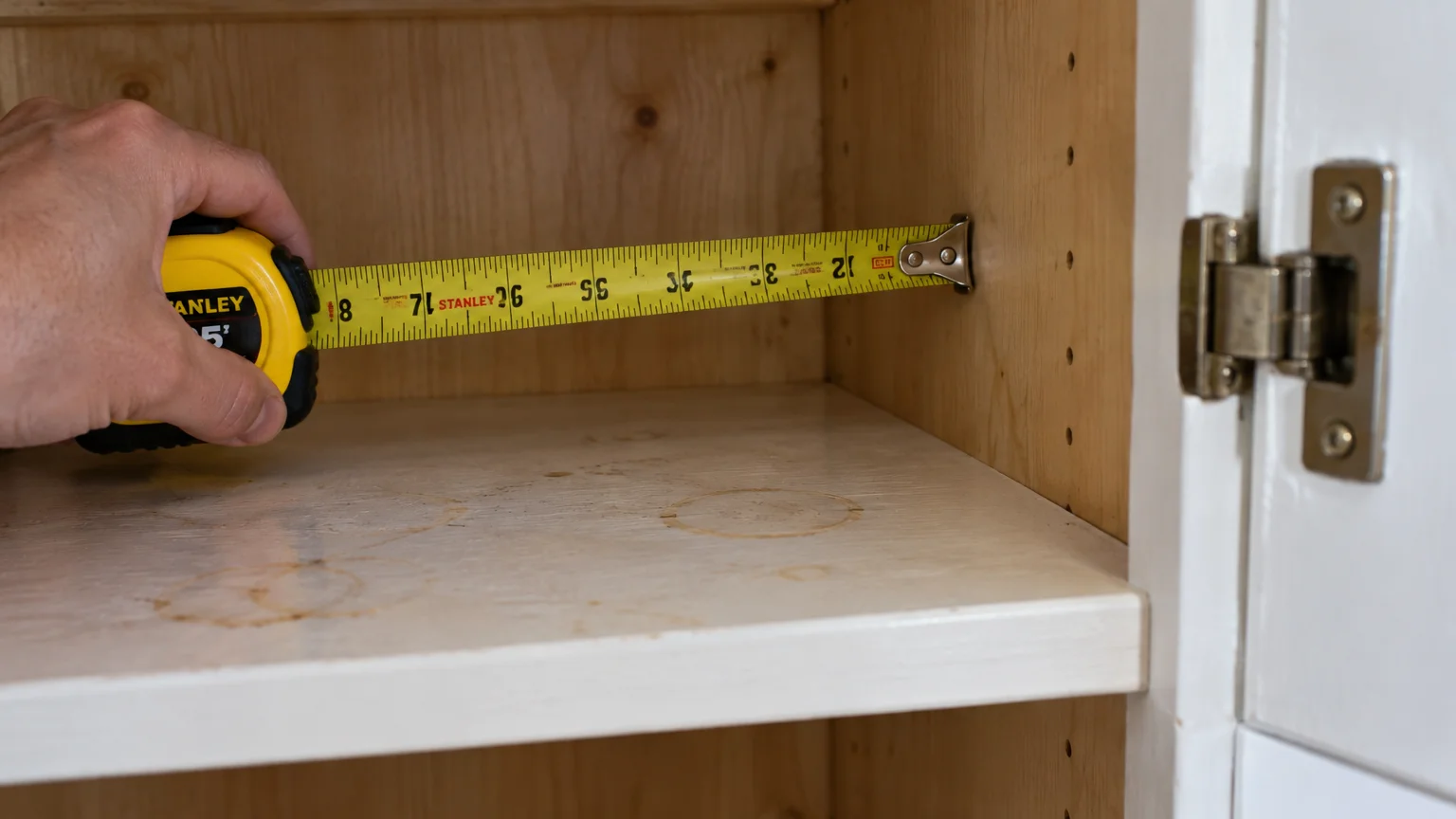
Before testing anything, measure the shelf you will give to baking. Record interior width, depth from the back wall to the closed door, and clear height to the shelf above.
Hinges and door-mounted racks steal depth, so measure to them. Measure height to the lowest obstruction, not to the shelf edge.
Write the three numbers at the top of your shopping list. Every container decision below gets checked against them.
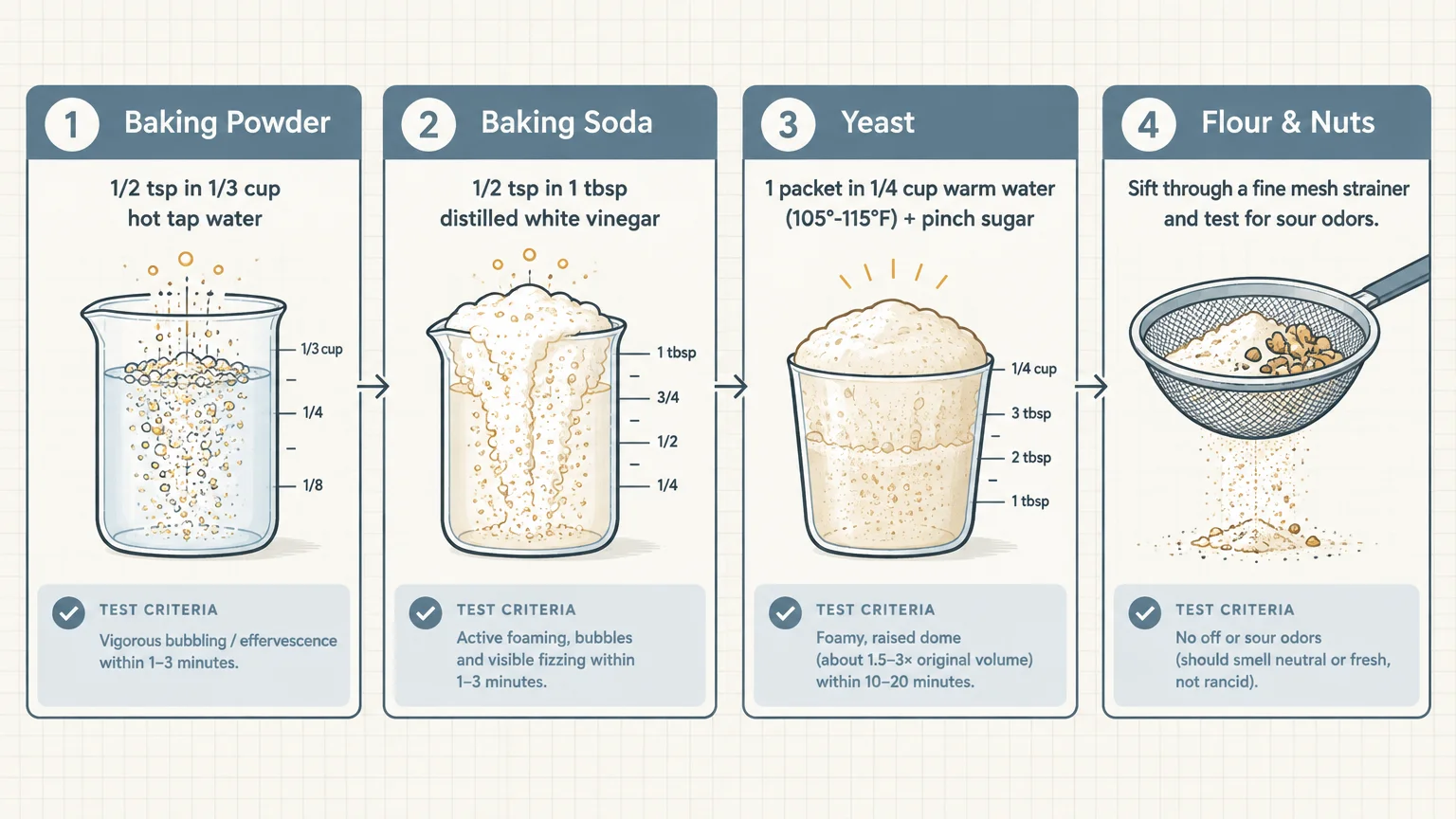
Step 2: Run the Fifteen-Minute Freshness Check
Pull every baking ingredient out and group it by category on the counter. Only items that pass go into this year’s count.
- Baking powder: stir 1/2 teaspoon into 1/3 cup hot tap water. Vigorous bubbling means keep; faint, lazy bubbles mean replace, or your cookies bake dense and flat.
- Baking soda: add 1/2 teaspoon to 1 tablespoon distilled white vinegar. Immediate foaming means it can still leaven gingerbread and drop cookies.
- Yeast: stir one packet into 1/4 cup of lukewarm water at 105 to 115 degrees Fahrenheit with a pinch of sugar. Look for a foamy dome within ten minutes.
- Flour: sift a cup through a fine mesh strainer and look for beetles or webbing. Sniff whole-grain and nut flours; sour, musty or wet-cardboard odors mean discard.
- Sugars: break granulated clumps with a fork. Soften hard brown sugar with a terracotta saver for 24 hours.
- Chocolate: a dull gray bloom comes from cocoa butter separating in temperature swings and is fine to melt into batters. Discard only if it smells or tastes off.
- Nuts: taste one from the center of the bag. Paint-like, sour or very bitter means the batch goes.
- Spices: rub a pinch between your palms. A faint or dusty aroma means replace, especially jars stored above the stove.
- Extracts: sniff oil-based lemon and peppermint for greasy notes. Pure vanilla stored cool and dark keeps; skip the fridge, which can cloud it.
If you find insects, bag the item and take it outdoors. If pests appear behind baseboards or inside cabinet walls, call a licensed pest control professional to treat those voids.
Step 3: Turn Recipe Cards Into a Shopping List
Now total the plan. For each ingredient, need = amount per batch × number of batches, added across every recipe card.
Then deficit = need − passing stock on hand. Buy the smallest package that covers the deficit, plus a small cushion for a re-roll or a spill.
To learn how many cups a bag holds, check the Nutrition Facts label. Multiply servings per container by the serving size; 4 cups equal 1 quart.
To measure what you already have, pour leftovers into a container with volume marks, or scoop them out with a 1-cup measure and count.
Container rule: each container should hold passing stock plus the purchase, with room to scoop. If it would overflow, the purchase is too big, not the container too small.
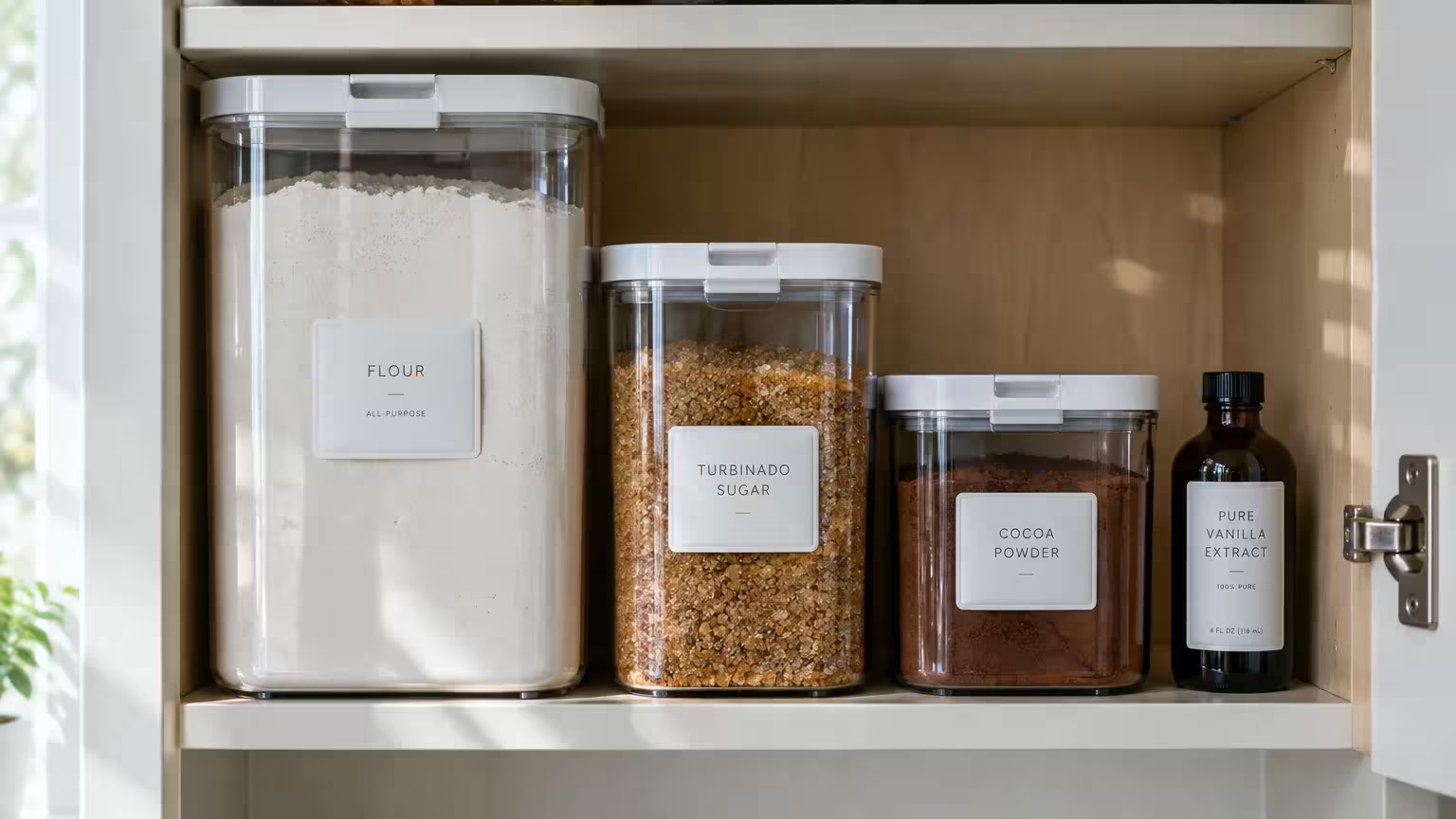
Containers Sized to Cups and Cabinet
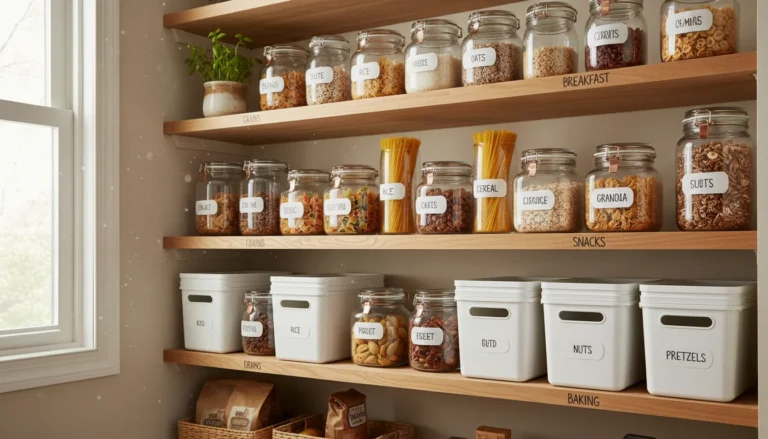
Square and rectangular containers sit flush and waste less shelf than round canisters. Airtight gaskets block humidity and pantry pests.
| Container Type | Seal | Volume in Cups | Footprint (W x D x H) | Shelf Must Allow | Best For |
|---|---|---|---|---|---|
| Modular clear canister | Silicone gasket clamp, BPA-free plastic | 4.4 quarts = 17.6 cups | 7.5 x 5.2 x 12.6 inches | 12.6 inches of height plus room to open the clamp | Flour or granulated sugar, up to a 5-pound bag |
| Half-gallon glass jar | Two-piece metal screw lid | 64 ounces = 8 cups | 4.5 x 4.5 x 9.2 inches | 9.2 inches of height | Brown or powdered sugar, chips, nuts |
| Divided cabinet turntable | Open; ball-bearing base | Not a bulk container | 11.5-inch diameter x 3.5 inches | 11.5 inches of width and depth | Extracts, food coloring, leavener cans |
| Open-front storage tote | Open; integrated handles | 15 quarts = 60 cups | 16.5 x 11.0 x 7.0 inches | 11 inches of depth, 16.5 of width | Carrying the season’s whole kit to the counter |
Keep the kit on an interior shelf between 50 and 70 degrees Fahrenheit. Avoid garages and basements, where temperature swings cause condensation inside containers.
For the rest of the shelves, our guide to pantry zones, containers and labels picks up from here.
Worked Example: Four Batches, One Shelf
Here is the formula run on one illustrative plan. Your recipe cards will differ; the method is what carries over.
Say the plan is two batches of chocolate chip cookies, one of gingerbread and one of rolled sugar cookies. Totaled from the cards, it calls for about 10 cups of flour, 3 cups of chopped walnuts and 3 teaspoons of baking powder.
Day 1, two weekends out: measure the shelf and run the freshness check. Last year’s all-purpose flour passes the sift and smell test; poured into the canister, it reads about 7 cups.
The baking powder barely bubbles, and the half bag of walnuts tastes sour. The baking soda foams, four spice jars pass the palm test and the vanilla is fine.
Day 2: run the numbers. The flour deficit is 10 − 7 = 3 cups, so the smallest bag your store carries covers it.
A full 5-pound bag on top of 7 cups would overflow the 17.6-cup canister. The surplus would sit in its paper sack until next fall, which is exactly the leftover this method avoids.
Walnuts: buy only enough for 3 cups, which fits the 8-cup jar with room to spare. Baking powder: buy the smallest can on the shelf.
Day 3: shop the short list. Skip spices, vanilla and baking soda entirely.
Day 4: decant into the canister and jar, and write the open date on masking tape. Set extracts and leavener cans on the turntable, then load everything into the tote.
If you would rather print dates than write them on tape, see how to choose a label maker.
Fit check: compare the tote’s 16.5-inch width and 11-inch depth with your Day 1 numbers. If the shelf is shallower, keep the canister and turntable on the shelf and skip the tote.
Baking weekend: lift the tote to the counter, bake, and slide it back. One shelf holds the whole season.
Afterward: move leftover nuts to the freezer and note what flour remains. Next year’s check starts from a smaller, dated stock.
Frequently Asked Questions
Can I use baking powder past its printed expiration date?
Yes, if it passes the hot water test. Best-by dates mark peak performance, and dry, sealed powder can stay potent past them; test it the week you bake.
How do you revive rock-hard brown sugar quickly?
Place it in a microwave-safe bowl with a damp paper towel draped over the top. Microwave on medium in twenty-second bursts until it softens.
Should I store baking nuts in the freezer or the pantry?
Use the freezer for anything you will hold longer than a month. Cold slows fat oxidation far better than a pantry shelf; taste one before baking regardless.
What is the safest way to store opened bags of flour?
Transfer it to an airtight food-grade plastic or glass container with a silicone gasket. That blocks humidity and keeps pantry pests out far better than the paper bag.