This guide is for a busy family home whose only real storage is an attached two-car garage that is never heated or cooled, plus one hall closet. Eight mismatched cardboard boxes sit on the concrete slab right now.
It is the start of decorating season, and those boxes are about to come inside. In January, everything will go back out to the garage while everyone is tired.
Here is the judgment most storage guides skip. In a garage-only home, the key question is not how much to keep.
It is which few items earn space in the one indoor closet.
Make that call while you unpack, not while you pack up. Everything that does not earn the closet goes into sealed, raised containers built for a damp garage.
Why the Cull Happens Now, Not in January
In January, the household wants the tree down and the living room cleared fast. That rush pushes broken ornaments, crushed garland and unwanted knick-knacks straight back into boxes.
Unpacking is different, because you only put out what you actually like. When the eight boxes come in from the garage this week, leave them open in the room for three days.
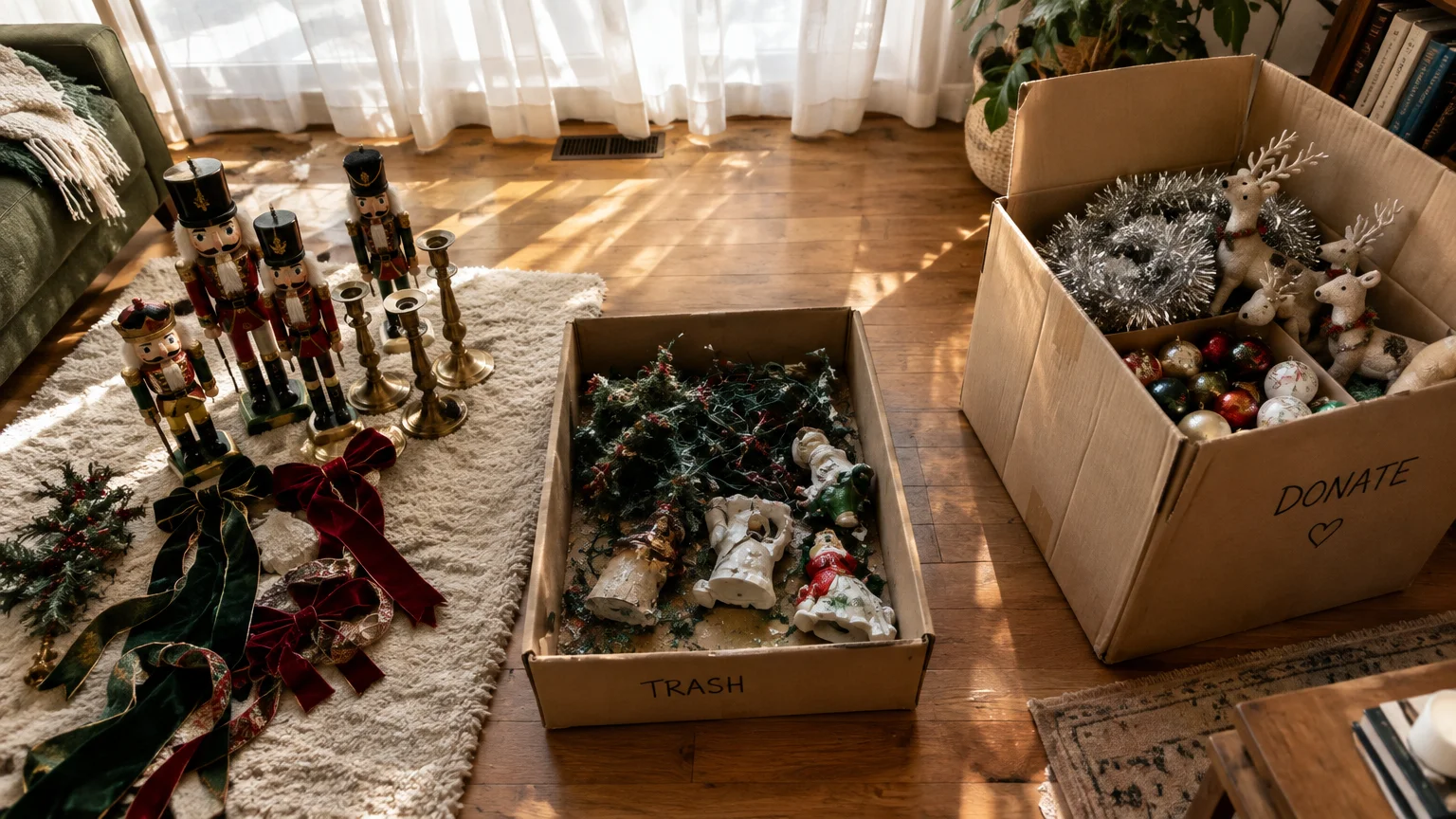
Decorate the mantel, tree and tabletops first. Anything still sitting in a box after 72 hours is something your household no longer uses.
Set up three floor zones: one for items on display, one for broken pieces headed to the trash, and one for intact decorations to donate.
Load the donations into the car and drop them off before the weekend ends. Every item that leaves now is one less item exposed to garage dampness for eleven months.
What an Unconditioned Garage Does to Decorations
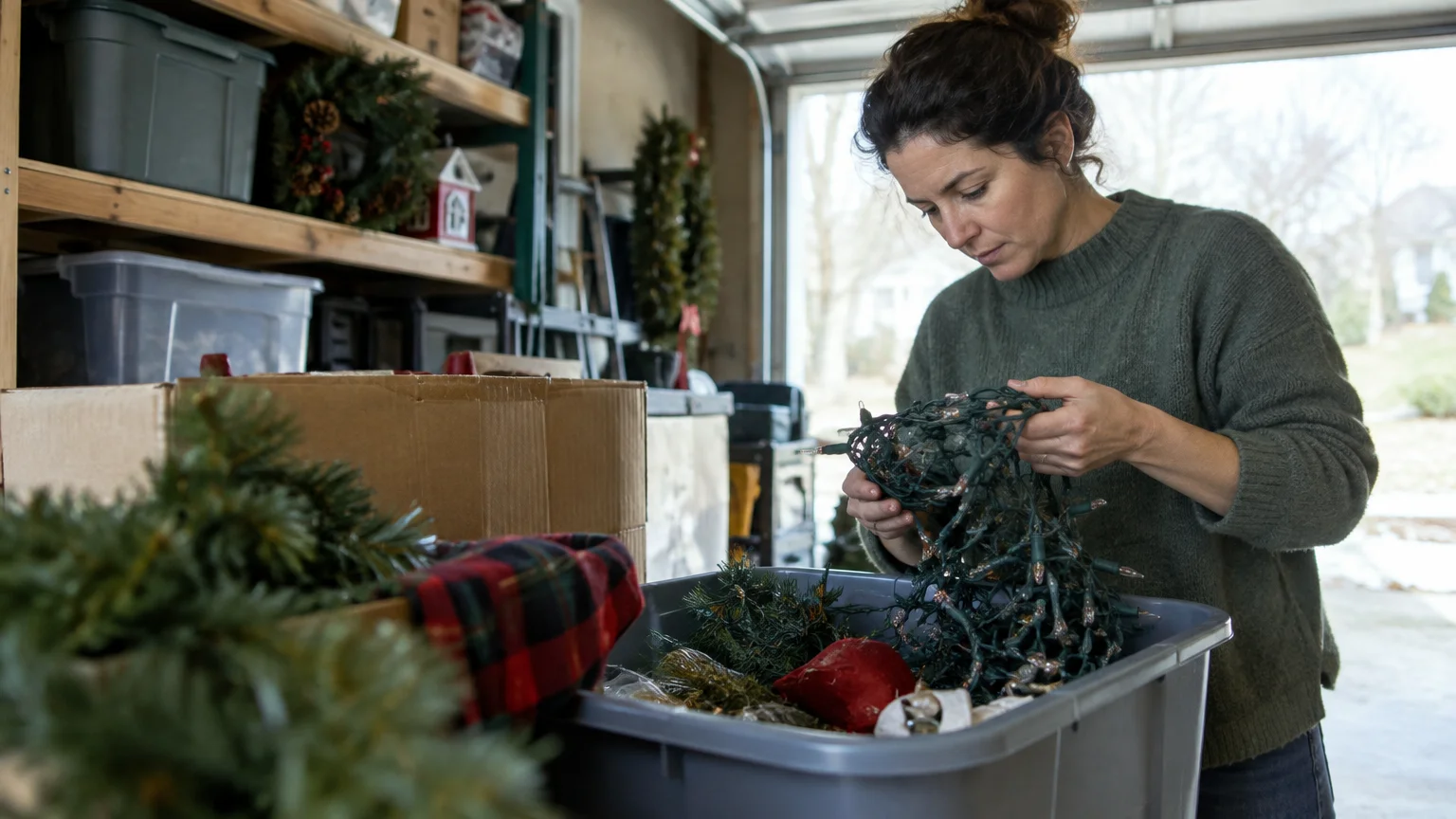
A garage slab wicks moisture upward into anything resting on it. Cardboard boxes on the floor soak up that dampness, and fabric stockings, plush tree skirts and woven tree collars inside can grow mold.
Cardboard boxes absorb atmospheric moisture, attract silverfish, and collapse when stacked. In a humid garage, that makes cardboard the first thing to retire.
Garages also bring vehicle exhaust soot and nesting rodents. Mice chew through soft cardboard and wire insulation, then nest in stored fabric.
Summer heat matters too, since an unconditioned garage warms up along with the weather. Wax candles, hot-glued wreath accents and painted finishes are the items most likely to soften or warp.
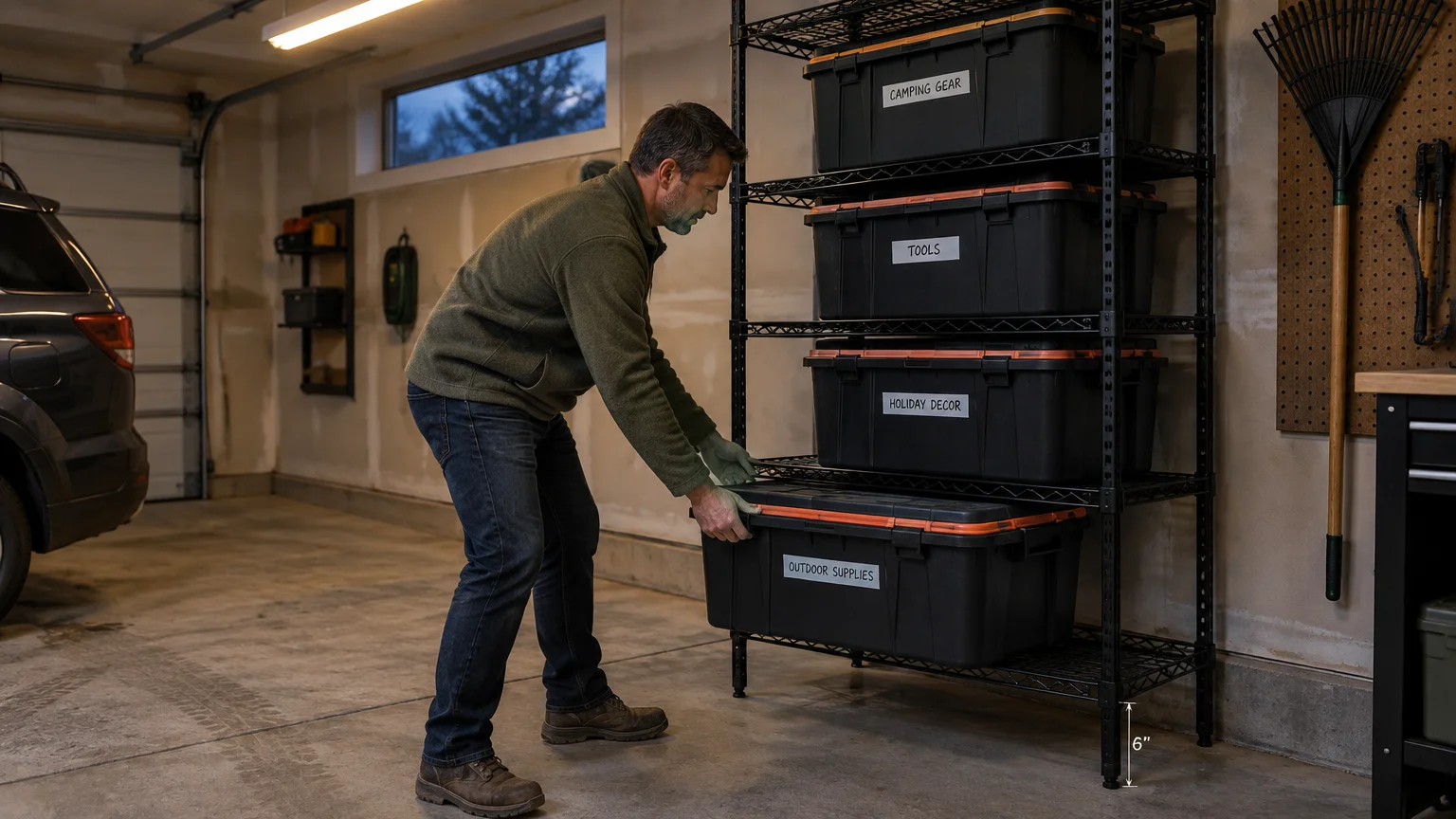
Whatever stays in the garage should raise containers at least six inches off the concrete on heavy-duty steel utility shelving. Place the shelving away from the car’s tailpipe and the overhead door.
Our garage storage design guide covers shelf depths and loads.
If the slab stays wet, water pools along a wall, or mold keeps returning, that is a building moisture problem. Have a licensed contractor or home inspector look before you store anything there.
The One-Closet Rule: What Earns Indoor Space
Before you buy anything, measure the closet shelf or floor space you can give up. That measurement, not your wish list, sets how much comes indoors.
If the closet itself needs rework, see how to choose a closet organization system.
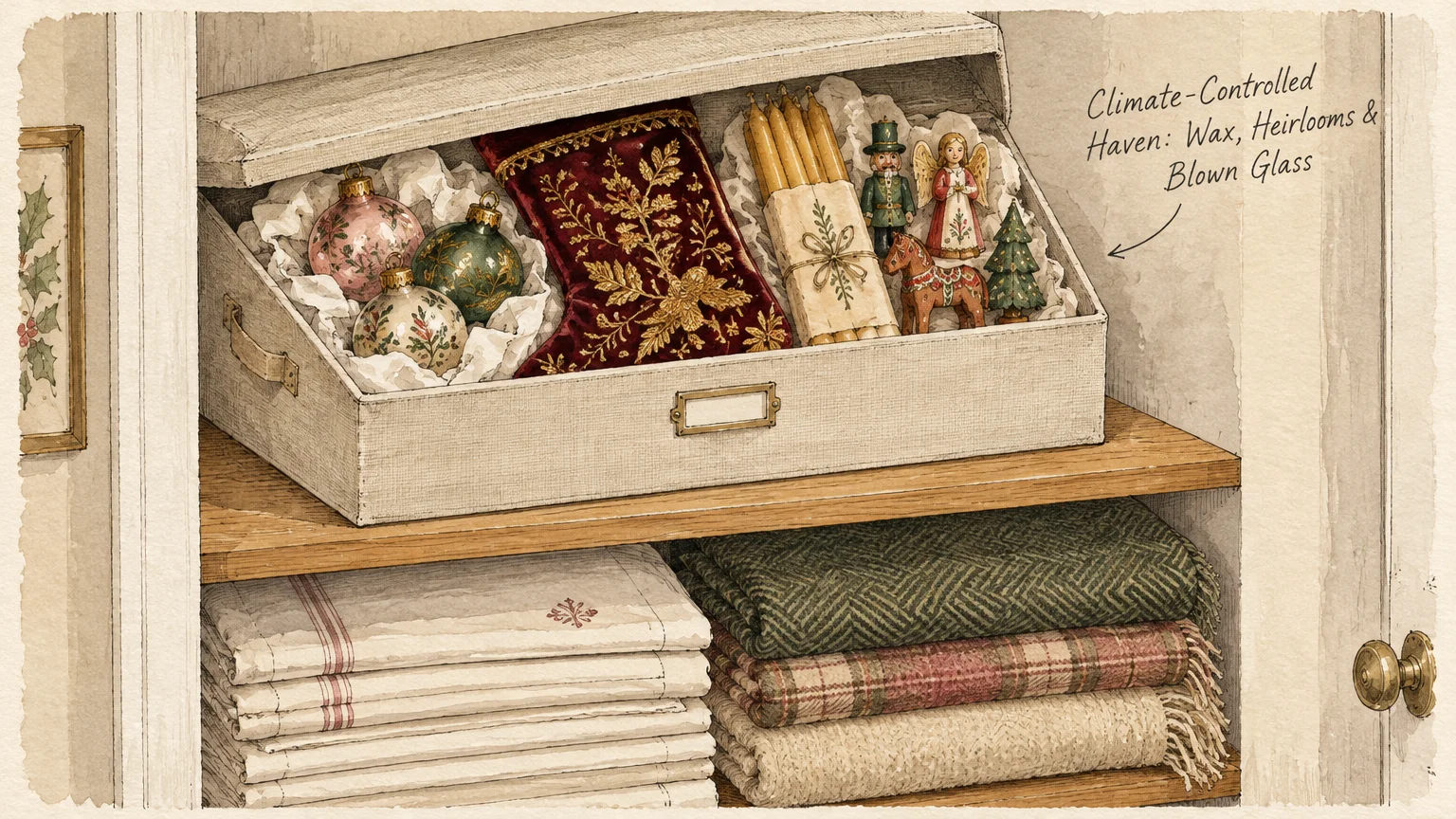
Reserve the indoor spot for items that moisture, heat or pests would ruin for good:
- Hand-painted, vintage or blown-glass ornaments
- Heirloom stockings, embroidered tree skirts and handmade fabric pieces
- Candles and anything made of wax
- Small decorations held together with hot glue
Everything else can live in the garage if it is sealed and raised:
- The artificial tree, in an upright bag
- Light strands wound on spools
- Shatterproof plastic ornaments and artificial garland
- Metal outdoor light stakes and hardware
- Washed, everyday table linens in zippered bags
If the indoor items will not fit the space you measured, go back to the 72-hour leftovers. That pile usually holds the answer.
Choosing Bins for a Humid Garage
Clear polypropylene containers let you see contents without prying off lids. For the garage, choose bins with rubber foam gaskets and locking latches to block moisture and insects.
Our comparison of clear vs fabric storage bins explains which material suits which spot.
Stick to containers between 16 and 74 quarts. Larger totes quickly get too heavy to lift safely once loaded with ceramic villages, thick garland or glass.
The one exception is a 27-gallon utility tote for light, bulky items such as artificial garland. Keep it on the lowest shelf, where you will not lift it overhead.
| Container | Check on the label | Seal and lid | Where it goes in this home | What goes inside | |
|---|---|---|---|---|---|
| Gasket-sealed latching tote | Quart size (16–74), outer depth vs. your shelf depth | Foam rubber gasket, locking latches | Garage steel shelving, off the slab | Tabletop decor, shatterproof ornaments, washed linens | |
| Divided ornament box | Cell size vs. your largest ornament; acid-free trays | Zippered fabric shell | Hall closet only | Glass, painted and vintage ornaments | |
| 27-gallon utility tote | Outer footprint vs. a 24-inch shelf | Snap-fit lid, no gasket | Garage bottom shelf | Artificial garland, other light bulky items | |
| Small latching tote | Fits your light spools lying flat | Gasket or tight latch | Garage shelf at waist height | Light spools, timers, extension cords | |
| Upright tree bag | Rated for your tree’s height | Zippered canvas, interior frame | Garage corner on a pallet or low platform | Artificial tree sections |
Measure your shelving before buying. Garage units commonly come in 18-inch or 24-inch depths, and a tote that overhangs the edge is easy to knock off.
Label the front end and the lid of every container with a broad permanent marker. You can then read it whether bins sit side by side or stacked.
Use red or green lids only for holiday totes. They will not disappear among camping gear and tools on the same garage shelves.
How to Store Christmas Lights and Prevent Tangles
Tangled strands crack bulb sockets and strip wire jackets. Before coiling any strand, plug it in and confirm every bulb lights.
The Consumer Product Safety Commission advises inspecting decorative lights for frayed cords, exposed wiring and cracked sockets. Discard damaged strands rather than storing them.
If you need new outdoor GFCI receptacles for exterior lights, hire a licensed electrician to install the protected circuits.
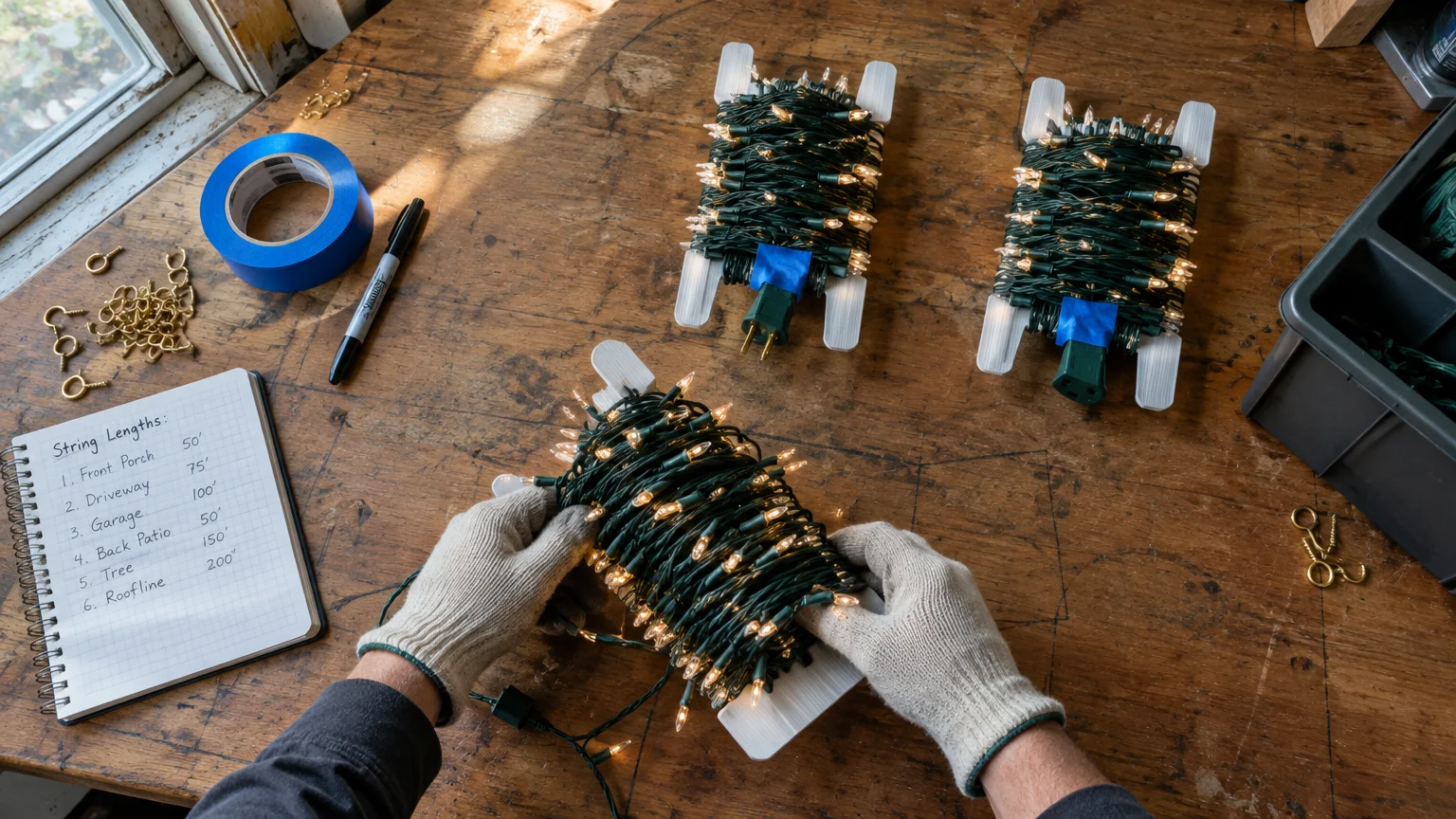
Wrap each strand around a 12-by-6-inch notched piece of heavy cardboard, a corrugated plastic sheet, or a plastic cord spool. In a damp garage, plastic holds up better than cardboard.
Cut a one-inch notch into each end of the board to hold both plugs. That keeps tension steady and stops coils from unspooling when the tote moves.
Stack the finished spools flat in one small latching tote. Next season, you unwind each strand straight onto the tree.
Protecting Fragile Ornaments
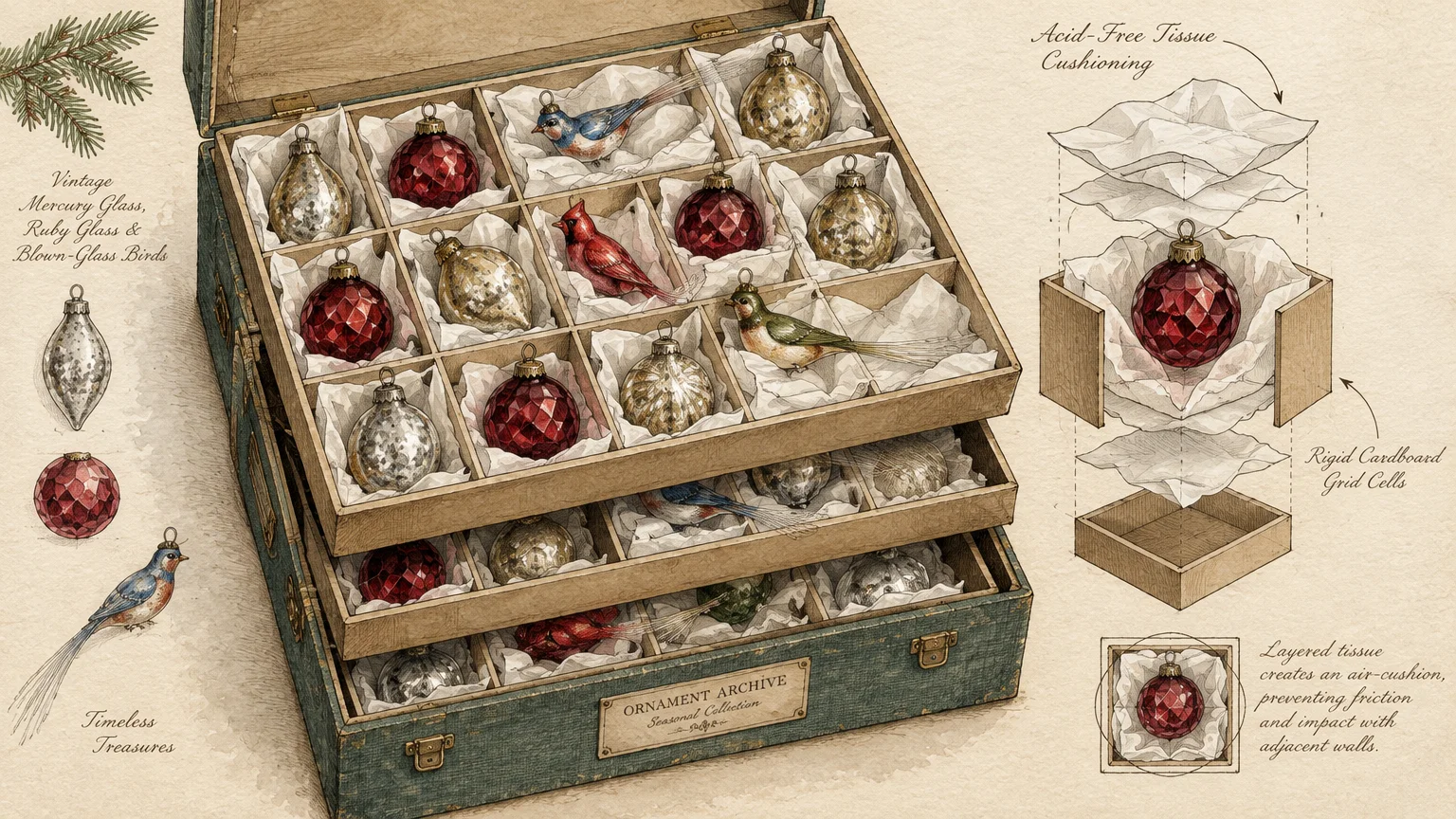
Do not wrap heirloom ornaments in printed newspaper. Ink and acidic paper can transfer to glass finishes during long storage.
Wrap glass and porcelain in archival acid-free tissue paper or clean, unprinted white paper. Acid-free tissue helps protect painted surfaces and metallic leafing.
Use the divided ornament box so no two glass pieces touch when the box is carried from the closet to the living room.
Put heavier glass and ceramic pieces in the bottom tray. Keep blown glass, spun cotton and paper ornaments in the upper trays.
Even indoors, trapped moisture can tarnish metal caps and hanging loops. Tuck a few silica gel packets into the box, and check the packet for when to replace or recharge it.
Wreaths, Garland and Holiday Linens
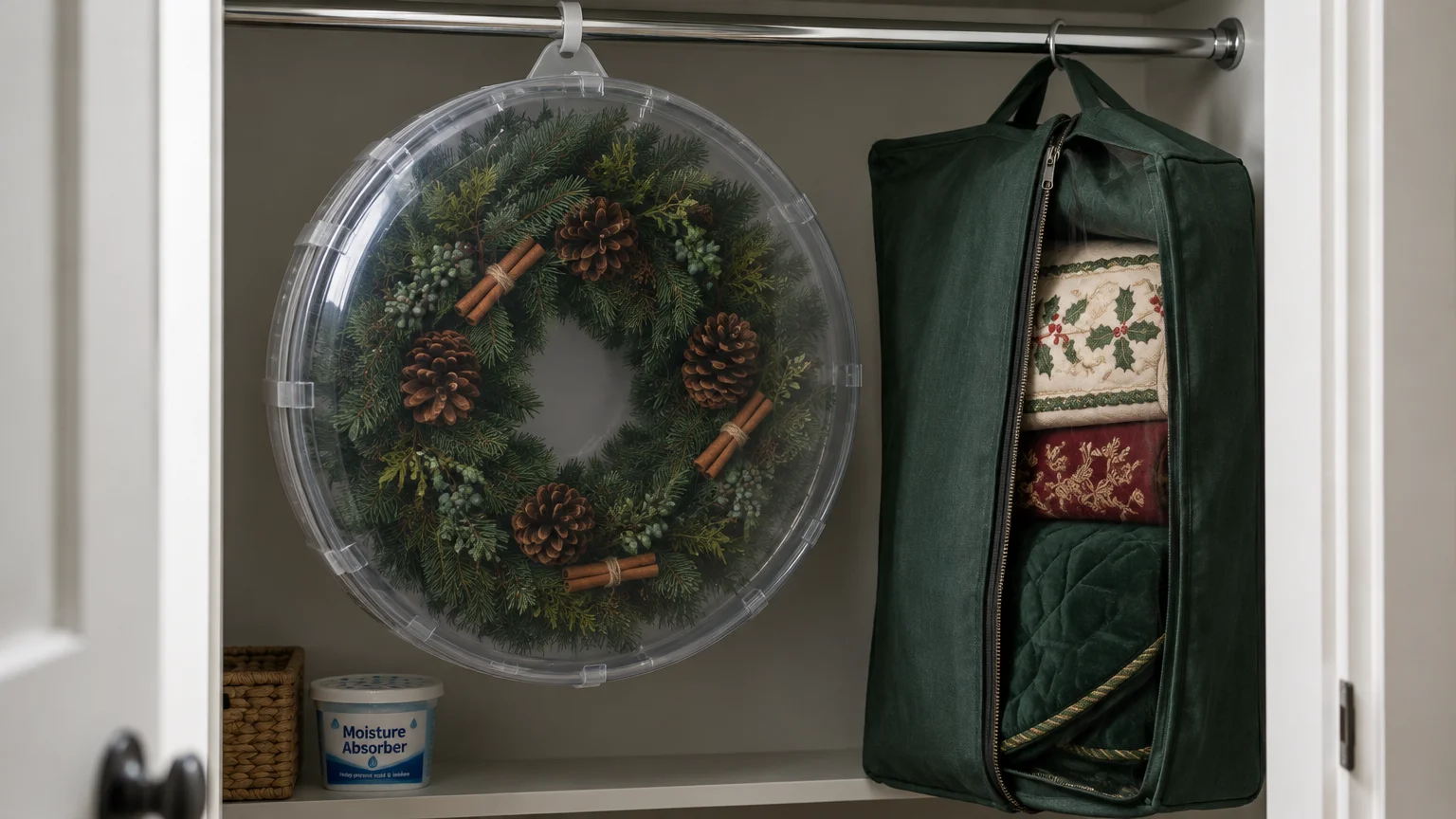
Wreaths stored flat under heavy bins bend their wire frames and snap pinecone accents. Slide each wreath into a rigid zippered wreath case sized to its diameter.
Hang the cases on wall hooks high on a garage wall, away from the car. A wreath with real pinecones, dried berries or lots of hot glue belongs in the closet instead.
Wash or spot-clean stockings, tree skirts and runners before storage; check the maker’s care label. Food stains left on fabric attract carpet beetles and clothes moths over long storage.
Let every textile dry completely, then fold it into a zippered bag with a cedar block. Keep cedar from touching white cotton or linen, since its oils can discolor fabric.
Worked Example: Eight Garage Boxes to Four Containers
Here is the whole plan for this household, from the first evening of decorating through January pack-up.
- Day 1, evening: Carry all eight boxes in from the garage. Empty them onto a drop cloth and bag broken items, frayed ribbon, dead light strands and brittle plastic foliage for the trash.
- Days 1–3: Decorate. Test each light strand before it goes up. Leave the open boxes in the room.
- Day 4: Whatever is still boxed goes to donation, except true heirlooms you are holding for the closet. Recycle the cardboard.
- Day 4: Measure the closet space and your garage shelf depth. Write both numbers on your shopping list.
- Day 5: Buy one divided ornament box for the closet, three gasket-sealed latching totes for the garage, light spools, acid-free tissue, silica gel packets, zippered textile bags and colored-lid labels.
- Before January: If the garage lacks steel shelving, set it up now so containers come off the slab.
- Pack-up day: Pick a dry day. Remove batteries, spool the lights, wrap fragile ornaments and wash textiles first.
The four storage categories map to four containers:
- Tree ornaments (fragile): divided ornament box, hall closet.
- Lighting and hardware: gasket tote, garage shelf at waist height.
- Tabletop decor and shatterproof ornaments: gasket tote, garage shelf.
- Everyday seasonal textiles: gasket tote with bagged, cedar-packed linens, garage upper shelf.
Heirloom fabrics go in one zippered bag on the closet shelf beside the ornament box. The tree bag and wreath cases sit outside the count.
Attach a clear label pouch to the short end and lid of each tote listing its contents. Next year, the ornament box and three totes come in, and decorating takes one evening.
Frequently Asked Questions
Can I store an artificial Christmas tree in an unheated garage?
Yes, if the tree is metal with standard PVC or PE needles. Keep the sections in a heavy-duty canvas bag raised off the concrete so floor moisture cannot reach it.
How do I prevent pest infestations in stored holiday decorations?
Replace cardboard with gasket-sealed polypropylene totes with locking latches. Do not store edible ornaments, gingerbread pieces or popcorn garland, which draw rodents and pantry insects.
Should I leave batteries inside holiday decorations during the off-season?
Always remove alkaline batteries from illuminated figures, musical snow globes and LED timers before packing them. Alkaline batteries left in place can leak corrosive potassium hydroxide and ruin electronic contacts.
What is the best way to clean dusty glass ornaments before packing?
Wipe glass ornaments gently with a dry, soft microfiber cloth or a clean makeup brush. Skip sprays, water and glass cleaners, which can lift hand-painted detail and lacquer.